Inspiration
Two hours. That's how long we stood in line at a Big Tech booth at our last career fair. When we finally reached the front, we had about ninety seconds, a folded resume, and the same opening line as the 200 people before us: name, major, "So what does your company do?"
We didn't freeze because we had nothing to say. We'd built [your real project] and placed at [hackathon]. We froze because nobody walks into a career fair with a pitch that connects their work to the team in front of them. Nerves flatten everyone into the same script.
Meanwhile, the student who wandered over at closing time walked straight up to the recruiter. Some friends scanned the booth QR code and left without talking to anyone. Recruiters went home with stacks of paper and no way to remember who stood out.
Career fairs are one of the best chances students get. We wanted every student to leave feeling they'd had a fair shot.
What it does
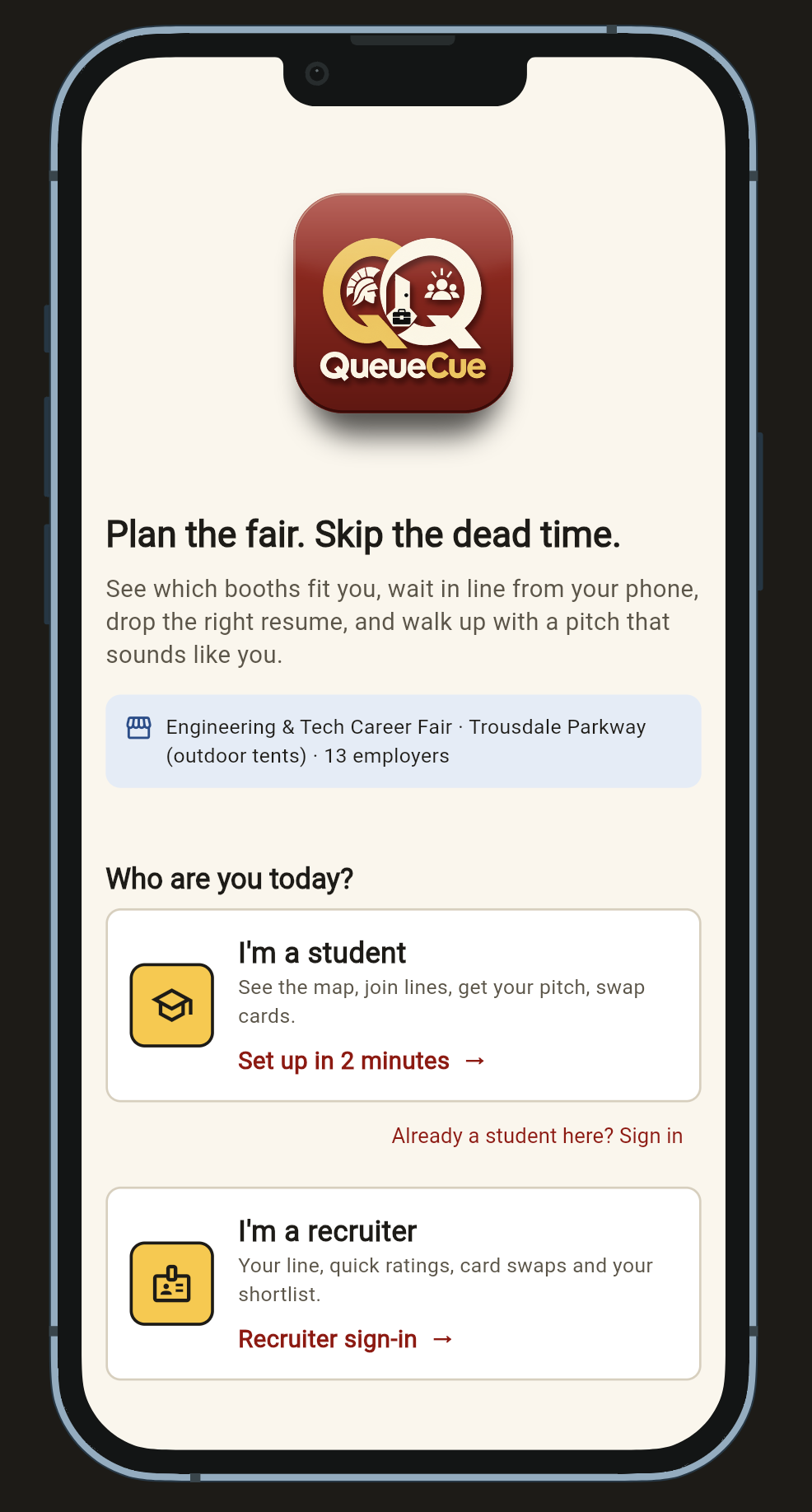
QueueCue (qq, because job hunting makes everyone want to cry) is a career fair copilot for students, recruiters and organizers.
For students
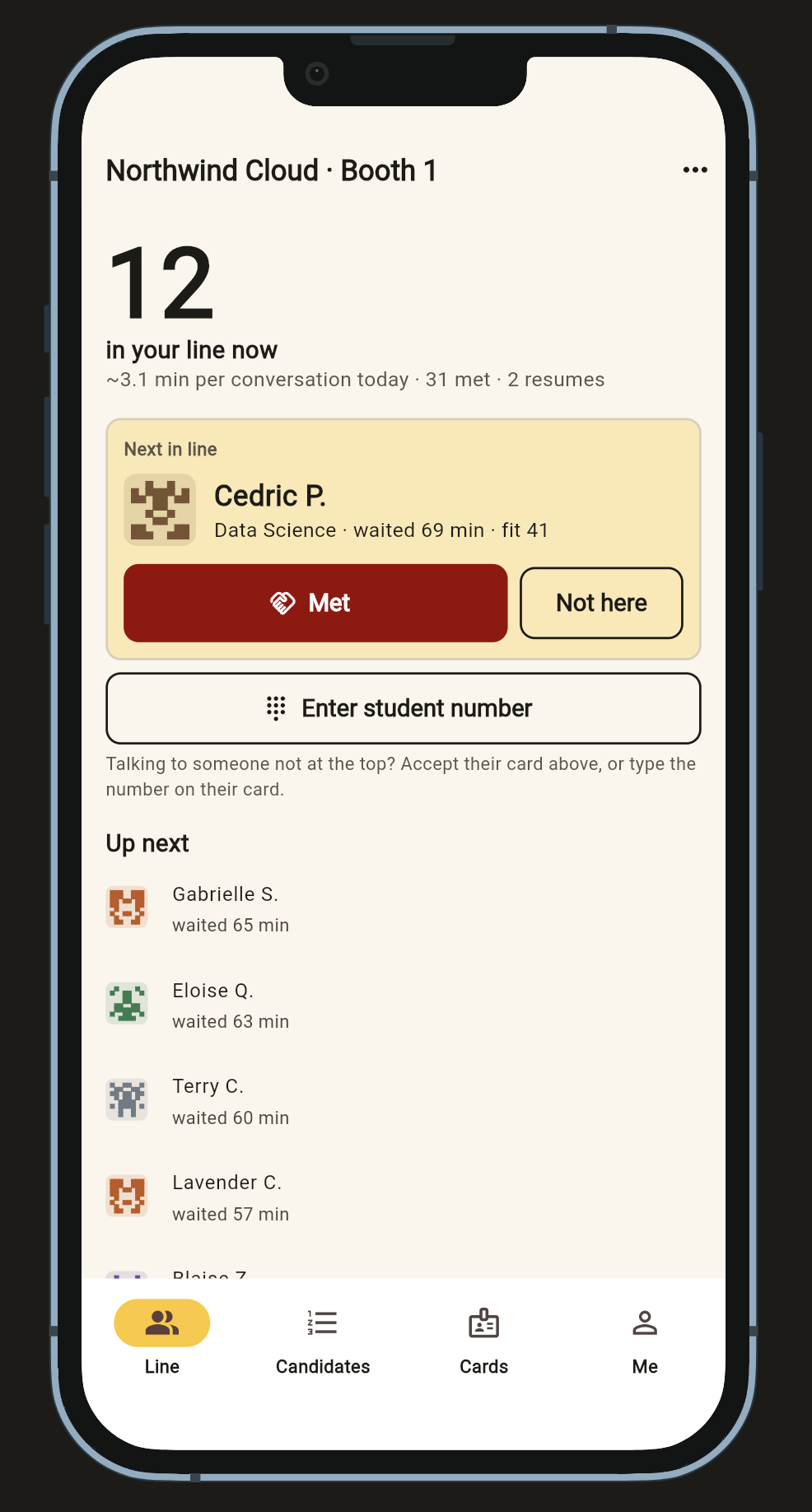
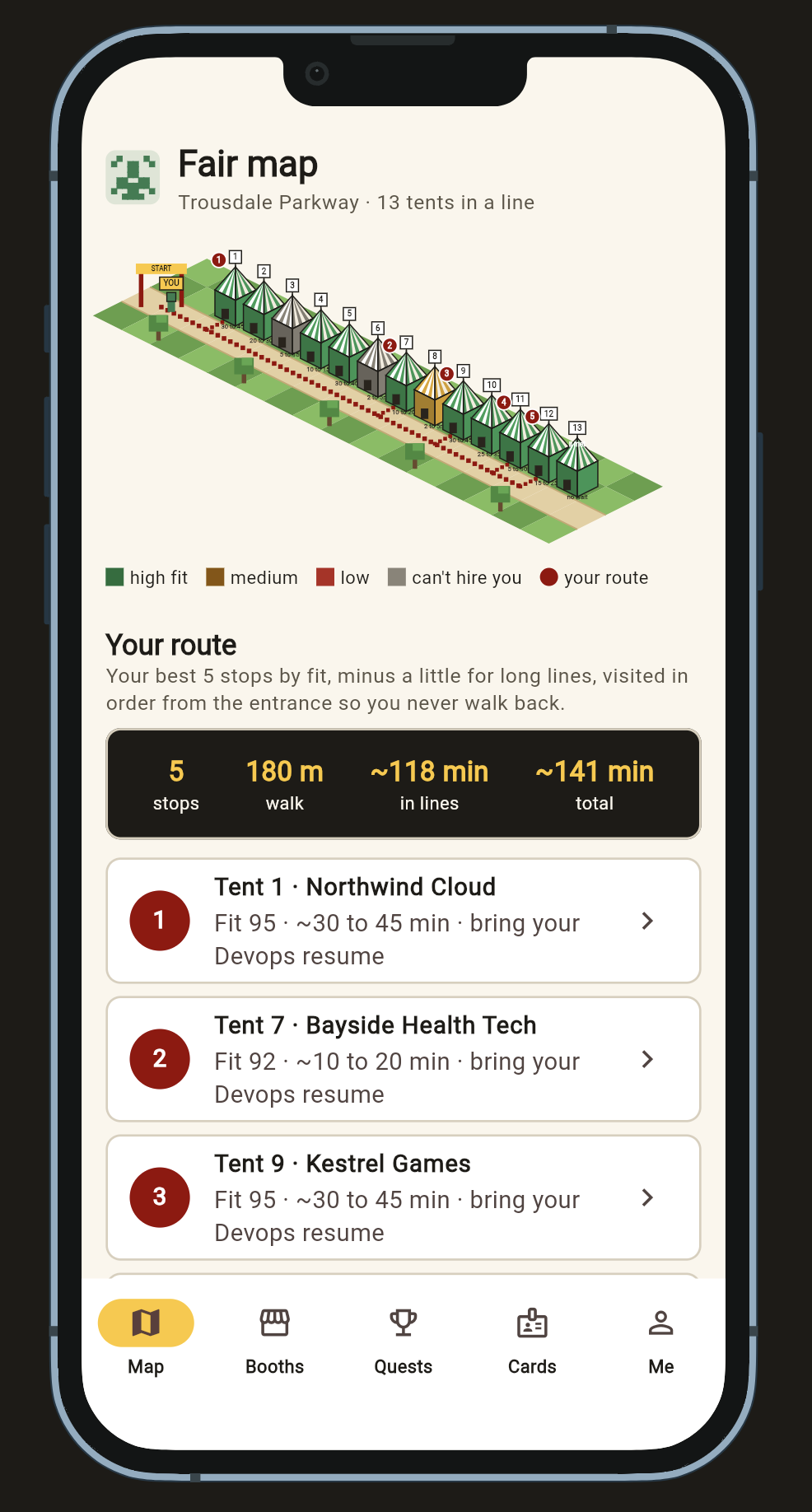
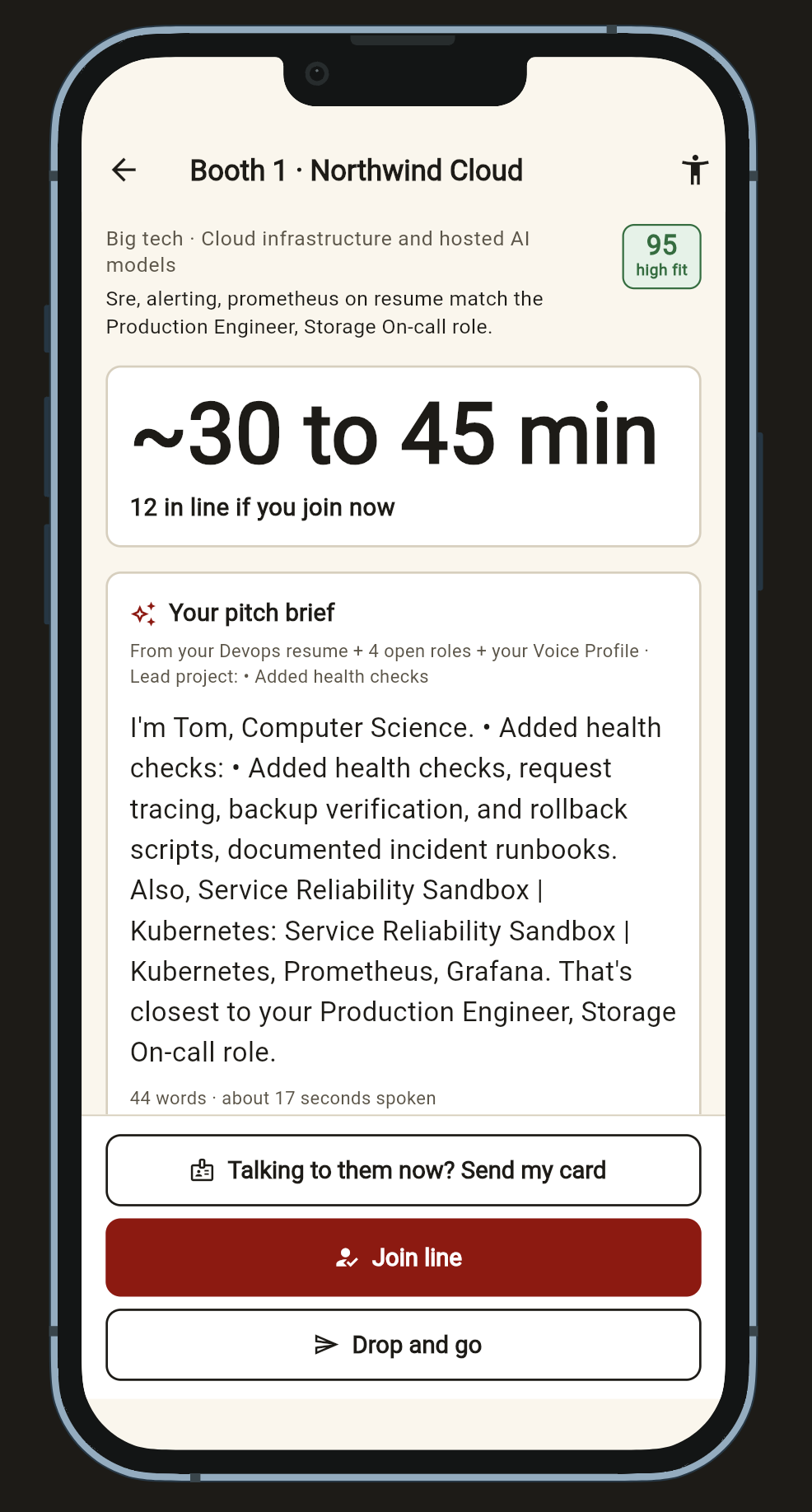
- Virtual lines with real wait times. Join a booth's line from your phone and see how many people are ahead of you, with a wait estimate based on how long recent conversations took.
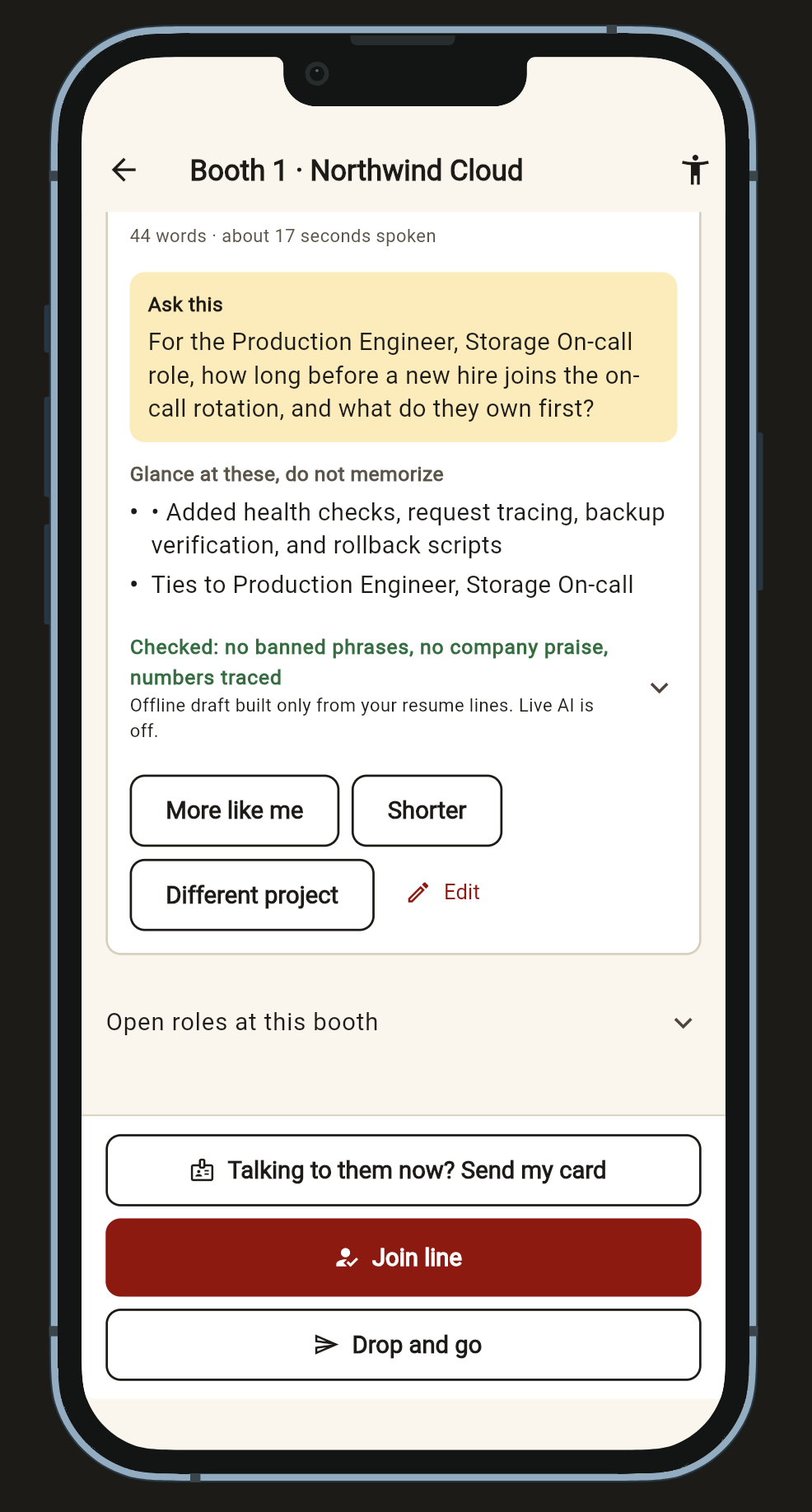
- A pitch that sounds like you. QueueCue learns how you talk from a 60-second voice note, then connects your actual projects to what each company is working on, so you can show where you'd contribute. A built-in critic strips out buzzwords, flattery, and anything you didn't actually do.
- Your fit for each booth. Your fair plan shows which booths can sponsor visas and hire your major, and which of your tailored resumes to bring to each one.
- Drop and go. Can't wait? Leave your best-matched resume and a short note straight in the recruiter's inbox.
- Levels, side quests and a Fair Recap. Climb from Rookie to Closer by doing what actually helps (real conversations, sharp questions, follow-ups), not by spamming resumes.
For recruiters
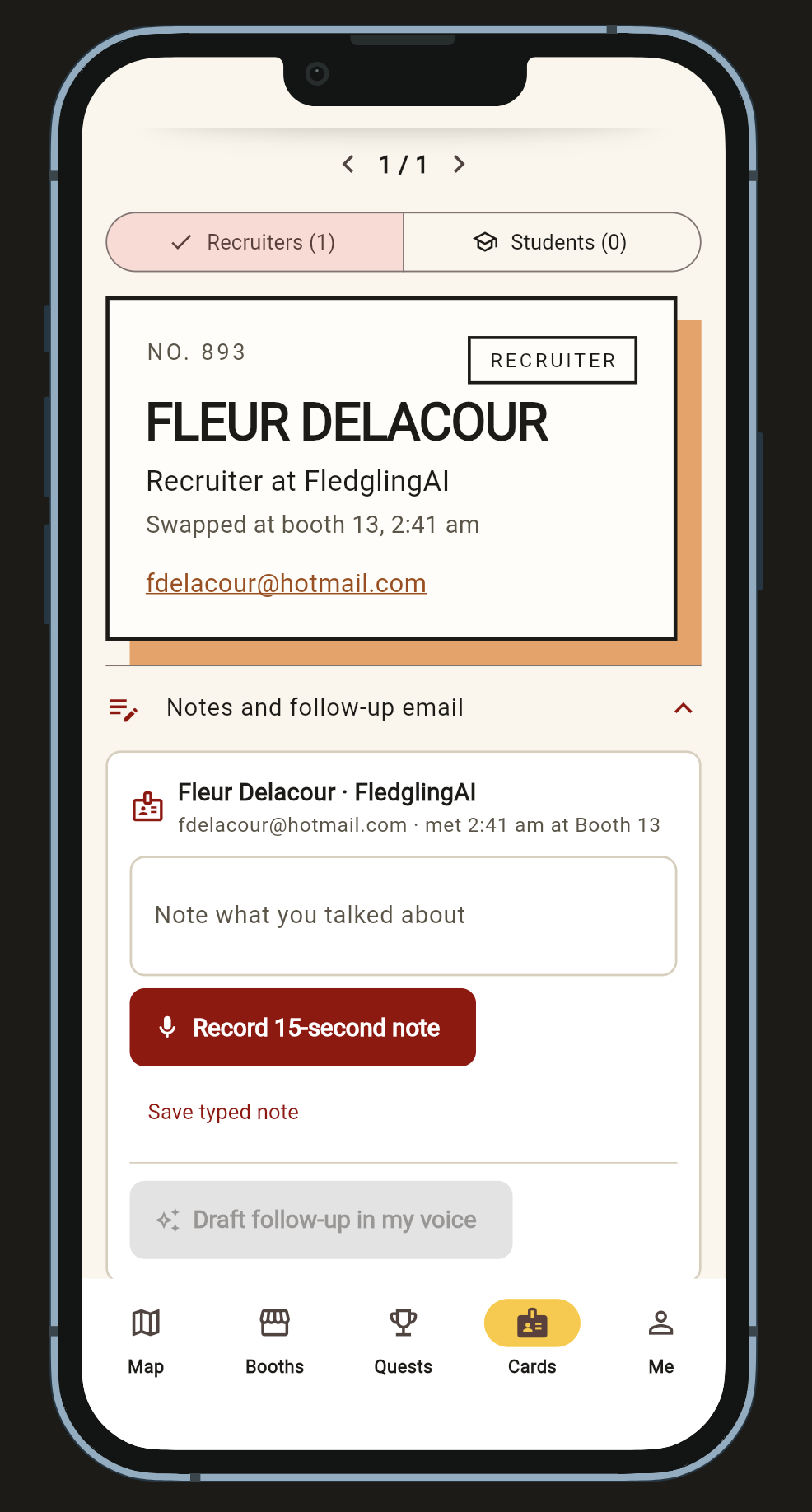
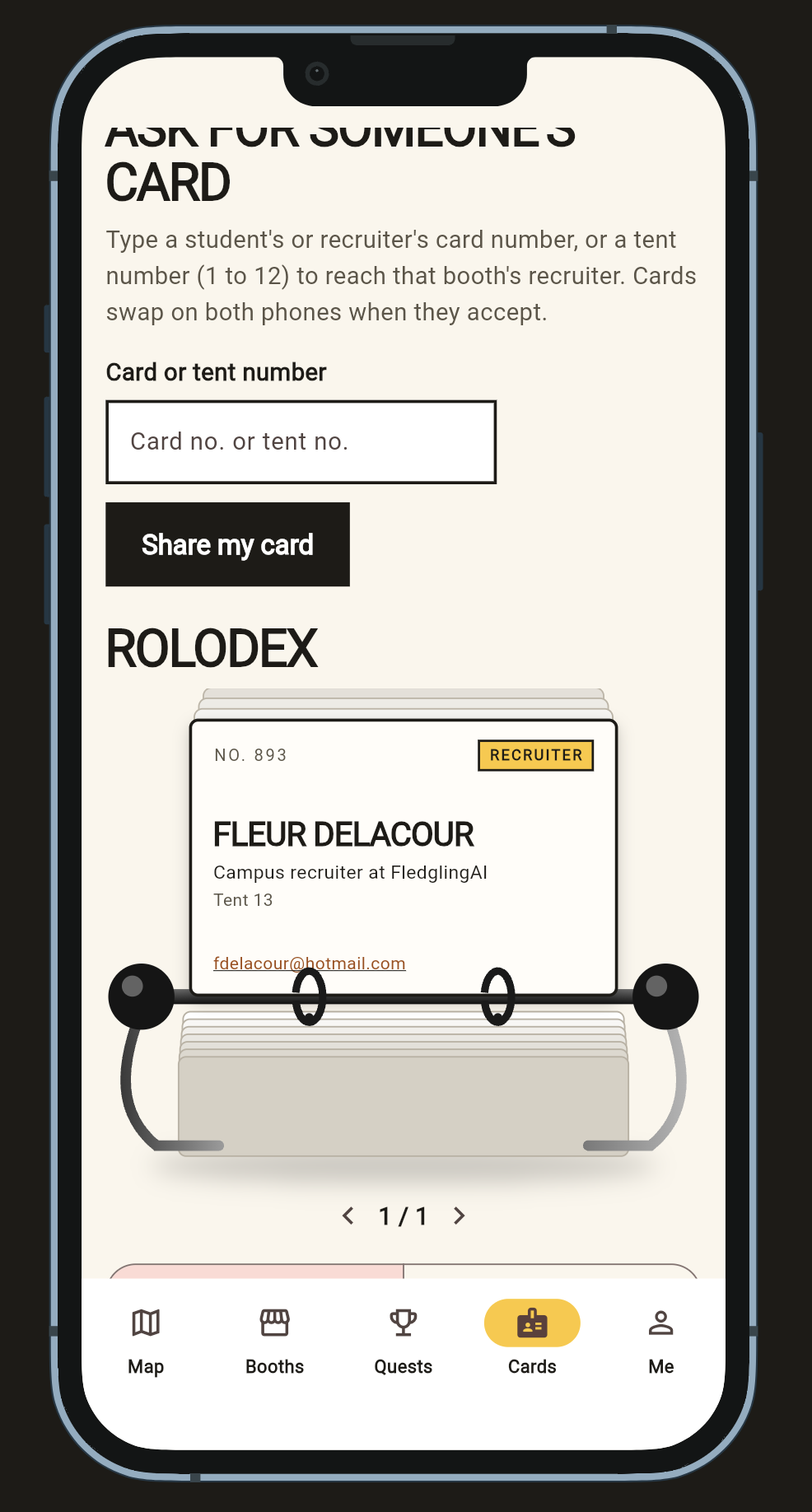
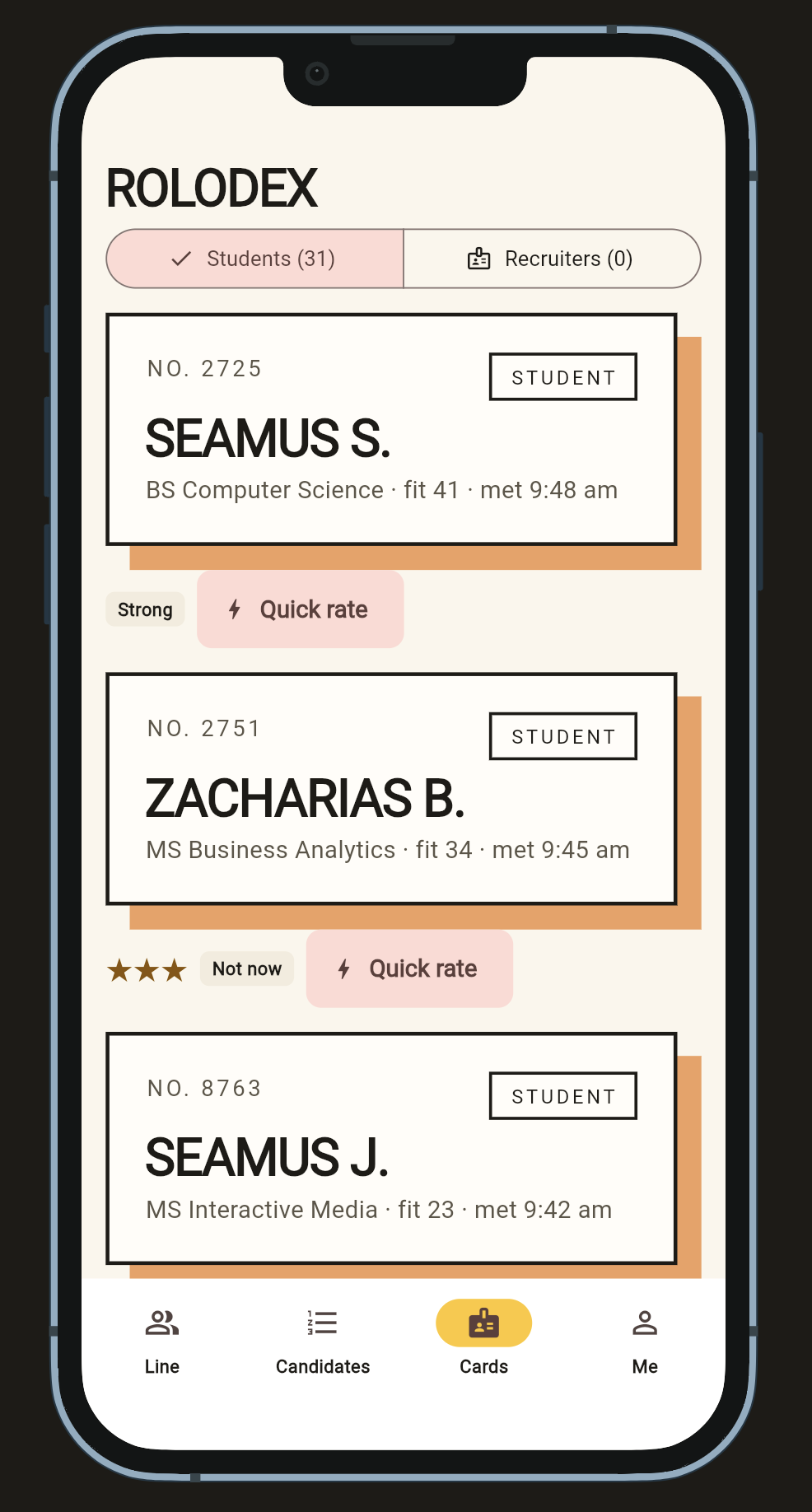
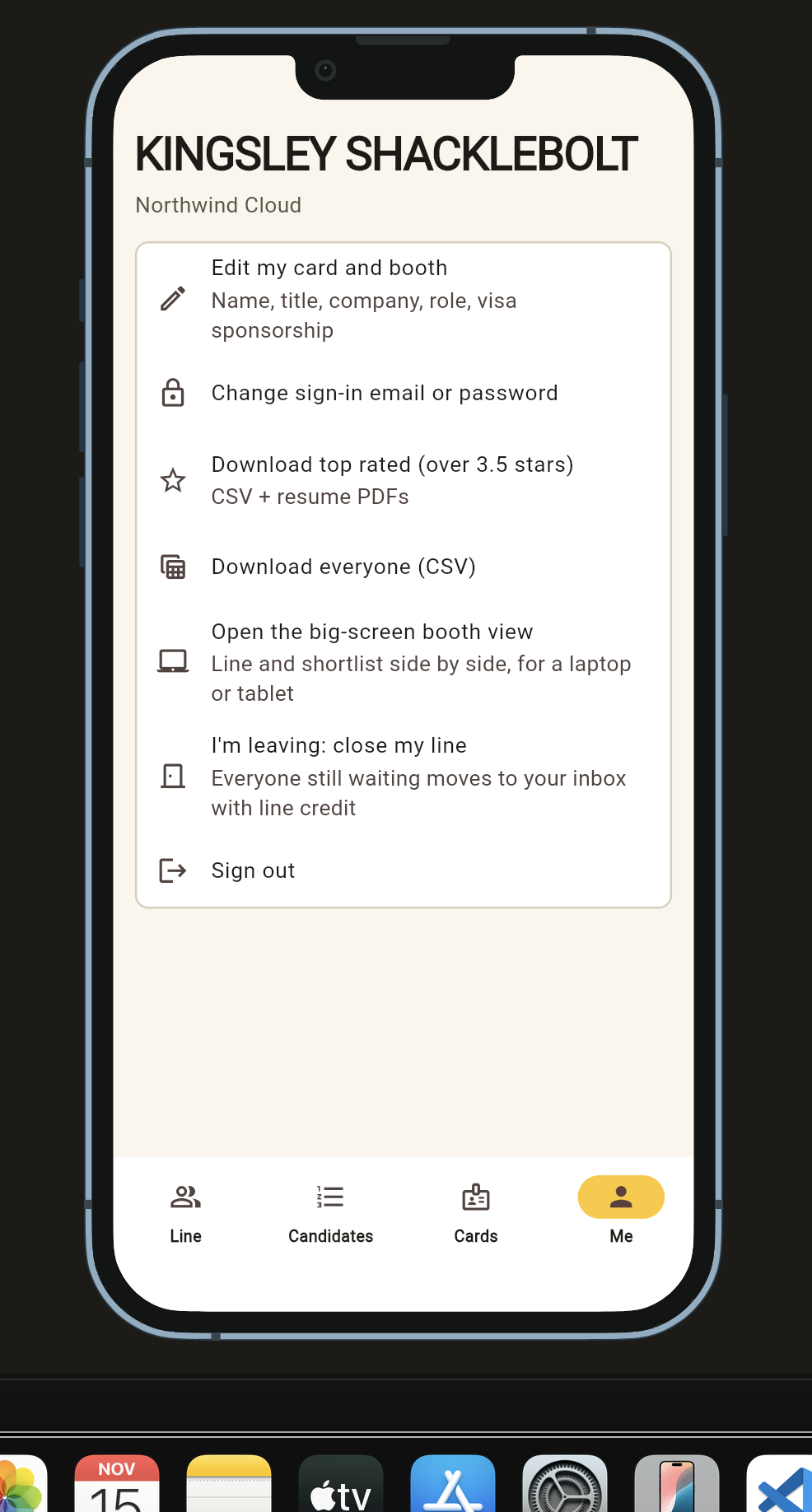
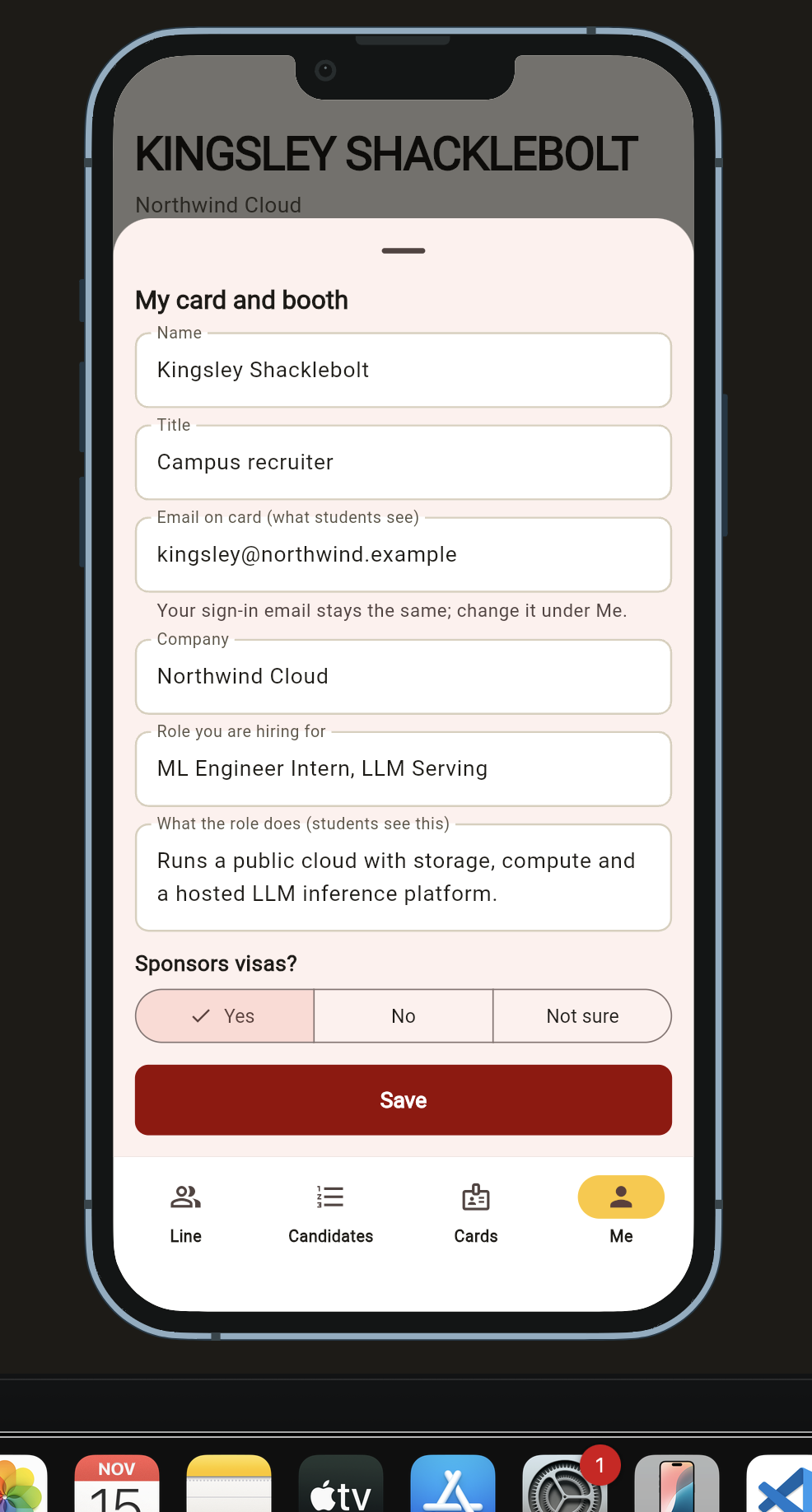
- One tap confirms a real conversation, swaps digital cards, and sorts the student into a pile with a three-second memory note.
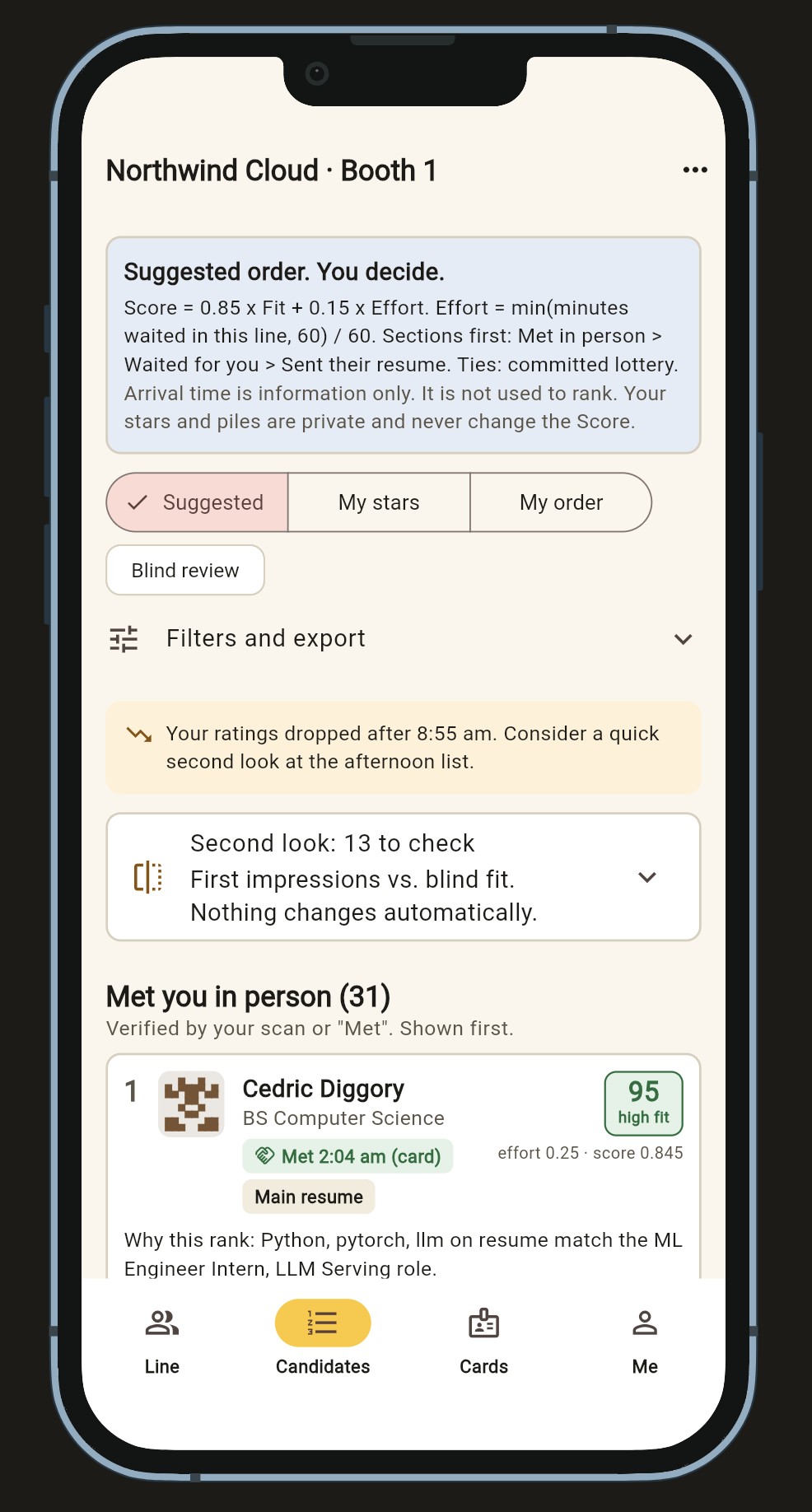
- A "second look" panel flags nervous-but-qualified students and charming-but-mismatched ones, so first impressions don't override the resume.
- Shortlists export straight to the hiring team.
The Fair Play guarantee When the fair closes, every student's best resume reaches their top three best-fit companies, even if they never got to the front of a line. Anyone still in line when a booth closes is flagged to that recruiter. Students who showed up and talked are always seen first.
How we built it
- App: Flutter (Dart), so one codebase runs on iPhone, Android and the web.
- Backend: a Dart server with SQLite and WebSockets, so line counts update live on every phone.
- AI: runs entirely on one laptop with Ollama ([model name]) and whisper.cpp for speech-to-text. No API keys, no cloud costs, and students' resumes and voices never leave the device.
- Pitches: grounded in a voice profile plus a facts-only, two-pass writer-and-critic setup with structured JSON outputs.
- Ranking: within each section of a recruiter's list (met in person, waited, sent a resume), students are ordered by
$$ \text{Score} = 0.85 \cdot \text{Fit}{\text{blind}} + 0.15 \cdot \frac{\min(t{\text{wait}},\, 60)}{60} $$
where $\text{Fit}{\text{blind}}$ is scored with names, photos, pronouns and graduation years removed, and $t{\text{wait}}$ is minutes spent in that booth's line. Ties are broken by a lottery whose seed is locked in at the start of the fair and revealed at the end.
Challenges we ran into
- Defining "fair." First come, first served rewards early birds. Pure qualifications ignores the student who waited two hours. Points reward free time. We landed on three layers: strict first-in, first-out for the live line; blind fit plus capped waiting credit for shortlists; and in-person conversations ranked first.
- Proving fairness instead of claiming it. We wrote invariance tests: change a student's name, arrival time or points, and the ranking must not move.
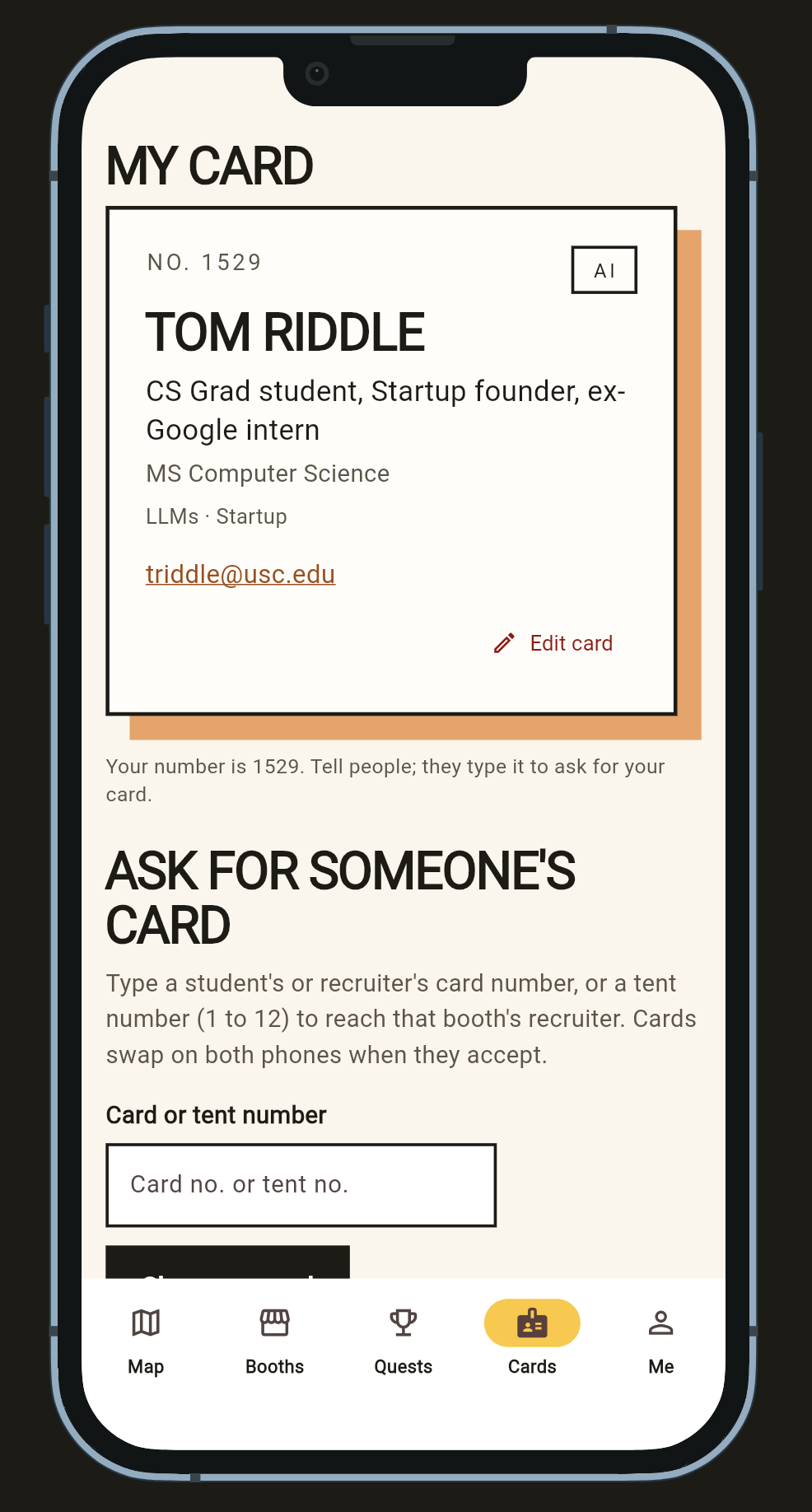
- Stopping fake conversations. Booth QR codes can be photographed and shared, so only the recruiter's device can confirm a conversation, and students' codes change every 30 seconds.
- Getting good writing from a small local model. We used a voice profile, facts-only grounding and a strict critic pass to compensate.
Accomplishments that we're proud of
- Pitches that sound like different people, because they come from different people.
- A ranking system we can explain, test and audit, and that tells every student why they're on a list.
- The whole thing runs free, offline-capable, and private, on hardware students already own.
What we learned
[Write 2–3 honest lessons, for example what surprised you about local models, about recruiters' needs, or about how hard "fair" is to define.]
What's next for QueueCue (qq)
- A pilot at a USC career fair with the career center.
- Recruiter feedback on piles and the second-look panel.
- An organizer dashboard that uses live heat maps to open overflow tables before lines hit two hours.
- Other schools: nothing in QueueCue is specific to one campus.
Built With
- dart
- flutter
- ollama
- sqlite
- websockets
- whisper.cpp
