Inspiration
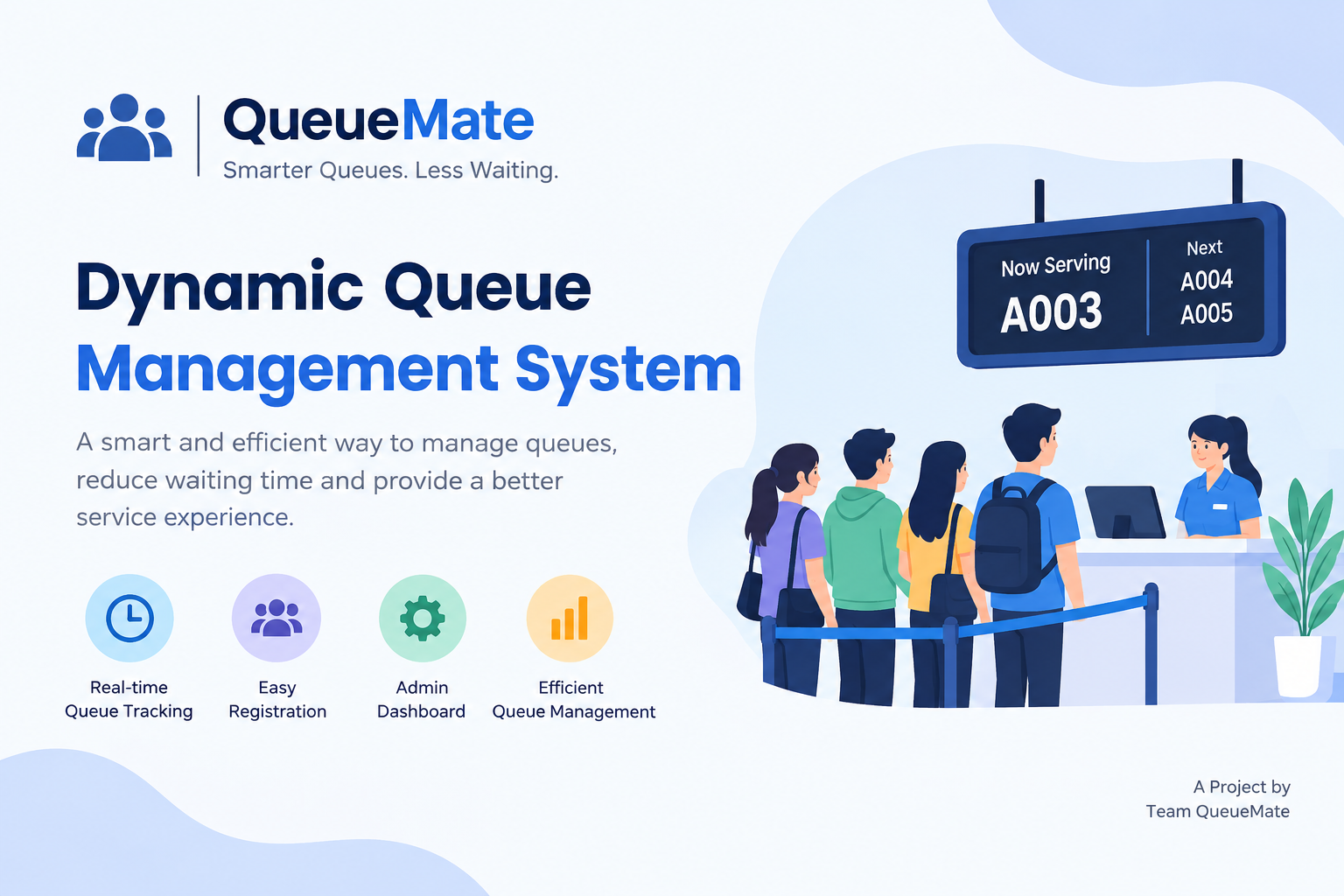
We were inspired by the long waiting times and overcrowding people often experience in hospitals, banks, colleges, government offices, and other service centers. Traditional queue systems can be difficult to manage and often make users wait without knowing their exact position. We wanted to create a smarter solution that makes queue management faster, transparent, and more convenient.
What it does
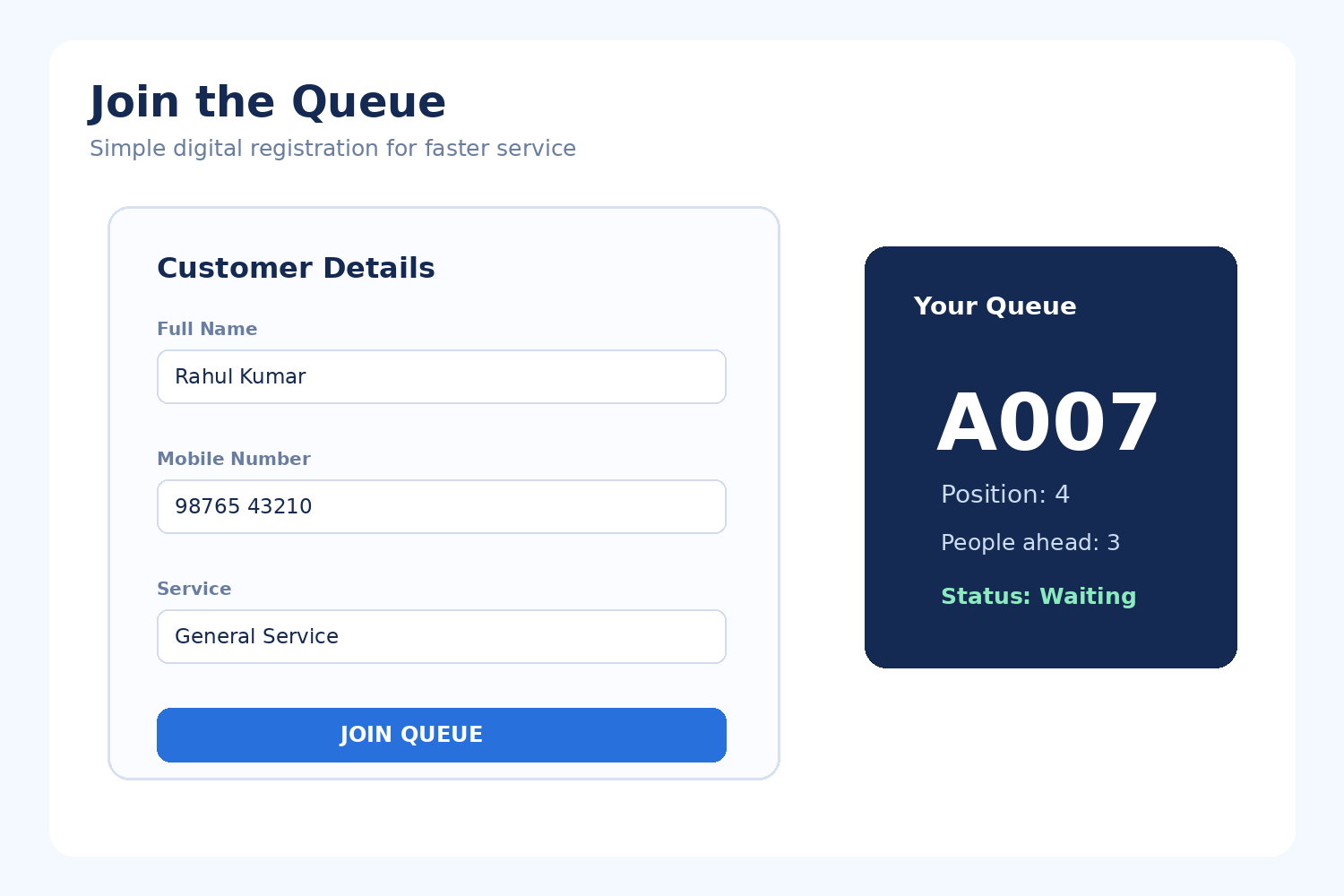
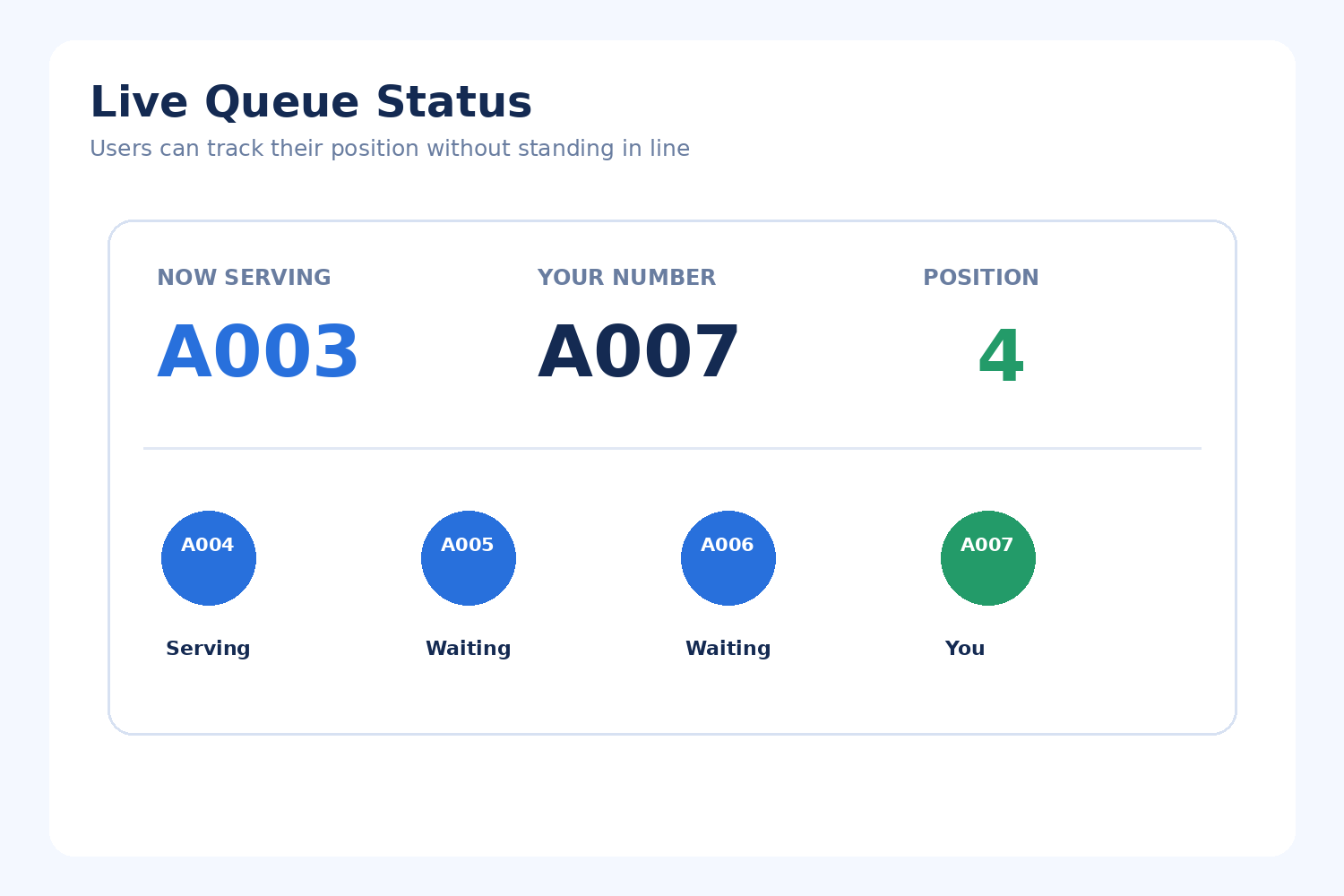
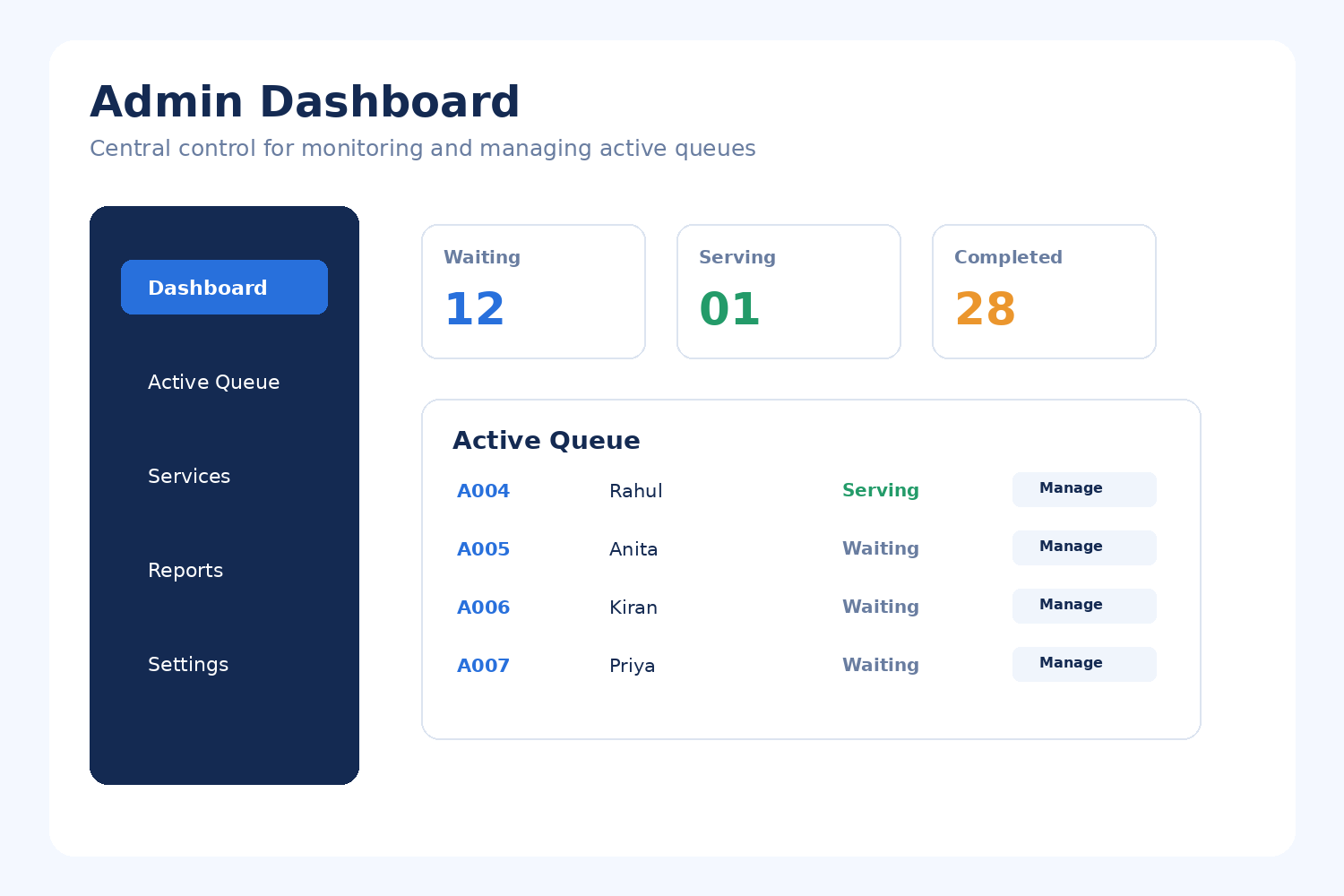
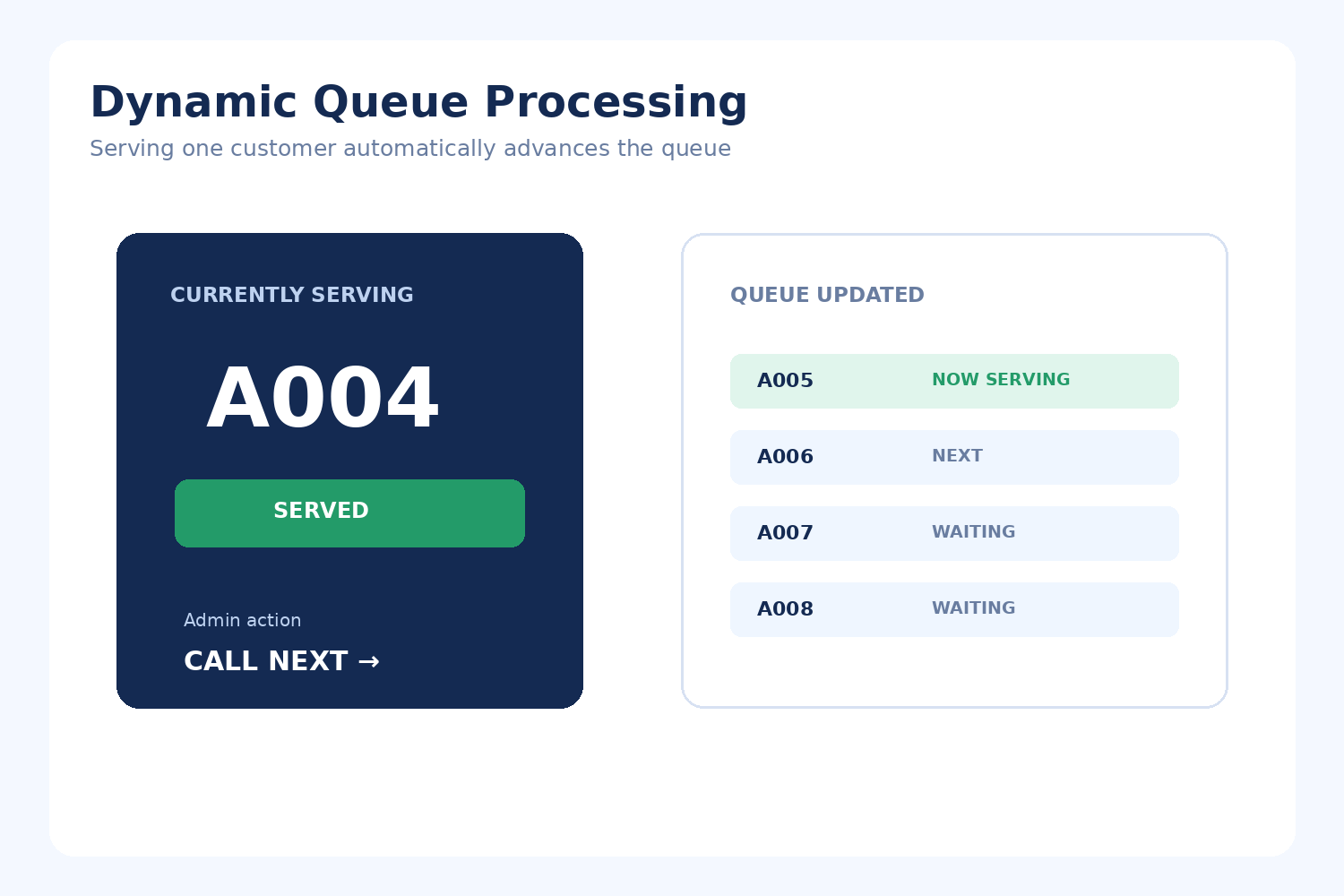
Our Dynamic Queue Management System allows users to join a queue digitally and track their queue position in real time. The system helps administrators manage users, call the next person, monitor the queue, and reduce unnecessary waiting and crowding.
Key features include:
- Digital queue registration
- Real-time queue position tracking
- Automatic queue number generation
- Admin dashboard for queue management
- Calling the next customer/user
- Queue status updates
- Simple and user-friendly interface
How we built it
We designed the system as a web-based application with separate user and administrator functionalities. The frontend provides an easy interface for joining and tracking queues, while the admin side provides controls for managing the queue.
We implemented the queue logic so that users are assigned numbers dynamically and their status changes as the administrator processes the queue. We focused on making the system simple, responsive, and easy to use.
Challenges we ran into
One of our main challenges was designing a queue system that could update the user's position correctly whenever a person was served, skipped, or removed from the queue. We also had to make the user and admin workflows simple enough for first-time users.
Another challenge was maintaining consistent queue states and ensuring that the interface clearly communicates the current queue status.
Accomplishments that we're proud of
We are proud of building a functional prototype that demonstrates how a traditional physical queue can be converted into a digital and dynamic system. The project provides a clear user experience while giving administrators better control over queue operations.
We also successfully designed the system with practical real-world use cases such as hospitals, banks, colleges, government offices, and service centers in mind.
What we learned
Through this project, we learned how to convert a real-world problem into a software solution, design user and admin workflows, implement dynamic queue logic, and improve the usability of a web application.
We also learned the importance of testing different queue scenarios and handling edge cases such as empty queues, skipped users, and multiple users joining at the same time.
What's next for Queue System Management
In the future, we plan to enhance the system with SMS and email notifications, QR-based queue registration, estimated waiting-time prediction, multiple service counters, analytics dashboards, and mobile support.
We also want to explore intelligent queue optimization using real-time data so that service centers can reduce waiting times and manage crowds more efficiently.


Log in or sign up for Devpost to join the conversation.