-
-
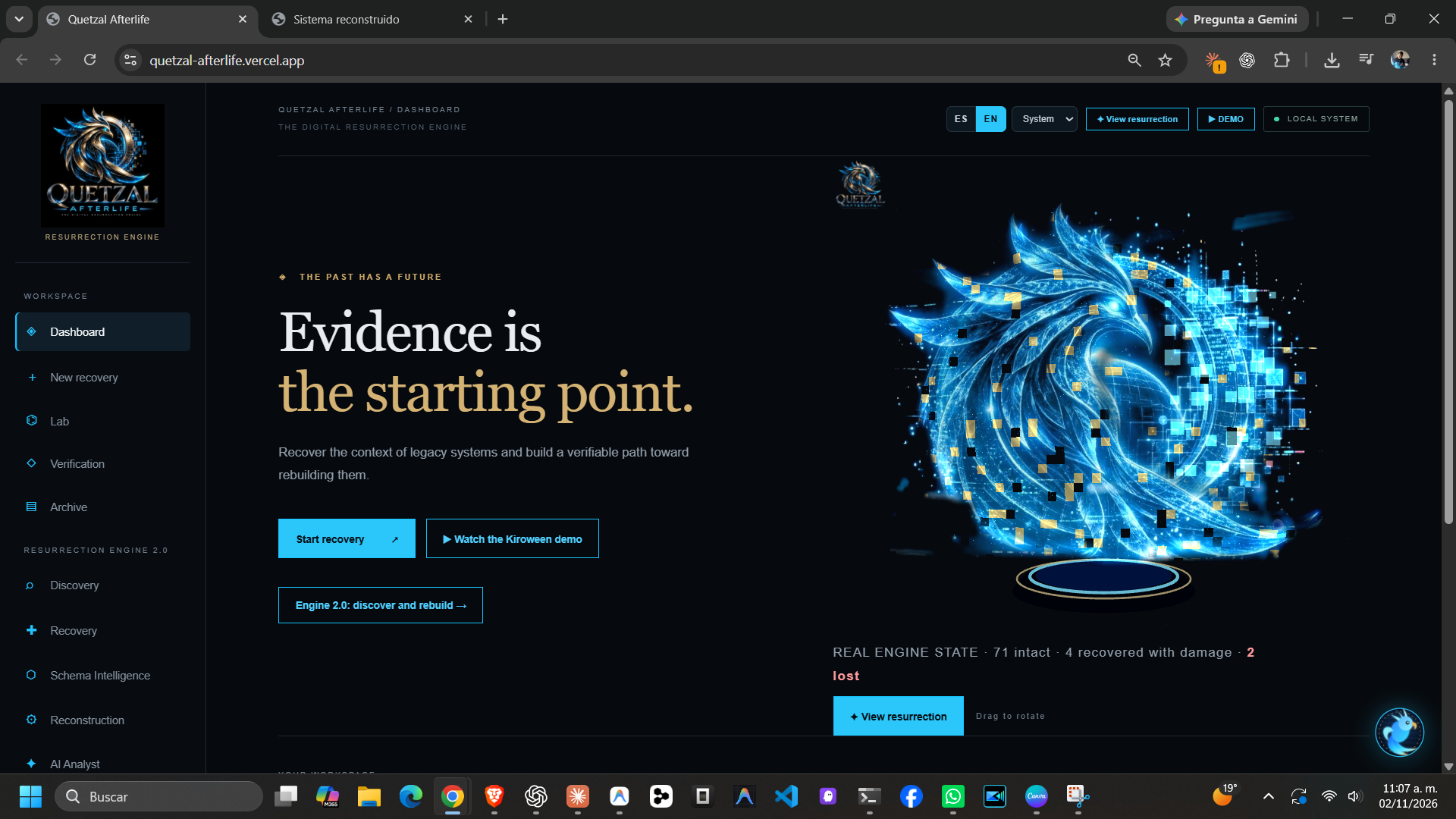
DASHBOARD
-
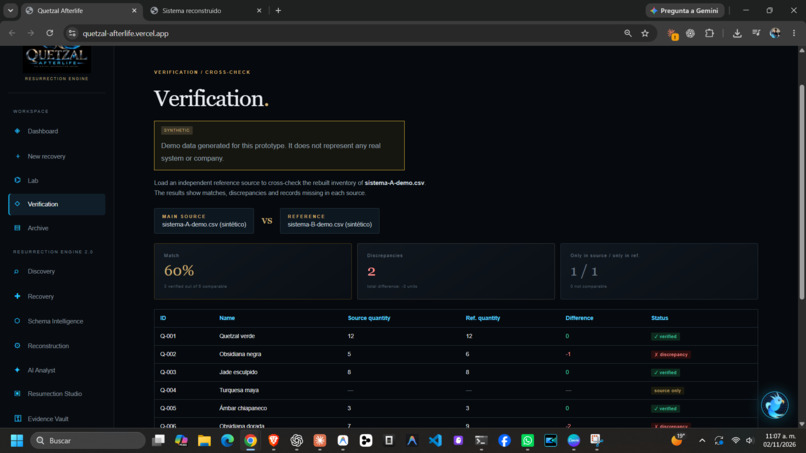
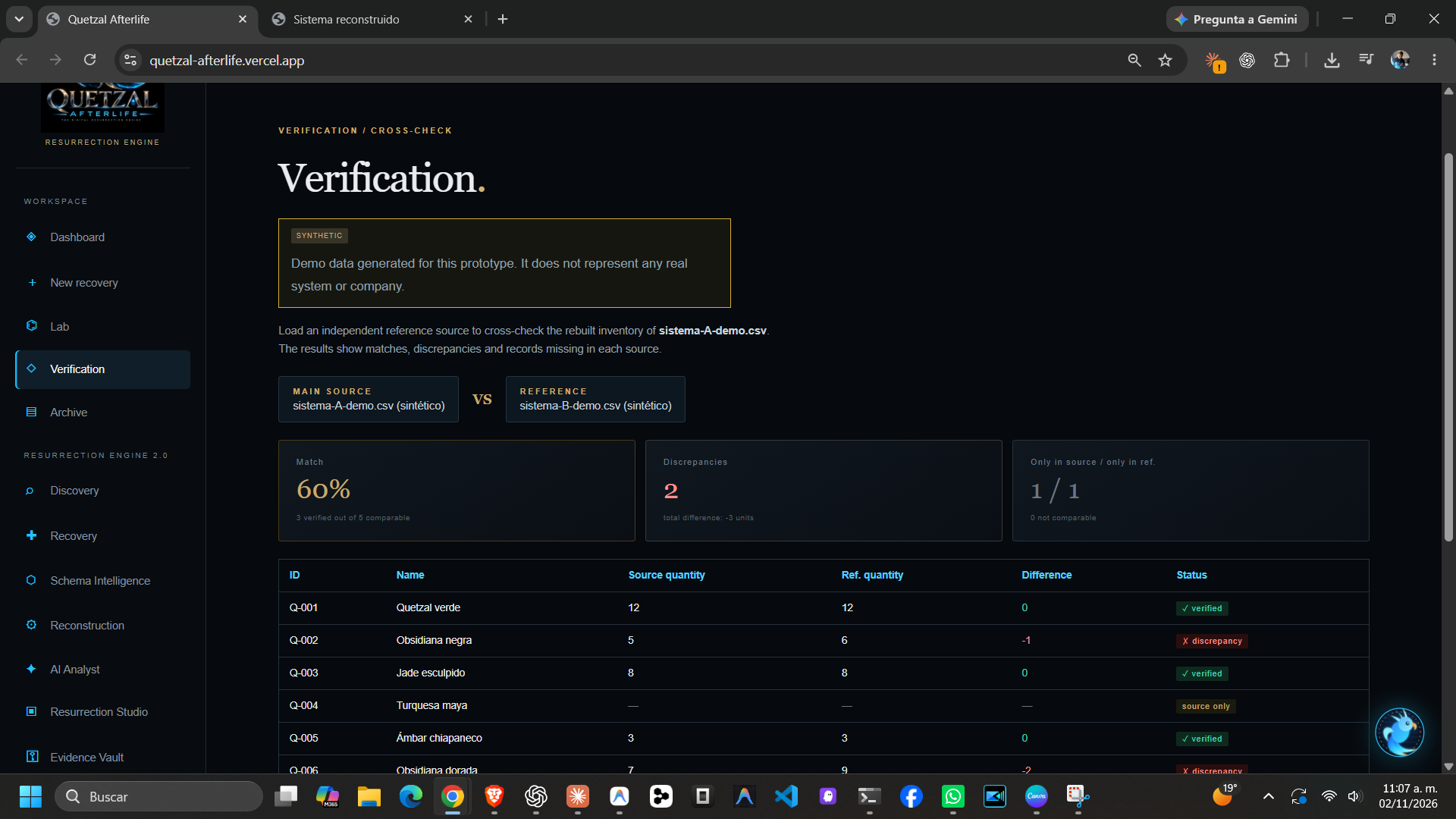
VERIFICATION
-
-
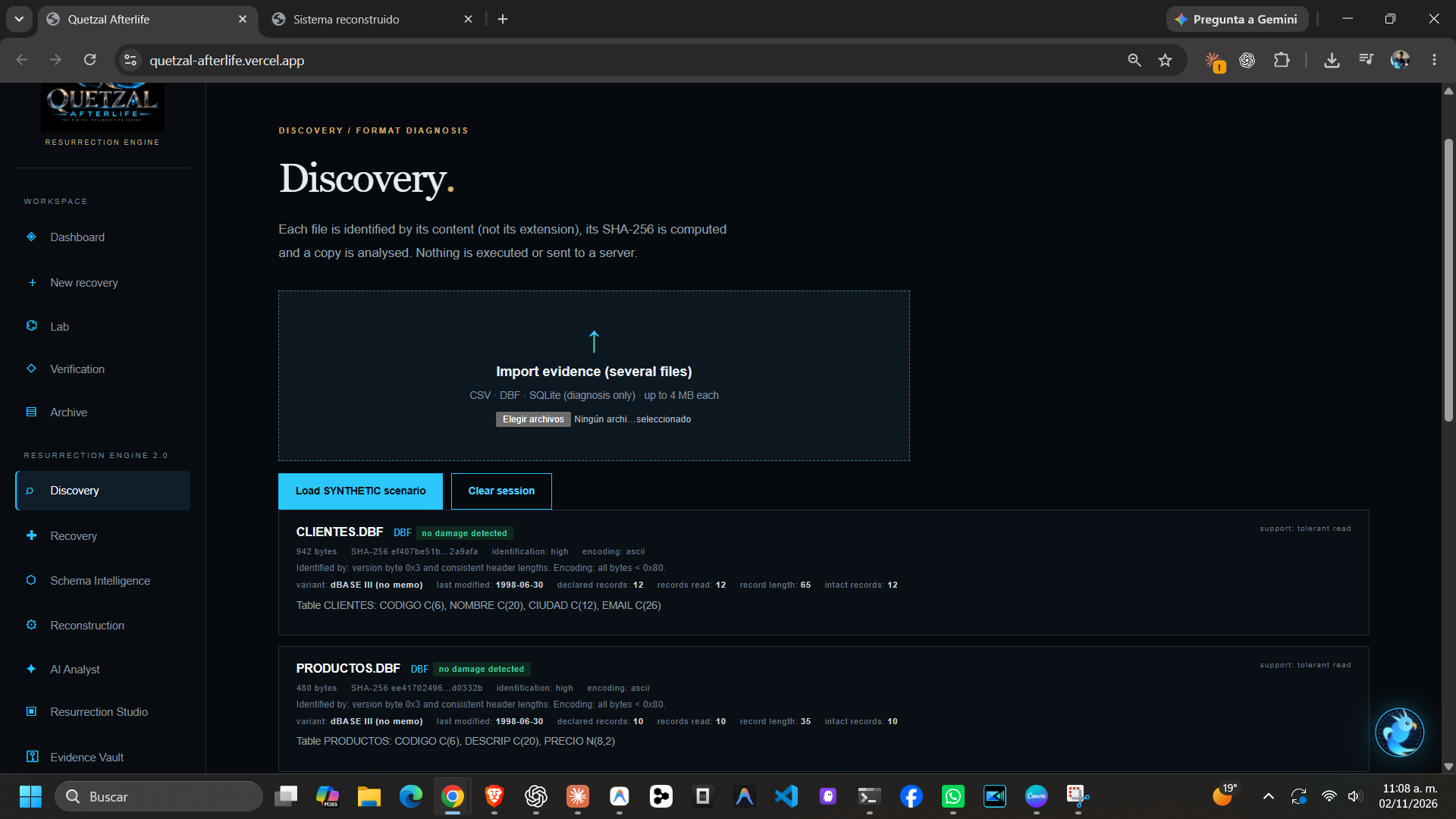
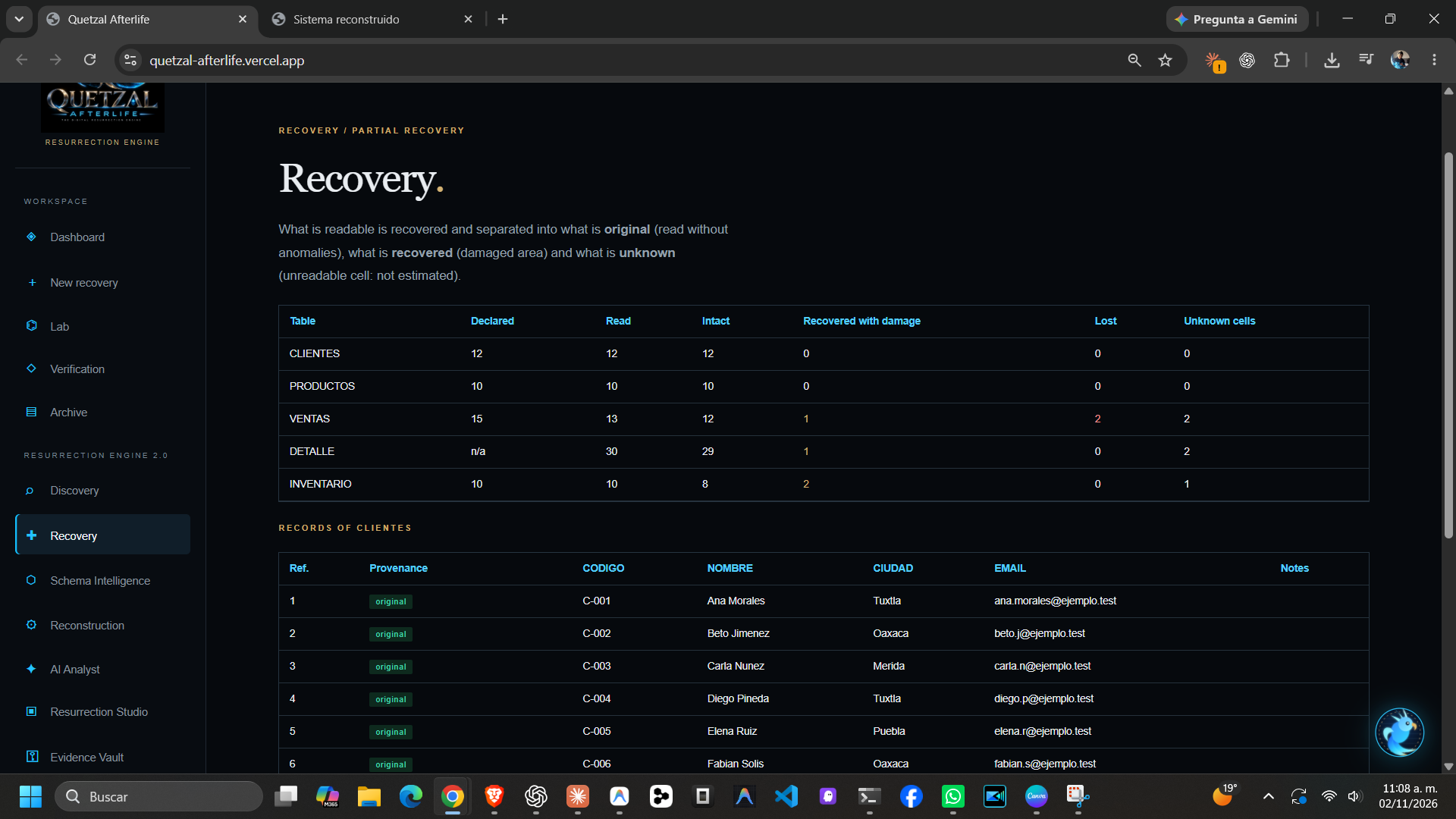
DISCOVERY
-
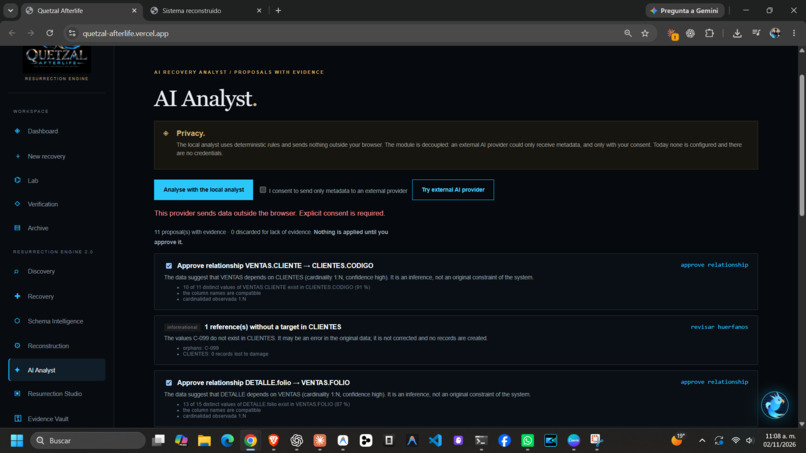
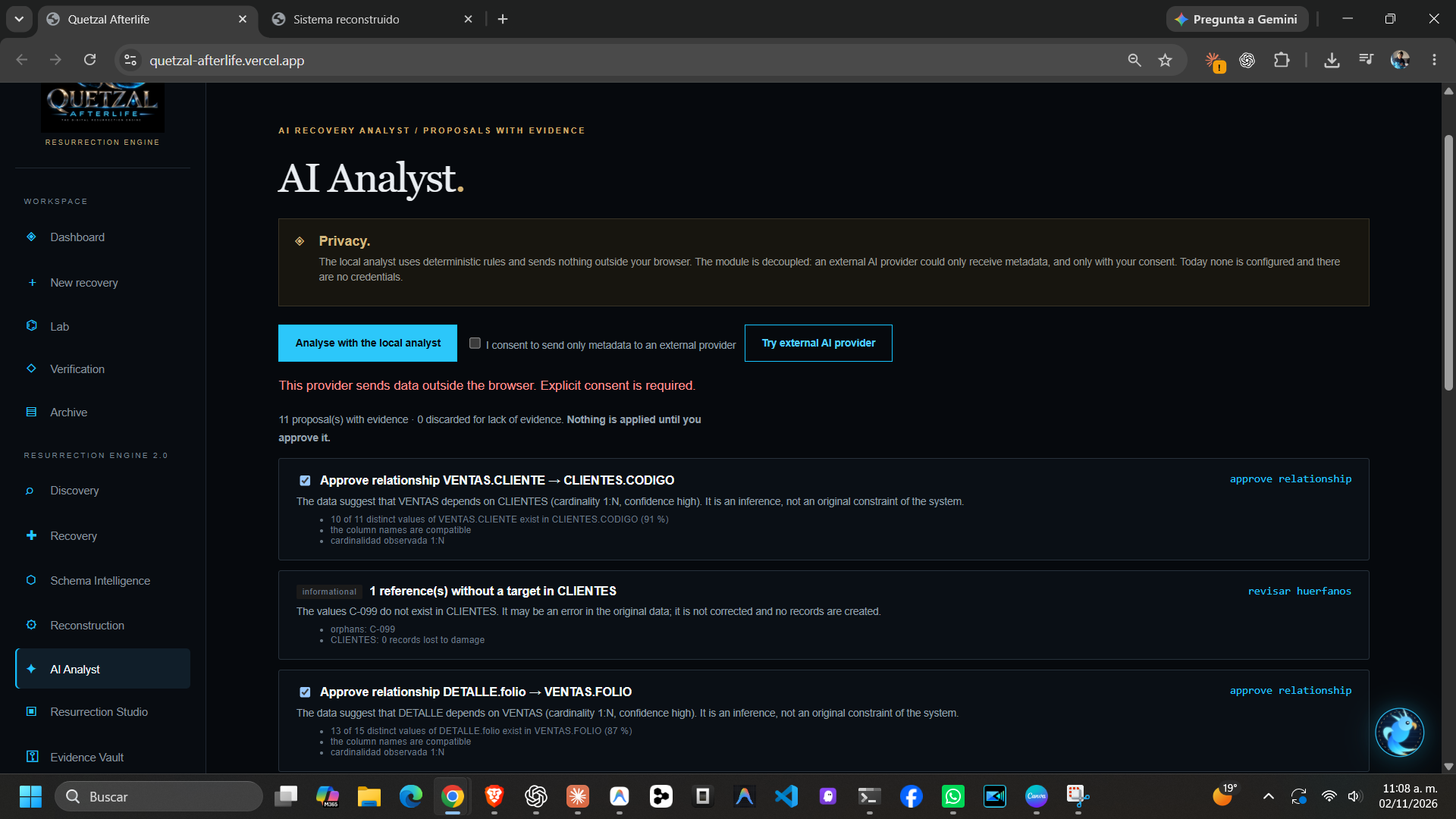
IA ANALYSE
-
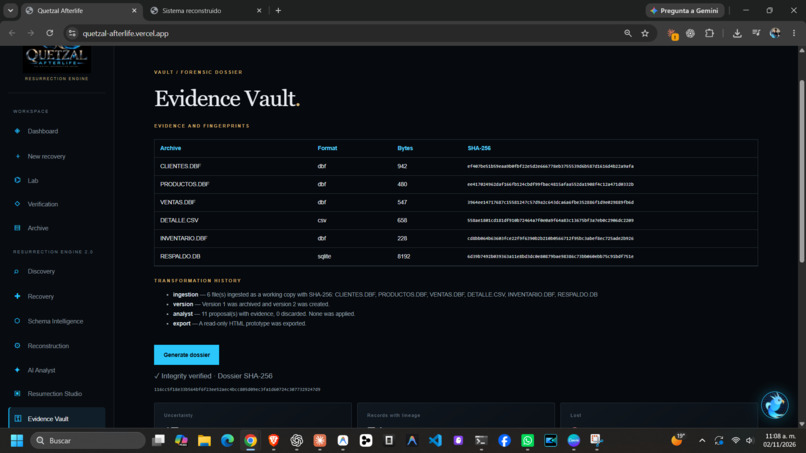
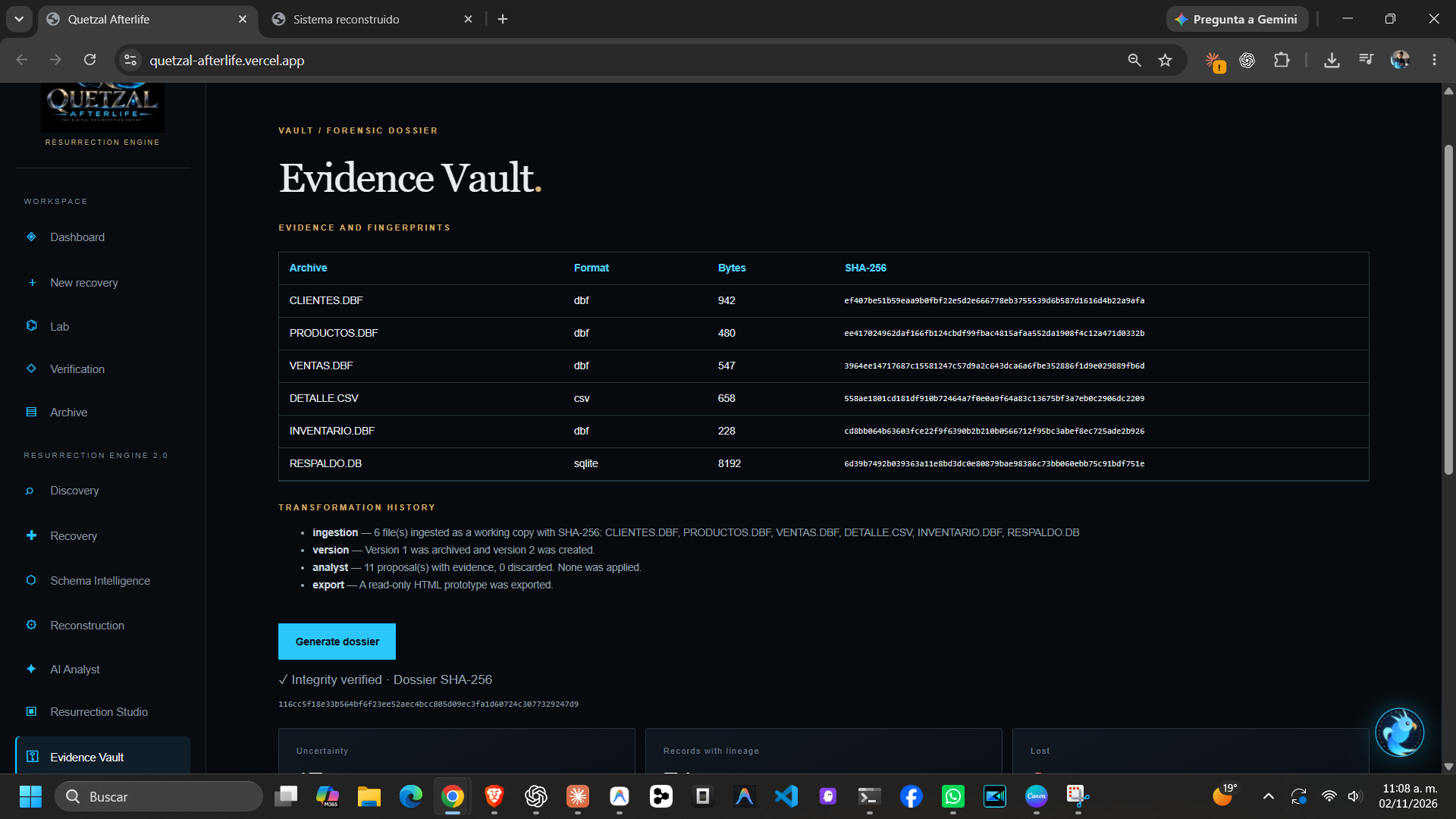
Evidence Vault
-
-
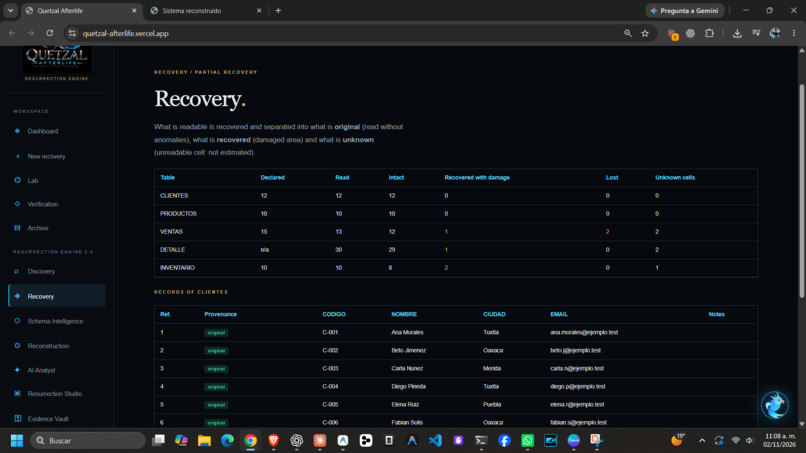
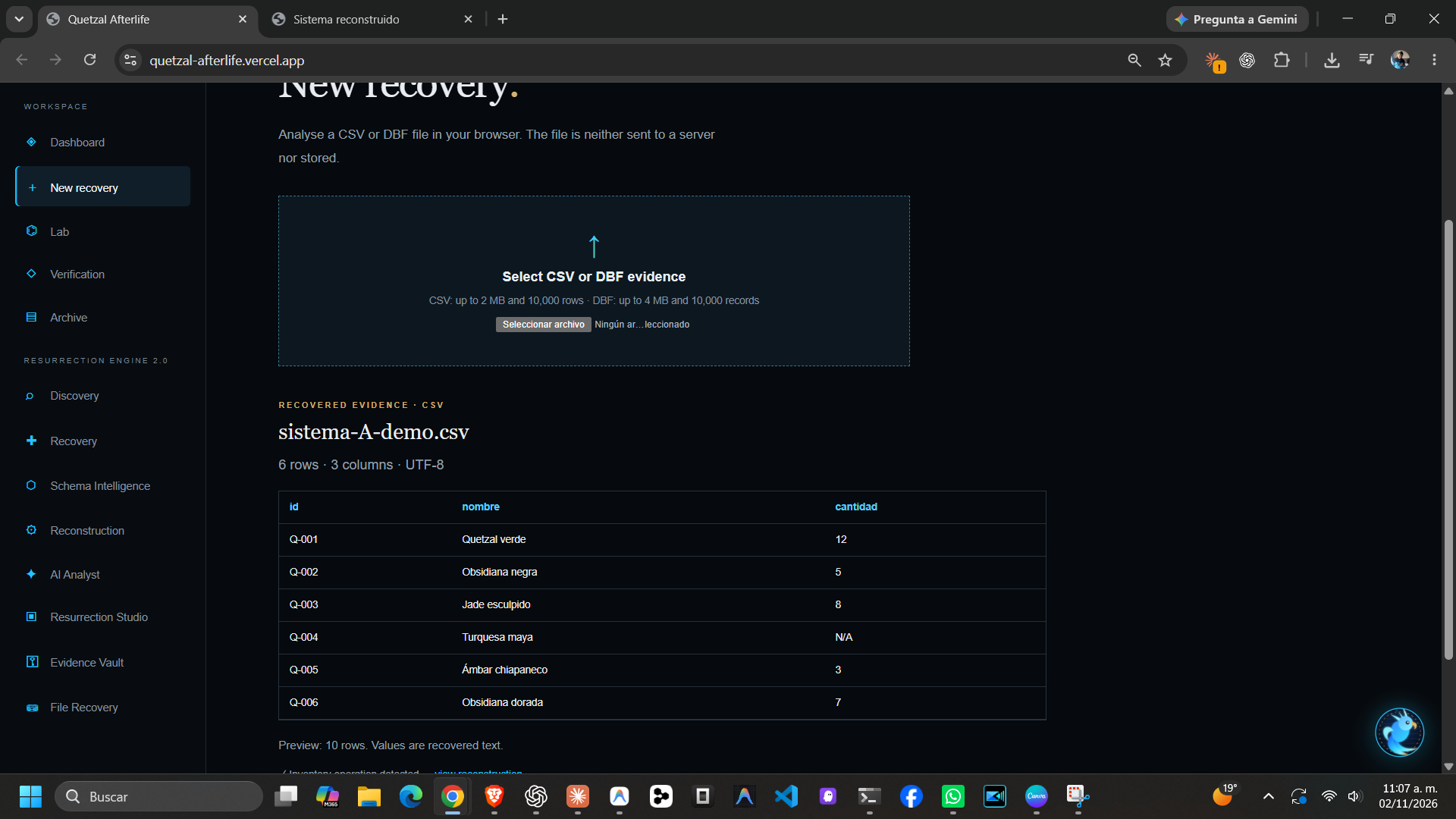
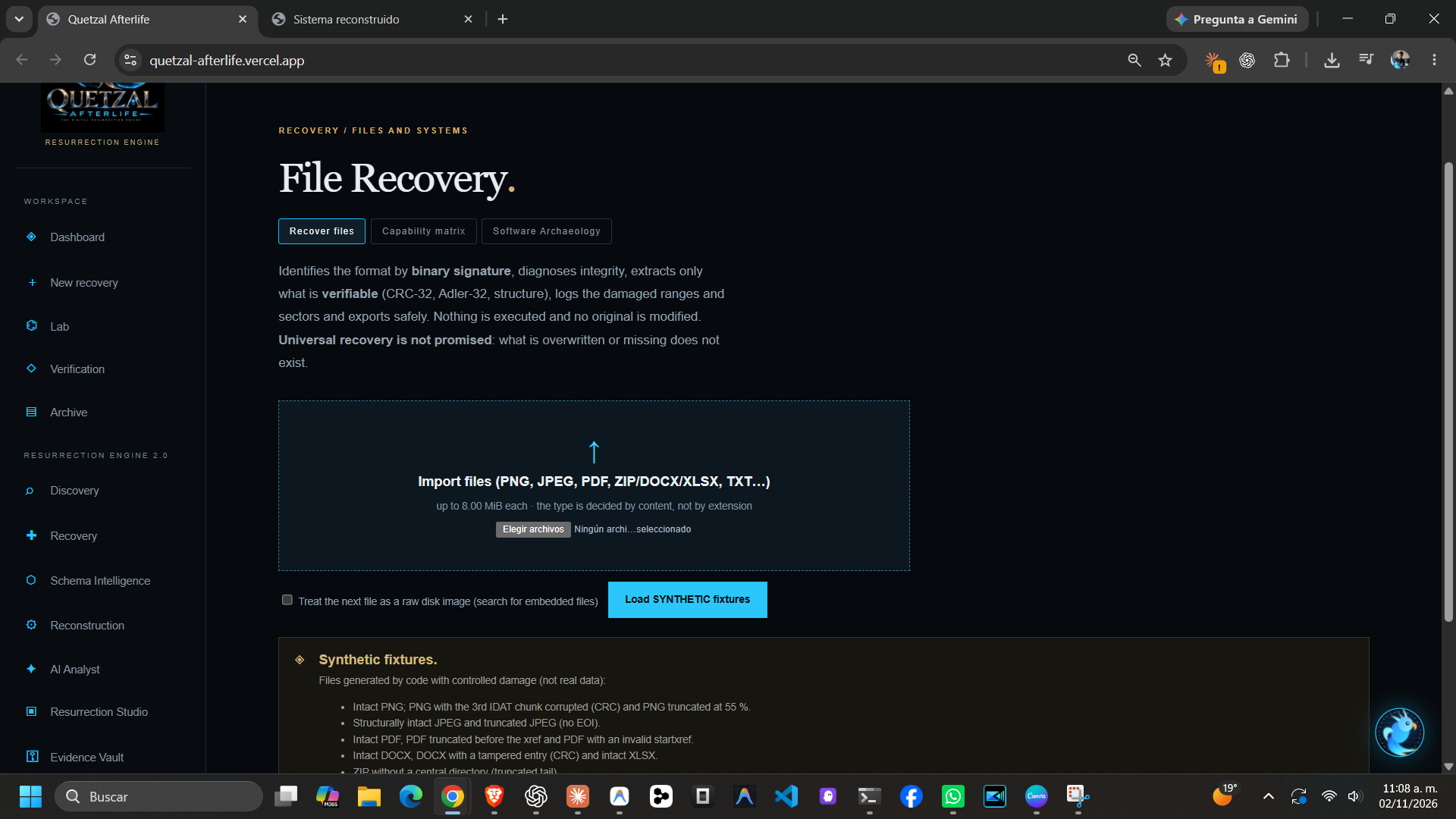
NEW RECOVERY
-
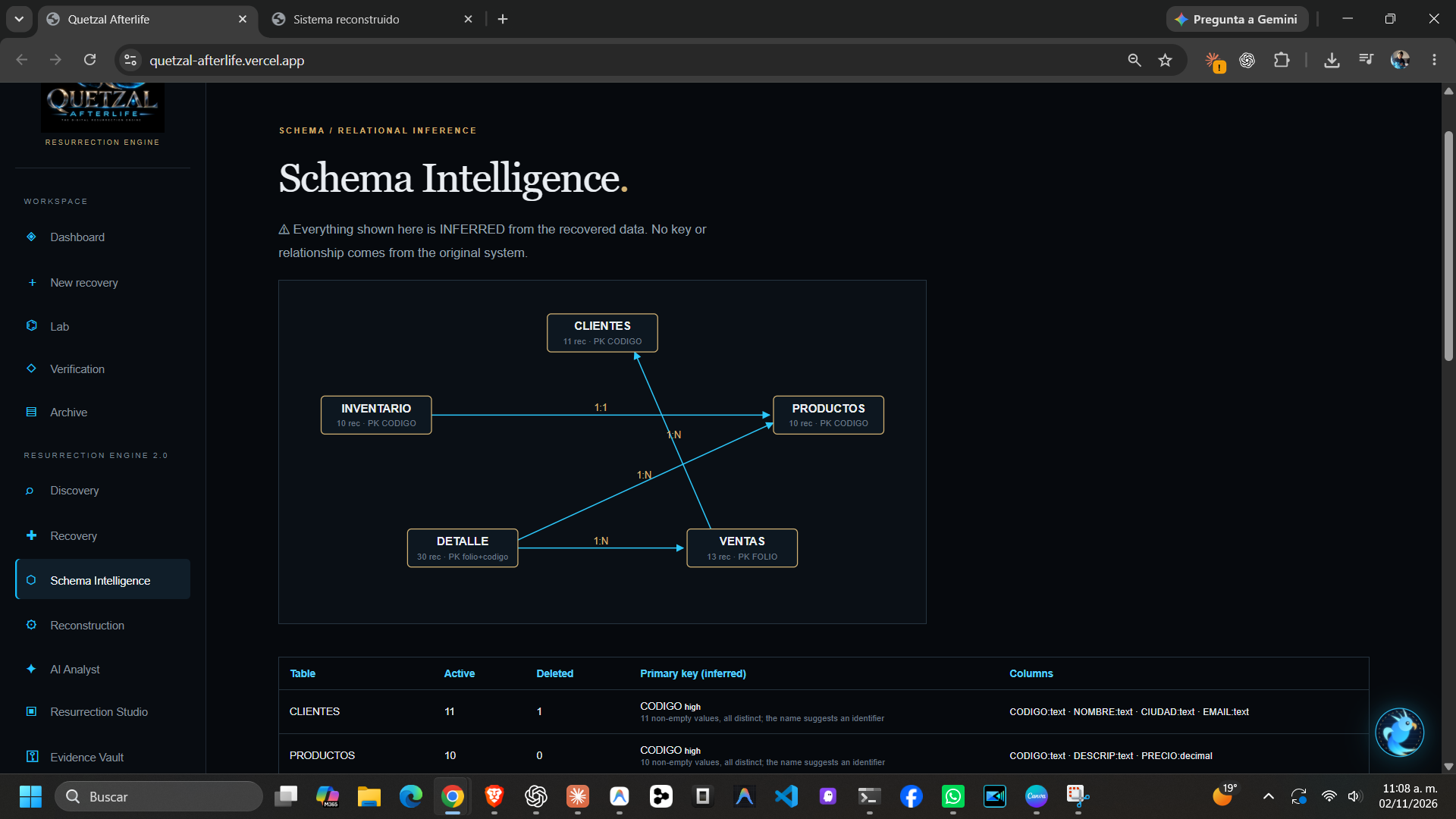
Schema Intelligence.
-
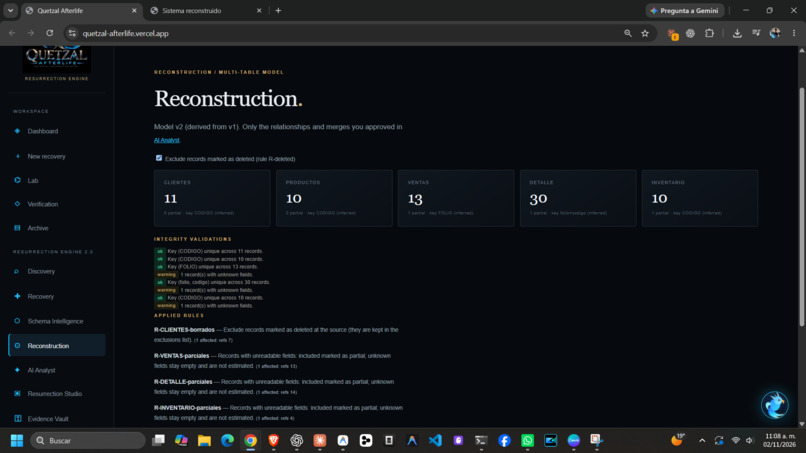
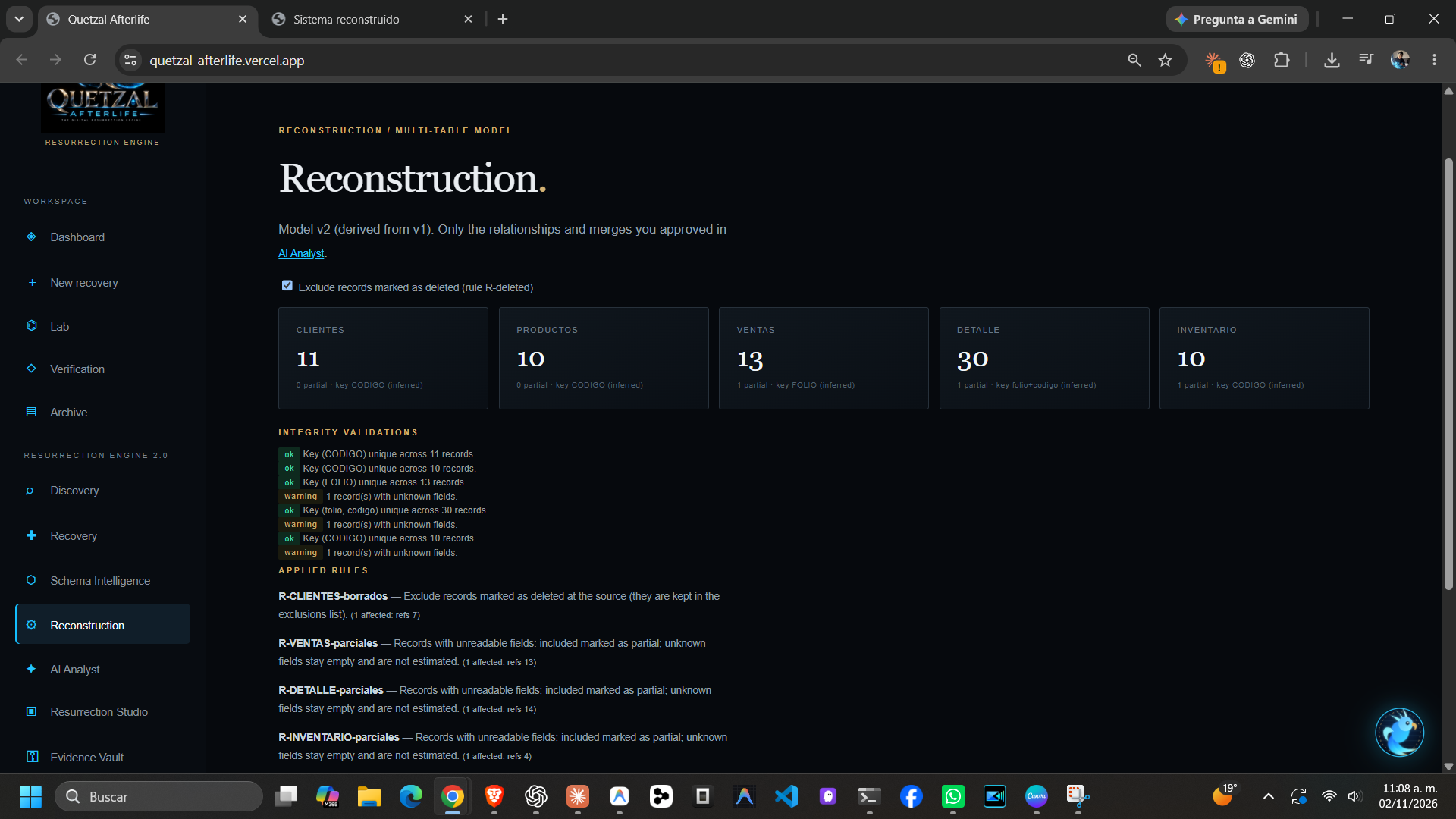
Reconstruction
-
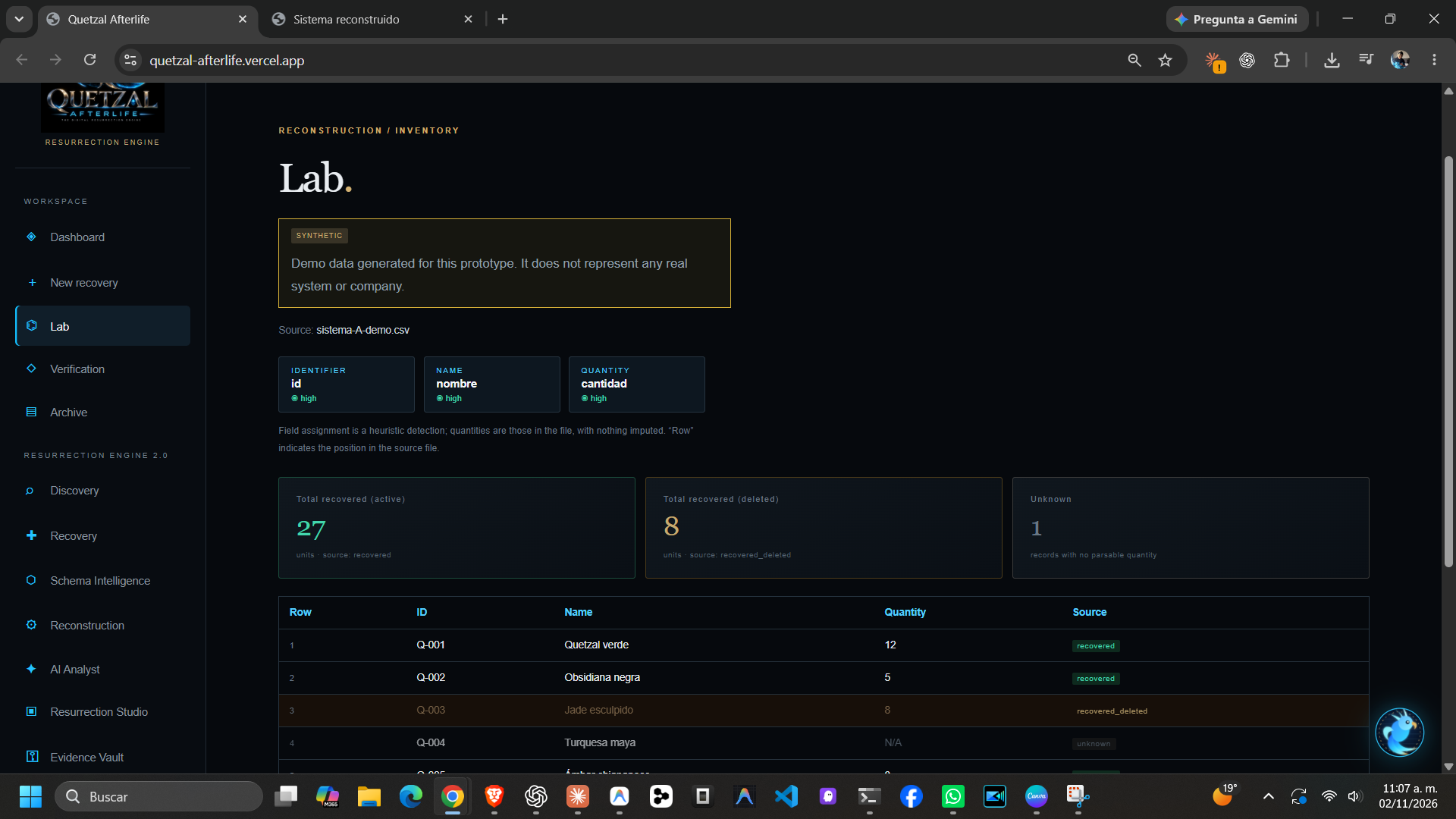
LAB
-
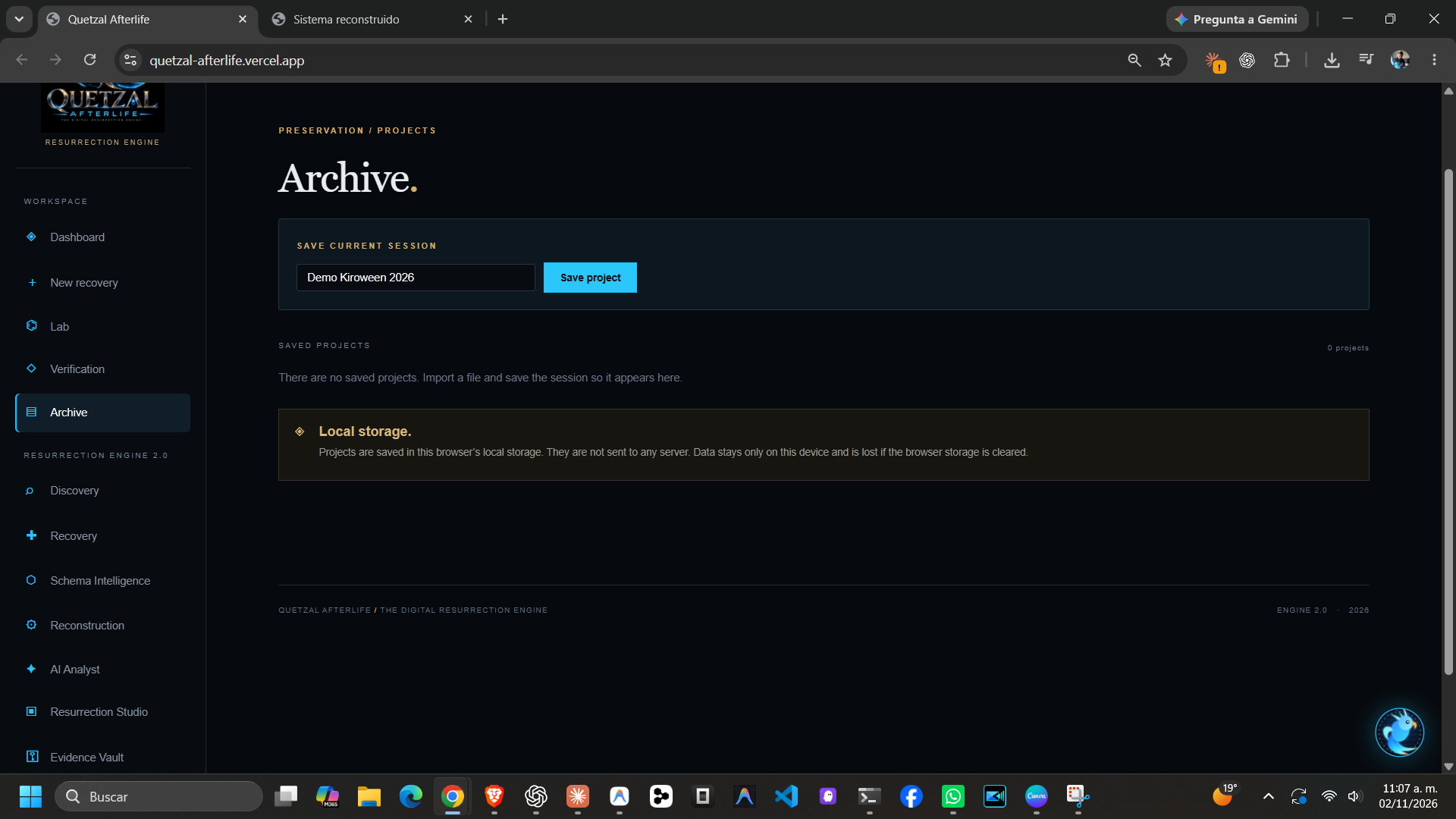
ARCHIVE
-
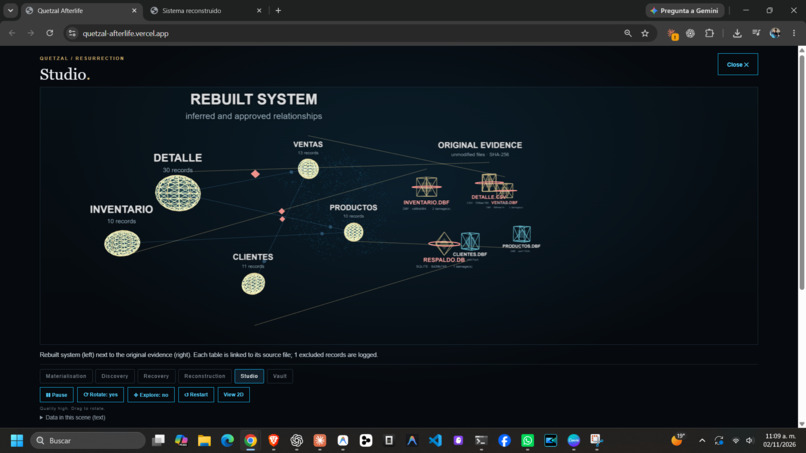
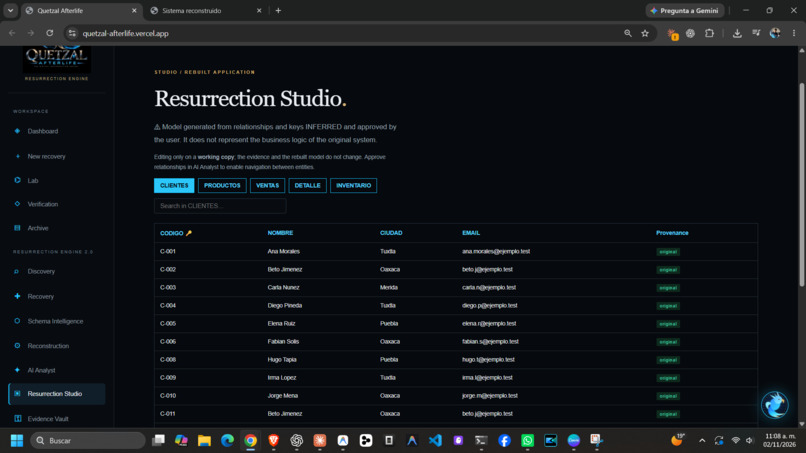
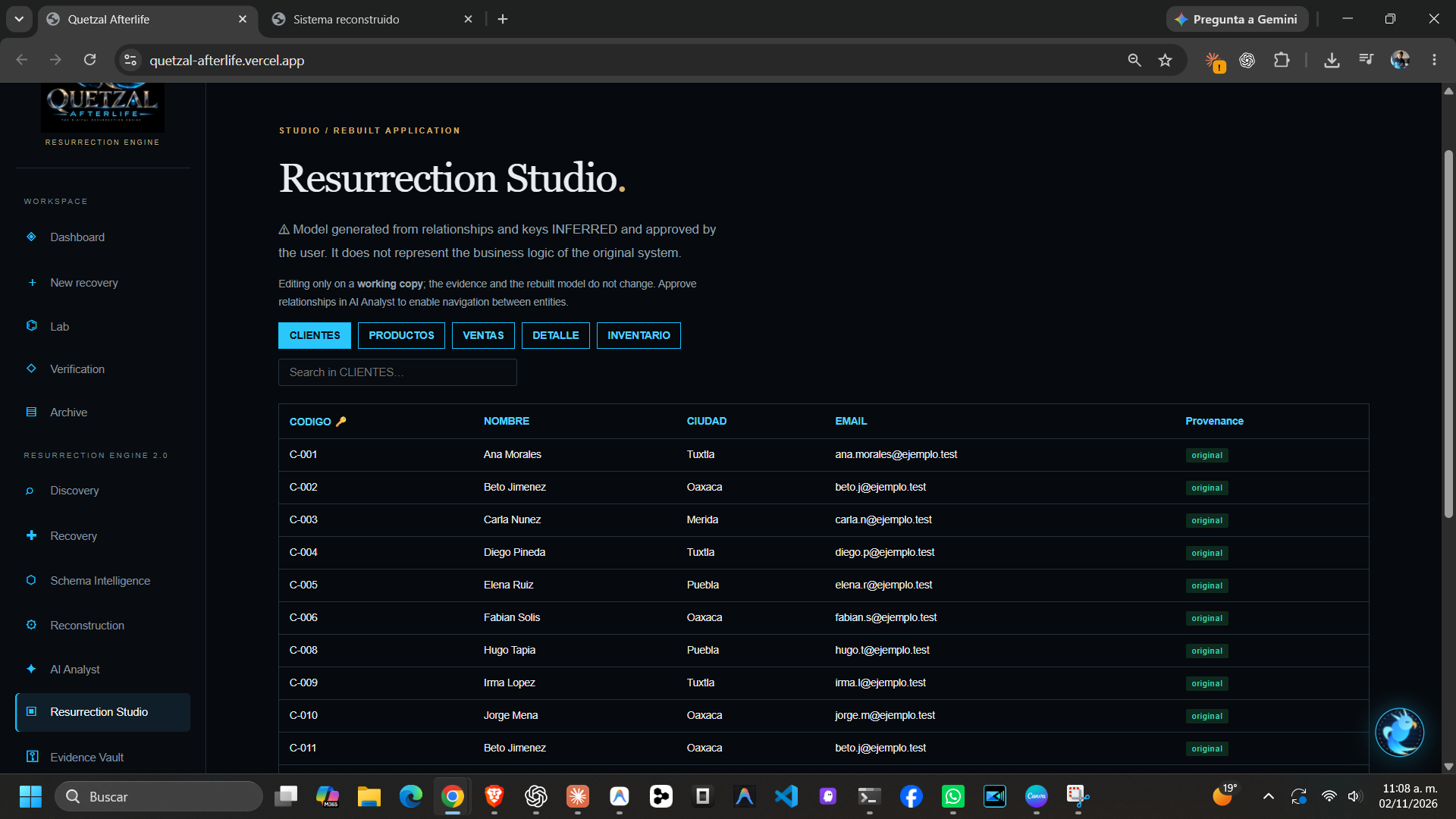
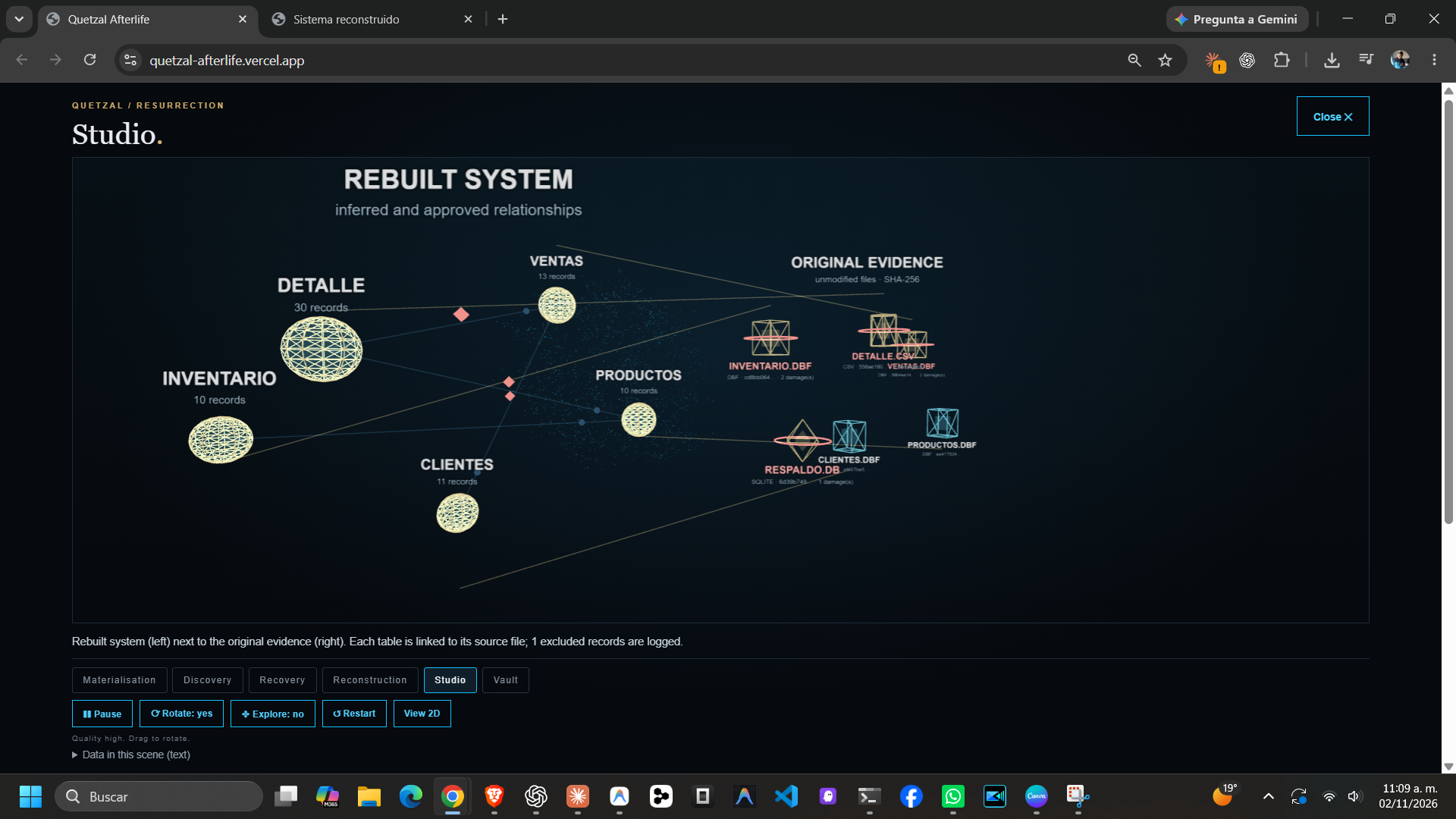
Resurrection Studio.
-
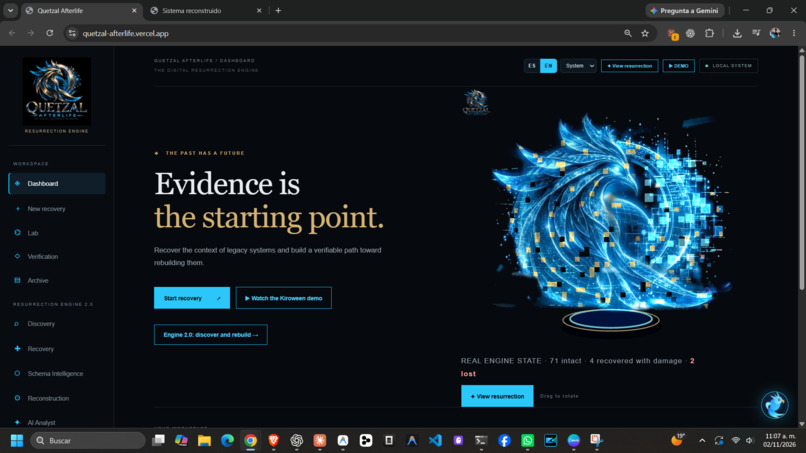
QUETZAL
Inspiration
What it # QUETZAL AFTERLIFE — The Digital Resurrection Engine
Inspiration
Every year, valuable digital systems become obsolete. Legacy business applications, forgotten databases, discontinued software, and abandoned websites contain years of knowledge that can become inaccessible as technology evolves.
I created QUETZAL AFTERLIFE around a simple question: What if artificial intelligence could help bring forgotten technology back to life?
My goal is to preserve digital knowledge, recover useful functionality, and transform legacy systems into accessible, modern applications.
What it does
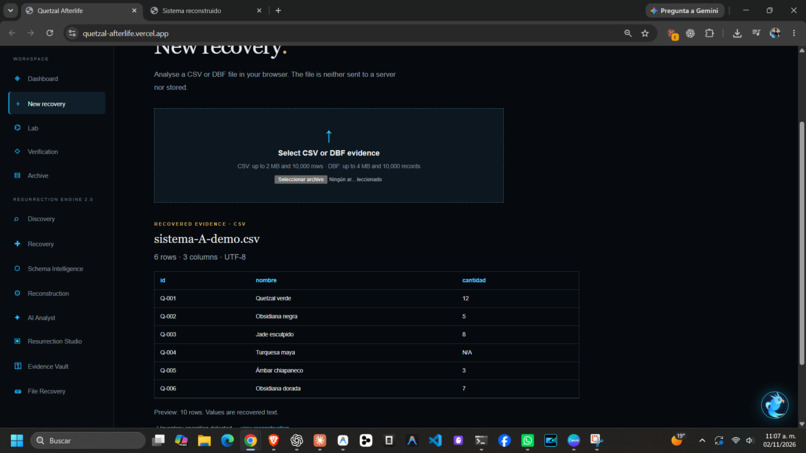
QUETZAL AFTERLIFE is an AI-powered digital resurrection platform designed to analyze, reconstruct, validate, and preserve obsolete digital systems.
The platform is being developed to support five core stages:
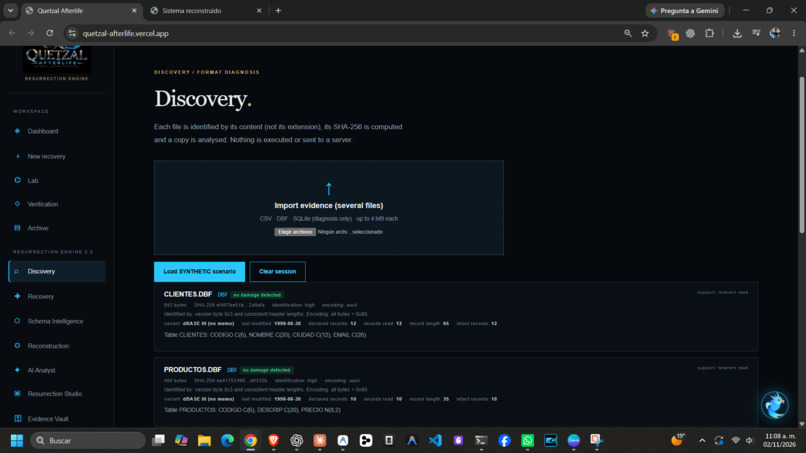
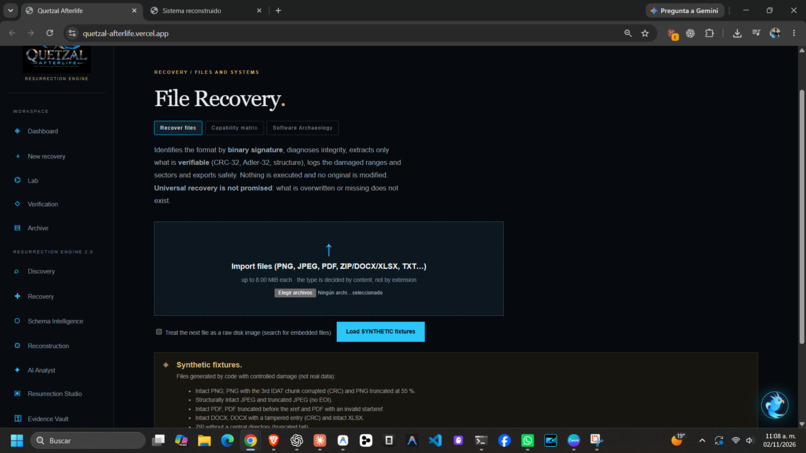
- Digital Archaeology: Examine legacy files, databases, manuals, and surviving documentation.
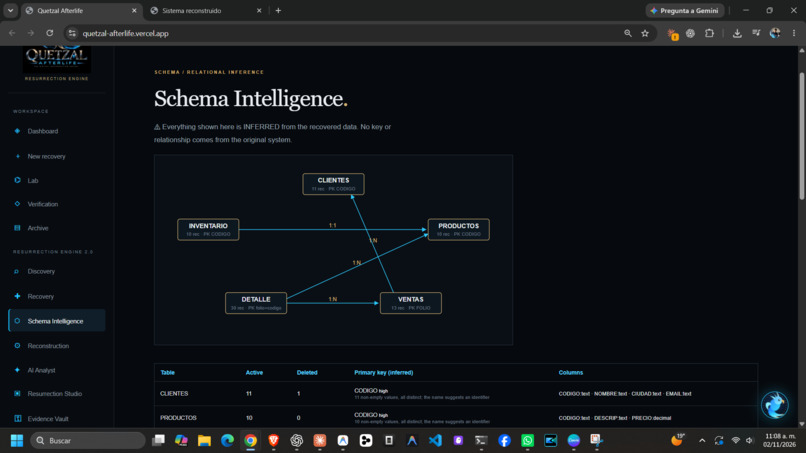
- Intelligent Reconstruction: Identify data structures, relationships, and potential business rules.
- Digital Resurrection: Rebuild recoverable functionality as modern applications.
- Verification: Compare reconstructed behavior against available evidence and automated test cases.
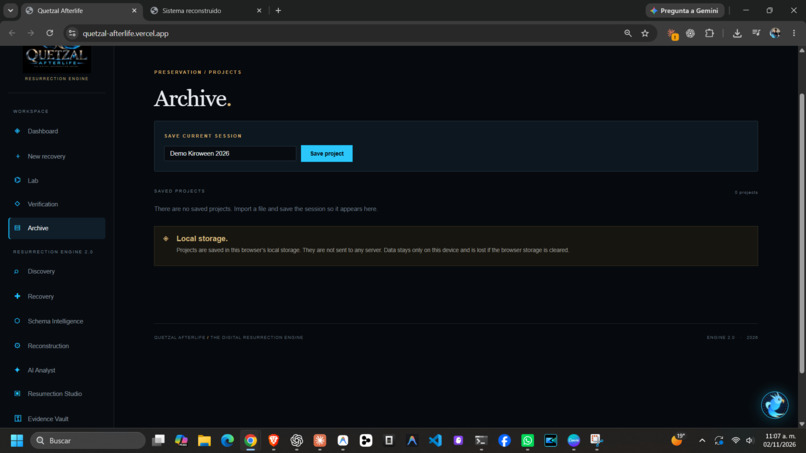
- Preservation: Export recovered data, technical documentation, and verification reports.
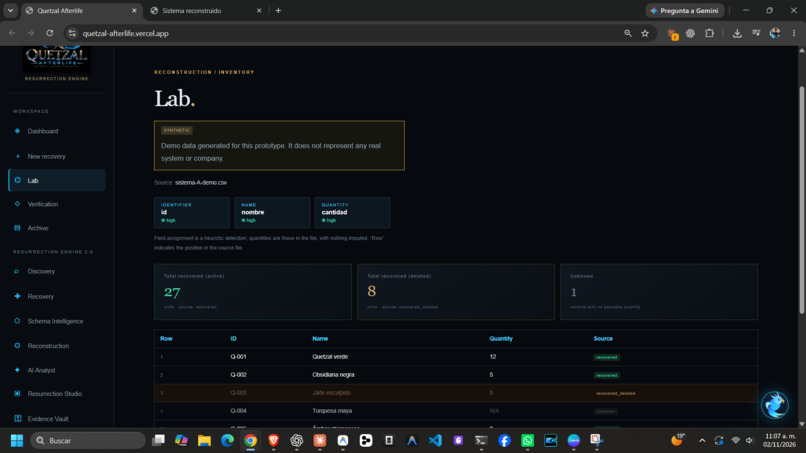
The initial demonstration focuses on recovering a legacy inventory management system from historical data files and documentation.
Future extensions may support abandoned websites, obsolete document formats, and other legacy technologies.
How I'm building it
I am developing QUETZAL AFTERLIFE as a modular platform using Kiro as the AI-assisted development environment.
The planned architecture includes:
- A modern web interface built with Next.js, React, and TypeScript.
- Secure ingestion and analysis of legacy files.
- Data extraction and schema reconstruction.
- AI-assisted identification of historical business logic.
- Generation of modern application components.
- Automated verification and evidence-based recovery reports.
Kiro will support implementation planning, code generation, debugging, testing, and technical documentation.
Challenges
The central challenge is distinguishing genuine recovery from AI-generated assumptions.
Legacy systems frequently lack source code, complete documentation, or reliable examples of their original behavior.
QUETZAL AFTERLIFE is designed to address this through evidence tracking, explicit uncertainty, controlled reconstruction, and automated testing.
Another challenge is safely processing unknown files without executing untrusted software.
What I'm learning
This project is an opportunity to explore the intersection of digital preservation, legacy modernization, reverse engineering, AI-assisted software development, and automated validation.
An important principle guides the project: a reconstructed feature should not be presented as verified unless supporting evidence and tests justify that conclusion.
What's next
My immediate objective is to deliver a working prototype that reconstructs selected functionality from a legacy inventory system and demonstrates measurable verification results.
Longer-term, I envision QUETZAL AFTERLIFE as a practical digital preservation and modernization platform for businesses, educational institutions, and organizations that depend on aging technology.
QUETZAL AFTERLIFE — Because valuable technology deserves a second life.does
How we built it
Challenges we ran into
Accomplishments that we're proud of
What we learned
What's next for QUETZAL AFTERLIFE
Built With
- github
- kiro
- next.js
- node.js
- openai
- postgresql
- python
- react
- tailwind-css
- typescript
- vercel

Log in or sign up for Devpost to join the conversation.