-
-
Questty
-
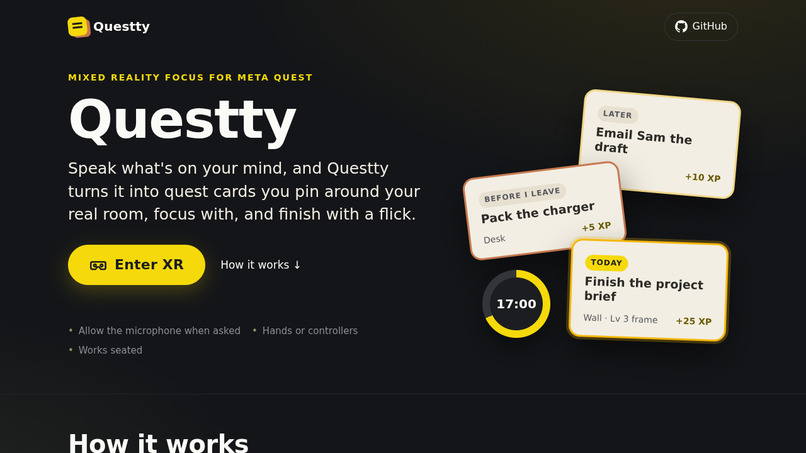
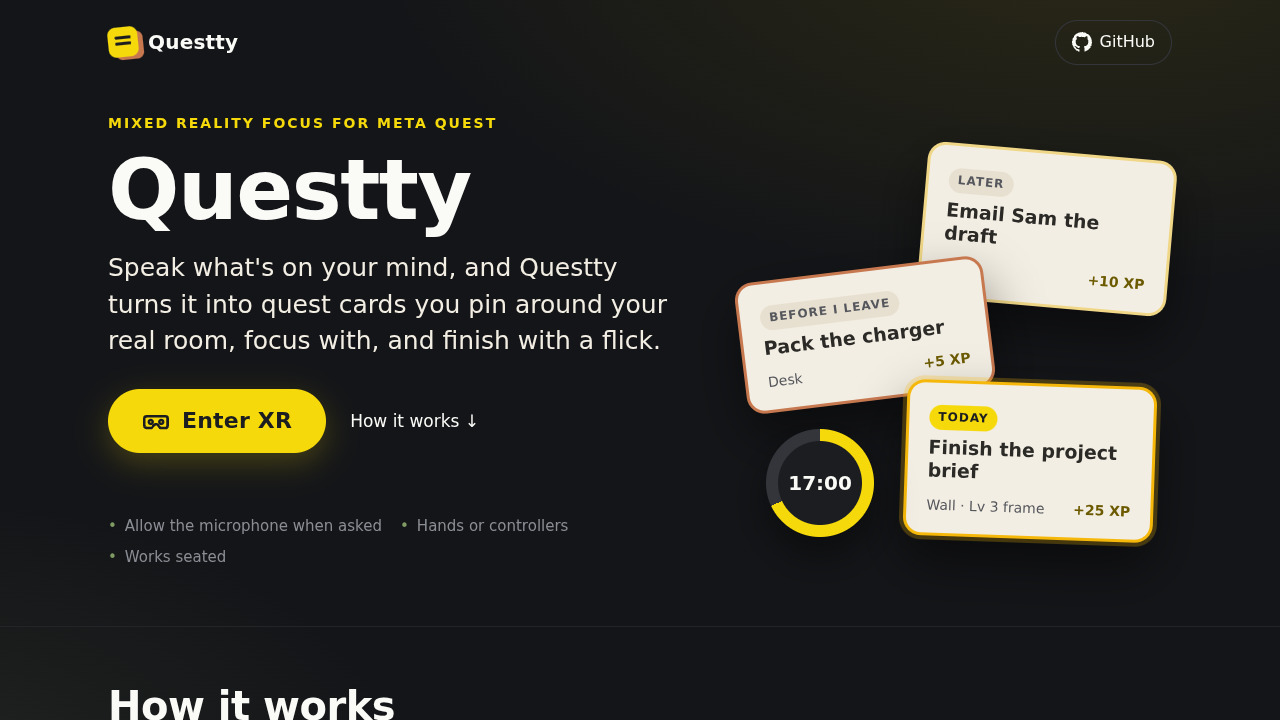
Questty homepage
-
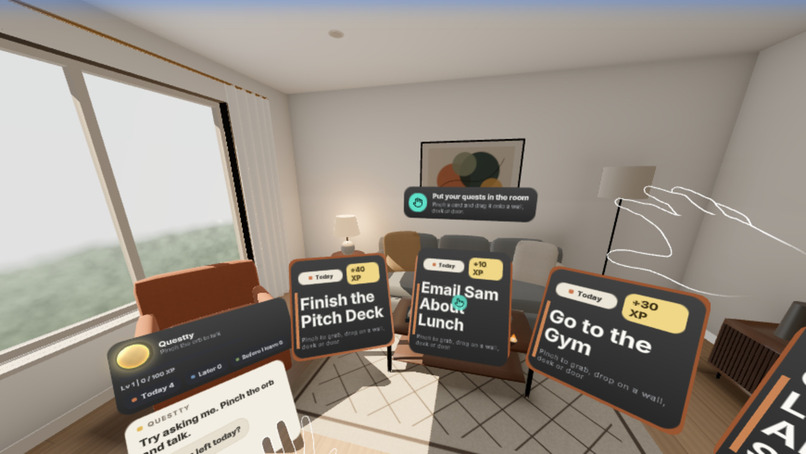
Brain dump cards
-
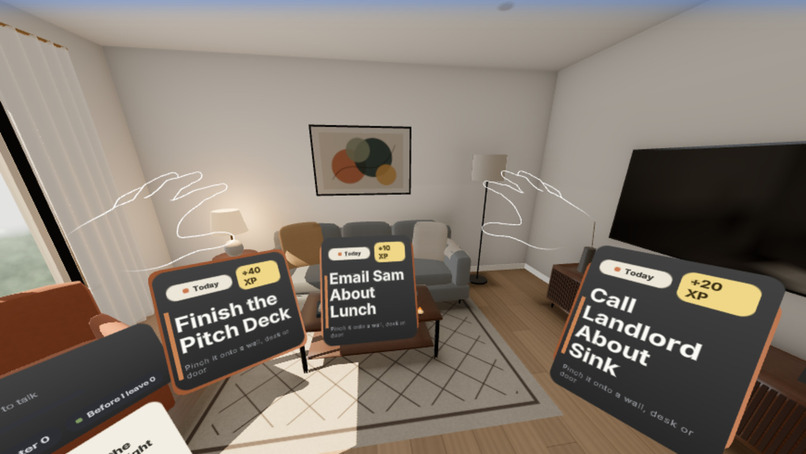
Buddy talk and action
-
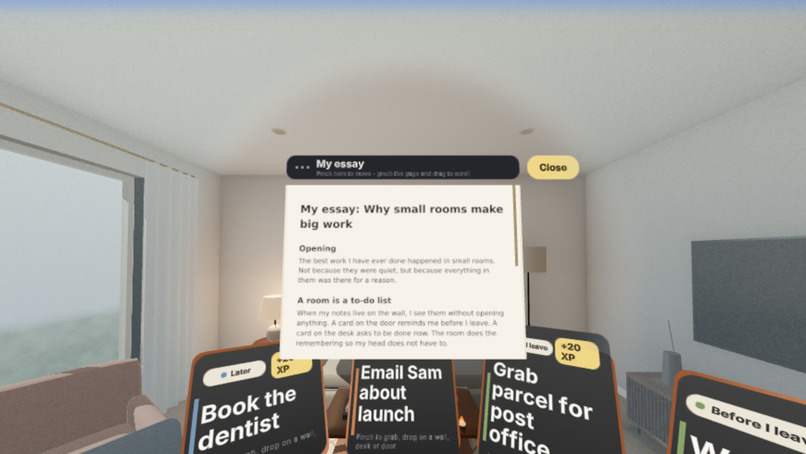
Document viewer
-
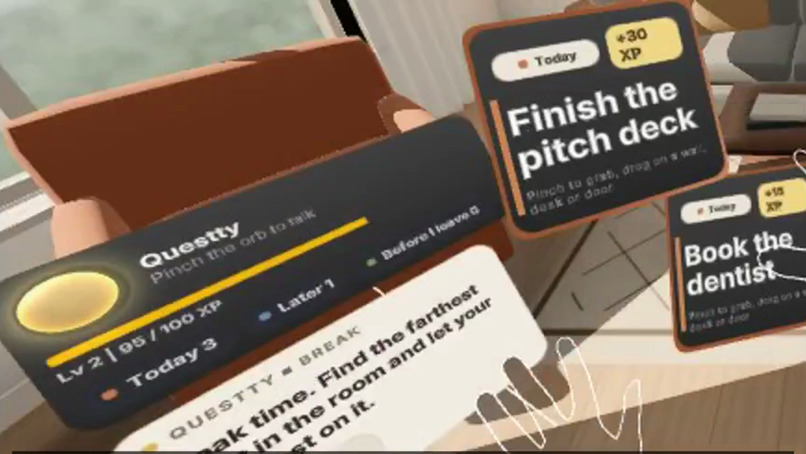
XP bar and AI buddy talk/action mode
-
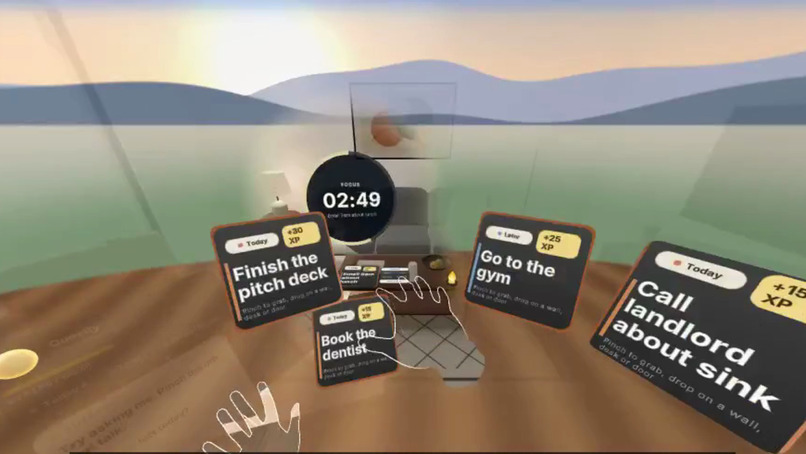
Focus and Calm mode
-
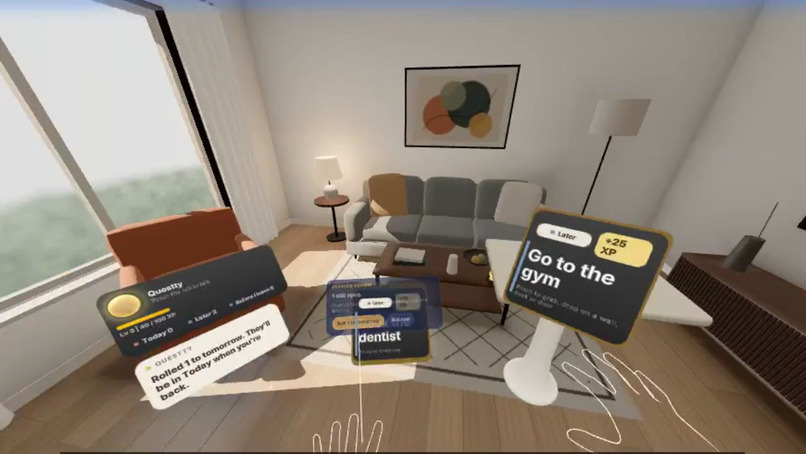
Evening review
-
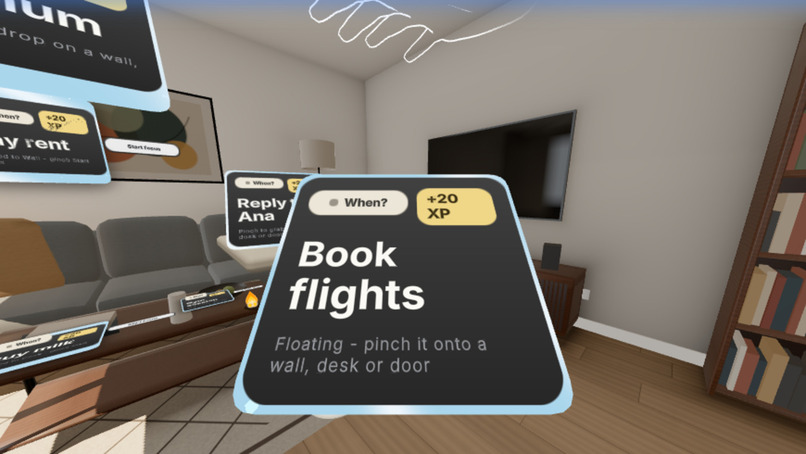
Diamond tier card quest
-
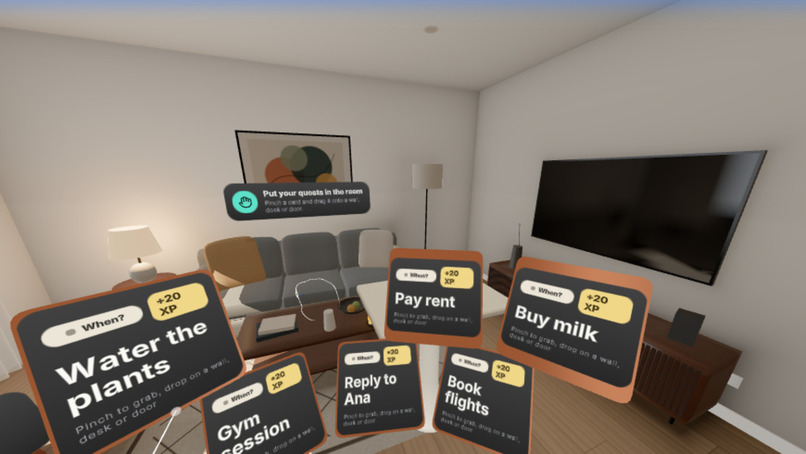
Crumple card once done
Inspiration
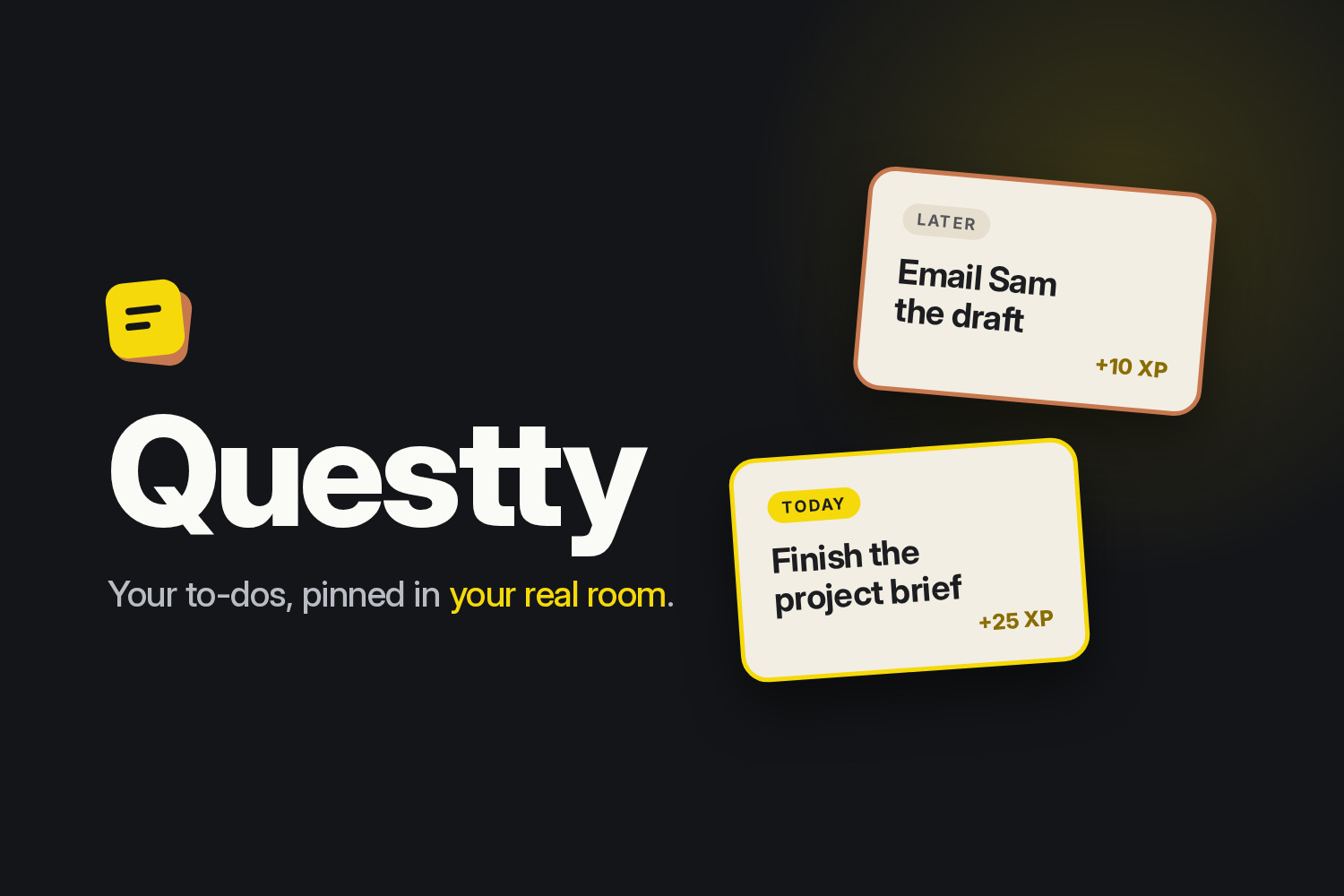
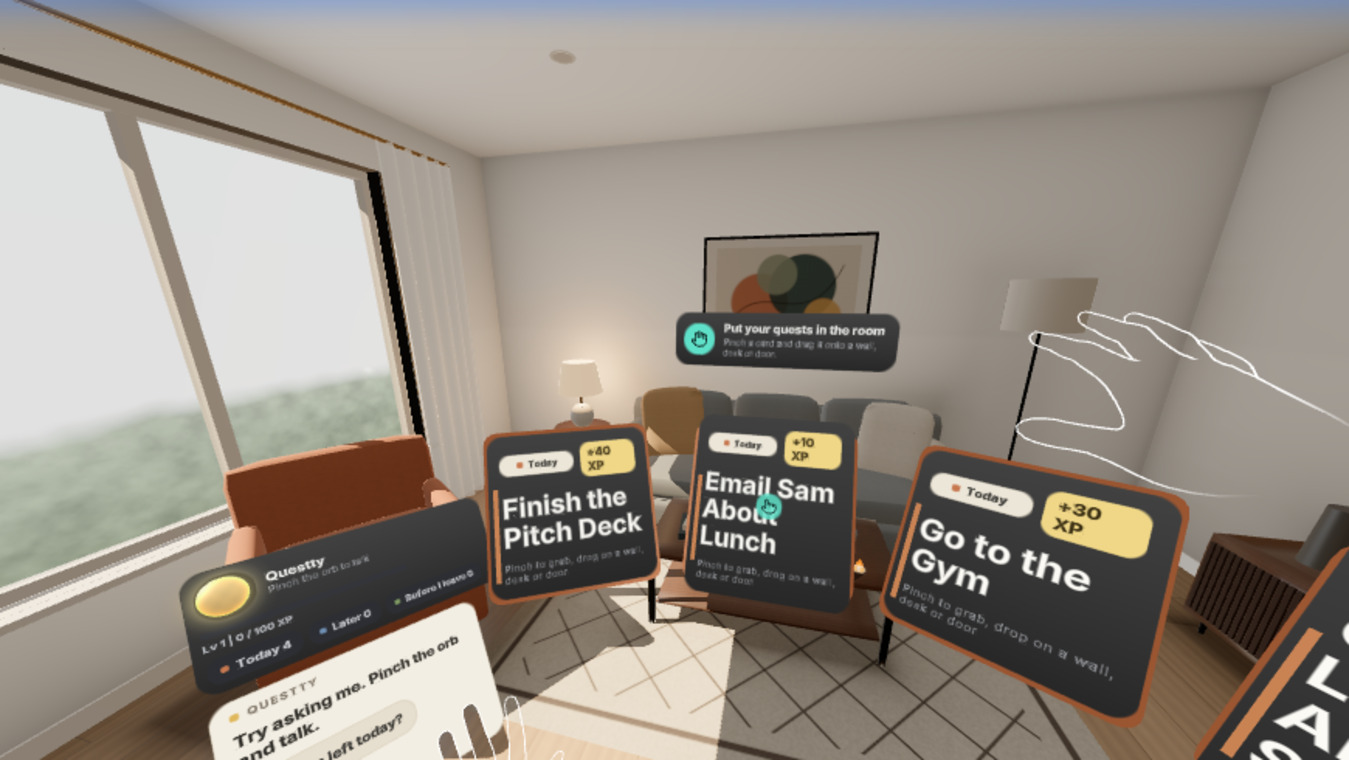
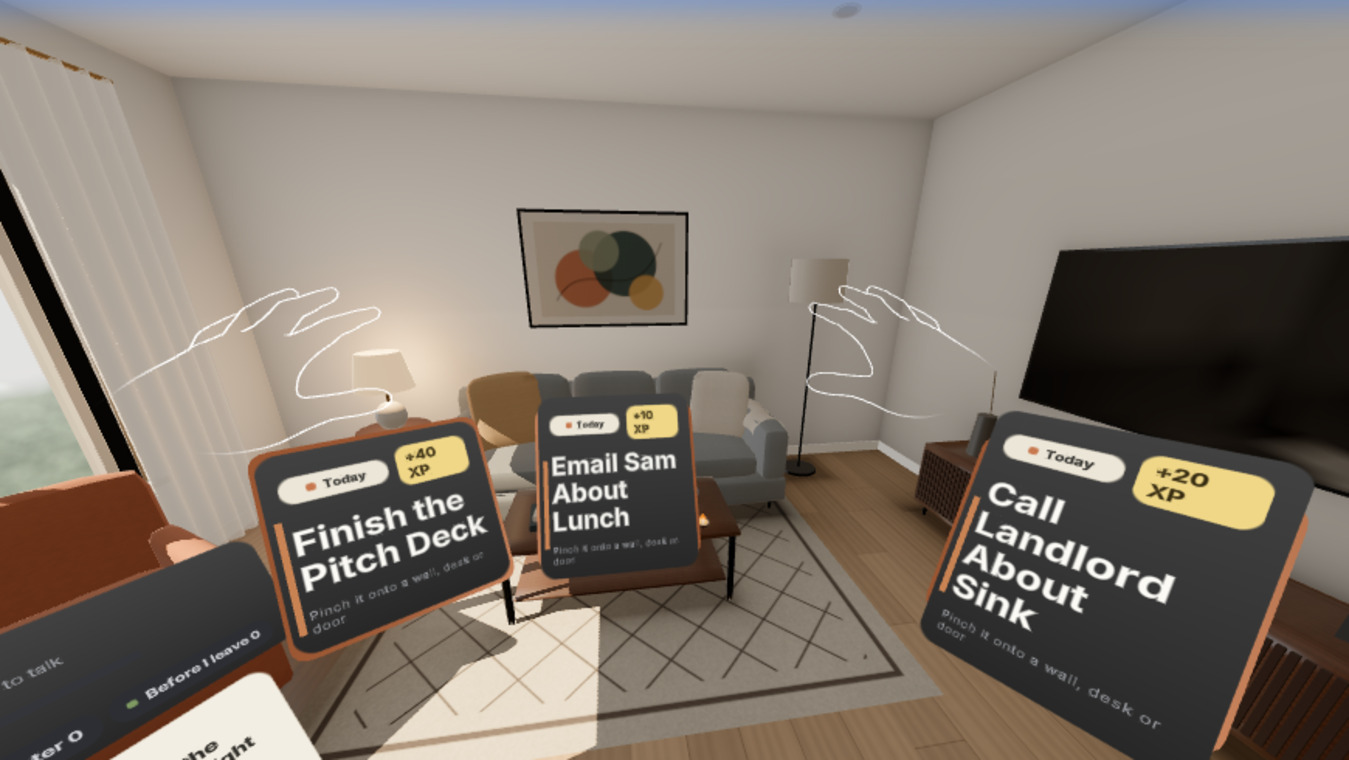
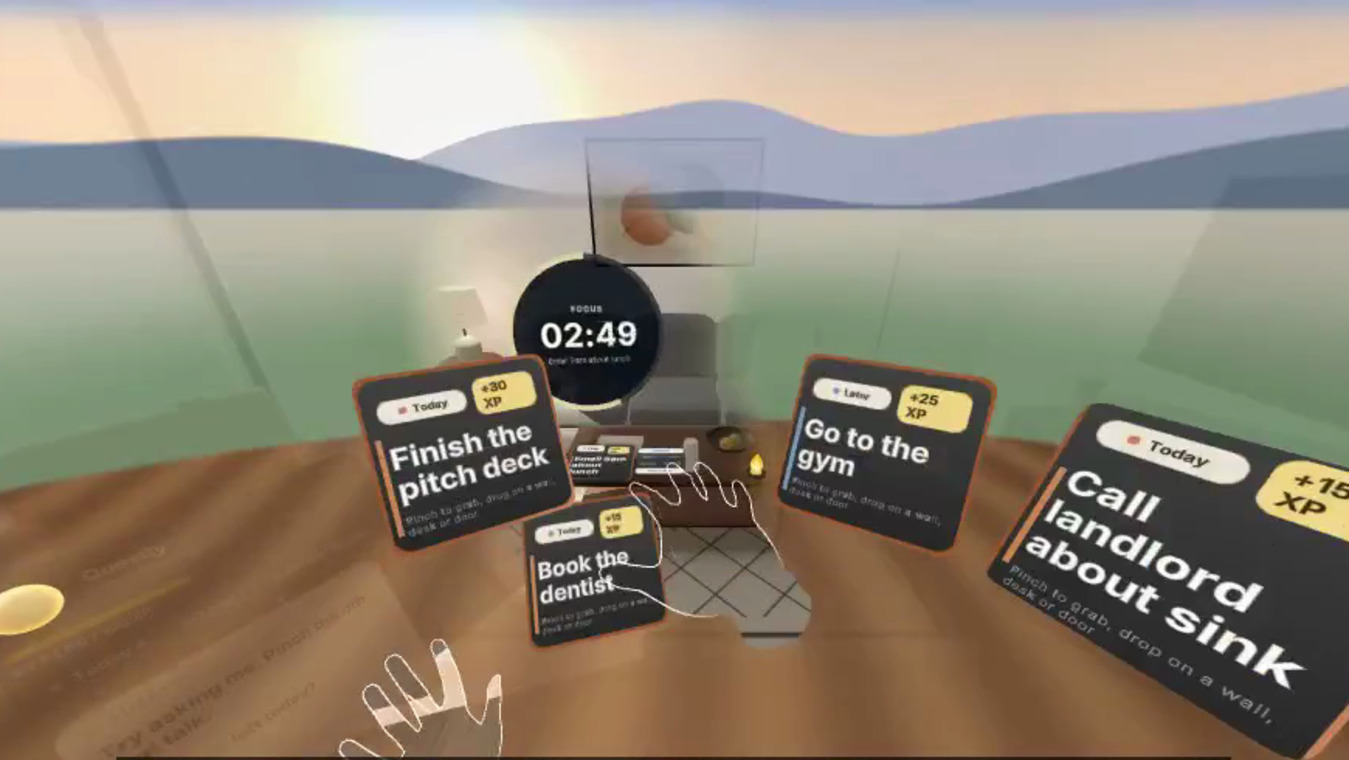
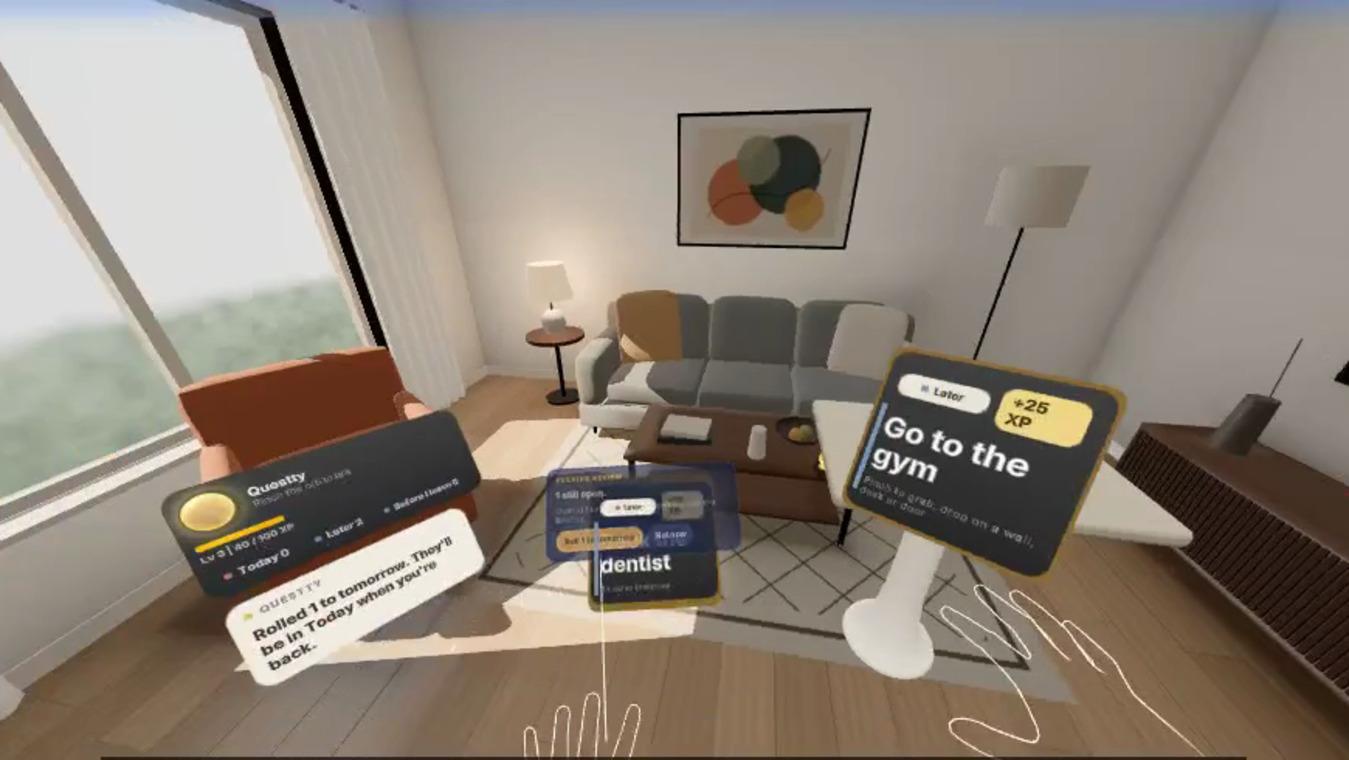
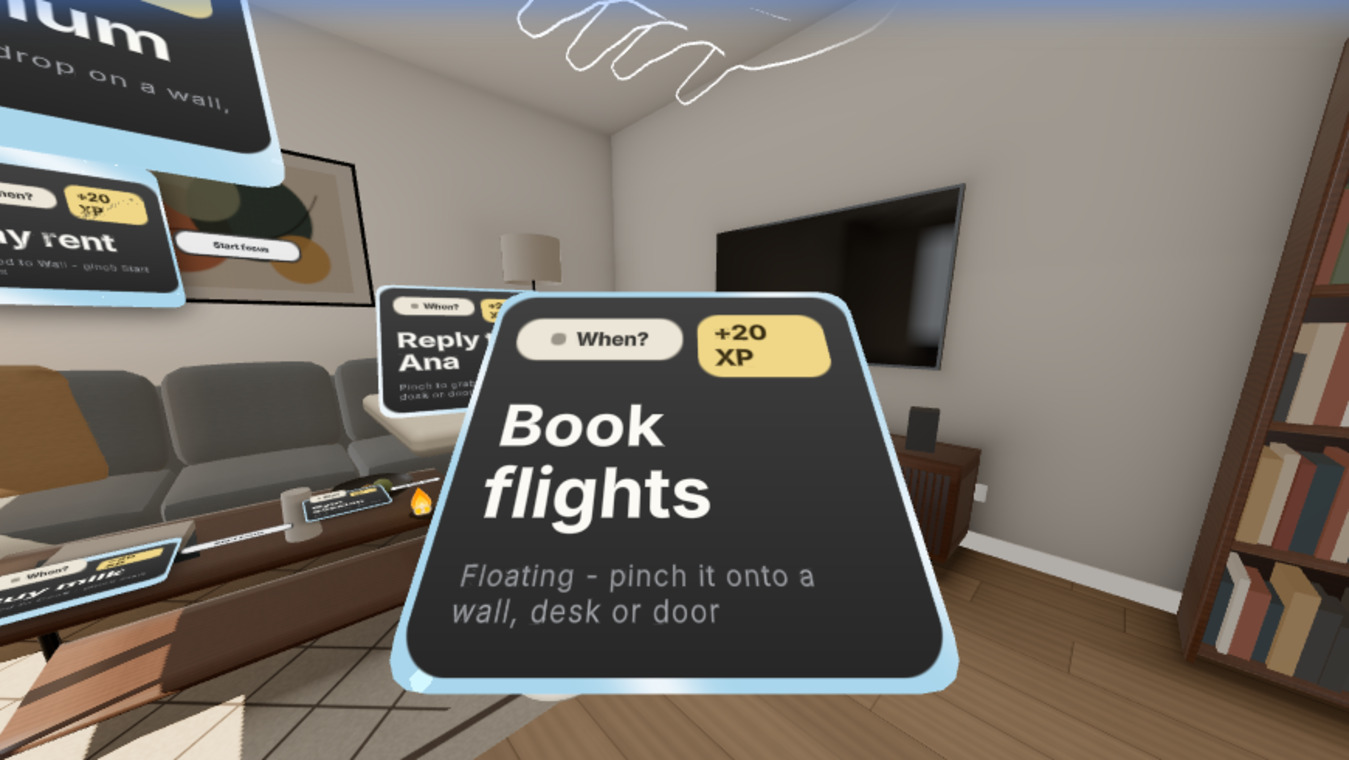
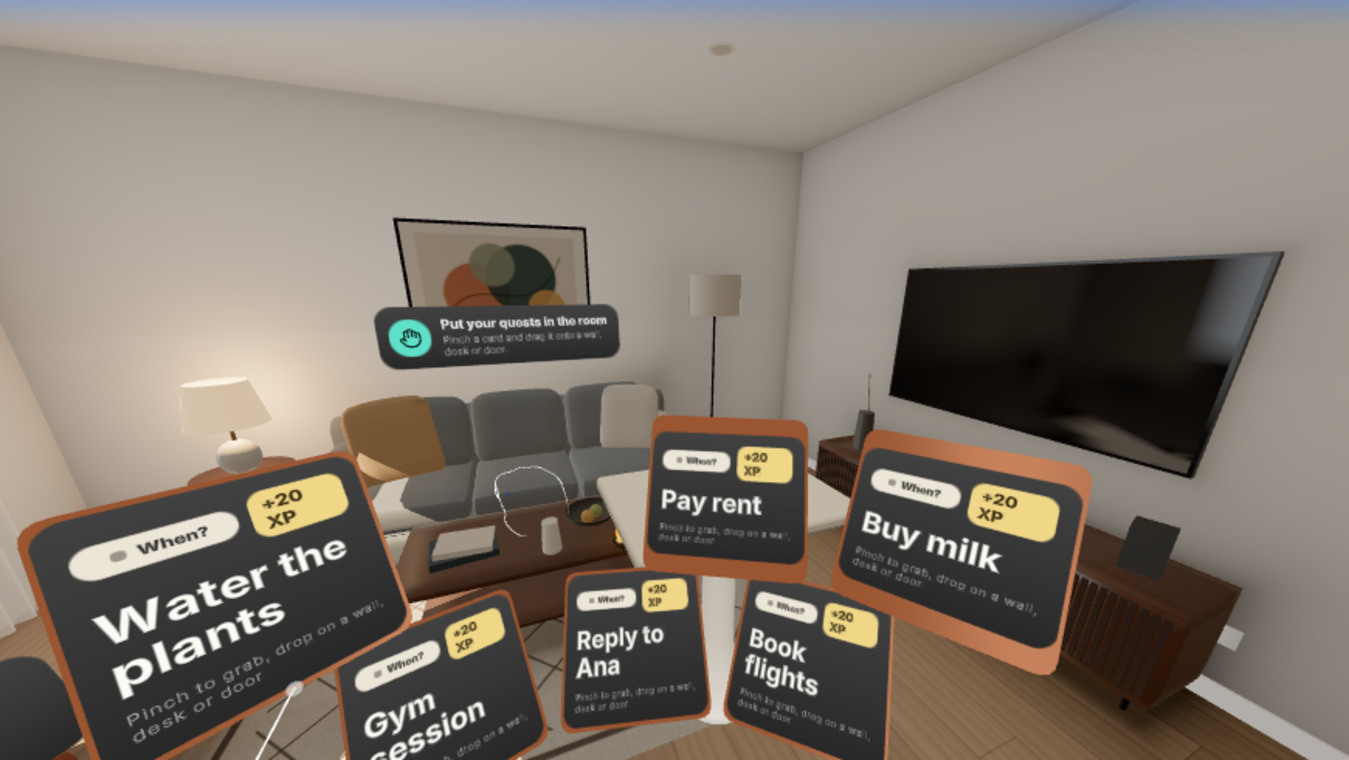
Every to-do app lives in a tab you close. Meanwhile the real reminders, a sticky note on the monitor or a gym bag by the door, work because they live in your space. Questty takes that idea into mixed reality: your tasks become physical quest cards in your actual room, with an AI buddy you can just talk to.
What it does
- Talk, don't type. Pinch the orb and have a real voice conversation with the buddy (GPT-Live, full duplex, you can interrupt it). Small talk stays conversation; the moment you say a task ("I need to call mom and finish the deck"), it becomes a card.
- Pin quests in your real room. Cards live in passthrough. Put work on the desk, the gym card by the door, and they stay where you left them.
- Your room remembers. Pinned cards persist across sessions. Take the headset off, come back tomorrow, and your quests are still on the desk and by the door, right where you put them.
- A buddy that remembers. "Move the second one to the left wall." "Actually, delete it." "Make another like that for dad." Questty keeps a sliding window and summary of the conversation across voice and typing, so follow-ups just work.
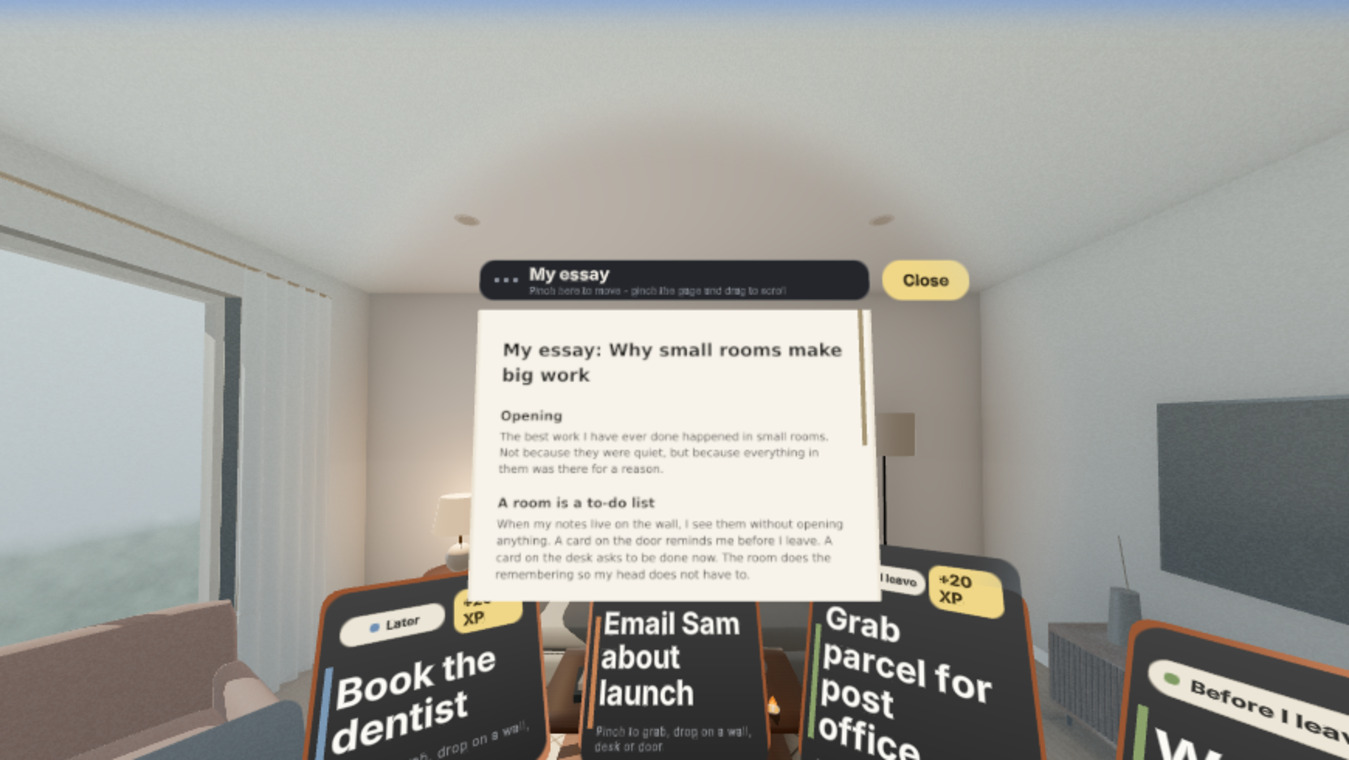
- Pull anything from the web. "Pull up the Wikipedia article on Meta Quest 3" or "get chapter 3 of Pride and Prejudice": the buddy searches, scrapes the page (Firecrawl), cleans it, and opens it in a distraction-free reading view in your room.
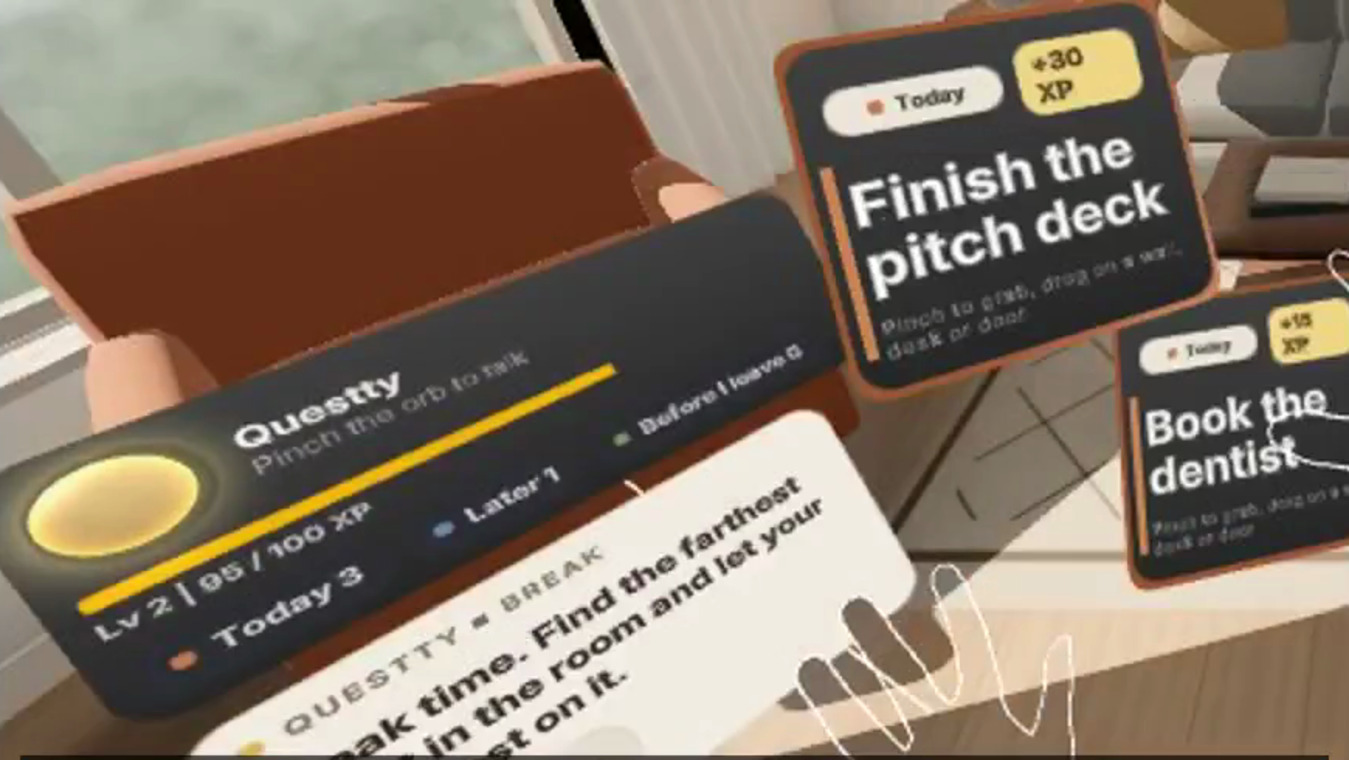
- Focus mode. Start a session on a card: the room softens, a timer runs, and the buddy keeps you on the one thing, with spoken break prompts in spatial audio.
- Finish with a flick. Throw a done card into the trash can with your hand or controller. XP fills, your daily flame streak grows, and card frames level up all the way to diamond.
- Evening review. After your review hour it walks you through what's left and rolls it to tomorrow; say "not now" and it stays away until you ask.
How we built it
- Meta IWSDK (WebXR) + Three.js + TypeScript + Vite: runs straight in the Quest browser, one link, no install.
- OpenAI: GPT-Live over WebRTC for the voice buddy; a Responses-API buddy brain with a strict JSON action schema, so the AI can only take validated actions on cards that actually exist. Simple requests run on a fast, cheap model and hard ones (web, multi-step references) route to a stronger one automatically.
- Tool calling for the web:
web_searchandread_pagetools backed by Firecrawl, with a server-side loop, time budget, private-network blocking, and copyright rules (full text only for public-domain works, summaries otherwise). - Spatial audio: the buddy's voice comes from the orb through an HRTF panner, with one-voice-at-a-time ownership so nothing talks over anything.
- Vercel serverless functions keep every API key server-side.
Challenges we ran into
- Making hand and ray "flick" throws feel natural and land in the bin every time.
- Giving a realtime voice model reliable memory: the handoff from voice to the app was losing words and context until we rebuilt how turns and card references are recorded.
- Keeping the buddy from turning every passing thought into a card.
- Overlapping voices from break prompts and the live chat, solved with a single voice owner while keeping full duplex.
Accomplishments that we're proud of
A productivity app that feels like a place, not a list: talk, pin, focus, flick, all hands-first, all in the browser, with an AI that actually remembers what you just said and a room that remembers where you left everything.
What we learned
Mixed reality is at its best when it respects your real environment. Small spatial cues (where a card lives, a voice coming from the orb) do more for focus than any notification.
What's next for Questty
Shared rooms so teams can pin and finish quests together, calendar and email sync that pins today's meetings as cards, and a native Meta Quest release in January 2027.
Built With
- iwsdk
- meta-quest
- openai
- three.js
- typescript
- vercel
- vite
- webrtc
- webxr
