Inspiration
Creating great Meta Quest experiences should be about world-building, presence, and gameplay. Instead, VR teams and solo developers lose hours every week to broken SDK setups, confusing manifest permissions, unexpected Meta Store rejections, and manual release uploads. We built QuestForge to give every VR creator an autonomous AI teammate that understands Meta Quest from day one.
What it does
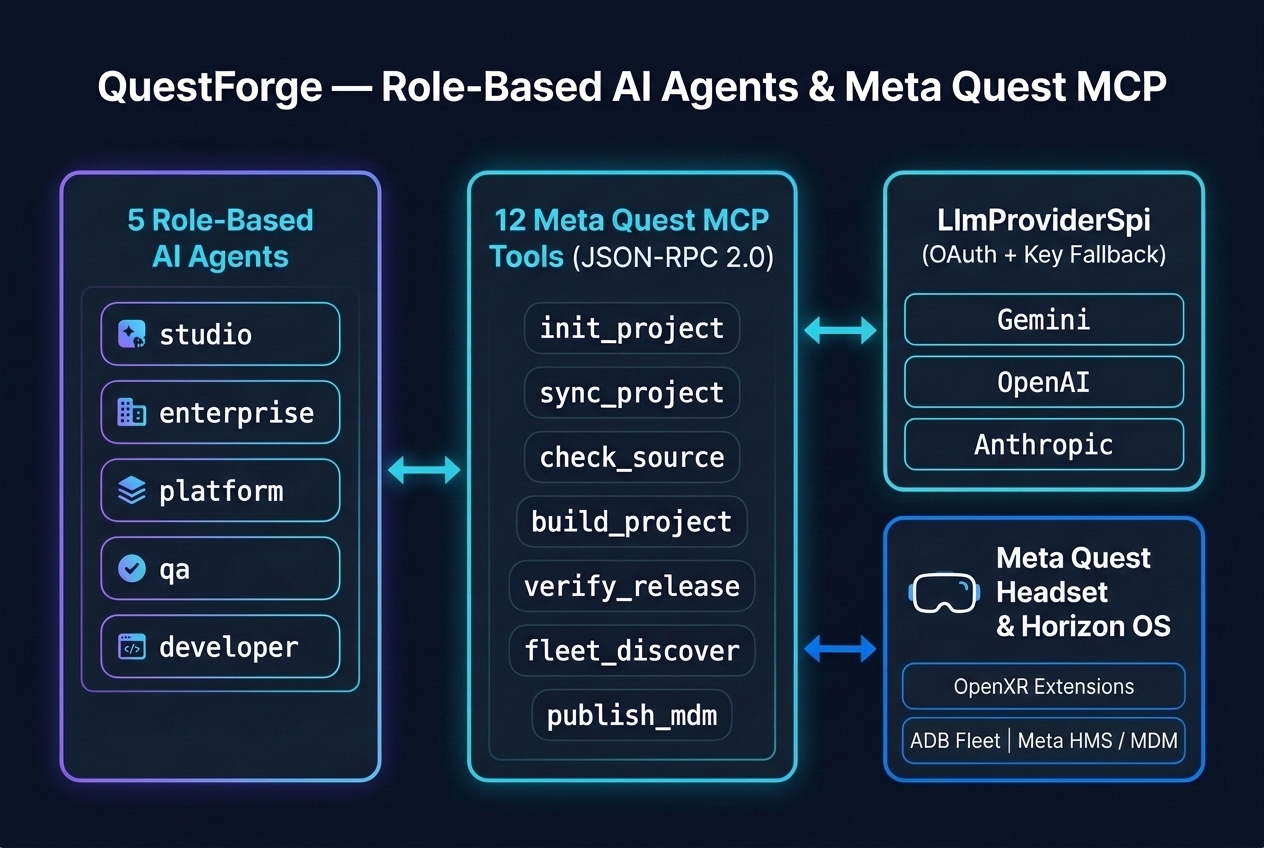
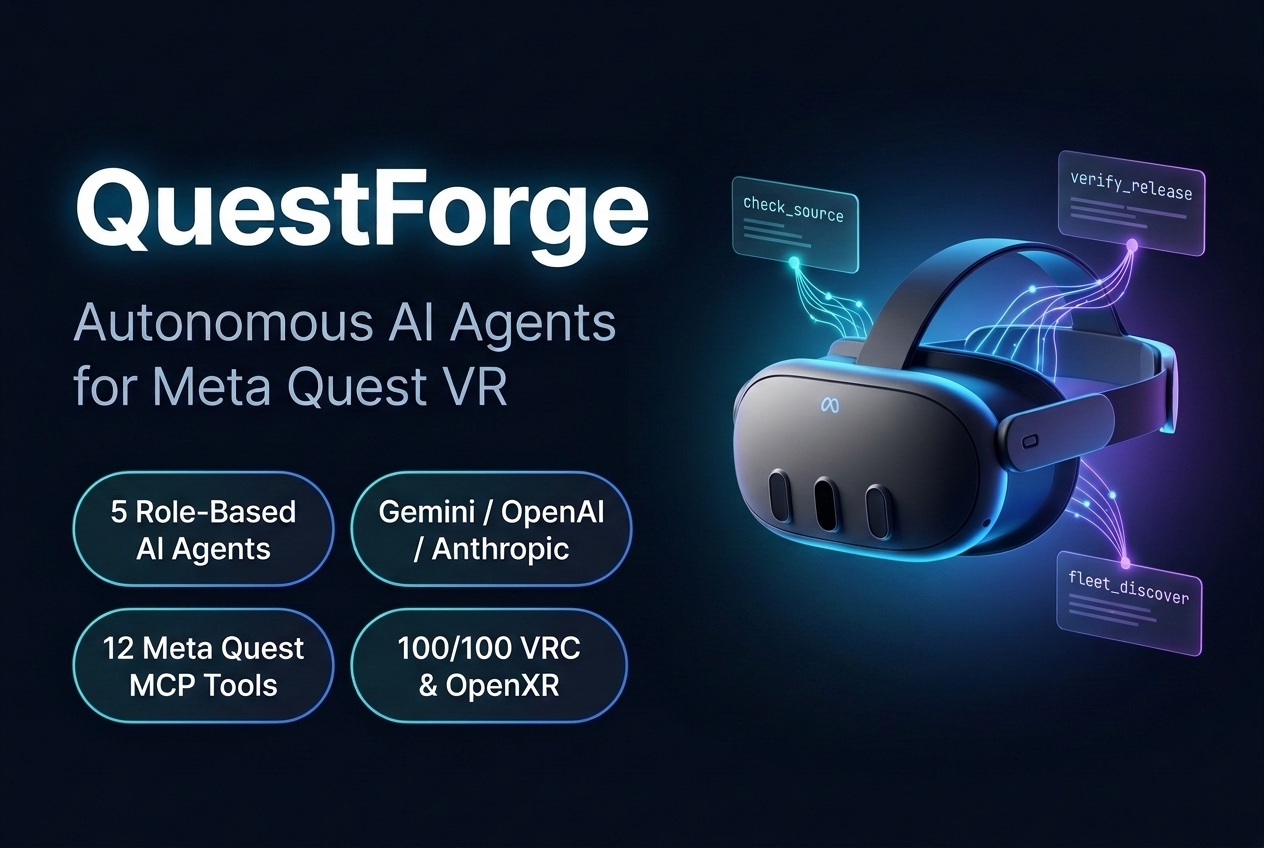
QuestForge puts role-based AI agents in charge of the Meta Quest development, verification, and release journey so creators can focus on building in VR.
- Studio AI Agent: Guides game teams from initial project setup through OpenXR configuration, build checks, and store readiness.
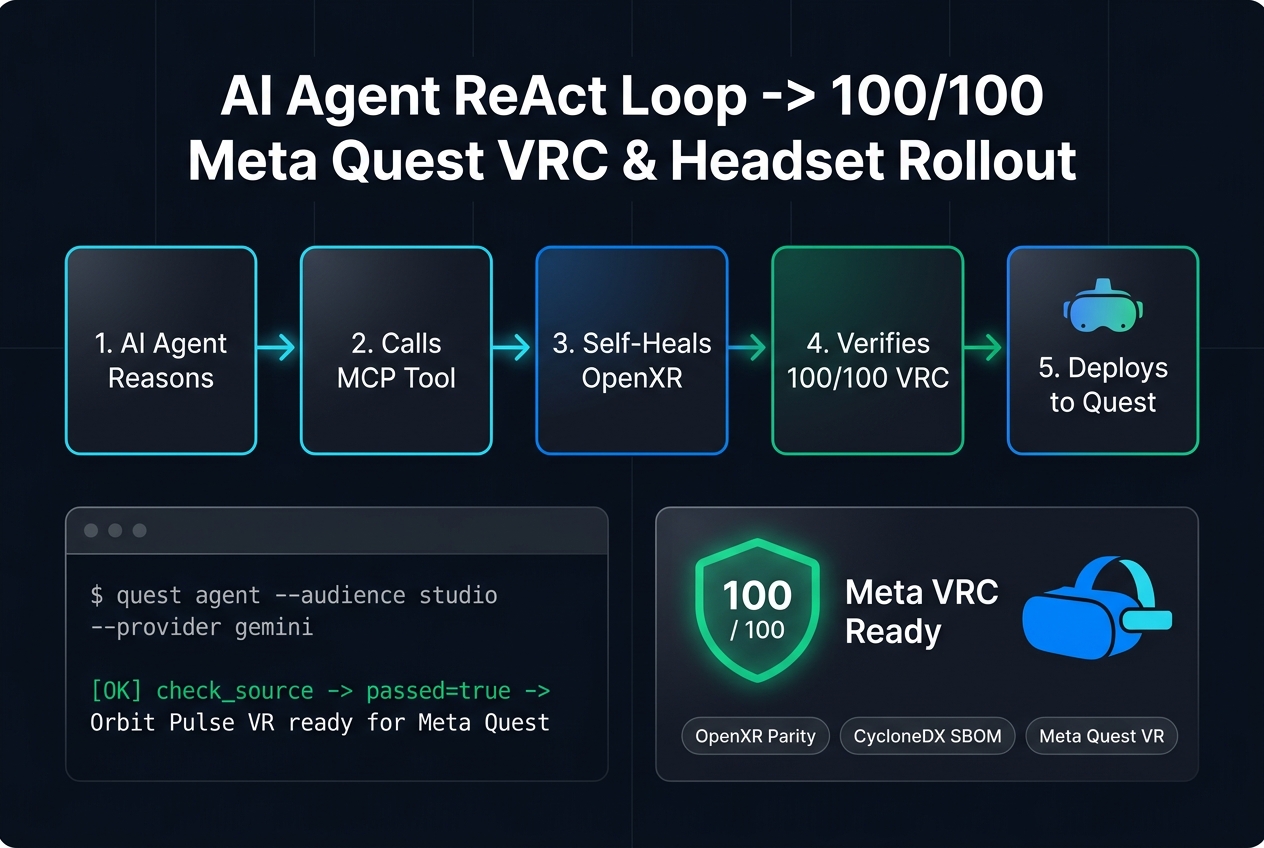
- Autonomous QA and Release AI Agent: Audits Quest builds against Meta Horizon Store guidelines, scores release readiness from 0 to 100, autonomously diagnoses and fixes missing tools or build blockers, and publishes verified builds to Meta Horizon Store channels.
- Enterprise and Platform AI Agents: Keep multi-developer teams aligned on SDK versions, Mixed Reality capabilities, and controlled lab rollouts.
- Developer Copilot Agent: Diagnoses cryptic VR build errors and answers project questions using live workspace context.
- Direct Meta Horizon Store Publishing: Automates signed Quest APK uploads, release channel promotion, and build downloads using Meta's official Platform Utility.
- Multi-AI Choice: Works with Gemini, OpenAI, and Anthropic using simple one-command login or API keys.
- Orbit Pulse VR Showcase: Includes a playable Mixed Reality OpenXR showcase supporting hand tracking, passthrough, spatial anchors, and 120 Hz gameplay.
How we built it
We built QuestForge around a unified AI agent hub that connects leading language models directly to 14 verified Meta Quest tools and OpenXR workflows. Rather than letting AI guess commands, every role-based agent acts through structured Meta Quest actions for toolchain setup, OpenXR capability sync, build verification, failure recovery, headset deployment, and Meta Horizon Store publishing.
Challenges we ran into
Different AI models speak different languages and use different authentication flows, while Meta Quest projects span Unity, Unreal, and native OpenXR. Making one seamless experience where any supported AI model can reliably inspect a VR project, recover autonomously when tools or checks fail, verify Meta Horizon compliance, and publish to headsets or the store without brittle workarounds was our biggest hurdle.
Accomplishments that we're proud of
- Turning complex Meta Quest release checks and Horizon Store uploads into a fast, autonomous AI workflow.
- Supporting five role-based AI agents tailored to indie studios, QA and release managers, platform engineers, enterprise XR teams, and individual developers.
- Verifying our Orbit Pulse VR showcase at a 100 out of 100 readiness score and running it live on Meta Quest.
What we learned
AI agents become dramatically more reliable for VR development when paired with structured Quest-specific tools, clear role boundaries, and autonomous recovery loops instead of open-ended shell access.
What's next
- Full Unity and Unreal Engine in-editor plugins so QuestForge AI agents can inspect scenes, optimize assets, and publish to Meta Horizon Store directly inside the editor.
- Local and private AI model support for air-gapped XR studios.
- Live headset telemetry and AI-assisted performance tuning in the web dashboard.
Built With
- adb
- android
- cyclonedx
- meta-horizon-os
- model-context-protocol
- openxr
- postgresql
- rust
- typescript
