Inspiration
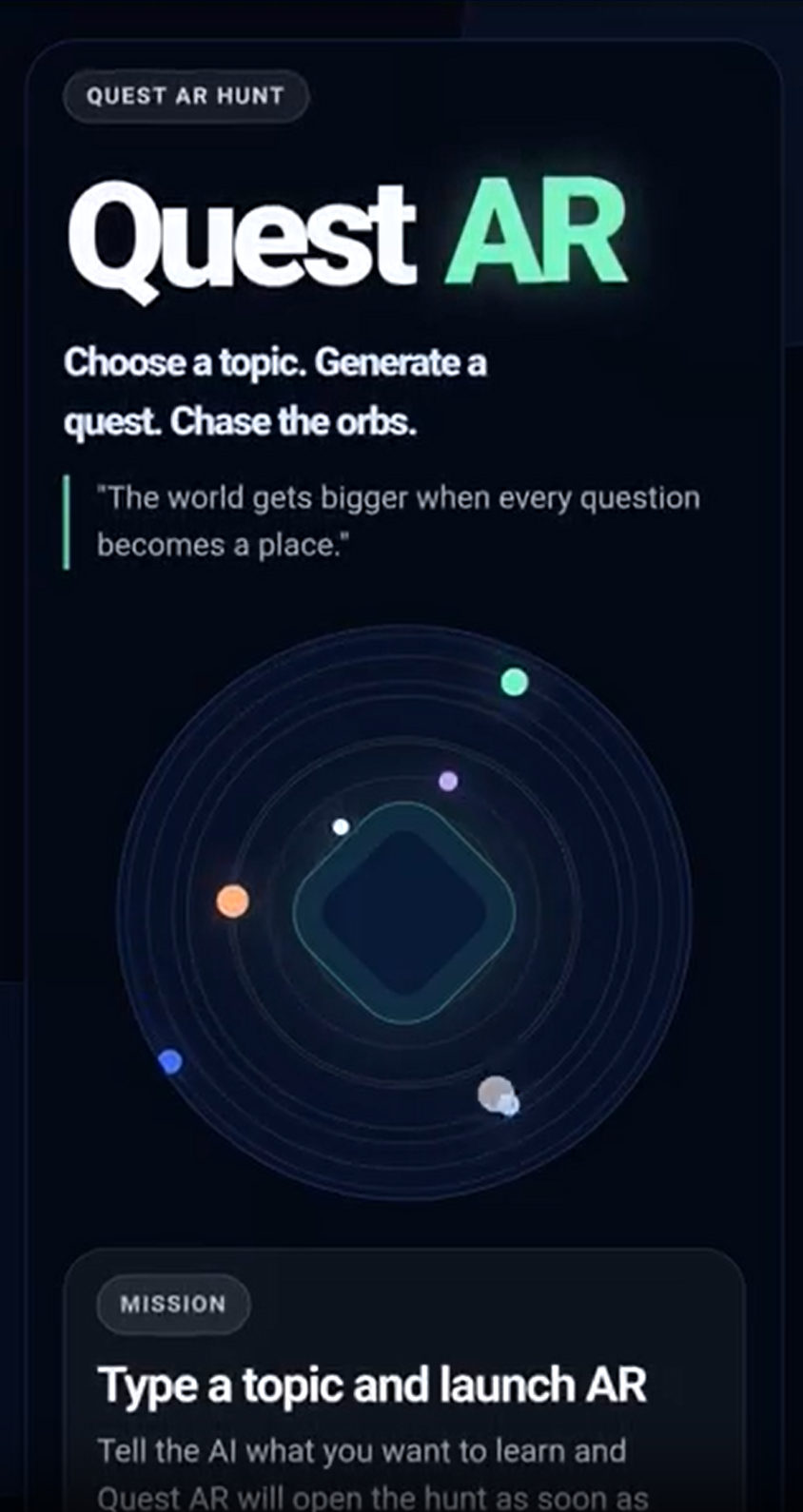
Physical learning beats passive studying. We wanted a scavenger hunt where players walk the real world, discover hidden orbs, and answer trivia to collect them. Merging AR with AI-generated questions felt like a fresh way to make education interactive.
What it does
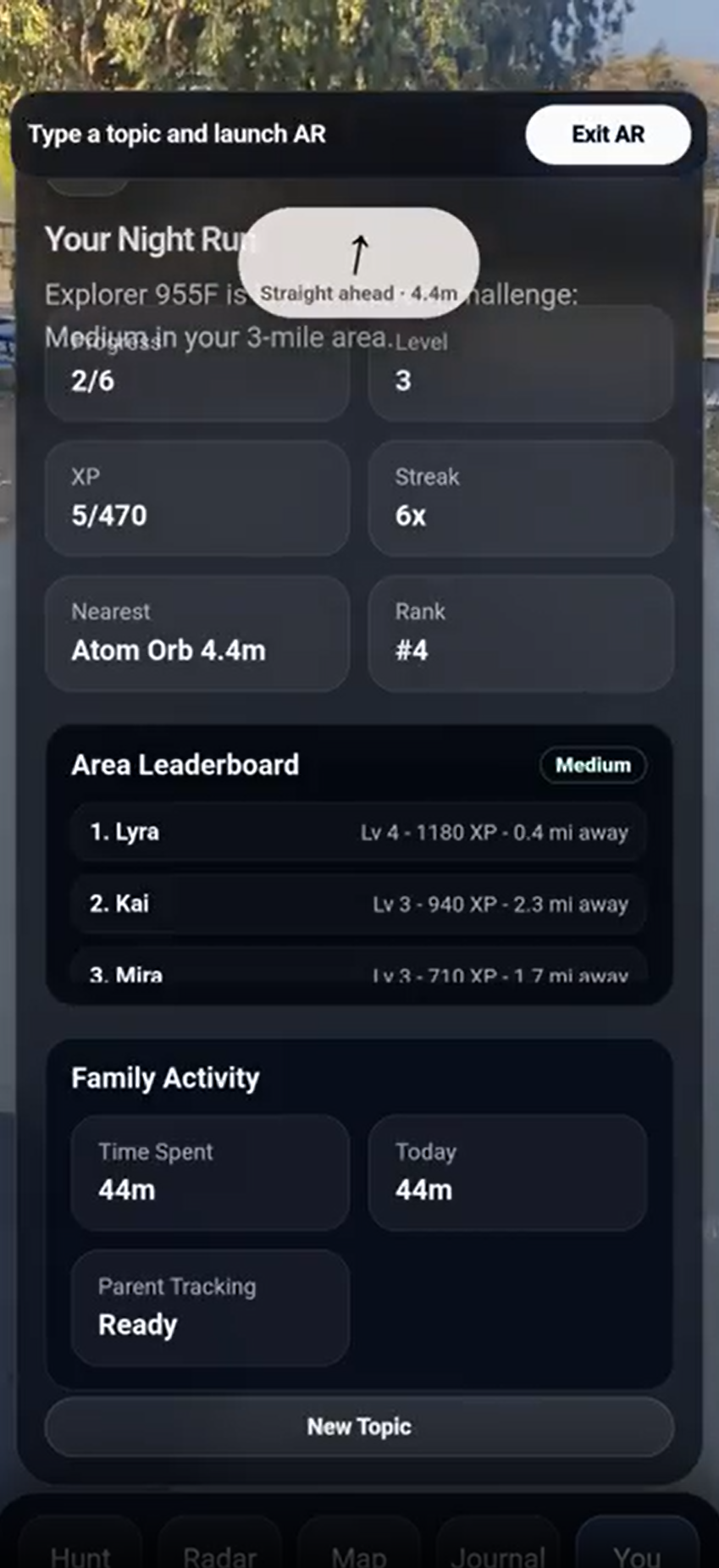
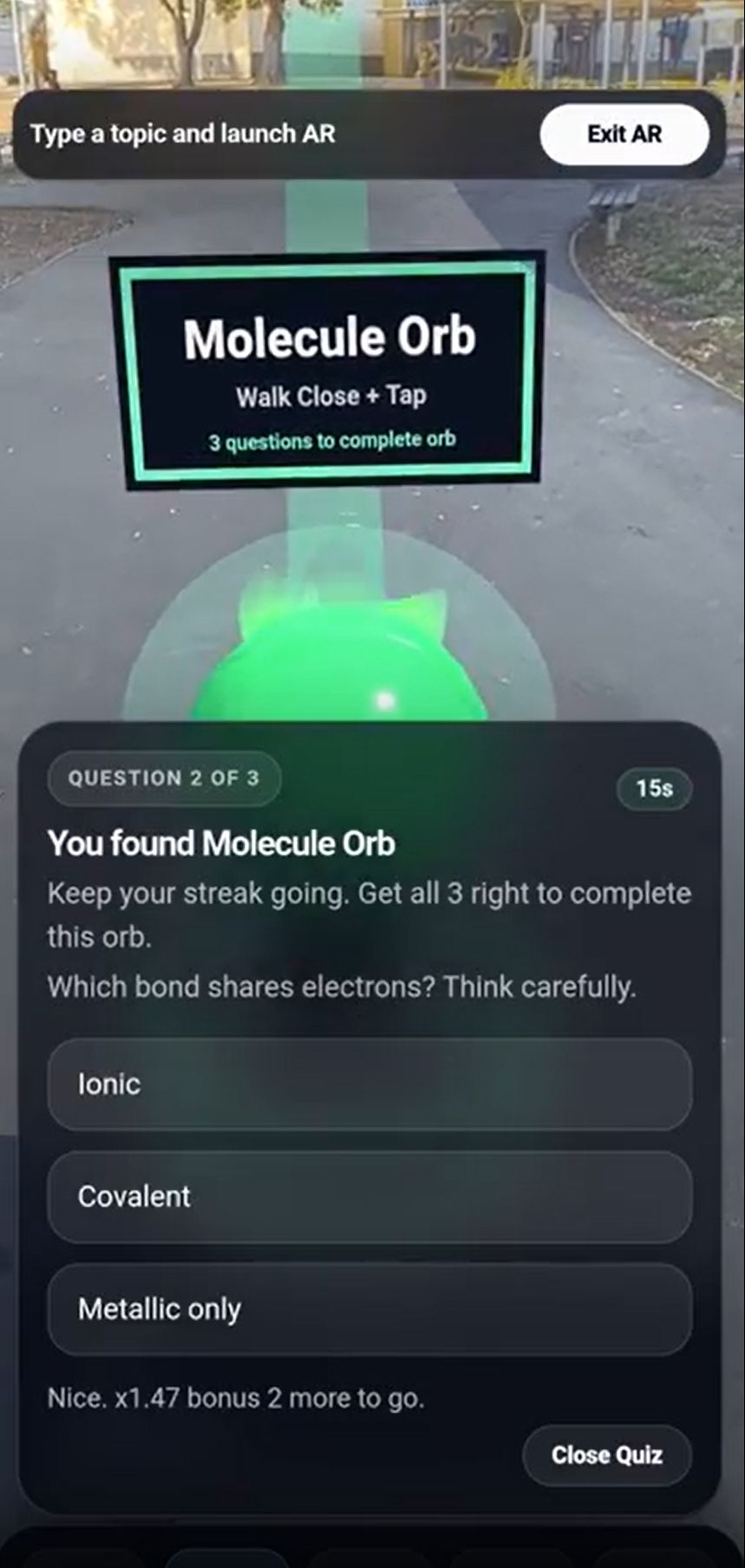
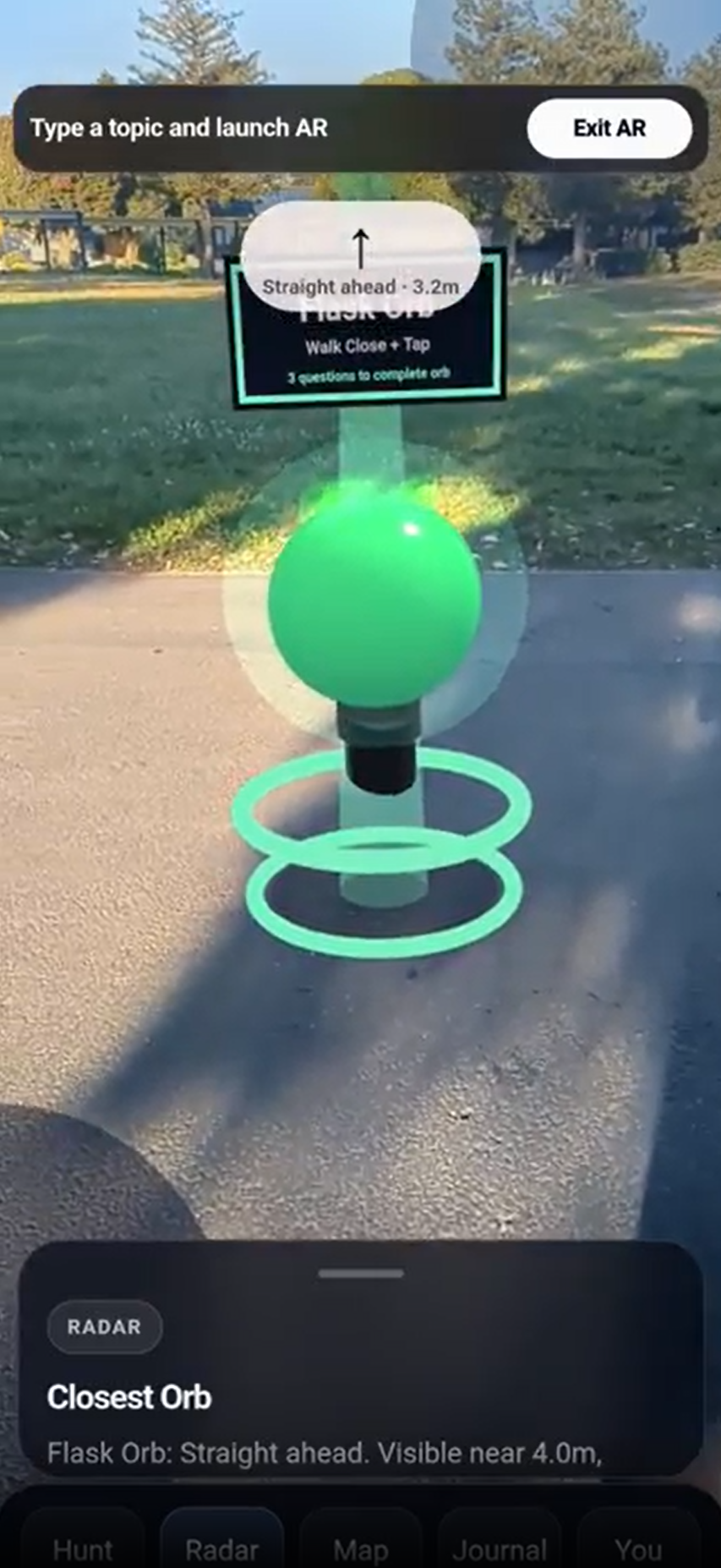
Quest AR generates topic-based trivia orbs using AI. Players enter an immersive AR session, scan the floor, and follow a radar to find hidden orbs. Each orb unlocked is a 3-question quiz with a 20-second timer. XP, streaks, and levels track progress; a global leaderboard ranks players server-side.
How we built it
- Frontend: Vite + vanilla JS, Three.js for procedural 3D orbs, WebXR hit-test API for floor detection and AR anchoring
- Backend: Node.js server, PostgreSQL with JSON fallback, NVIDIA NIM integration for dynamic trivia generation
- Storage: IndexedDB for browser progress, server database for leaderboard and profiles
- Styling: Pure CSS with custom animations, floating orbs, XP pop effects
Challenges we ran into
- AR tracking — Hit-testing produces noisy results on real surfaces. Added a scanning phase with visual feedback so players know when tracking is ready.
- WebXR session lifecycle — Handling session start, context loss recovery, and graceful fallback on unsupported devices took careful state management.
- Procedural orb distances — Calculating walkable distances in real-world meters and placing orbs reachable but not trivially close required iterative tuning.
- Offline-capable gameplay — Queuing leaderboard updates while offline and syncing when reconnected without losing progress.
Accomplishments that we're proud of
- Fully functional WebXR AR experience on Android Chrome with no headset required
- Dual database system: production-ready PostgreSQL on Railway and a local JSON fallback for testing
- AI-powered topic generation with a robust built-in question bank fallback
- Complete gamification loop: XP, streaks, levels, collectible journal, and global leaderboard
What we learned
- WebXR session management and hit-testing fundamentals for mobile AR
- Three.js scene composition with canvas-generated textures and AR anchoring
- Integrating external AI APIs with fallback resilience
- Full-stack patterns: environment-based config, database abstraction, and client-server state sync
What's next for QuestAR
- Image target tracking for fixed orb placement on specific markers
- Expanded AI topic coverage and difficulty scaling
- Multiplayer co-op quest mode
- Social sharing of collected orbs and quiz scores

Log in or sign up for Devpost to join the conversation.