-
-
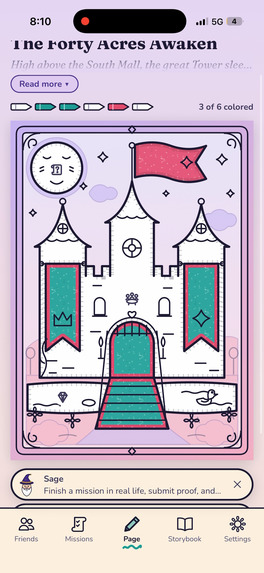
Chapter Halfway Progressed
-
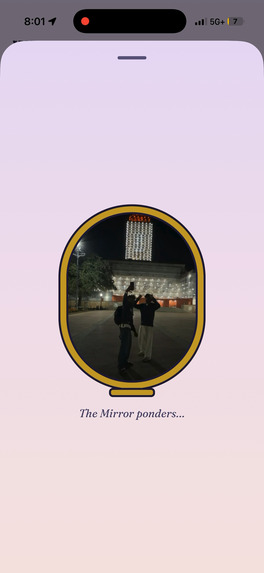
Uploading Mission Completion Image
-
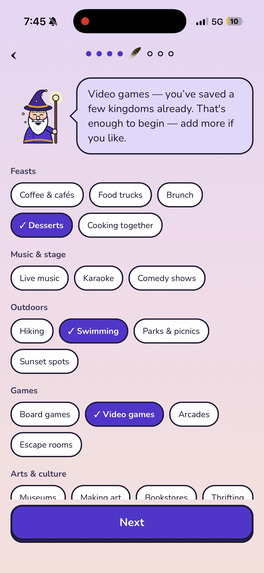
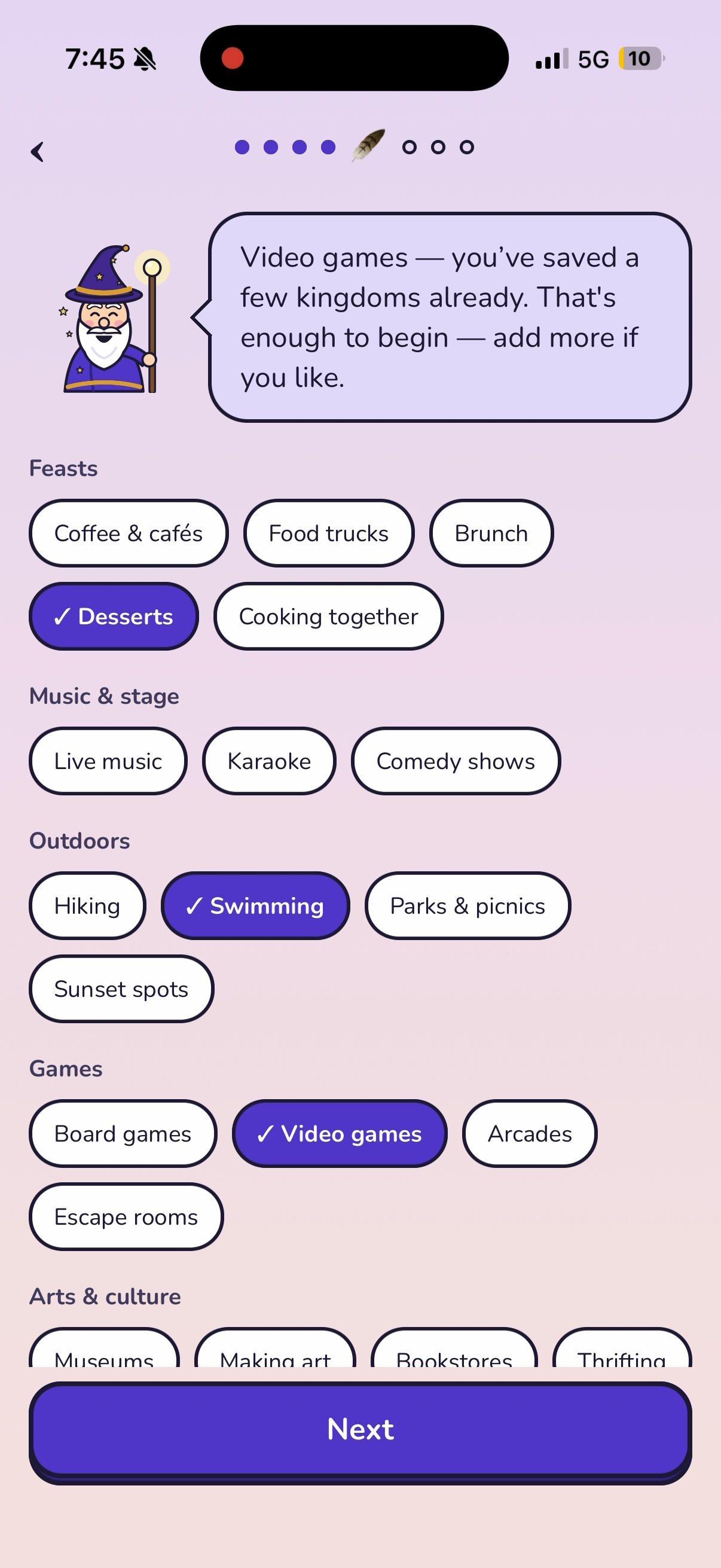
Selecting Interests
-
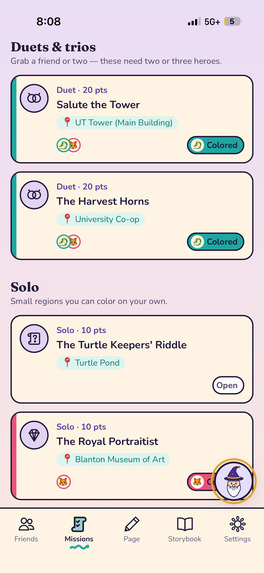
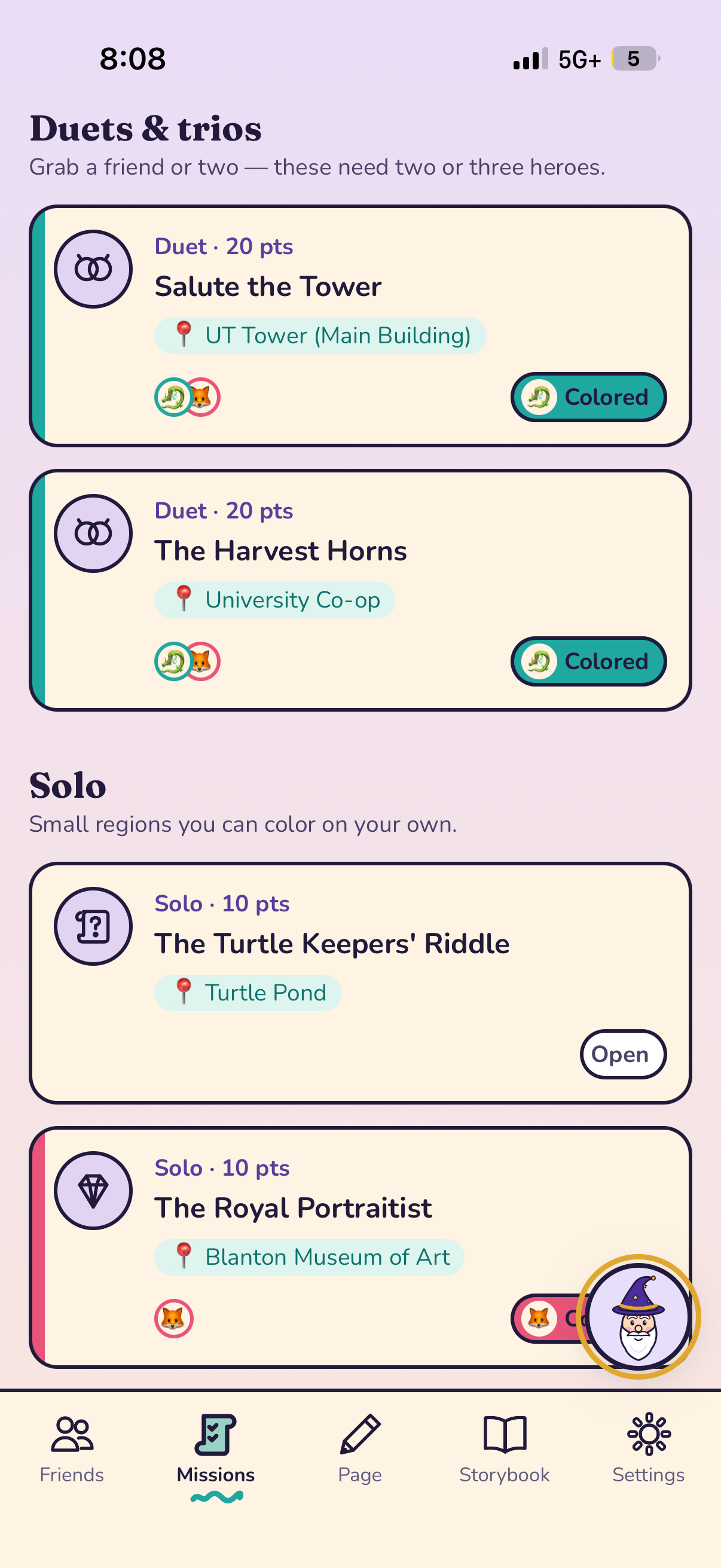
Mission Dashboard
-
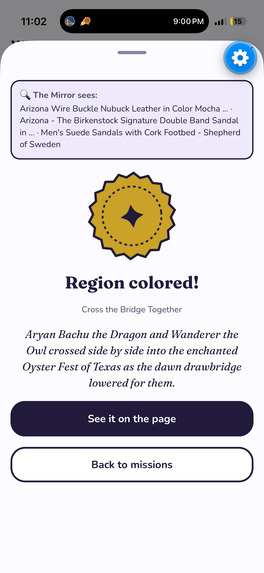
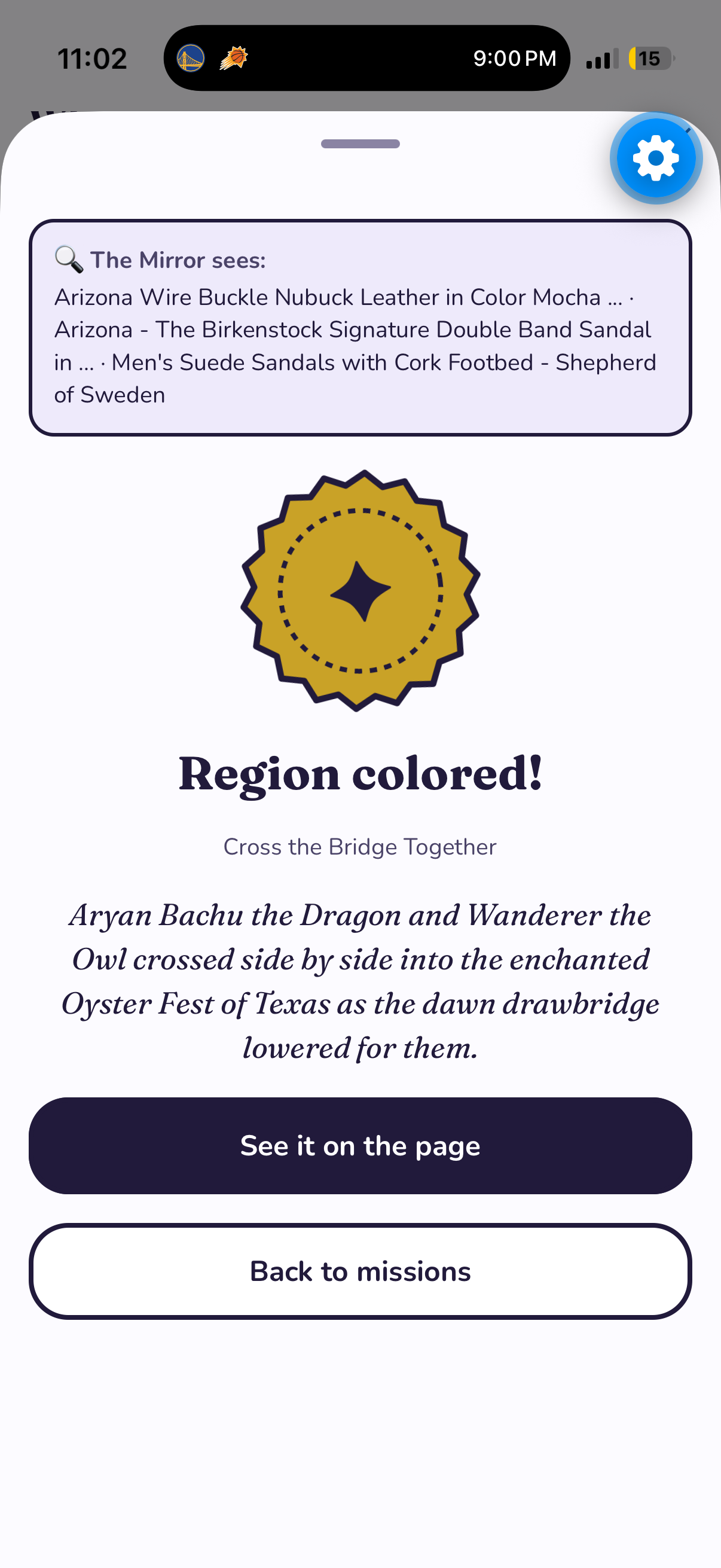
Mission Successfully Completed
-
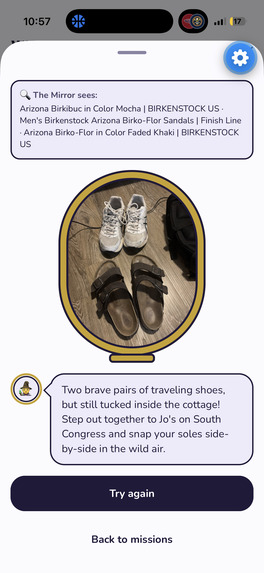
Sage Detects Real-Time Environment
-
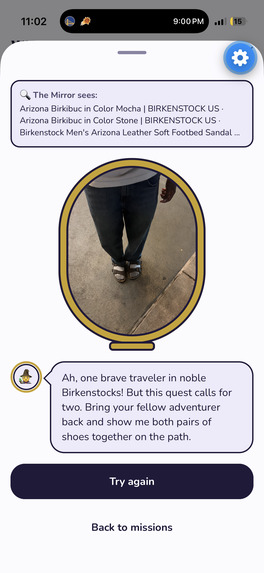
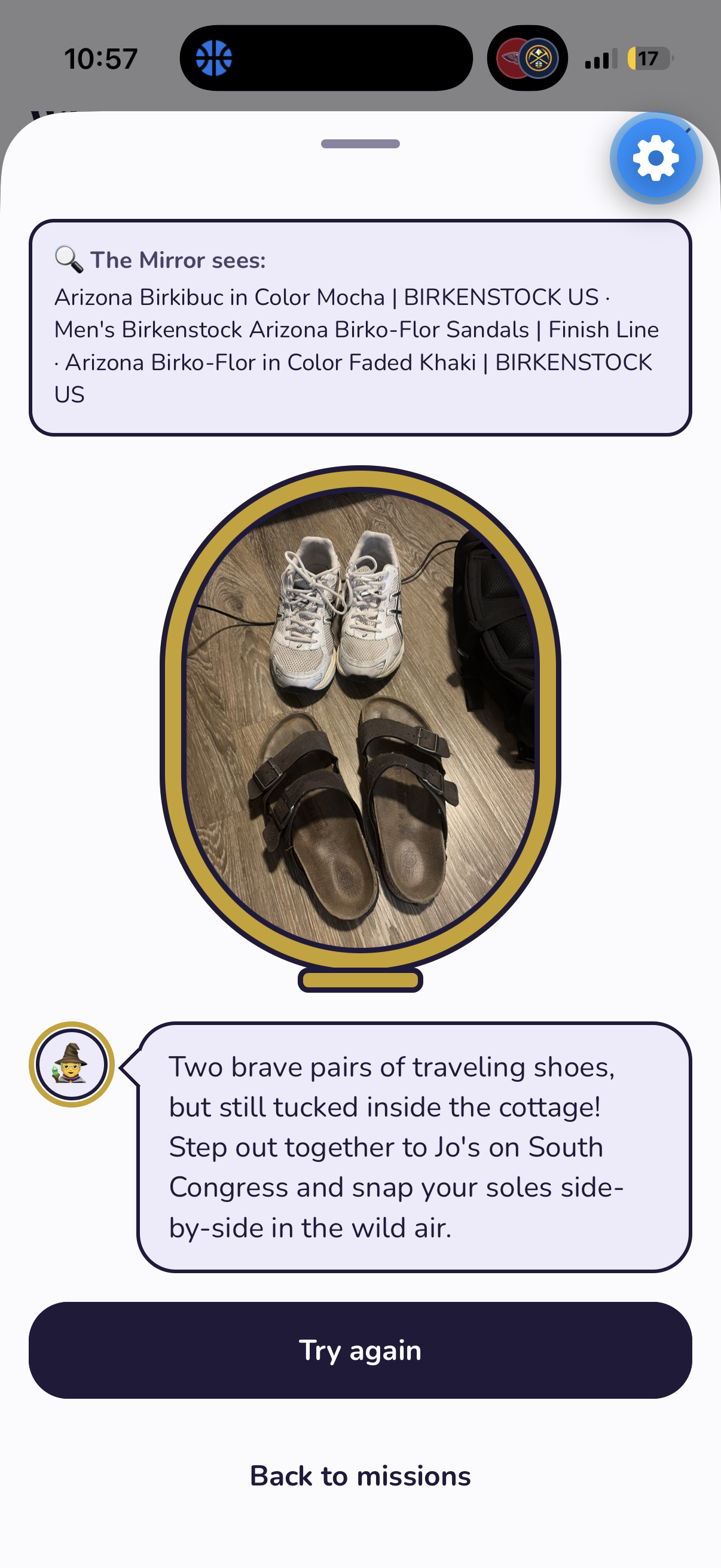
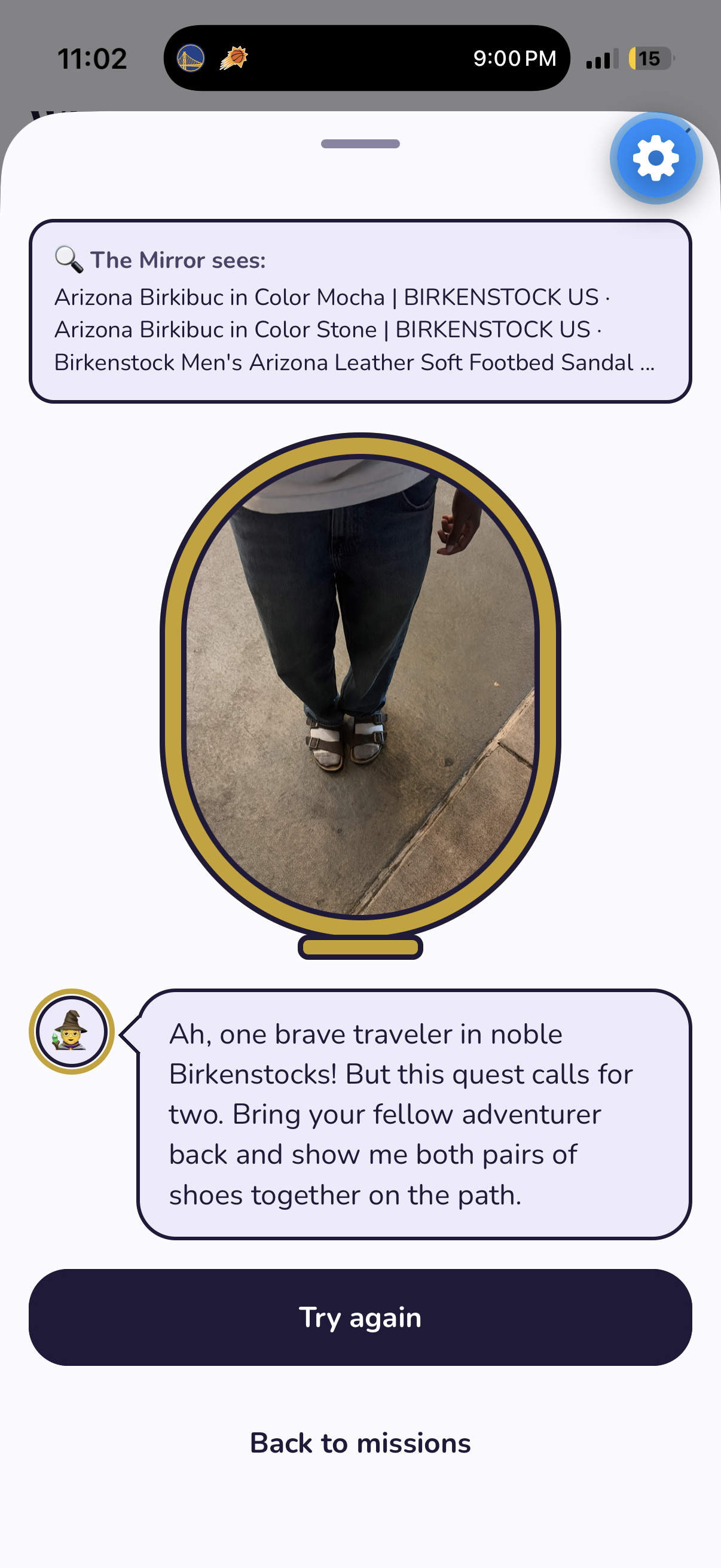
Sage detecting Failed Mission Parameters
-
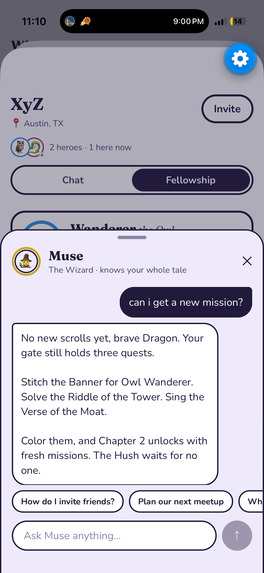
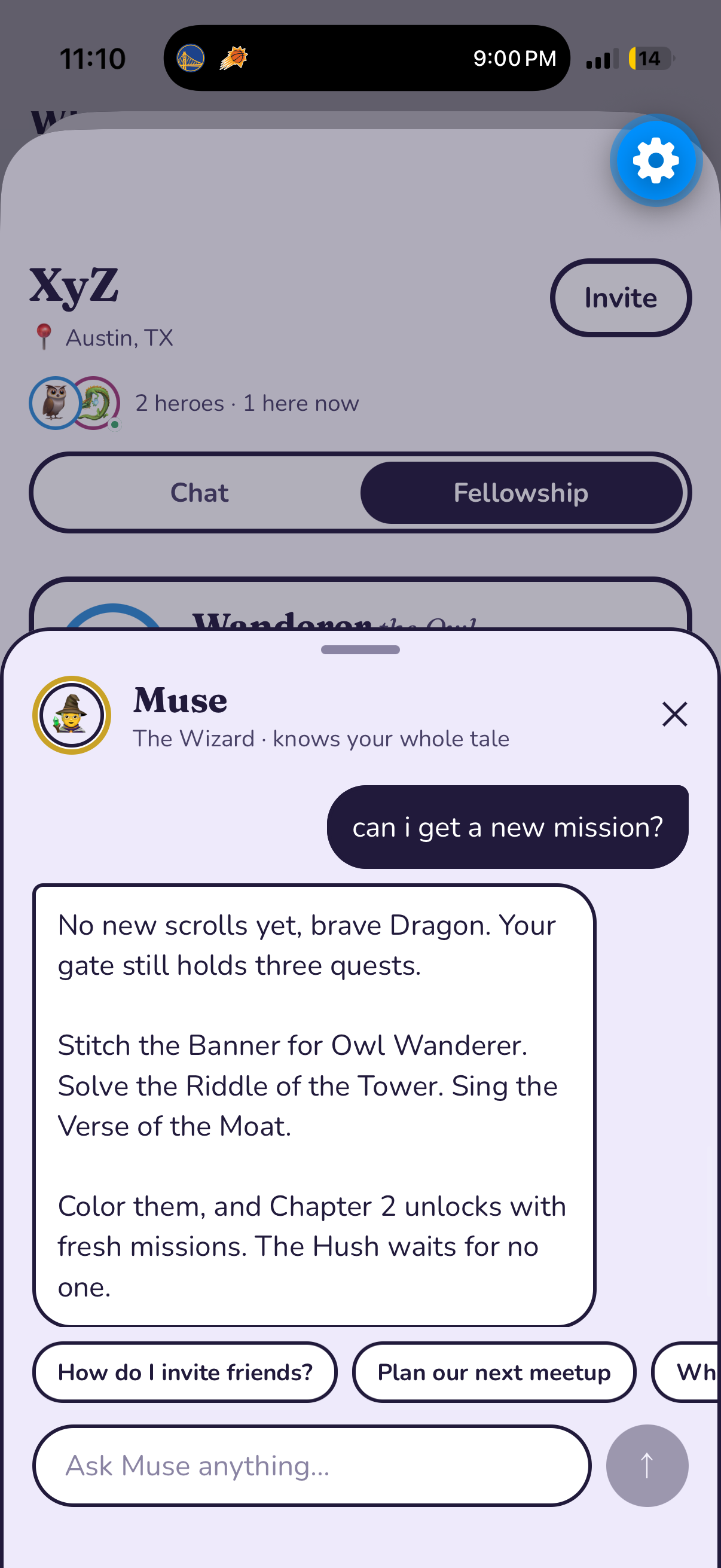
Asking Sage a Question
-
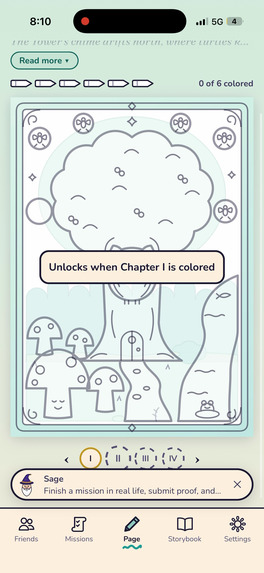
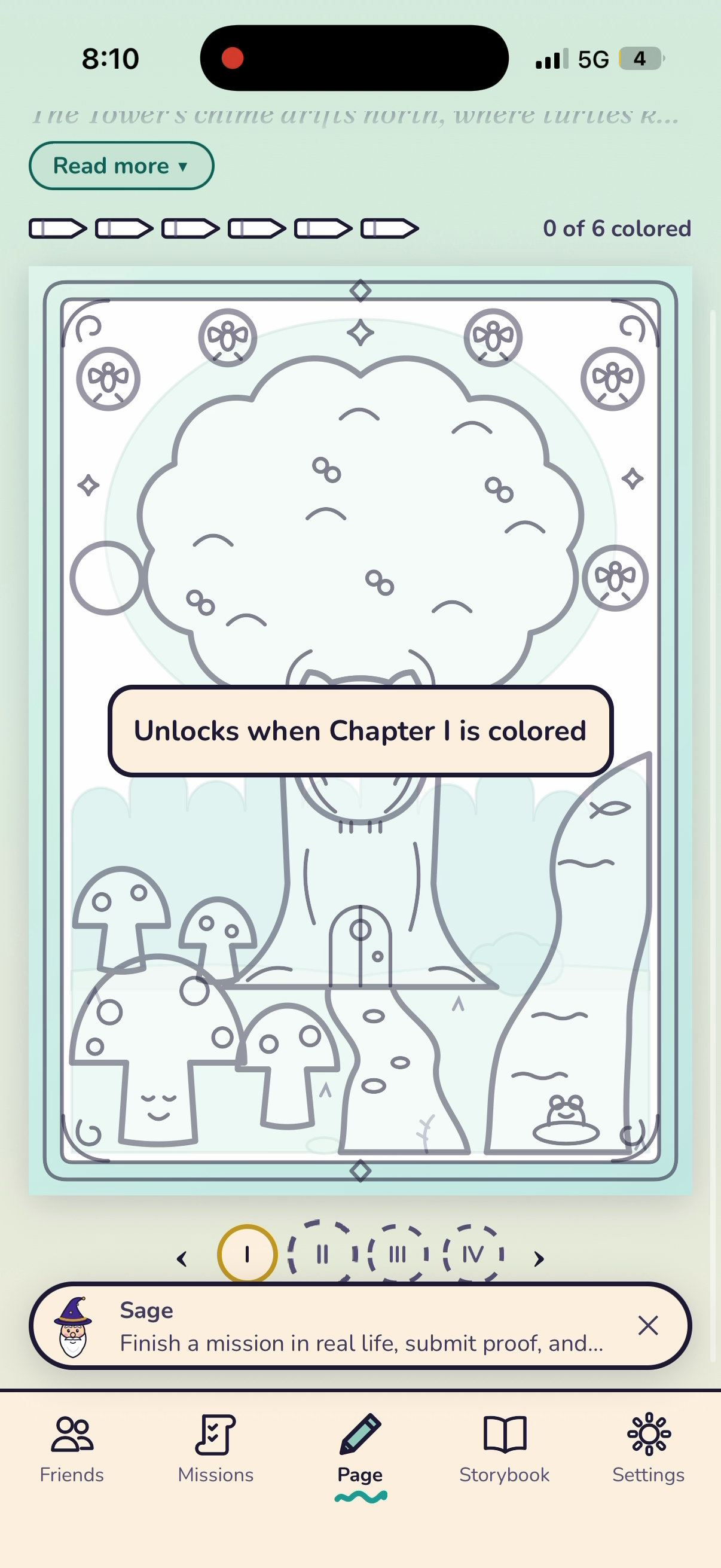
New Page Pending Prior Chapter Completion
-
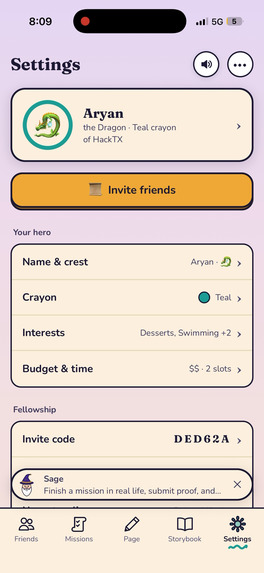
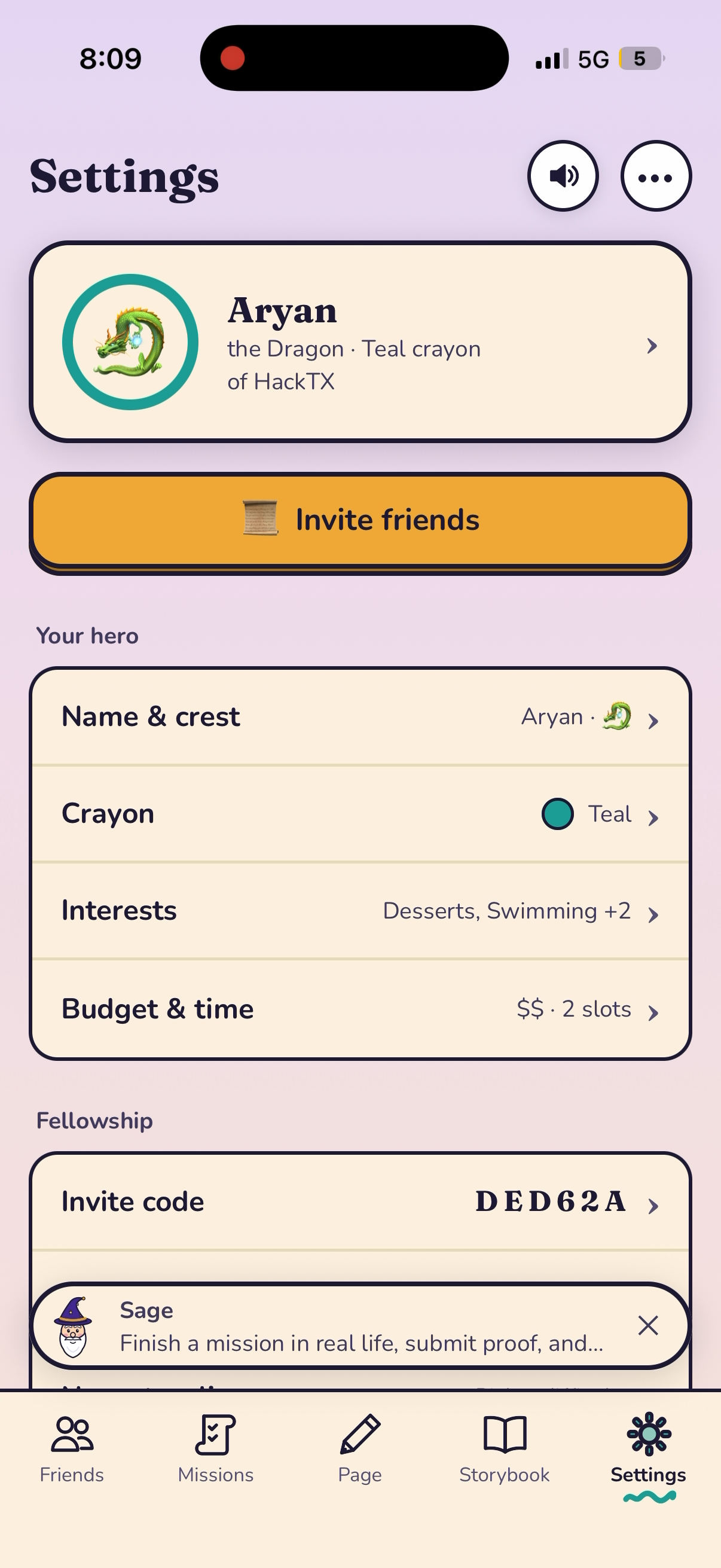
Settings Page
-
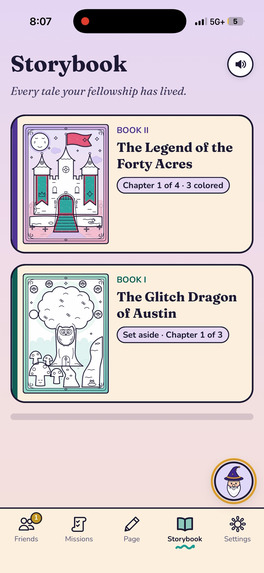
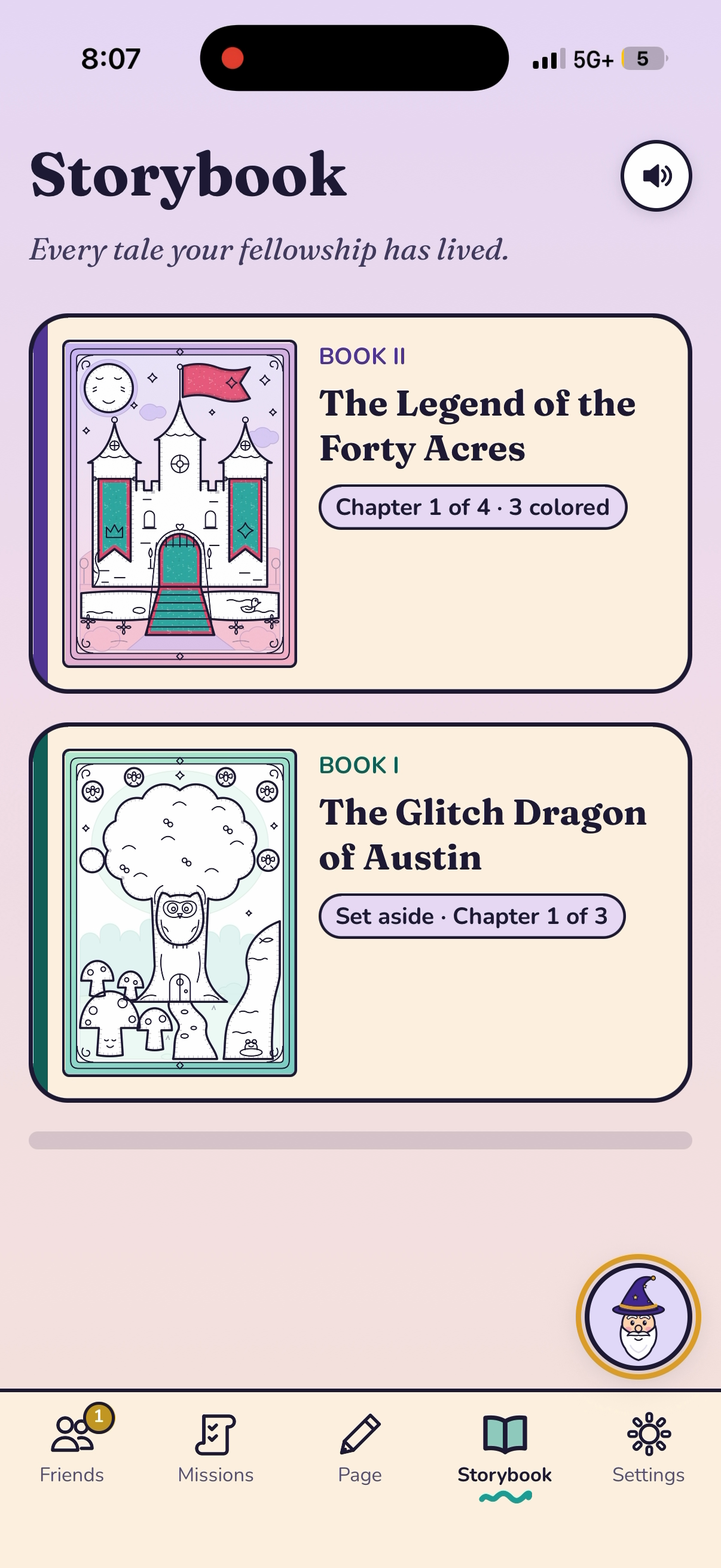
Storybook Tab
-
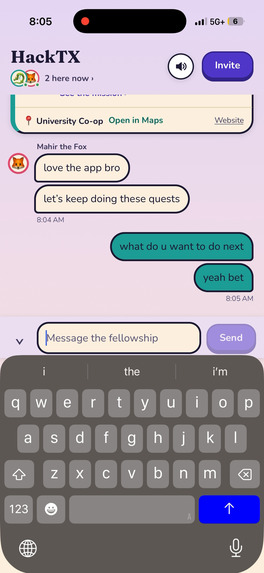
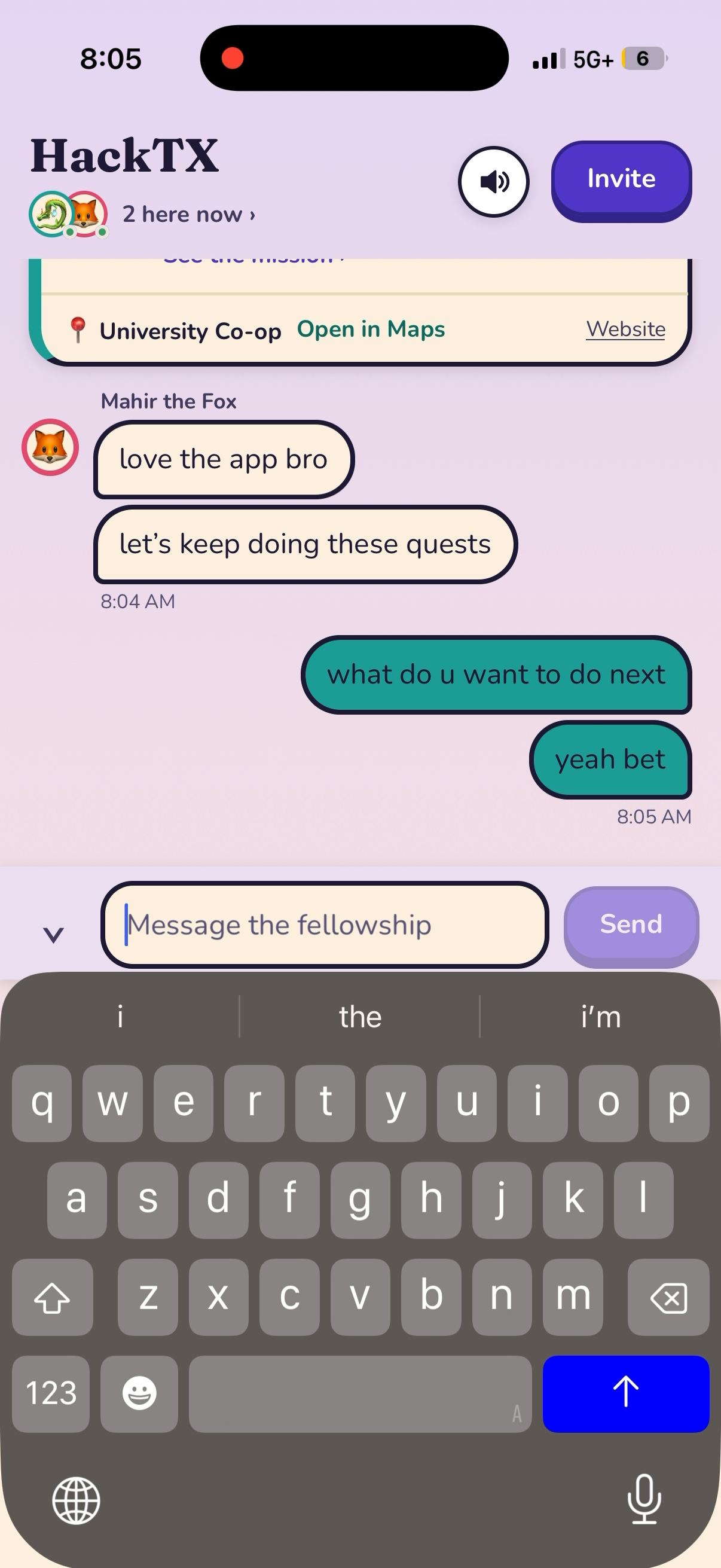
Chat With Friends
-
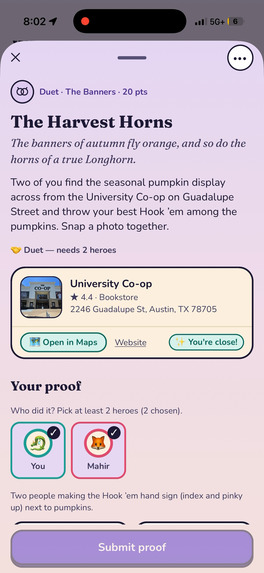
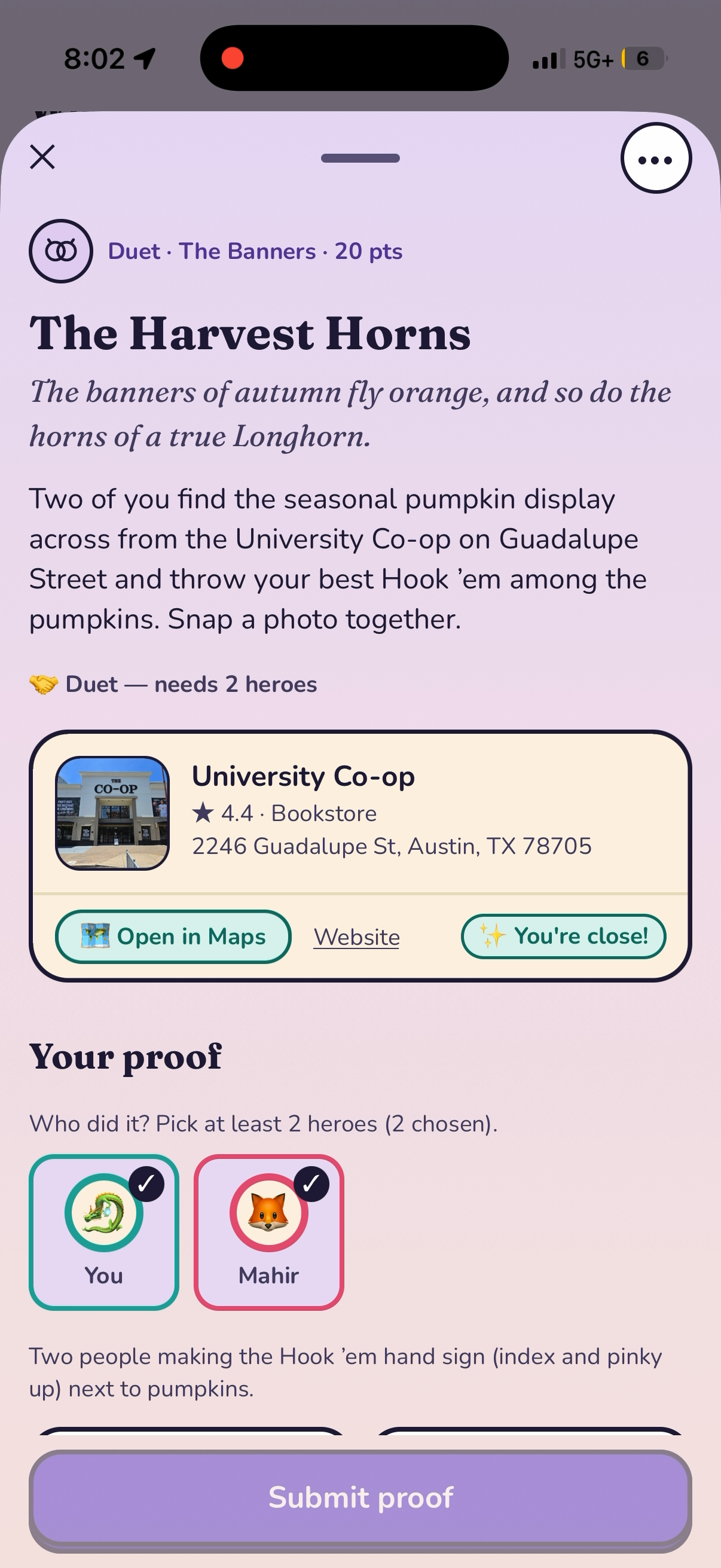
Mission Interface
-
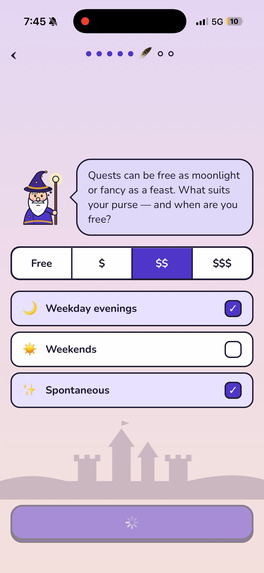
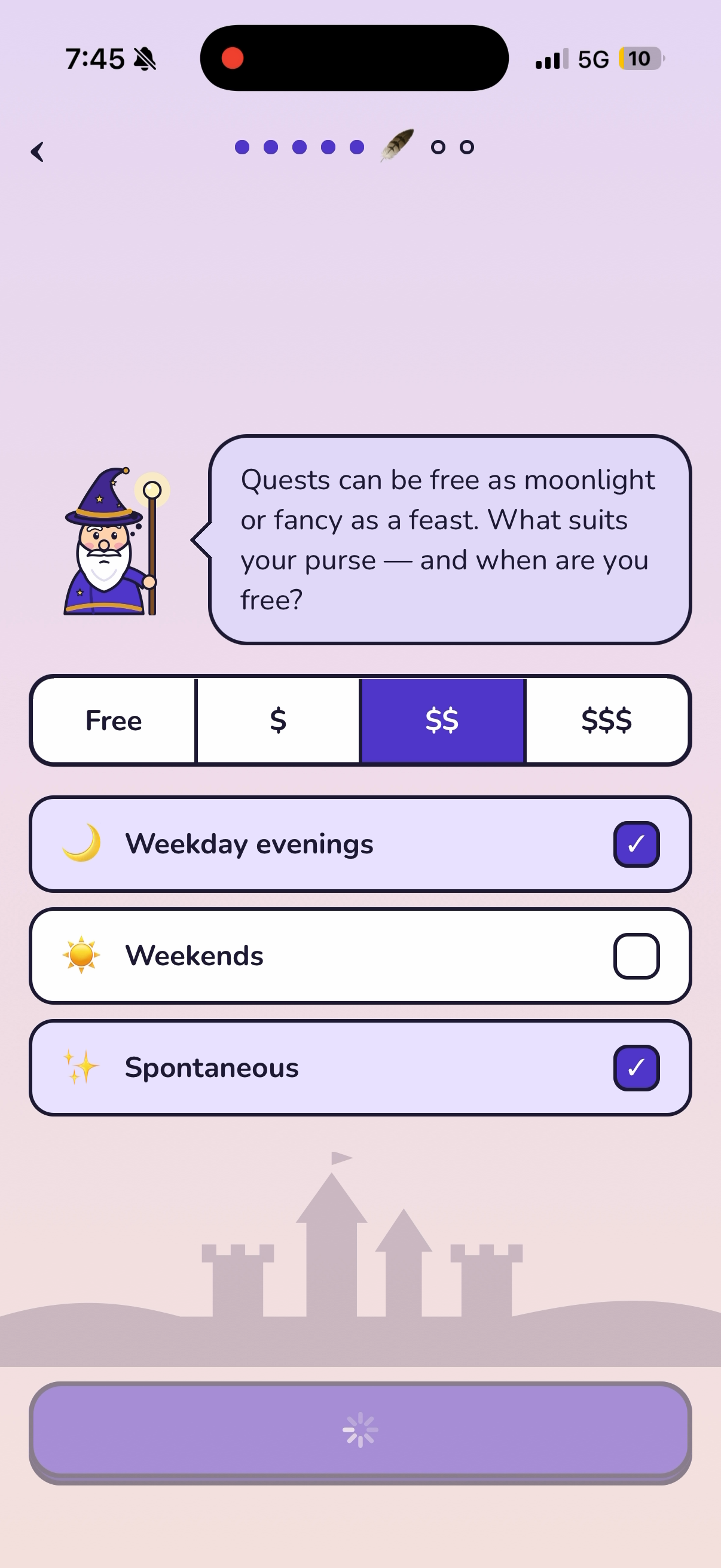
Selecting Mission Difficult/Settings
Inspiration
Every friend group has the same graveyard: a group chat full of "we should hang out soon!" that never turns into plans. Nobody wants to be the planner, and "what do you want to do?" goes in circles until everyone forgets.
We asked: what if AI didn't replace time with friends, but got you back to them? And what if making plans felt like an adventure instead of a calendar invite? HackTX's fairy-tale theme gave us the answer: turn your friendships into a storybook you can only finish together.
What it does
QuestBound turns your friend group into a Fellowship living inside a fairy-tale coloring book written just for you.
- Join in one tap. Pick a crest, a crayon color and your interests, then invite friends with one link or QR code. It works on any phone, no install needed.
- Sage writes your story. Our wizard guide, powered by Meta's Muse, blends everyone's interests with real places and events nearby, found live with SerpApi, into a multi-chapter storyline.
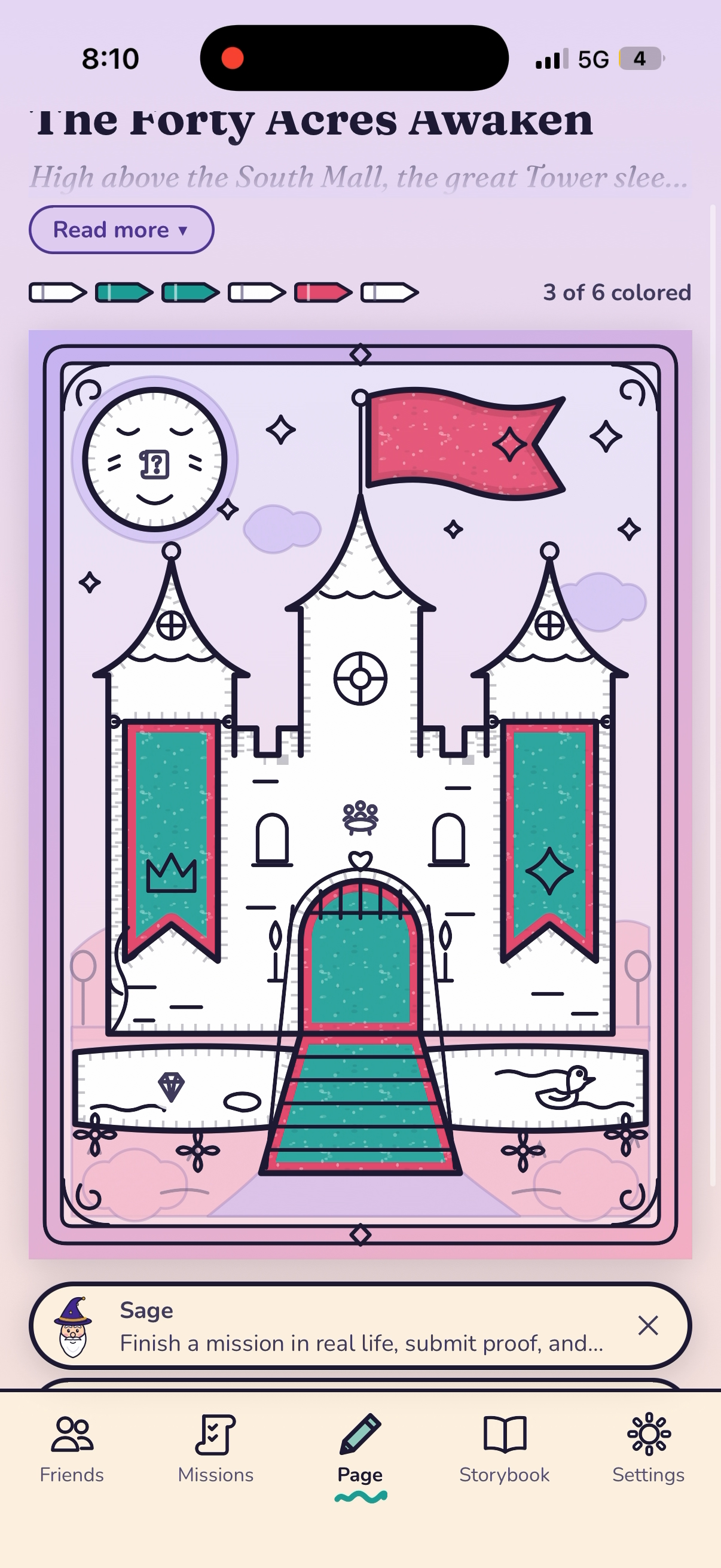
- Every page is a coloring page, and every region is a real-world quest. Quests are built for groups: 🏰 Fellowship, 🤝 Trio and Duet quests, with solo quests rare by design. You can't finish a page alone.
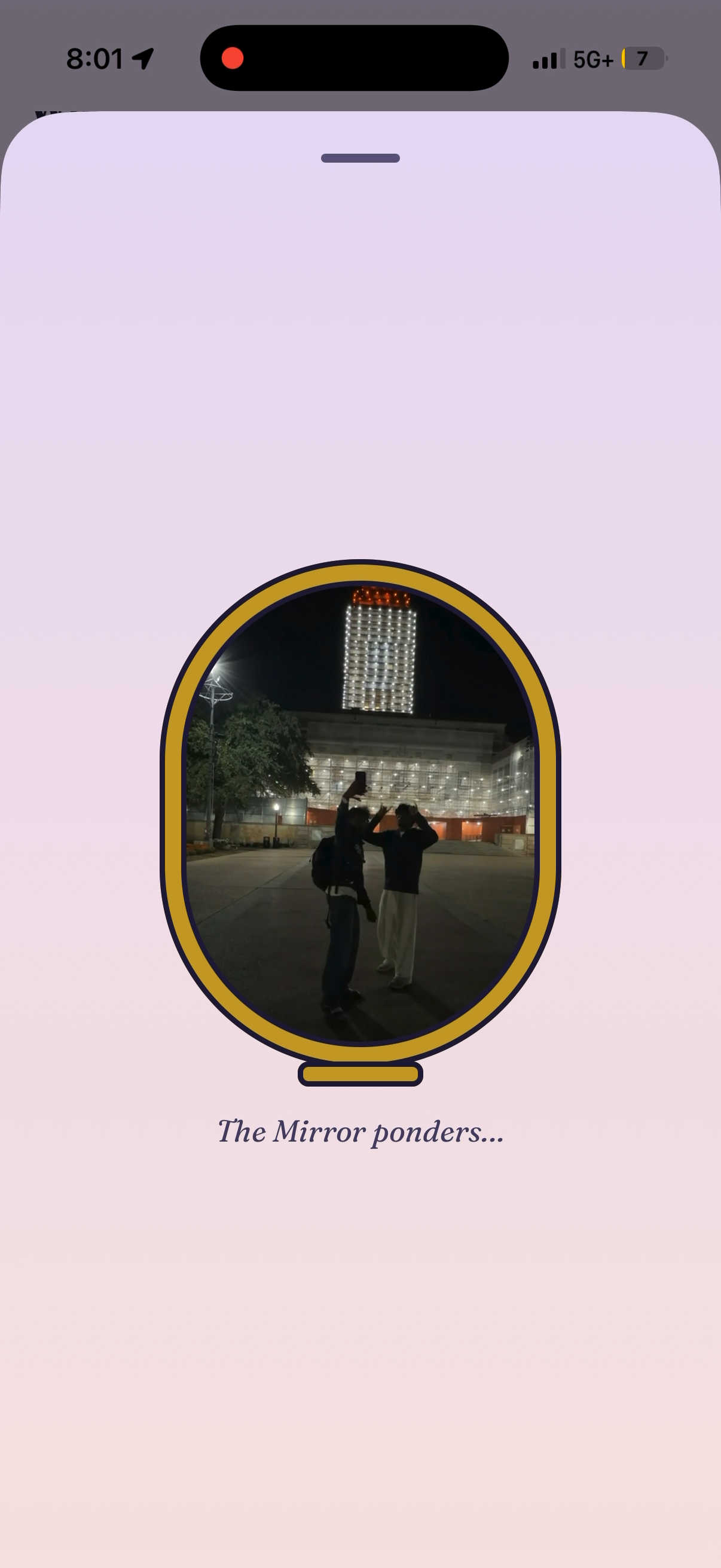
- Snap your proof and the Magic Mirror checks it. Photos are verified with Google Lens via SerpApi plus Muse's vision, riddles are graded, and poems become part of the story. Place-based quests check that you're actually there, within a generous radius.
- Watch it come alive. A trading-card-style reward pack opens, your crayon scribbles across the region, a royal proclamation lands in the group chat, and a fully colored page flips to the next chapter.
- Relive it. The Storybook pairs a Muse Image painting of every chapter with your real photos, poems and story lines, plus a stories-style montage. Finish a book and Sage writes a sequel tailored to what your group actually enjoyed. You can also ask for easier or harder quests anytime.
UT Campus Demo: "The Legend of the Forty Acres" sends your fellowship across UT Austin: a selfie at the Tower, a Hook 'em at the pumpkins across from the Co-op, a hand-drawn sketch of the Blanton, and a video-game tournament victory together.
How we built it
- App: Expo (React Native) + Expo Router in TypeScript, shipped from one codebase as a web app on EAS Hosting (installable as a PWA) and an Android APK.
- Backend: Supabase for anonymous auth, Postgres with row-level security, and Realtime, so regions color live on every friend's phone, plus chat, presence and reactions. Storage and Deno Edge Functions keep every API key off the client.
- AI (Meta Muse):
- Muse Spark writes storylines as strict JSON schema, verifies proofs with vision, narrates each completed quest, writes recaps and sequels, and powers Sage, our in-app assistant.
- Muse Image paints every chapter for the Storybook. We transcode its output from about 4.5 MB to about 370 KB so it loads on hackathon Wi-Fi.
- SerpApi as the dungeon master: Google Maps and Google Events ground every quest in real nearby places, and events are geocoded so location checks work. Google Lens is the Magic Mirror for photo proofs. Every search is cached in Postgres to save credits.
- Art and feel: 20 original hand-built SVG coloring pages (120 tappable regions), an animated crayon-scribble fill, a mood wash that leaves no white space when a page is complete, real page-flip animations, and original music and sound effects.
- Game design: points scale with crew size (Solo 10 · Duet 20 · Trio 30 · Fellowship 40) × difficulty (0.75 / 1 / 1.5), so togetherness is always worth the most.
Story generation is a pipeline, not one prompt. We compute shared and unique interests in code, ground them in real places, ask Muse for a book in a strict schema, then validate and repair every chapter: region coverage, crew sizes, real places only. If the model is slow or returns junk, a handcrafted fallback book takes over in milliseconds, so the app never breaks mid-demo.
How four of us built this in 24 hours: each teammate directed a Claude Code agent that owned one slice of the app (story engine, social, art, app shell) on its own branch, coding against frozen shared contracts and a full mock mode, so nobody waited on anyone. A dedicated merge agent integrated our branches over four merge rounds, each followed by live deploys and real-phone testing.
Challenges we ran into
- Making AI trustworthy. LLMs invent regions, ignore group sizes and hallucinate places. Strict JSON schemas, code-side validation and repair, retries and a deterministic fallback fixed it.
- Verifying reality. Google Lens returns matches, not yes/no, and it needs a public image URL. We run Lens and a vision model in parallel and combine them into one verdict. GPS checks use a generous radius with accuracy slack, so real players never get blocked unfairly.
- Native crashes on iPhone. Opening one pop-up while another closes crashes iOS. We rebuilt the new-book flow around a single non-modal "Sage is writing your book…" overlay with timeouts and retry.
- Animation polish. A one-frame flicker in the coloring reveal traced back to SVG re-renders during a points counter, and a navigation call that silently re-mounted the whole page. We fixed both by checking frame-by-frame captures.
- Shipping for everyone. Expo Go isn't something you hand a judge. We deployed a production web build with universal https invite links, so anyone can scan a QR code and join.
- Coordinating parallel AI agents. Four agents editing one app at once meant merge conflicts and mismatched interfaces. File ownership, frozen contracts and frequent small merges kept us moving.
Accomplishments that we're proud of
- The moment a region floods with your friend's color on your phone the instant they finish a quest.
- Quests grounded in real Austin places, verified to within tens of meters, not generic AI filler.
- An AI whose success metric is time friends spend together offline.
- A live, public, cross-platform app, web and Android, built and deployed in 24 hours.
- A full, polished game loop: interests → story → quest → proof → reward → color → chat → page flip → storybook → sequel.
What we learned
- AI is most powerful as a facilitator of human connection, not a substitute for it.
- Structured outputs plus validation beat clever prompting every time.
- Search grounding is what makes generative experiences feel real and actionable.
- Contracts-first, mock-first development lets humans and AI agents build in parallel without stepping on each other.
- Testing on real phones early matters: several of our hardest bugs never appeared in the browser.
What's next for QuestBound
- iOS App Store release and push notifications for proclamations.
- Smart scheduling: Sage proposes meetup times from everyone's availability.
- Community quest packs: campus orientations, city tours, club socials and team-building.
- Voice quests with Muse Voice Transcribe, and shareable finished storybooks.
- Safety and privacy controls for public quests, and richer accessibility options.
Built With
- claude
- deno
- eas
- expo-router
- expo.io
- google-events
- google-lens
- google-maps
- meta-muse-image
- meta-muse-spark
- postgresql
- pwa
- react-native
- react-native-svg
- realtime
- reanimated
- serpapi
- supabase
- typescript

Log in or sign up for Devpost to join the conversation.