About QueryHive AI
The Inspiration
The idea for QueryHive AI came from a frustrating experience working with complex datasets at my previous internship. I watched data analysts spend hours writing SQL queries, wrestling with different database schemas, and manually creating visualizations for what should have been simple questions like "What are our top-performing products this quarter?"
I realized there was a gap between the questions business users wanted to ask and the technical barriers preventing them from getting answers quickly. What if we could bridge that gap with natural language processing and make data analytics as easy as having a conversation?
What I Learned
Building QueryHive AI pushed me far beyond my comfort zone. I dove deep into natural language processing, learning how to implement query parsing algorithms that could translate human questions into database queries. Working with large datasets taught me the importance of query optimization and caching strategies.
The AI integration was particularly challenging - I had to understand how to fine-tune language models for domain-specific tasks while managing API costs and response times. I also gained hands-on experience with data visualization libraries and learned how to make complex charts both beautiful and meaningful.
Perhaps most importantly, I learned that building AI-powered tools isn't just about the technology - it's about understanding user workflows and designing interfaces that feel intuitive rather than intimidating.
How I Built It
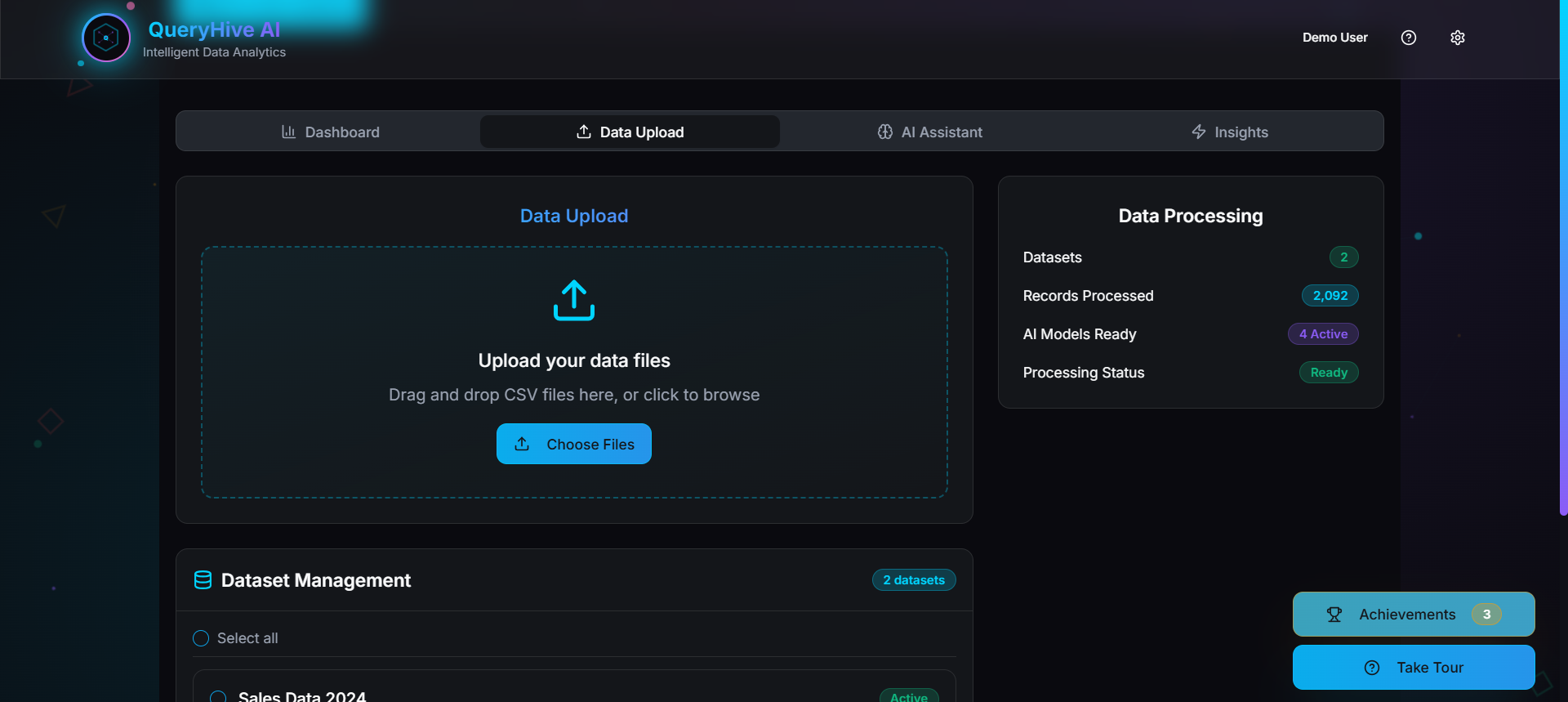
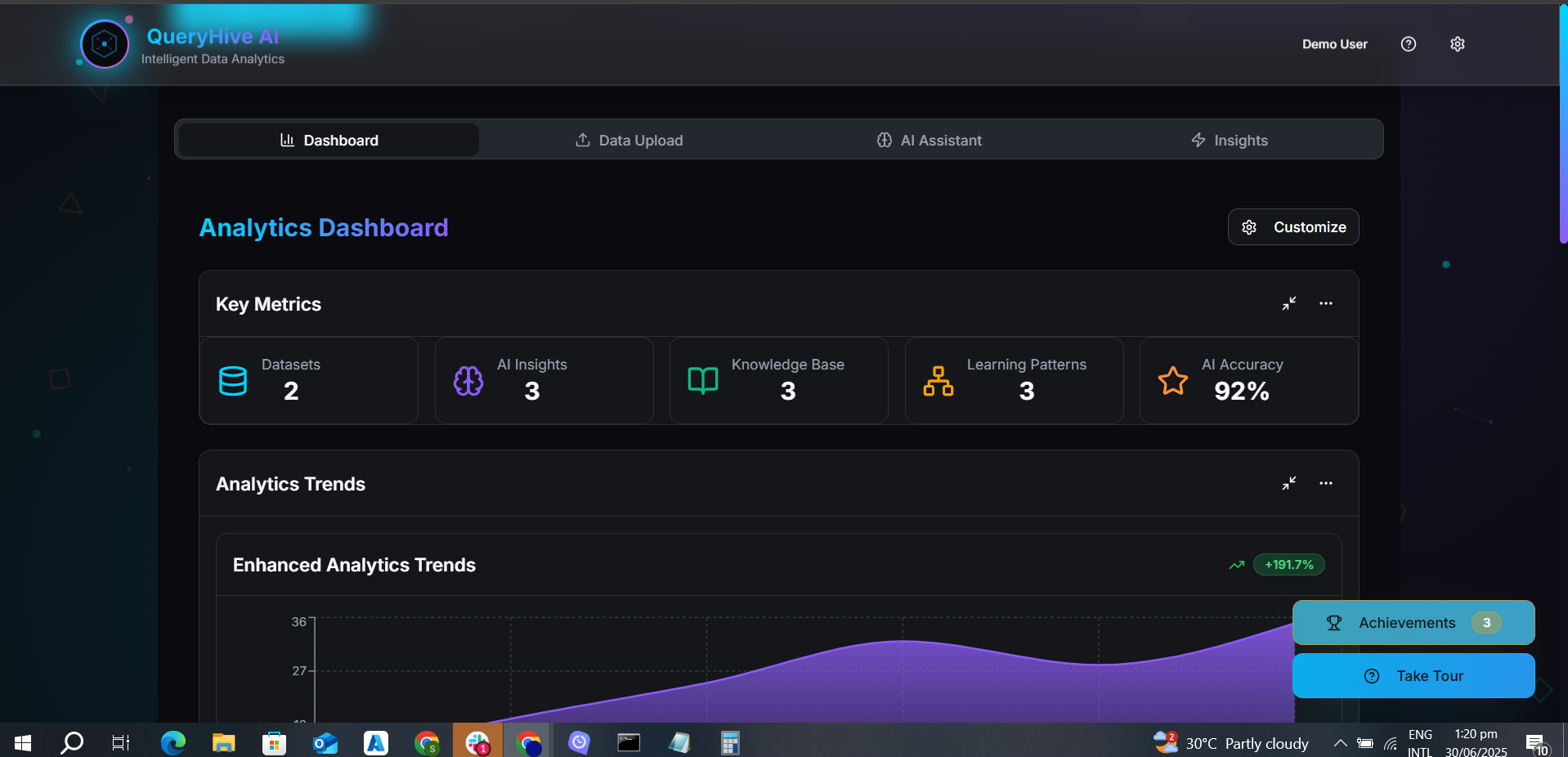
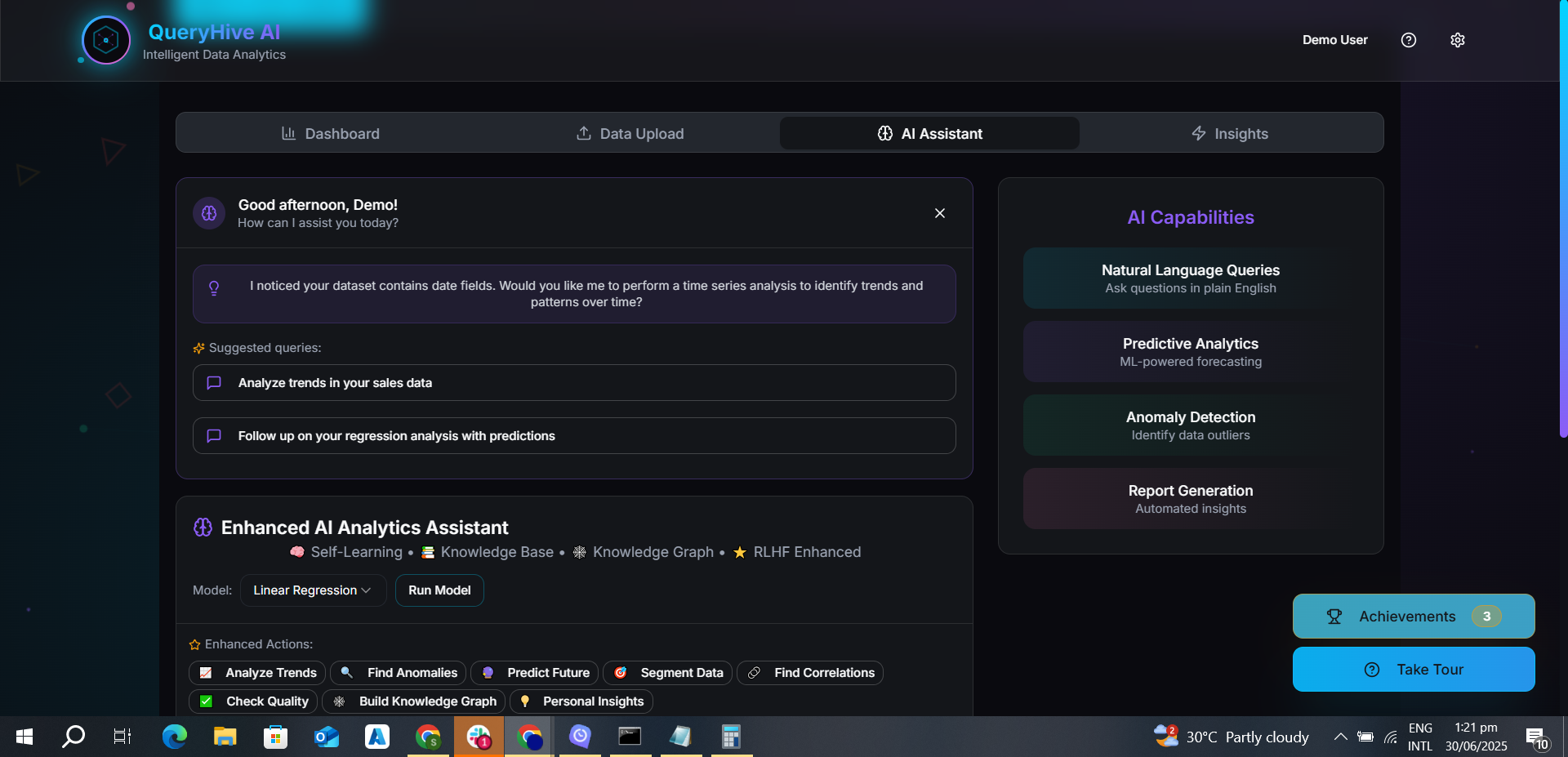
Frontend: Built with React and TypeScript for a responsive, type-safe user interface. I used Recharts for dynamic data visualizations and implemented a chat-like interface that makes querying feel conversational.
Backend: Node.js with Express, connected to a PostgreSQL database for storing user queries and results. I integrated OpenAI's API for natural language processing, with custom prompt engineering to improve query accuracy.
AI Pipeline: Developed a multi-step process that parses natural language, identifies data requirements, generates appropriate SQL queries, and formats results for visualization. I implemented caching to reduce API calls and improve response times.
Deployment: Deployed on Netlify with a serverless backend architecture, using environment variables for secure API key management.
The Challenges I Faced
Query Ambiguity: Natural language is inherently ambiguous. "Show me sales last month" could mean many things depending on context. I solved this by implementing a clarification system that asks follow-up questions when queries are unclear.
Performance Optimization: Initial queries were taking 10-15 seconds, which felt sluggish. I implemented intelligent caching, query result storage, and optimized my database indexes to bring response times down to 2-3 seconds.
AI Hallucinations: The language model sometimes generated invalid SQL or made assumptions about data that didn't exist. I built a validation layer that checks generated queries against the database schema before execution.
Data Security: Handling sensitive business data required implementing proper authentication, query sanitization, and ensuring no data leakage between users. I spent considerable time on security testing and input validation.
User Experience: Early versions overwhelmed users with too many options. Through user testing, I learned to simplify the interface and guide users through progressive disclosure of features.
What's Next
QueryHive AI currently handles basic analytics queries and generates standard visualizations. I'm working on adding support for more complex analytical functions, real-time data connections, and collaborative features that let teams share and build on each other's insights.
The goal is to democratize data analytics - making it accessible to anyone with questions, regardless of their technical background.
Built With
- axios
- cors
- css
- express.js
- github
- netlify
- node.js
- openrouter
- postgresql
- react
- recharts
- redis
- tailwind
- typescript

Log in or sign up for Devpost to join the conversation.