-
-
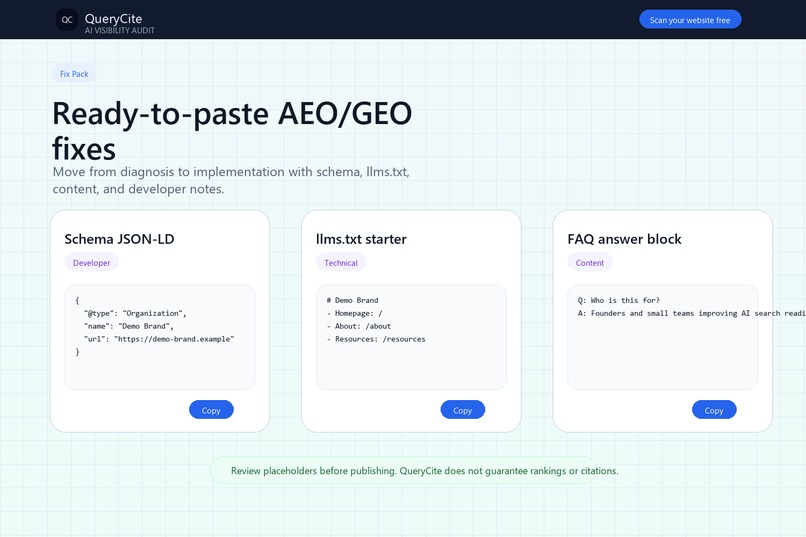
05-copy-paste-fixes
-
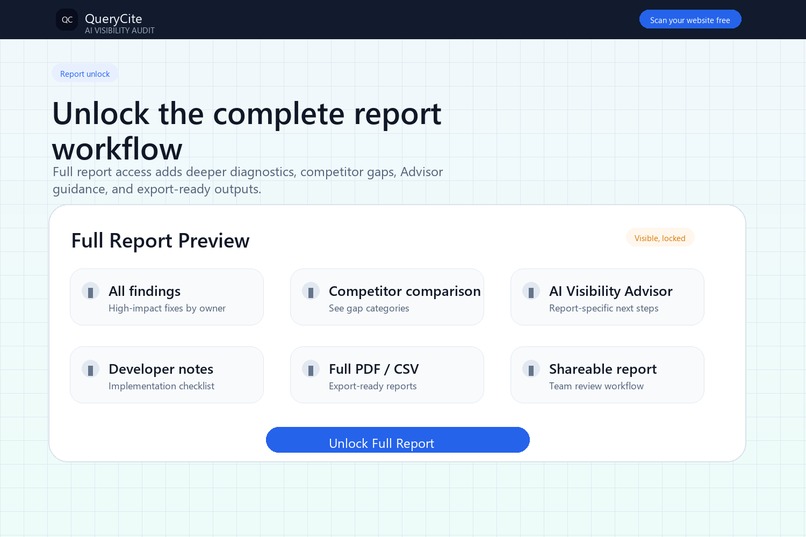
08-dashboard-report-unlock
-
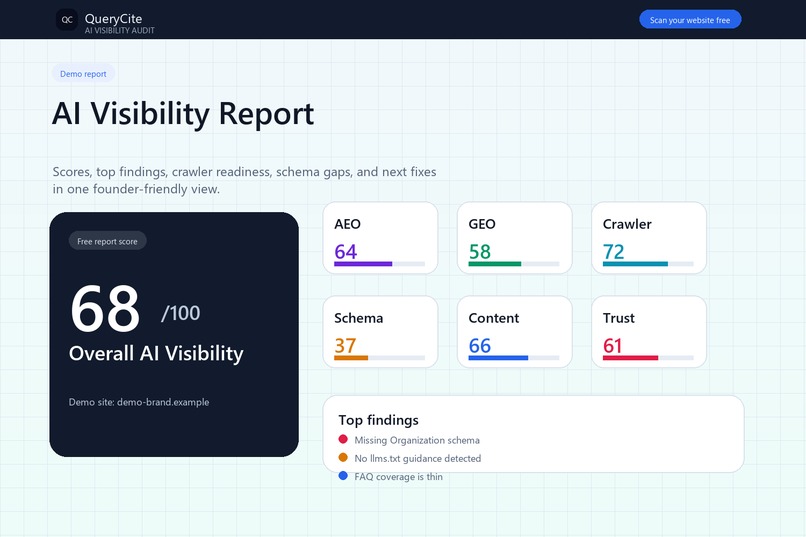
03-ai-visibility-report
-
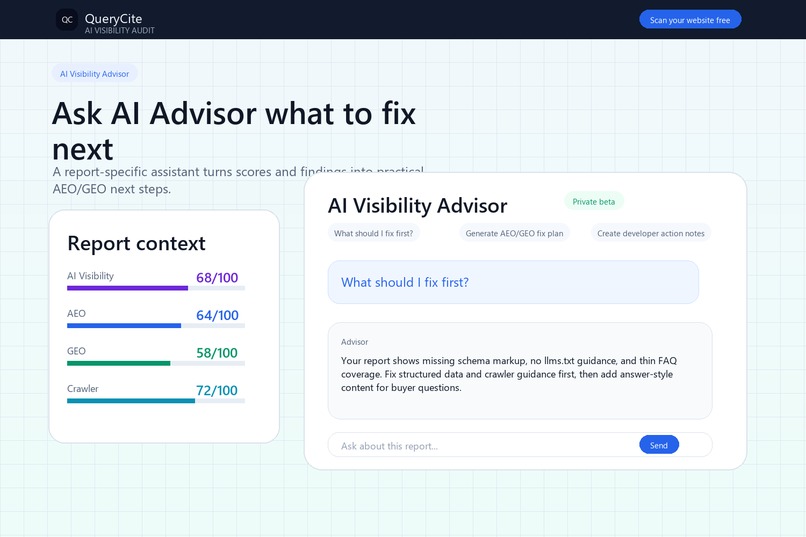
04-ai-advisor
-
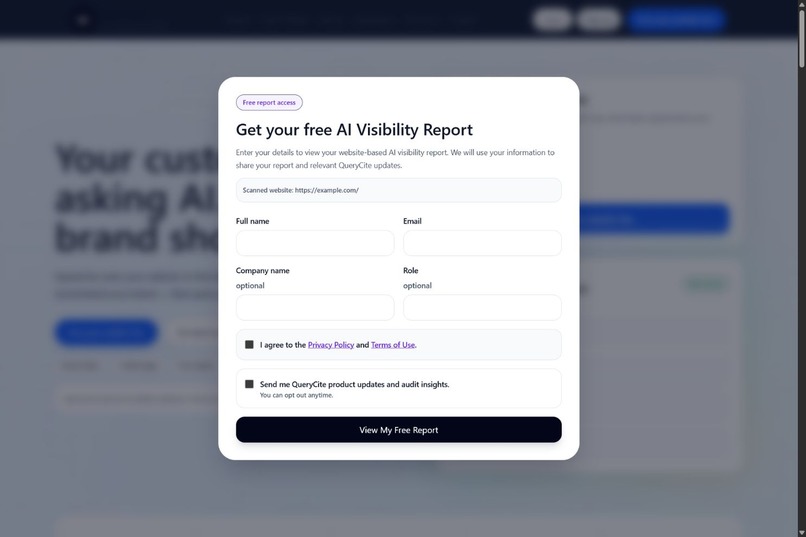
website Scan flow
-
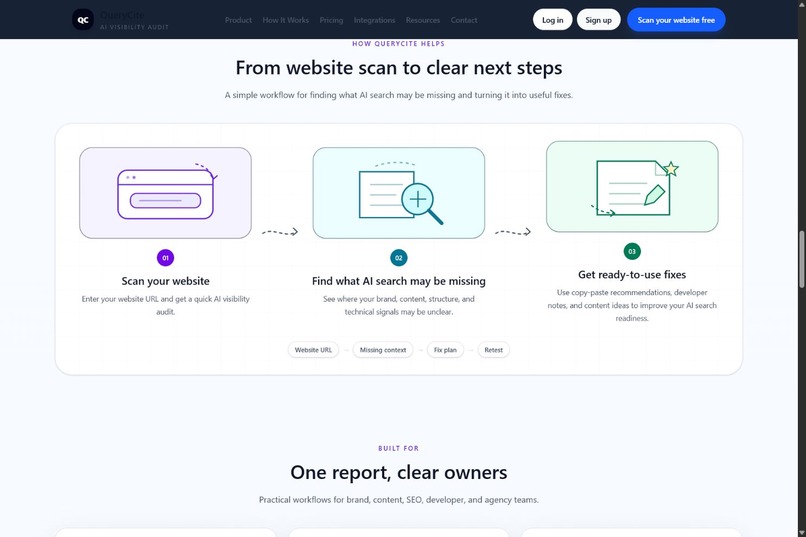
06-how-querycite-helps
-
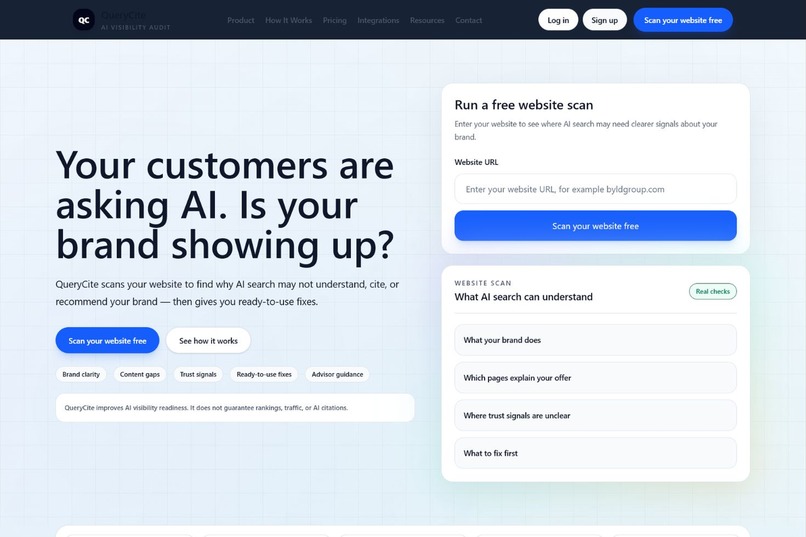
Home Page
-
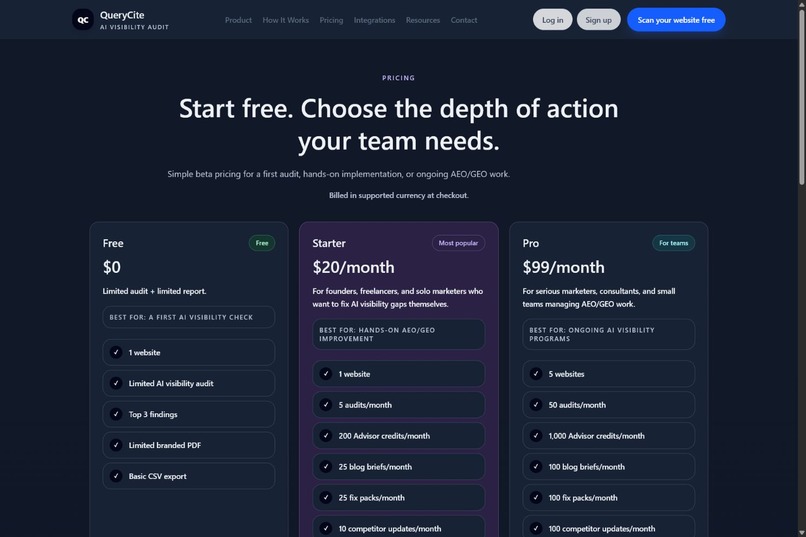
07-pricing-beta
Inspiration
I built QueryCite because search behavior is changing.
People are not only going to Google anymore. They are asking ChatGPT, Gemini, Perplexity, and other AI tools for recommendations, comparisons, and buying advice.
That made me think:
If someone asks AI about a problem my brand solves, will AI understand my website well enough to mention or recommend it?
Most small teams do not have the time or technical knowledge to understand terms like AEO, GEO, schema, crawler readiness, or llms.txt. They need a simple way to know whether their website is ready for AI search.
That is where QueryCite started.
What it does
QueryCite is an AI Visibility Audit tool for founders, entrepreneurs, freelancers, solo marketers, and small teams.
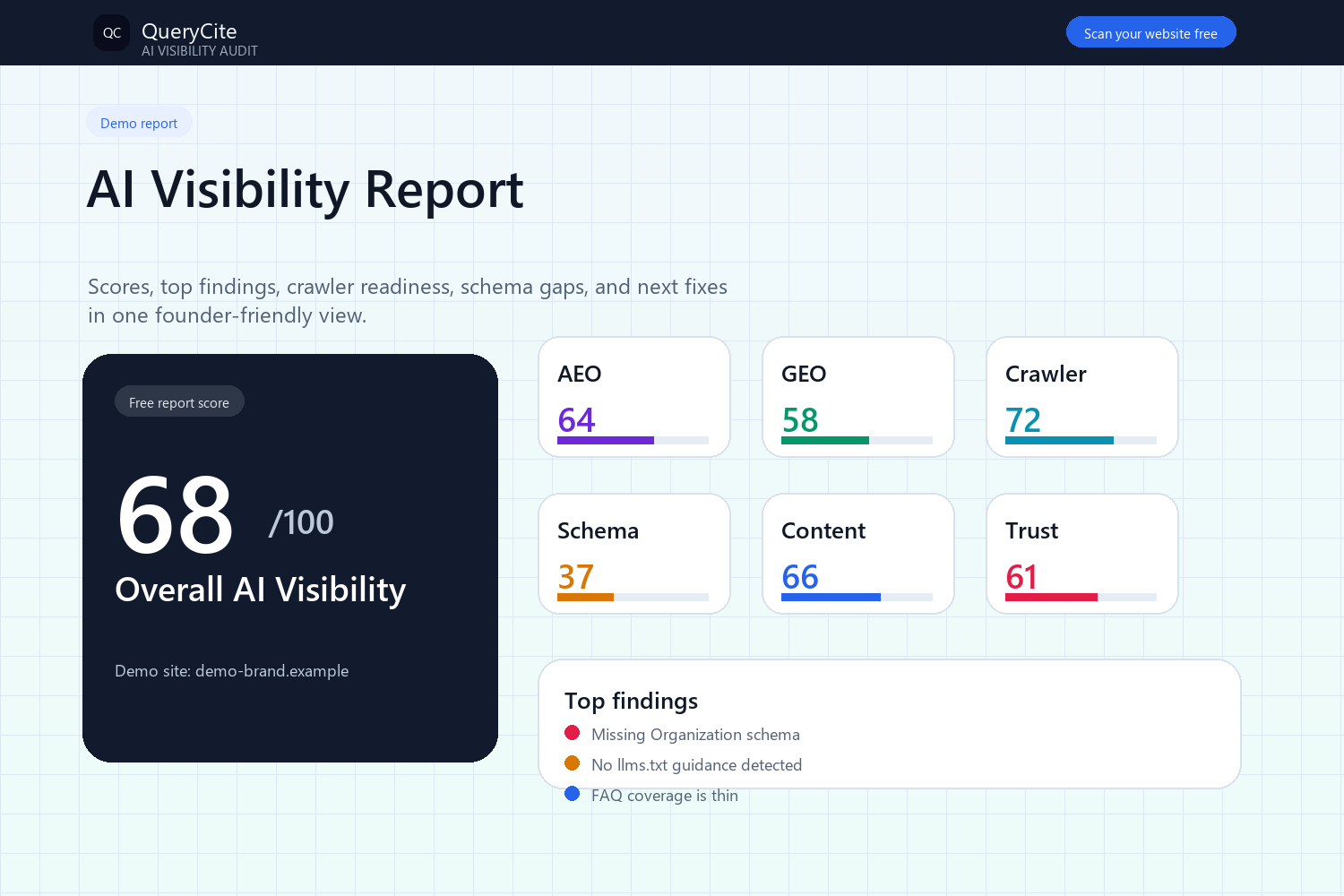
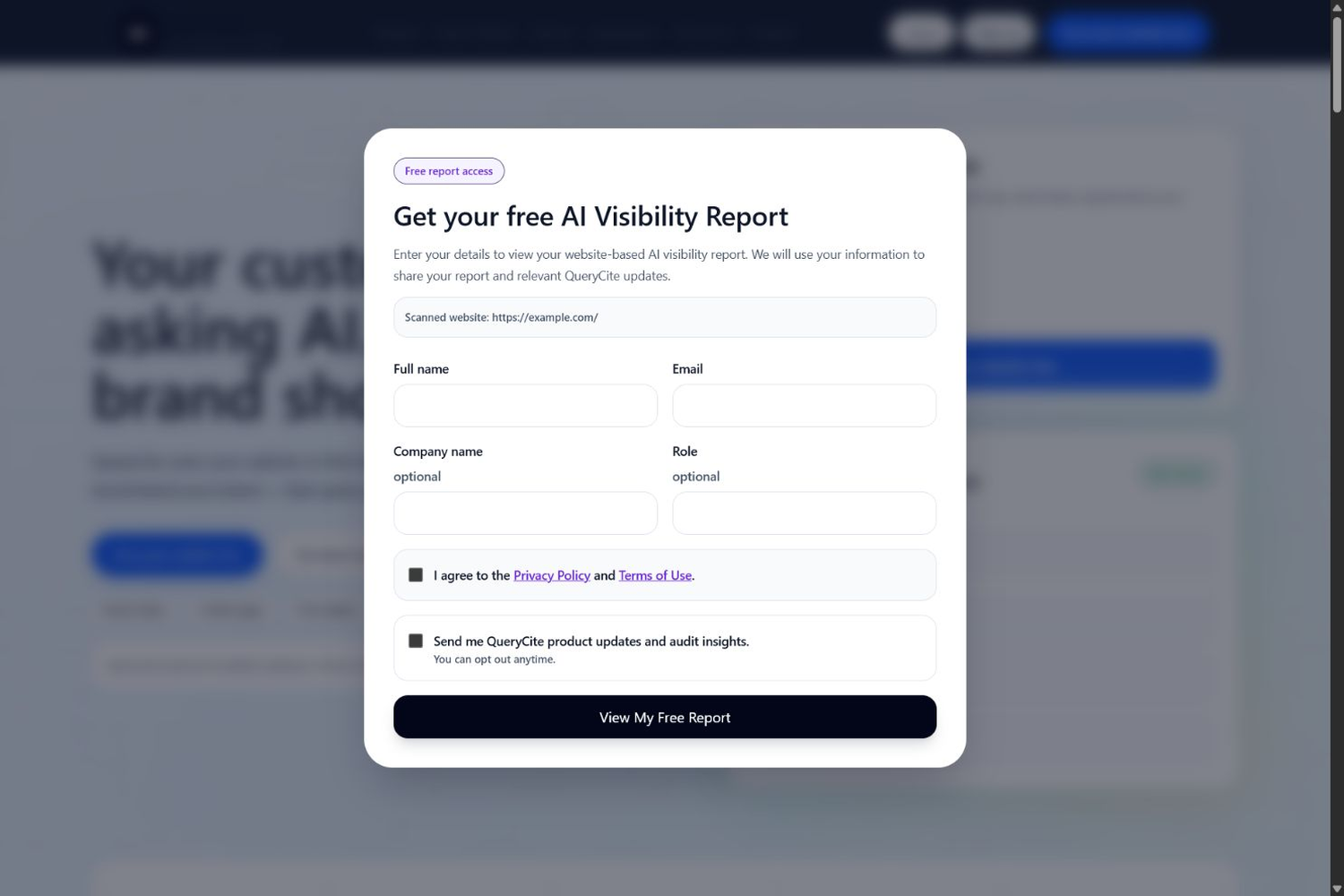
A user can enter their website and get a report that shows where their site may be weak for AI search visibility. The product looks at things like content clarity, structure, crawler readiness, schema signals, and gaps that may stop AI systems from understanding the brand properly.
The most important part is that QueryCite does not stop at a score.
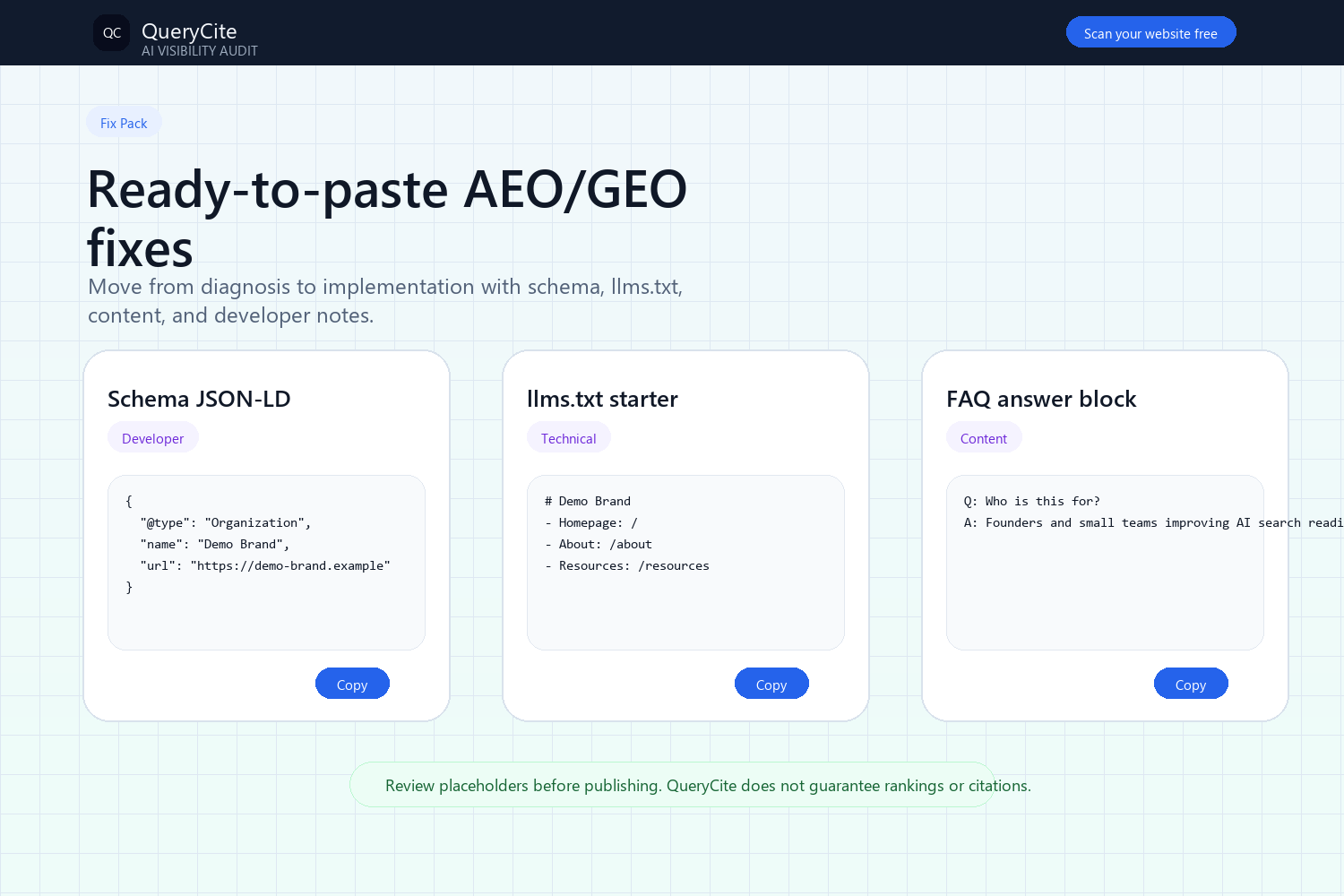
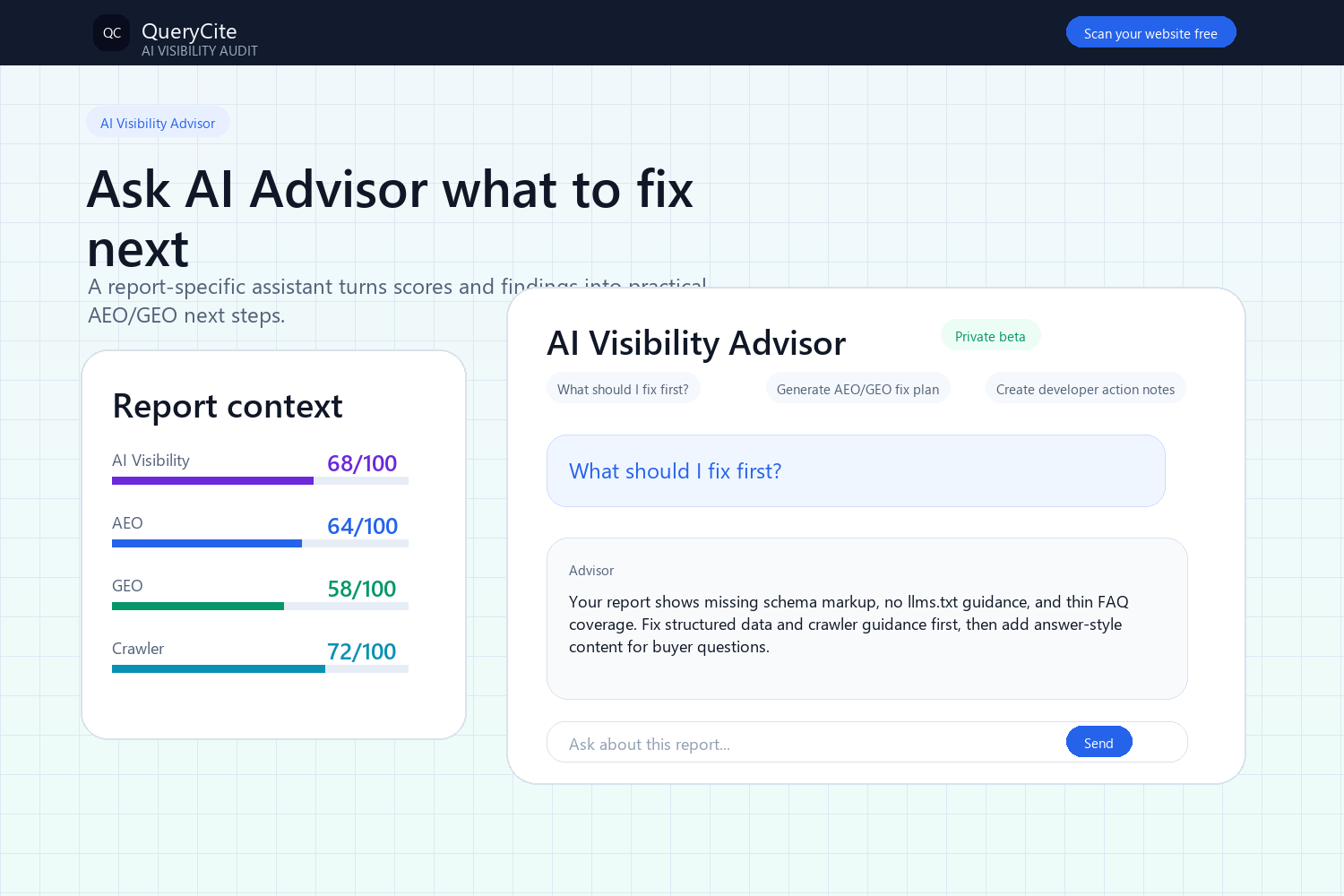
It also gives ready-to-use fixes through AI Advisor, including practical recommendations, FAQ ideas, schema suggestions, developer notes, and content guidance.
The goal is not to promise guaranteed AI rankings or guaranteed citations. The goal is to help businesses understand what they should fix first.
How I built it
QueryCite was built as a full-stack SaaS product.
The main stack is:
- Next.js and TypeScript for the app
- Supabase for auth and database
- Gemini for AI-powered recommendations
- Razorpay for payments
- Resend for emails
- Vercel for hosting
- GitHub for version control
- Codex and GPT-5.6 for development, debugging, product thinking, and iteration
- Figma for design support
I built the core user flows around a simple journey:
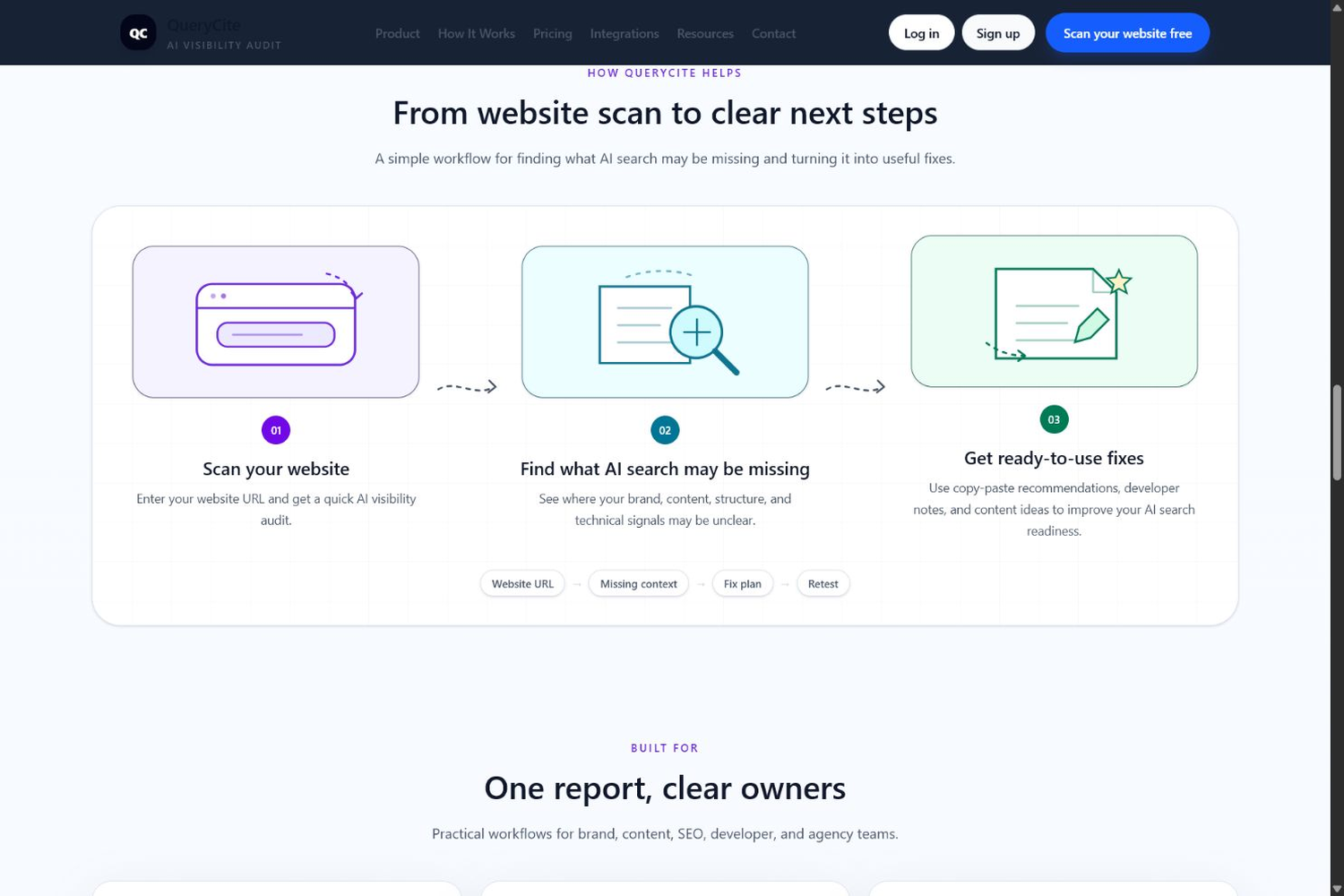
Website scan → AI visibility report → AI Advisor → ready-to-use fixes → optional paid access.
A lot of the work went into making the product feel simple for non-technical users.
Challenges I faced
The hardest part was simplifying the category.
AI visibility can quickly become too technical. Early versions of the product used words like AEO, GEO, LLM optimization, crawler readiness, and schema too early. That sounded smart, but it was not easy for a founder to understand in five seconds.
So I changed the positioning to:
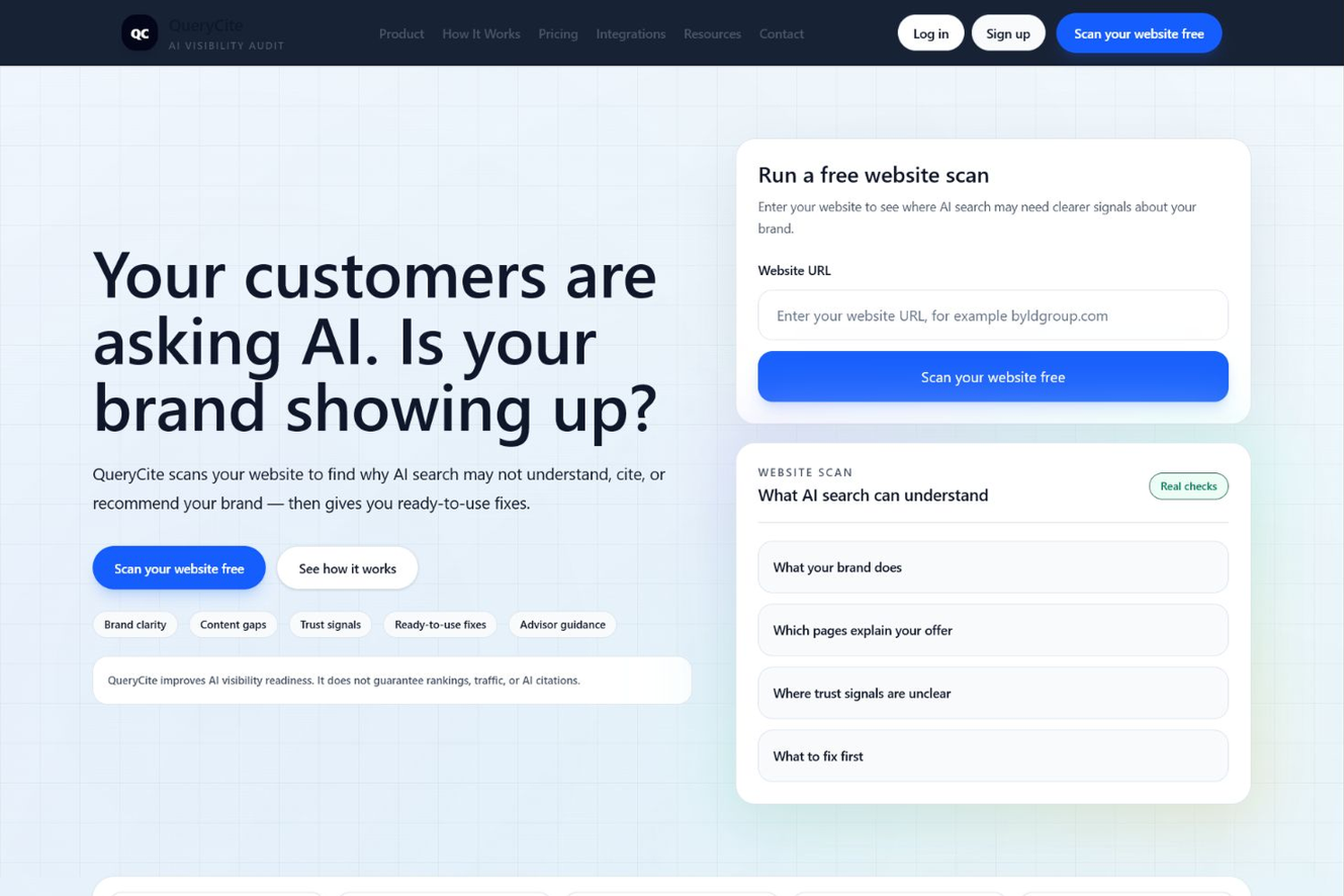
“Your customers are asking AI. Is your brand showing up?”
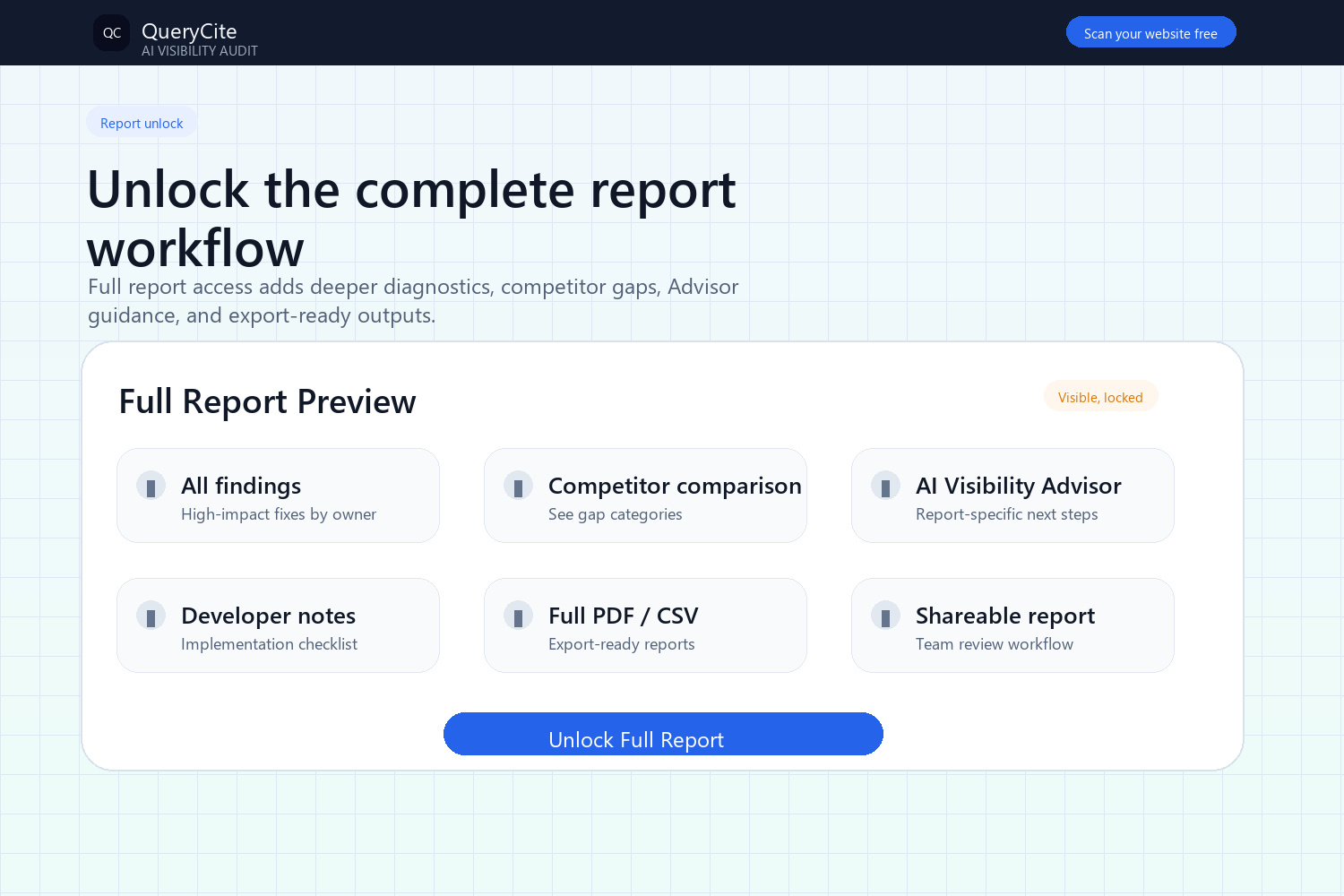
Another challenge was making the SaaS flow real, not just a demo. I had to validate authentication, payments, Razorpay webhooks, subscription access, coupons, billing, invoices, report unlocks, and AI Advisor responses.
Payment success alone was not enough. The app also had to correctly unlock access and show the right subscription state.
What I learned
I learned that AI visibility is not just a technical SEO problem.
It is a mix of clear positioning, structured content, crawlability, FAQs, schema, trust signals, and practical recommendations.
I also learned that product messaging matters as much as product features. If users do not understand the problem quickly, they will not care how powerful the tool is.
Codex and GPT-5.6 helped me move faster, but I still had to make the product decisions, test the flows, review the outputs, and decide what was actually useful.
What I am proud of
I am proud that QueryCite became more than a landing page or prototype.
It has a working scan flow, report experience, AI Advisor, payment flow, billing, invoices, and clear founder-friendly positioning.
The product solves a real emerging problem:
Small businesses need to know whether AI can understand and recommend them.
QueryCite gives them a practical starting point.
What is next
Next, I want to test QueryCite with more founders, marketers, and small teams.
The next improvements are:
- Better report quality
- More industry-specific recommendations
- Stronger AI Advisor answers
- Cleaner UI/UX for reports
- Better onboarding
- More actionable implementation guidance
The long-term goal is to make QueryCite a simple and trusted AI visibility audit platform for businesses preparing for the AI search era.
Built With
- ai
- codex
- css
- figma
- gemini
- github
- next.js
- razorpay
- react
- resend
- saas
- search
- supabase
- tailwind
- typescript
- vercel

Log in or sign up for Devpost to join the conversation.