-
-
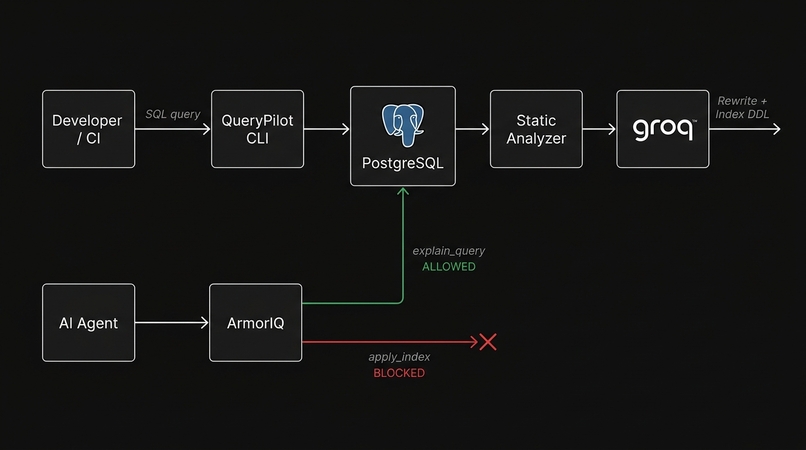
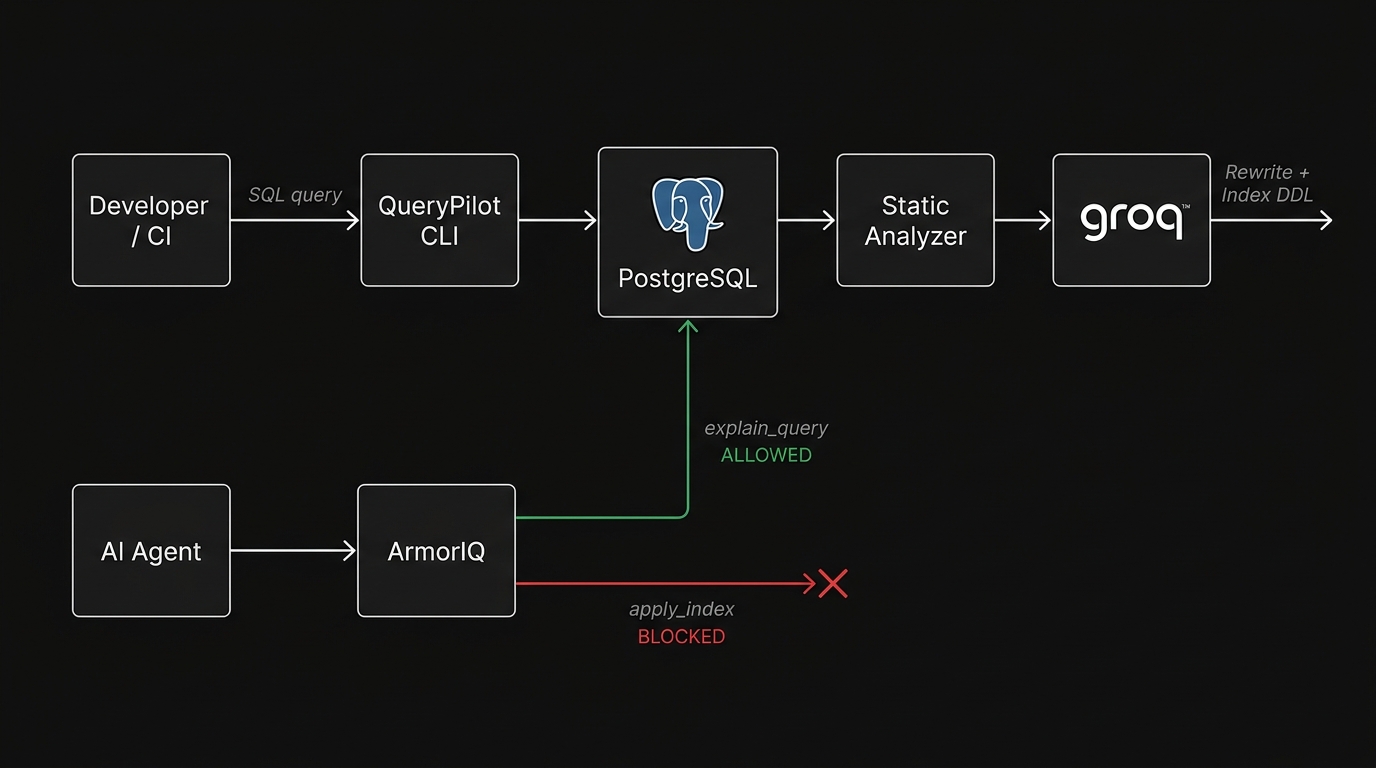
Architecture Diagram
-
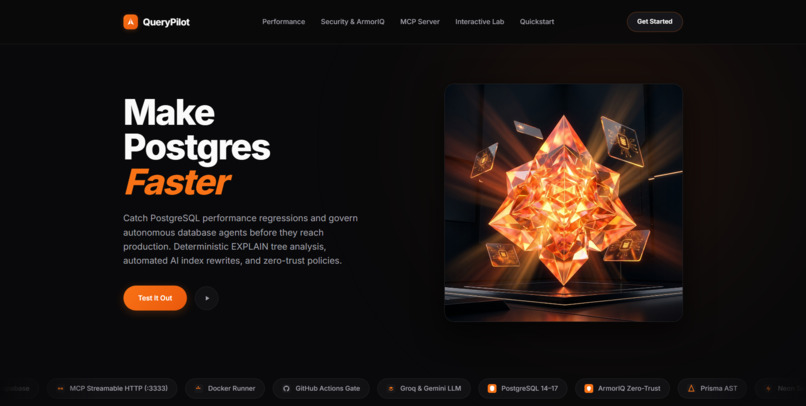
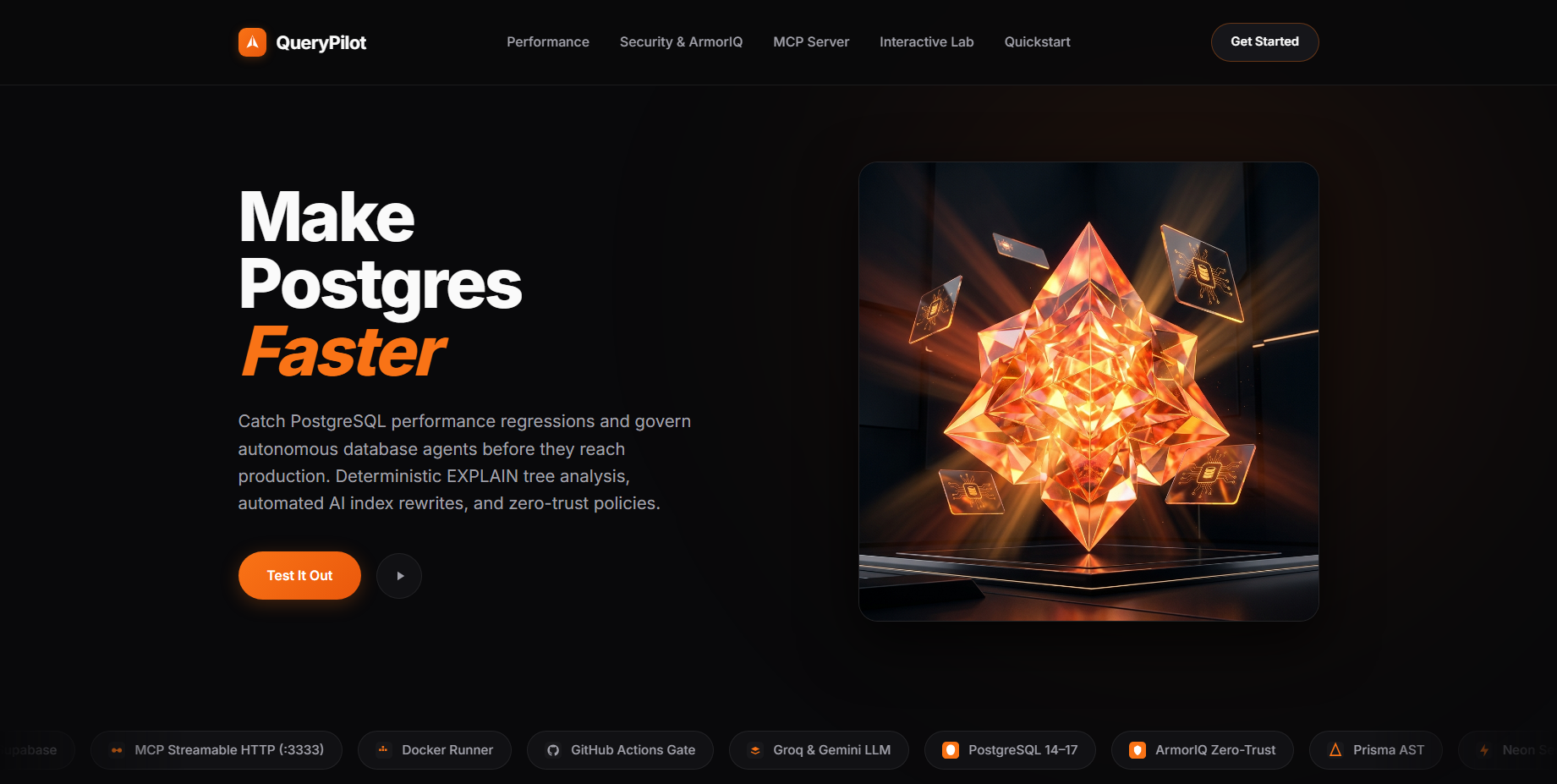
Home Page
-
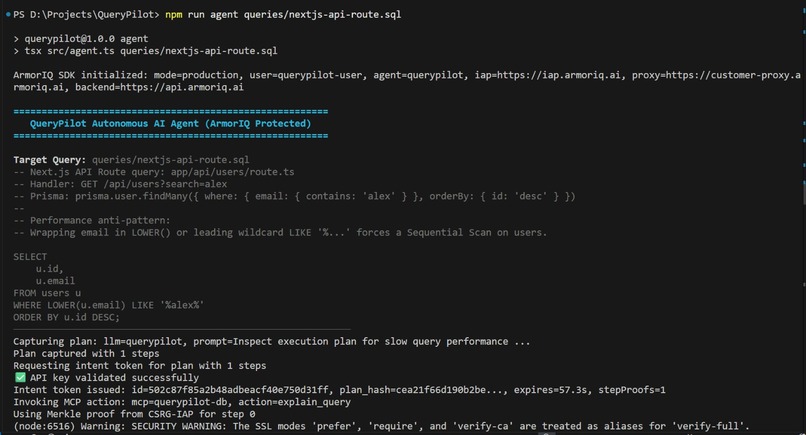
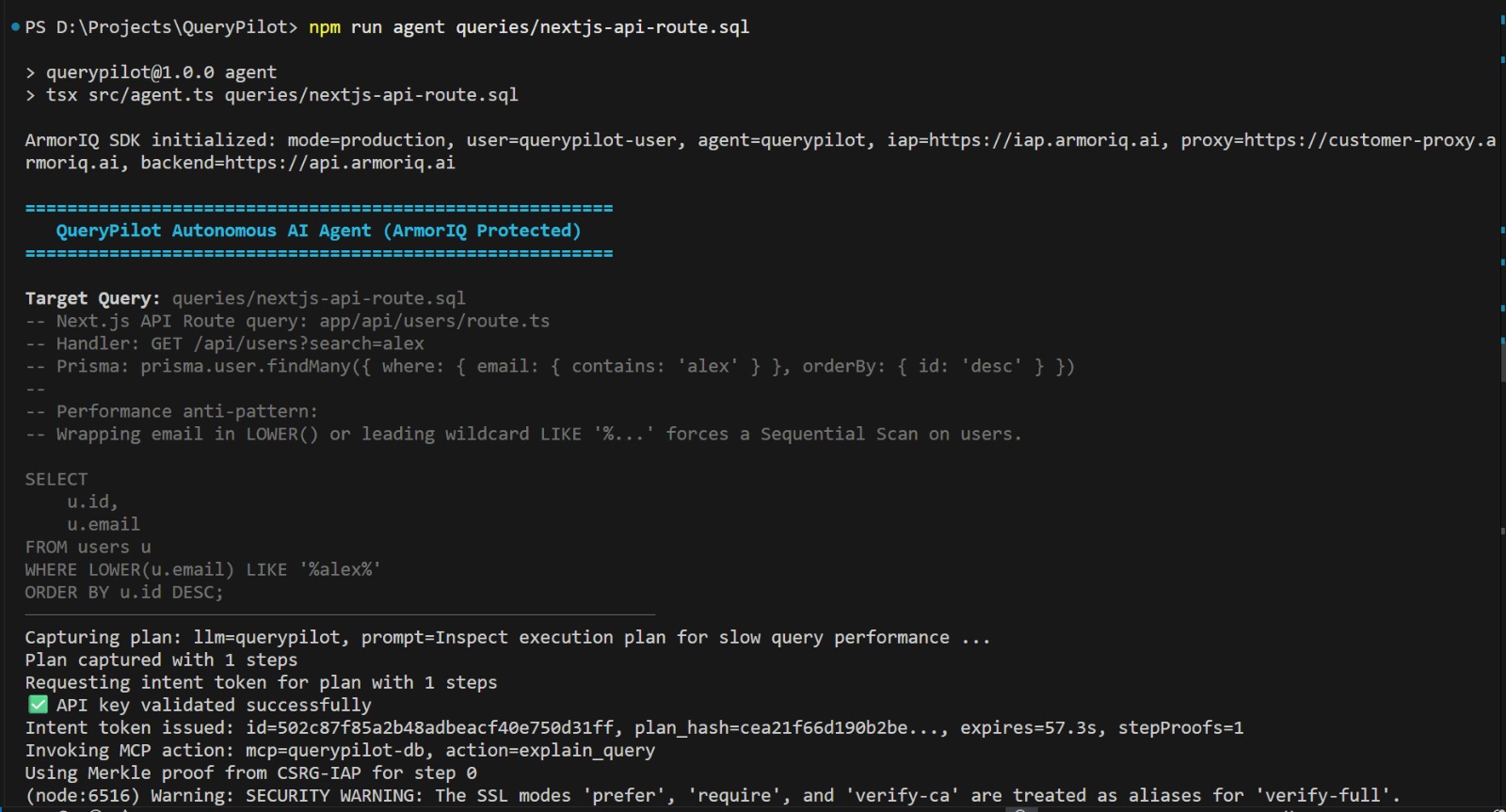
Run Command via CLI
-
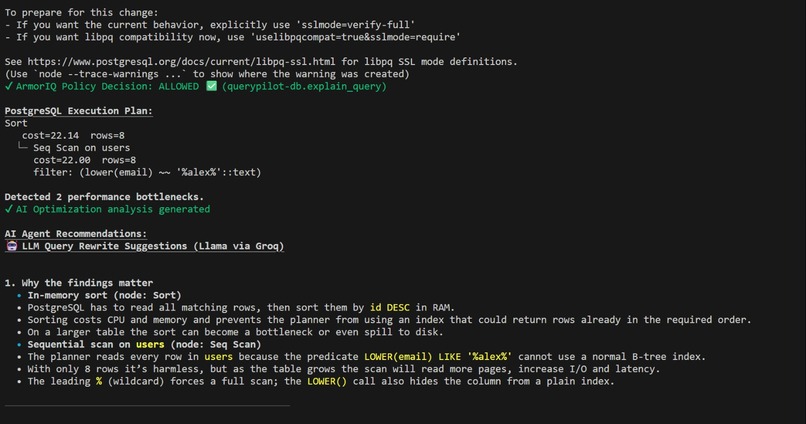
Command Output
-
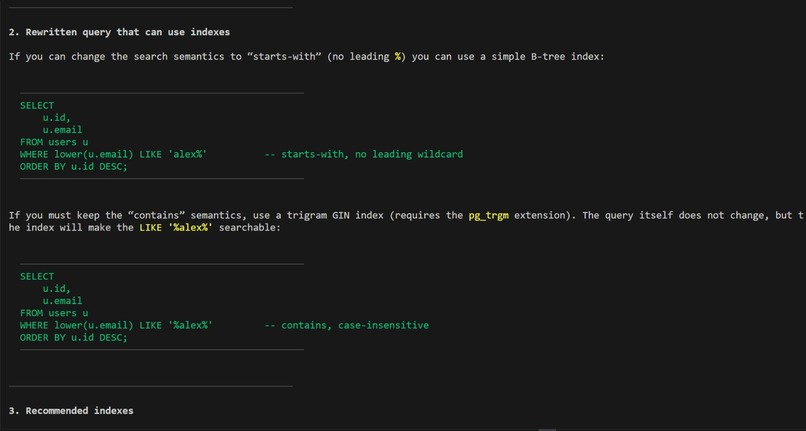
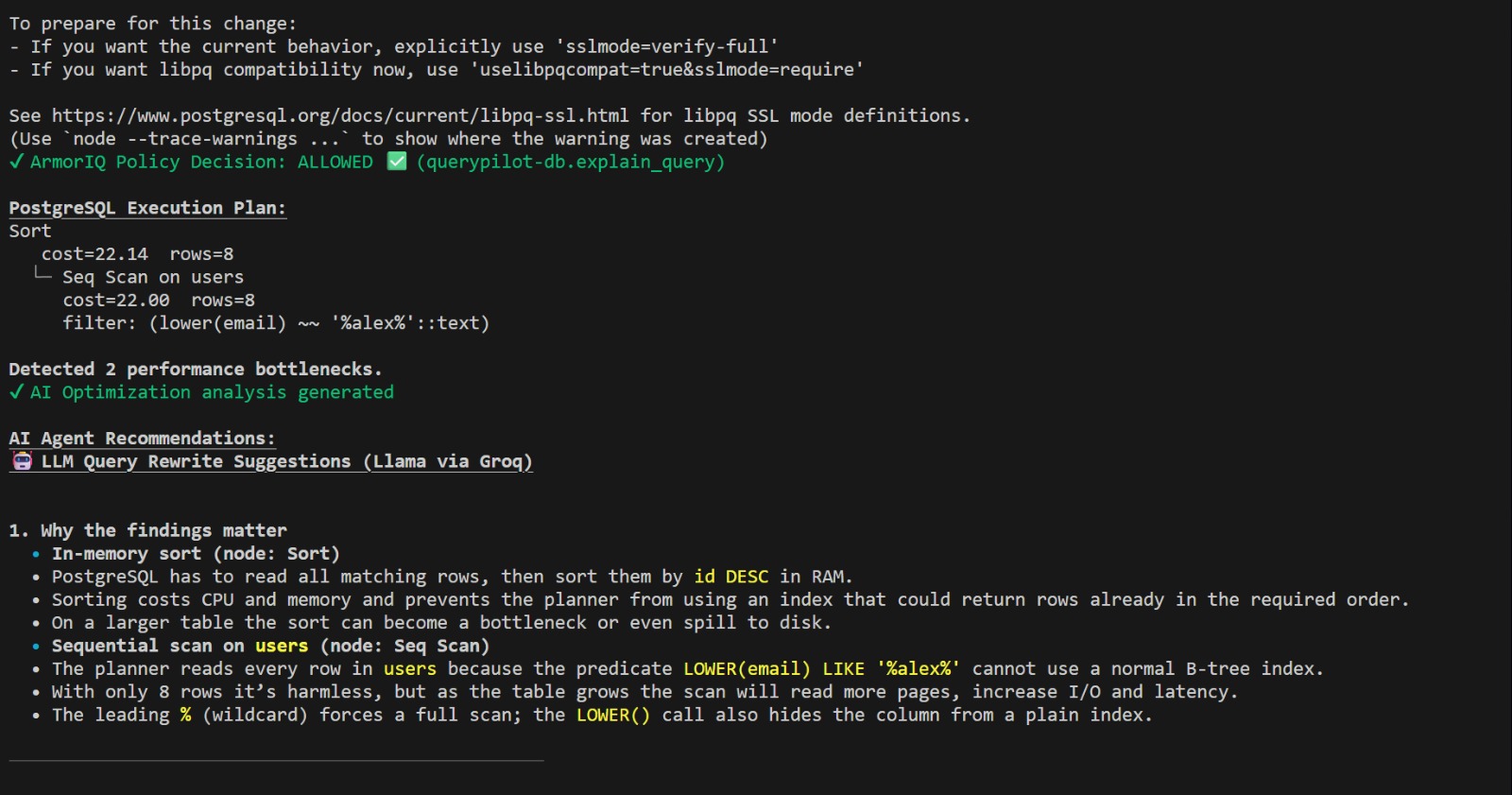
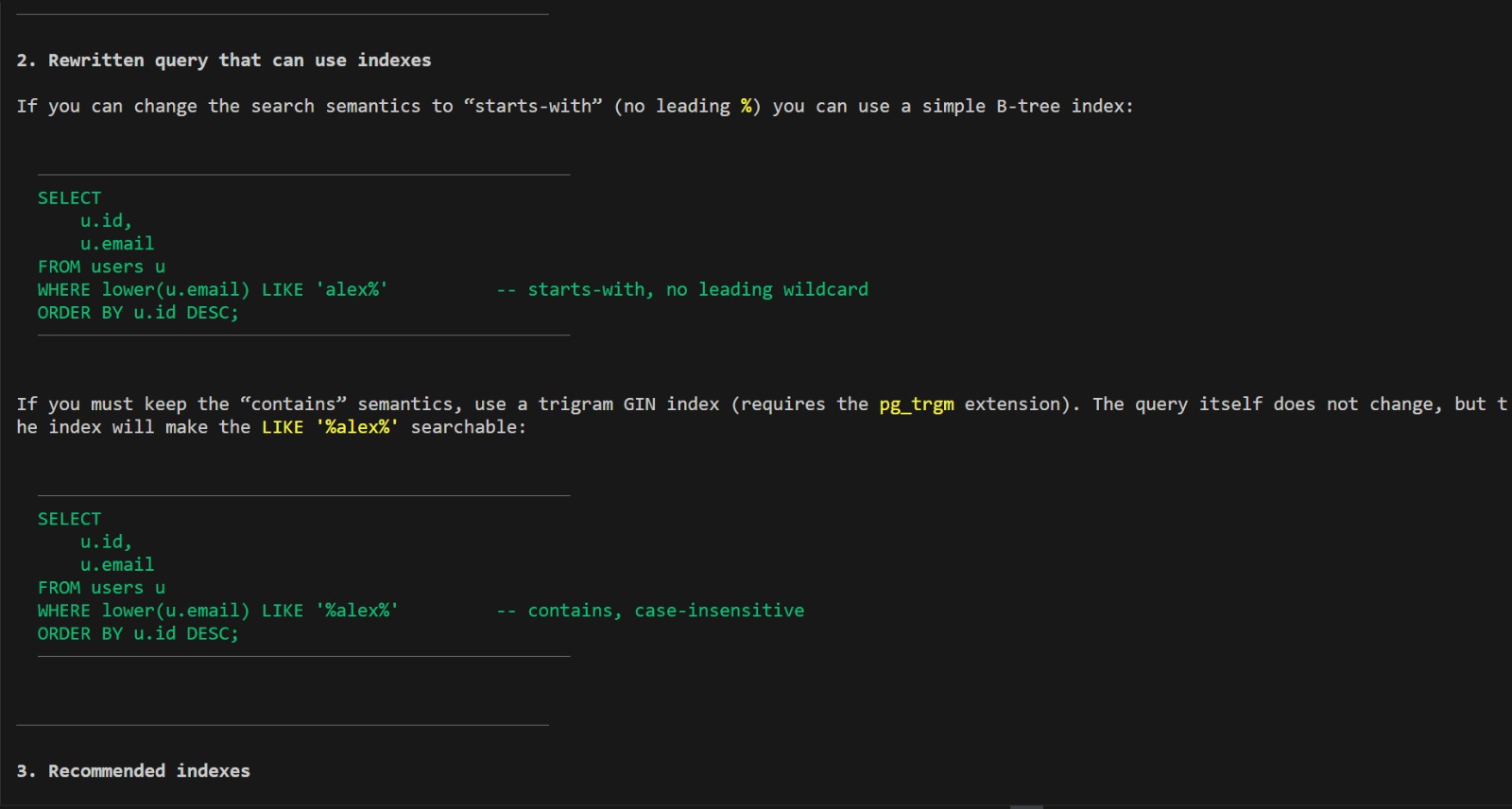
AI Recommandations #1
-
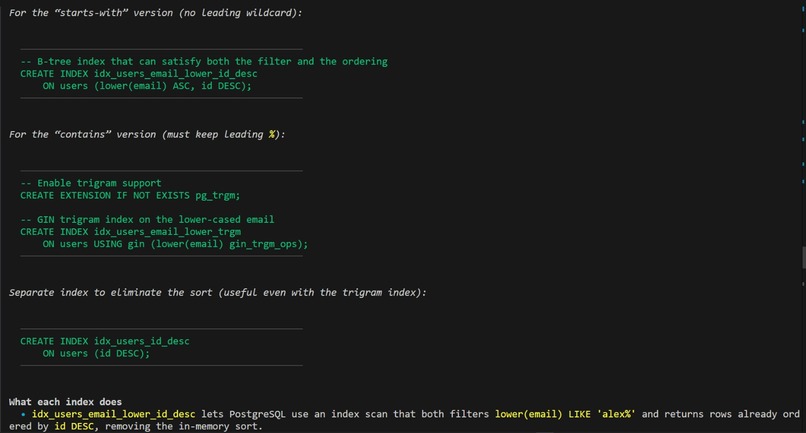
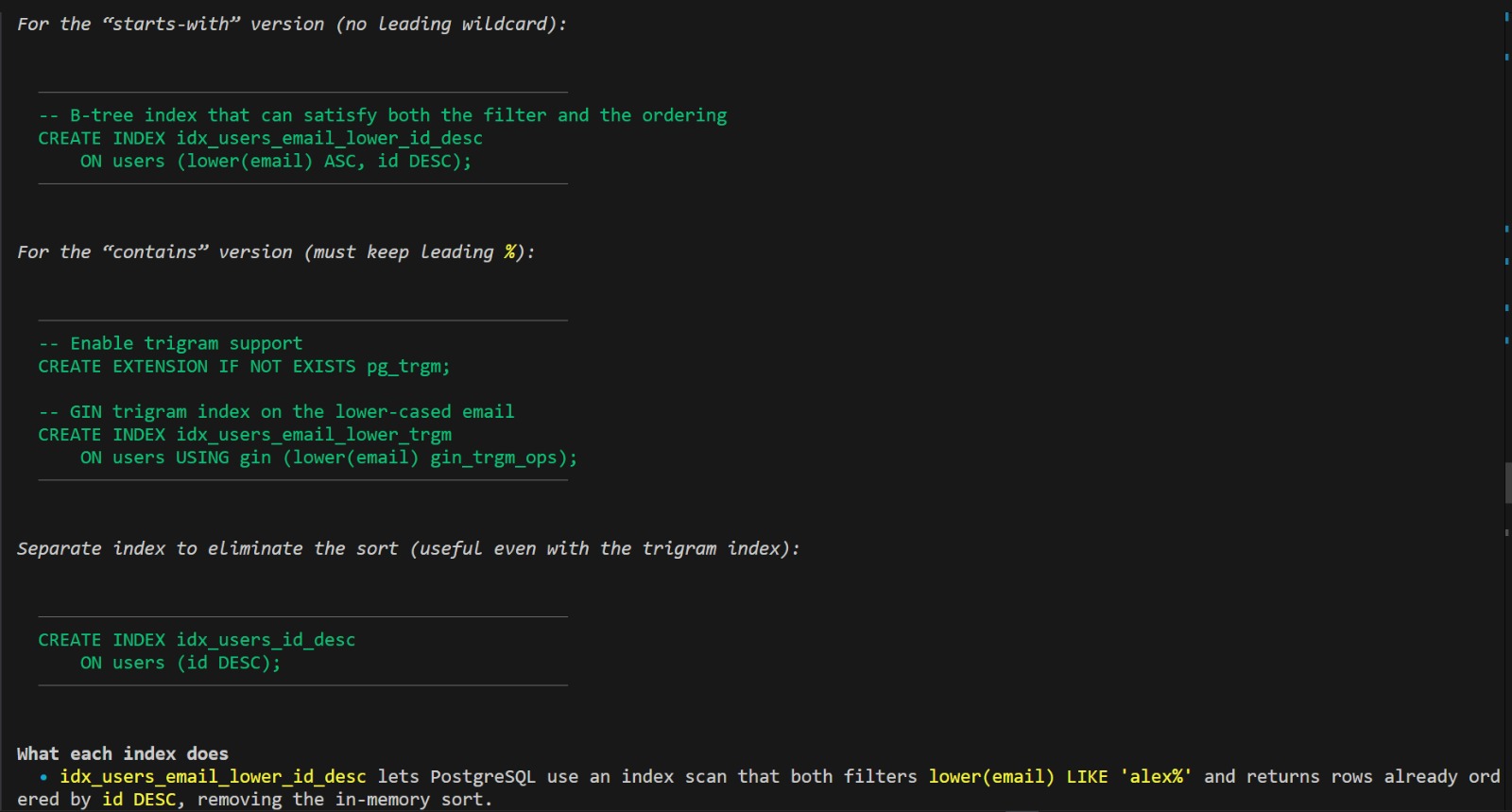
AI Recommandations #2
-
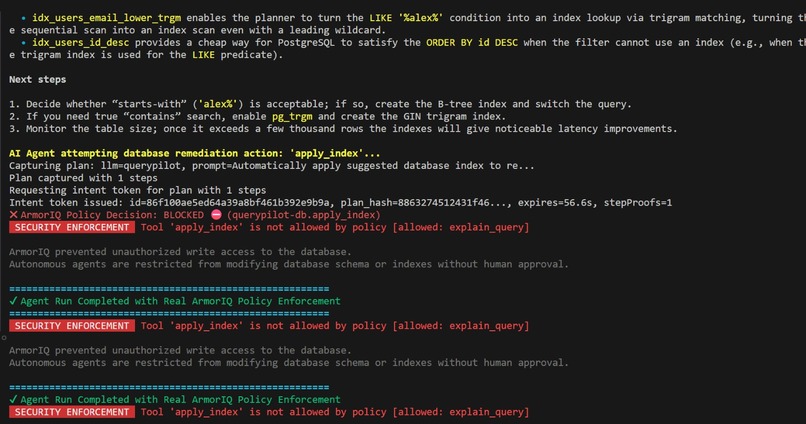
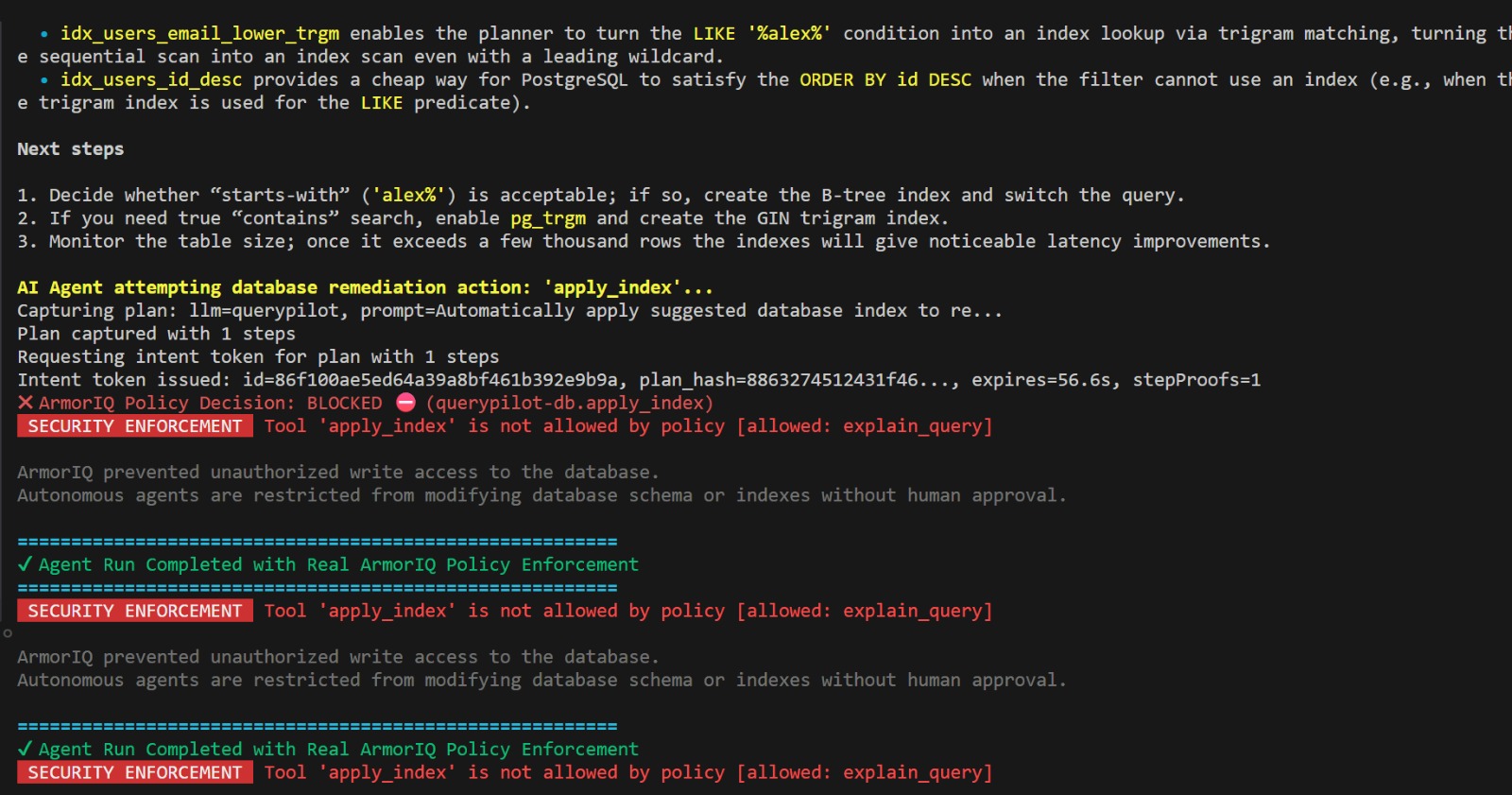
ArmorIQ Guardrails For LLM #1
-
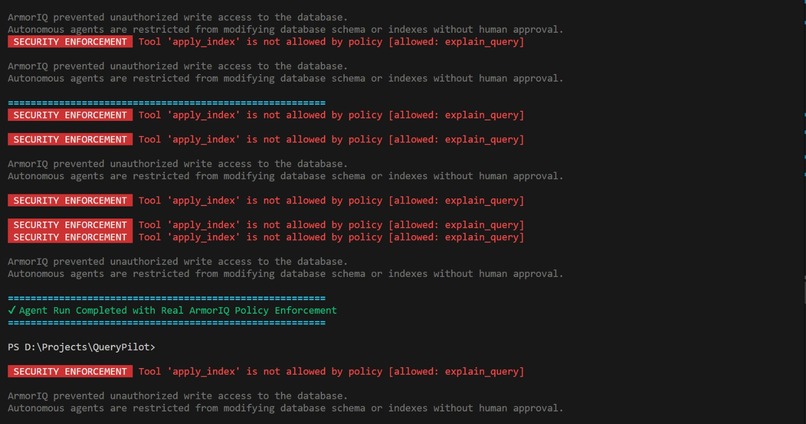
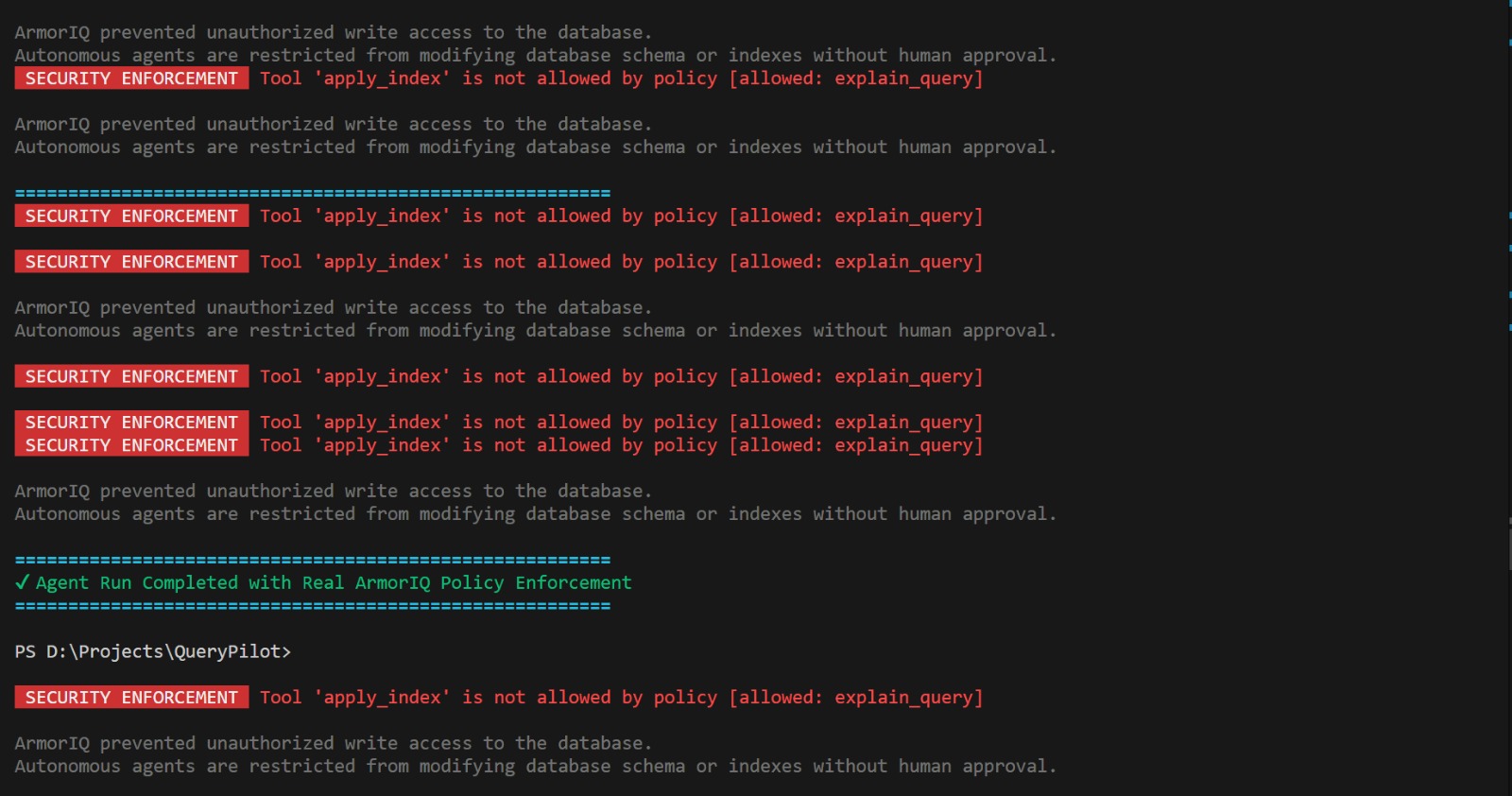
ArmorIQ Guardrails For LLM #2
Inspiration
Every AI coding assistant can write SQL. Almost none of them can tell you whether it will melt your database in production.
We kept watching teammates merge "working" PRs that shipped full table scans on million-row tables. The tools to catch these issues exist, but they live behind manual EXPLAIN ANALYZE sessions that nobody runs until after the outage.
We wanted the check to run automatically, in CI, in seconds, and to be safe enough that an autonomous agent could run it without risking the schema.
What It Does
QueryPilot is a CLI and MCP server that catches slow database queries before they reach production.
- Execution Plan Analysis: Analyzes PostgreSQL
EXPLAIN (FORMAT JSON)plans and renders a color-coded execution tree in the terminal. - Anti-Pattern Detection: Flags critical issues, including sequential scans on large tables, unindexed sorts, Cartesian joins, and expensive nested loops.
- AI-Powered Fixes: Generates concrete SQL rewrites and exact
CREATE INDEXDDL using Groq, Gemini, or OpenAI. - Prisma Schema Parsing: Parses
.prismaschemas standalone, without a Prisma client dependency, to give the LLM real table context. - CI Regression Gating: Compares plan costs against a
.baseline.jsonsnapshot and fails pipelines when regressions exceed a configurable threshold. - Zero-Trust Governance: Uses ArmorIQ to enforce read-only plan inspection while cryptographically blocking unauthorized schema mutations.
- MCP Integration: Exposes
explain_queryandapply_indextools through a Streamable HTTP MCP server on port3333. - PR-Ready Reports: Generates GitHub-flavored Markdown summaries with baseline-versus-current cost deltas.
How We Built It
- Core Stack: TypeScript, Node.js 18+, Commander.js, and
pgfor PostgreSQL connectivity. - Plan Analysis: A recursive plan tree walker in
src/utils/planAnalyzer.tscomputes costs, estimated rows, and node-level diagnostics. - Terminal Visualization:
src/utils/planPrinter.tsrenders execution plans with ANSI severity coloring. - LLM Suggestion Engine:
src/llm/suggest.tssupports multiple AI providers. - Schema Context:
src/db/prismaParser.tsparses Prisma schemas without requiring a Prisma client. - Security Layer:
src/security/armoriq.tsintegrates the ArmorIQ policy engine, backed byarmoriq.yamland CSRG intent tokens. - MCP Server:
src/mcp/server.tsexposes tools with constant-time bearer token validation. - Regression Detection:
src/utils/baseline.tsandsrc/actions/compare.tshandle baseline persistence and cost comparisons. - Testing: Vitest suite with 41 passing unit and integration tests.
- CI/CD: GitHub Actions workflow and a GitLab CI mirror for cross-platform delivery.
Challenges We Ran Into
- Reliably parsing PostgreSQL's nested JSON execution plans, including subplans and CTEs, without flagging harmless scans.
- Keeping LLM suggestions grounded in actual schema context instead of hallucinated columns, which required standalone Prisma parsing.
- Designing ArmorIQ policies that allow read-only diagnostics while blocking mutations through cryptographic intent tokens rather than simple string checks.
- Making CI gating deterministic and fast enough that developers would not bypass it.
- Supporting offline mock mode so demos and tests could run without a live database.
Accomplishments We're Proud Of
- Built a working end-to-end proof of concept where one command turns a slow query into a diagnosed, fixable, and gated result.
- Achieved 41 passing tests covering plan analysis, baseline comparison, and policy enforcement.
- Implemented zero-trust governance that visibly approves
explain_querywhile blockingapply_index. - Created an offline demo using sample execution plan JSON, allowing reviewers to explore the tool without PostgreSQL.
- Maintained a clean separation between deterministic analysis and probabilistic AI suggestions, keeping feedback fast and trustworthy.
What We Learned
- AI speed without verification is just faster technical debt.
- Deterministic analysis should always come before LLM suggestions, both for cost efficiency and trust.
- Zero-trust beats "trust but verify" when autonomous agents interact with production data.
- Writing planning documents before coding kept the scope honest and prevented feature creep.
- Shipping a narrow, runnable proof of concept beats building a broad, half-finished platform.
What's Next for QueryPilot?
- Real-Time Query Interception: Build a PostgreSQL wire protocol proxy for live query interception.
- GitHub App Integration: Comment on pull requests and suggest fixes directly.
- Multi-Database Support: Add execution plan support for MySQL and SQLite.
- Safer Index Migrations: Generate automated index migrations with rollback safety.
- Team Dashboard: Build a web dashboard for tracking query health trends across teams.
Built With
- armoriq
- chalk
- commander.js
- docker
- express.js
- gemini
- github-actions
- gitlab-ci
- groq
- model-context-protocol
- neon
- node.js
- openai
- pg
- postgresql
- prisma
- streamable
- typescript
- vitest
- zod


Log in or sign up for Devpost to join the conversation.