
Inspiration
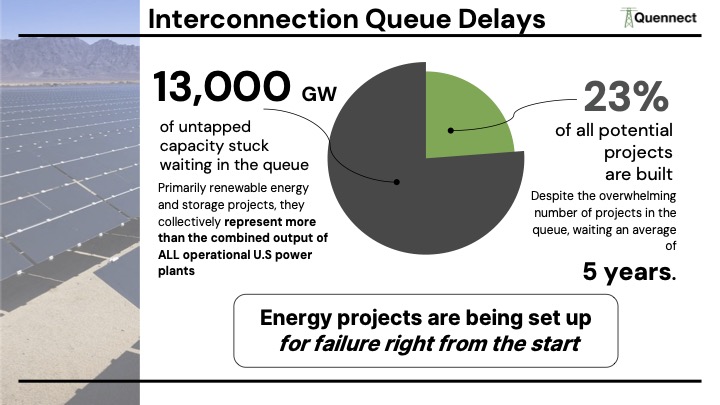
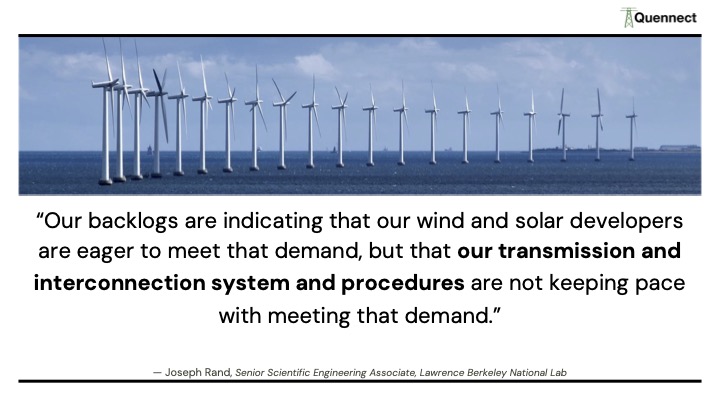
Interconnection wait times averaged five years in 2022, up a year from the average of four years for projects built between 2018 and 2022, but completion rates also remain a concern — less than a quarter of the projects that entered the queue between 2000 and 2017 have been built as of the end of 2022, according to the Berkeley Lab data, with the number most likely on the decline.
What it does
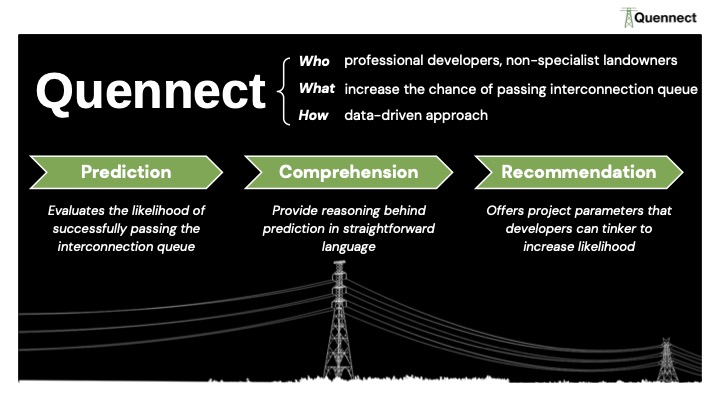
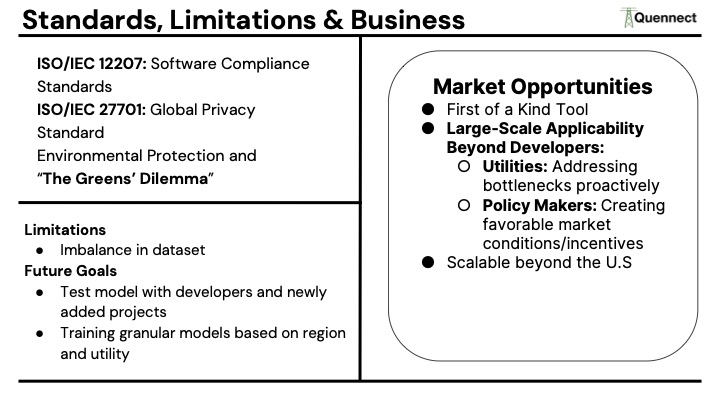
Using past data on project progression through the interconnection queue, we aim to develop an automated process and scoring system to identify projects that most likely will not make it to completion, as a way to help more effectively and efficiently process the queue.
How we built it
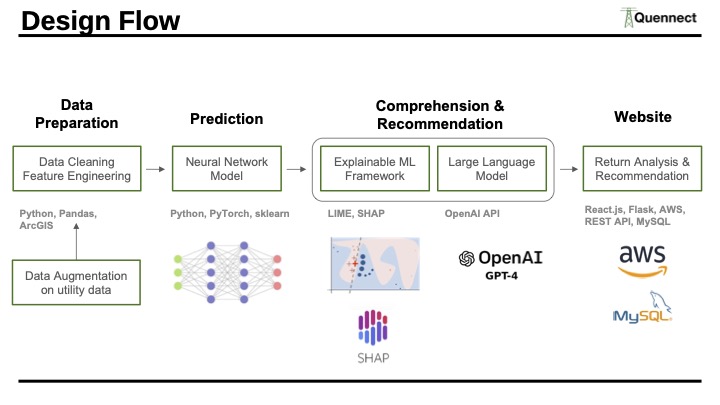
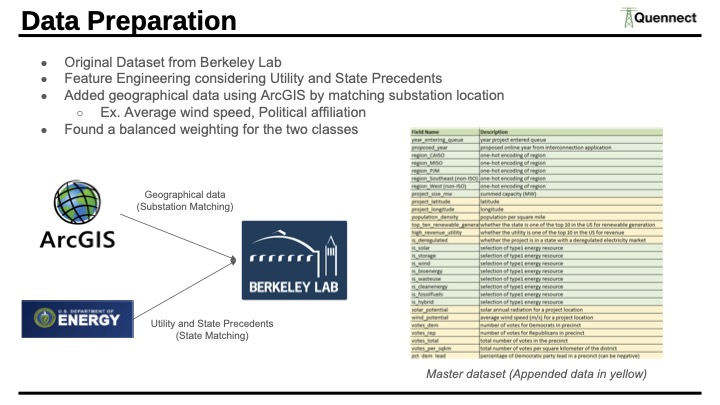
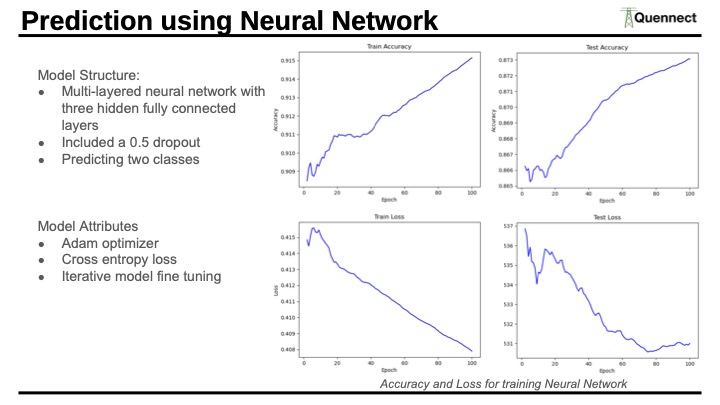
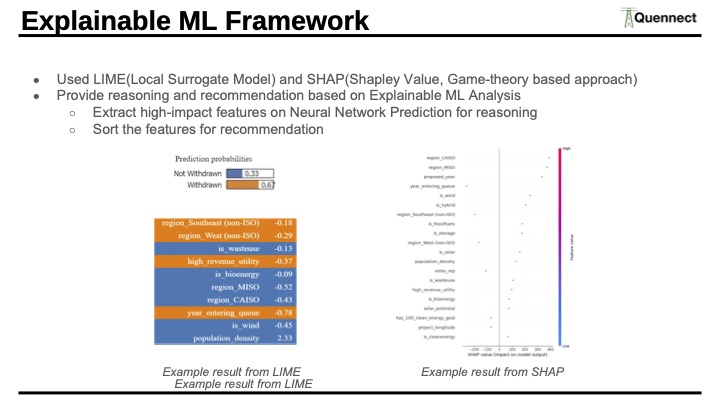
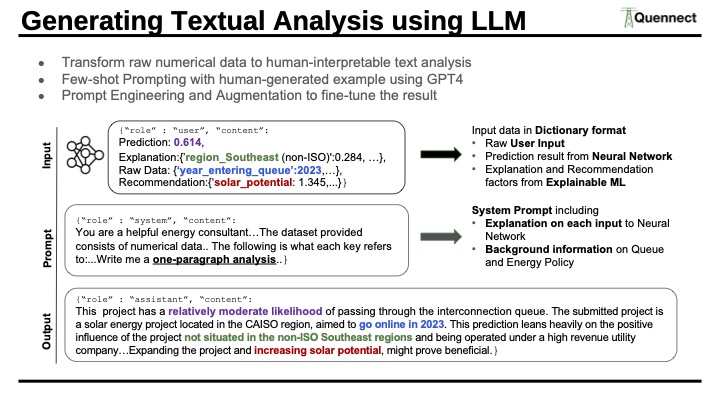
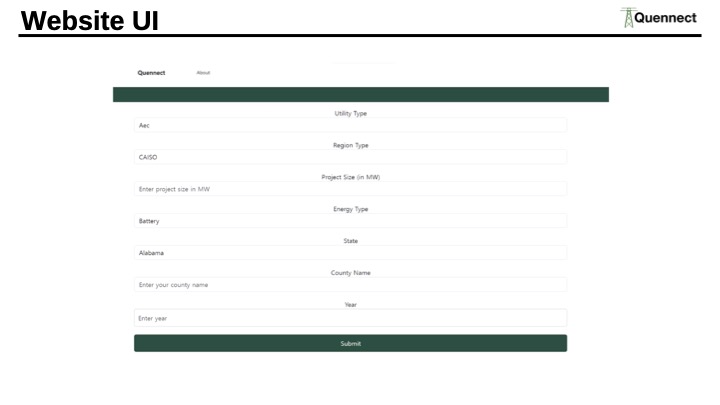
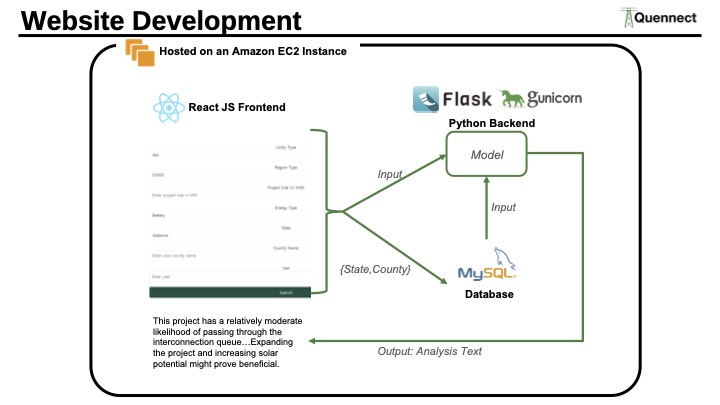
Quennect is a tool incorporating prediction, recommendation and comprehension advice based on data. For an energy project submitted to interconnection queue, project developers can submit the project detail to our website. After submission, we will append other geographical and political attributes and run prediction neural network model to get score on its likelihood of successfully passing through the queue. Then, we applied two explainable ML framework, LIME and SHAP, to find the reasoning behind score and to provide recommendation on how to increase its possibility of going through the queue. At the end, we used LLM to transform these number analysis into human-understandable, straightforward language.

Log in or sign up for Devpost to join the conversation.