-
-
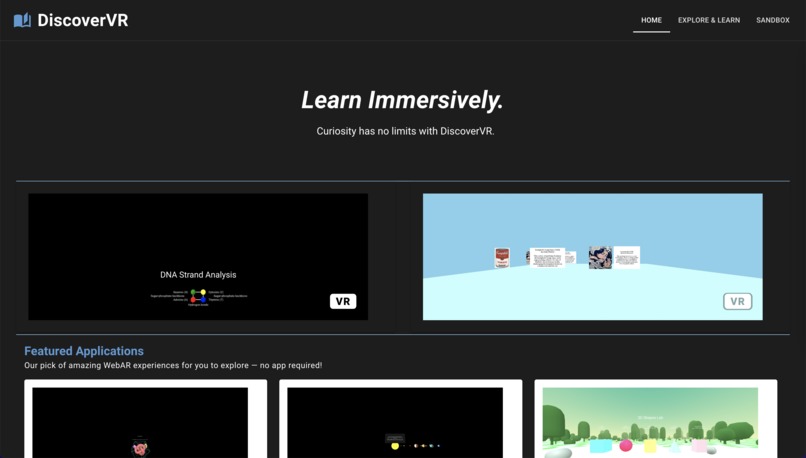
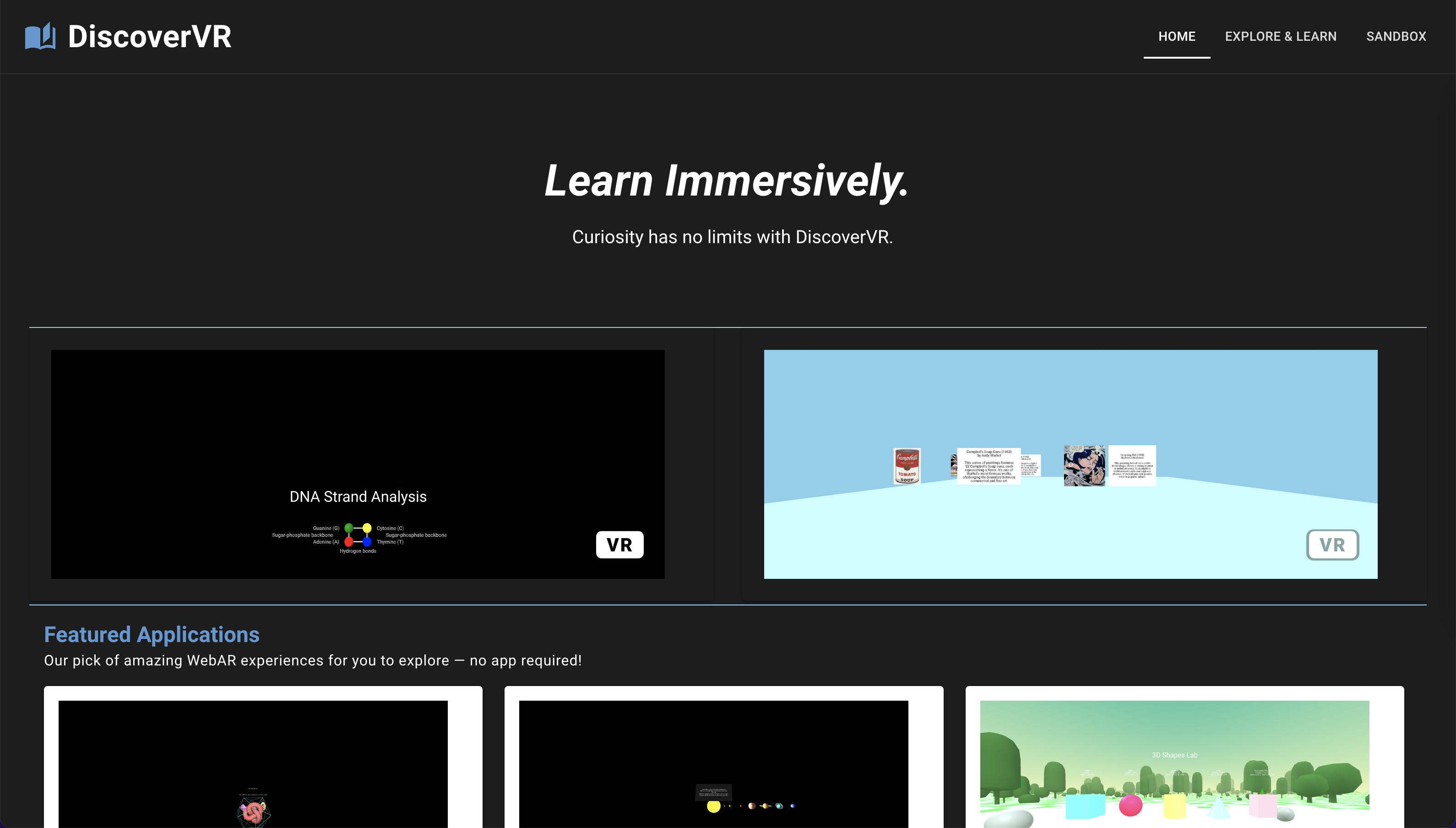
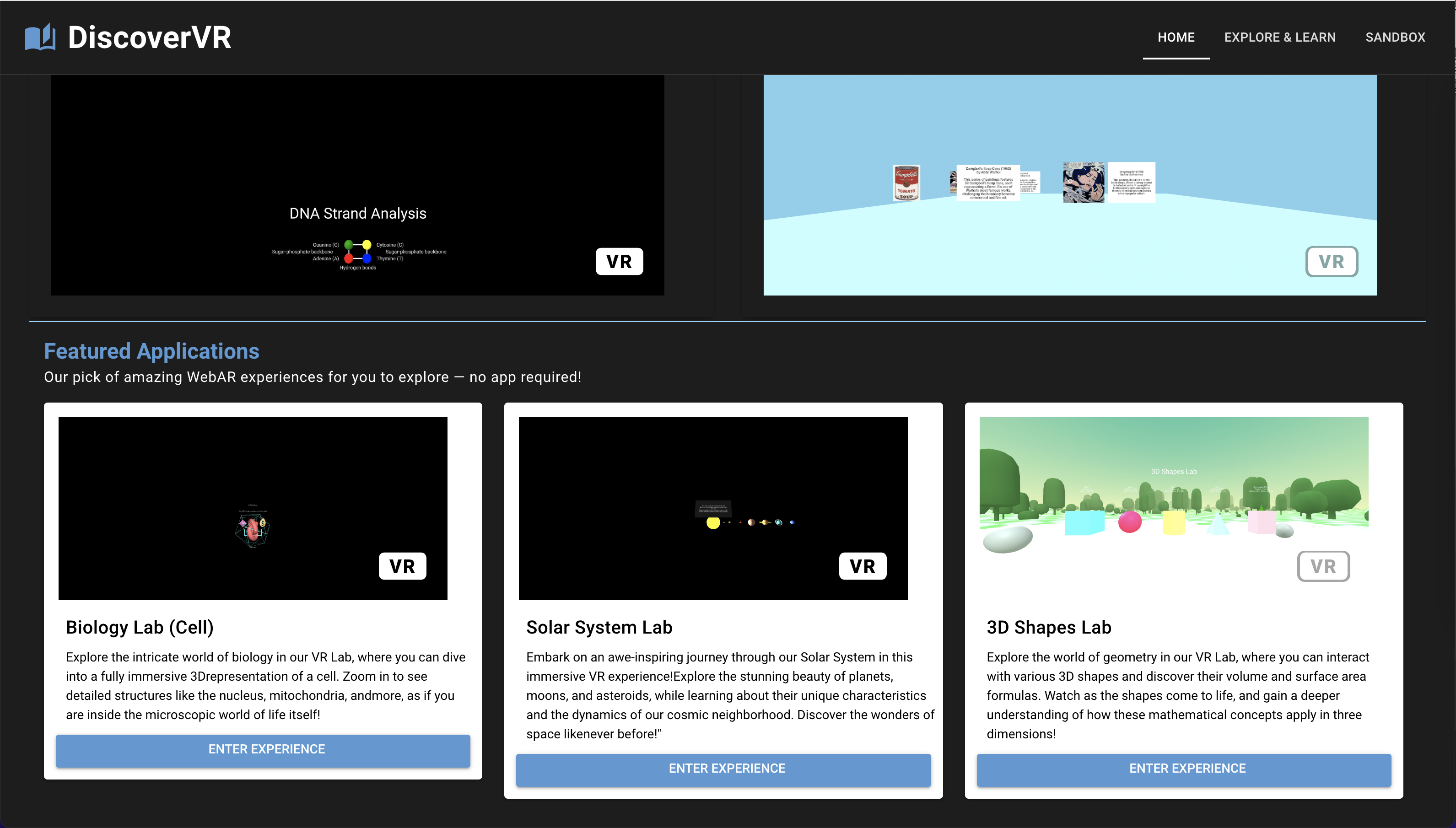
Homepage
-
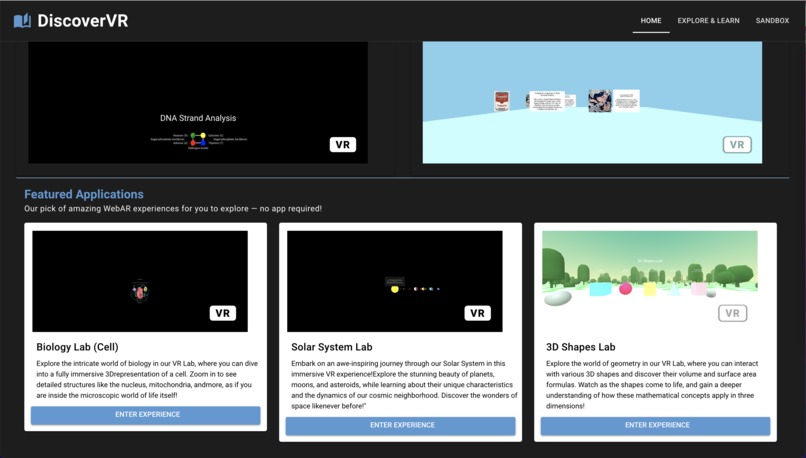
Featured VR Experiences
-
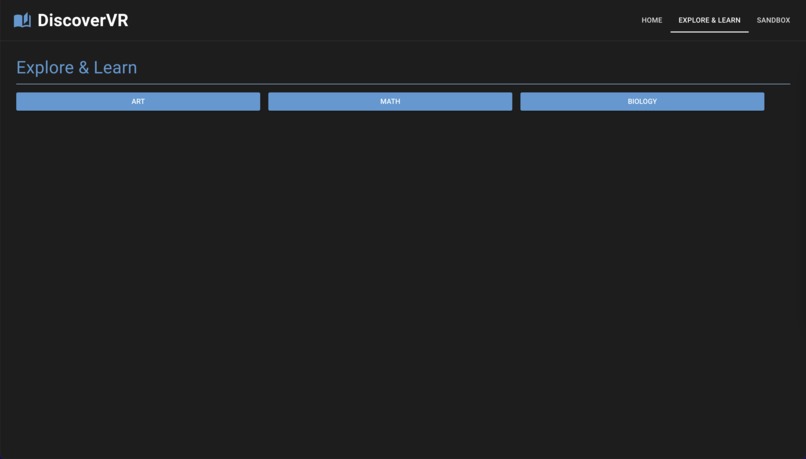
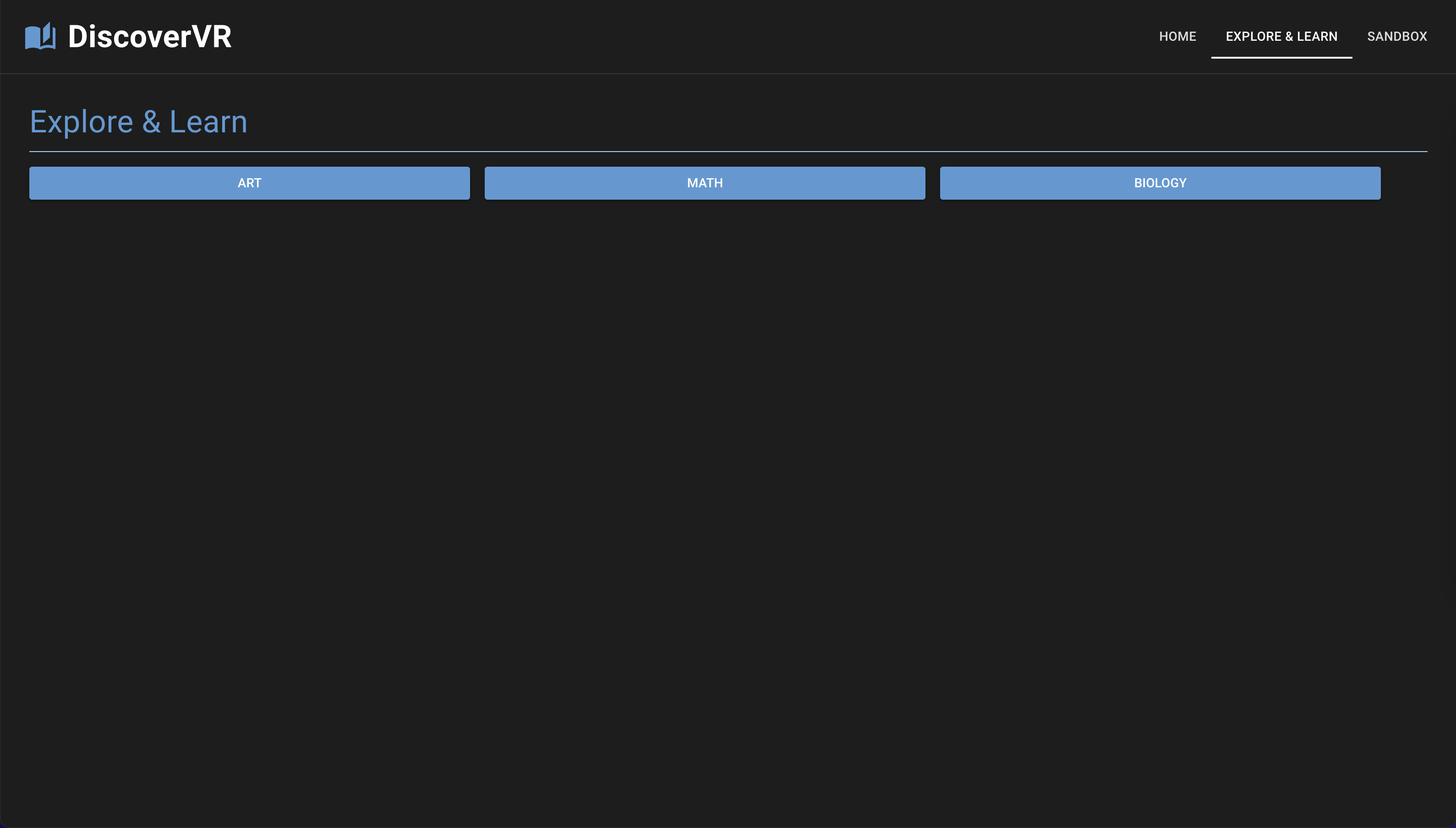
Explore/Learn Tab, with the subjects Art, Math, and Biology
-
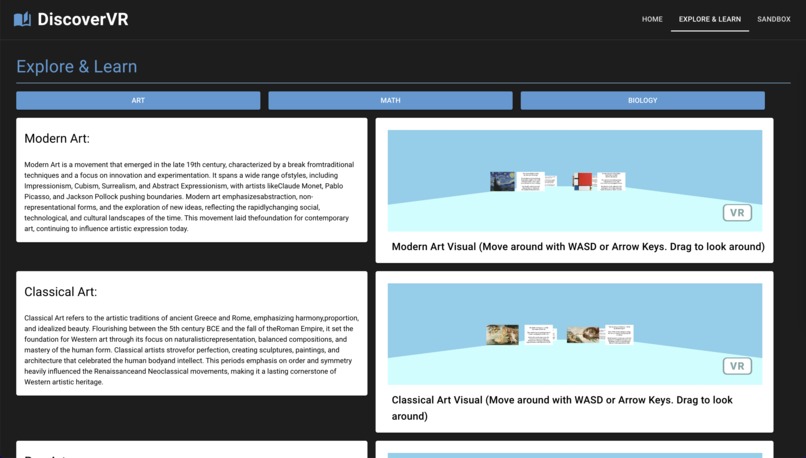
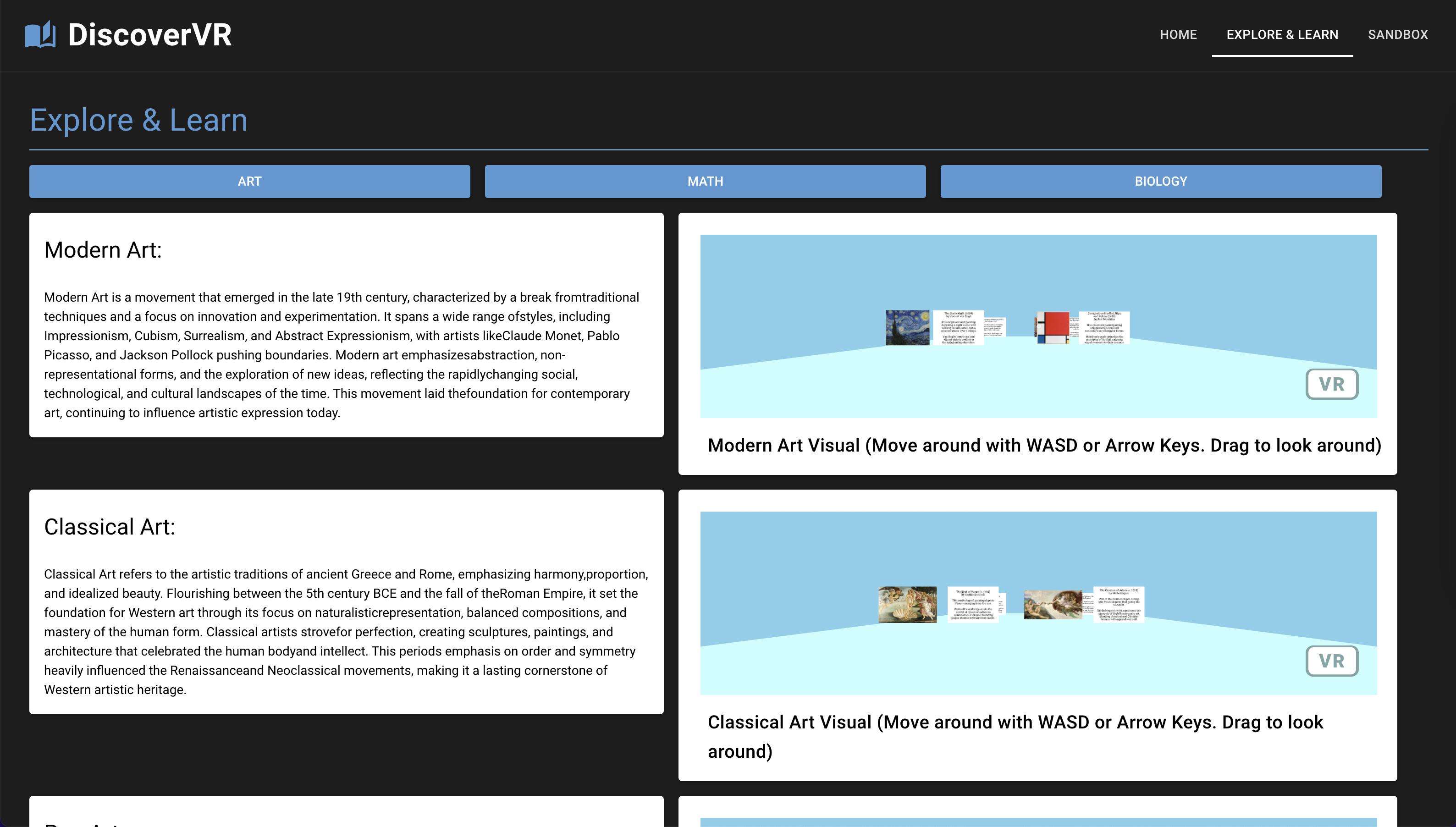
Art topics
-
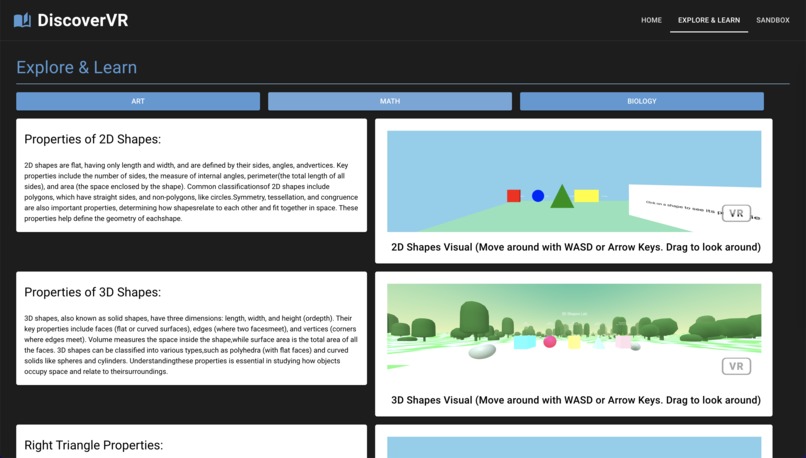
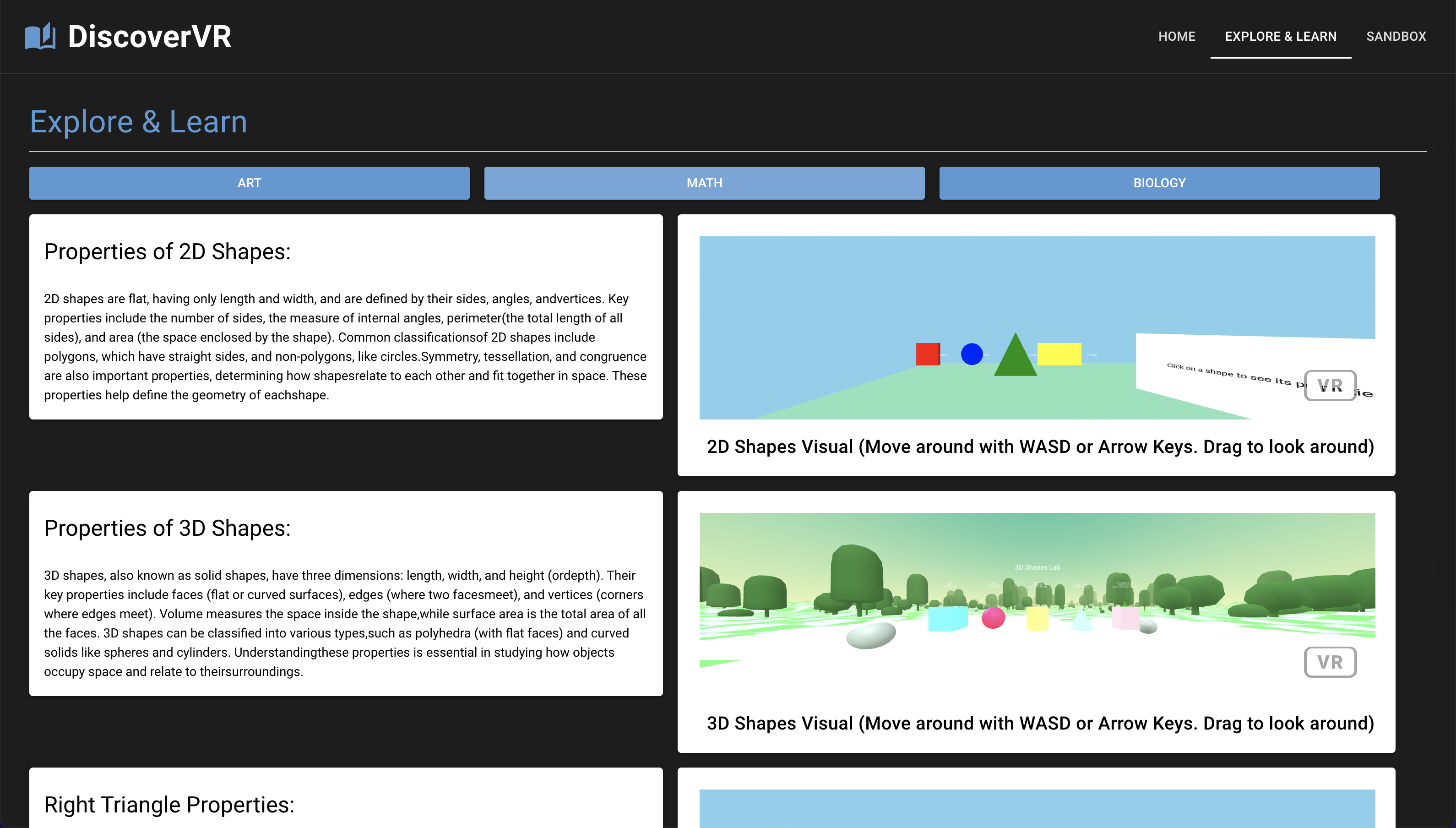
Math Topics
-
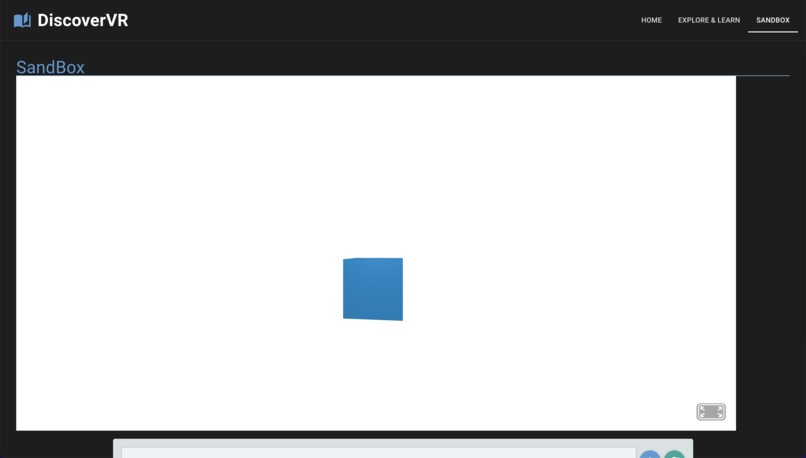
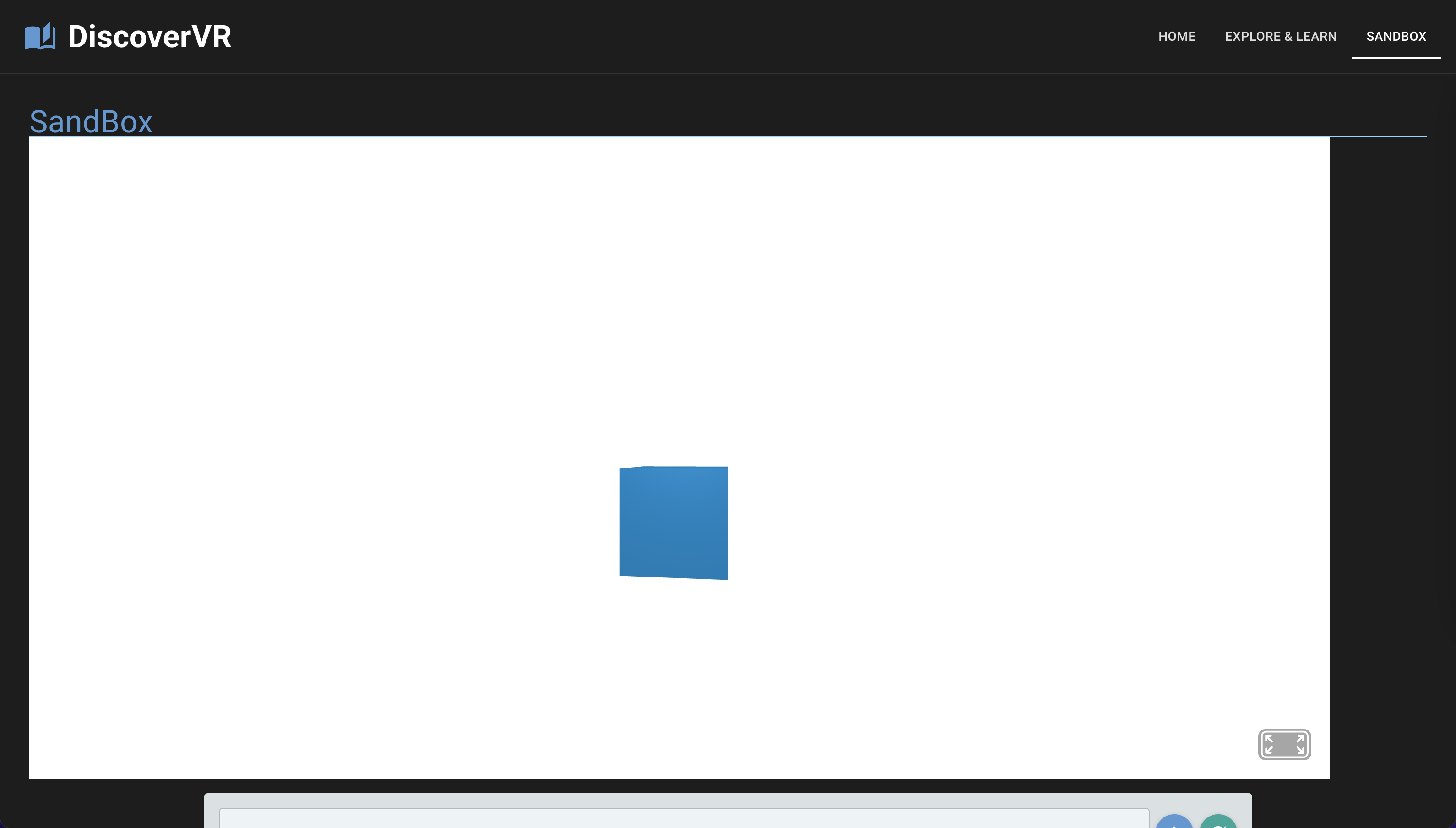
The Sandbox Tab opens up to a VR Experience
-
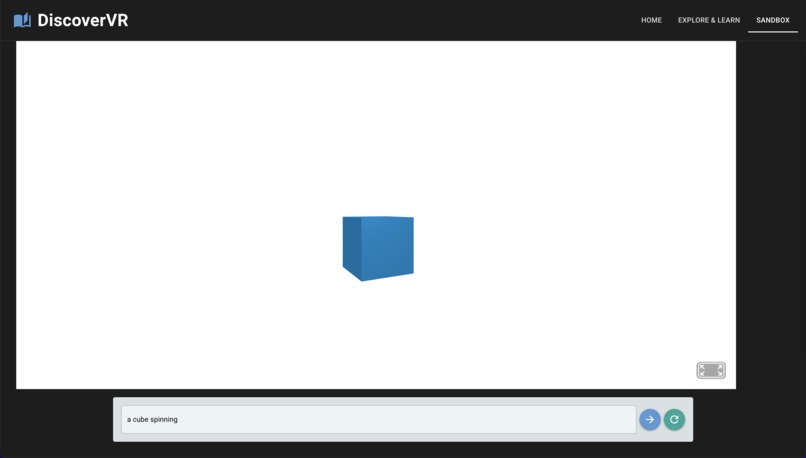
Use the typing bar to generate your idea

Inspiration
Our inspiration for DiscoverVR came from the growing need for innovative, engaging, and accessible educational tools in an increasingly digital world. We recognized the potential of Virtual Reality (VR) and Augmented Reality (AR) technologies to transform traditional learning methods into immersive, interactive experiences. The idea of breaking down geographical and resource barriers in education, while making complex concepts more tangible and engaging for students, drove us to create this platform.
What it does
DiscoverVR is a comprehensive VR and AR-enabled learning platform that offers immersive educational experiences across various subjects. It features a user-friendly interface with three main components: a home page showcasing featured AR applications, an "Explore & Learn" section with in-depth content and interactive 3D visuals for art, mathematics, and biology, and a unique Sandbox environment. The Sandbox allows users to generate custom A-Frame scenes based on text prompts, fostering creativity and hands-on learning of 3D web technologies. The platform seamlessly integrates WebAR experiences, making learning more visual, interactive, and accessible without the need for specialized apps.
How we built it
We built DiscoverVR using a combination of modern web technologies and AI integration. The backend is powered by Python with FastAPI, while the frontend utilizes NiceGUI, a Python-based UI framework, for creating a responsive and intuitive user interface. We incorporated A-Frame, a WebVR framework, for rendering 3D content and creating immersive experiences. To enhance the platform's capabilities, we integrated OpenAI's API through Perplexity AI, enabling the generation of custom A-Frame scenes based on user input in the Sandbox feature. The styling was achieved through a combination of custom CSS and Tailwind CSS classes, ensuring a visually appealing and consistent design across the platform.
Challenges we ran into
During the development of DiscoverVR, we faced several challenges. One significant hurdle was integrating the AI-powered scene generation feature seamlessly with the user interface. We had to overcome issues related to real-time updating of the A-Frame scenes and ensuring compatibility across different browsers and devices. Another challenge was optimizing the performance of the 3D renders, especially for more complex scenes, to ensure smooth user experience even on lower-end devices. Additionally, creating a intuitive and user-friendly interface that could accommodate the diverse range of features while maintaining simplicity was a constant balancing act throughout the development process.
Accomplishments that we're proud of
We're particularly proud of successfully creating a platform that seamlessly blends educational content with cutting-edge VR and AR technologies. The integration of AI for generating custom 3D scenes in the Sandbox is a feature we're especially excited about, as it opens up endless possibilities for creative learning. We're also proud of the comprehensive "Explore & Learn" section, which offers in-depth, interactive content across multiple disciplines. The responsive design and user-friendly interface we've achieved, making complex technologies accessible to users of all skill levels, is another significant accomplishment. Lastly, we're proud of how our platform has the potential to democratize access to high-quality, experiential learning resources, particularly for underfunded schools or remote learners.
What we learned
Throughout the development of DiscoverVR, we gained valuable insights into integrating VR and AR technologies with web-based platforms. We deepened our understanding of A-Frame and its capabilities in creating immersive web experiences. The process of integrating AI for scene generation taught us about the potential and challenges of using AI in educational tools. We also learned a great deal about user experience design, particularly in the context of educational platforms, and how to balance feature-rich environments with intuitive navigation. Additionally, we gained experience in optimizing 3D content for web delivery, ensuring performance across various devices and network conditions.
What's next for DiscoverVR
The future of DiscoverVR is filled with exciting possibilities. We plan to expand our range of subjects and interactive experiences, incorporating more advanced simulations and virtual field trips. Implementing user authentication and personalized learning paths is a priority, allowing for a more tailored educational experience. We aim to further optimize performance for mobile devices and low-bandwidth connections, ensuring accessibility for a wider range of users. Enhancing the AI capabilities for more sophisticated content generation and potentially incorporating real-time collaborative features in the virtual environments are also on our roadmap.
Built With
- a-frame
- fastapi
- html
- javascript
- nicegui
- openapi
- perplexityai
- python

Log in or sign up for Devpost to join the conversation.