-
-
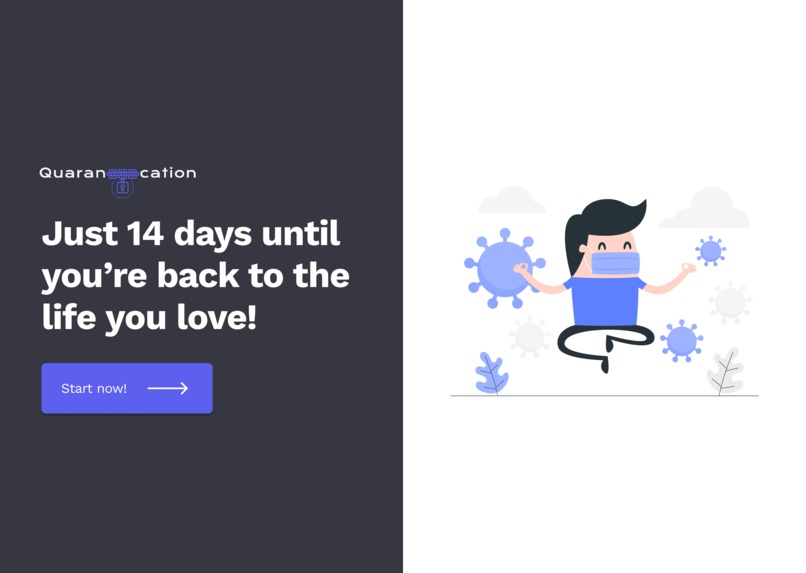
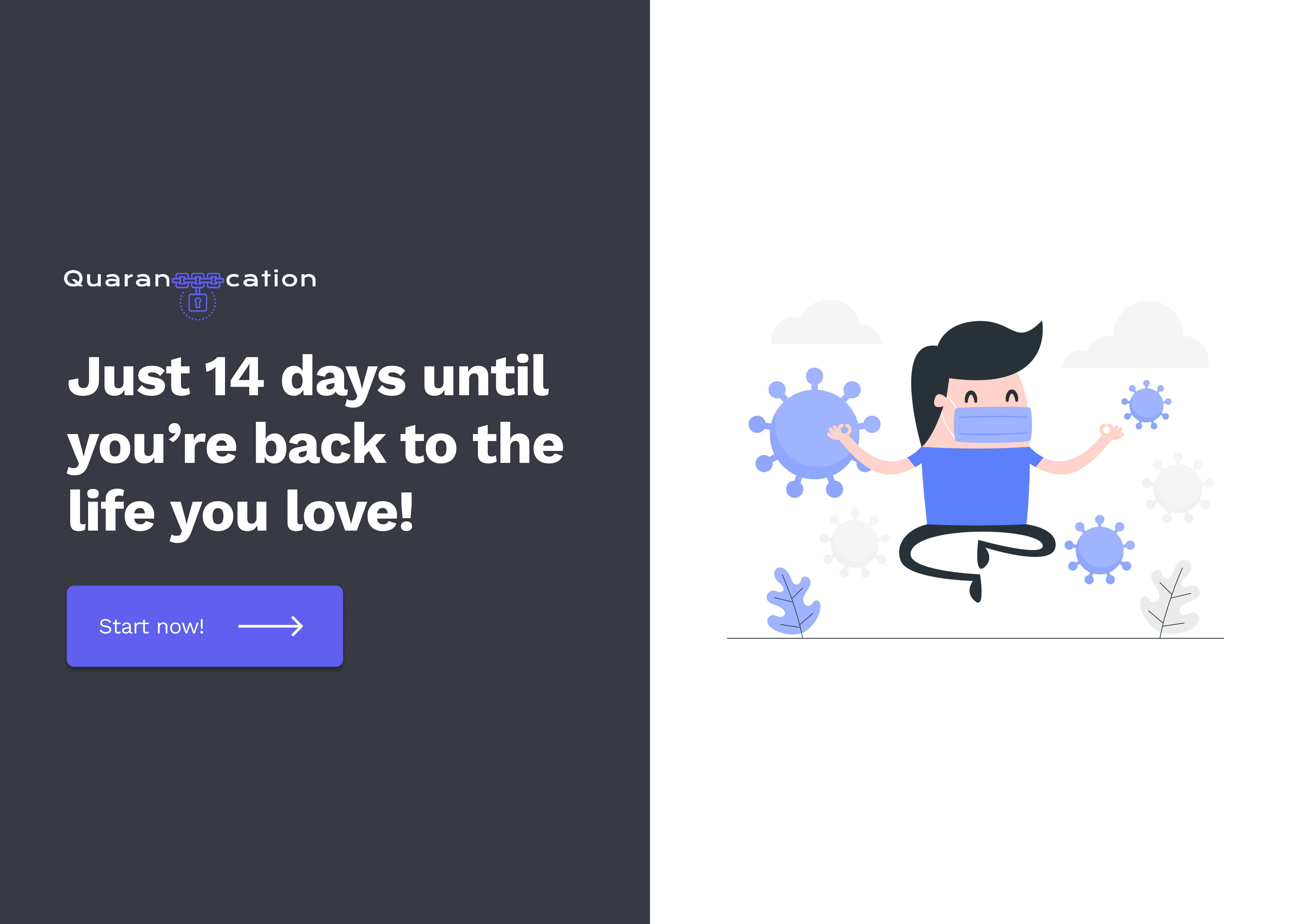
Landing Page
-
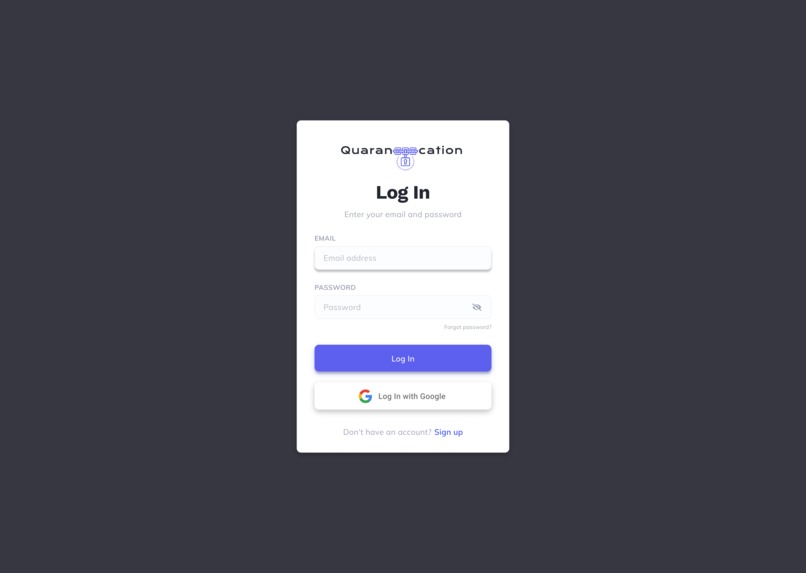
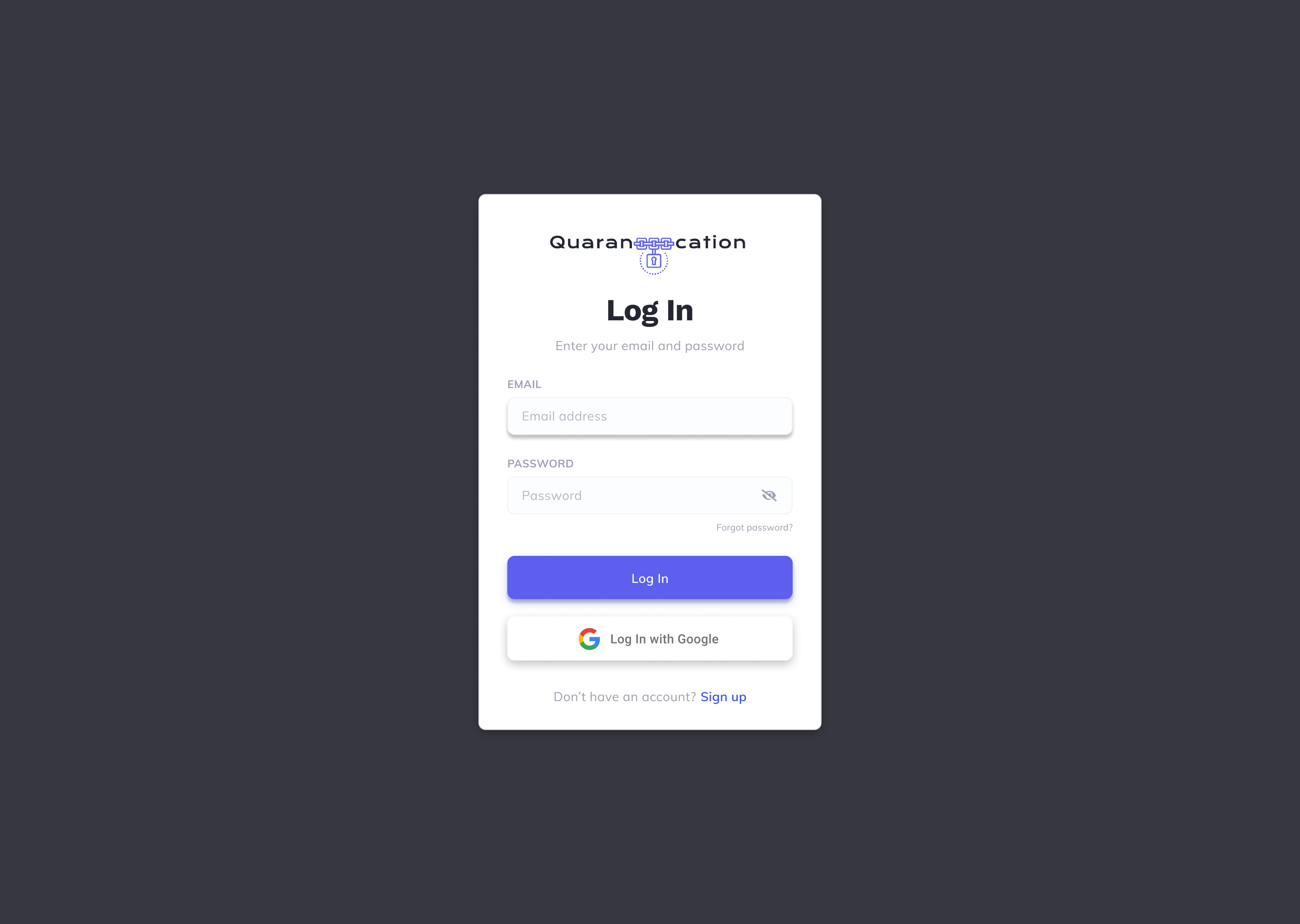
Login Screen
-
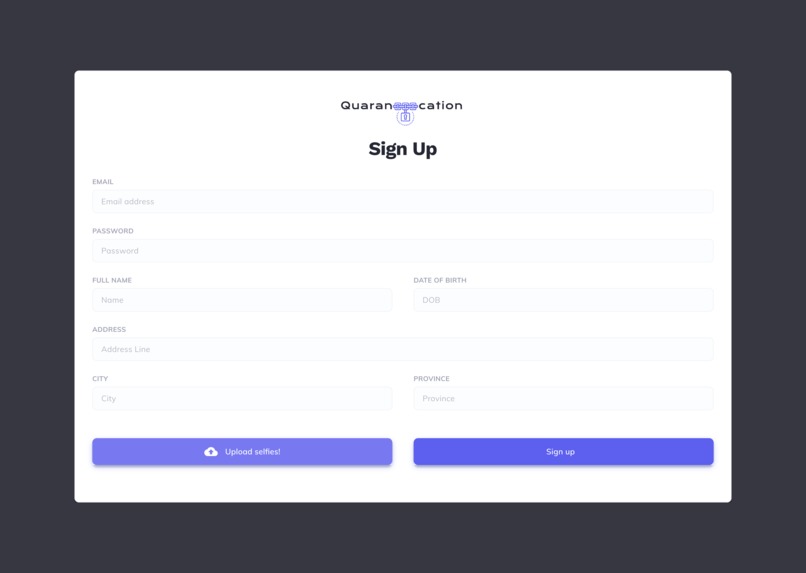
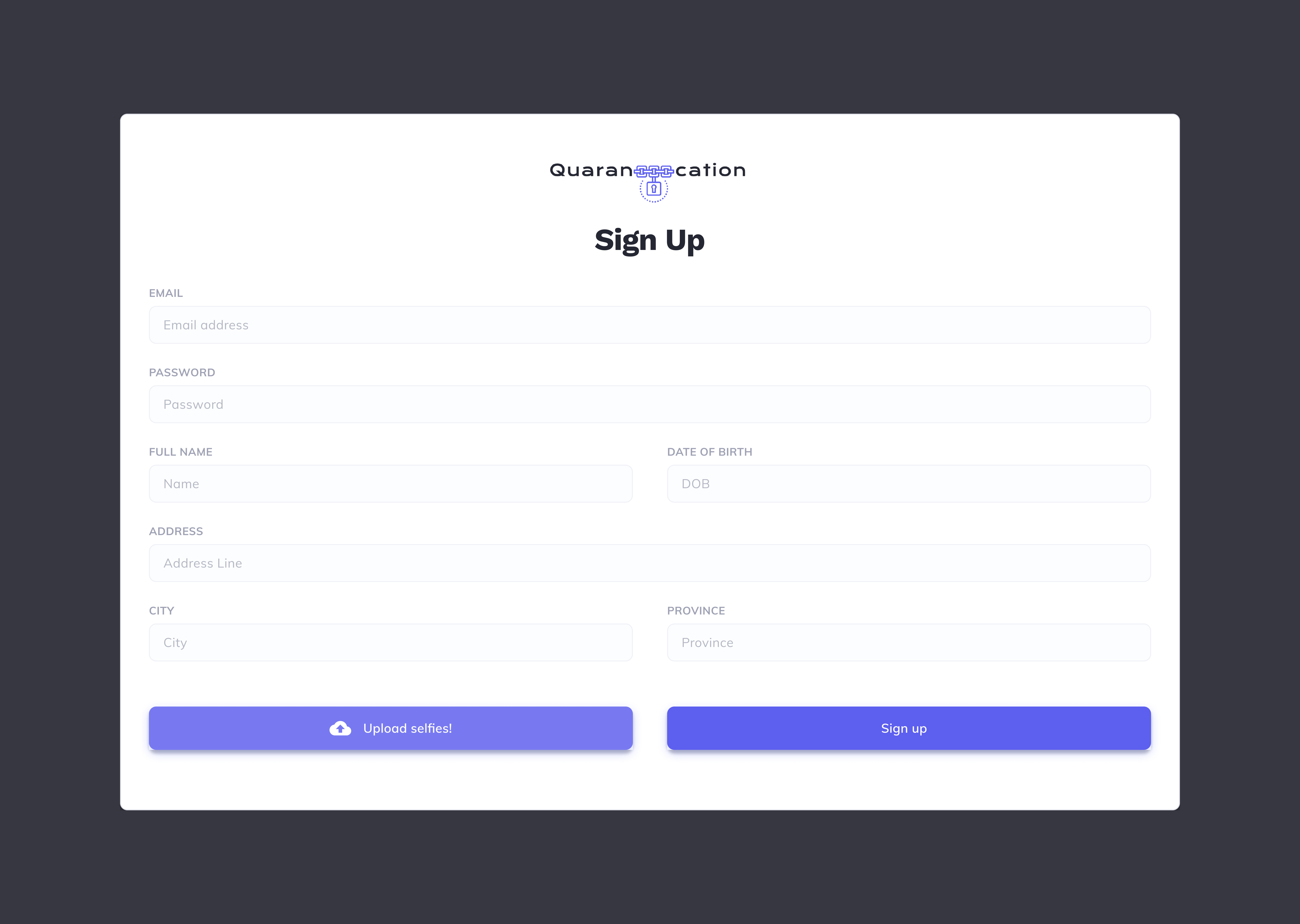
Sign Up
-
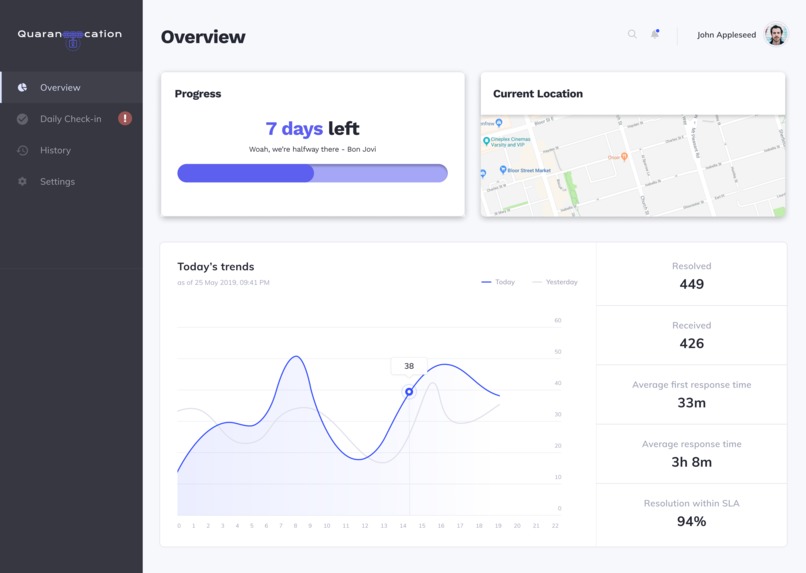
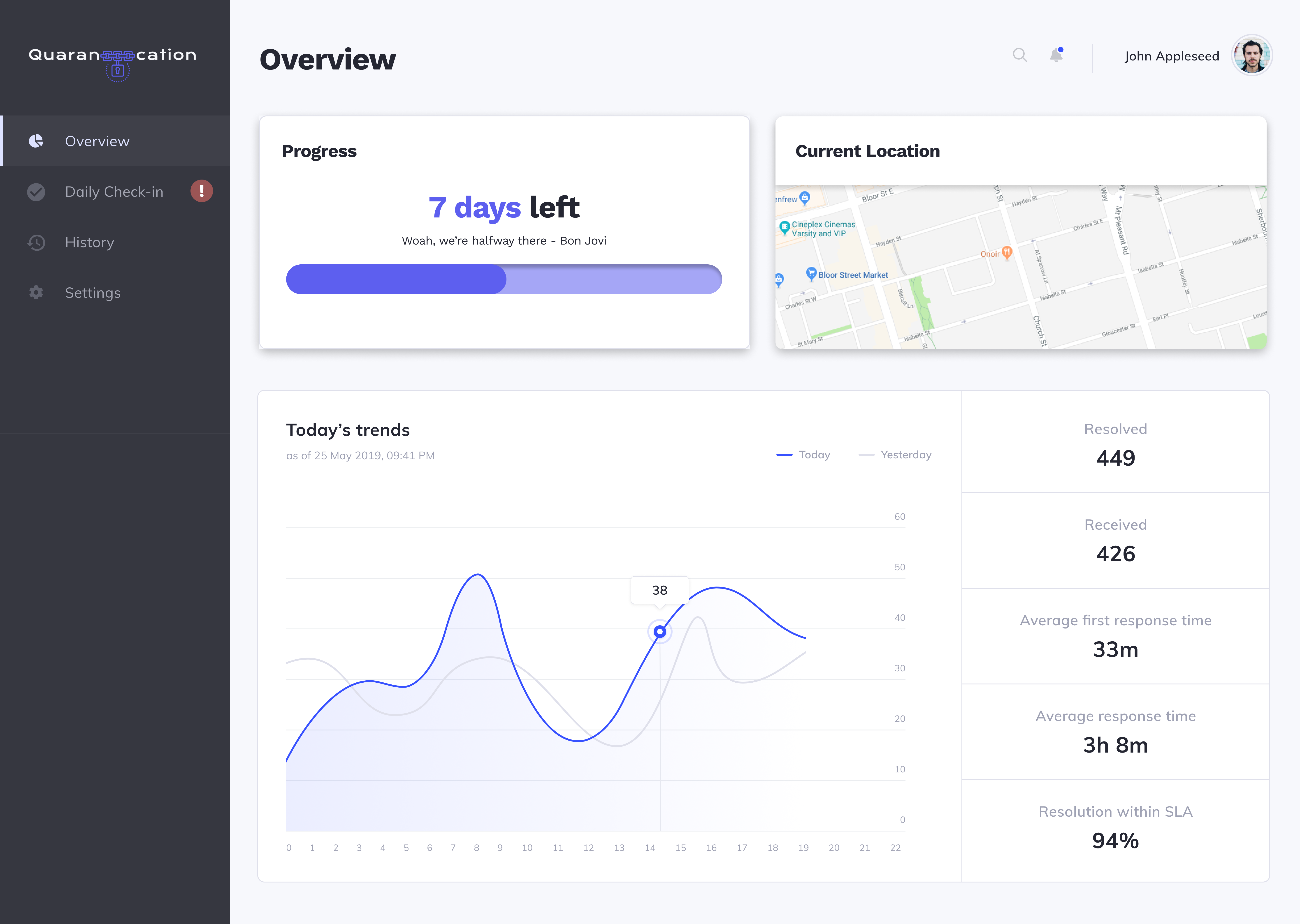
Dashboard
-
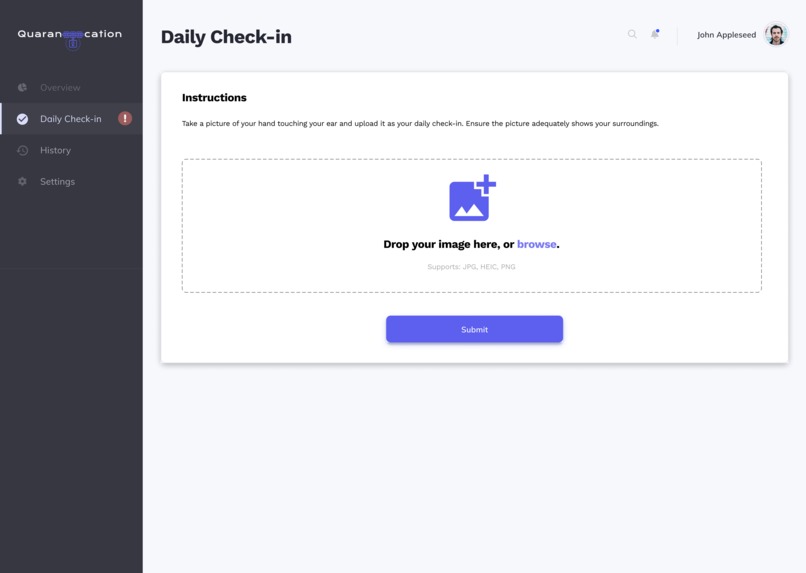
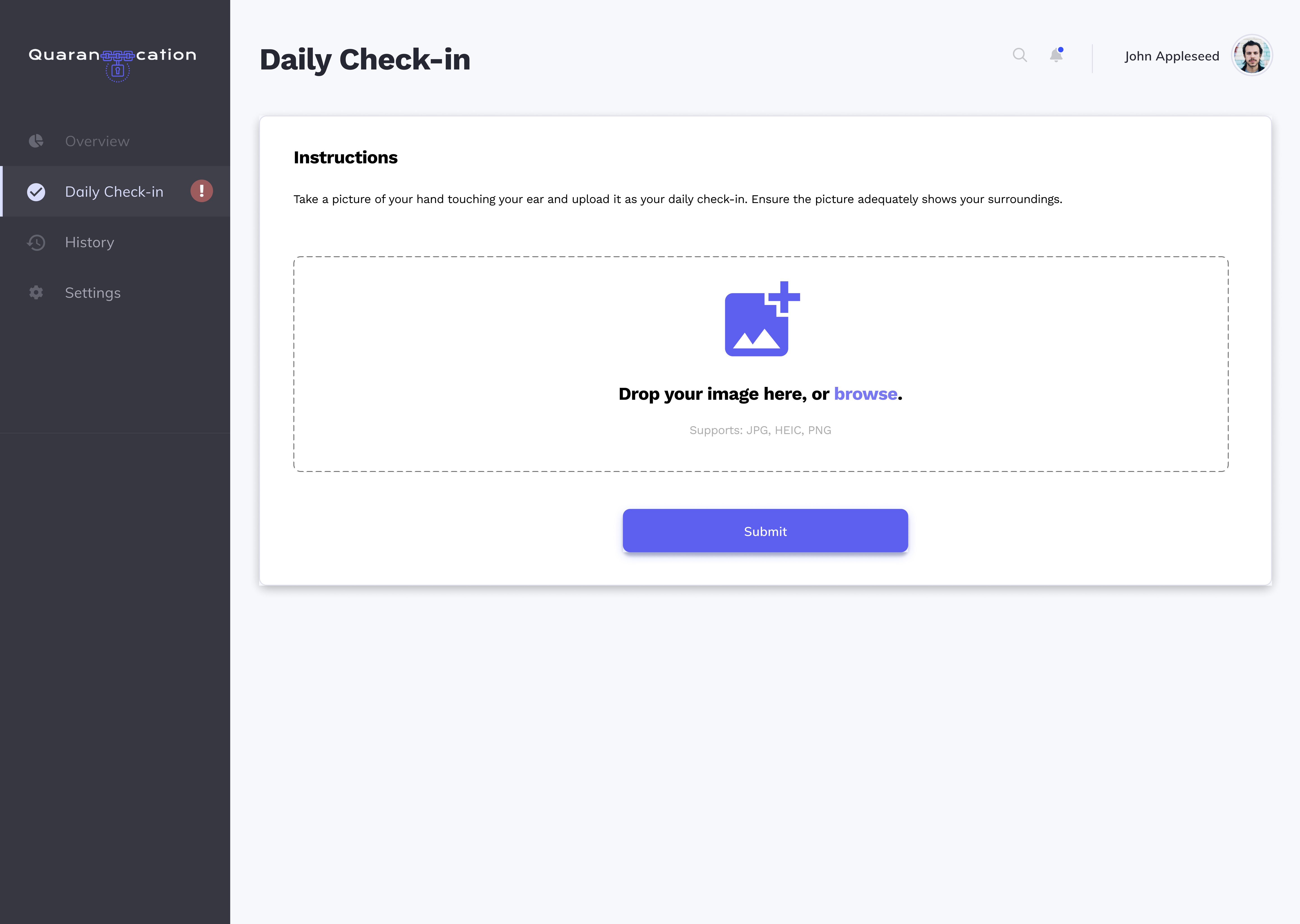
Daily Check-ins
Inspiration
The COVID-19 pandemic has gone back and forth for 21 months. Canada is now in its 4th wave of the pandemic as cases spike. It was proven that conscious self-isolation can significantly reduce the probability of infection, which means the 5th wave can be avoidable. However, according to observation, this is incredibly difficult for Canadians.
What it does
Quarancation is an application to assist in identification and detection. It determines whether people have consciously performed a qualifying self-isolation during the first 14 days of their entry into Canada. Quarantines are now as interesting as a personalized Instagram with facial recognition that tags your digital identity in the profile. The app also provides alerts to help users keep track of their active check-ins during quarantines.
How we built it
- We started by brainstorming functions we want to integrate into the app. Meanwhile, we collected useful APIs, UI design software and existing framework for building the architecture.
- Front-End: we used figma to design the interface, and we used react.js.
- Back-End: we used Flask and connected it with Azure cognitive API that recognizes the face of a user. In addition to that, we added used authentication using google credentials.
- We used a Geolocation Python script as our tagging machine to verify if the user stayed in the same place as their registered quarantine location.
Challenges we ran into
- The most challenging task we had was to practice what we only just learned.
- The most challenging task was to combine all the parts into one and make a complete web application. The connection of the API to the web application was the next hardest thing
- It is my second hackathon and my first time going for a submission, so I was exposed to a lot of new things and concepts especially for web-app.
- Given that I had very little experience with front-end web dev, I had to learn very quickly to at least try and put some workable user interface together. Definitely didn’t help that we started the front end at 2am.
Accomplishments that we're proud of
- For images uploaded by our app users, our Geolocation script can quickly fetch information of the GPS, shooting device, time and location.
- We were able to formulate an idea and come up with a plan to execute it with different APIs and concepts.
What we learned
- The mysteries behind the blockchain, distinguishing and adopting the correct API.
- How the different cloud platforms provide various facial recognition API and I got to learn from Azure and Gcs.
- Learned the basics of hashing and encrypting Strings and files using python
- The fundamentals of using React and HTML/CSS to develop out the front-end
What's next for Quarancation
We hope to integrate the following features:
- Guaranteeing user data privacy through cryptographic technologies such as zero-knowledge proof and homomorphic encryption.
- Making face features as pass private key: Based on facial recognition technology and AI algorithm, it can accurately verify users' identity by face and protect account security.
- Completing data trustworthiness: Based on the blockchain's tamper-evident and traceability, the trustworthiness of user data is guaranteed.
- Aggregate data fragments among users' applications: After users' authorization, they can connect the data fragments scattered among different applications.
- Even if COVID dies out, this app can be migrated into a children check-up app in the scenario that children are home alone and parents prompt them to send pictures


Log in or sign up for Devpost to join the conversation.