-
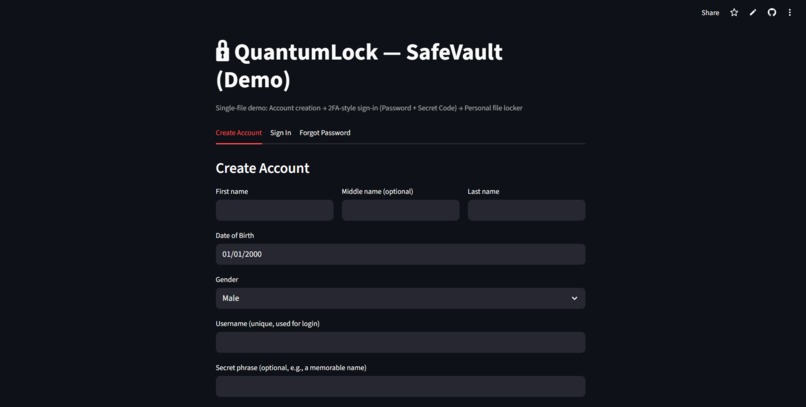
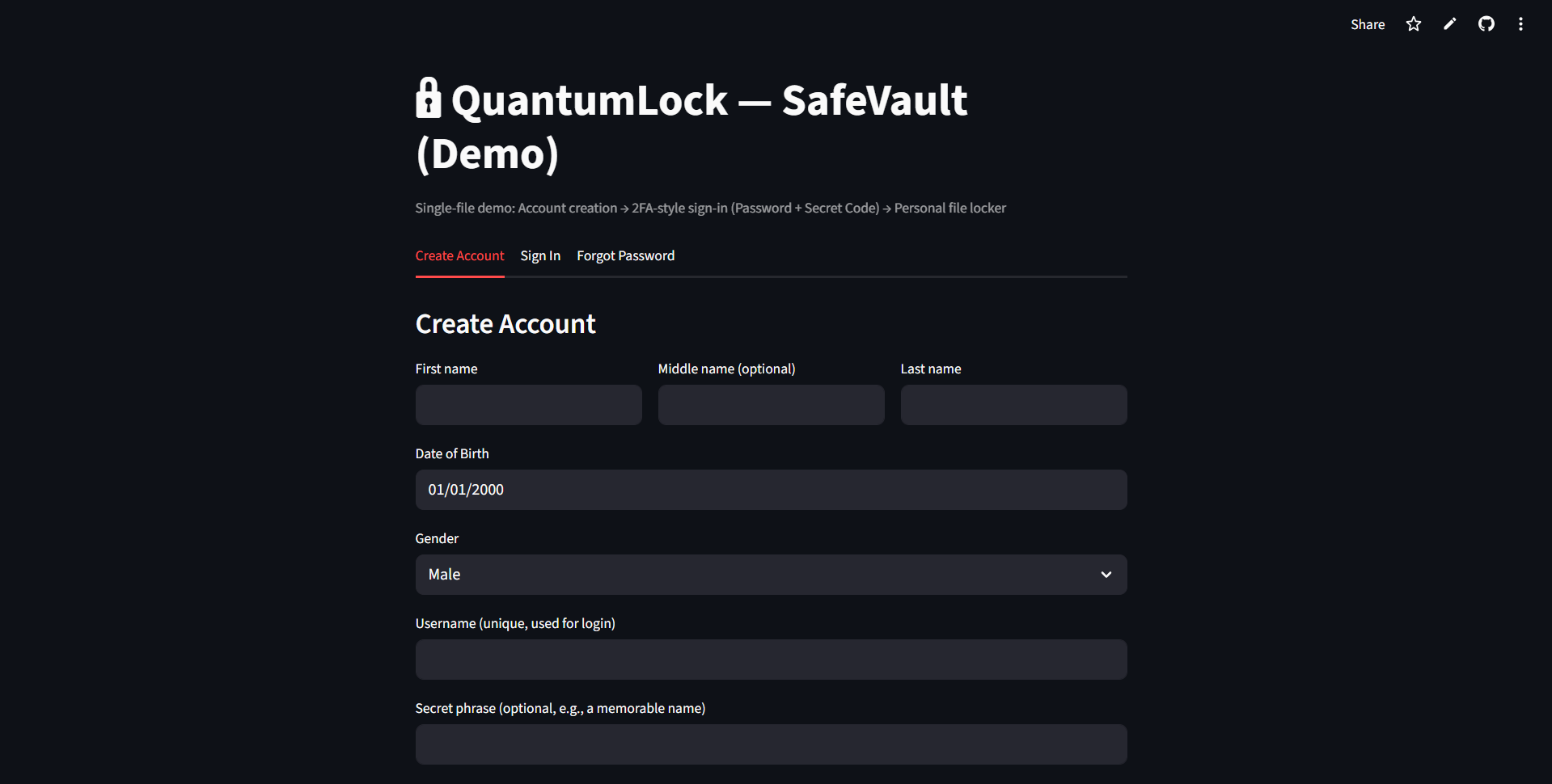
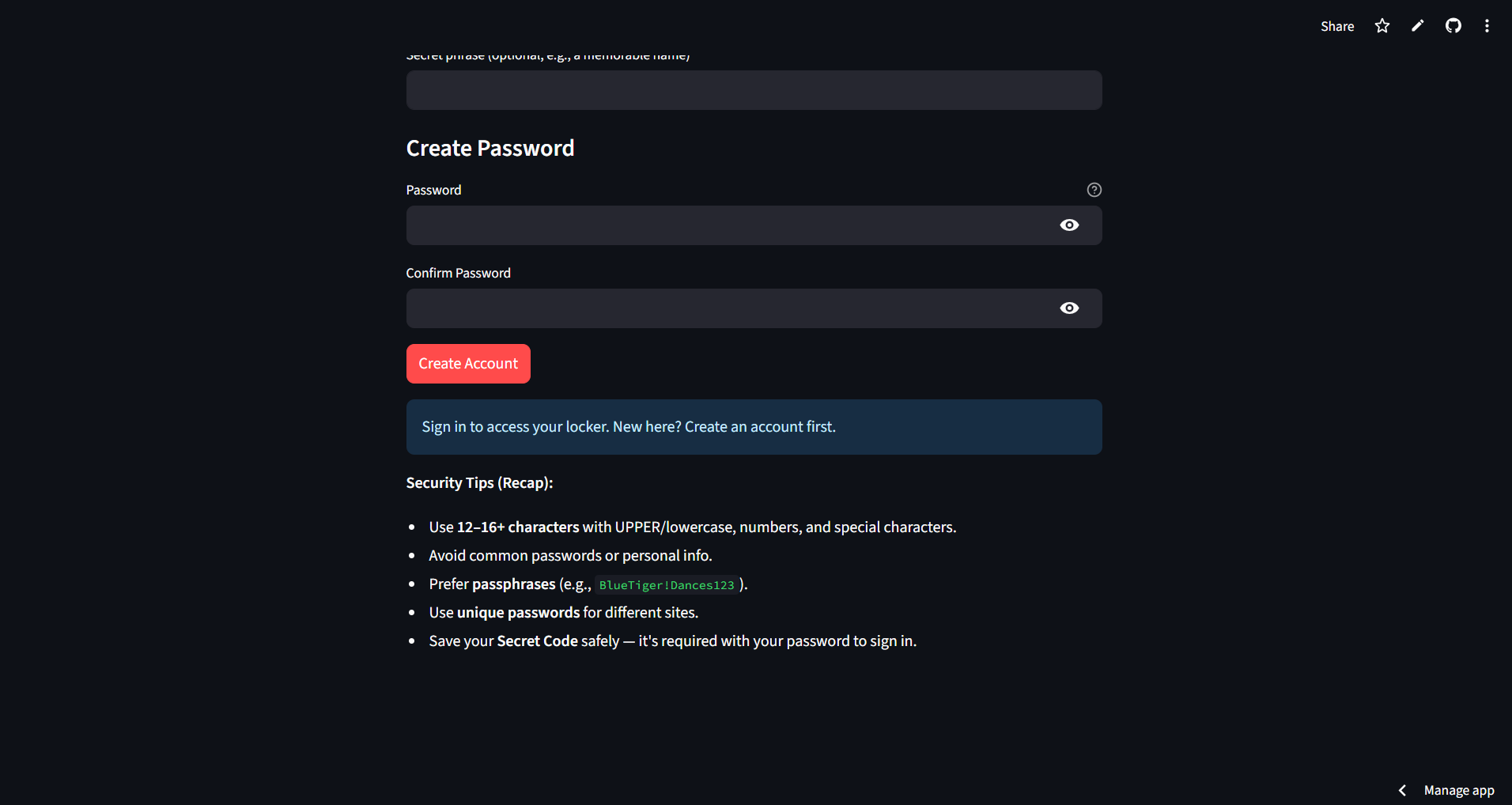
Create an account
-
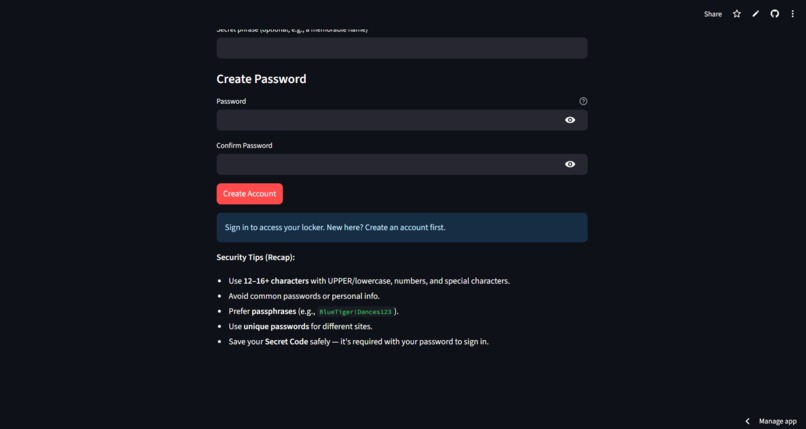
Create an account
-
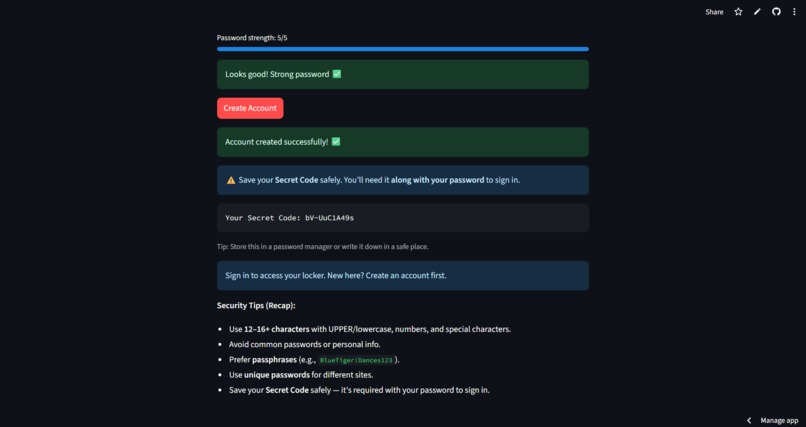
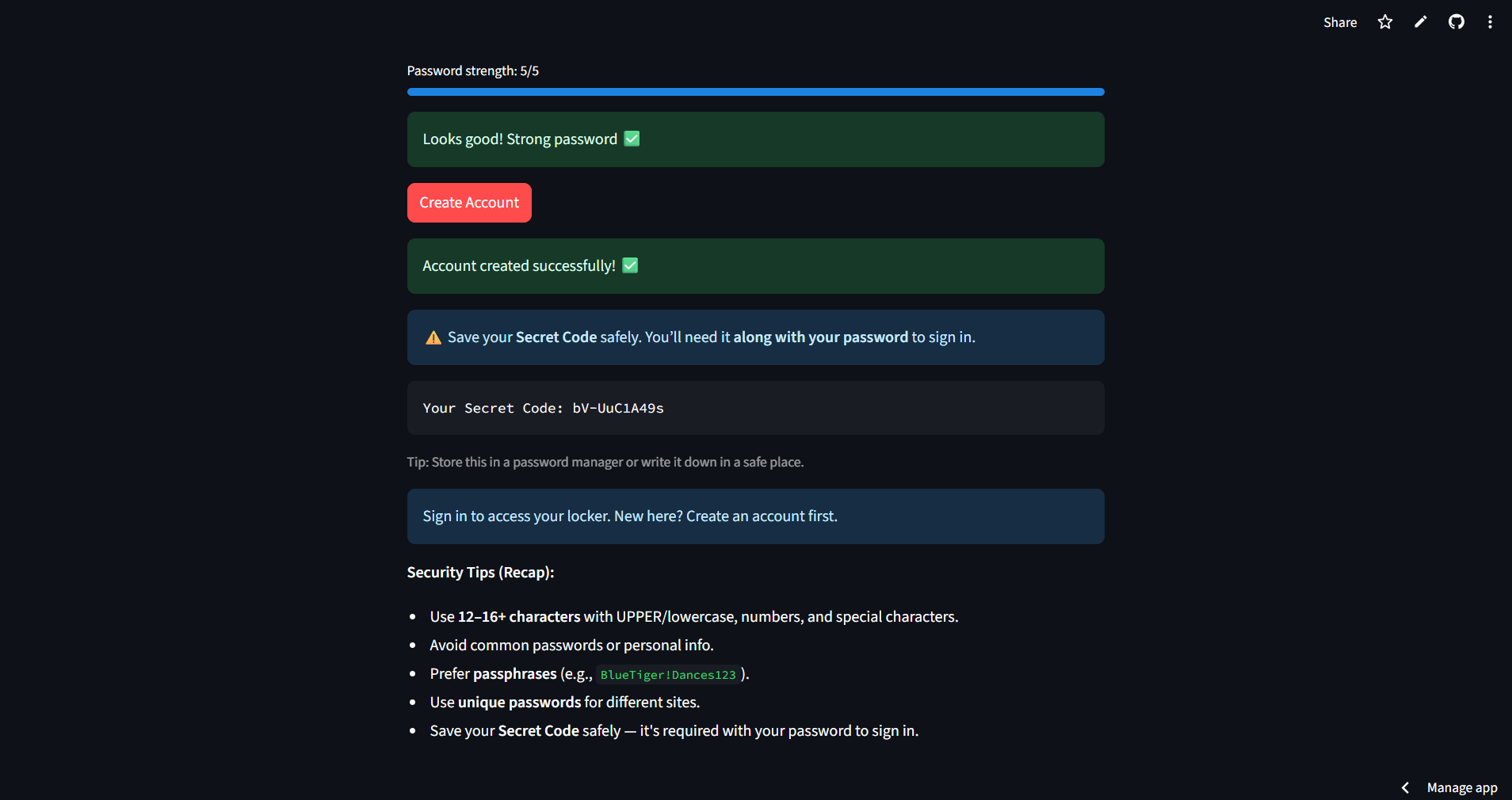
Save Your Secret Code safely
-
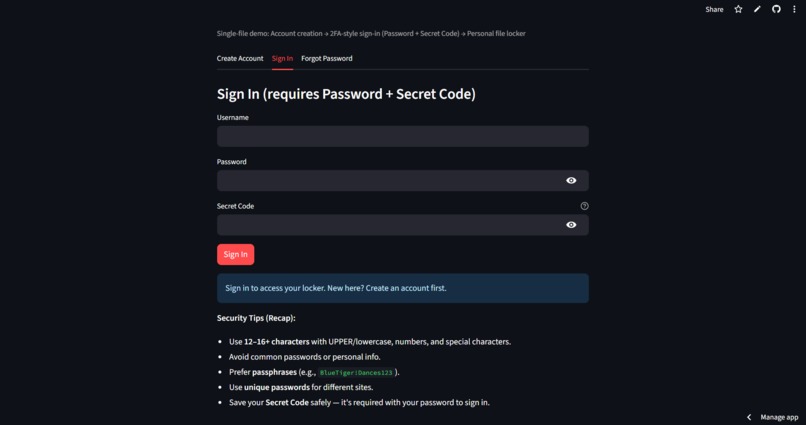
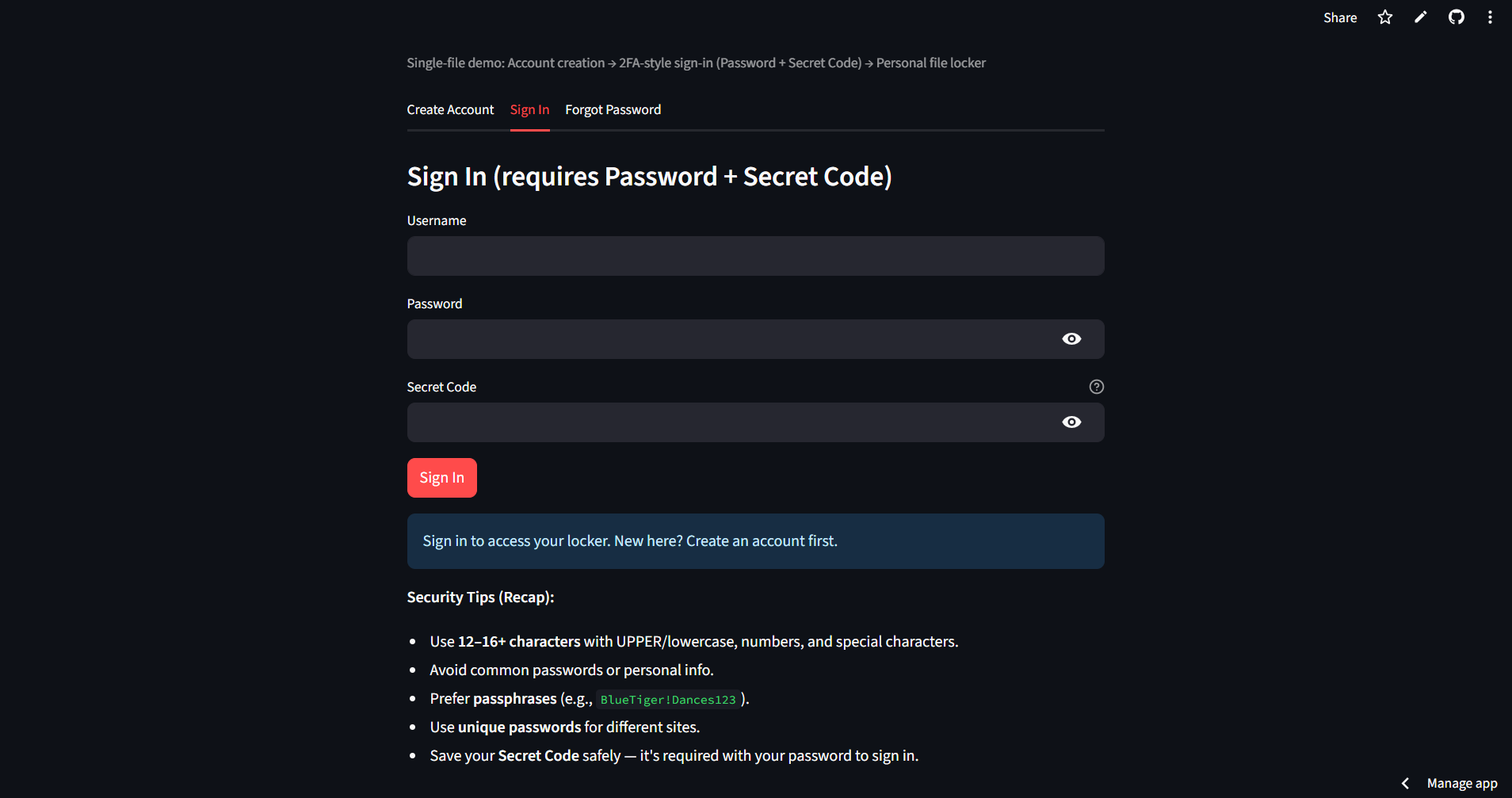
Sign in page
-
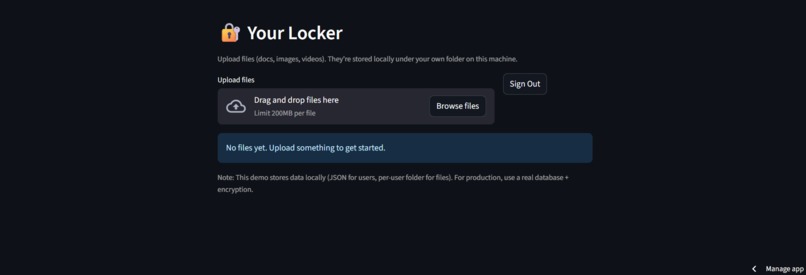
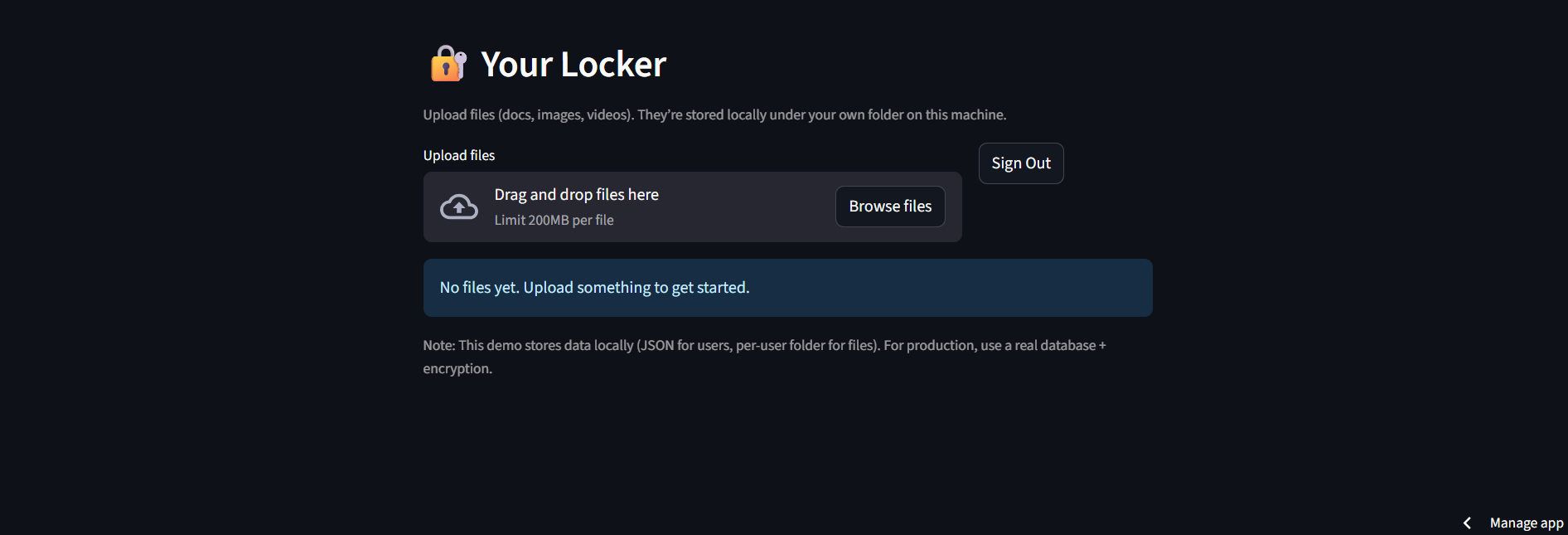
Upload files
Inspiration
In the past, wars were fought for food and land. But in today’s world, the real war is for data — a cyber war where hackers constantly attempt to steal our digital assets.
To safeguard this most valuable resource, I built QuantumLock. Its motto is simple: “Your data, secured in your own hands.”
With QuantumLock, you can:
Create an account securely.
Log in anytime, anywhere.
Store sensitive notes (like PINs, passwords, and reminders) in a safe and encrypted place.
What it does
When a user creates an account in QuantumLock, the system automatically generates a unique secret code.
This code is tied only to the user’s account.
It works like a digital key to their personal locker.
Without it, no one — not even the creator — can access the vault.
Once logged in, users land on their Locker Dashboard, where they can securely store important notes such as:
PINs
Passwords
Personal reminders
This ensures that even if users forget their password, their vault remains safe and cannot be accessed by anyone else.
How we built it
I developed QuantumLock step by step, combining multiple Python libraries and deployment tools:
Core Application (Python)
Built the logic in Python for account creation, login, and session handling.
Used built-in libraries like hashlib for generating secure secret codes.
Frontend & UI (Streamlit)
Designed the interactive signup, login, and dashboard using Streamlit.
Leveraged st.tabs, st.session_state, and simple form inputs to create a smooth user flow.
Data Handling
Used Python’s pickle & json modules for local data storage (simulating a vault).
Managed session storage directly with Streamlit session state.
Visualization & Styling
Streamlit widgets (st.text_input, st.text_area, st.success, etc.) for UI.
Added a clean structure for “Locker Dashboard” so users can save important notes, pins, and passwords.
Deployment & Version Control
Code maintained on GitHub.
Deployed directly using Streamlit Cloud for instant public access.
Tools & Libraries Used
Python 3
Streamlit
hashlib (secure secret code generation)
pickle/json (data storage & retrieval)
GitHub (version control)
Streamlit Cloud (deployment & hosting
Challenges we ran into
Session Management Handling authentication states without a backend was challenging. We had to carefully design st.session_state logic so that login, signup, and secret-code verification worked smoothly without breaking the user flow.
Secure Secret Code Flow One of the most difficult parts was integrating the secret code mechanism during account creation and ensuring that the same code works later for login. We had to rethink the flow multiple times to balance usability and security.
Dynamic UI Updates Streamlit automatically refreshes the UI on each interaction, which sometimes broke our navigation between signup, login, and the home dashboard. Solving this required experimenting with rerun logic and conditional rendering.
Scalability Constraints Since we didn’t implement a full backend or database due to time constraints, designing a prototype that still feels functional and secure was a big challenge. We simulated a local vault for storing notes, which demonstrates the core idea while leaving room for future scalability.
Rapid Deployment & Integration Integrating with GitHub and deploying to Streamlit Cloud under a tight deadline tested our ability to iterate quickly, fix errors fast, and keep the project running live for testing and demo purposes.
Accomplishments that we're proud of
Built a Working Prototype in Limited Time Despite not having a backend or database, we successfully created a fully functional authentication flow (signup, secret code, and login) within the hackathon deadline.
Innovative Secret Code Vault Concept We implemented a unique security layer where users generate and use a secret code that acts as a personal key to their vault — adding creativity and novelty to a simple login system.
Seamless Deployment We went from local code to a live Streamlit Cloud deployment accessible via a public URL, allowing anyone (including judges and teammates) to try it instantly.
User-Friendly Interface Designed a clean and minimal Locker Dashboard where users can safely store important notes like PINs, passwords, and personal reminders.
Human + AI Team Collaboration The project was a result of me working together with AI tools (like ChatGPT, BlackBox) — solving bugs, refining code, and iterating ideas quickly. This unique collaboration boosted productivity and allowed me to build something meaningful in a short time.
What we learned
To be frank, there is still a lot to learn to make QuantumLock even stronger and more robust. However, through this project, I gained valuable experience in writing smarter code in less time, optimizing workflows, and building functional prototypes quickly.
I learned how to:
Develop secure authentication flows using Python and Streamlit.
Integrate unique features like the secret-code vault efficiently.
Manage session states and dynamic UI updates without a full backend.
Rapidly deploy a project using GitHub and Streamlit Cloud.
Collaborate with AI tools (like ChatGPT and BlackBox) to debug, refine code, and iterate ideas faster.
Overall, this project taught me the importance of efficiency, creativity, and learning on the go — skills I can now carry forward to make future projects even stronger.
What's next for QuantumLock
The current version of QuantumLock represents only 1% of its full potential. The roadmap for future versions aims to combine stronger security, AI assistance, and data-driven insights:
Version 1.0 Cyber: Enhanced auto-generation of stronger secret codes for even higher security.
Version 1.1 Cyber: Improvements to the homepage and user interface for a smoother experience.
Version Bot 1: Integration of an AI assistant to suggest and manage user actions within the vault.
Version Bot 1.1 Cyber: Advanced AI agent that connects to user emails, automatically saving important information securely within QuantumLock.
QuantumLock will serve as the main base for personal and sensitive data storage, while also enabling data-driven analytics for business applications.
Retail Analytics Expansion
A key application built on QuantumLock is AI-powered retail analytics, focused on improving customer engagement insights while maintaining privacy.
Problem Statement: Retail stores, especially multi-section shops like clothing brands, struggle to understand which customer groups are most interested in specific sections or products. Traditional methods such as manual surveys or observation are time-consuming, error-prone, and lack real-time insights. Store owners need an automated system to track customer demographics and engagement, helping them optimize layout, inventory, and marketing strategies.
Approach / Methodology:
Data Capture: Use cameras or video feeds in the store to track customer movement. Only anonymized data is collected to preserve privacy.
Customer Detection & Categorization: AI/ML models (OpenCV + pre-trained classifiers) detect customers and categorize them by demographics: men, women, kids.
Section Engagement Tracking: Map store layout into sections and track which sections customers spend the most time in.
Data Aggregation & Reporting: Collect data over time and generate visual reports, including:
Heatmaps of foot traffic per section
Charts showing which demographics engage most with each section
Trends over time to guide business decisions
Optional Enhancements: Predict peak hours, combine with sales data to calculate conversion rates by demographic.
Impact: This system provides real-time, actionable insights into customer behavior while keeping personal data secure. Retail stores can:
Understand which demographics are interested in which sections.
Optimize store layout, promotions, and inventory based on real engagement.
Reduce reliance on manual surveys and guesswork.
Key Technologies: AI/ML (OpenCV, pre-trained models), Python, Data Visualization (Matplotlib/Plotly), optional cloud backend.
Resume-Friendly Line: "Developed an AI-powered retail analytics system that tracks customer engagement by demographic and store section, storing all data securely in QuantumLock to ensure authorized access and privacy."
Main Goal: The primary purpose of QuantumLock remains the safety of personal information, ensuring that only authorized users can access sensitive data while supporting advanced analytics for business insights.

Log in or sign up for Devpost to join the conversation.