-
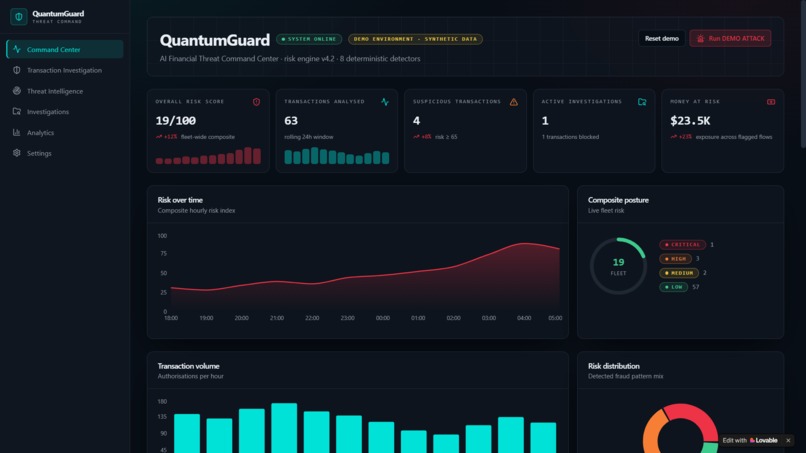
Home page
-
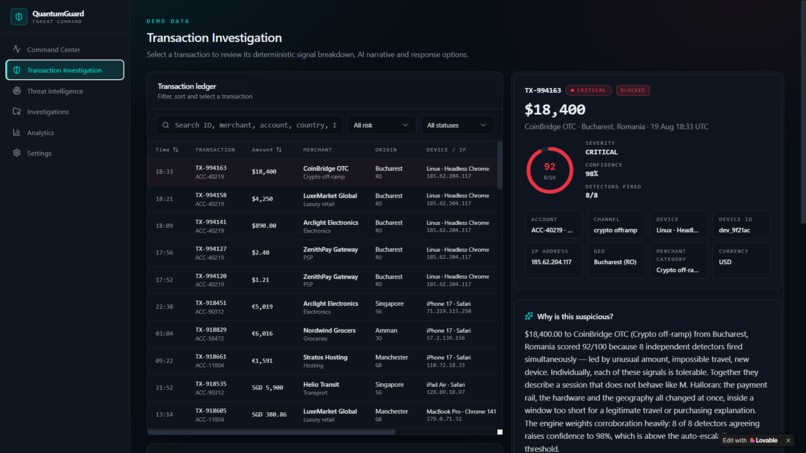
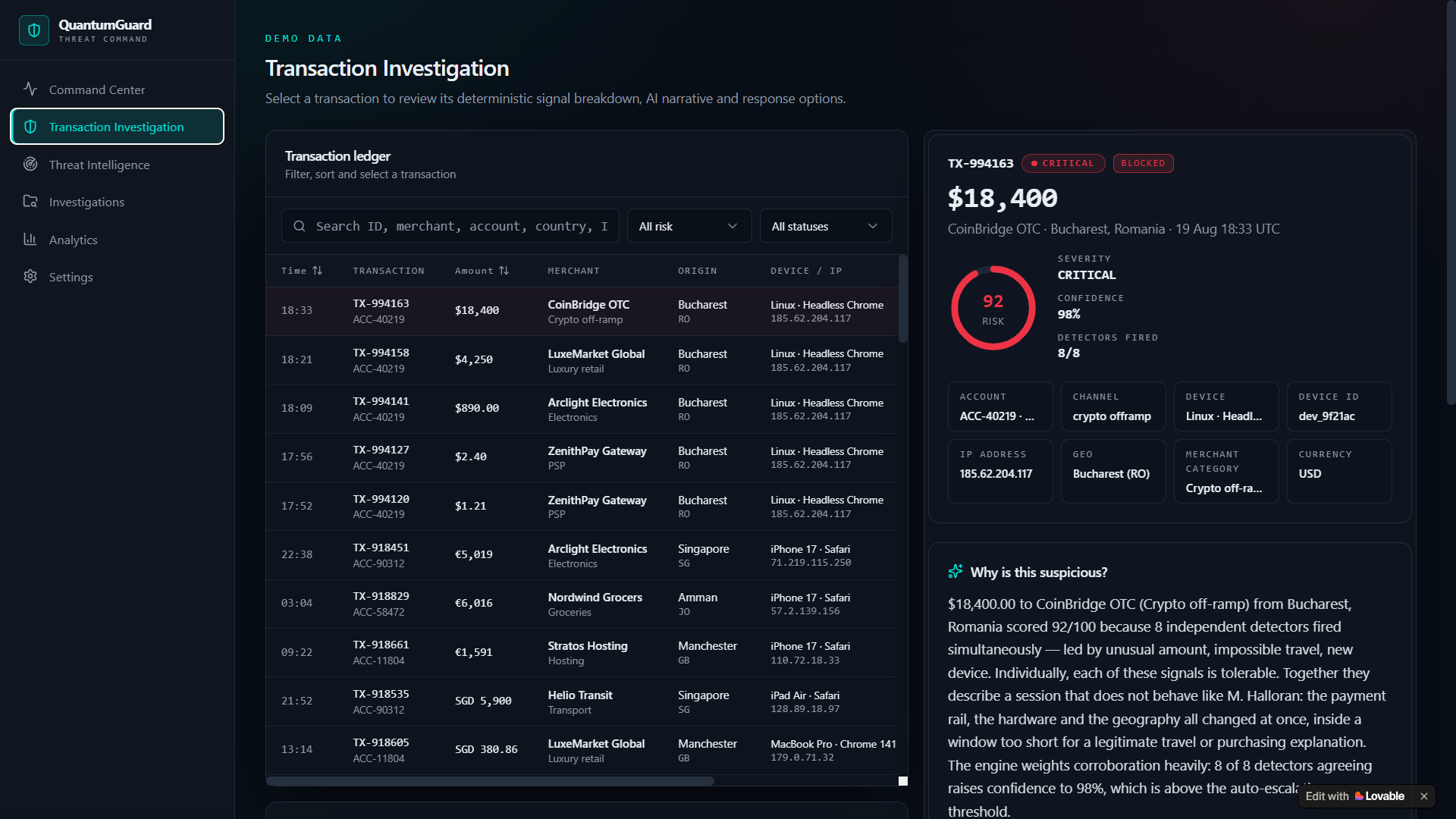
Transaction Investigation Page
-
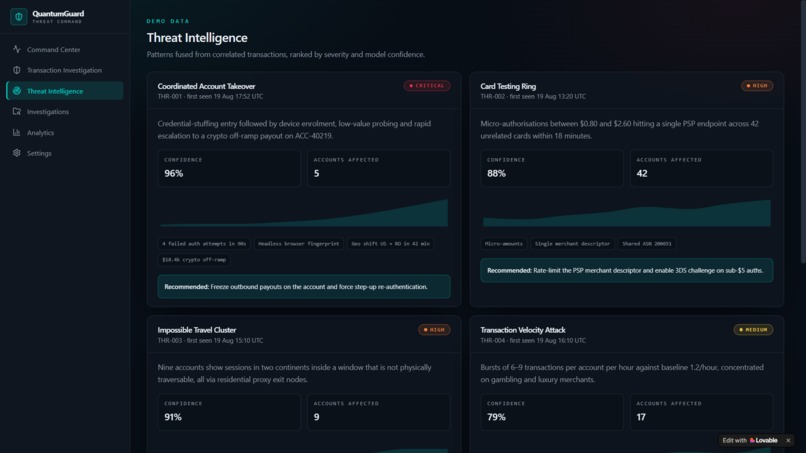
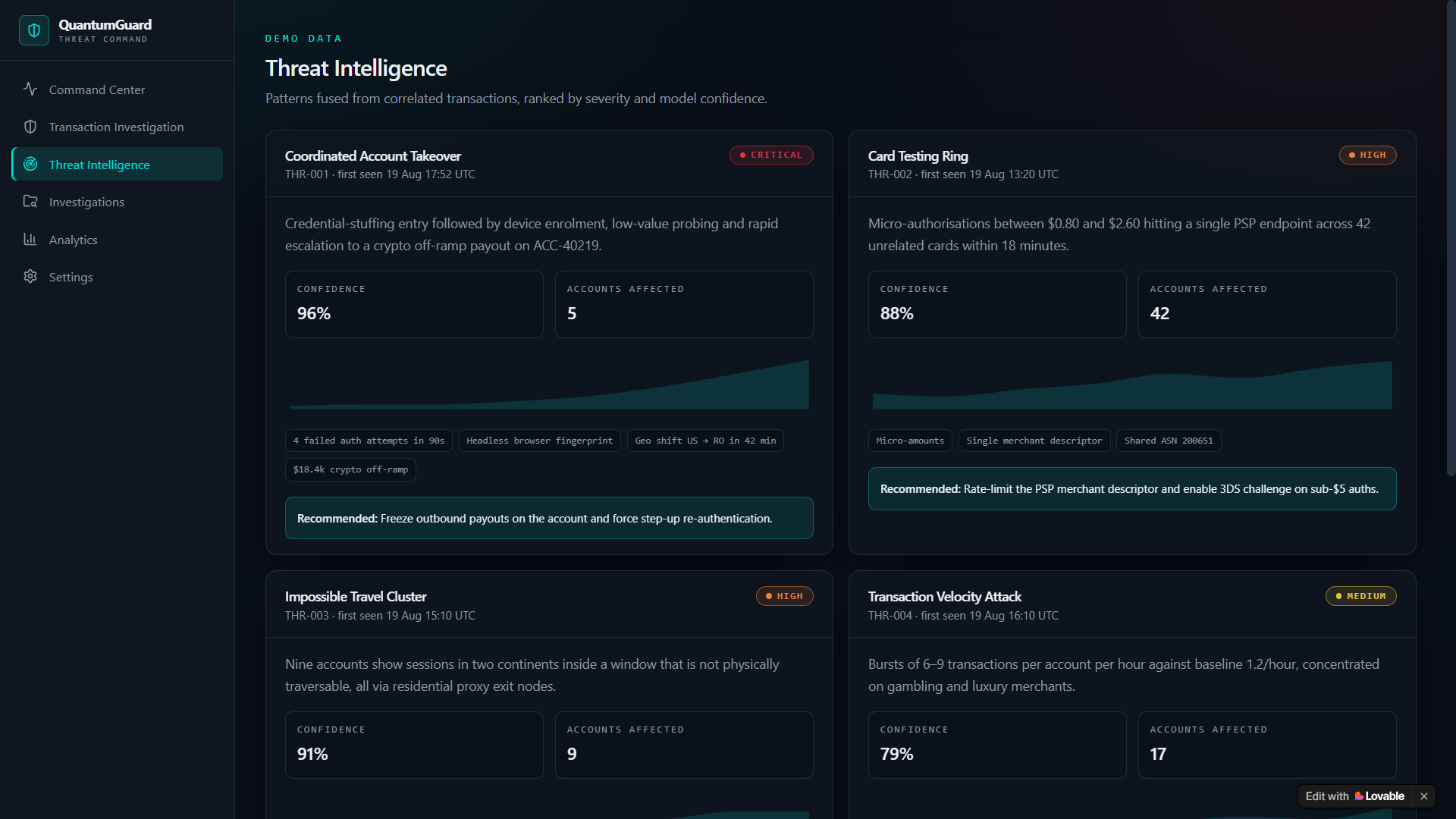
Threat Intelligence Page
-

Investigations Page
-
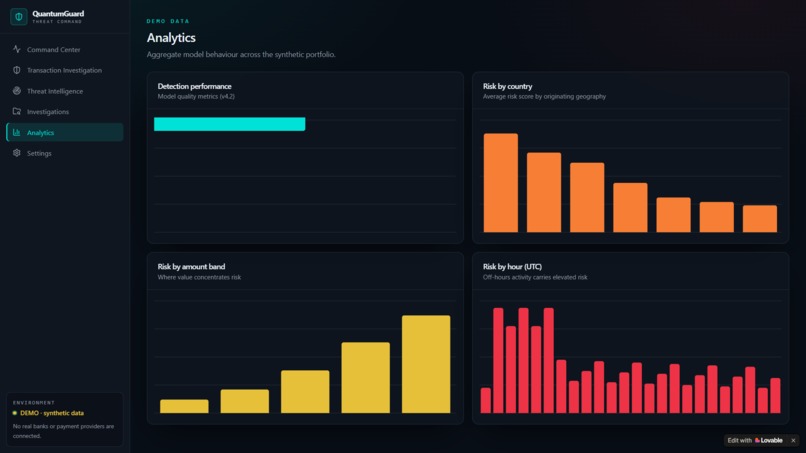
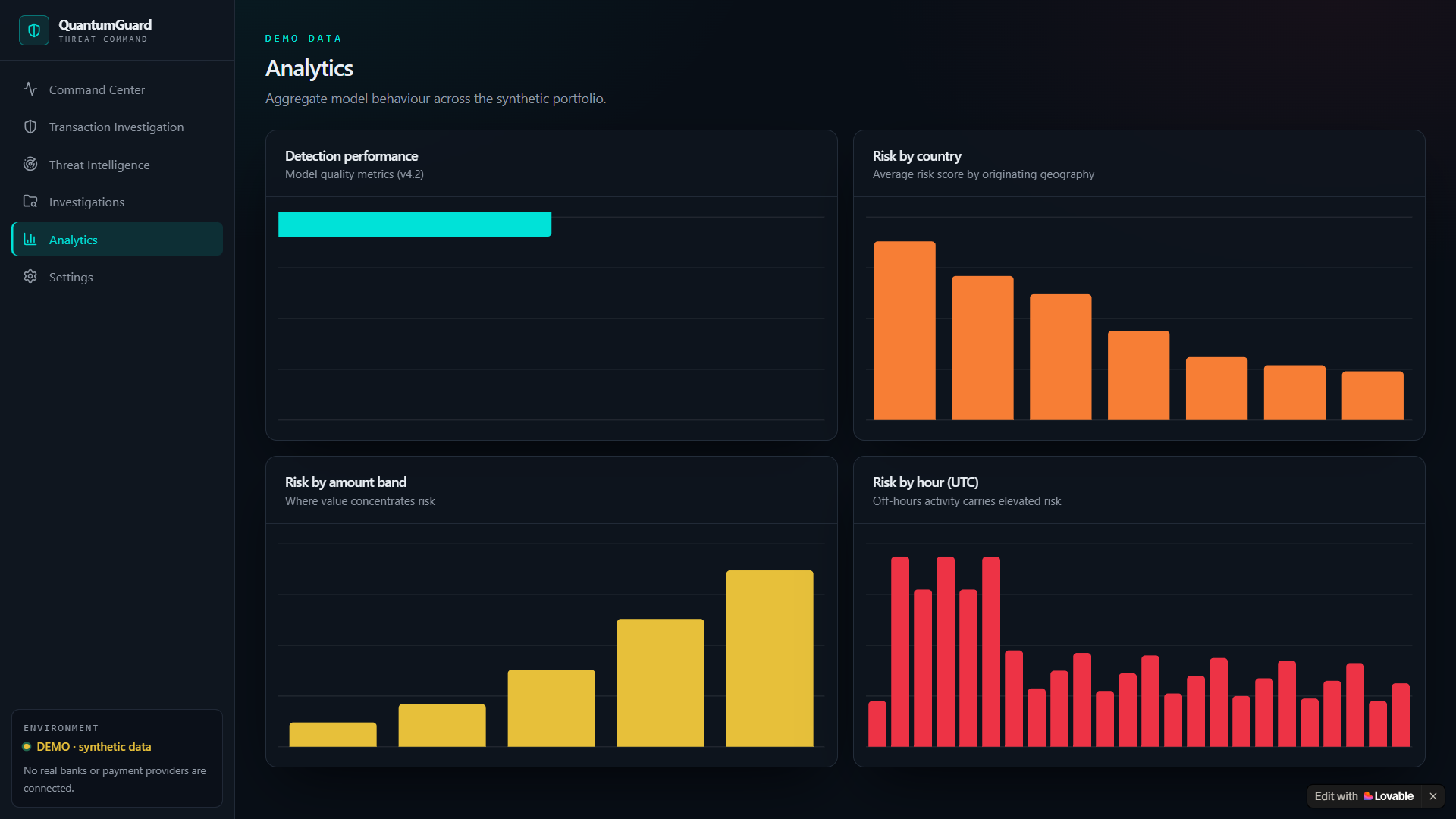
Analytics
-
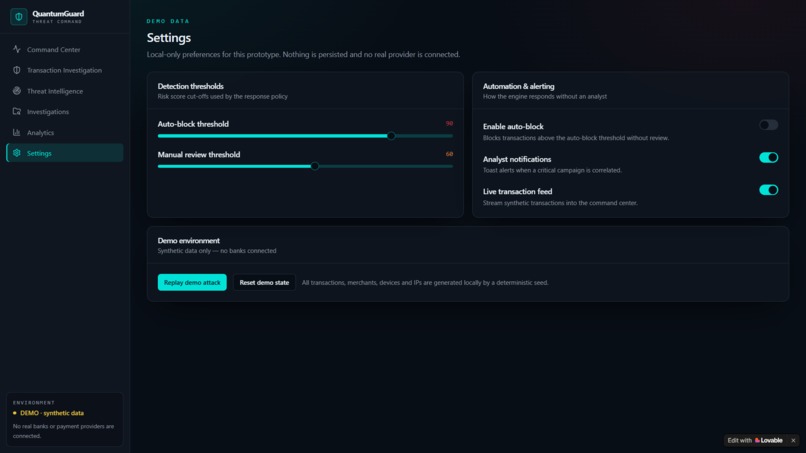
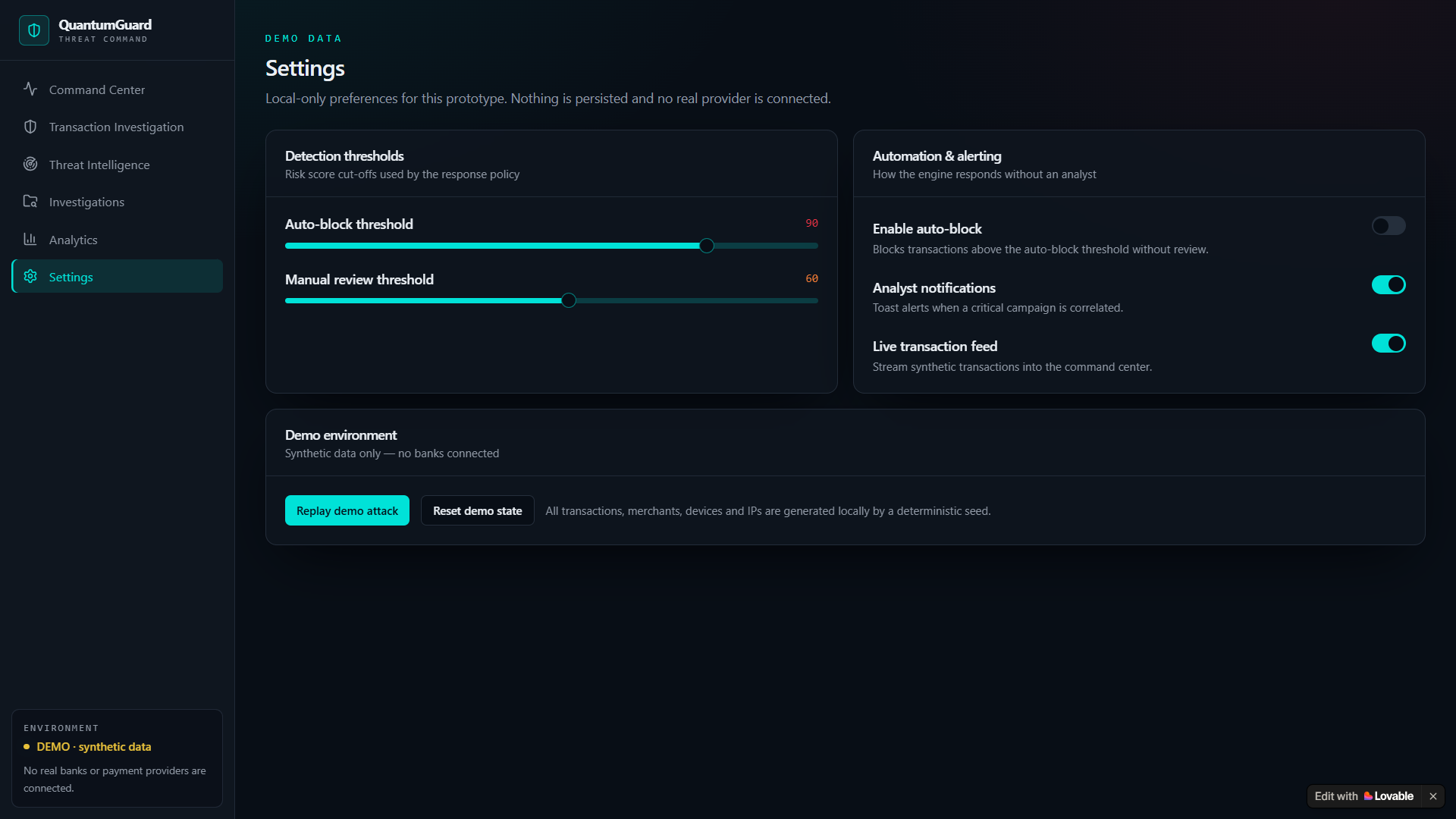
Settings
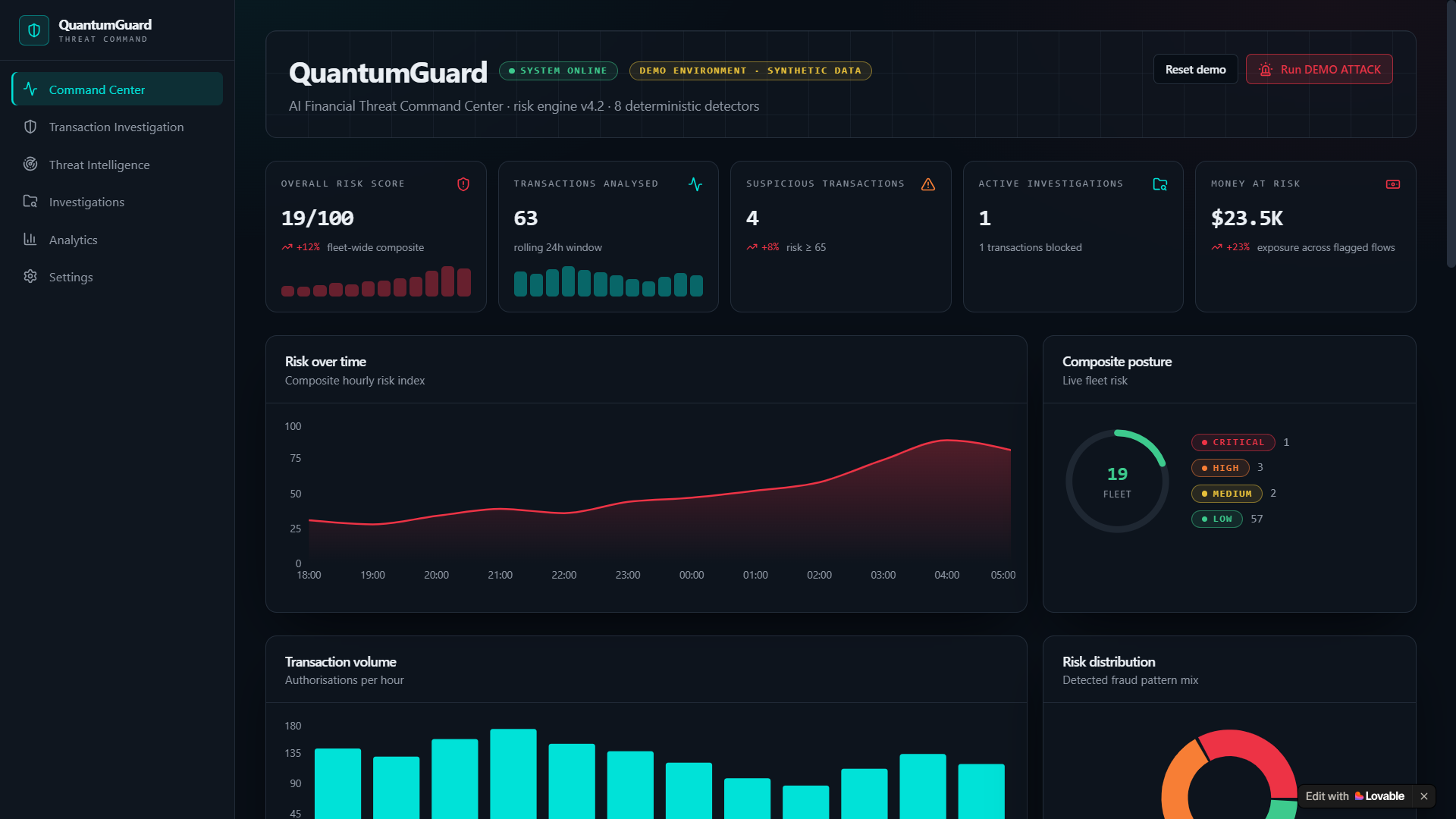

QuantumGuard
The Problem
Financial attacks rarely look suspicious from a single event.
A new device might be normal. A login from another location might be suspicious. A failed login attempt might be harmless. A large transaction might be legitimate.
But when these signals happen together, they can reveal a coordinated attack.
Traditional fraud systems can struggle to communicate why a transaction is risky and how separate signals are connected.
Our Solution
QuantumGuard is an AI-powered Financial Threat Command Center that detects, correlates, and explains suspicious activity before it becomes a major loss.
Instead of looking at transactions in isolation, QuantumGuard connects multiple signals across an incident:
Login anomaly → New device → Location anomaly → Authentication failures → Transaction probing → High-value transaction
The system then produces an explainable risk assessment and recommends an appropriate response.
The Demo
Our main scenario simulates a coordinated account takeover.
A series of individually suspicious events begins to appear. QuantumGuard continuously evaluates the signals and correlates them into a larger attack pattern.
When the high-value transaction occurs, the system identifies the coordinated behavior and raises a Critical Risk alert.
The investigation view shows:
- Risk score
- Confidence
- Detected signals
- Correlated events
- AI investigation
- Decision trace
- Recommended response
- Incident timeline
Security teams can then take actions such as blocking the transaction, locking the account, or requiring verification.
All financial data in the demo is synthetic.
What Makes It Different
We wanted to move beyond the idea of an AI system that simply says:
"This transaction looks suspicious."
QuantumGuard focuses on explainability and correlation.
It answers:
What happened? Why is it risky? How are the events connected? What should happen next?
This makes the AI's decision easier for a human analyst to understand and act on.
How We Built It
QuantumGuard was built as a web-based security command center using modern web technologies and AI-assisted development.
The application combines:
- A transaction risk engine
- Multiple detection signals
- Event correlation
- Explainable risk scoring
- AI-powered investigation
- Incident timelines
- Interactive analytics
- A simulated response workflow
- Synthetic financial transaction data
The core demo works without requiring access to real financial accounts or banking APIs.
Challenges
One of our biggest challenges was making the AI useful without turning it into a black box.
We designed the system so that the final risk assessment can be traced back to observable signals. This makes the demonstration more realistic and helps users understand how the system reached its conclusion.
Another challenge was building a complete security workflow rather than just a dashboard. We wanted the user to go from detection → investigation → explanation → response in one continuous experience.
What We Learned
We learned that a strong AI product is not only about generating an answer.
It is about turning complex information into a decision that a person can understand and act on.
We also learned how important product design and storytelling are when building a technical solution. A security system can be powerful, but its value becomes much clearer when the entire attack can be visualized as a story.
What's Next
QuantumGuard could eventually connect to real-time financial and authentication systems, incorporate more advanced behavioral models, and continuously learn from confirmed incidents.
Our goal is to evolve QuantumGuard from a hackathon prototype into an intelligent security layer that helps financial teams detect coordinated attacks earlier and respond with confidence.
Built With
- ai
- cybersecurity
- data-visualization
- event-correlation
- fintech
- fraud-detection
- react
- risk-analysis
- tailwind-css
- typescript
- vite

Log in or sign up for Devpost to join the conversation.