-
-
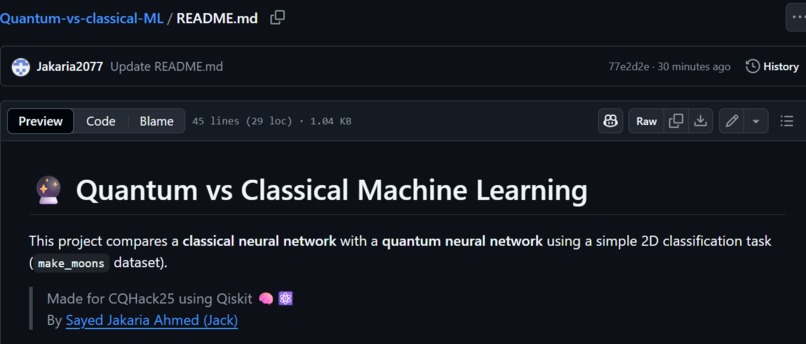
README
-
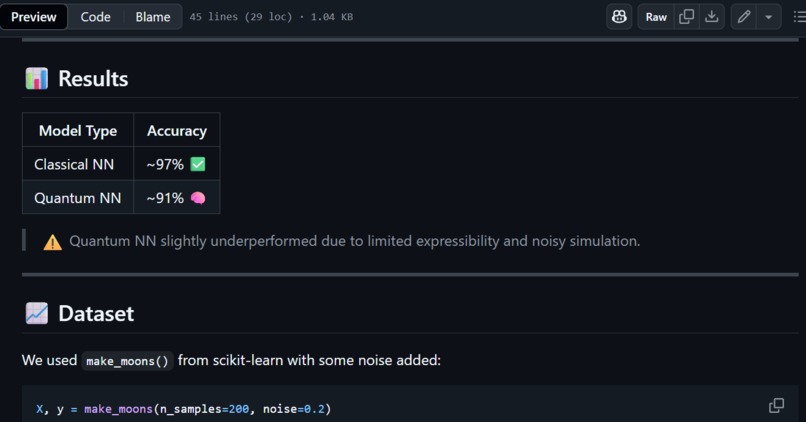
README
-
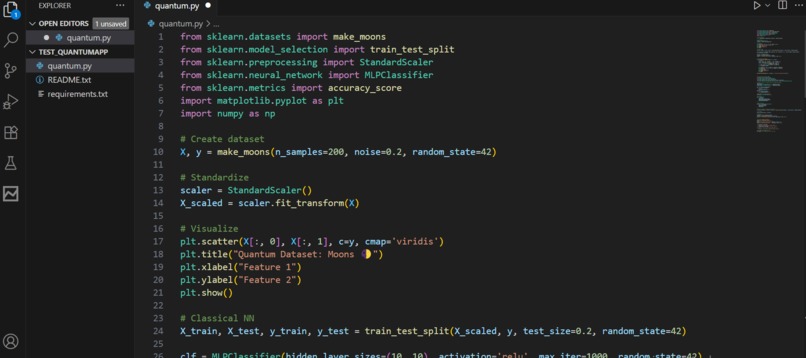
Code
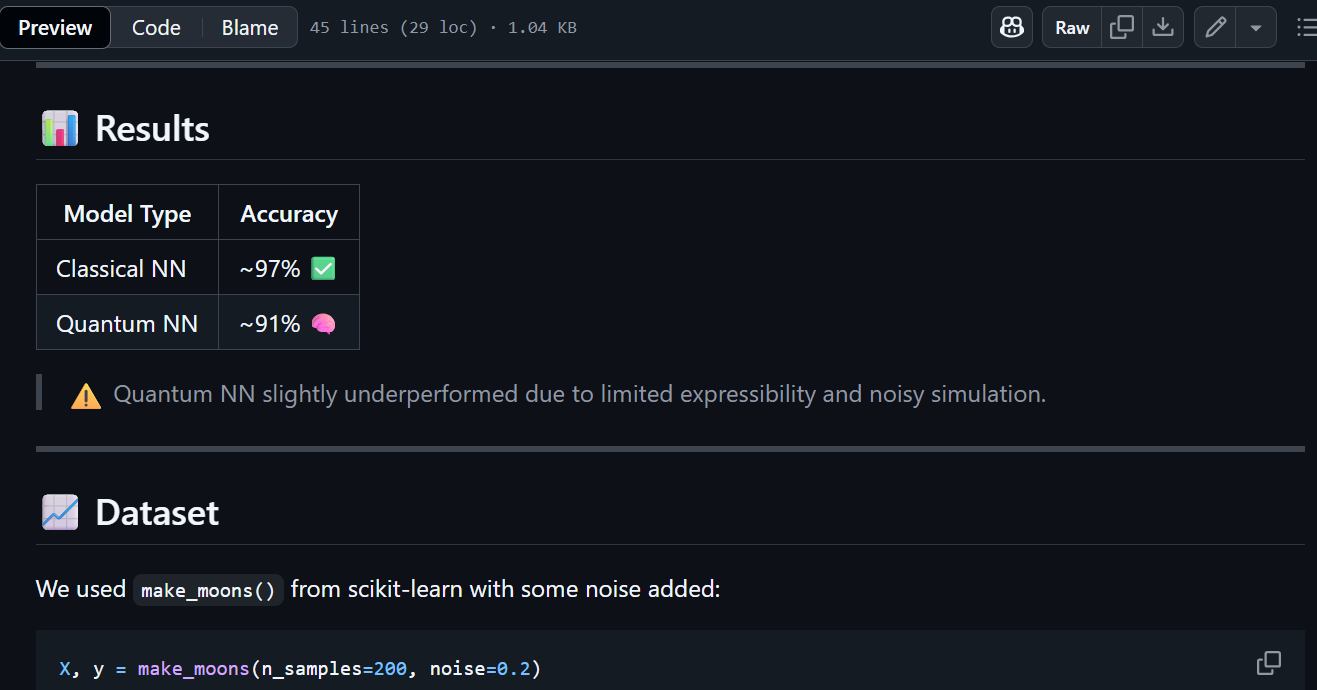
🧠 What inspired me? I was always fascinated by quantum mechanics — the uncertainty, the weirdness, the beauty of particles existing in multiple states at once. I kept diving deeper into the quantum world, and that’s when I discovered quantum computers.
The idea that we could use quantum principles to perform computations felt like science fiction becoming reality 🤯. That curiosity pushed me to explore how quantum computers could be used in real applications — especially in Machine Learning, which I already loved.
🧪 What I learned The basic structure and limitations of quantum machine learning models
How quantum kernels differ from classical kernels
How to build hybrid systems and visualize performance trade-offs
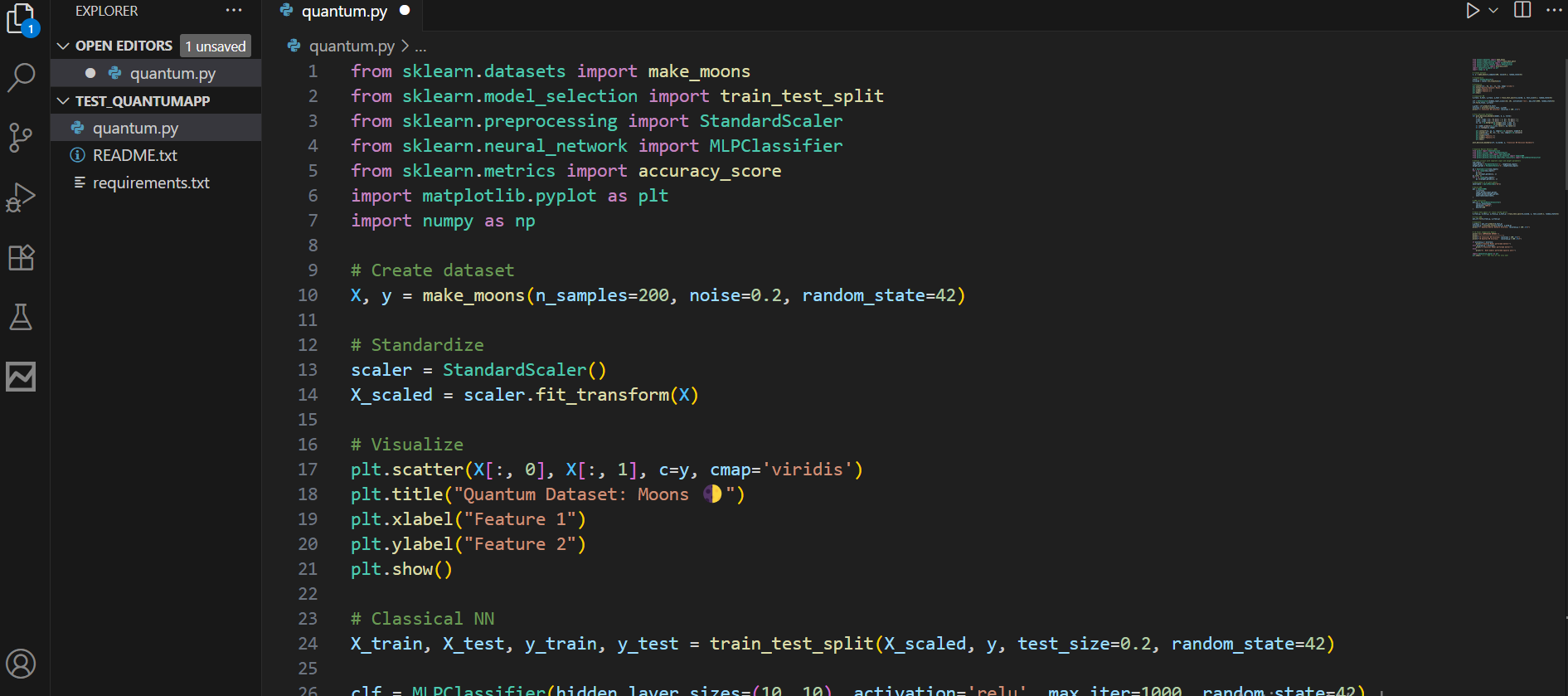
How to structure a reproducible, testable ML project on GitHub
And most importantly — how quantum computing still needs time, but the future is bright ✨
❗ Challenges I faced Installing and configuring Qiskit properly on a local machine
Long simulation times for quantum kernels compared to classical ones
Debugging circuit parameters and kernel matrix issues in QSVC
Limited dataset sizes due to simulation constraints
Choosing the right visualization techniques to make comparison intuitive
📈 Future Improvements Run quantum models on real IBM Quantum hardware
Try other quantum algorithms like VQC (Variational Quantum Classifier)
Use a larger, more complex dataset
Deploy the project with a streamlit UI or Flask web app for interactive demo
Built With
- github
- matplotlib
- numpy
- python
- scikit-learn
- vsc


Log in or sign up for Devpost to join the conversation.