-
-
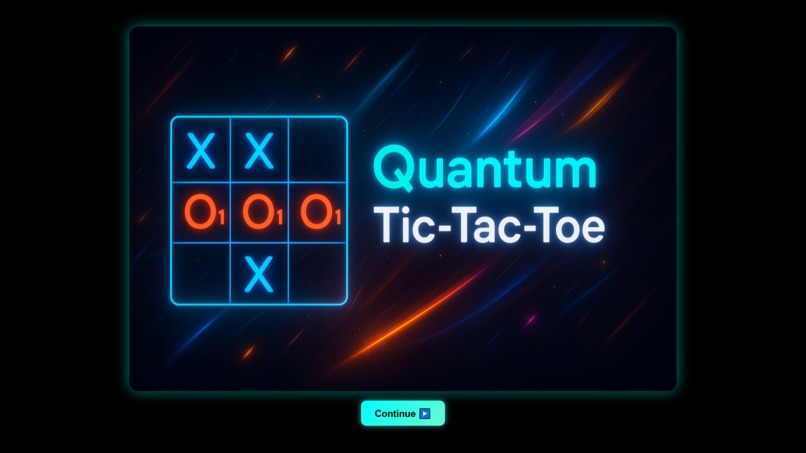
Startup Interface
-
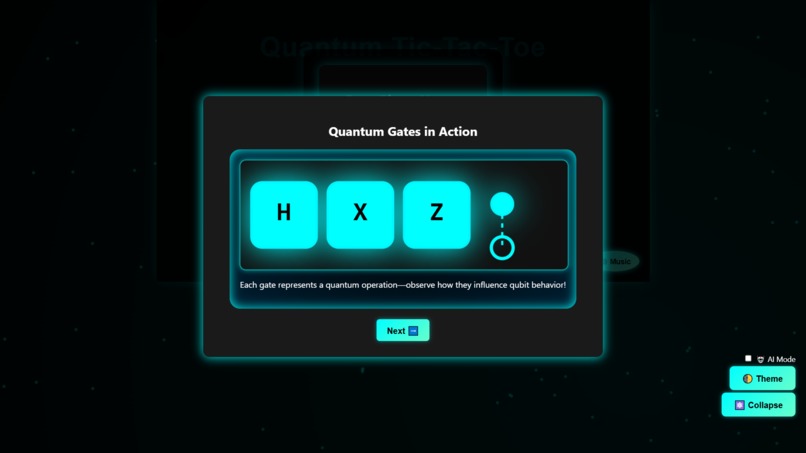
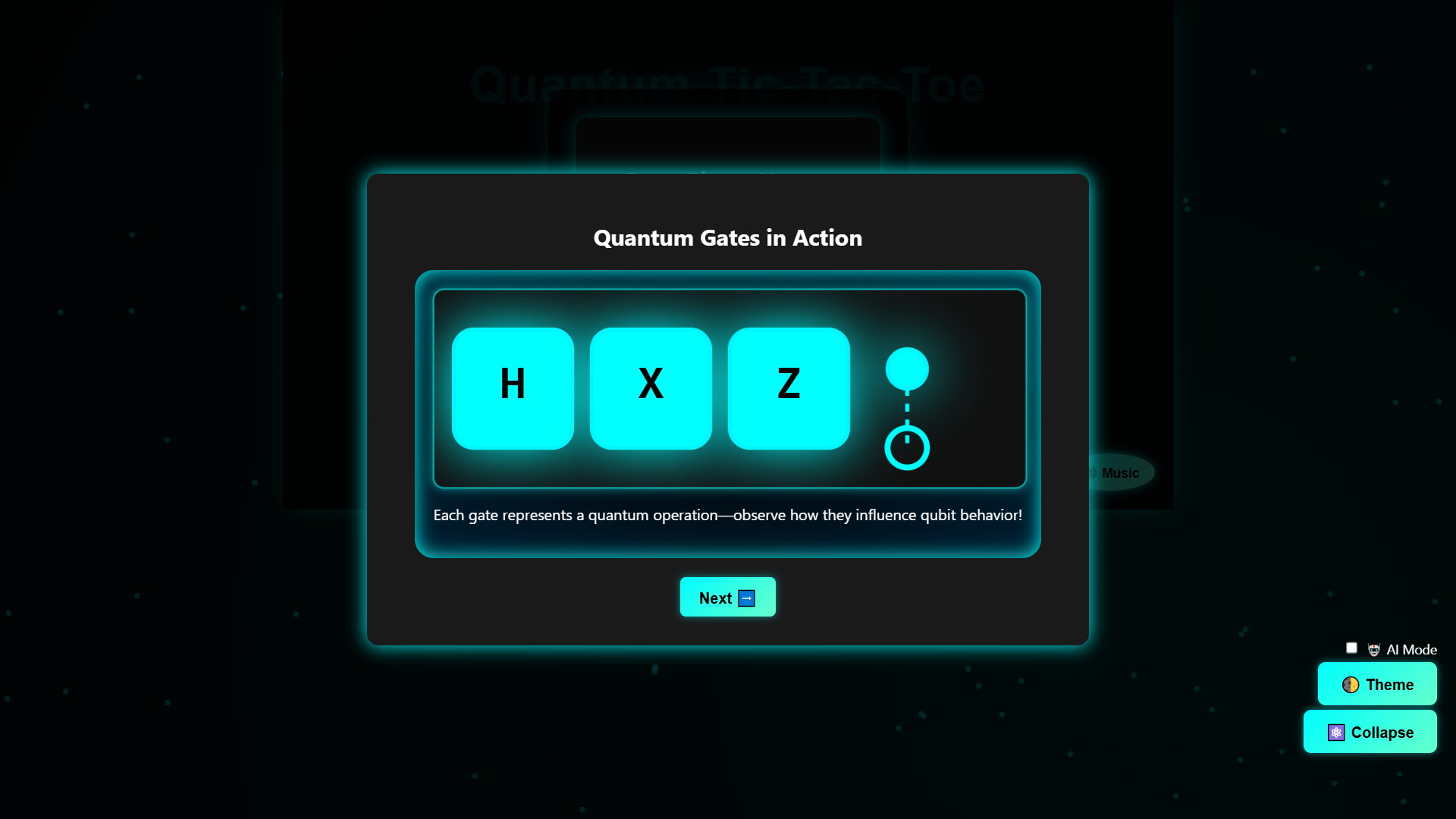
Quantum Gates in Action
-
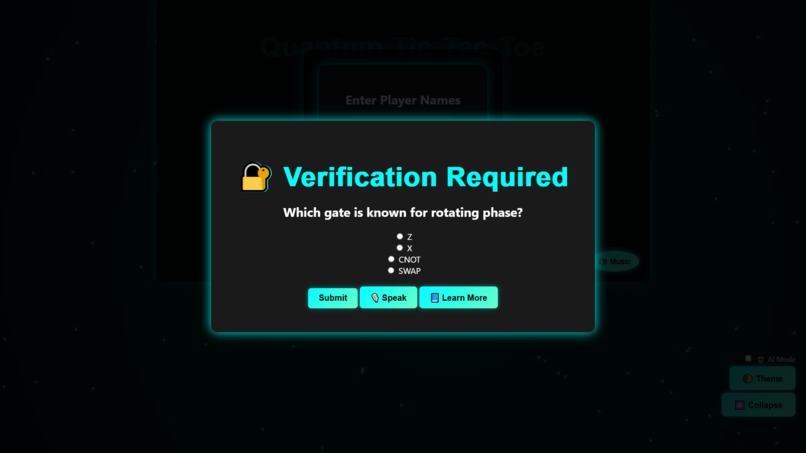
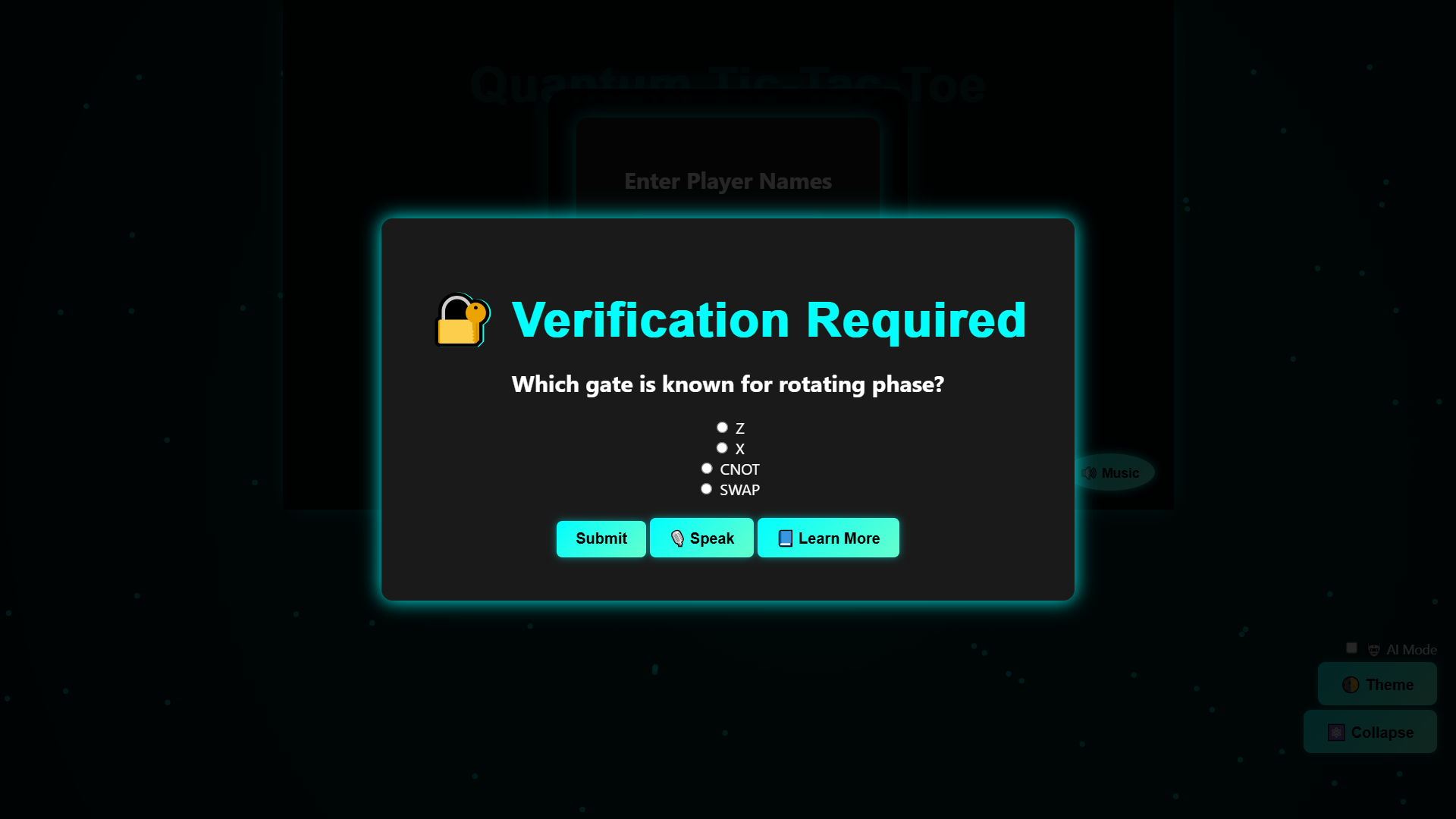
User Verification
-
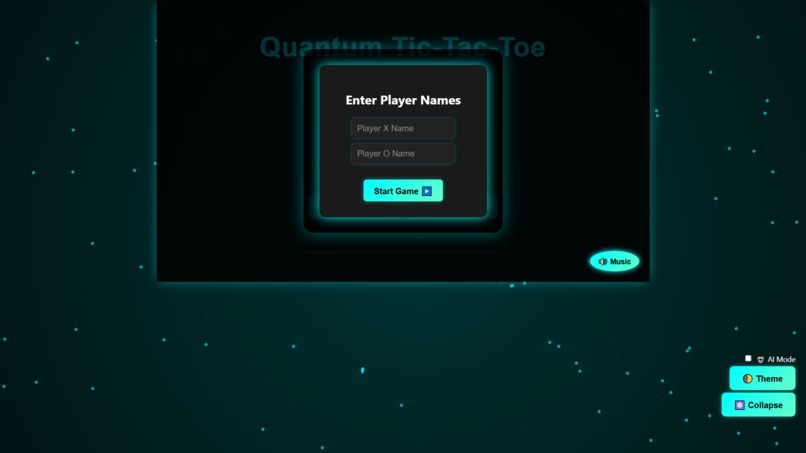
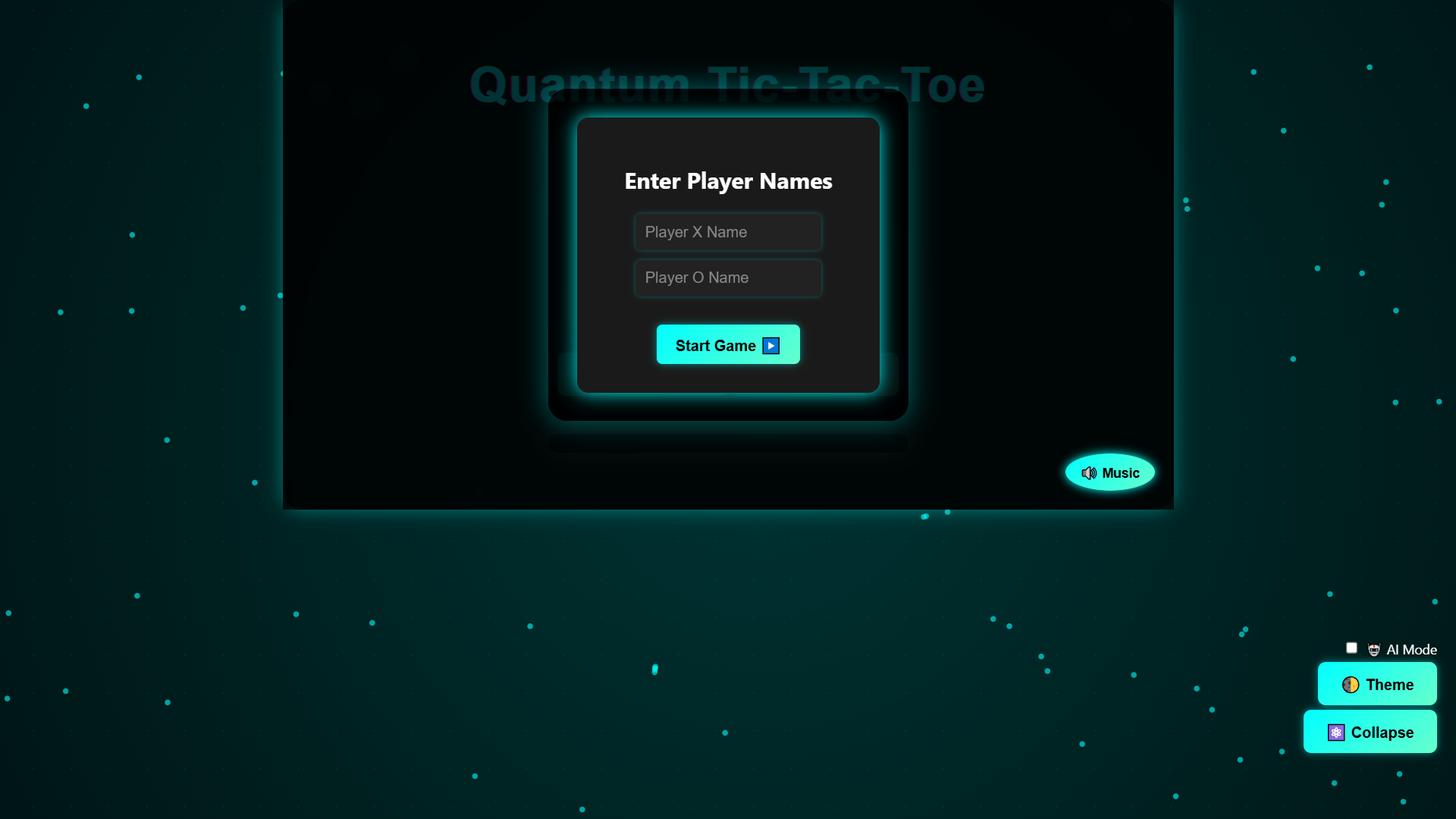
Player Name Input
-
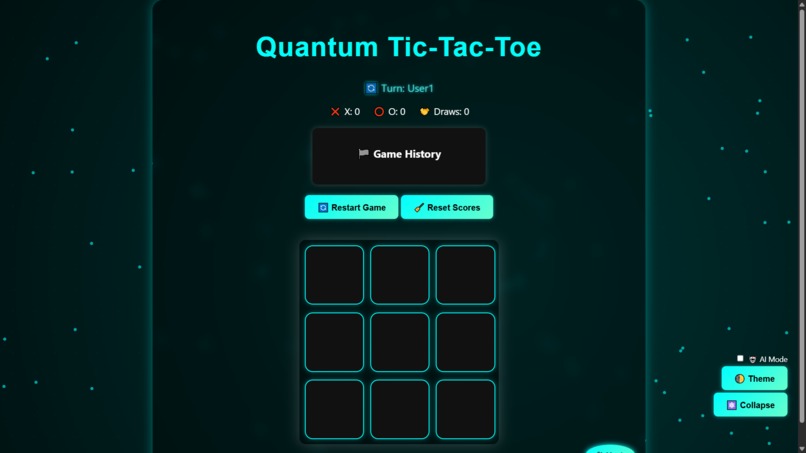
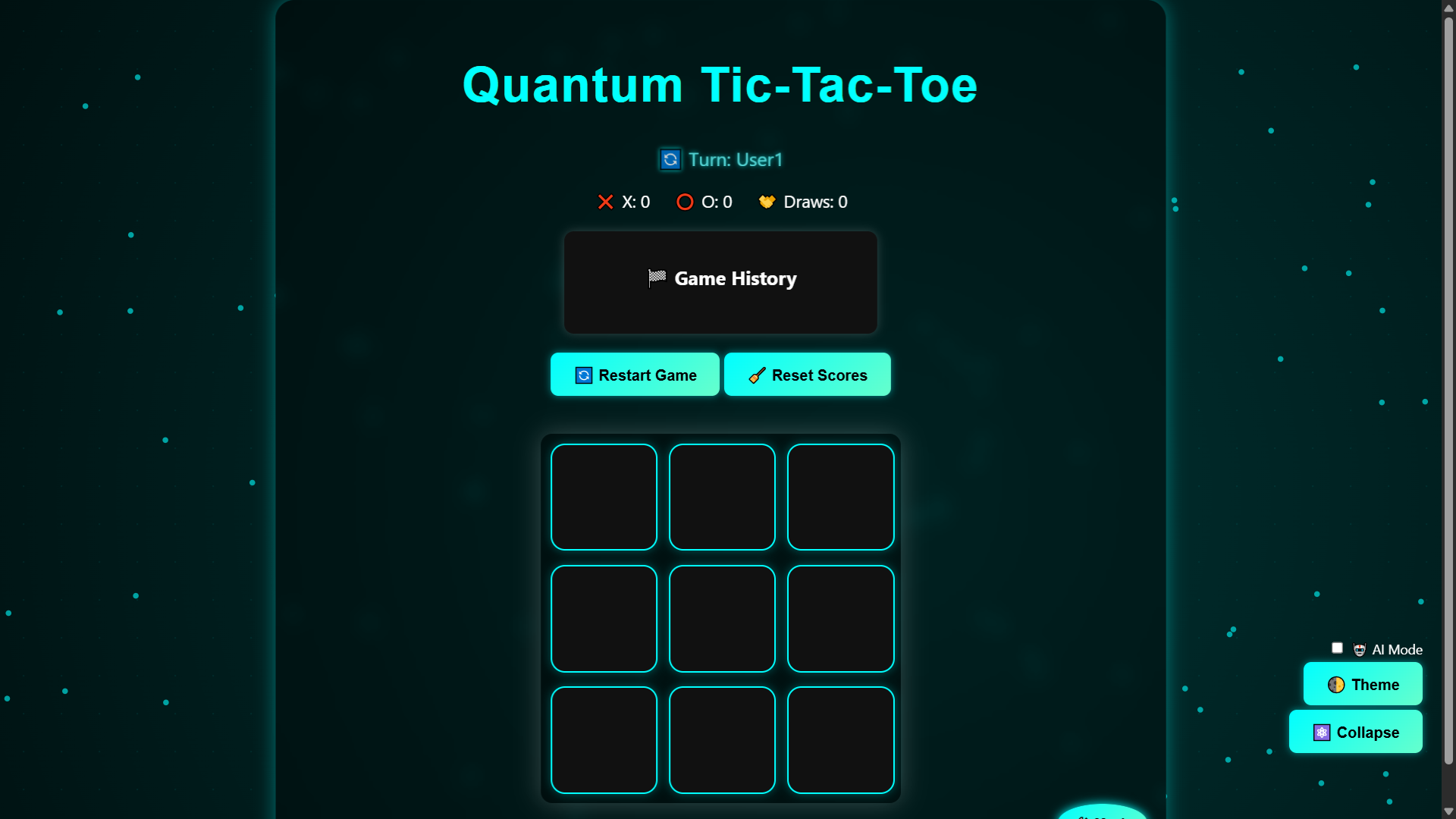
Main Game Interface
-
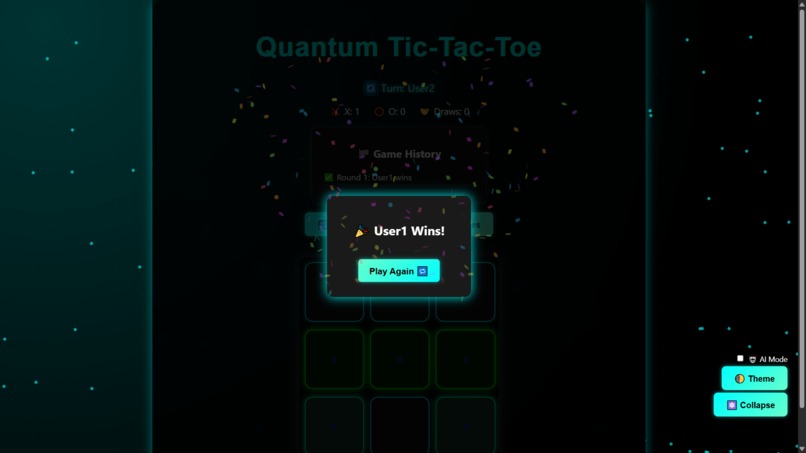
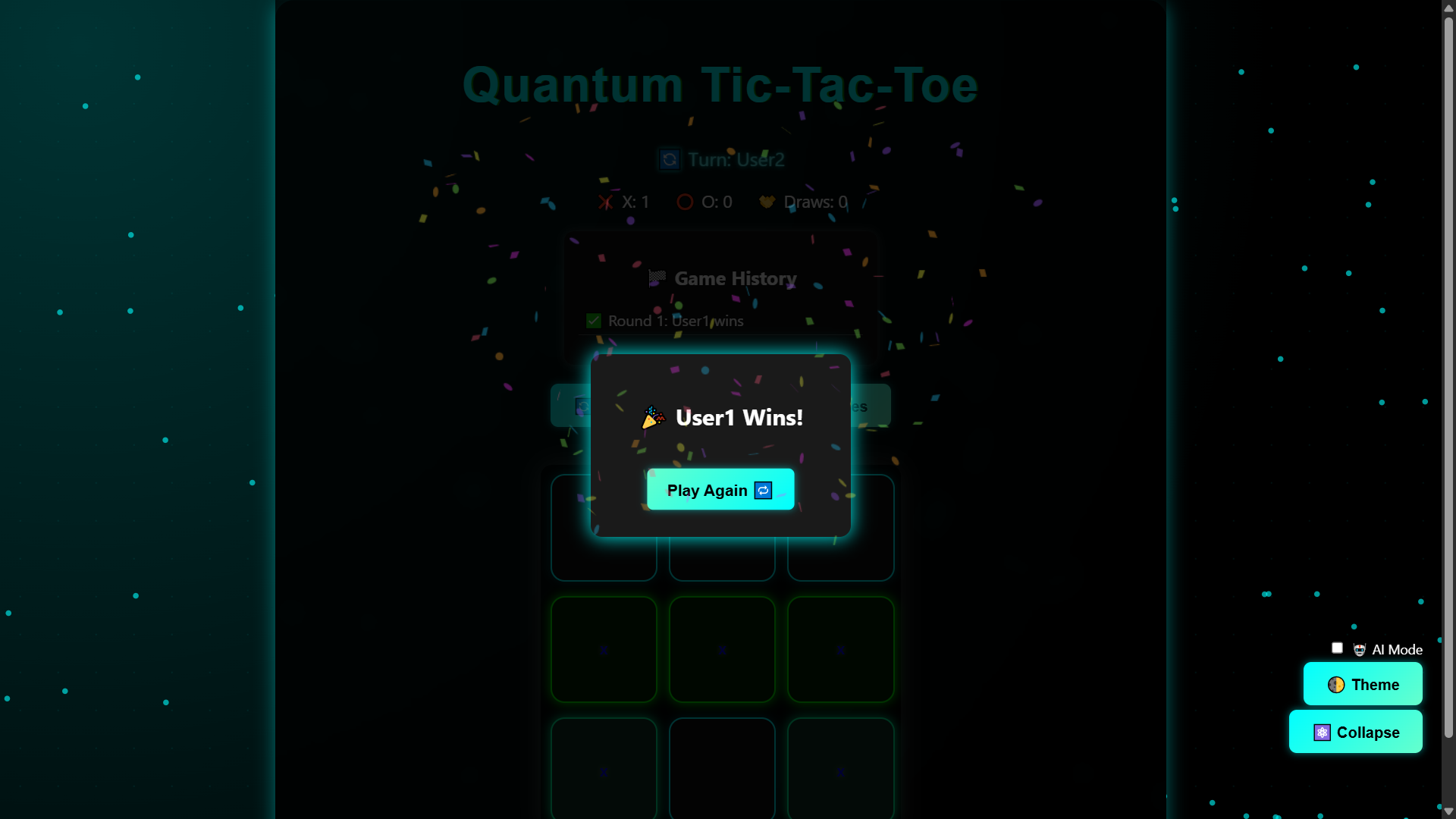
Winning Interface
Inspiration
Quantum computing has always fascinated us, but we noticed how hard it is for beginners to understand. We wanted to change that — by blending education with gameplay.
Tic Tac Toe is a classic game that’s universally known. Our idea was simple: what if the game’s logic followed quantum rules? That led to the birth of Quantum Tic Tac Toe, where players experience quantum principles like superposition, entanglement, and measurement collapse — all by playing.
What It Does
Quantum Tic Tac Toe is a web-based interactive game where:
- Moves can exist in superposition — both X and O until measured.
- Cells can become entangled — affecting each other’s outcomes.
- Players must pass a quantum quiz before starting the game.
- Users can collapse quantum states manually during the game.
- Voice input allows hands-free answers to quiz questions.
- An optional AI opponent provides a single-player challenge.
- The interface features a theme toggle, gate animations, and local storage for saving progress.
How We Built It
We used:
- HTML, CSS, JavaScript – Core structure and logic
- SVG animations – To represent quantum gates visually
- Framer Motion + modals – For transitions and user feedback
- Voice Recognition API – For quiz and game interaction
- LocalStorage – For persistent state
- Particle.js – For a glowing quantum backdrop
We simulated quantum behavior such as gate operations, superposition state objects, and entanglement logic directly in JavaScript.
Quantum Concepts Used
Some of the real quantum principles we integrated include:
- Superposition – A cell can represent both X and O at the same time
- Entanglement – Two cells can be linked so that collapsing one affects the other
- Measurement – Moves collapse randomly into a classical value (X or O)
- Quantum Gates:
- Hadamard – Creates superposition
- CNOT – Links two cells
- Pauli X/Z – Used for bit flips and phase shifts (simulated)
Here’s an example of a quantum state (in simple terms):
|ψ⟩ = α|X⟩ + β|O⟩
Key Features
- Fully playable quantum-enhanced 3x3 board
- Animated Hadamard and CNOT gate visuals
- Voice input for quiz answers
- Quantum knowledge check before playing
- Local storage of game state
- Glowing, animated, futuristic UI
- Dark/light mode toggle
- “Learn More” button linking to external quantum resources
What We Learned
Through this project, we gained hands-on experience with:
- Simulating quantum mechanics in a classical environment
- Designing intuitive game mechanics for complex science
- Creating SVG animations and responsive design
- Managing entangled game states
- Using modern frontend tools like modals, transitions, and APIs
Challenges We Faced
- Representing superposition and entanglement in a visual and interactive format
- Designing collapse logic that felt fair but followed quantum randomness
- Syncing animations with real-time logic
- Making the UI beautiful without overwhelming the player
- Keeping gameplay accessible for both beginners and science enthusiasts
What's Next
We plan to add:
- Multiplayer mode using Firebase or WebSocket
- Real quantum backend using Qiskit or PennyLane
- A puzzle mode with preset entangled boards
- Graphical visualization of entanglement webs
- Multilingual quiz and interaction support
- Gamified progress system with quantum levels
Future Enhancements
1. Multiplayer Mode
- Enable real-time quantum matches between players using Firebase, Socket.IO, or WebRTC
- Add invite links, player nicknames, and quantum chat
2. Real Quantum Backend
- Connect to IBM Qiskit, PennyLane, or Quantum Inspire
- Let players run actual quantum circuits on real quantum hardware or simulators
- Visualize results from Bloch spheres, histograms, etc.
3. Quantum Puzzle Mode
- Add a campaign/story mode with preset entangled puzzles
- Increase difficulty with limited collapse attempts
- Use this to teach quantum error correction, nonlocality, etc.
4. Entanglement Graphs
- Show real-time entanglement visualizations using nodes and lines
- Let users trace which cells are linked and how
5. Multilingual Support
- Translate the entire game and quiz system to Hindi, Marathi, Spanish, French, etc.
- Use voice-to-text APIs with language auto-detection
6. Adaptive AI Opponent
- Make the AI smarter with MiniMax or Reinforcement Learning
- Let it use entangled tactics, collapse traps, and gate-based strategy
7. Quantum Lab Mode
- Add a "sandbox" where users can design their own gates, test collapse, and observe outcomes
- Include gate builders, qubit viewers, and circuit design tools
8. Gamified Learning System
- Unlock new gates, puzzles, or UI themes as players complete levels
- Add badges like "Quantum Beginner", "Qubit Master", etc.
9. Quantum Education Companion
- Add a side panel or mini-wiki explaining the science behind each move
10. AR/VR Experience
- Bring the game into 3D/VR space where players walk through entanglement links and interact with gates
Conclusion
Quantum Tic Tac Toe started as a fun idea and became a bridge between gameplay and quantum theory. We believe it makes a complex subject more accessible, engaging, and fun. With glowing visuals, scientific depth, and creative interaction, we’re proud of what we’ve built.
"The universe might not play dice — but in our game, you can!"
Built With
- ai
- css
- html
- javascript
- quantum
- quantumgates
- vs


Log in or sign up for Devpost to join the conversation.