-
-
Banner
-
Architecture Diagram
-
Homepage
-
Agents Orchestration
Inspiration
Learning quantum computing has always been a personal dream of mine. Coming from the country of Dr. Abdus Salam and Dr. Nergis Mavalvala, physics has always inspired me, and quantum computing is where my two passions meet: physics and software engineering.
I built AgentiQ for learners like me who are excited about quantum computing but feel blocked by dense math, unfamiliar notation, and unclear learning paths.
What it does
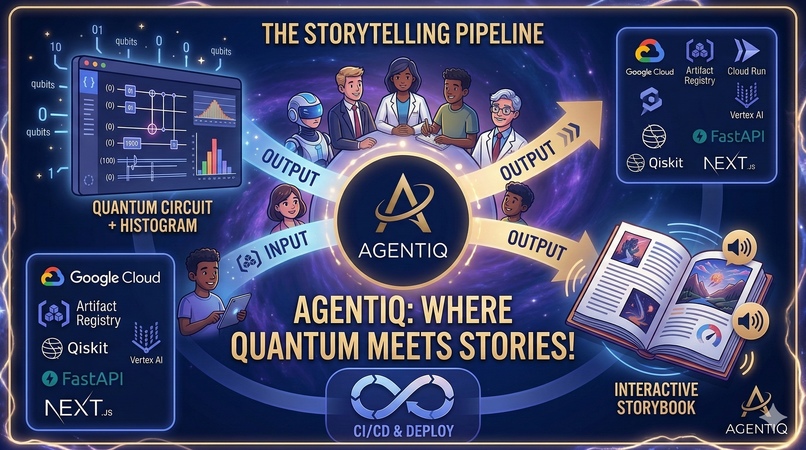
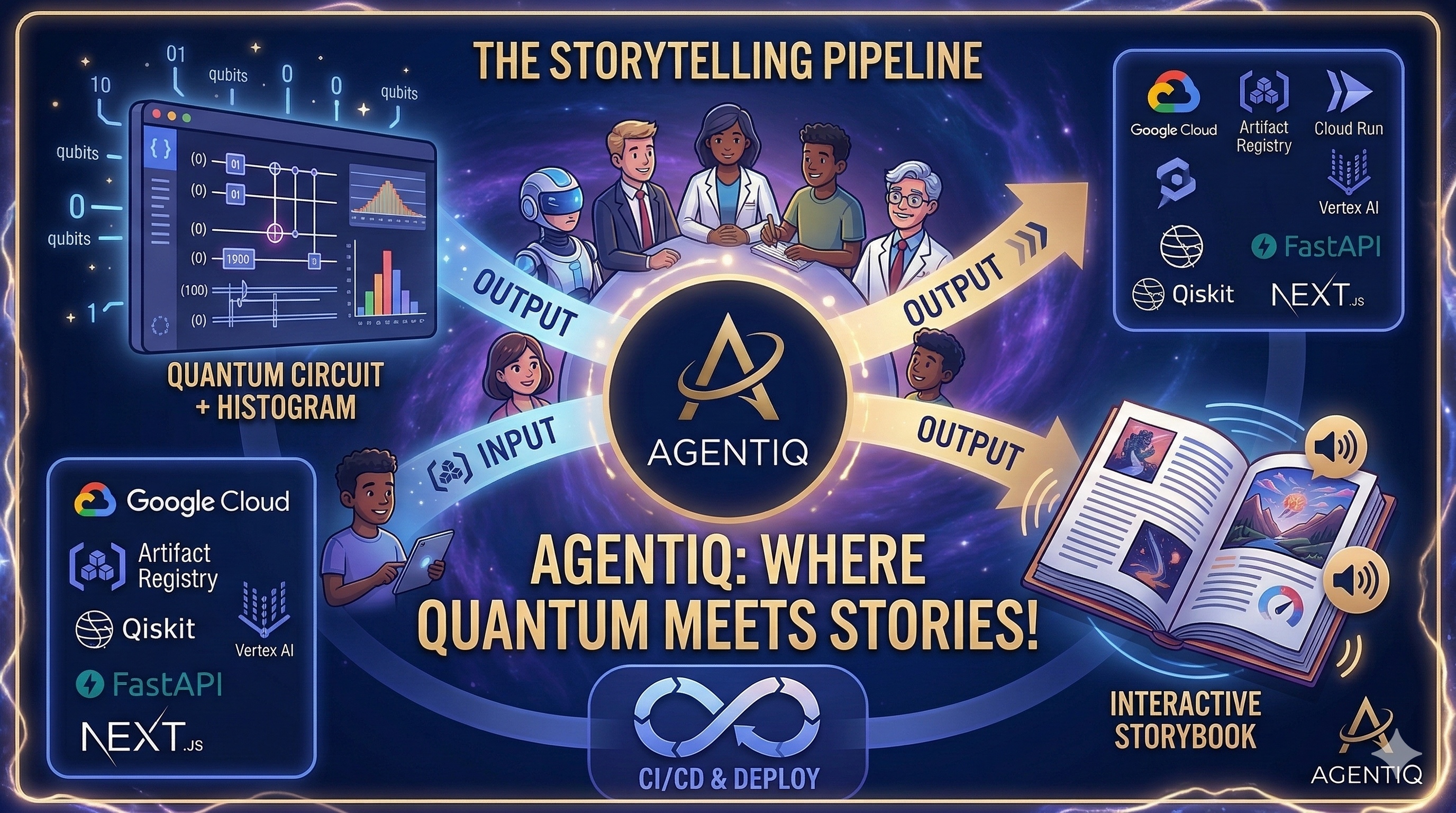
AgentiQ turns a plain-language problem into a complete, tested, and explainable quantum learning experience.
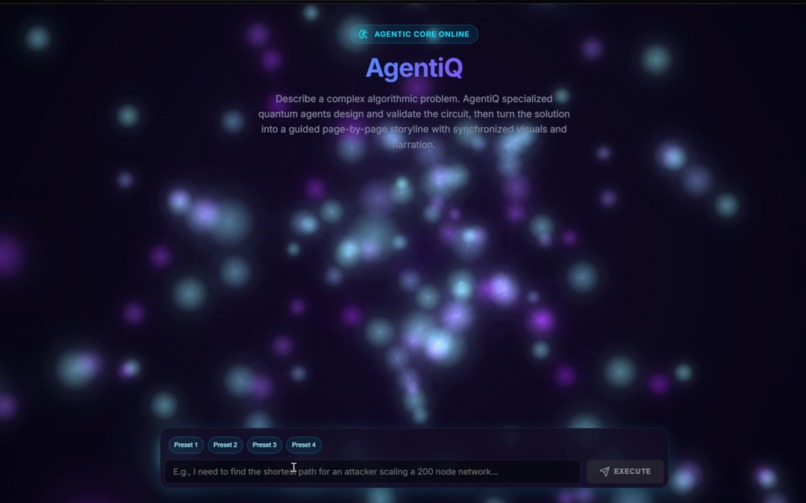
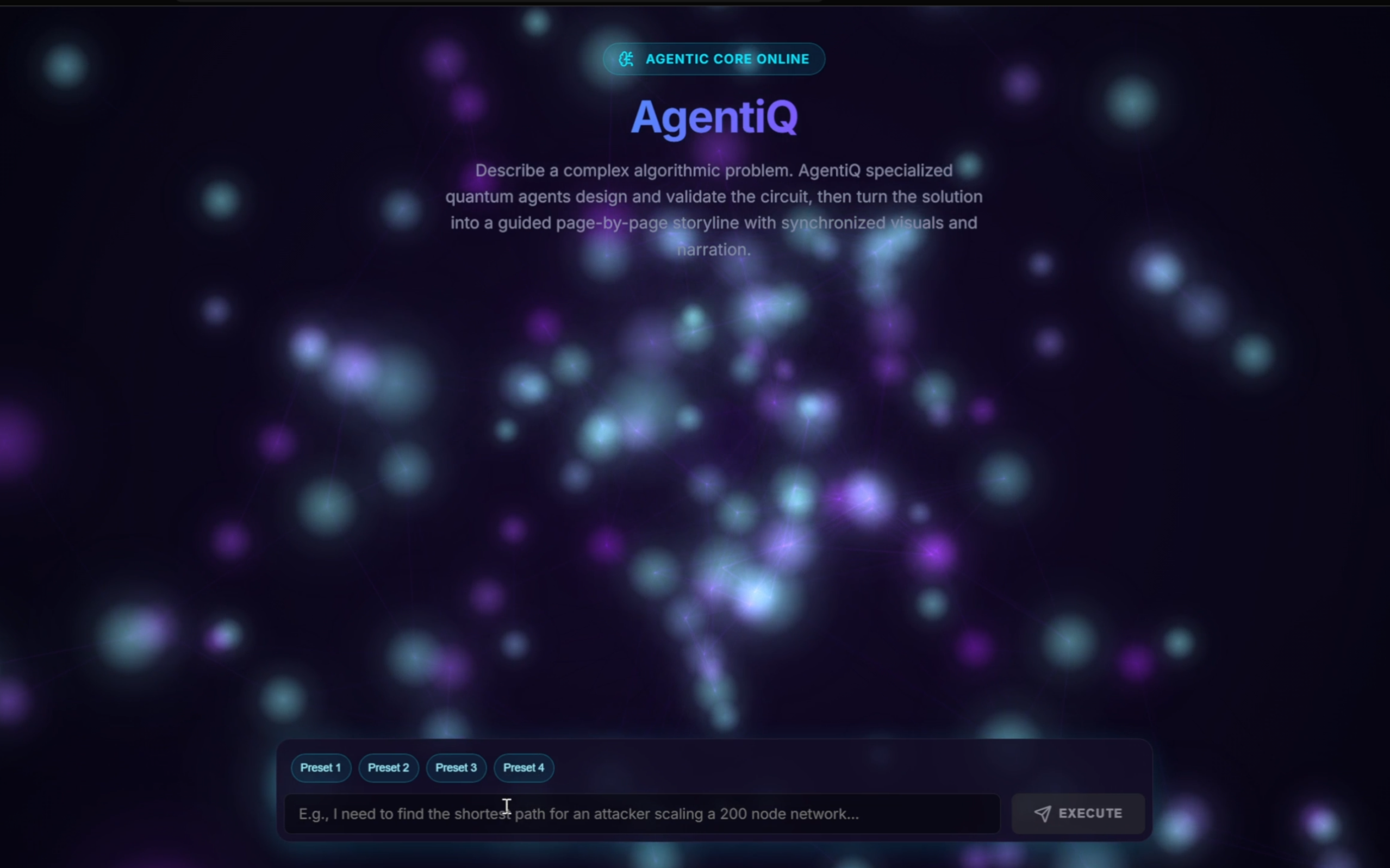
A user writes a problem in simple words, and the system:
- Maps it to the right quantum problem class and algorithm.
- Generates executable Qiskit code.
- Audits the code for scientific correctness and practical NISQ constraints.
- Runs simulation and validates outputs.
- Converts the final solution into a page-by-page storybook with:
- guided explanation text,
- per-page AI illustration,
- per-page narration audio.
How we built it
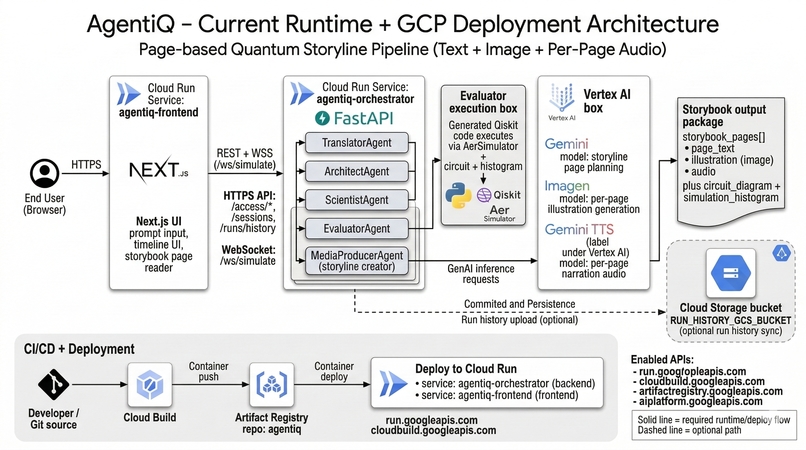
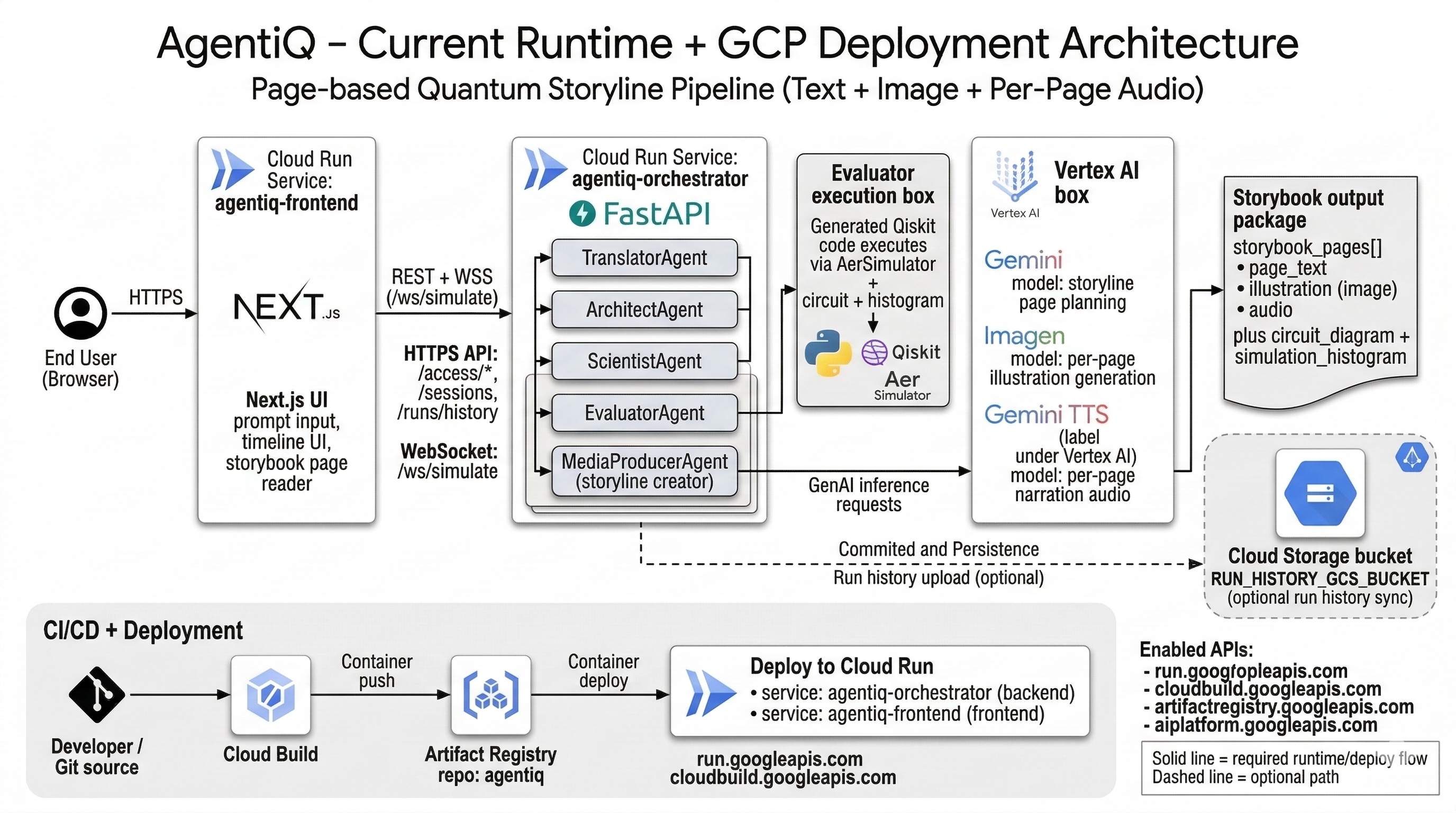
We built AgentiQ as a multi-agent pipeline with Google and open-source tooling:
- Backend Orchestrator: FastAPI + WebSocket pipeline to stream real-time progress.
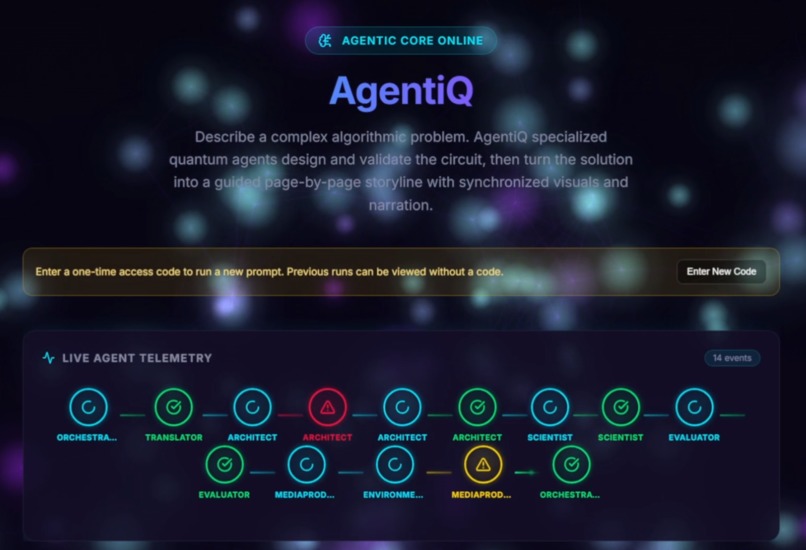
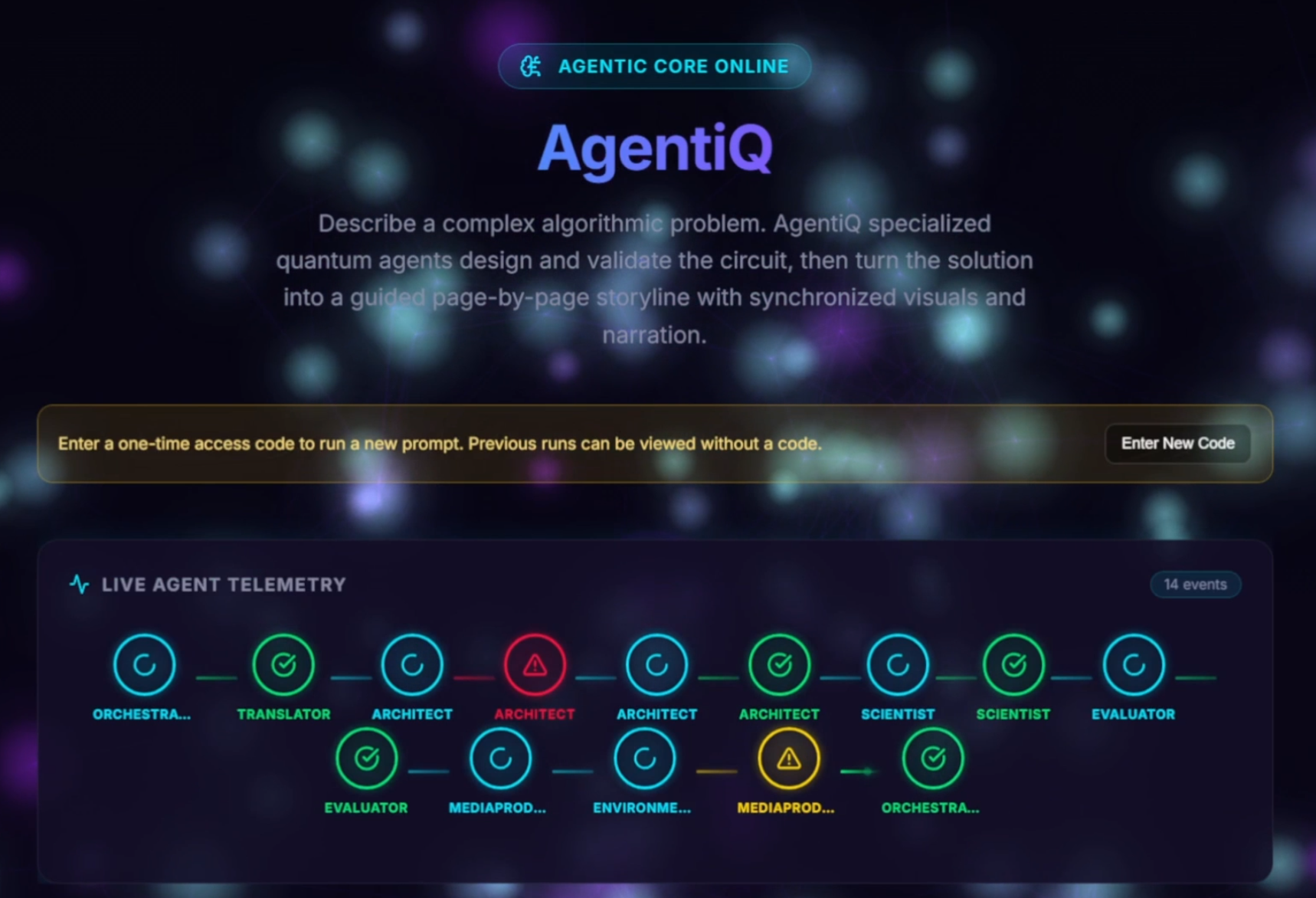
- Agent System: 5 specialized agents (Translator, Architect, Scientist, Evaluator, Media Producer).
- Google ADK: Agent runtime contracts and structured LLM calls.
- Gemini (Vertex AI): reasoning, mapping, review, and storybook planning.
- Imagen (Vertex AI): page-level illustrations.
- Gemini TTS (Vertex AI): narration audio for each page.
- Quantum execution: Qiskit + AerSimulator for local simulation and validation.
- Frontend: Next.js interface with live event timeline and storybook viewer.
- Cloud deployment: Cloud Run + Cloud Build + Artifact Registry, with optional GCS run-history persistence.
Challenges we ran into
- Enforcing strict JSON outputs from multiple agents and keeping contracts stable.
- Ensuring generated Qiskit code is both pedagogical and actually executable.
- Building a reliable correction loop when audits or simulation fail.
- Migrating from legacy static media logic to a unified storybook page pipeline.
- Keeping text, visuals, and audio consistent across all story pages.
- Handling deployment and environment consistency across local and Cloud Run.
Accomplishments that we're proud of
- Delivered a true end-to-end workflow from plain-language prompt to tested quantum solution.
- Built a scientifically grounded multi-agent review loop, not just a one-shot generator.
- Shipped a storybook learning format with synchronized page text, image, and narration.
- Enabled production-style deployment and run-history replay for demos and education.
What we learned
- Multi-agent systems need strict schemas, normalization, and fallback strategies to be dependable.
- Educational UX matters as much as technical correctness for complex subjects like quantum computing.
- Real-time visibility (events, stages, retries) greatly improves user trust in AI pipelines.
- A story-first explanation format can make intimidating technical content accessible.
What's next for AgentiQ
- Converting this solution in a scalable product with a financial model.
- Interactive storybook mode with quizzes and checkpoints per page.
- Hardware-aware execution options beyond simulator-first runs.
- Multilingual narration and adaptive audience modes (school, university, practitioner).
- Instructor dashboard for assignments, progress tracking, and reusable lesson generation.
Built With
- bash
- fastapi
- gcs
- gemini-imagen
- gemini-tts
- google-adk
- google-genai-sdk
- html/css
- javascript
- nextjs
- powershell
- pydantic
- python
- qiskit
- react
- typescript
- vertex-ai
- websockets


Log in or sign up for Devpost to join the conversation.