Inspiration
The inspiration behind the Quantum Learning Assistant came from the growing interest in quantum computing and the lack of accessible, interactive learning platforms. We wanted to create a tool that demystifies quantum computing concepts through AI-powered explanations and visualizations, making this complex field approachable for students and enthusiasts alike.
What it does
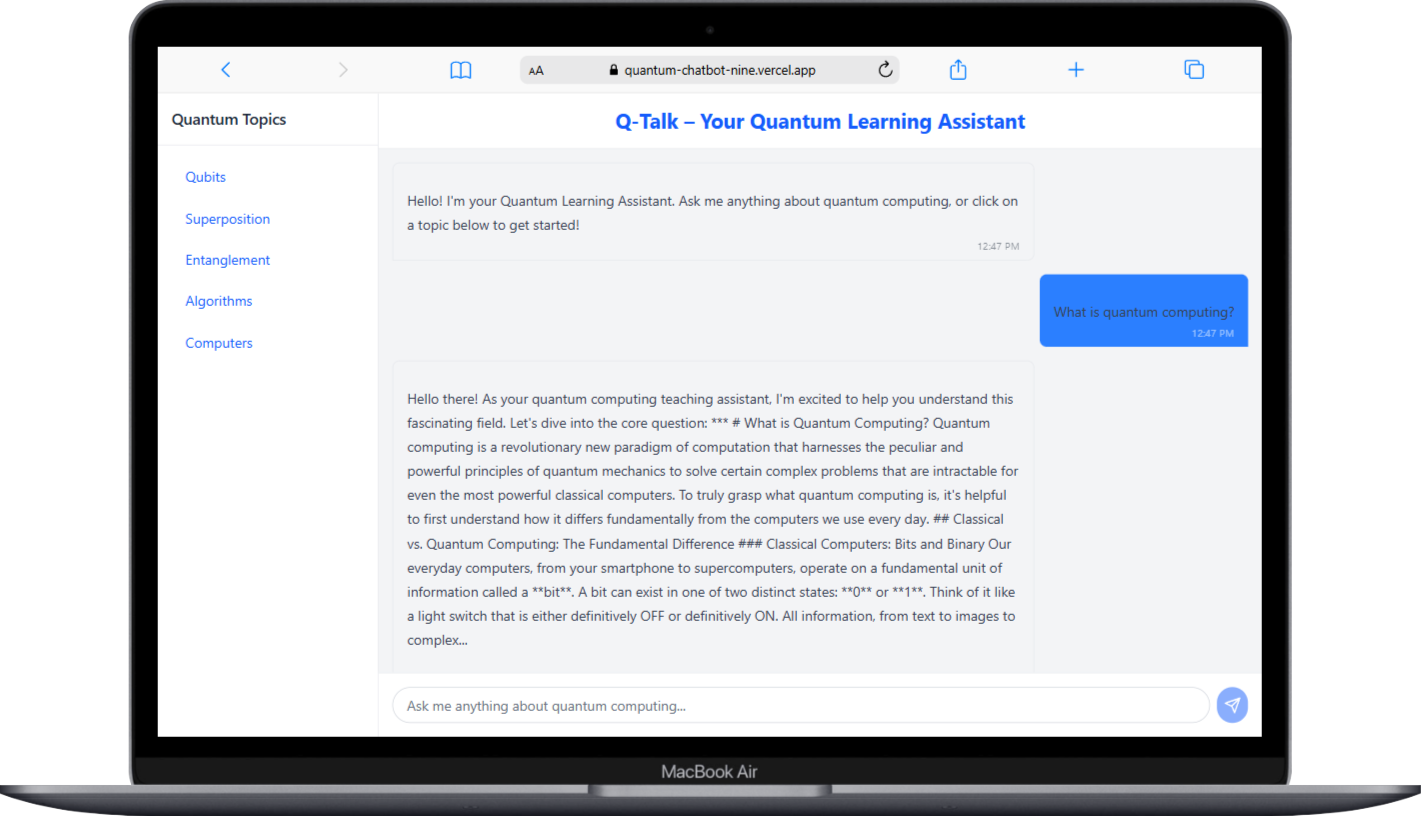
The Quantum Learning Assistant is an interactive platform that:
- Provides real-time explanations of quantum computing concepts
- Offers visual demonstrations of quantum states and operations
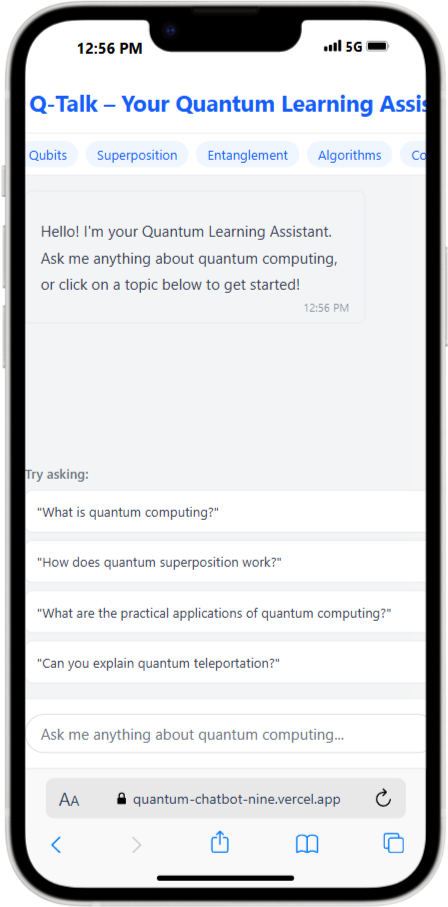
- Features an AI-powered chat interface for answering questions
- Includes interactive quantum circuit builder
- Provides learning paths from basic to advanced quantum topics
How we built it
- Frontend: Built with React and Tailwind CSS for a responsive, modern interface
- AI Integration: Connected to Google's Gemini API for intelligent responses
- Quantum Simulations: Implemented using Qiskit and Cirq for quantum circuit simulations
- State Management: Used React Hooks for efficient state management
- Deployment: Hosted on Vercel for seamless CI/CD
Challenges we ran into
- Managing complex quantum states in a performant way
- Creating intuitive visualizations for abstract quantum concepts
- Handling the probabilistic nature of quantum computations in a deterministic UI
- Optimizing API calls to maintain responsive performance
- Ensuring accuracy in AI-generated quantum explanations
Accomplishments that we're proud of
- Created an intuitive interface that makes quantum computing accessible
- Successfully integrated AI with quantum computing education
- Built a responsive design that works across devices
- Implemented real-time quantum circuit visualization
- Developed a scalable architecture for future quantum learning modules
What we learned
- The importance of clear visualizations in teaching abstract concepts
- How to effectively use AI as an educational tool
- The challenges of simulating quantum systems in a web environment
- Best practices for responsive design in educational applications
- How to balance technical accuracy with educational accessibility
What's next for Quantum Learning Assistant
- [ ] Add support for more quantum computing frameworks (Q#, Pennylane)
- [ ] Implement collaborative quantum circuit building
- [ ] Add quantum programming challenges and exercises
- [ ] Integrate with real quantum hardware
- [ ] Develop a mobile app version
- [ ] Add support for more languages
- [ ] Create a community feature for sharing quantum circuits
- [ ] Develop specialized learning paths for different career tracks in quantum computing

Log in or sign up for Devpost to join the conversation.