-
-
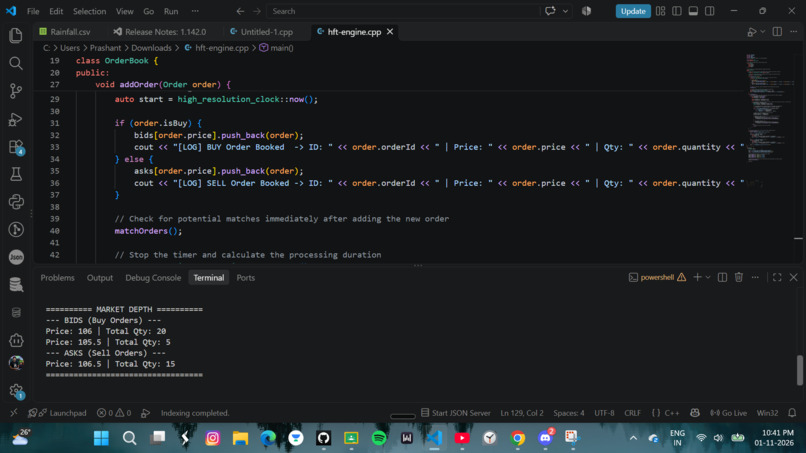
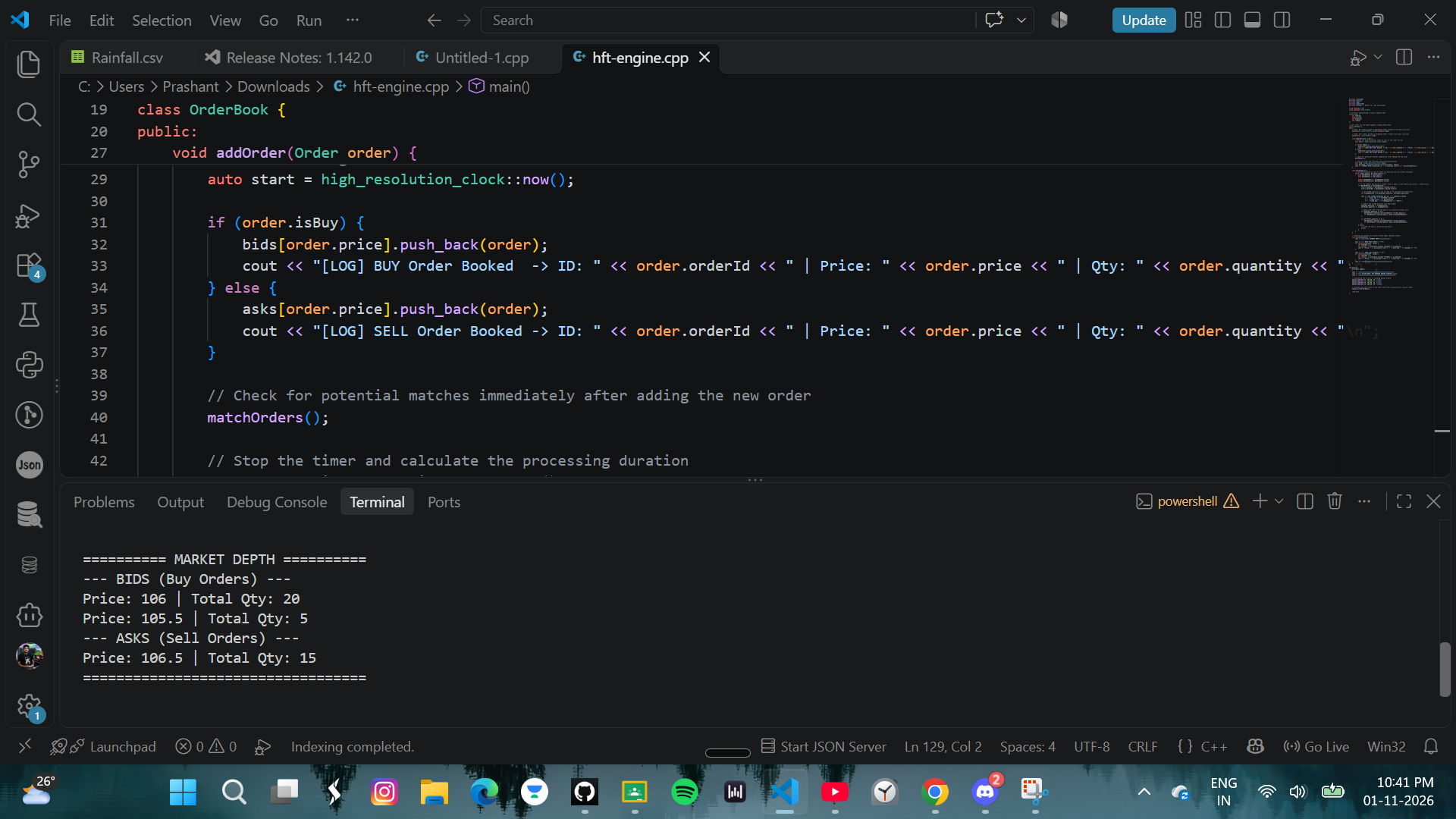
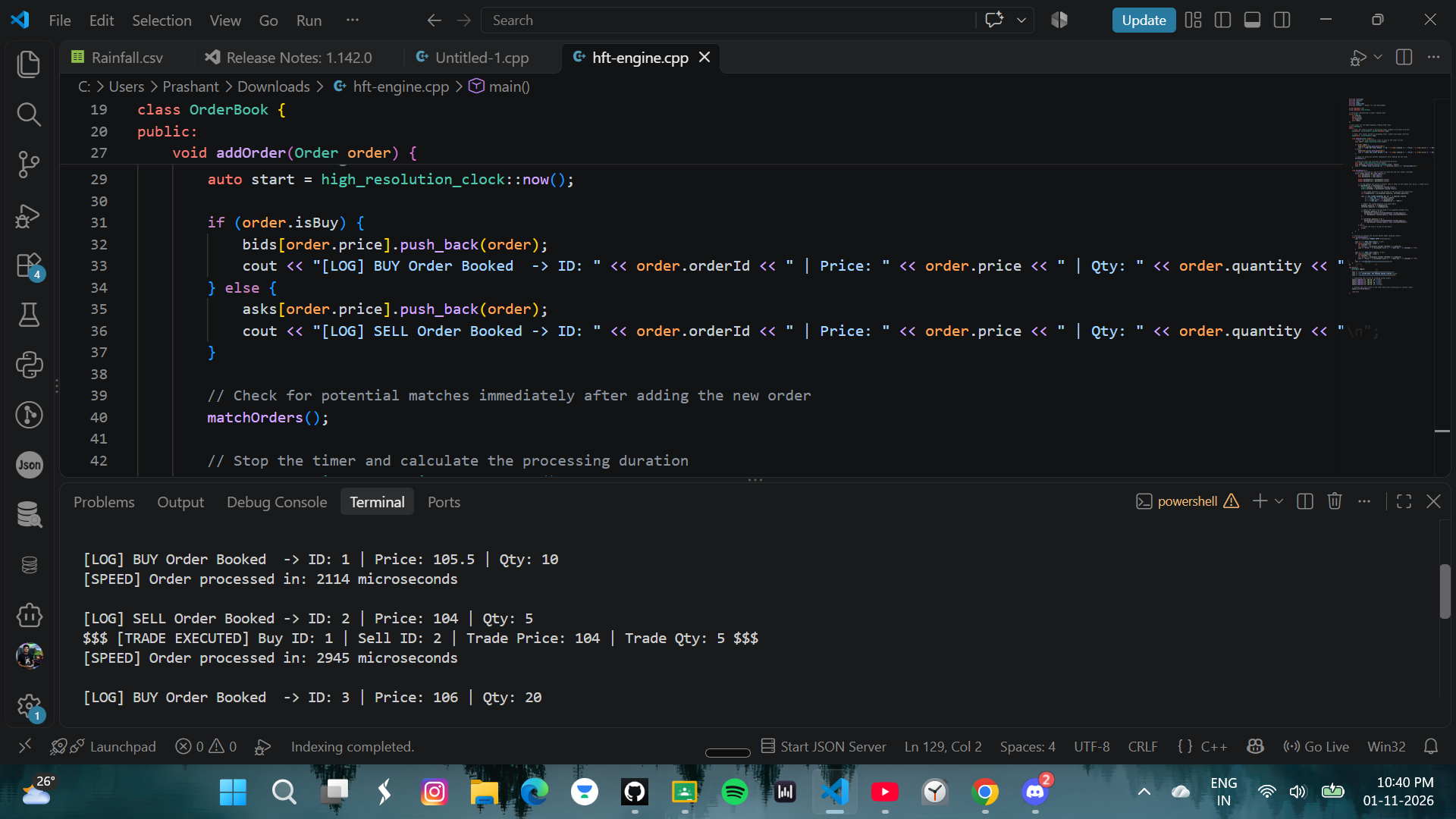
Core Codebase: Ultra-low latency logic using lock-free data structures in C++.
-
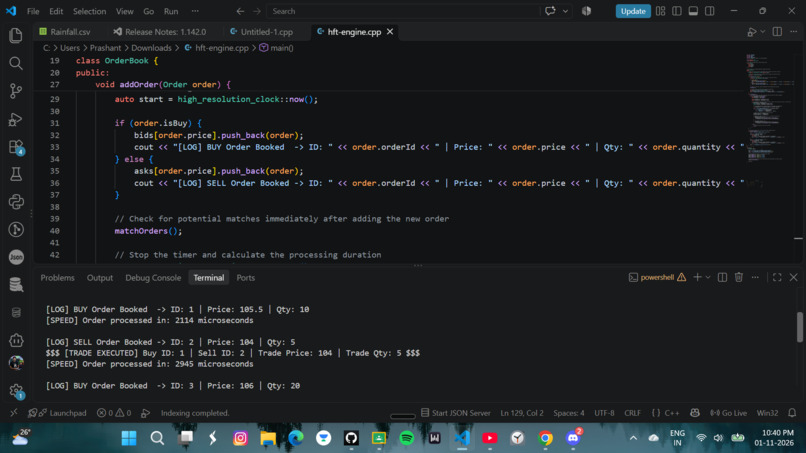
Terminal Output: Real-time order matching and latency benchmarking of the C++ HFT engine
-
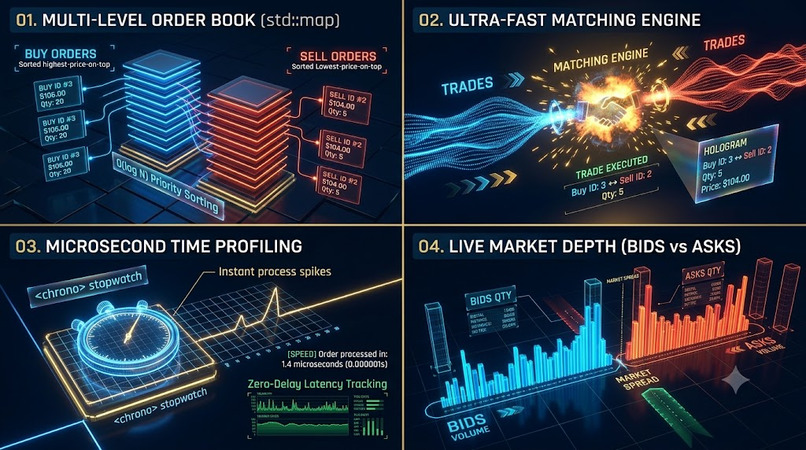
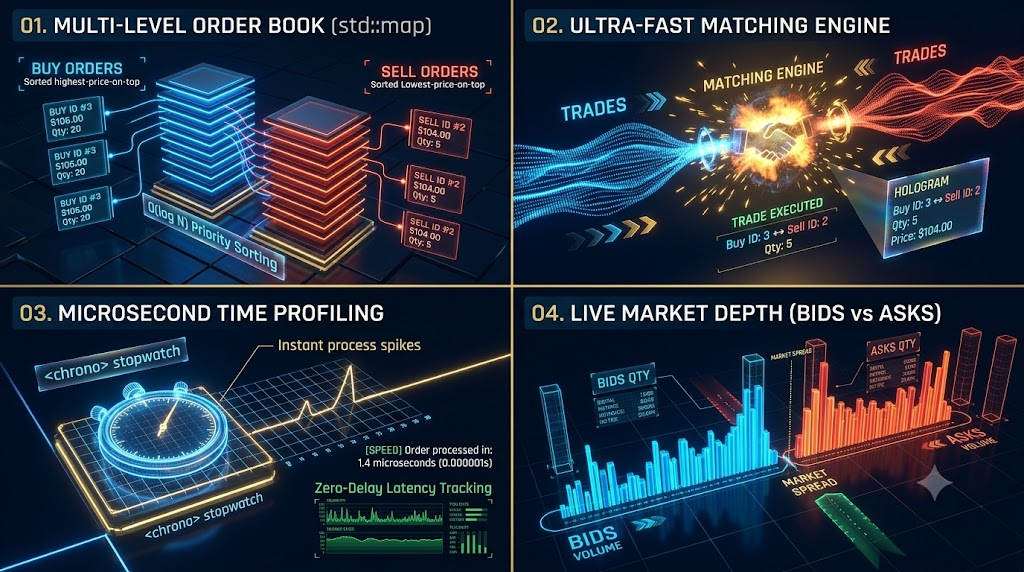
System Architecture: Visualizing the high-frequency trade order flow and execution process
Inspiration
High-Frequency Trading (HFT) requires systems to process millions of orders in microseconds. I wanted to challenge my understanding of low-level system design, memory management, and data structures by building a system where every nanosecond counts.
What it does
Quantum-HFT-Engine is an ultra-low latency order matching engine. It efficiently matches buy and sell orders for financial instruments based on price-time priority. It simulates a real-world exchange environment, ensuring that trades are executed with minimal delay and maximum throughput.
How we built it
The core engine is built entirely in C++ to leverage its bare-metal performance and memory control.
- I utilized custom memory pools to avoid the overhead of dynamic memory allocation during runtime.
- Lock-free data structures and multithreading were implemented to handle concurrent order streams without bottlenecks.
- Highly optimized Limit Order Books (LOB) were designed using a combination of hash maps and doubly linked lists for O(1) order insertion, deletion, and execution.
Challenges we ran into
Achieving true low latency was the biggest hurdle. Initially, standard library containers introduced unexpected latency spikes due to memory reallocation. I had to deep-dive into C++ memory management and design custom allocators to stabilize the execution time. Handling race conditions in a multithreaded environment without using slow mutex locks also took significant debugging and research.
What's next for Quantum-HFT-Engine
I plan to integrate networking protocols (like FIX or custom UDP multicast) to accept orders over a network, and implement a market data feed handler. Additionally, I want to benchmark it against real-world exchange datasets to further optimize the tail latency.
Built With
- algorithms
- c++
- cpp
- data-structures
- multithreading

Log in or sign up for Devpost to join the conversation.