Inspiration
I have always been fascinated by quantum computing but found it challenging to connect theoretical concepts with practical, engaging experiences. I wanted to create something that could introduce people to superposition, entanglement, and quantum algorithms in an interactive, game-like way. The idea of combining an educational goal with a cyberpunk-themed heist narrative felt like the perfect way to make complex quantum topics approachable and exciting.
What it does
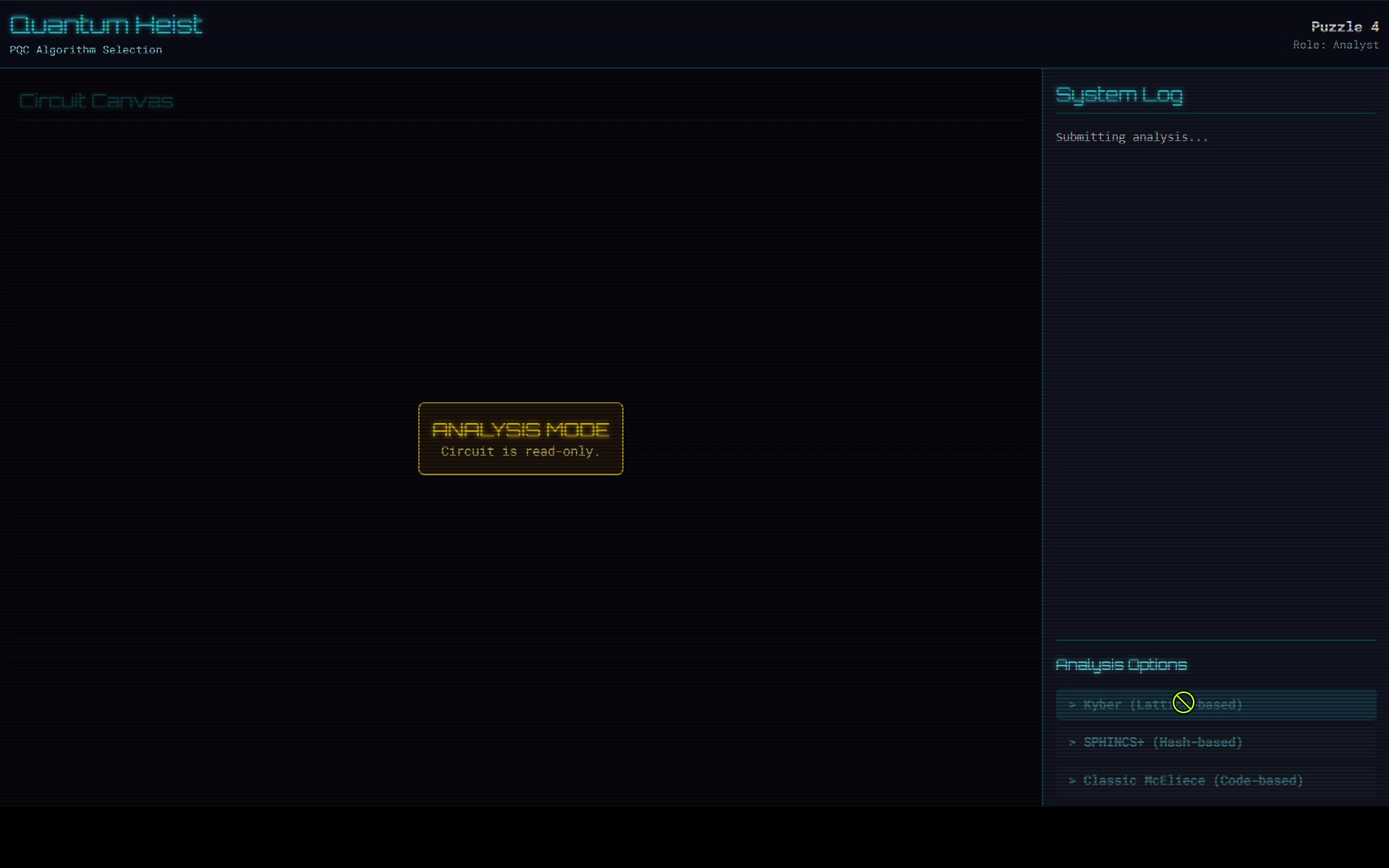
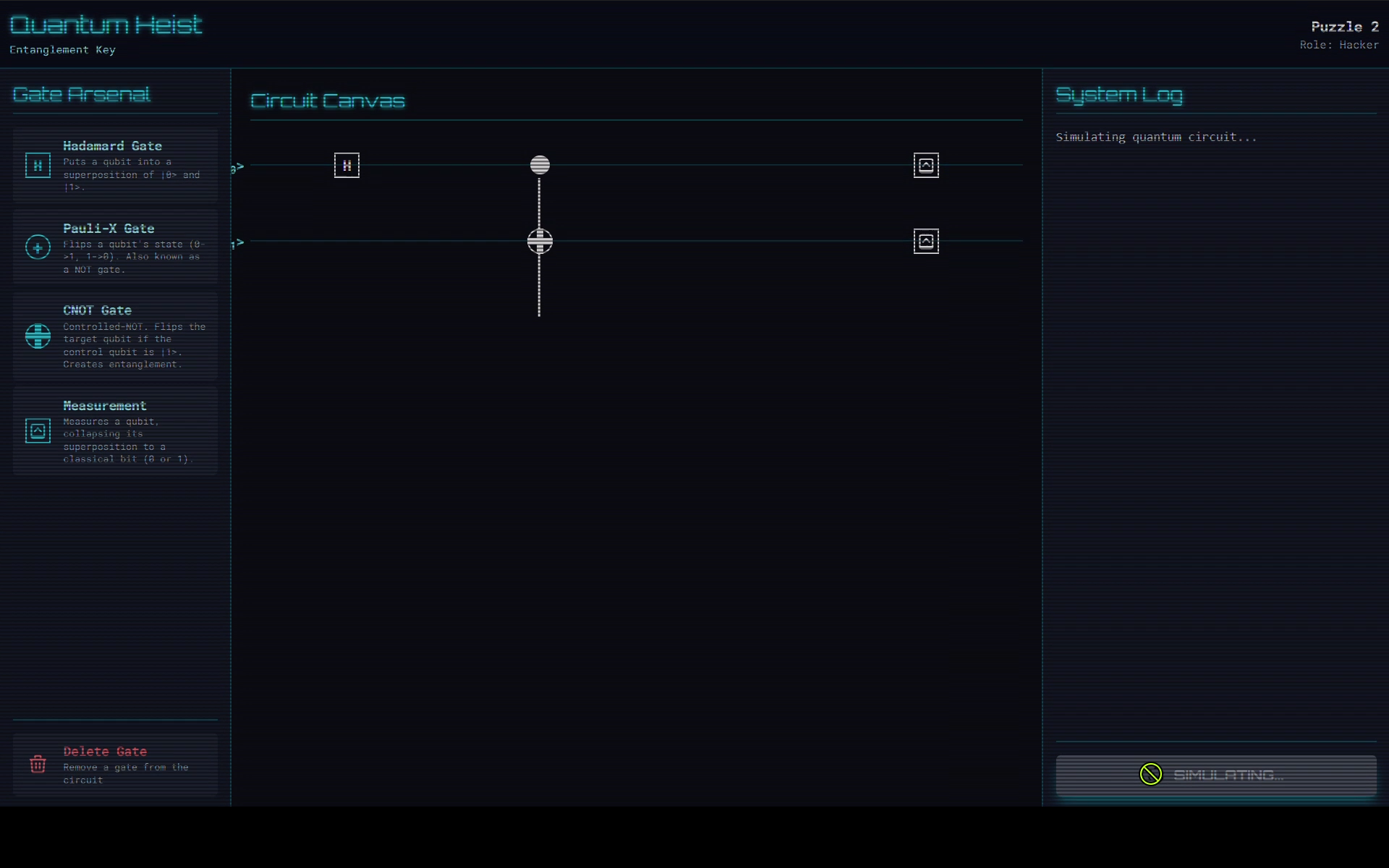
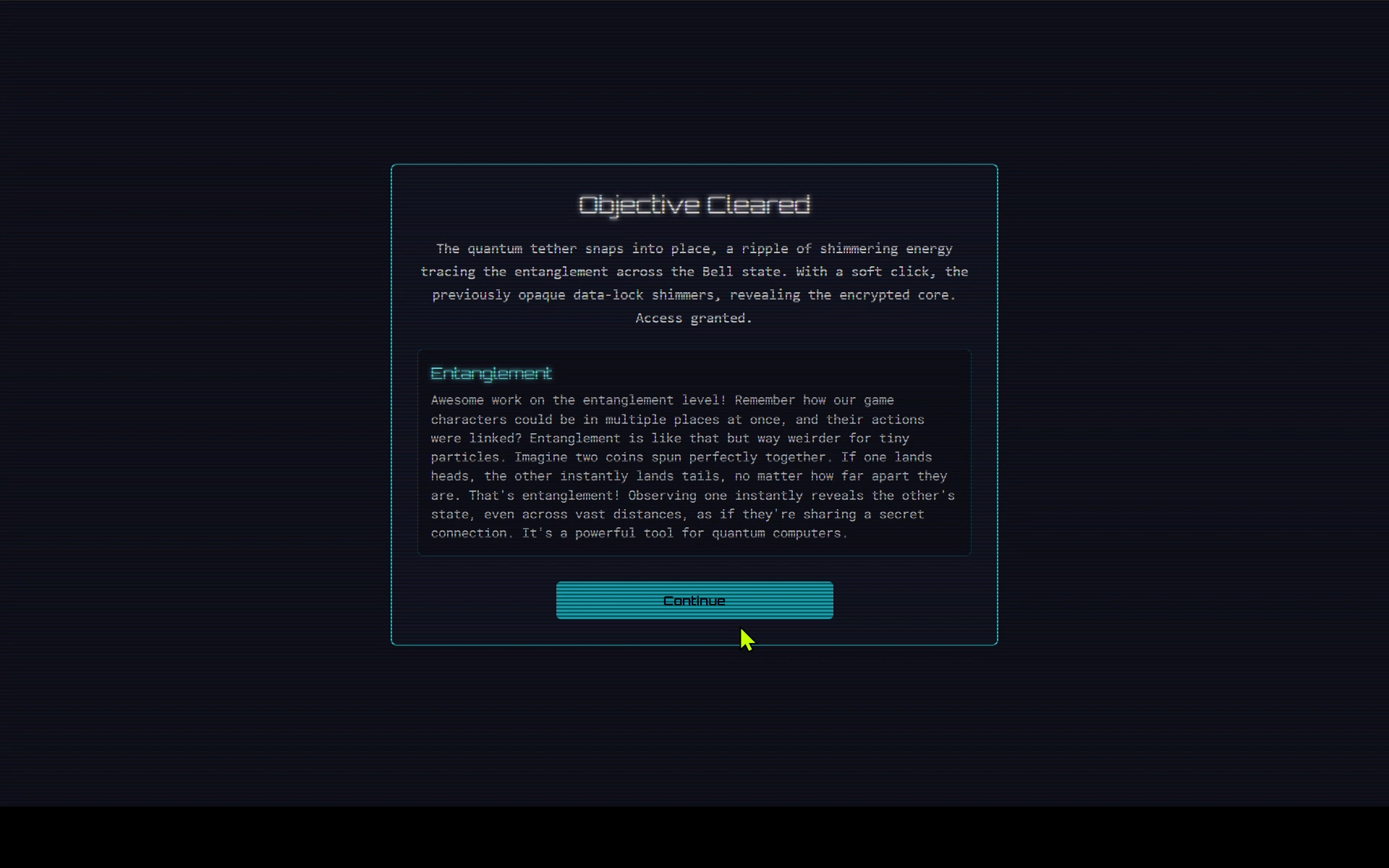
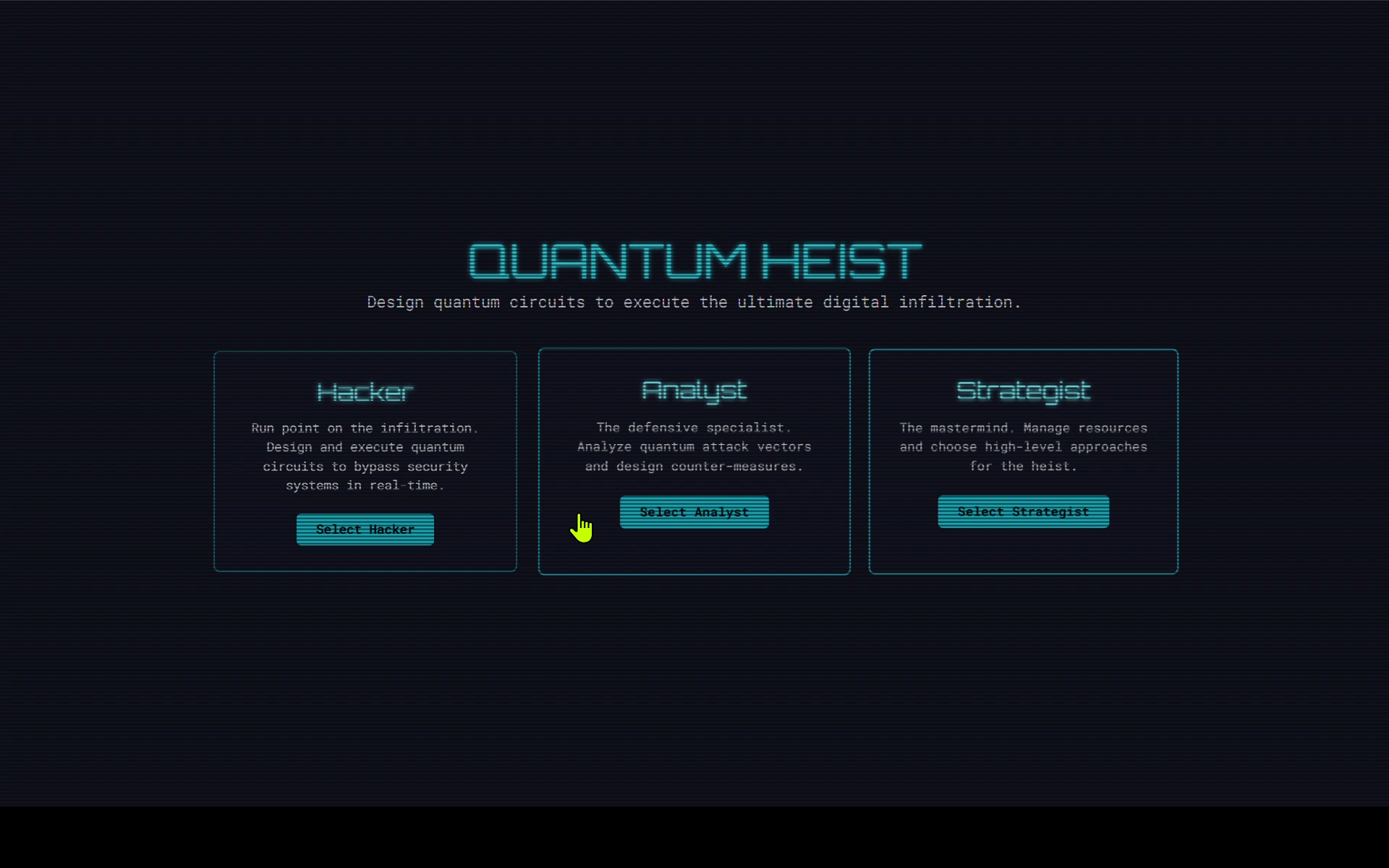
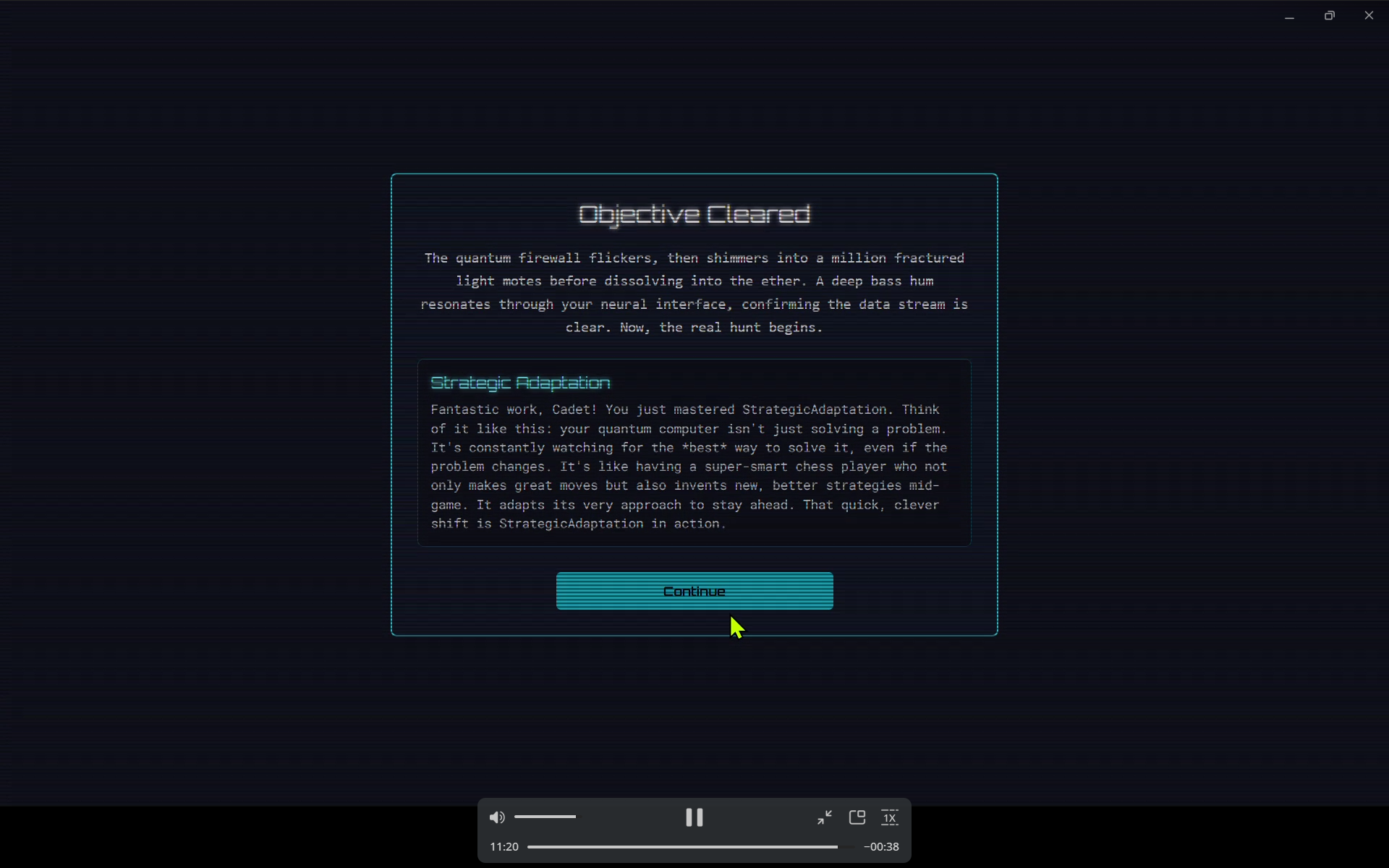
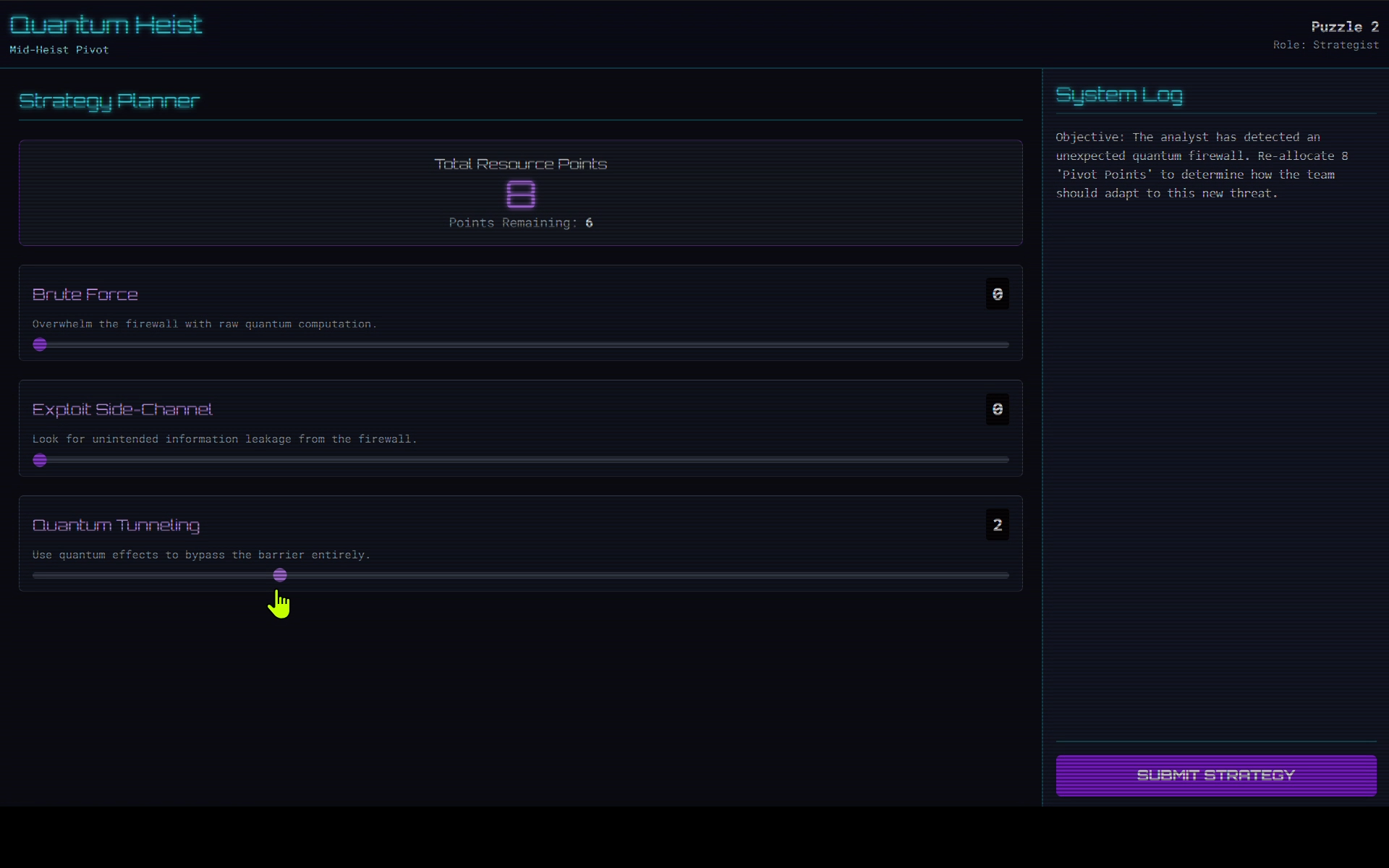
Quantum Heist is a single-player interactive puzzle game set in a futuristic cyberpunk world. I take on the role of a skilled infiltrator using quantum-powered tools to bypass security systems. Each puzzle in the game is designed around a real quantum computing concept—such as quantum gates, superposition, and Grover’s search algorithm—and solving them progresses the story. Players learn while they play, without realizing they are engaging with advanced computing principles.
How I built it
I built the project using:
- Vite for fast and efficient development.
- TypeScript for type-safe, maintainable code.
- HTML/CSS for structuring and styling the game interface.
I started with wireframing the storyline and puzzle flow, then implemented the game logic with modular TypeScript hooks. I also used quantum-inspired algorithms in puzzle logic to simulate the feel of real quantum operations. The cyberpunk visuals were crafted with custom UI components to immerse the player in the game's atmosphere.
Challenges I ran into
- Translating quantum concepts into gameplay mechanics without oversimplifying or overcomplicating them.
- Designing puzzles that are both fun and educational.
- Managing the game flow so that players remain engaged while gradually learning complex topics.
- Debugging asynchronous game states caused by interactive puzzle logic.
Accomplishments that I'm proud of
- Successfully integrating educational quantum computing concepts into a fun, immersive game.
- Designing puzzles that provide a "lightbulb" moment for players when they understand the concept behind them.
- Completing the entire project solo within the hackathon time frame.
- Creating a polished cyberpunk-themed UI without relying on heavy design libraries.
What I learned
- How to simplify complex quantum computing principles without losing their core meaning.
- The importance of balancing difficulty in educational games to keep players motivated.
- How to structure a TypeScript project for modular and reusable game logic.
- Techniques for creating engaging narratives that guide learning.
What's next for Quantum Heist
I plan to:
- Expand the storyline with more chapters and advanced puzzles covering additional quantum algorithms.
- Add a scoring and leaderboard system to encourage replayability.
- Integrate basic real quantum computation through APIs like IBM Quantum for certain puzzles.
- Make the game mobile-friendly so that it can reach a wider audience.
Built With
- html
- typescript
- vite

Log in or sign up for Devpost to join the conversation.