



Quantum-Enabled Anomaly Detection
Team Members: Keerthana, Shakthi, Madhu,Venkat
Inspiration
Cyberattacks are becoming more sophisticated, and traditional intrusion detection systems often struggle to detect zero-day attacks and subtle anomalies in network traffic. We were inspired to explore how quantum-inspired machine learning concepts could enhance anomaly detection and create a smarter, more reliable cybersecurity solution.
What it does
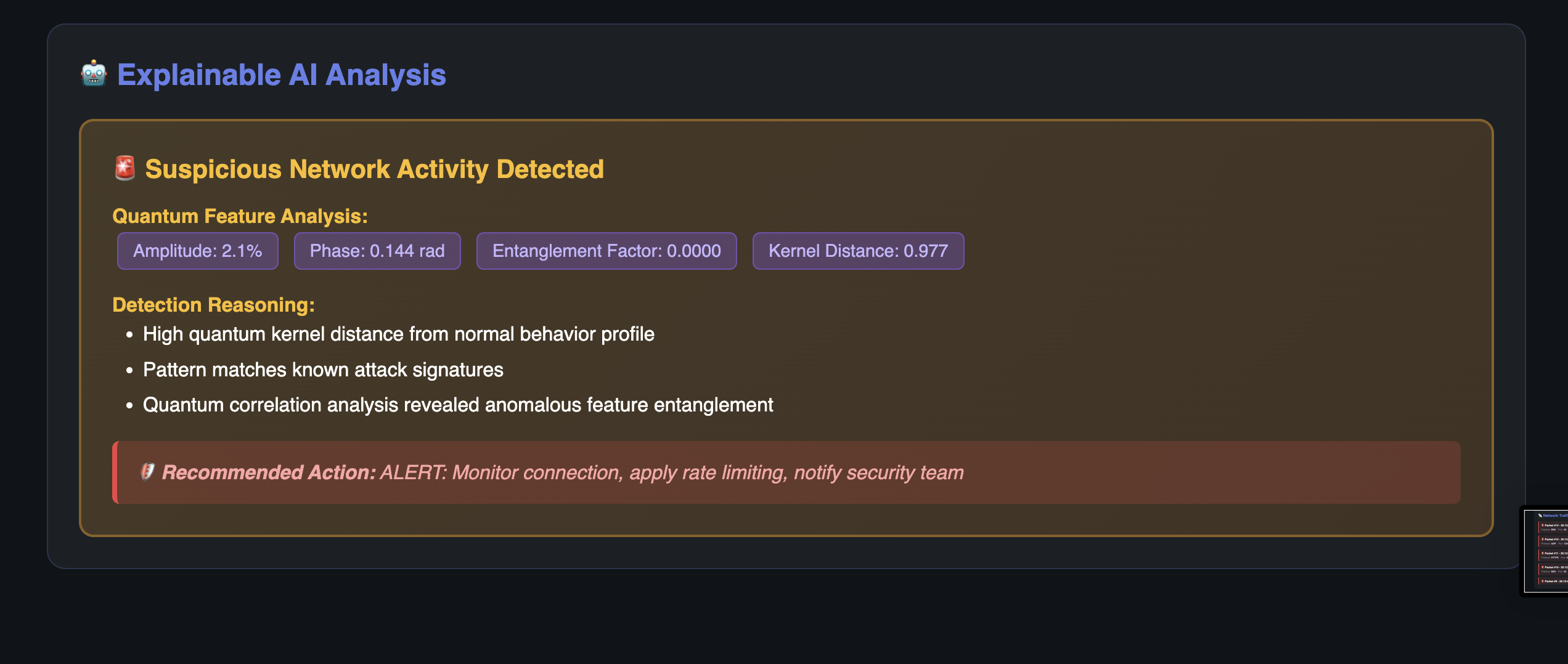
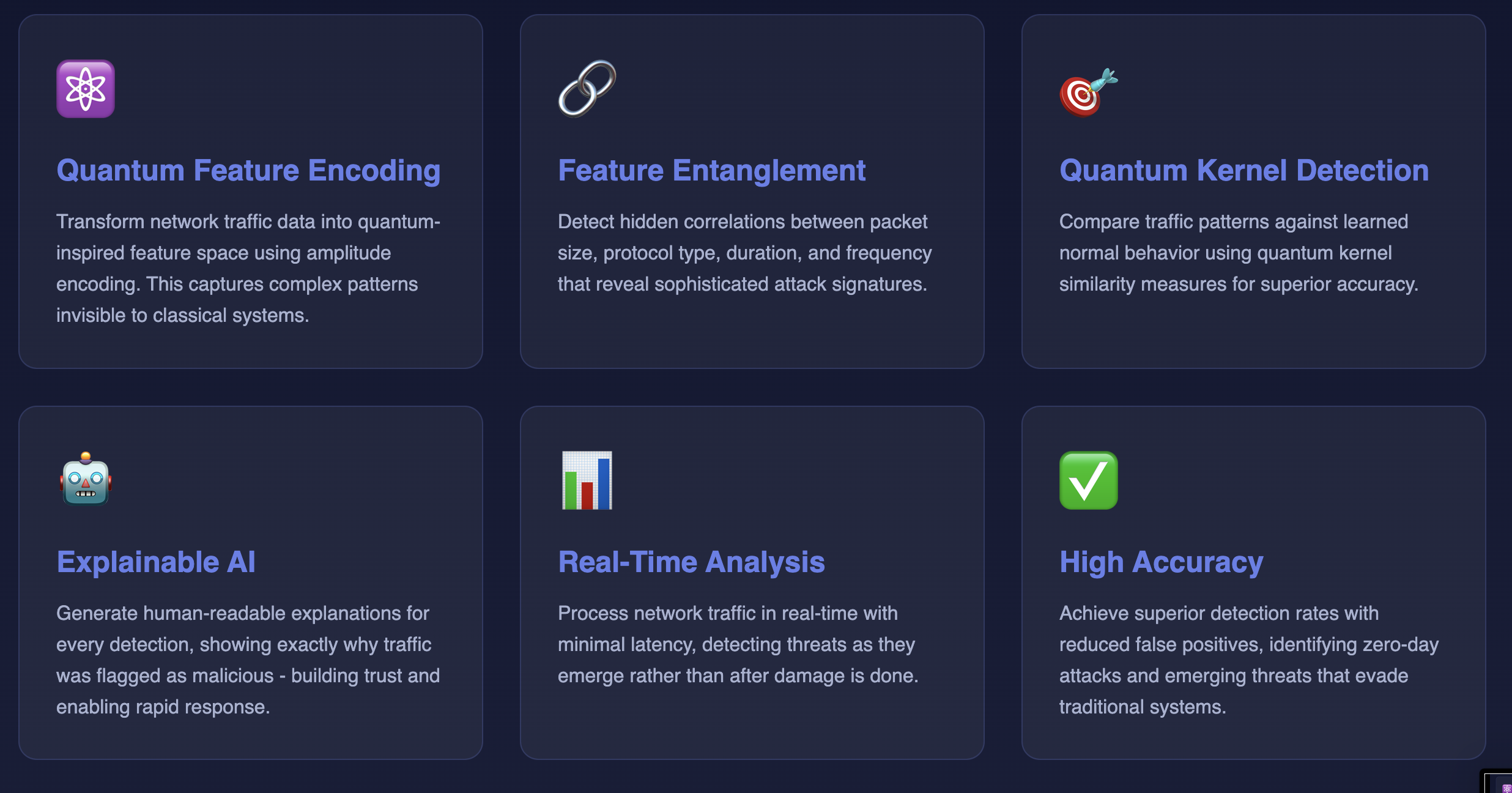
Quantum-Enabled Anomaly Detection is a system that identifies abnormal network behavior using advanced similarity analysis. It transforms classical network data into a higher-dimensional representation and compares new activity against learned normal patterns.
The system helps detect unknown threats, reduces false positives, and provides clear, interpretable alerts for security teams.
How we built it
We built the project using Python for implementation and data processing. NumPy and Pandas were used for preprocessing and normalization.
Scikit-learn was used for classical machine learning models and evaluation.
Quantum-inspired feature mapping and kernel similarity techniques were simulated on classical hardware.
Challenges we ran into
Simulating quantum-inspired transformations efficiently was challenging. Handling noisy and high-dimensional datasets required careful preprocessing.
Balancing high detection accuracy with interpretability was another key difficulty.
What we learned
We learned that quantum-inspired techniques can enhance traditional machine learning approaches. Feature engineering plays a critical role in anomaly detection systems.
Explainability is essential for trust in AI-driven cybersecurity solutions.
What’s next
We plan to work toward real-time deployment and integration with enterprise security systems. Future improvements include adaptive learning models and exploring quantum hardware acceleration.


Log in or sign up for Devpost to join the conversation.