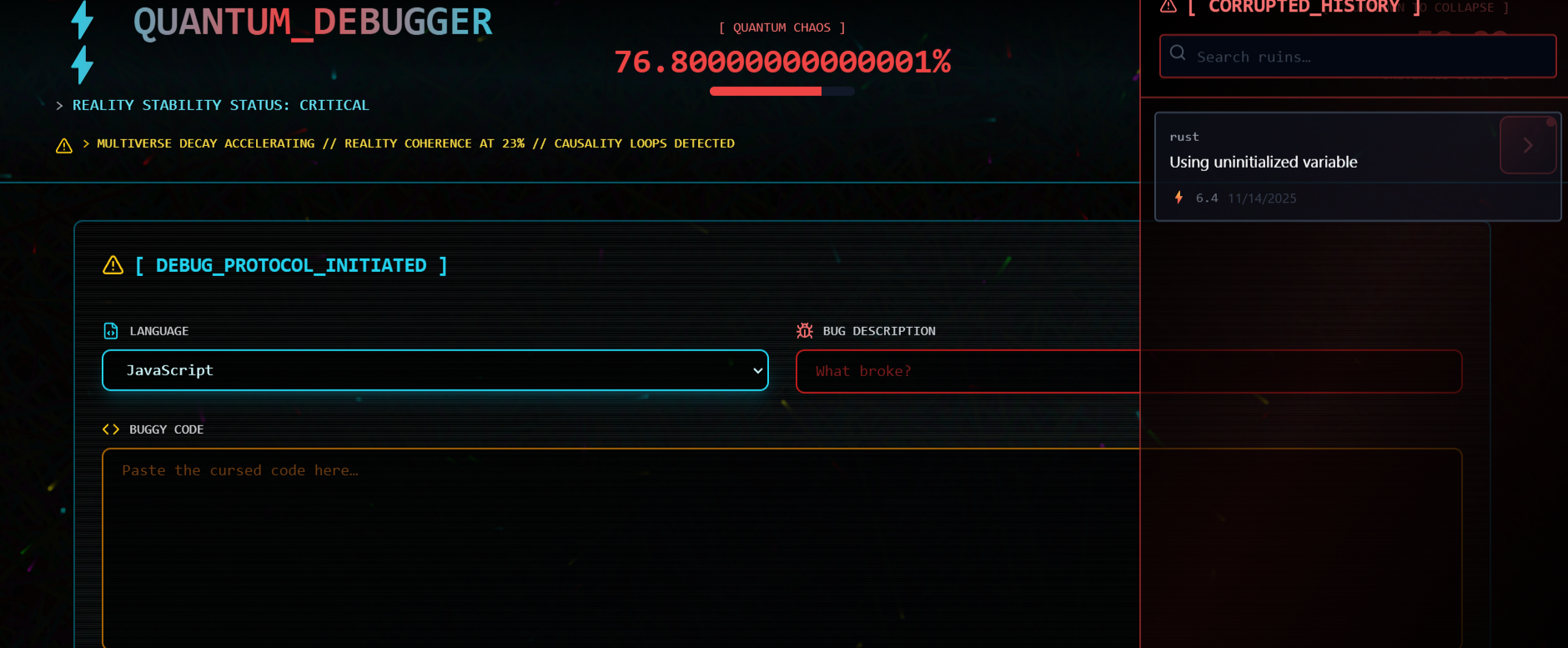
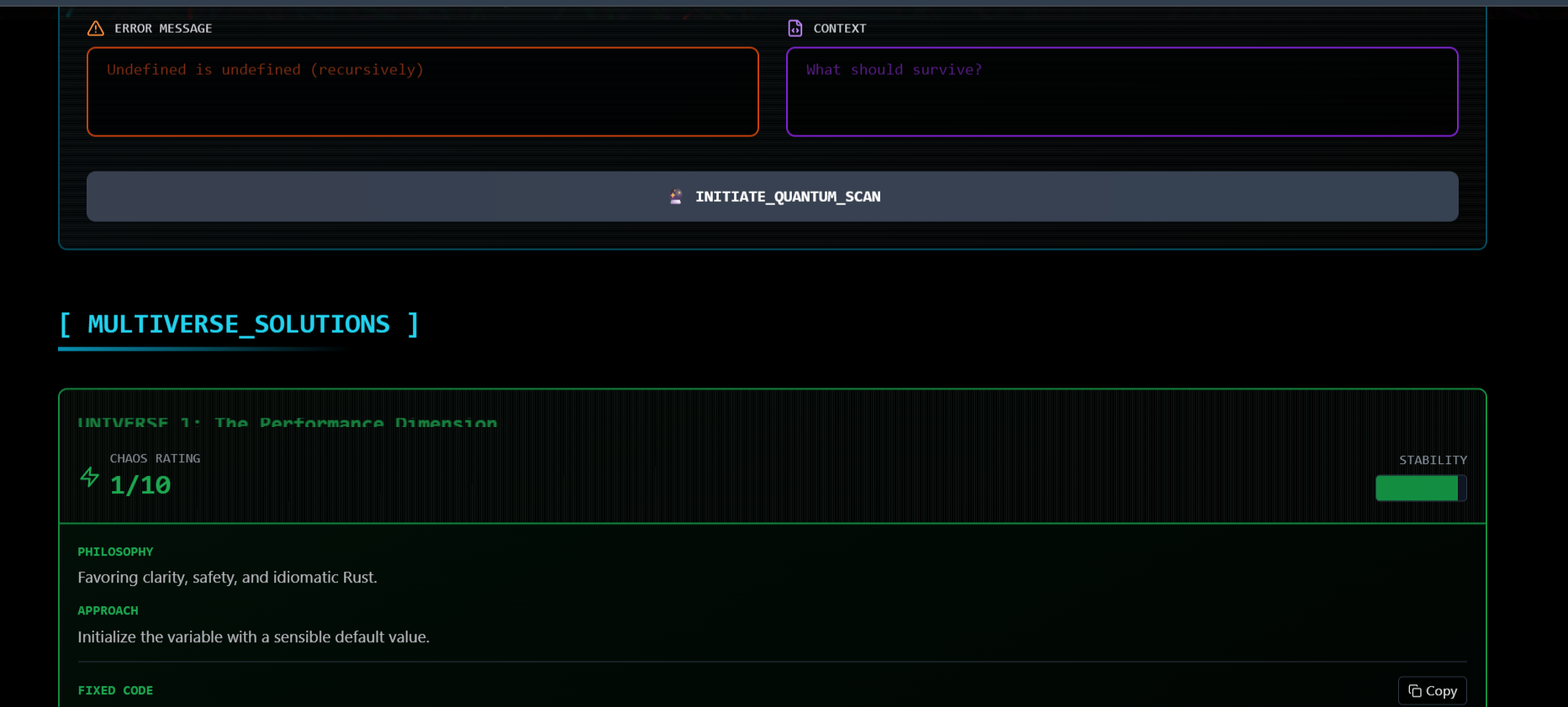
Inspiration: With the internet becoming increasingly unstable—frequent glitches, outages, and corrupted feeds—I began thinking about how debugging would look in a world where everything is falling apart. What if a small Rust borrow error didn’t just break code, but caused entire systems to collapse? Quantum Debugger came from this idea: a tool that turns normal programming bugs into large-scale, universe-level breakdowns. The goal was to make debugging feel engaging, dynamic, and unexpectedly fun.
What it does: Quantum Debugger transforms code errors into multiverse-style scenarios. It:
- analyzes buggy code
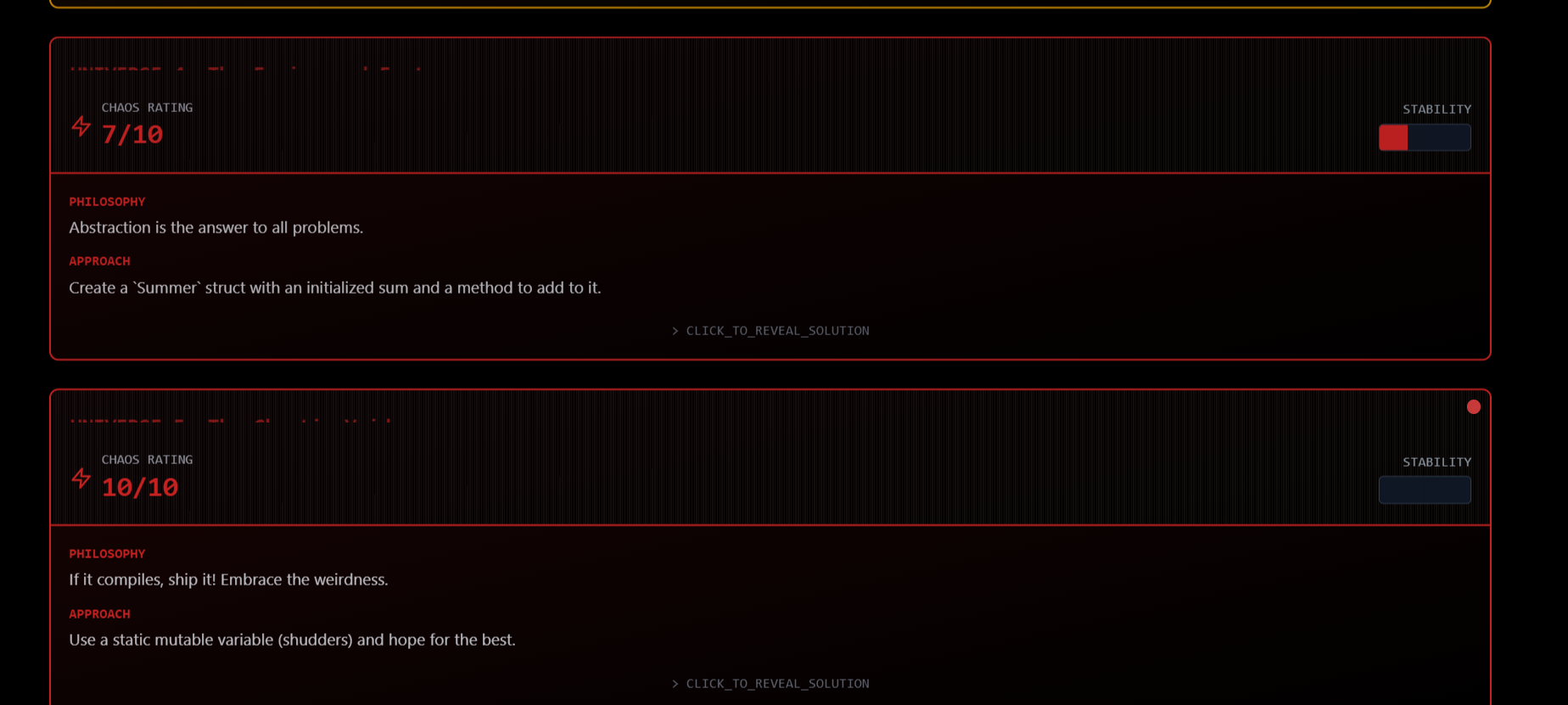
- generates several possible fixes based on different approaches
- assigns chaos levels, stability ratings, and outcomes
- visualizes the error as a collapsing system
- lets the user choose which version of the fix to apply The idea is to make each error feel meaningful and each fix feel like a decision that shapes the outcome.
How I built it: I built a custom AI debugging engine that:
- parses the user’s input code
- detects error patterns
- generates multiple possible fixes with different trade-offs
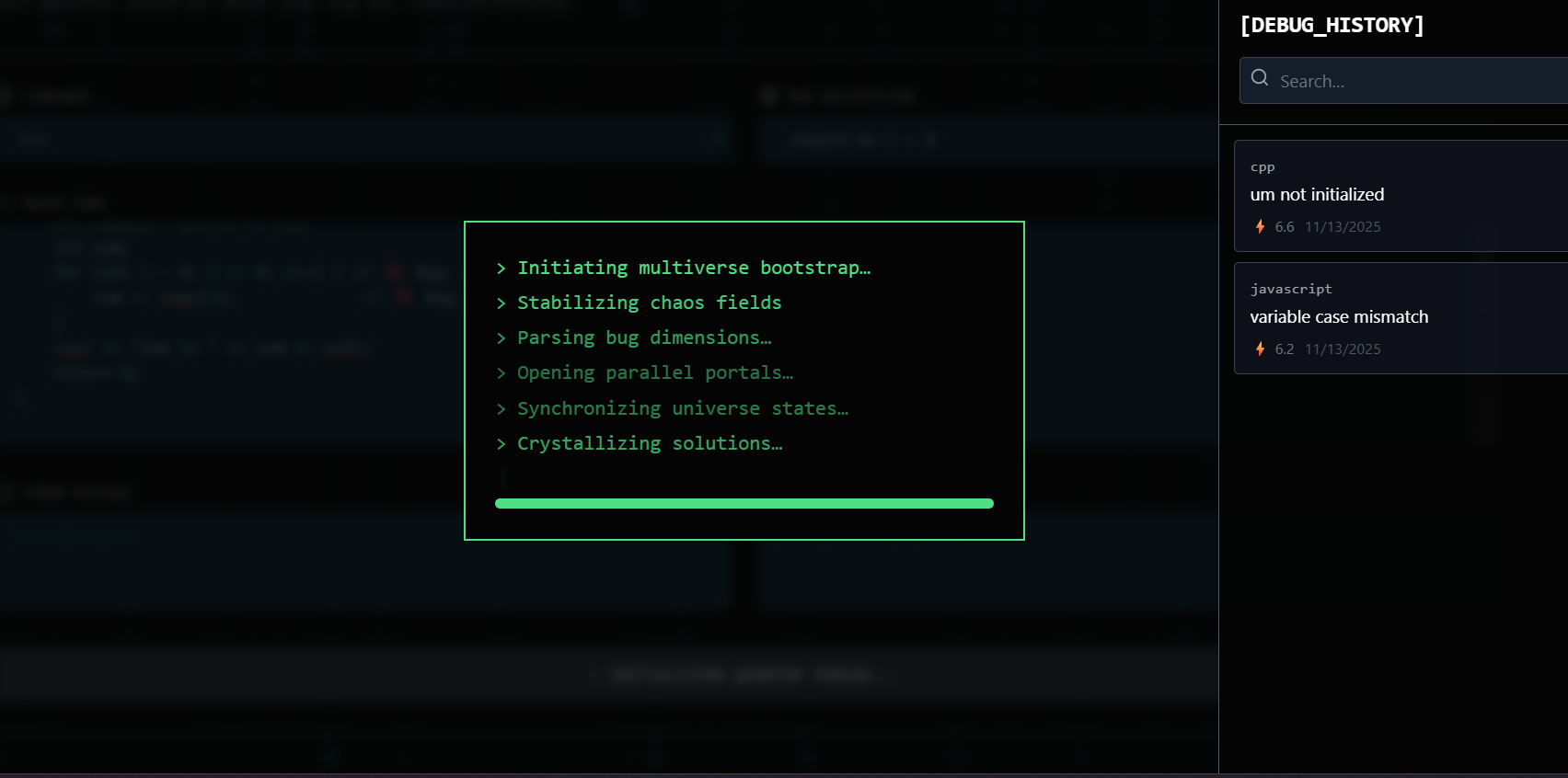
- adds narrative elements like timers, warnings, logs, and visual effects The frontend uses a stylized terminal interface designed to look like a system running at the edge of failure. I also created a small narrative layer that adds context, warnings, and atmospheric messages to make the debugging results more immersive.
Challenges I ran into:
- Designing an interface that looked chaotic but remained usable
- Creating different types of fixes for the same bug instead of repetitive results
- Balancing the aesthetic “chaos” with actual debugging clarity
- Keeping the theme consistent across different bugs and outputs
- Preventing the AI from giving nearly identical answers
- Turning normal compiler messages into meaningful scenarios
Accomplishments I'm proud of:
- Building a debugger that feels dynamic instead of plain or static
- Combining storytelling and programming tools in a single experience
- Making Rust borrow-checker errors more understandable and interesting
- Getting the multiverse fix generator to work across multiple languages
- Creating a UI with a strong atmosphere and recognizable style
- Receiving feedback that users enjoyed fixing code more with this tool This project became more than just a tool—it turned into a unique interactive experience.
What I learned:
- Developers enjoy debugging more when it is interactive and engaging
- Adding narrative elements can make technical tasks more motivating
- AI tools don’t have to feel formal or corporate
- Good design includes emotion, not just layout
- The boundary between tools and games can be very thin Most importantly, I learned that debugging can be presented as a form of storytelling.
What's next for Quantum Debugger:
- Add sound effects and glitch audio for immersion
- Introduce themed debugging universes (like Cyberpunk, Cosmic, etc.)
- Create a leaderboard for how quickly users can “stabilize” a reality
- Add multiplayer debugging
- Implement visual cracks or distortions that appear over time
- Add a full “Codepocalypse Mode” where errors escalate continuously Long-term, I want to expand this into a gamified debugging world where code doesn’t just compile— it survives.
Built With
- css
- geminiapi
- react
- tailwind
- typescript

Log in or sign up for Devpost to join the conversation.