-
-
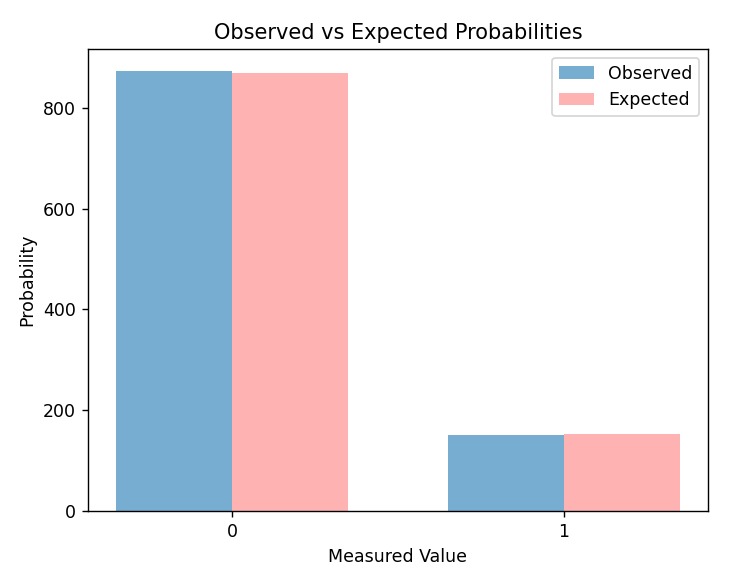
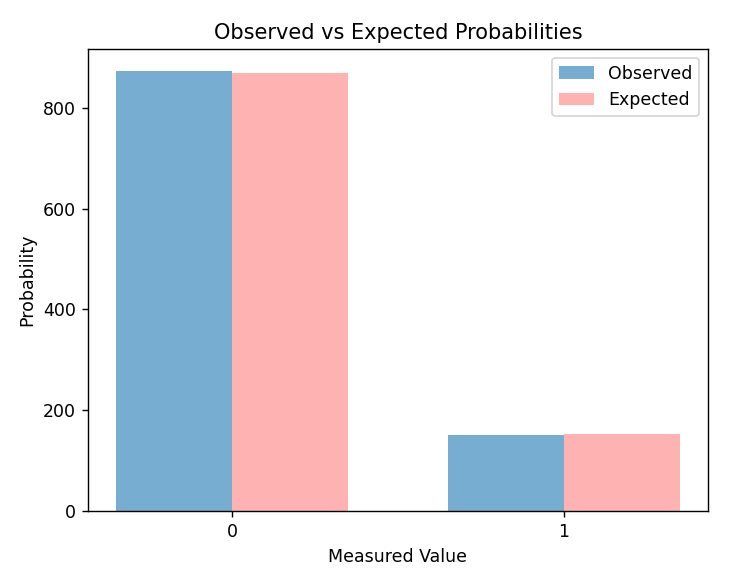
Sample Graph for 0.85 probability of 0
-

Printed data for 0.85 probability of 0

Inspiration
I have experimented with quantum computing before, but I never tried coding qiskit in python, so I wanted to learn how and make a simple project in the process.
What it does
It allows the user to input a custom probability bias, and then it shows what a quantum computer outputs given that probability bias.
How we built it
It converts the user-inputted probability into an angle, and then it uses a single-qubit rotation about the y-axis (Ry gate) to encode this probability to the qubit.
Challenges we ran into
It was difficult for me to figure out how qiskit worked. I have worked the composer before but this was my first time trying to type code so there was a lot of difficulty along the way. I was never able to figure out how to get it to run on one of the actual IBM computers, so for now it just runs on a simulator, but this could be changed to see how real quantum computers act.
Accomplishments that I'm proud of
I was happy I was able to get a working product that actually used qiskit to run a simple algorithm. I learned a lot about qiskit.
What's next for Quantum Biased Measurement Simulator
Perhaps it would be interesting to turn this into a quantum random number generator, where a custom distribution or bias could be plugged in, and it would give you truly random numbers, better than the pseudorandom algorithms used currently.
Built With
- python
- qiskit


Log in or sign up for Devpost to join the conversation.