-
-
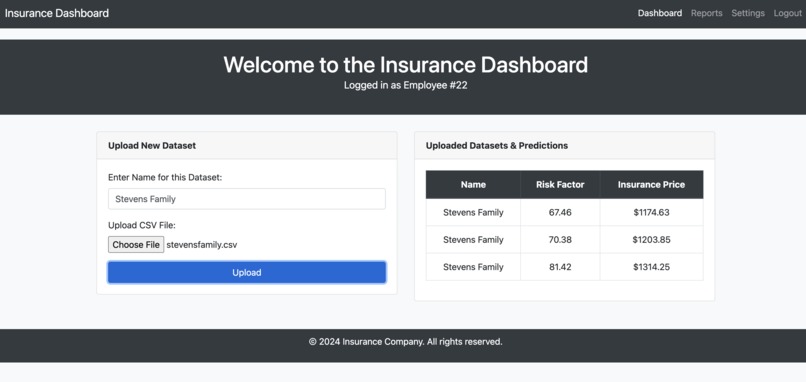
UI/ Design Frontend
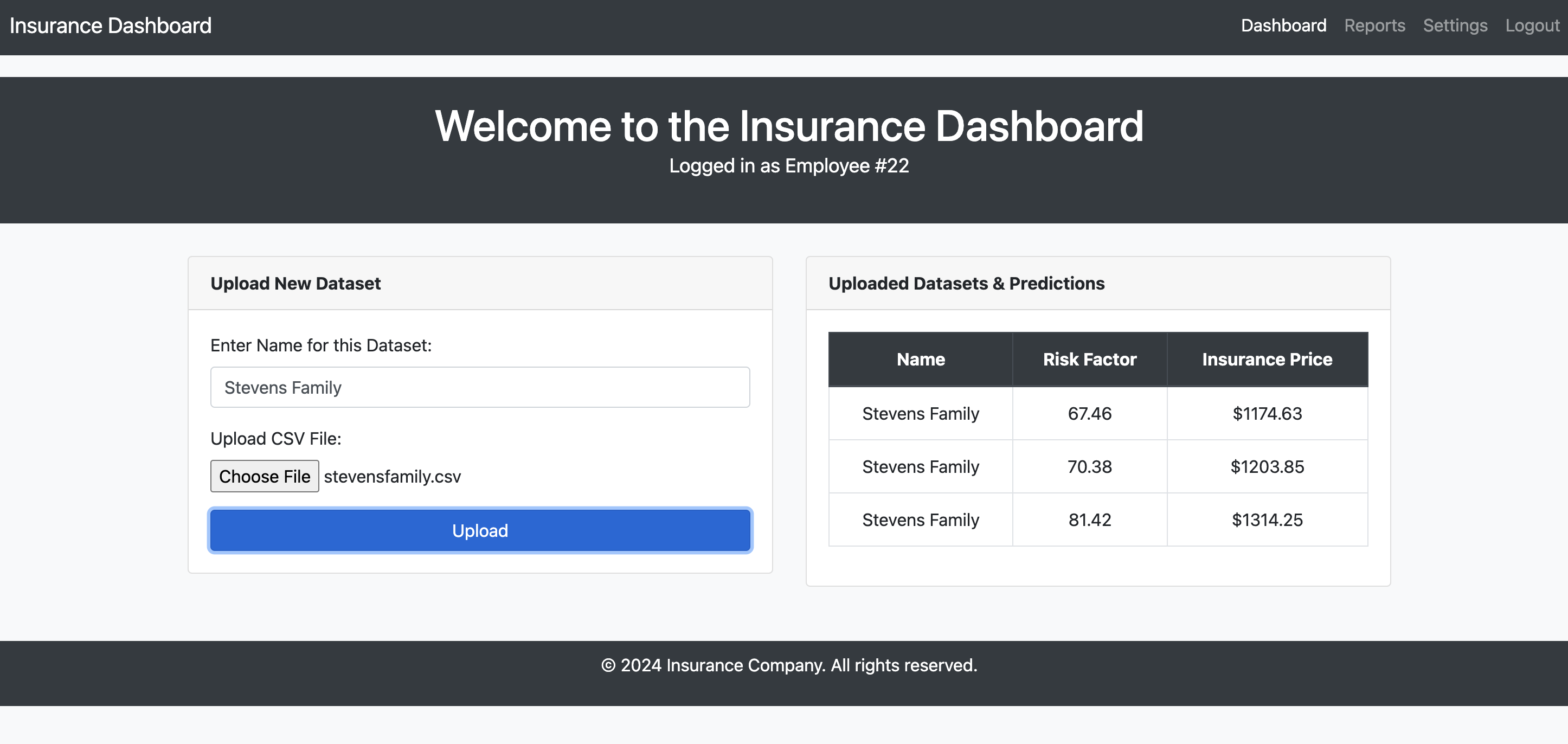
Inspiration
I saw firsthand how insurance companies struggle with generating fast and accurate risk assessments. They rely heavily on traditional mathematics, which often falls short in predicting complex, future risks. This inefficiency not only delays decision-making but also compromises the accuracy of premium calculations, ultimately affecting the company’s profitability and customer satisfaction. This inspired me to explore how AI and machine learning could transform this process, making it faster, more reliable, and adaptable to evolving risks.
What it does
QuantInsurance leverages advanced AI algorithms to automate risk assessments and insurance premium calculations. It processes customer data, predicts risk factors with high accuracy, and instantly calculates the corresponding premiums. By integrating machine learning, QuantInsurance provides more precise and dynamic assessments than traditional methods, helping insurance companies make better-informed decisions.
How we built it
We built QuantInsurance using a combination of Python, Flask for the backend, and Bootstrap for the frontend. The core of the system is a Gradient Boosting Regressor model, trained on extensive historical insurance data. This model is designed to identify complex patterns and predict risk factors accurately. We also used Pandas for data handling, Joblib for model serialization, and SQLite for database management.
Challenges we ran into
One of the biggest challenges was ensuring the model's accuracy while maintaining efficiency. Handling imbalanced datasets and fine-tuning the model to avoid overfitting required careful attention. Additionally, integrating the AI model seamlessly with the Flask backend and ensuring the system could scale to handle large datasets were significant hurdles we overcame.
Accomplishments that we're proud of
We're proud of building a platform that not only improves the accuracy of risk assessments but also significantly reduces the time needed to generate them. The successful integration of machine learning into a traditionally mathematical process is a major accomplishment. We're also proud of creating a user-friendly, responsive interface that makes these advanced tools accessible to insurance professionals.
What we learned
We learned the immense potential that AI and machine learning hold in transforming traditional industries like insurance. The project also reinforced the importance of data quality and the challenges of model training, especially when dealing with real-world, imbalanced datasets. Finally, we gained valuable insights into how to balance model complexity with efficiency and scalability.
What's next for QuantInsurance
Next, we plan to enhance QuantInsurance with real-time data integration, allowing for continuous risk assessment and dynamic premium adjustments. We also aim to develop more sophisticated predictive models that can account for an even broader range of variables. Additionally, we intend to expand our platform to support smaller insurance firms and explore applications in other data-intensive industries.
Built With
- bootstrap
- bootstrap-**platforms**:-local-development-environment
- but-can-be-integrated-with-aws
- css
- css-**frameworks**:-flask
- etc.)-**databases**:-sqlite-**apis**:-(no-external-apis-were-used)-**machine-learning**:-scikit-learn
- flask
- github
- github-**cloud-services**:-(none-specified
- google-cloud
- html
- joblib
- pandas
- python
- scikit-learn
- sqlite

Log in or sign up for Devpost to join the conversation.