-
-
Thumbnail
-
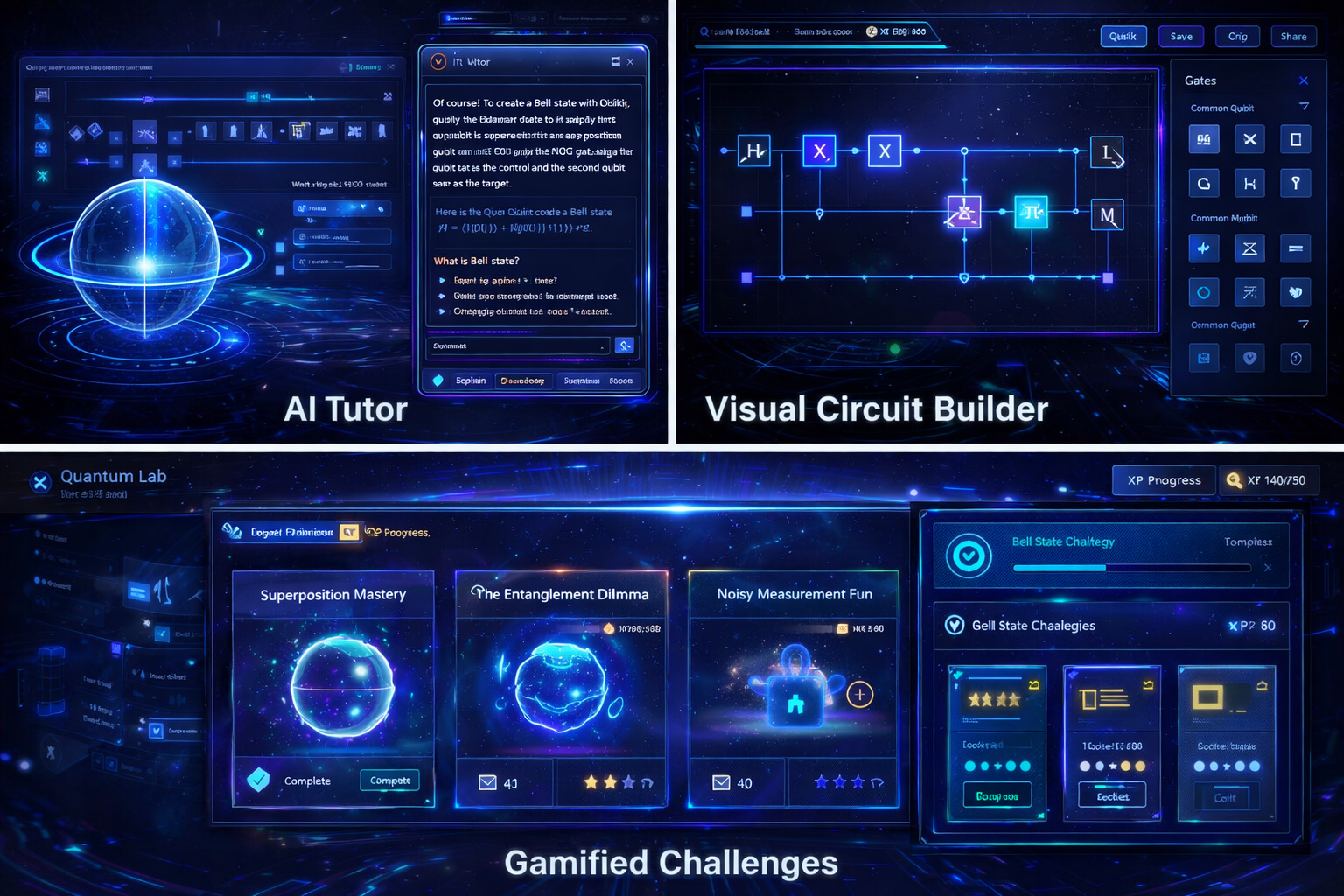
Website main features
-
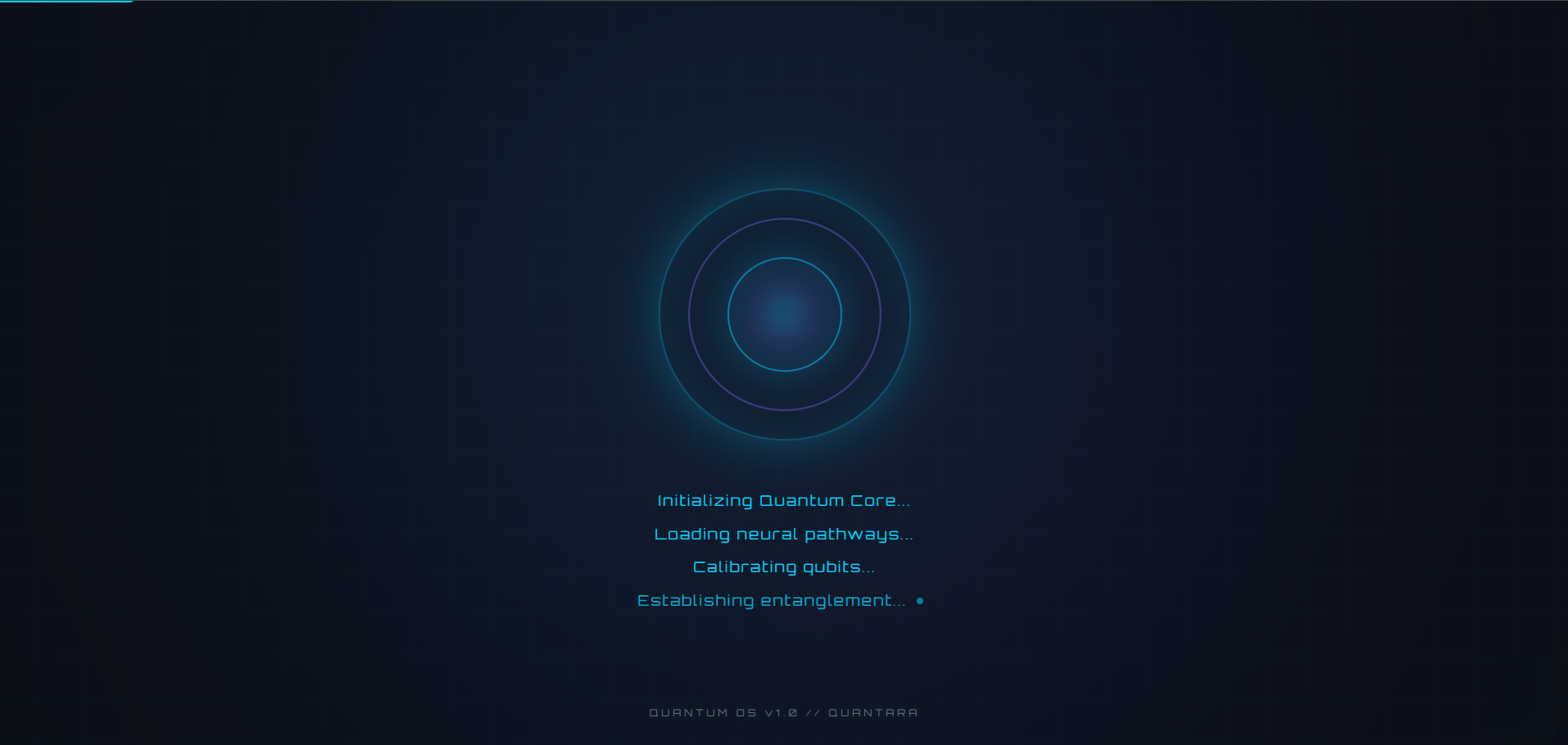
os loading
-
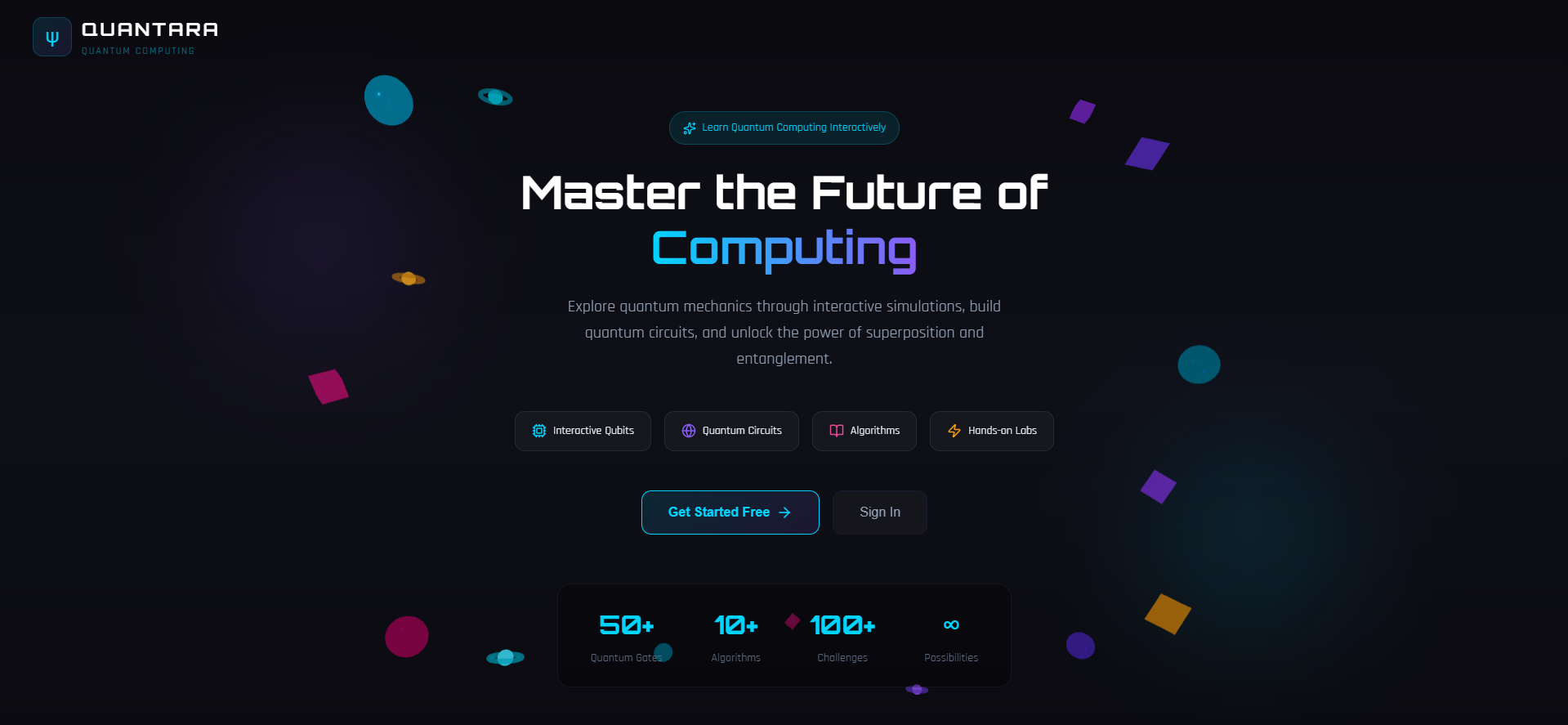
landing
-
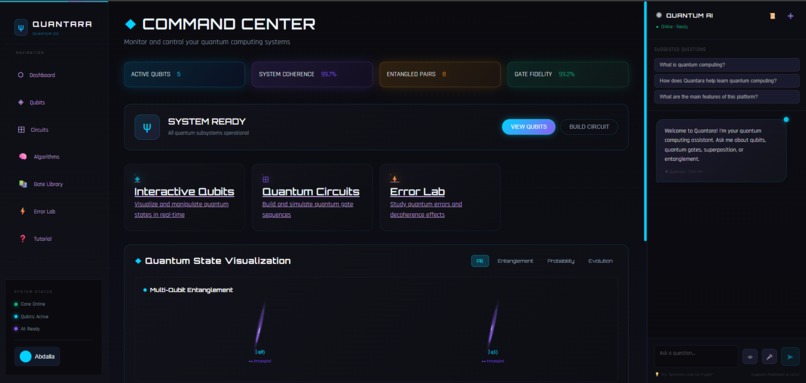
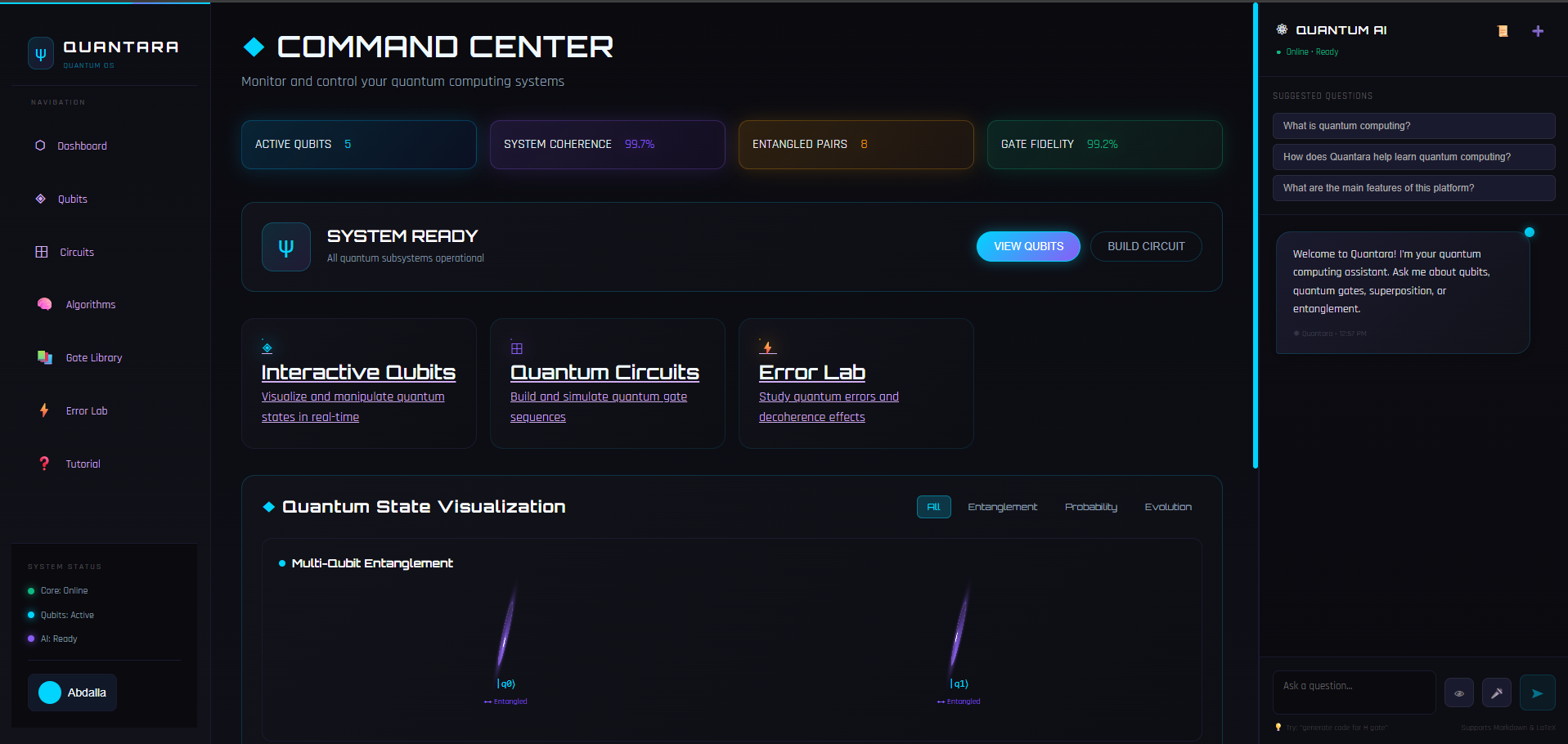
dashboard
-
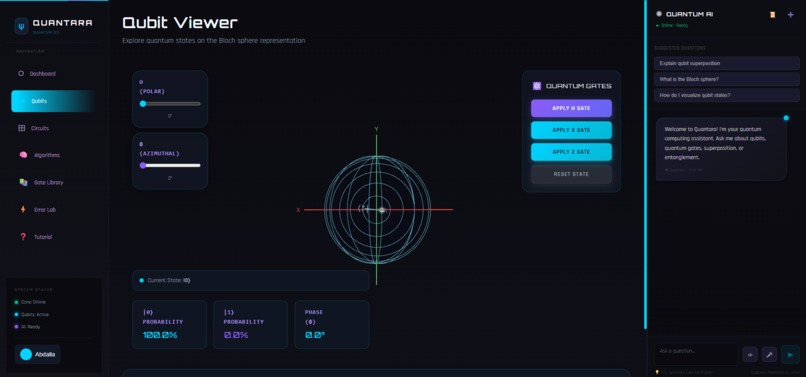
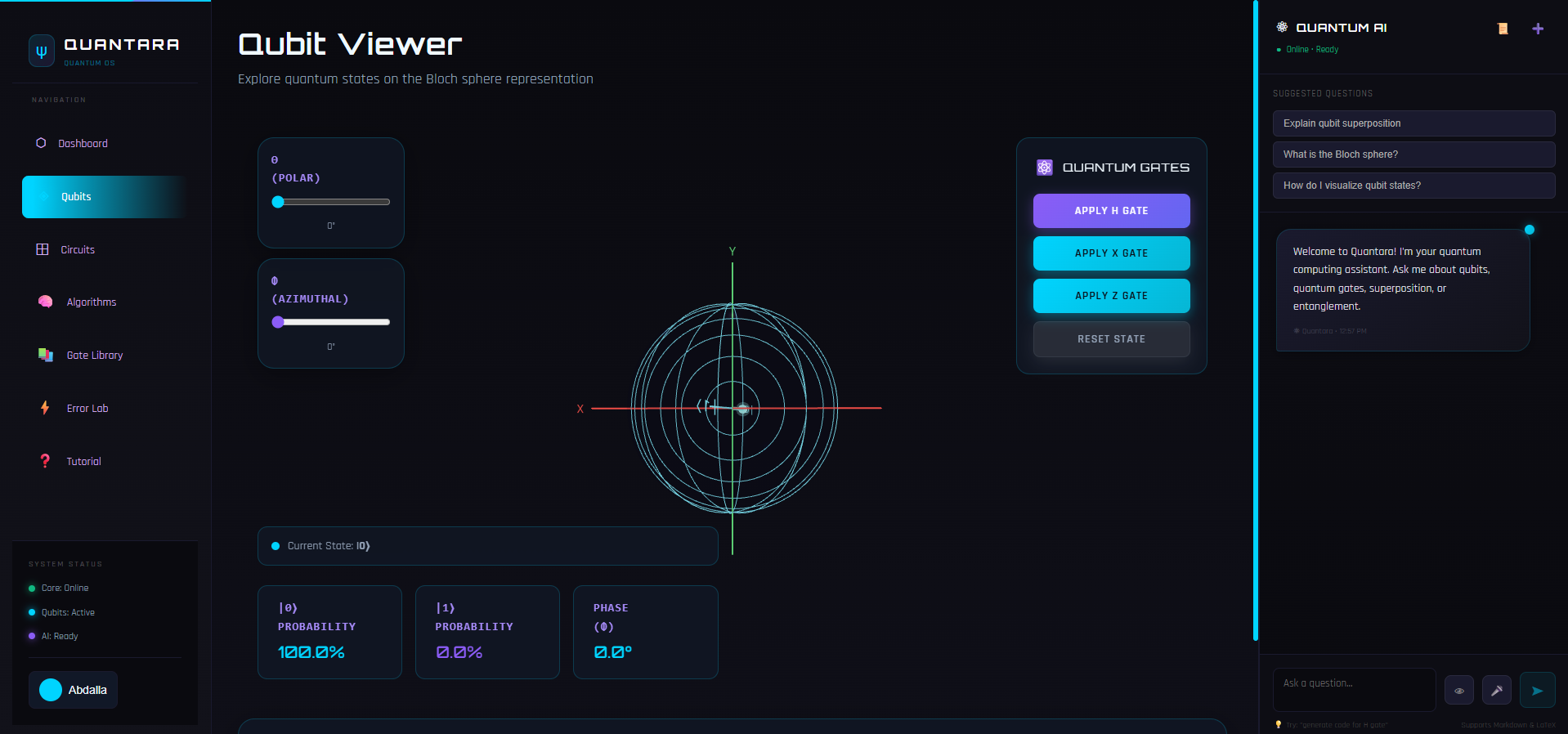
qubit viewer
Inspiration
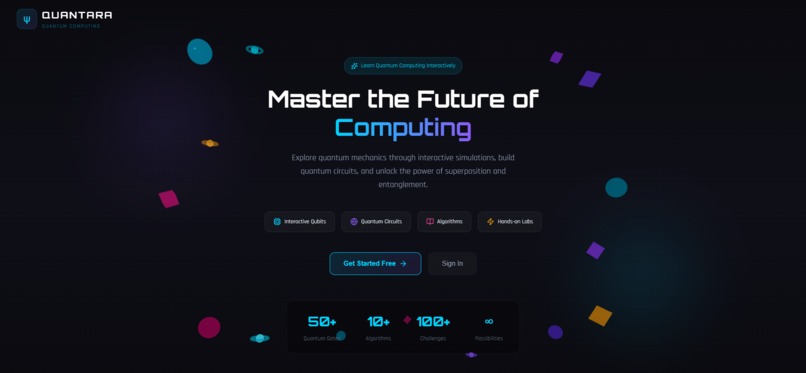
Quantum computing is one of the most powerful technologies of the future, yet it remains inaccessible, abstract, and intimidating for most students. Tools like IBM Quantum and Qiskit are incredibly powerful, but they often lack intuitive, visual, and beginner-friendly learning experiences. I wanted to answer a simple question: What if learning quantum computing felt like using an operating system from the future? Quantara was born from the idea of merging:
- Interactive visualization
- AI-powered tutoring
- Gamified learning into a single immersive experience we call a “Quantum OS.”
What it does
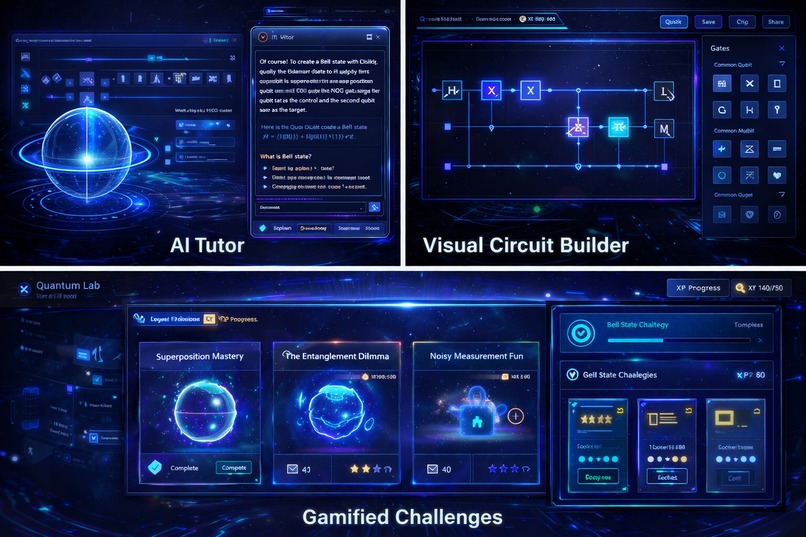
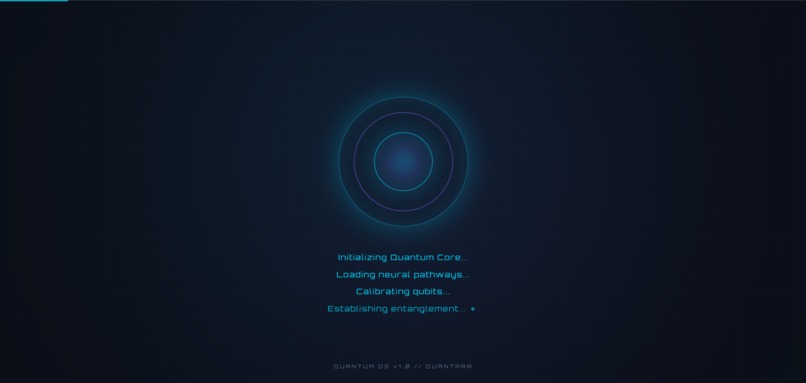
Quantara is an AI-powered interactive quantum computing platform that transforms complex concepts into visual, hands-on experiences. Core Features 🌌 Quantum OS Interface A futuristic system interface with a cinematic boot sequence and immersive UI ⚛️ 3D Qubit Visualization Interactive Bloch sphere to explore quantum states in real time 🔧 Visual Circuit Builder Drag-and-drop quantum circuits with export support for:
- Qiskit
- Cirq
- Q#
- PennyLane
- OpenQASM 🧠 AI Quantum Tutor Context-aware assistant powered by RAG for:
- Concept explanations
- Code generation
- Learning guidance 🧪 Quantum Error Lab Simulate noise, decoherence, and real-world quantum imperfections 🎮 Gamified Challenges XP-based learning system with interactive tasks and progression 🔍 Global Search (Ctrl+K) Instant access to gates, algorithms, and learning modules
How I built it
Quantara is a full-stack AI + visualization platform. Frontend React 18 + Vite Three.js / @react-three/fiber (3D rendering) Tailwind CSS (UI styling) Framer Motion (animations) PWA support for installability Backend FastAPI (Python API layer) WebSockets for real-time communication SQLite for persistence JWT authentication AI System LangChain for orchestration FAISS for vector storage Retrieval-Augmented Generation (RAG) pipeline for contextual answers Architecture Highlights Modular component-based frontend Real-time AI tutor panel Scalable vector search system Export-ready quantum circuit pipeline
Challenges I ran into
- Visualizing Quantum Concepts Quantum states are inherently abstract. Representing them in a 3D, interactive Bloch sphere while maintaining performance required deep integration between React and Three.js.
- AI Context Awareness
Making the AI tutor respond based on:
- Current page
- User actions
- Learning progress was challenging and required a carefully designed RAG pipeline.
- Circuit Builder Complexity
Building a system that:
- Handles multiple gates
- Maintains quantum state logic
- Exports to multiple frameworks was significantly more complex than a typical drag-and-drop UI.
- Performance Optimization
Balancing:
- Real-time 3D rendering
- AI responses
- Smooth animations required aggressive optimization and efficient state management.
Accomplishments that I am proud of
🚀 Built a fully immersive “Quantum OS” experience 🧠 Integrated AI tutoring directly into the learning interface ⚛️ Developed a real-time 3D quantum visualization system 🔧 Created a multi-framework circuit export pipeline 🎮 Designed a gamified learning system with progression tracking
What I learned
- How to design complex full-stack systems that combine AI + visualization
- The importance of user experience in technical education tools
- How to build and optimize RAG-based AI systems
- Managing real-time interactions between frontend and backend
- Translating highly abstract concepts into intuitive visual models
What's next for Quantara
I am just getting started. My next steps include: ⚡ Real quantum execution via Qiskit backends 🧠 Smarter AI tutor with reasoning and debugging capabilities 🌐 Collaborative circuit building (multiplayer mode) 📚 Structured learning paths (beginner → advanced) 🏆 Leaderboards and global challenges ☁️ Full cloud deployment and scalability My long-term vision: To become the go-to platform for learning, building, and experimenting with quantum computing.
Built With
- faiss
- fastapi
- framer-motion
- git
- github
- javascript
- jwt
- lang-chain
- node.js
- npm
- pip
- python
- qiskit
- rag
- react
- sqlite
- tailwindcss
- three.js
- vite
- websockets


Log in or sign up for Devpost to join the conversation.