-
-
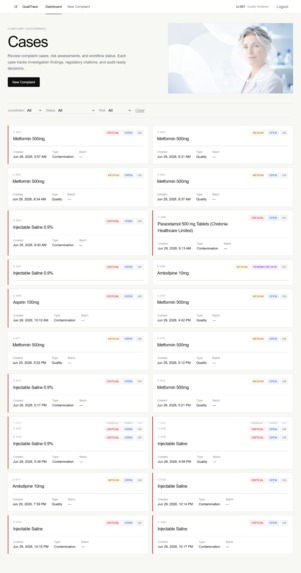
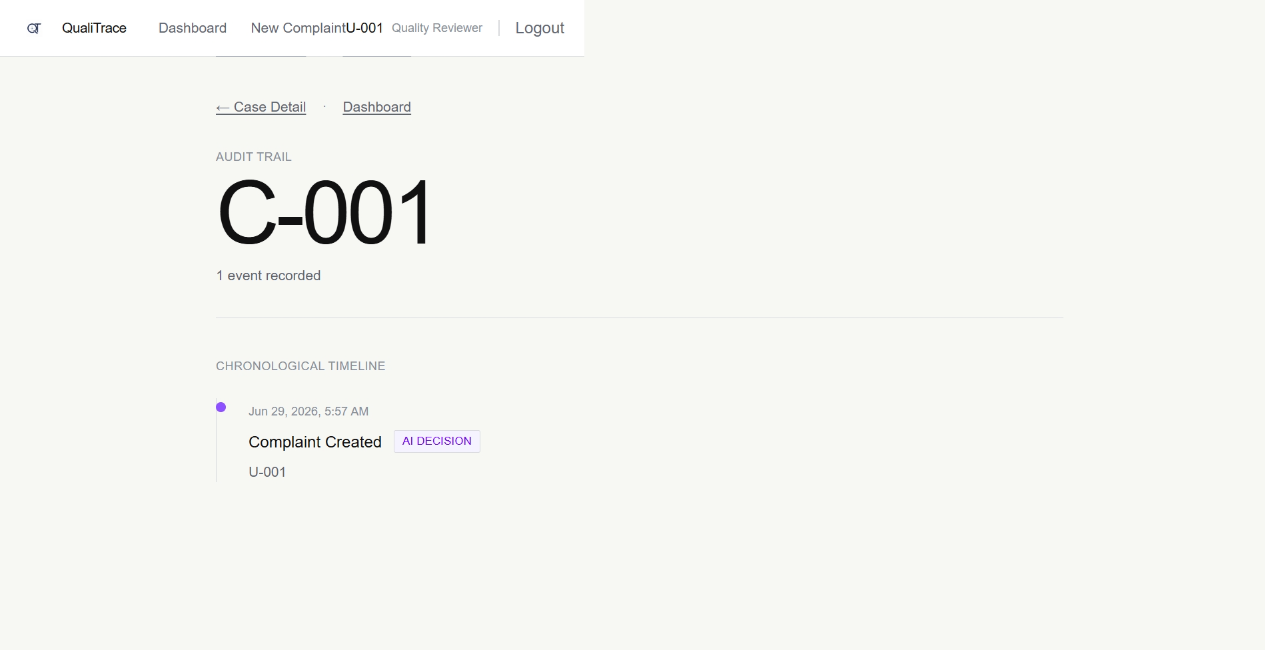
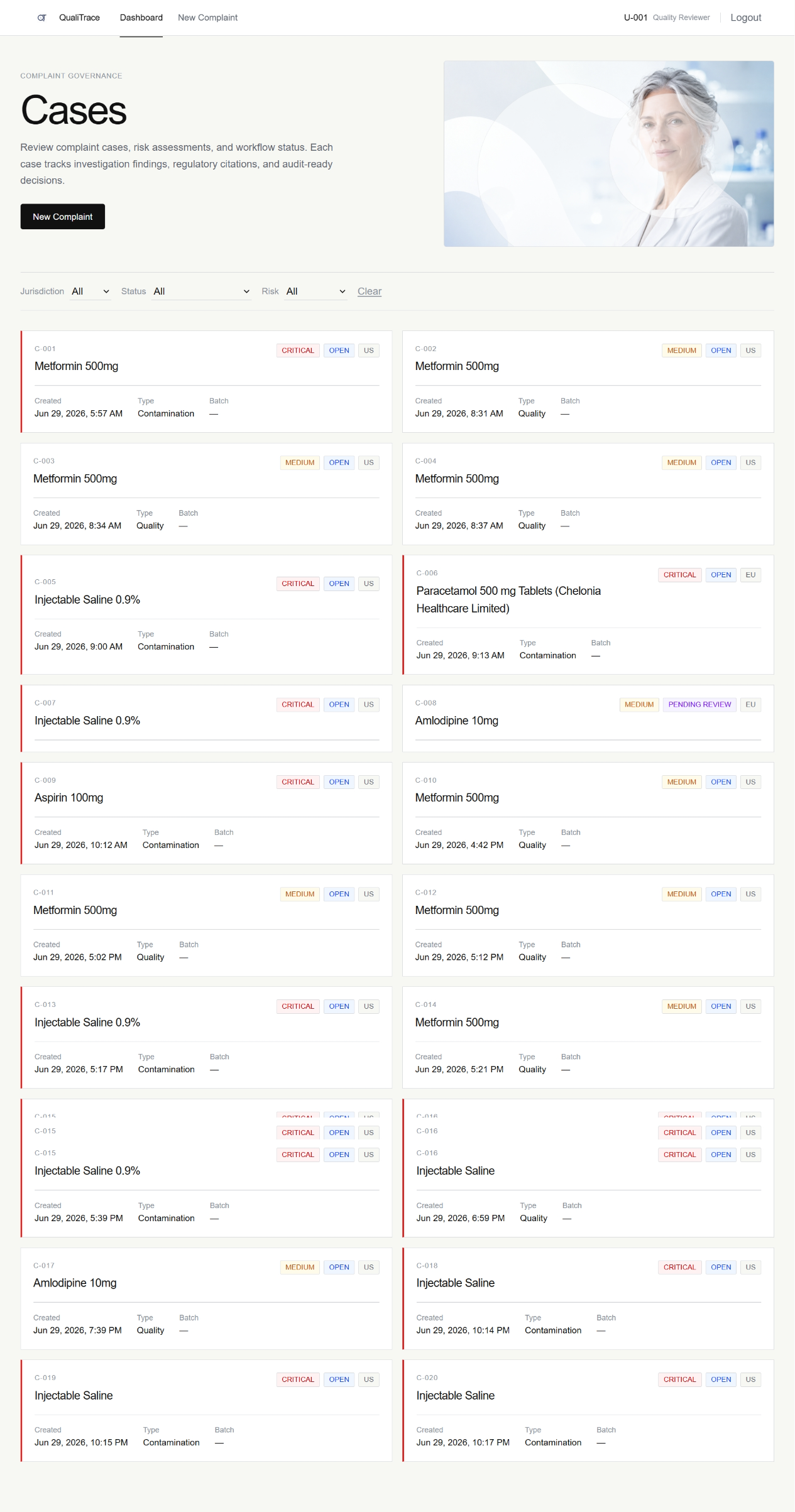
QualiTrace Dashboard: Real-time tracking of global complaints, AI-assigned risk levels, and active workflow statuses.
-
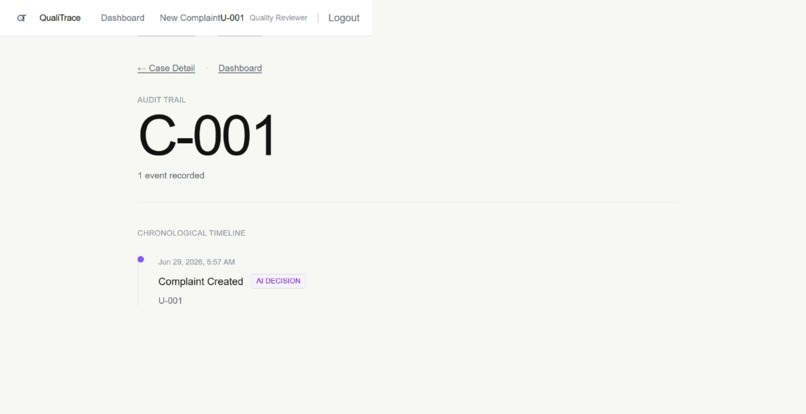
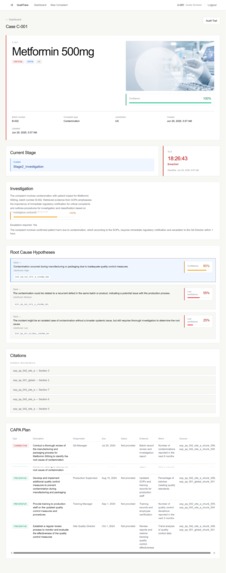
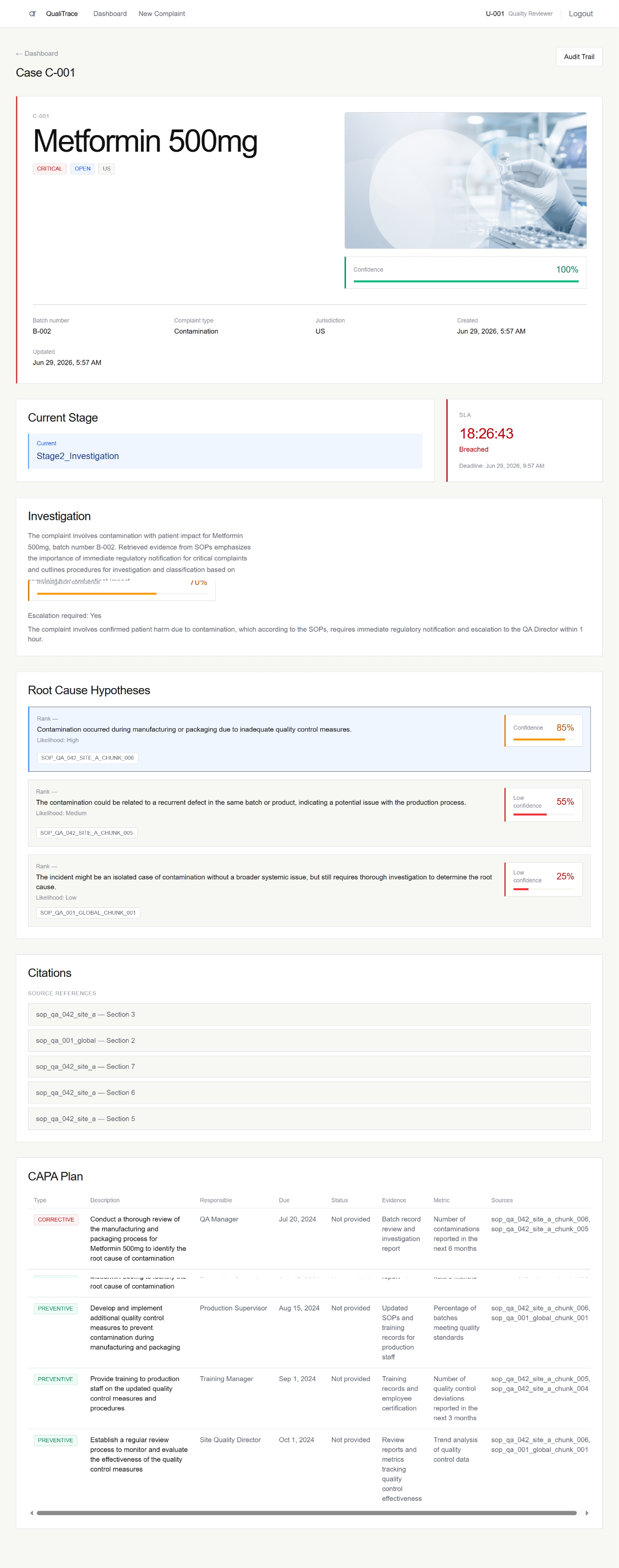
AI Investigation: Shows live SLA countdowns, confidence-scored root causes, actual FDA citations, and auto-generated CAPA plans.
-
AI Investigation: Shows live SLA countdowns, confidence-scored root causes, actual FDA citations, and auto-generated CAPA plans.
-
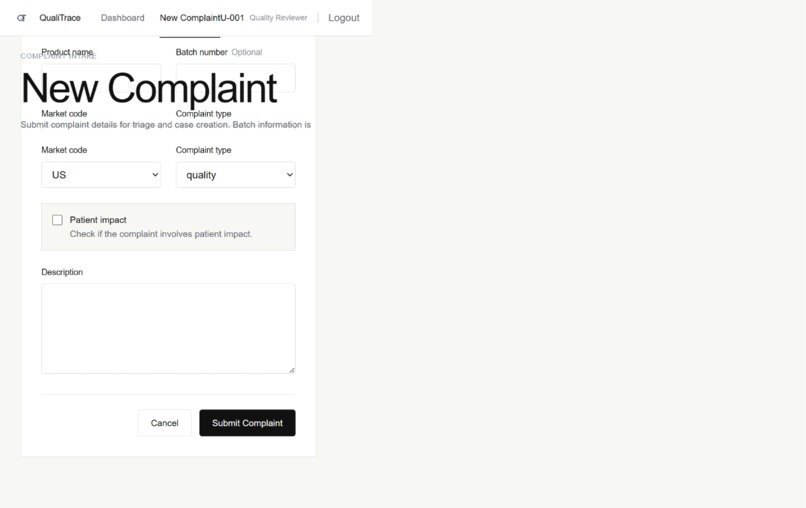
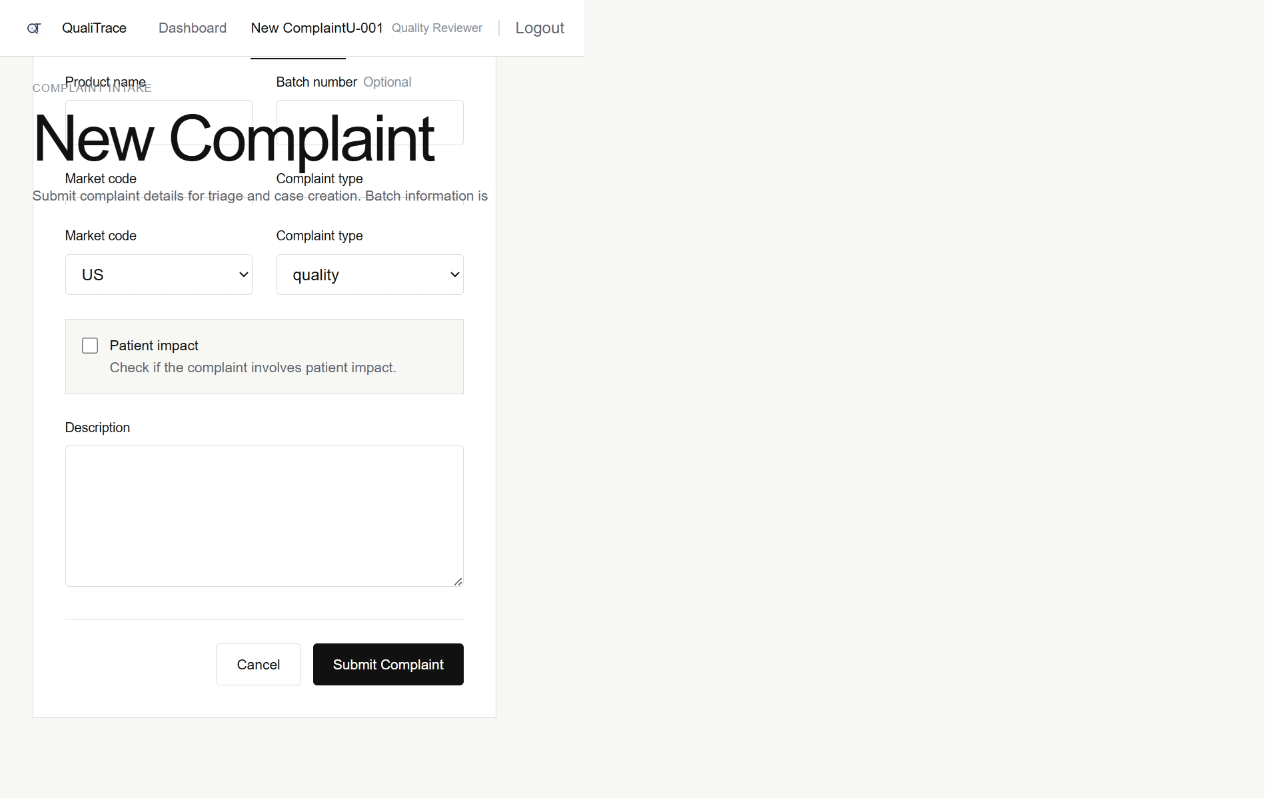
Intake Portal: Where new quality events enter the system, instantly triggering our Agentic AI pipeline for autonomous triage.
-
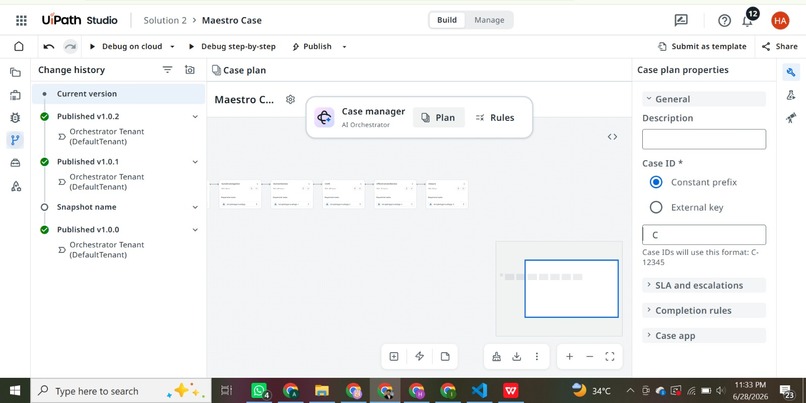
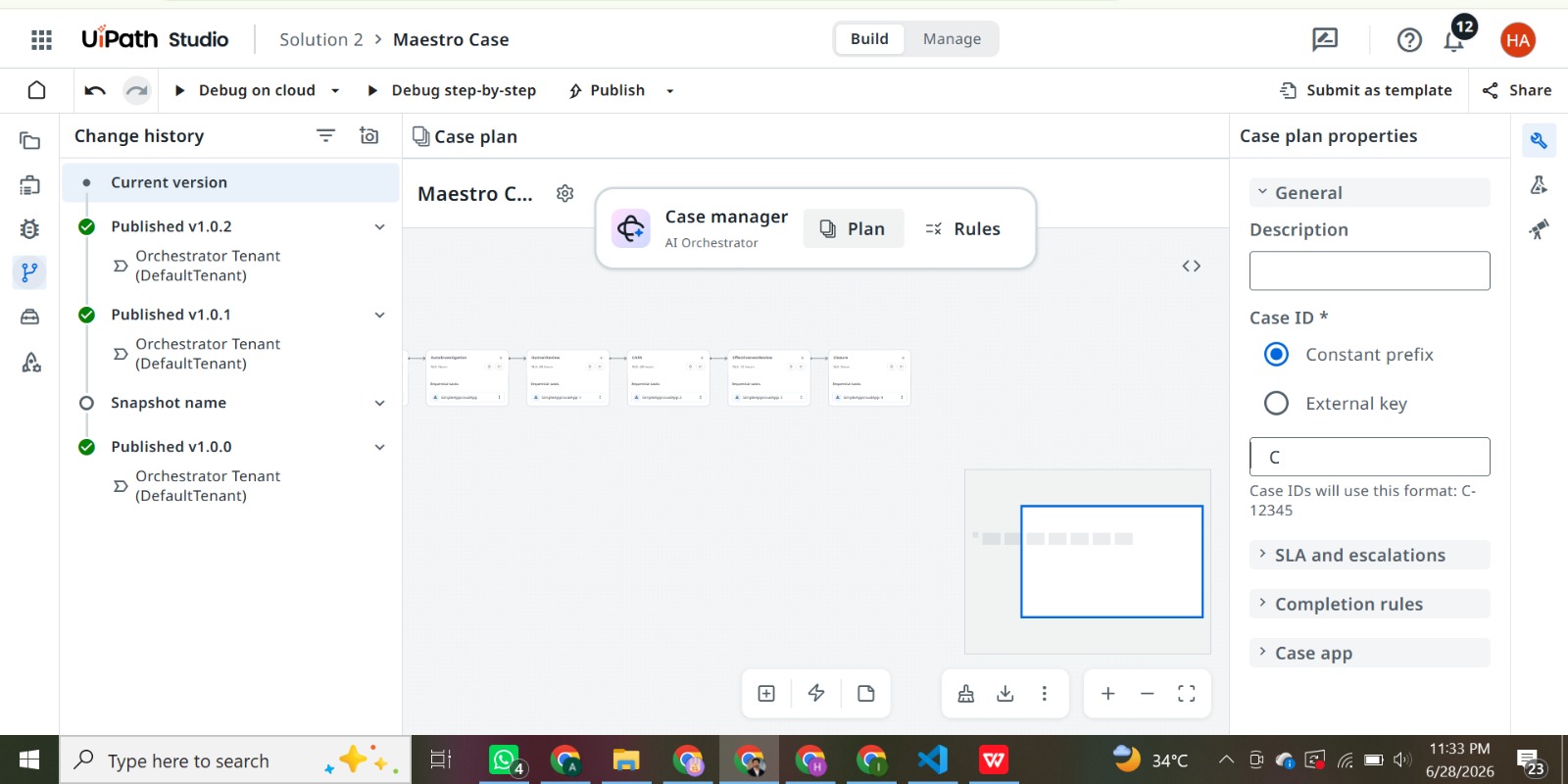
UiPath Maestro Orchestration: Our live 7-stage workflow enforcing strict SLA deadlines from initial intake to final CAPA closure.
Inspiration
Let’s be real traditional quality assurance in manufacturing and pharma is slow. When a critical defect happens (like contaminated IV saline), every second counts. Relying on humans to manually read, categorize, and escalate complaint emails means critical alerts get buried in crowded inboxes. We wanted to build a "Tony Stark war room" for quality control. The vision was an autonomous, AI-driven pipeline that catches high-risk complaints the exact millisecond they drop, analyzes them, and sounds the alarm before things go sideways.
What it does
QualiTrace AI is an end-to-end, Agentic AI automation pipeline for triage and emergency escalation. When a mock complaint email hits the system:
The RPA Muscle: Our UiPath bot intercepts and parses the raw text file, extracting the vital stats (Product, Batch, Market, Impact).
The AI Brains: It fires the data to our Python backend where our SynapseGrid architecture takes over. An Intake Agent (powered by Groq and Llama 3) acts as a classifier, reading the human context of the complaint to determine the risk level.
The Escalation: If the AI flags a high-impact event (e.g., patient fever), the backend updates the SLA, and our notification bot injects a raw VB.NET script to instantly blast a styled, dark-theme HTML emergency summary via Gmail SMTP directly to the response team.
How we built it
We went for a modern, tech-focused, full-stack approach:
Frontend: Built with React, featuring a sleek, minimalist dark theme with blue and purple accents. We utilized the Context API for clean state management and Axios for bulletproof HTTP requests.
Backend: Python (FastAPI) server hosting our custom AI agents, utilizing Groq's insanely fast inference to run our llama-3.3-70b-versatile models.
Automation: UiPath Studio. We bypassed standard clunky visual activities by writing custom Invoke Code blocks using VB.NET to handle heavy-lifting HTTP requests, JSON parsing, and background SMTP email dispatching without UI bottlenecks.
Challenges we ran into
Building this wasn't just smooth sailing. We spent hours debugging silent failures. We wrestled with Windows path syntax traps (\u vs \ destroying our file reads), fought UiPath's strict variable scoping, and had to hunt down "Value cannot be null" errors when our Regex ran empty. Just when we got the RPA-to-Python handoff flawless, we hit a massive 429 Rate Limit wall with Groq because our agents were firing too efficiently. We also had to pivot our email strategy from standard UiPath packages to a pure, injected VB.NET SMTP script just to bypass validation blocks. We were cooked for a minute, but we engineered our way out.
Accomplishments that we're proud of
Getting the seamless handoff between a local UiPath robot and a local Python server utilizing a massive LLM is a huge win. We are especially proud of abandoning standard "drag-and-drop" RPA limitations and writing raw VB.NET code inside the bot to dynamically generate and dispatch beautiful, HTML-styled emergency alerts. Building a system that actually reads the context of a complaint and acts on it autonomously feels like the future.
What we learned
Error handling is everything. You can't just trust an HTTP 200 OK—you have to watch the backend terminal and verify the payloads. We learned the hard way that "ContinueOnError" settings can hide fatal pipeline crashes. Most importantly, we learned how to effectively split the workload: let RPA do the mechanical data extraction, and let Agentic AI handle the cognitive routing and decision-making.
What's next for QualiTrace AI
Right now, the Intake and Escalation agents are absolutely flying. Next up is building out the rest of the SynapseGrid pipeline: the Resolver and Responder agents. We want the AI to not just alert the team, but automatically generate compliance reports and draft contextual response emails to the original complainant. We are also planning to expand the React dashboard into a full command center tracking live SLA countdowns across global markets.
Built With
- claude
- fastapi
- groq
- hugging-face-spaces
- llama-3
- python
- react
- sqlalchemy
- sqlite
- tailwind-css
- uipath-maestro
- uipath-orchestrator
- vercel
- vite


Log in or sign up for Devpost to join the conversation.