-
-
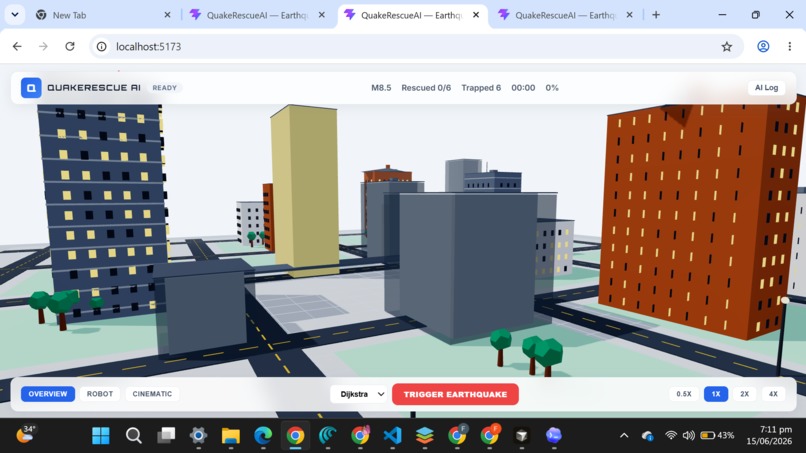
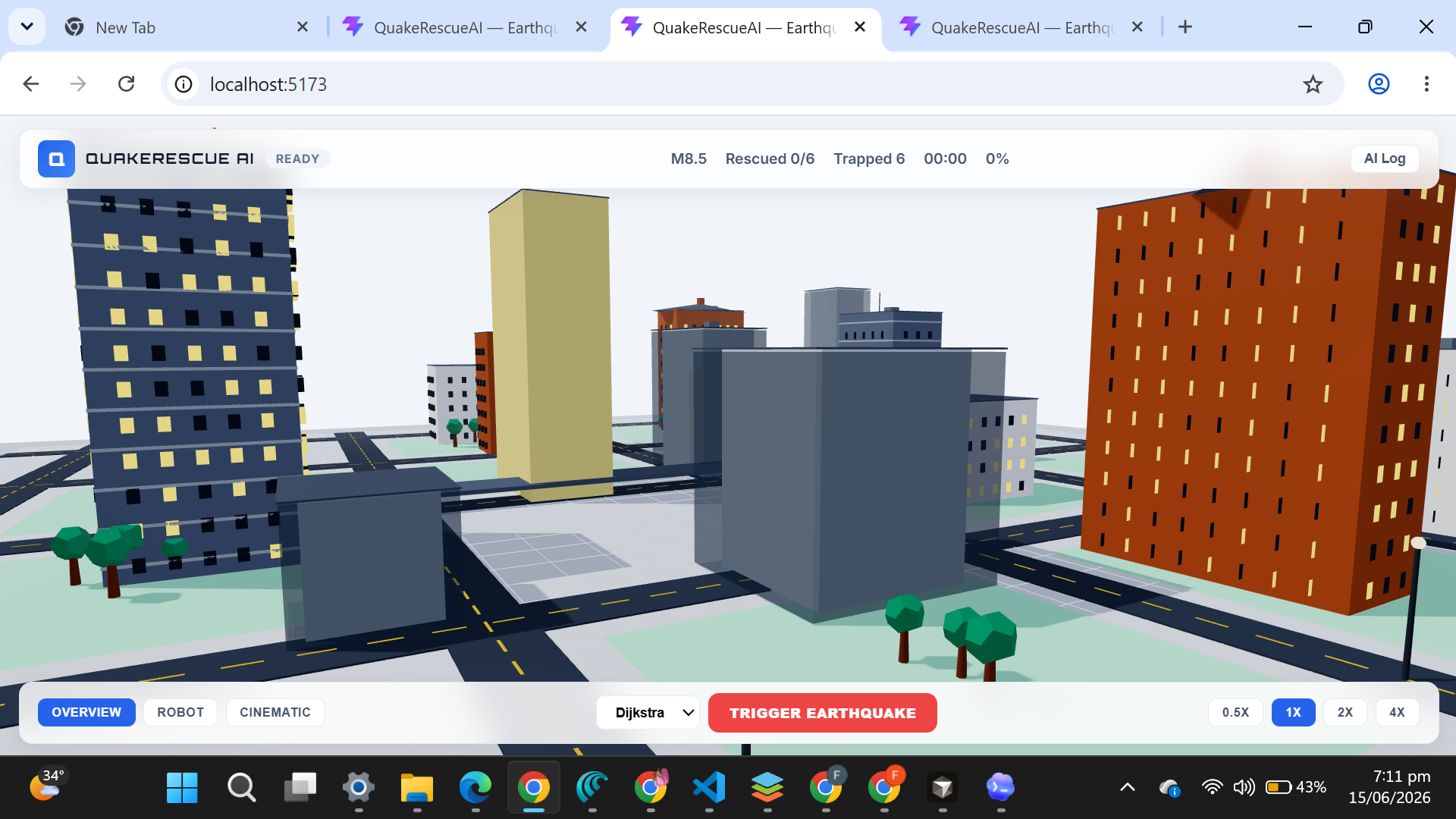
Home page
-
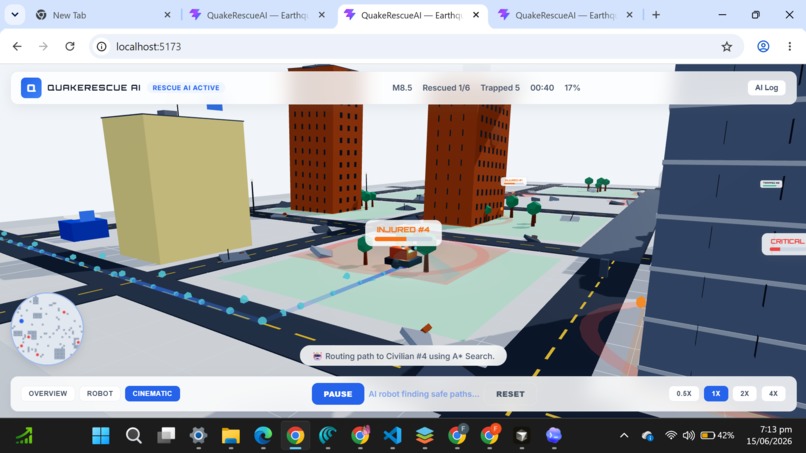
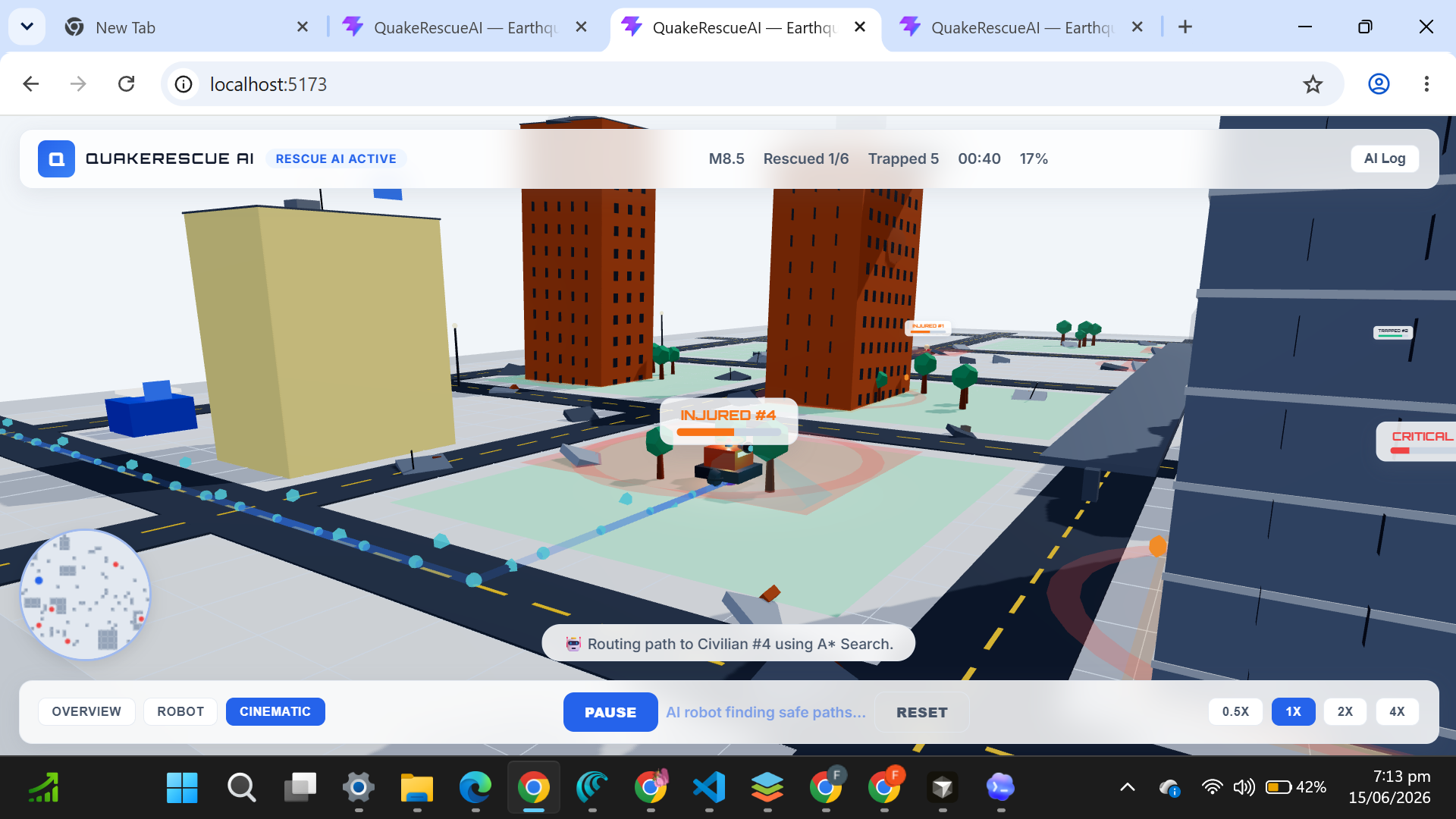
Rescue survivors
-
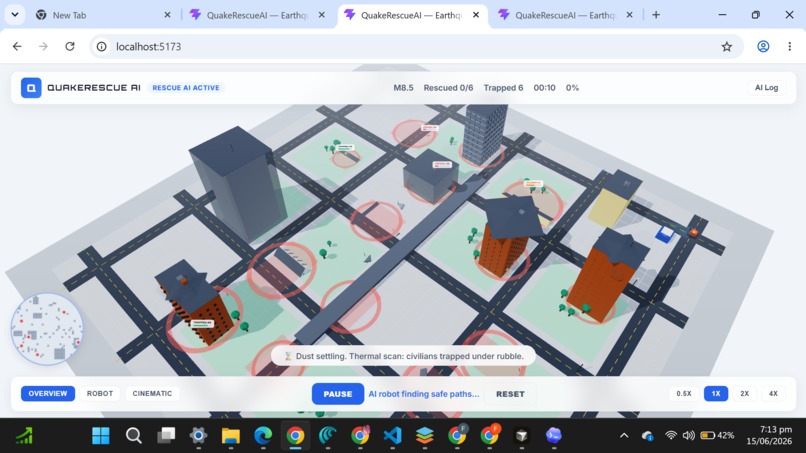
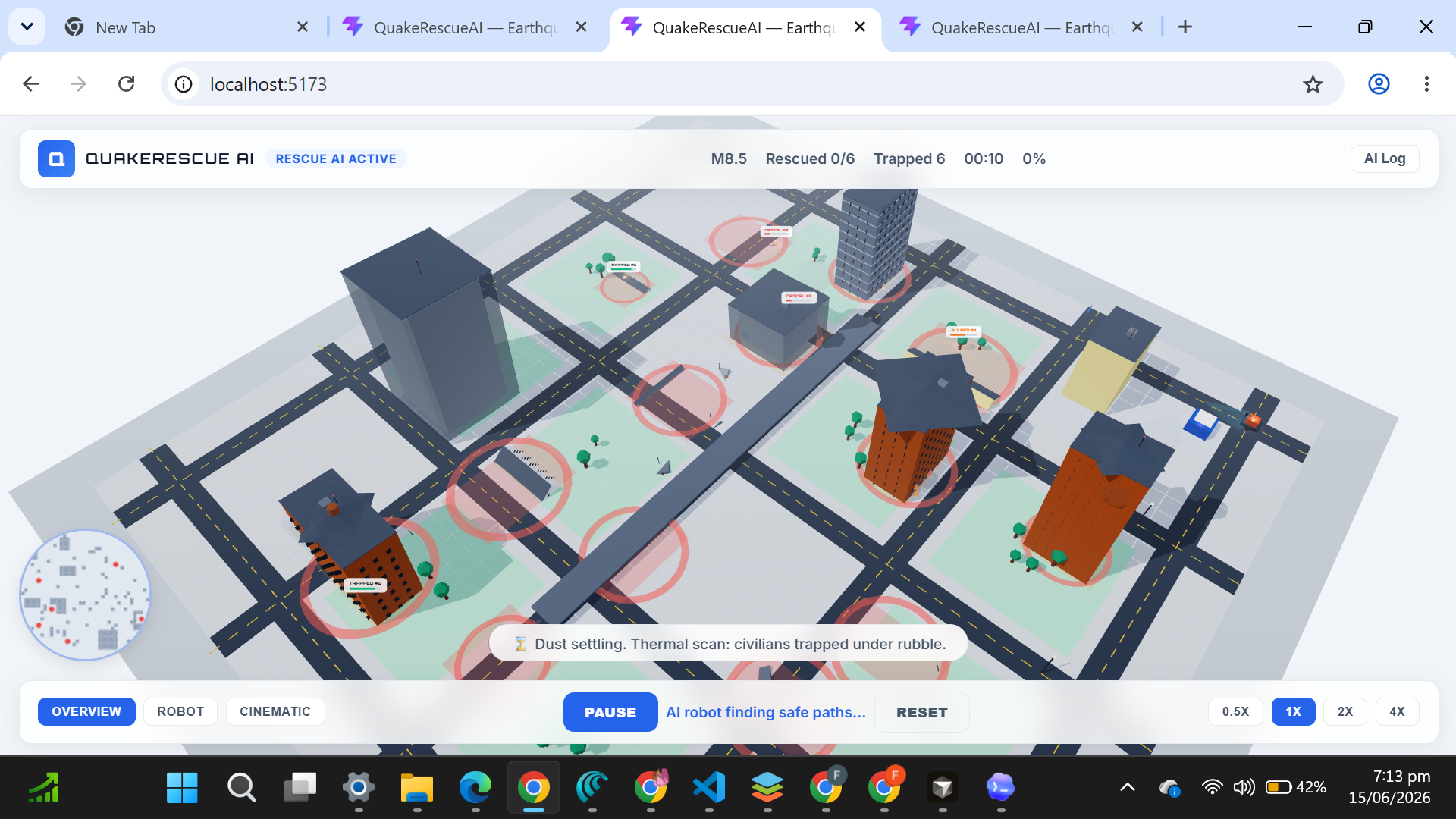
Earthqauke simulation
-
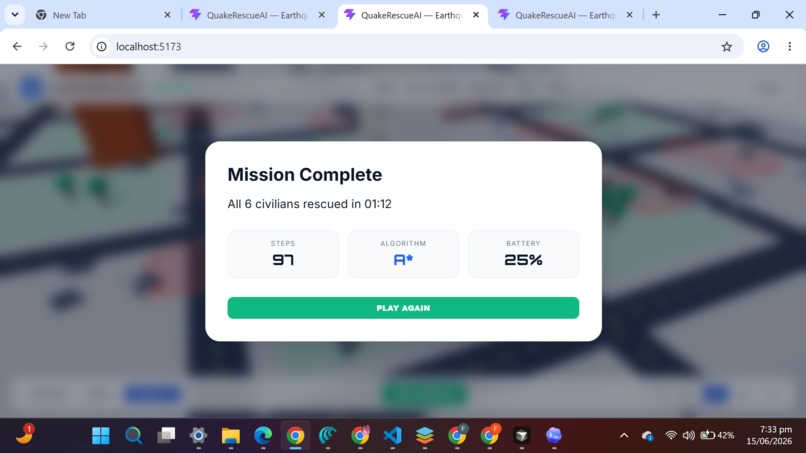
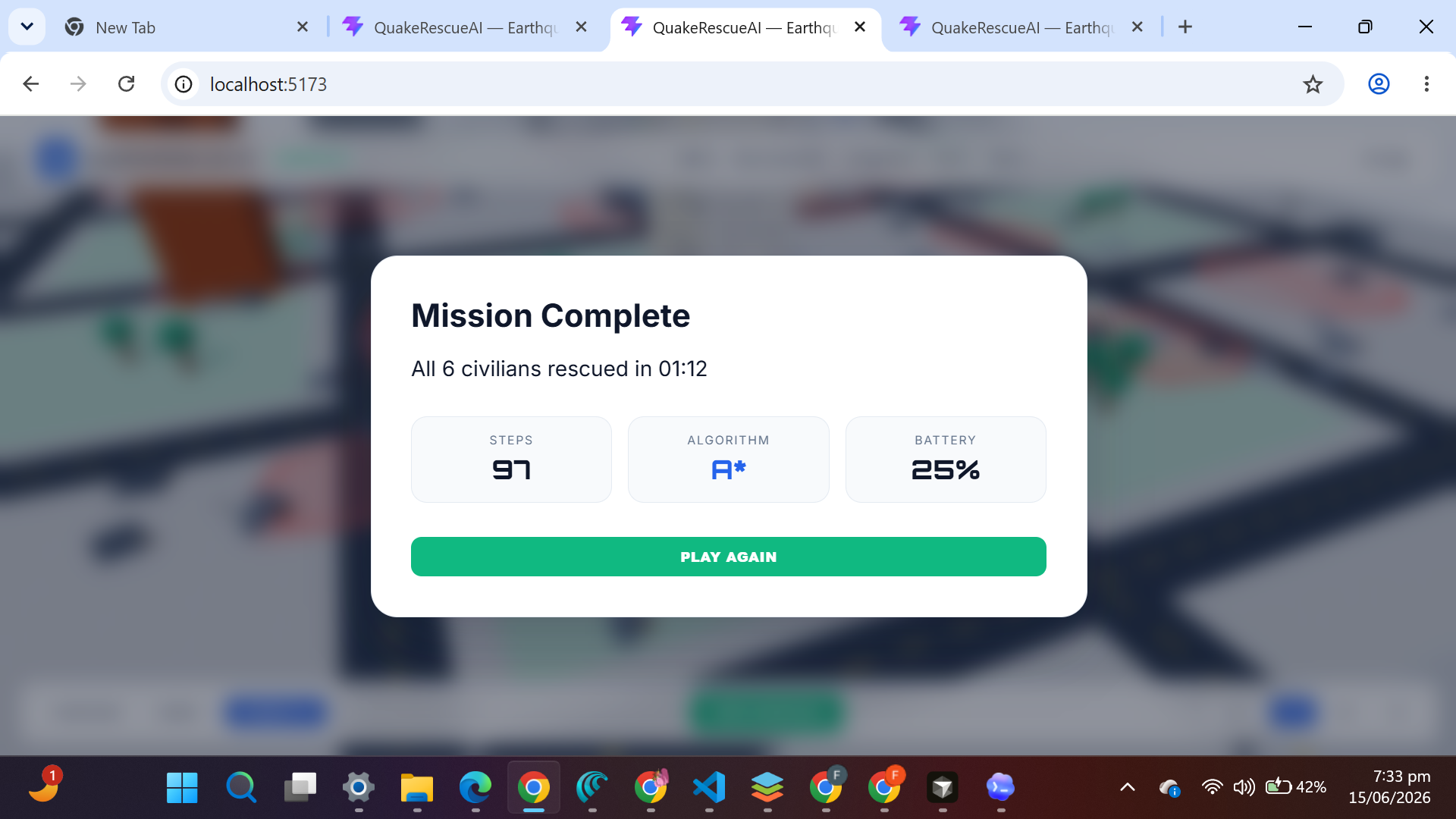
results
Inspiration
Earthquakes often leave buildings collapsed, roads blocked, and survivors trapped under debris. In such situations, every second matters, and choosing the wrong rescue route can delay operations or put rescue teams at risk. This inspired us to build QuakeRescue-AI—a smart disaster response system that demonstrates how AI-powered pathfinding can help rescue teams quickly locate survivors and navigate the safest, shortest routes through disaster-affected areas.
What it does
QuakeRescue-AI simulates a realistic post-earthquake environment where buildings may collapse, debris blocks roads, and survivors are trapped. The system generates a disaster scenario, identifies survivor locations, and uses pathfinding algorithms A, **Dijkstra's Algorithm, and **Breadth-First Search (BFS)* to compute the safest and shortest rescue path for emergency responders.
How we built it
The frontend was developed using React, TypeScript, Tailwind CSS, and Three.js (React Three Fiber) to create an interactive 3D earthquake simulation. The backend was built with Python and Flask, exposing REST APIs for city generation and pathfinding. We implemented A, **Dijkstra's Algorithm, and **Breadth-First Search (BFS)* to calculate rescue routes and compare their efficiency in different disaster scenarios.
Challenges we ran into
One of the biggest challenges was integrating a real-time 3D visualization with backend pathfinding logic while keeping the application responsive. Designing realistic earthquake scenarios, generating valid rescue paths around collapsed structures, synchronizing frontend animations with backend results, and optimizing algorithm performance required several iterations and careful debugging.
Accomplishments that we're proud of
- Built a complete AI-powered disaster response simulation from scratch.
- Successfully integrated React, Three.js, Flask, and Python into a single application.
- Implemented and compared multiple pathfinding algorithms in one platform.
- Created an immersive 3D visualization that makes rescue operations easy to understand and interact with.
- Demonstrated how AI concepts can be applied to solve real-world disaster management challenges.
What we learned
This project strengthened our understanding of graph search and pathfinding algorithms, REST API integration, full-stack application development, 3D visualization with React Three Fiber, and the importance of designing technology that can positively impact emergency response and disaster management.
What's next for QuakeRescue-AI
We plan to make QuakeRescue-AI even more practical by integrating real-time satellite and GIS data, supporting drone-assisted survivor detection, incorporating machine learning for damage assessment, enabling multi-robot rescue coordination, and developing a mobile-friendly dashboard for emergency response teams. Our long-term vision is to evolve it into a decision-support platform that can assist disaster management agencies during real emergency situations.


Log in or sign up for Devpost to join the conversation.