-
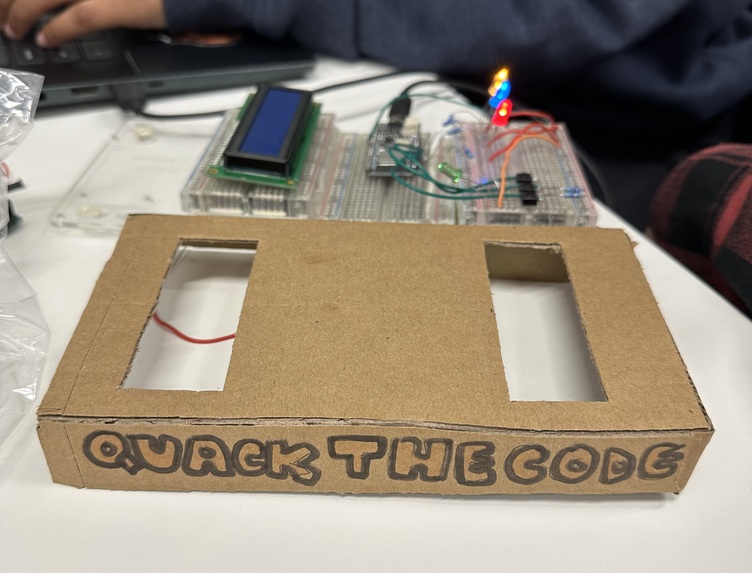
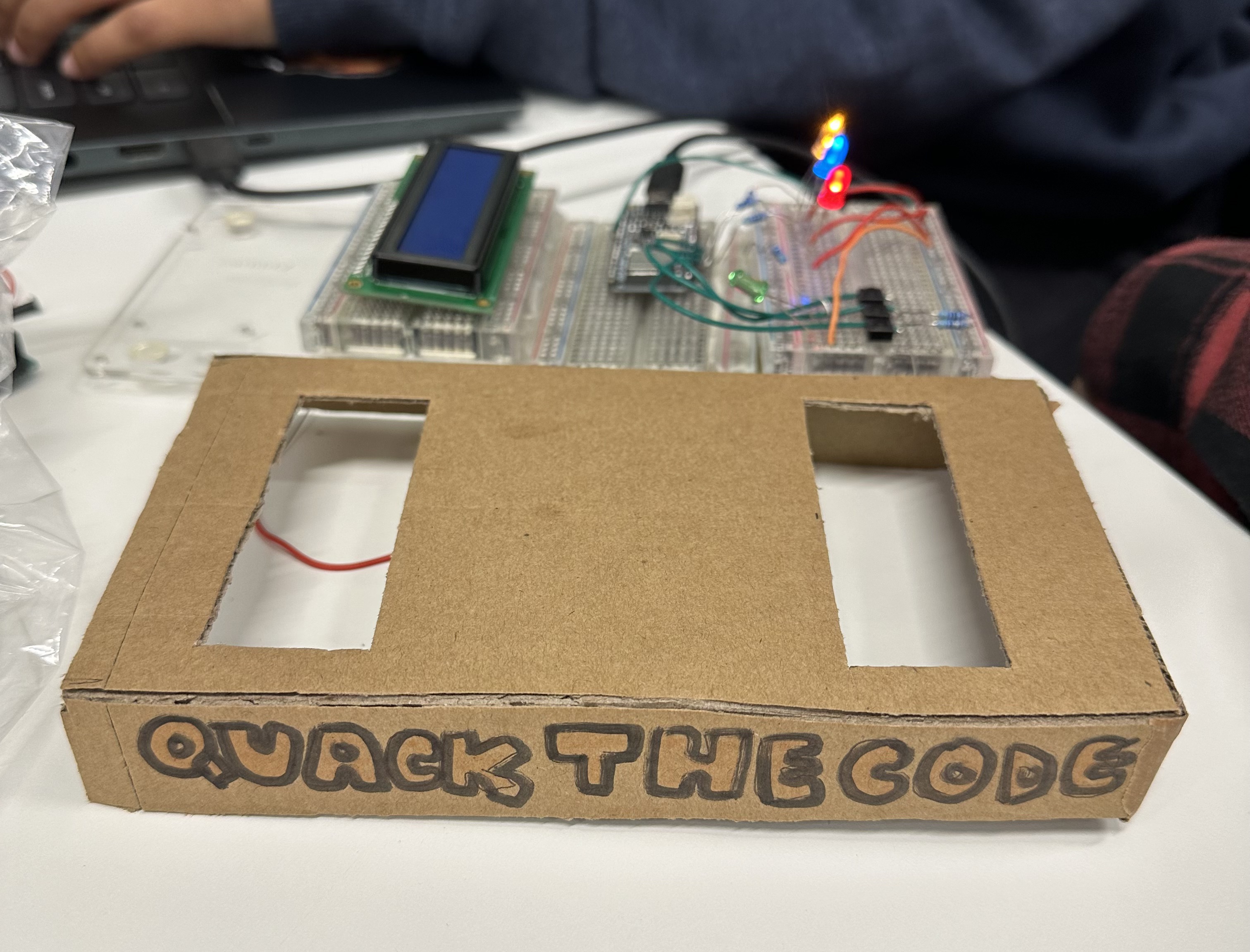
arduino and unfinished case cover
Inspiration + what it does
Our game is designed to promote collaborative learning and communication skills in children. Inspired by theories from Lev Vygotsky, it uses asymmetric gameplay where players must share information to solve puzzles in a similar style to 'Keep Talking and Nobody Explodes'. The puzzles focus on pattern recognition and logical thinking, aligning with developmental stages identified by Jean Piaget (our target market is 7-11 year olds). The game encourages thoughtful problem-solving in a low-stress environment. The use of physical interaction combined with visual and verbal elements supports multisensory learning, making the experience both engaging and educational.
How we built it
We built a hybrid physical-digital puzzle game using an Arduino and a simple digital manual. The physical device consists of LEDs (red, green, yellow, and blue) and buttons, which are used to display puzzle, receive player input and display if an answer is correct. The Arduino controls all core game logic, including generating puzzles, detecting inputs, and tracking mistakes. The code was made with C and Arduino IDE. Each puzzle is based on patterns such as sequences, colour mixing, etc. These puzzles are designed to be simple, visual, and suitable for children, using limited hardware creatively by varying colour, position, and blinking patterns.
The digital manual acts as a “Guide” for a second player. It is built with typst and displays the rules and instructions needed to solve each puzzle, creating an asymmetric gameplay experience where one player has information and the other has control. Communication between players is essential to succeed. Overall, we focused on creating an engaging, cooperative experience by combining simple electronics, clear visual design, and collaborative gameplay.
Challenges we ran into
- We faced challenges with available components and getting the code to work under time constraints. Finding a balance between puzzles that were not too difficult but not too easy was also an initial struggle and building a manual that was easy enough for children to navigate through.
What's next for Quack the Duck
- Adding complexity to puzzles and the necessary technology for them like a mistakes counter, a screen for the more complex puzzles described in the manual and more. We could also further develop the idea by replacing the manual with a storyline game with graphics/visual components that are more interesting and interactive for children. The digital side would communicate with the ESP32 via sensors measuring features such as orientation and modify the view according to that. the game so that both players get a turn instructing and


Log in or sign up for Devpost to join the conversation.