Inspiration
Quantum computing is rapidly advancing, but most students encounter it only through dense textbooks or inaccessible research papers. I wanted to change that — to take one of the most important quantum cryptography protocols, BB84, and make it interactive, visual, and approachable for anyone, regardless of their resources. This was about breaking the myth that quantum concepts are only for labs and PhDs.
What it does
QryptoTalk is a two-part learning and simulation platform:
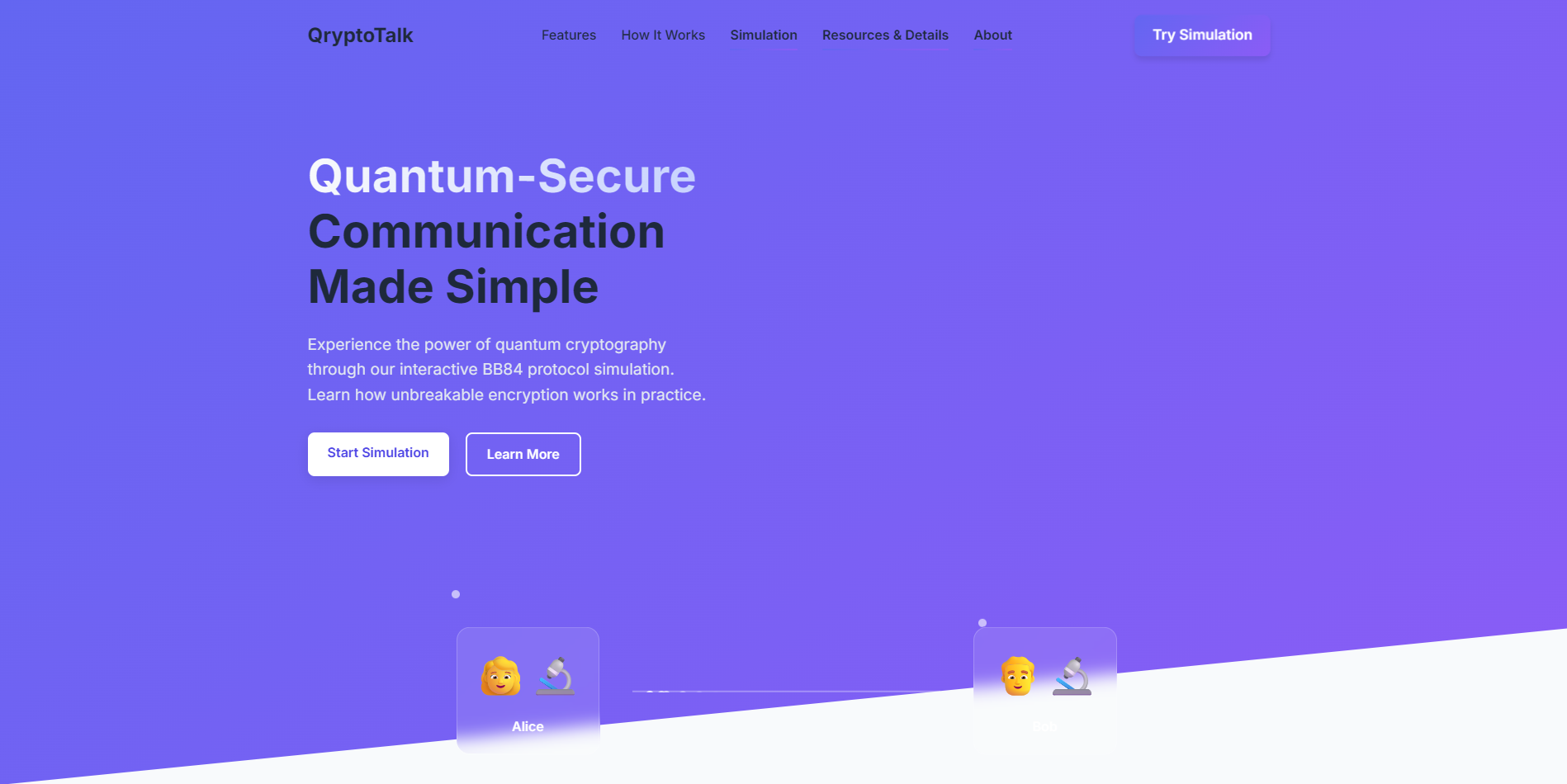
1) Web-Based BB84 Simulation – Lets users step through the quantum key distribution process visually, toggle eavesdropping (“Eve mode”), and see in real time how quantum uncertainty ensures data security. 2) Qiskit BB84 Model – A Python-based implementation of BB84 that uses IBM’s quantum framework to simulate key generation, intrusion detection via QBER, and auto-run testing.
Together, they make BB84 both teachable and technically accurate, bridging the gap between interactive learning and real quantum programming.
How we built it Frontend Simulation: HTML, CSS, JavaScript, ReactJS, deployed via Netlify. Quantum Model: Python with Qiskit for circuit simulation, logic for Eve attacks, QBER calculation, and retry logs. Focused on clean UI for the web app and readable, modular code for the Qiskit model so others can learn from and modify it.
Challenges we ran into
Translating the randomness of quantum behavior into a deterministic, browser-based environment. Keeping the UI simple while still showing all BB84 steps without overwhelming beginners. Debugging quantum state collapse behavior in the Qiskit model when simulating Eve’s interception. Working without any access to a real quantum lab or external mentor.
Accomplishments that we're proud of
Built a fully functional BB84 simulation that anyone can try in their browser without prior knowledge. Implemented a Qiskit model that captures the essence of BB84 and intrusion detection. Made quantum cryptography accessible for students, teachers, and self-learners worldwide. Proved that a 16-year-old student can independently build and share tools that bring complex science to life.
What we learned
How to explain abstract concepts like quantum superposition, measurement, and basis mismatch in an intuitive way. he nuances of mapping BB84 into both a visual interface and an actual quantum programming environment. That persistence and clarity matter far more than having expensive hardware when it comes to education.
What's next for QryptoTalk: Simulating the Quantum Future
Adding multi-protocol support (E91, BBM92) to expand beyond BB84. Integrating real quantum backend runs via IBM Quantum Experience. Creating a classroom version with guided tutorials for schools. Partnering with open-source science groups to host community challenges and quantum learning events.
Built With
- css
- html
- javascript
- netlify
- python


Log in or sign up for Devpost to join the conversation.