-
-
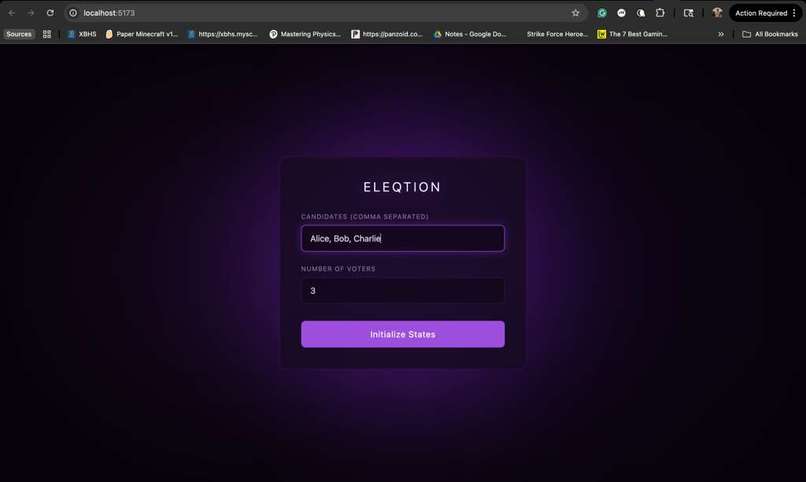
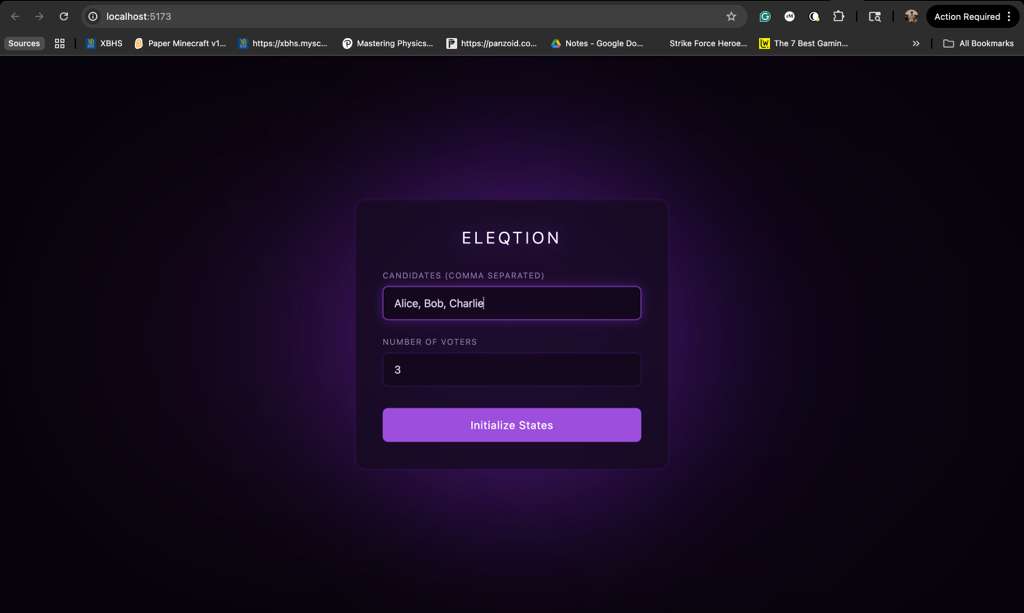
Webpage!
-

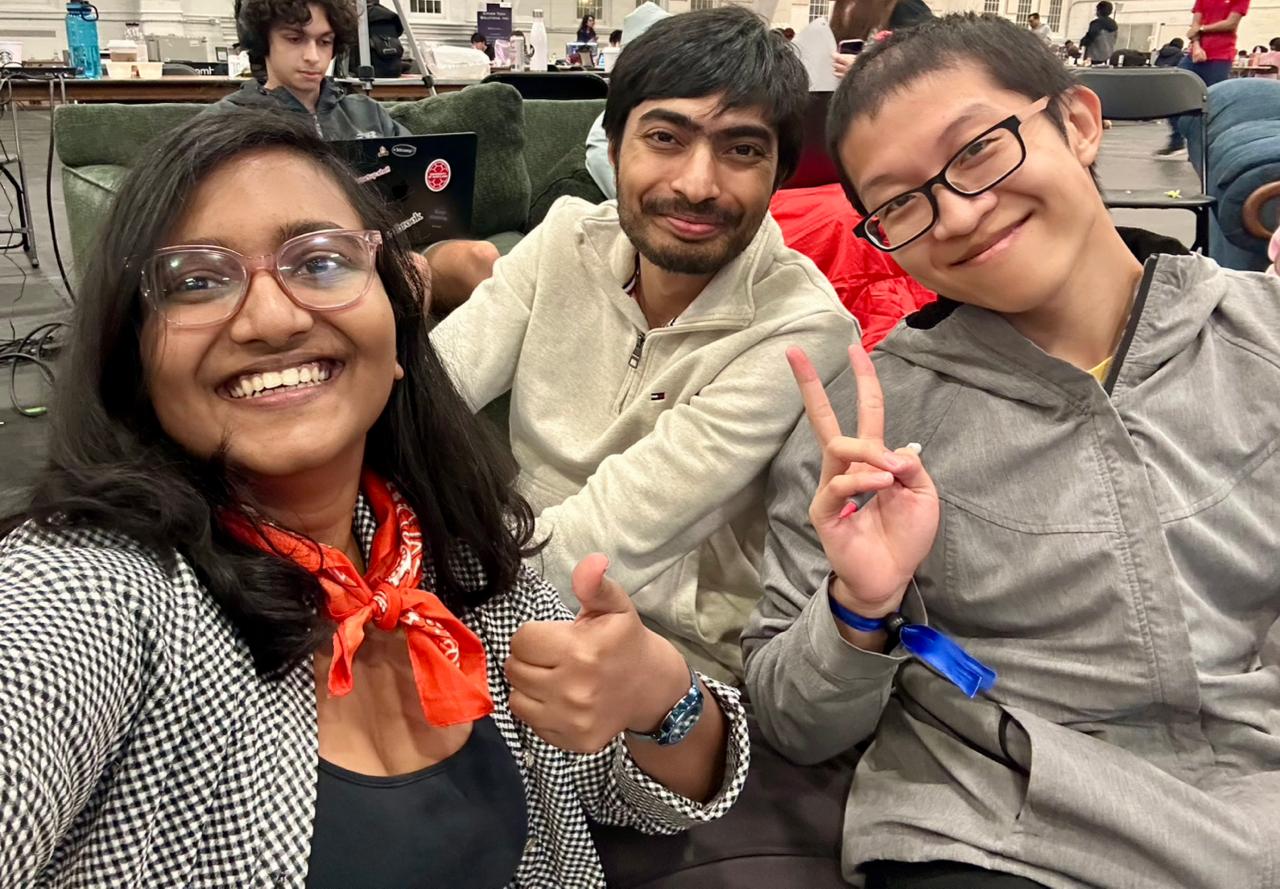
Hackers =)
-
Slides!
-
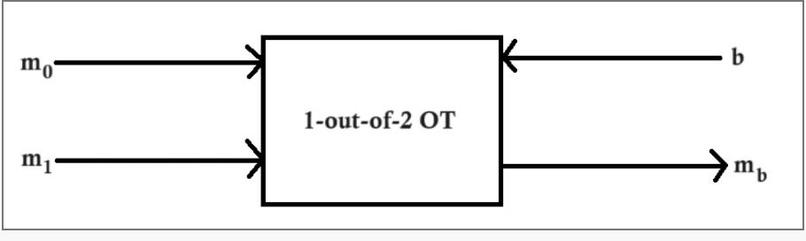
Cool OT!
Motivation
The idea of the quantum-secured vote tallying protocol, EleQt, wasn't the first our team came up with. We brainstormed a number of bleeding-edge concepts, from a 'quantum-VQE' first layer for classical neural networks to improved quantum key distribution (QKD) schemas, but always agreed: Our team needs to create an effective project that can be run not far in the future on fault tolerant quantum computers, but right now, in the NISQ era. Prakriti suggested that we focus on the recent quantum developments in oblivious transfer (OT) protocols, which have already been leveraged for fraud detection today. OT protocols are used for secure multi-party computation. Elections are the core of democracy and with recent advancements in quantum technologies, a malicious party could try to rig elections once Shor's algorithm is able to practically break currently used classical cryptography. Hence, we decided to demonstrate the use of QOT by creating a QSVP: Quantum Secure Voting Protocol, and the idea to merge this cryptographic protocol with the fundamentally secure key distribution possible with QKD to enable trustless, but verifiable, vote tallying was born.
Challenges
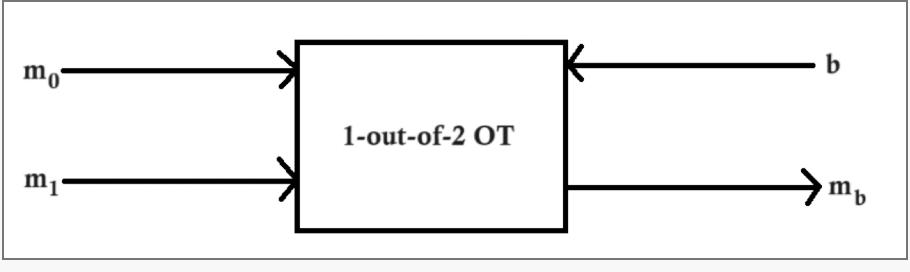
Certain issues made themselves known immediately. The original BBCS '2-to-1' protocol involved with OT is meant to be a trustless communication protocol wherein the sender Alice provides two messages, known only to Alice, and the receiver Bob selects one of the two messages, the selection of which is known only to Bob. Jonathan noted that though it is trivial to show that gate universality (NOT, AND) is achievable through this protocol, it is not so simple to demonstrate that its privacy guarantees are similarly preserved. Additionally, it was not clear how one could properly scale this to a campaign with m candidates and n voters (hereby denoted an (m,n) campaign)
Breakthrough
The team eventually found a promising resolution to all of our issues in the form of the GMW protocol with ZKP proofs, which preserves multi-party privacy and voter integrity respectively, for collaborative computing with a QOT protocol. Along with further research, where Pratham established that the E-91 quantum key distribution method would indeed function within the classical protocol. It remained for us to implement the quantum oblivious transfer protocol (QOT) within an (m,n) voting campaign.
Conclusion
The team established, through real-world implementation on IBM hardware and Qiskit simulation, that the EleQt protocol is fully functional and scalable. Without using computationally expensive blockchain technology, a trustless, quantum-secure electronic verification of vote-tallying is possible in the near future.

Log in or sign up for Devpost to join the conversation.