
Inspiration
We took on this challenge to test our computational thinking and push our Python skills to the limit. Choosing a fair and sustainable meeting point for 13 global offices felt like the perfect problem to solve — real-world impact with a clear optimization twist.
What it does
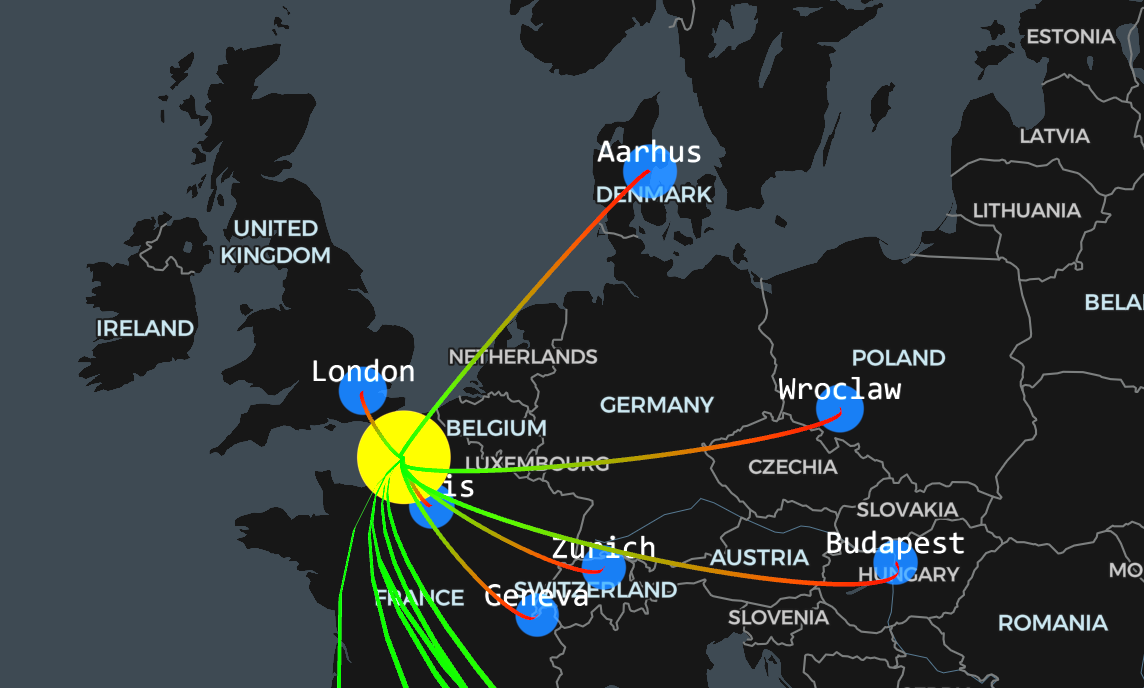
Our algorithm ingests flight and location data (via the OAG databases) and calculates: 🌍 Total CO₂ emissions, ✈️ Mean distance travelled, 💰 Estimated travel cost. It then uses adjustable sliders to weight each factor, allowing teams to decide whether they want to prioritize carbon efficiency, fairness, or budget — and instantly see which host location performs best.
How we built it
Backend: Python (pandas, NumPy, and our custom optimization logic) Frontend: Streamlit for interactivity and live updates Map Visualization: Pydeck for an immersive, data-driven world view of candidate cities
Challenges we ran into
Our database crashed mid-development, forcing us to rebuild the dataset manually (the real boss level of this project). Data cleaning and API connections turned into a mini-odyssey. Getting the frontend and backend to sync smoothly under time pressure.
Accomplishments that we're proud of
We actually got the optimization algorithm running and stable! Built a clean, interactive frontend that feels ready for production. Designed a weighting system that lets users explore trade-offs in real time
What we learned
Airline databases are horrific. (We stand by this.) Real data rarely behaves — but when it does, it’s glorious. UX and backend logic need to evolve together for a tool like this to feel intuitive.
What’s next for QRT — Meeting in the Middle
We plan to: Build an AI-driven suggestion system that learns from past meetings and expand to multi-site hybrid meetings and carbon offset recommendations.
Built With
- oag
- pydeck
- python
- streamlit


Log in or sign up for Devpost to join the conversation.