-
-
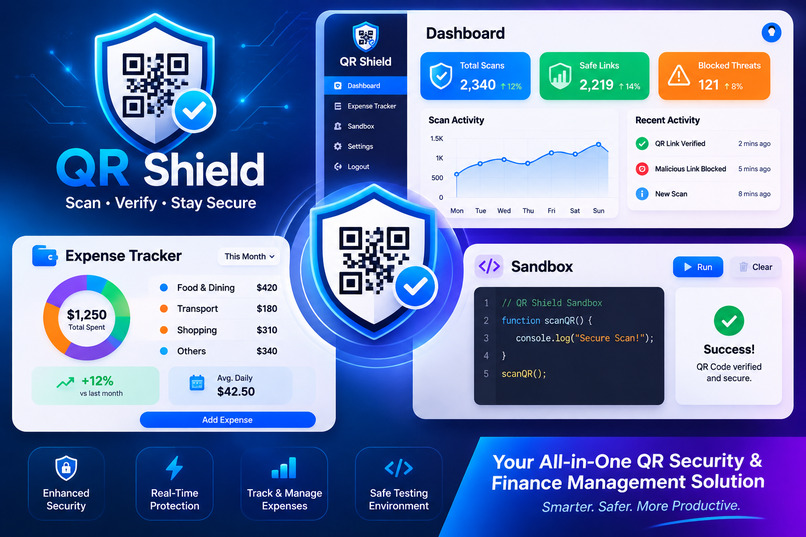
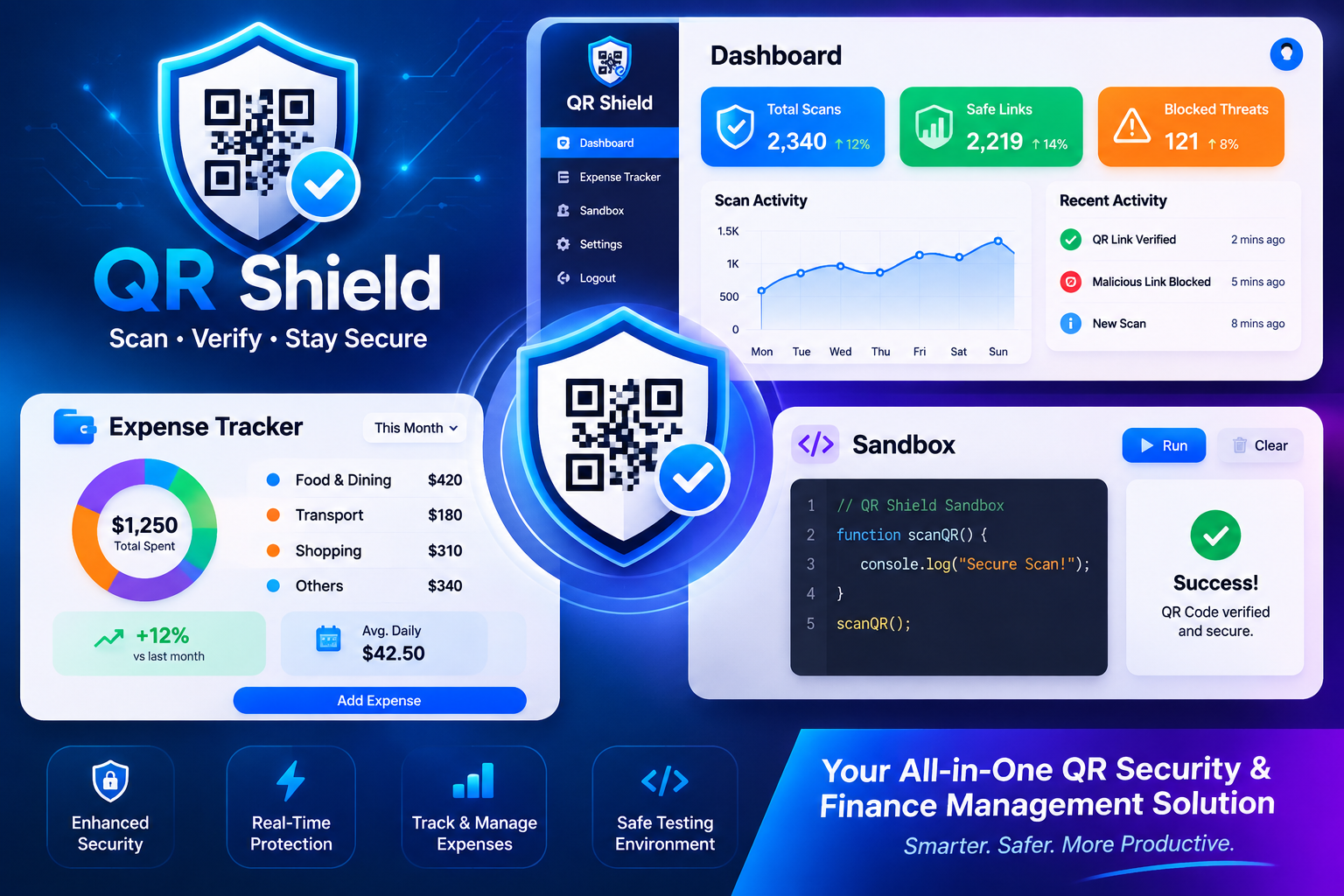
QR Shield – Scan, Verify, Stay Secure and Smarter,Safer,More Productive
QRShield Scan Smart. Stay Safe.
QR codes have become part of everyday life. We use them to make payments, access websites, view menus, and share information. However, not every QR code leads to a trustworthy destination. A malicious QR code can redirect someone to a phishing website, a fraudulent payment page, or another unsafe link.
I wanted to address a simple but important problem:people should understand where a QR code leads before they trust it.
That idea inspired QRShield, a QR code security platform designed to make scanning safer by analyzing QR codes and helping users recognize potential risks.
What It Does
QRShield allows users to scan QR codes using a camera or upload a QR code image. It extracts and analyzes the encoded content, identifies suspicious indicators, and presents a risk report to help users make informed decisions.
The platform also includes features such as:
- QR code scanning and image upload.
- Detection of suspicious links and potentially unsafe content.
- Risk analysis with explanations to help users understand warnings.
- Support for common QR formats, including URLs, Wi-Fi information, and PayPal-related content.
- Scan history and a dashboard for reviewing previous activity.
- PayPal Developer Sandbox integration for demonstrating safer payment workflows.
- AI-assisted analysis to support the security experience.
QRShield is designed as a decision-support tool. It helps users identify warning signs, but it does not guarantee that every QR code is safe or malicious.
How I Built It
I developed QRShield as a web application using "Next.js and React", with "TypeScript" for reliable application logic.
The backend uses "Prisma" and a "Supabase PostgreSQL database" to manage application data. The QR analysis engine processes decoded content and checks for suspicious patterns. AI integration supports the analysis experience by helping explain potential security concerns.
I also integrated the "PayPal Developer Platform Sandbox" to demonstrate payment-related workflows without using real money. This made it possible to explore how payment security could fit into a QR code protection platform.
The application was deployed using "Vercel", making the project accessible through a public web link.
Challenges I Faced
One of the biggest challenges was making QR analysis useful without creating unnecessary false alarms. A link can look unusual without necessarily being malicious, so the platform needed to communicate uncertainty clearly. Another challenge was integrating different technologies into one working application. QR scanning, image uploads, backend analysis, database operations, AI integration, and PayPal Sandbox workflows all needed to work together. I also had to pay attention to payment safety. A security platform should never automatically authorize a payment simply because a QR code contains payment information. Clear user confirmation and honest handling of sandbox or simulated payment flows were important design considerations. Testing and deployment presented additional challenges, particularly when working with database connectivity, environment variables, and production configuration.
What I Learned
Building QRShield helped me improve my understanding of full-stack development, API integration, database management, and application deployment. I learned how to connect frontend experiences with backend security logic, work with third-party developer platforms, and design features that communicate risk without making misleading promises. Most importantly, I learned that cybersecurity tools should not only detect possible threats they should also help people understand them and make better decisions.
What's Next
I would like to continue improving QRShield with more advanced threat intelligence, broader QR format support, stronger URL analysis, improved reporting, and additional security checks. My long-term goal is to make QRShield a practical security companion that helps people scan with greater awareness and confidence.
QRShield : Scan Smart. Stay Safe.
Built With
- ai
- analysis
- api
- cybersecurity
- detection
- full-stack
- gemini
- image
- integration
- javascript
- next.js
- paypal
- phishing
- postgresql
- prisma
- qr
- react
- risk
- sandbox
- security
- supabase
- typescript
- url
- vercel
- web
