-
-
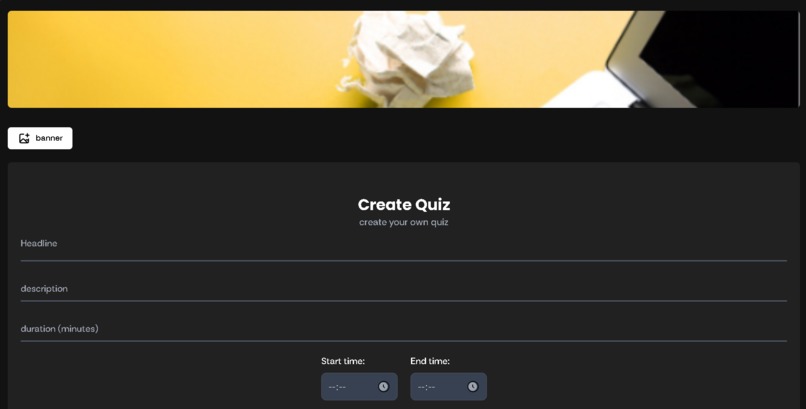
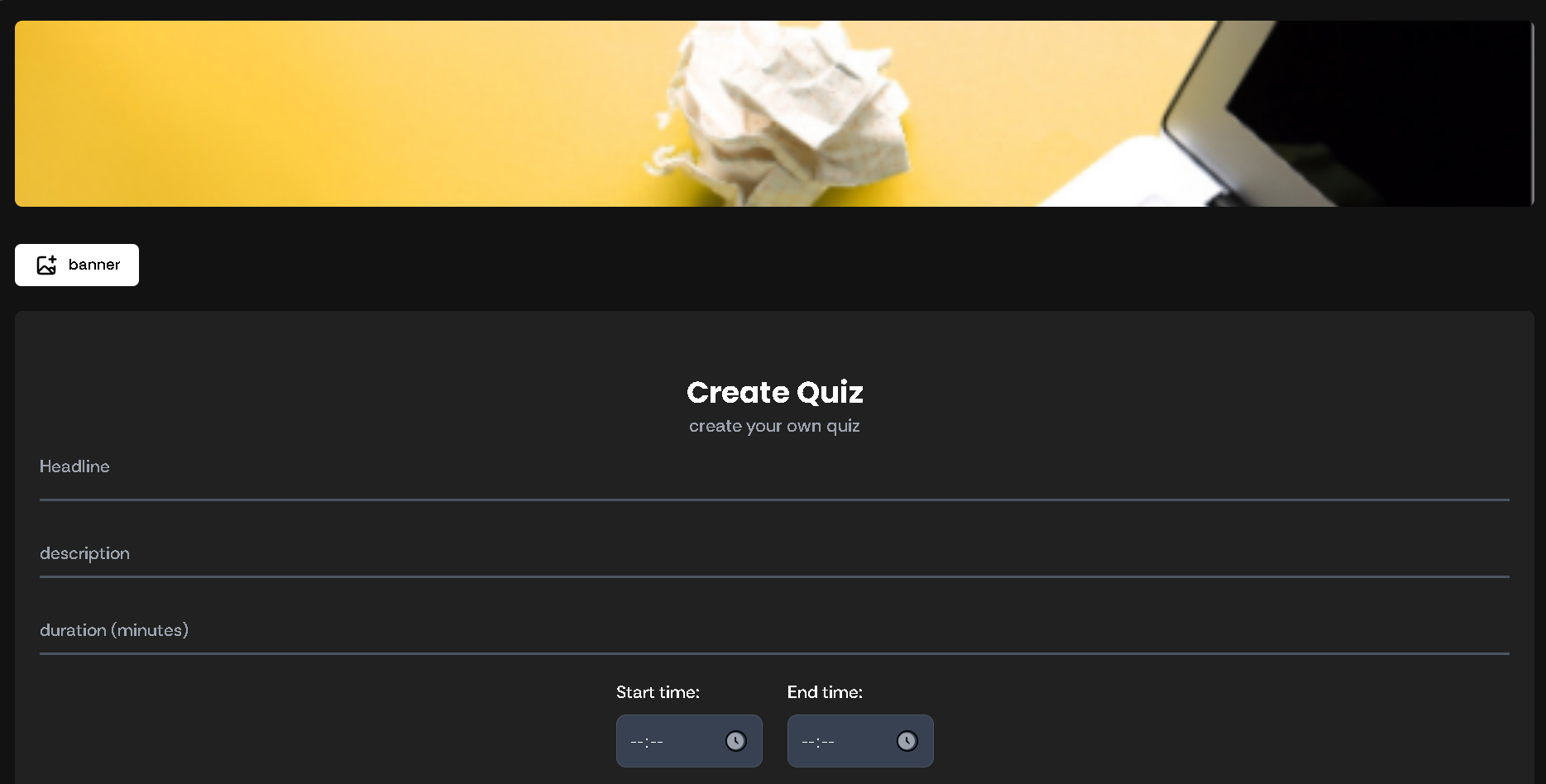
Create quiz
-
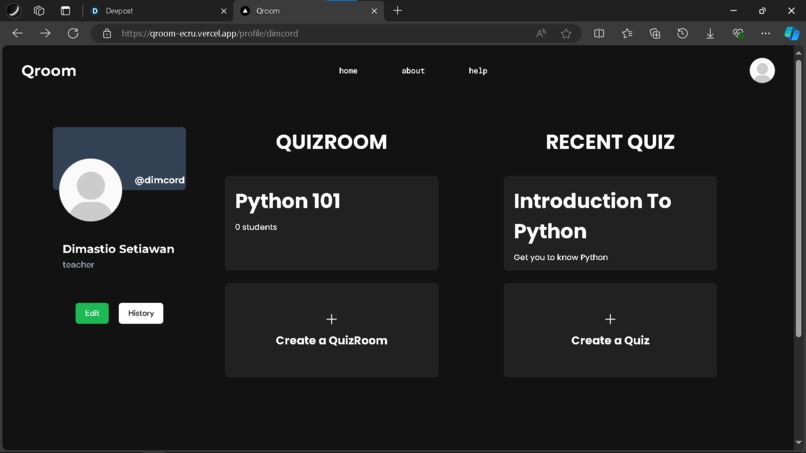
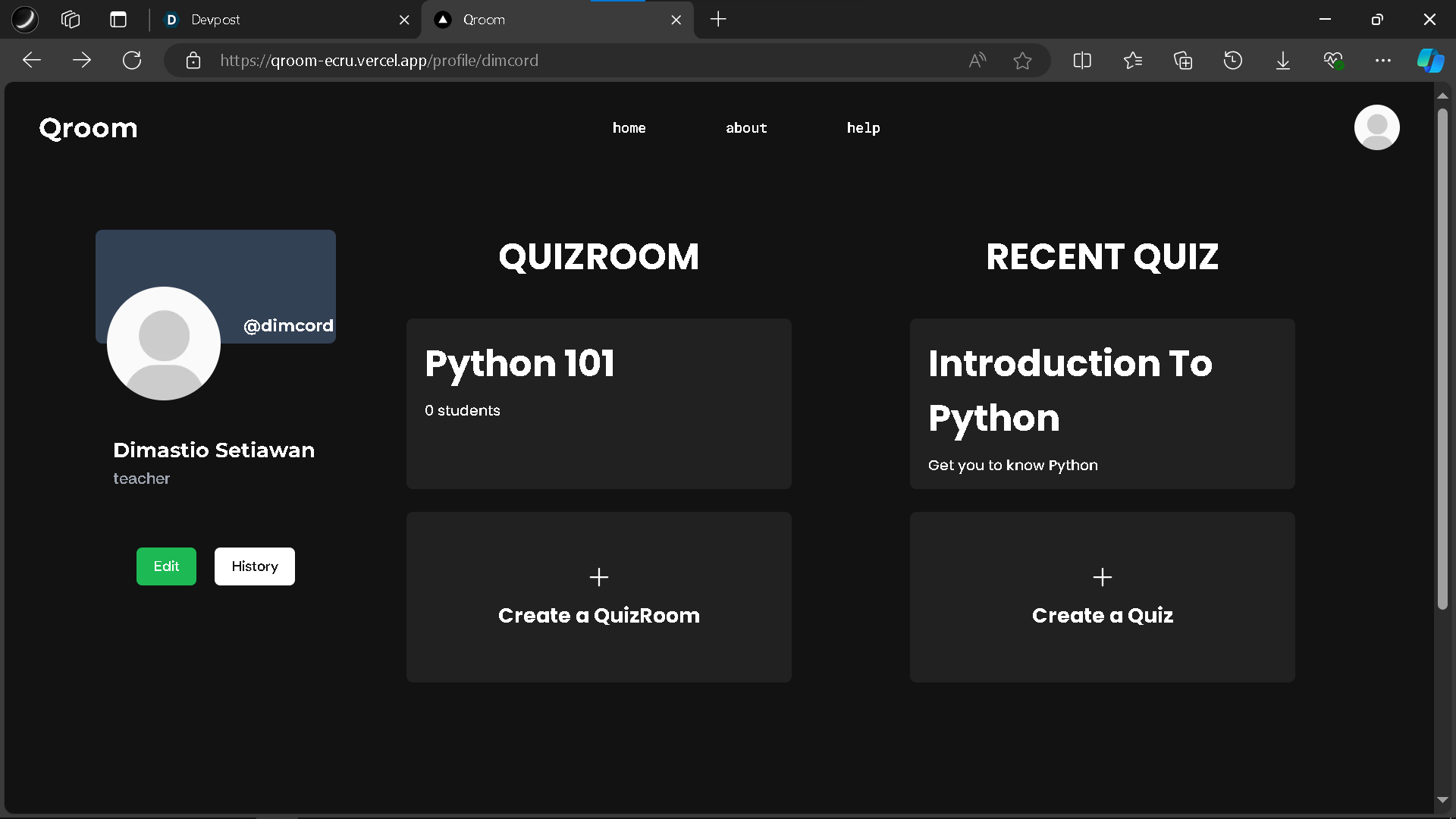
Profile page
-
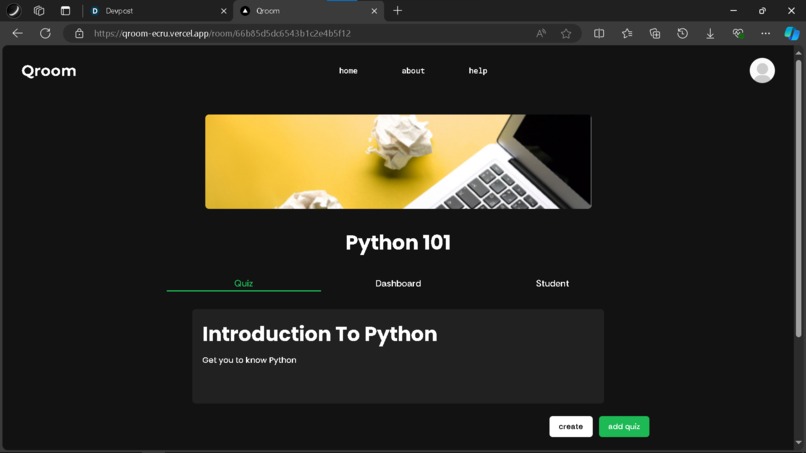
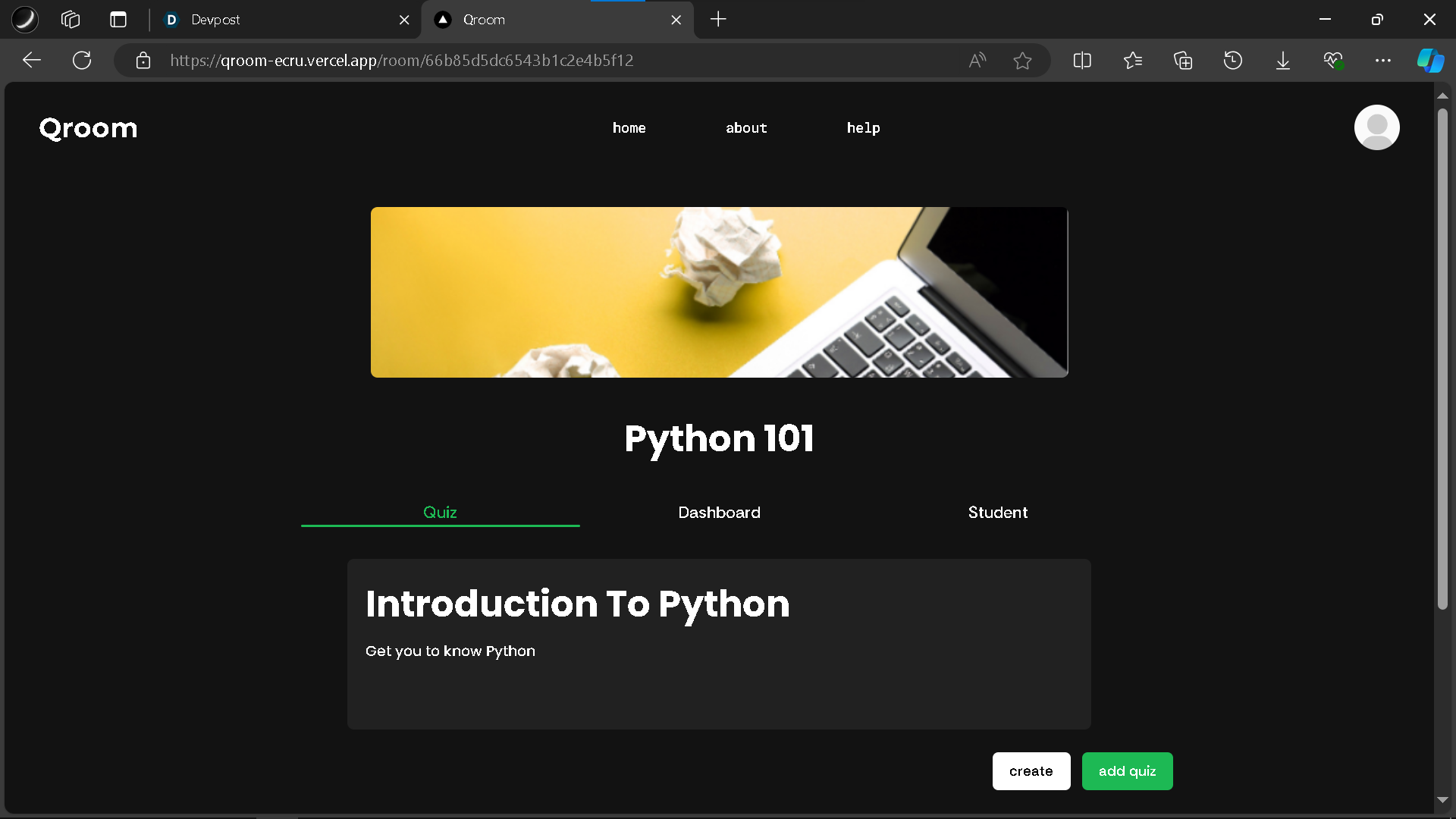
Quizroom
-
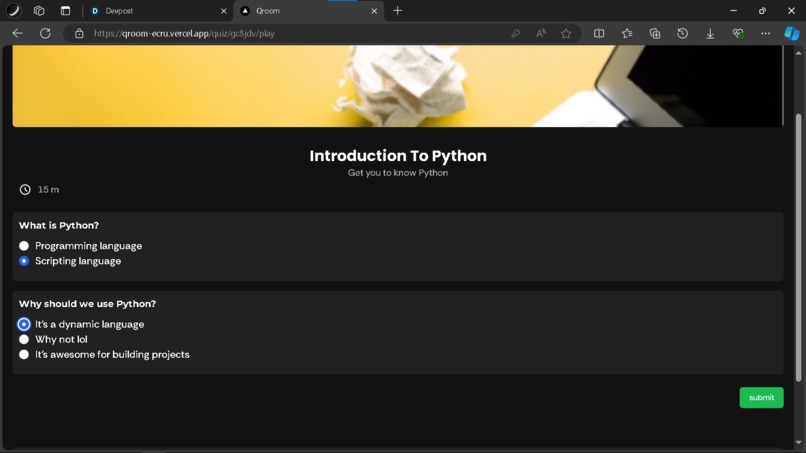
quiz page

Inspiration
Paper-based tests have a substantial environmental impact, given the large amounts of paper used in academic contexts. Paper production is a resource-intensive process that requires not only tree harvesting but also significant water and energy consumption. According to reports, paper accounts for around 26% of total trash in landfills, and the production of paper leads to deforestation, air pollution, and water waste. The educational industry, with its reliance on paper for tests and other resources, makes a significant contribution to this problem. Efforts to reduce paper use, such as shifting to digital exam forms, can benefit the environment. The Environmental Paper Network emphasizes the significance of lowering paper usage and boosting recycled content in order to reduce the industry's environmental impact.
While online learning is flexible and accessible, it also presents its own set of obstacles, particularly when quizzes are involved. Students frequently encounter technical glitches that break the flow of quizzes, causing irritation and fear. The absence of instant support or feedback, which is easily available in a regular classroom context, can also contribute to stress. Furthermore, the necessity for self-discipline in managing study schedules in the absence of a physical classroom frequently results in procrastination and uneven preparation. Distractions at home, fluctuating internet connectivity, and the lack of a specialized learning setting can all compound the situation. Despite these challenges, online learning continues to expand, indicating that the benefits might outweigh the drawbacks with the right measures in place.
Cheating on online tests is a serious concern for educational institutions, particularly with the rise of e-learning platforms. According to studies, a large majority of pupils cheat on unproctored online tests. Several solutions have been implemented to address this issue. For example, the usage of remote proctoring services has been shown to lower the likelihood of cheating. These services monitor students using webcams and screen-sharing technologies to assure exam integrity. Furthermore, creating tests that demand higher-order thinking and application of knowledge rather than rote memorization can deter cheating by making it more difficult to easily look up answers.
What it does
Qroom lets you to create and manage quizzes seamlessly by enabling you to assign students and quizzes into classes called Quizrooms. To prevent students from cheating in quizzes, teachers can set quizzes into a safe exam mode which blocks access to the quiz if tab switch is detected in student's browser.
How we built it
We used NextJS framework to build Qroom and make it as seamless as posible by implementing a fully responsive interface which suits any device. We hosted our serverless database on MongoDB Atlas and deployed our webapp on Vercel.
Challenges we ran into
Ideation is by far the most difficult phase we endured during the hackathon. We also ran into some difficulties in using modules that we have no prior experience with.
Built With
- javascript
- mongodb
- nextjs

Log in or sign up for Devpost to join the conversation.