Inspiration
The inspiration came from Tahoe Quantum. Will Araujo, Tahoe-quantum's founder, had a horrendous experience with wildfires earlier in his life that threatened his newborn son. Hearing about his experience spurred our creation of Qooked!; In order to create a faster basis for first responders.
What it does
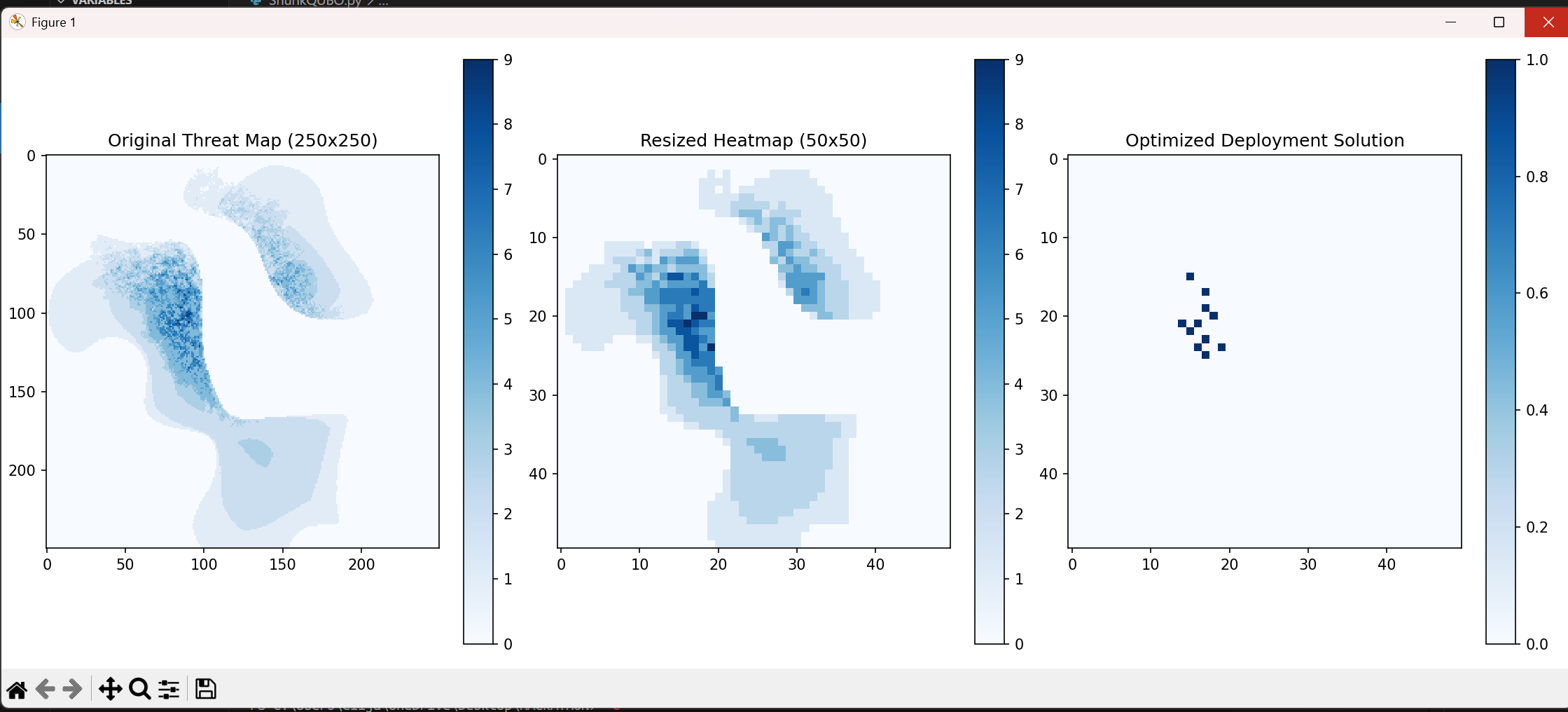
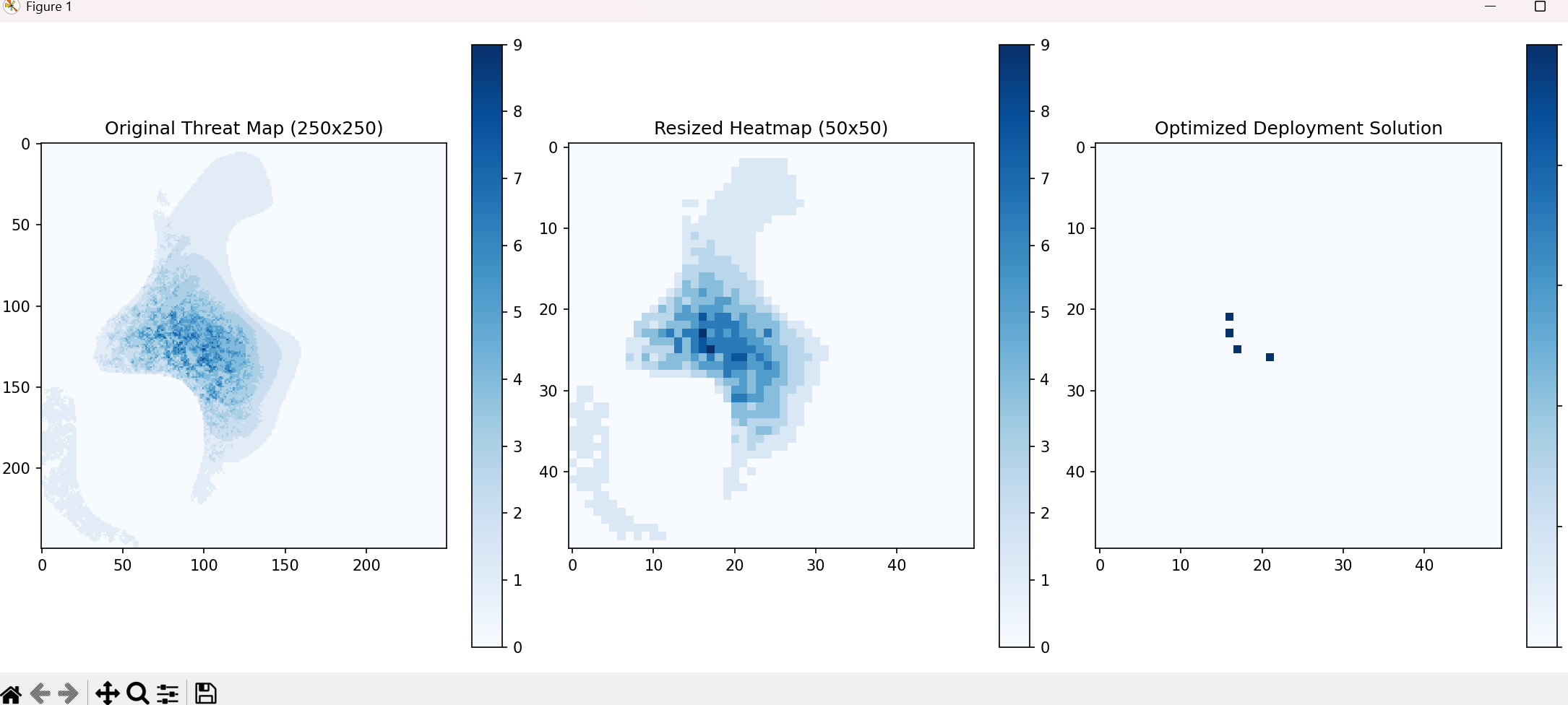
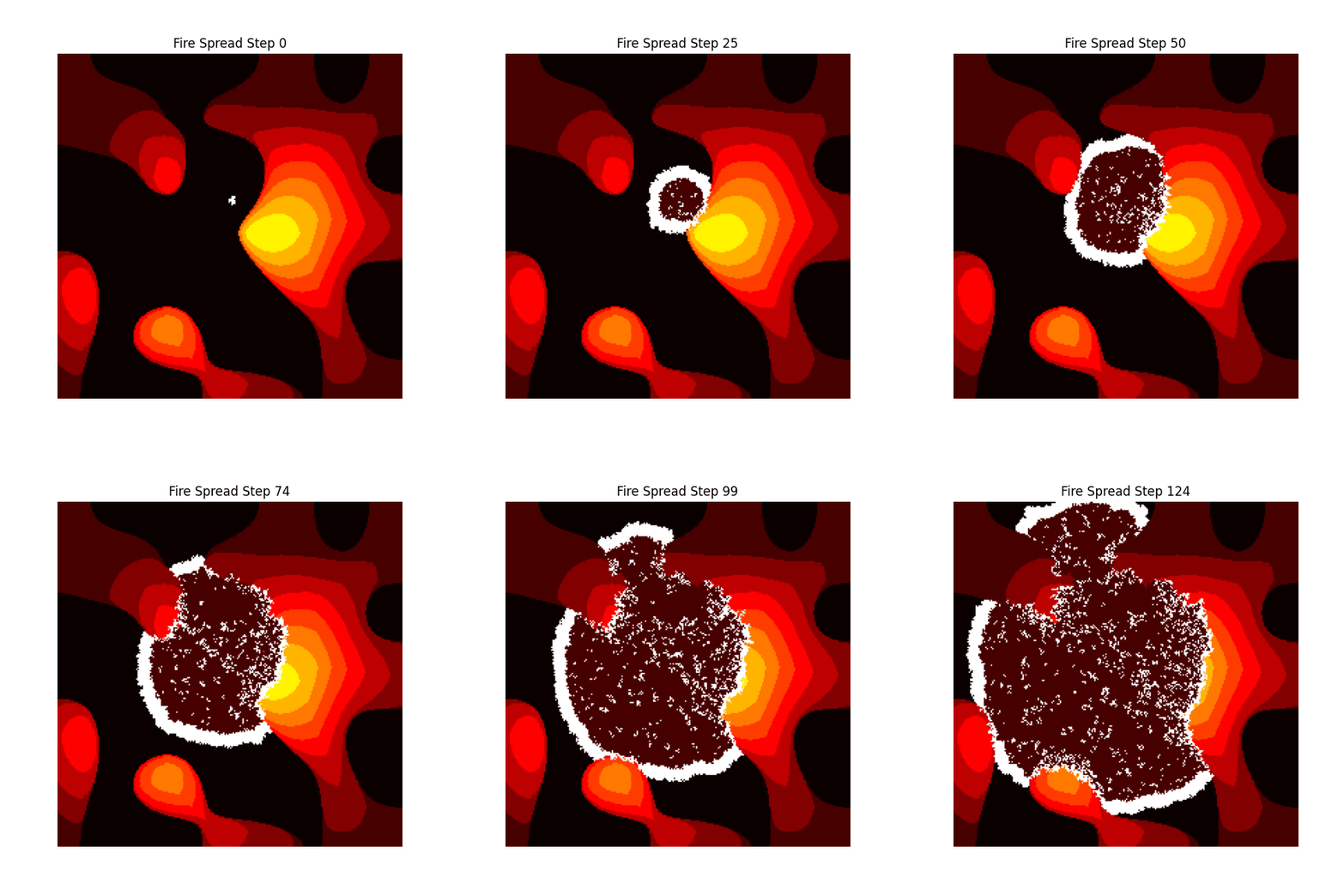
The project simulates the progression of wildfires through a city matrix based on terrain. It then assigns risk assessment values based on population density and likely future location of fires. Finally, we use this matrix and apply QUBO and quantum annealing to create a binary representation of the best location of first responders in the area.
How we built it
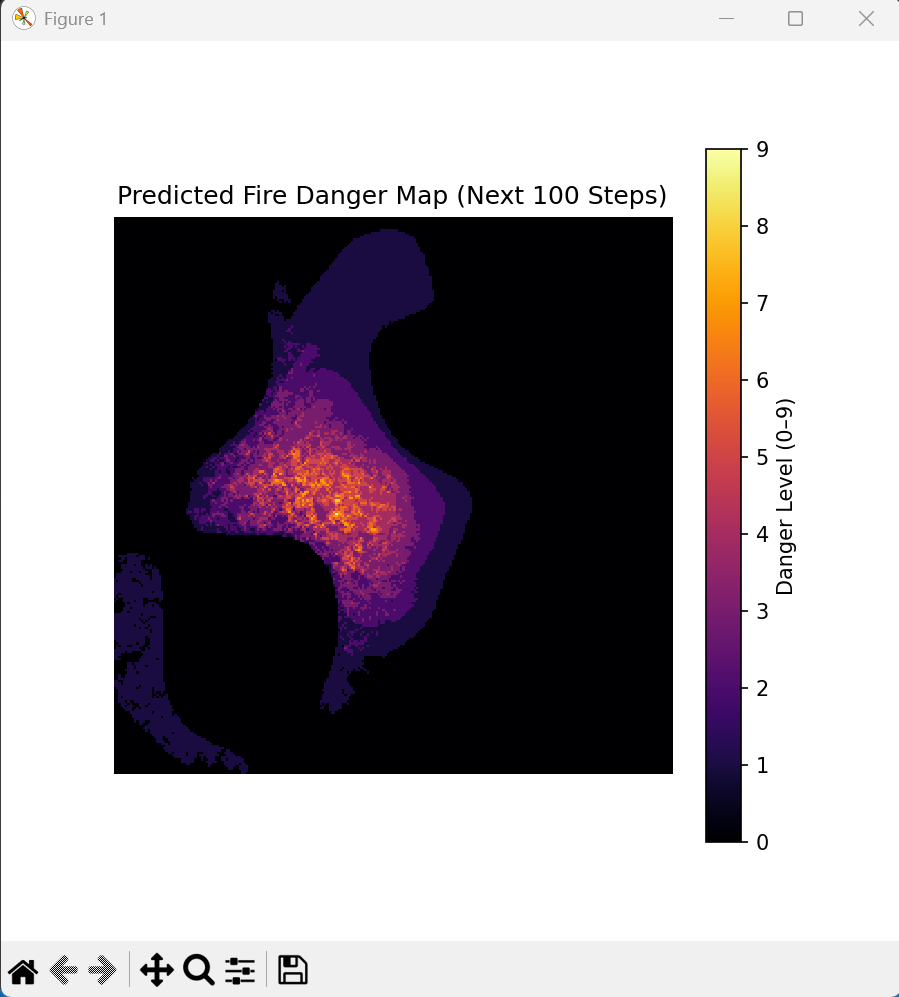
We separated our challenge into two separate parts to best utilize an effective method in which quantum computing will help to determine the proper course of action in preventing wildfires. The first section of our method is simulation, accurately plotting a randomly generated city and collection of forests/arid material using a matrix. The cities were represented by a population density from integers 0 to 9, and distributed so that denser cells were more likely to originate next to each other and away from forest/arid material. After creating the matrix, we then ran a simulation of fire spreading from a randomly determined forest origin. The probability of adjacent cells catching fire was determined by their weight in population density and material (arid material or not). Increased density and arid material increased the probability of fire spread to simulate how largely dense areas tend to increase fire propagation. Our main program, Firethreat.py, would allow one to create a random city, run the simulation of fire spread for n timesteps, and then return the most dangerous areas predicted in the next 100 timesteps as a heatmap. A fully implemented client program could further scout for more in depth variables such as topographical area, weather conditions, humidity, and wind speeds, which all further affect fire propagation to a more accurate degree. Finally, we converted our threat assessment matrix to QUBO; which is a representation of an optimization problem where the goal is to minimize the amount of energy used. Using quantum annealing, we solved the optimization, and outputted a matrix which positions each first responder in a spot where they can do the most good.
Challenges we ran into
We initially planned to build an entire interactive website, but as undergraduate sophomores, we were simply not experienced enough to make that happen. We also struggled for at least 8 hours when trying to understand Quantum Annealing, which was a large part of our project.
Accomplishments that we're proud of
Our most impressive component is definitely the simulation of fire spreading. We used real data to create an accurate representation of how a fire would spread in the real world. This simulation is the backbone that we use to apply the quantum computing.
What we learned
We learned that quantum computing has a wide variety of applications in the real world. We also learned how QUBO works in python, and how to simulate quantum bits without actually porting to a quantum computer.
What's next for Qooked! A Wildfire Simulation
Further application of this program would involve multiple key improvements in each of the two parts. For the classical computing program, the fire simulation would account for an input of other variables such as wind speed, humidity, topographical layout, and other weather conditions. Furthermore instead of running simulations on randomly generated city-like matrices, this program could be mapped to real world counties and cities, providing truly useful data on the spread of fires and emergency response. The second part of the program would be improved by running on an actual quantum computer rather than the simulated methods. This would allow for the heatmap matrices to stay truer too their size and optimal minimized solutions could be found much faster and more accurately. A fully implemented program would be able to process real world data sets when fires breakout, pinpoint their most likely paths of spread in the immediate future, and return the physically most optimal layout for emergency response to protect the wilderness and even more importantly, human lives and homes.
Built With
- pylib
- python
- vscode

Log in or sign up for Devpost to join the conversation.