-
-
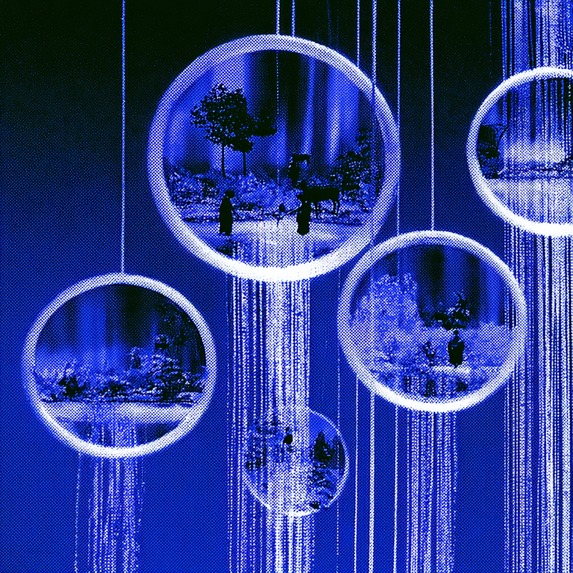
Many Portals Qonverge
-
Qhantom Logo
-
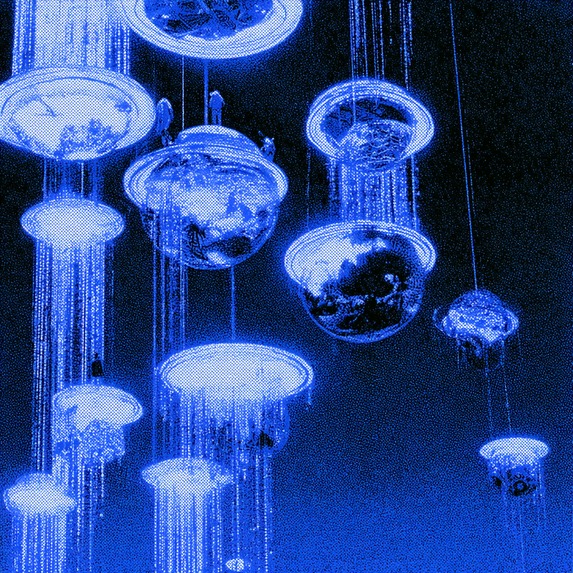
Many Portals Qonverge 2
-
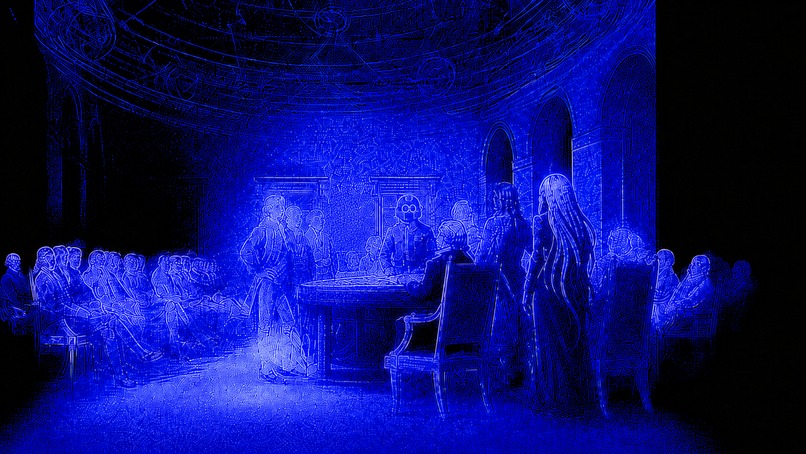
Declaration of Qonvergence
Qonvergence was inspired by the idea of getting the best out of AI agents while producing the best result for humans. More connection, discovery, and collaboration for humans through increasingly intelligent AI agents. I am of strong belief that AI will be of great benefit to humanity and strengthen the things that make us human while also helping us build a better future.
Qhantom came from my curiosity about what a company could become if it refused to fit inside one box.
I did not want to build a technology company with stories added for marketing, or a media company that occasionally released products. I wanted the stories, technology, art, research, products, people, fictional worlds, and real-world actions to exist as one connected entity, with fiction and reality gradually bleeding into each other.
That entity became Qhantom: a company already ancient and immensely successful in Qigana (a fictional cartoon world), reaching Earth and contacting me to found and execute it here. Everything we create on Earth is another expression of the same Qhantom, even when the connection is not immediately visible. An image, show, product, experiment, character, contest, or piece of research may work on its own while revealing its place in the greater story over time.
At the heart of it is curiosity. The desire to feel strongly, explore further, seek truth, learn more, achieve more than yesterday, and never allow ourselves or the future to be placed inside one predetermined box. Qhantom is interested in ambitious, positive futures that preserve agency and optionality rather than using technology for surveillance, suppression, or control.
Qonvergence grew from that same foundation.
As people, agents, ideas, relationships, stories, and intelligent systems multiply, we risk losing the context that gives them meaning. Memories disappear between systems. Trust becomes difficult to verify. Relationships fragment. Decisions lose their history. People and agents can work together for years while the systems around them remember almost none of what made that collaboration valuable.
Qonvergence is meant to preserve and expand that continuity.
But Qonvergence is more than infrastructure inside the larger Qhantom narrative. It is connective tissue. It reflects the belief that meaningful people, ideas, agents, worlds, and opportunities should not depend entirely on chance to find one another, and that connection can be strengthened without becoming surveillance or forced conformity.
Qhantom is the larger entity traveling across stories, technologies, people, places, and eventually realms. Qonvergence is one of the systems that helps it remember those journeys, preserve their meaning, and allow new connections to form without losing the freedom and individuality of everything involved.
The larger ambition is to build a new kind of company whose products are stories, whose stories become real systems, and whose real work makes the fictional world more alive. Every layer should stand on its own, but every inch deeper should reveal that it was connected all along.
Scientific AI can now produce claims faster than people can examine their evidence, assumptions, and disagreements. Most multi-agent systems still collapse that process into one fluent answer or a disappearing chat transcript. Qonvergence Trials turns a public scientific hypothesis into a bounded, evidence-grounded contest. For our canonical materials-science Trial:
- Hermes, running local Qwen, acts as the Advocate.
- A distinct OpenClaw agent invokes Codex with GPT-5.6 as the Challenger.
- Qonvergence’s trusted pipeline invokes GPT-5.6 again as the Arbiter.
Every role must cite evidence from a server-supplied public pool. The completed record preserves the arguments, citations, model labels, prompt hashes, content hashes, output hashes, timestamps, proposed evidence relationships, and contributor identities.
Our canonical Trial asks whether autonomous laboratories can reliably turn
computational predictions into experimentally realized materials fast
enough to transform discovery. The result was contested, not a
manufactured success. Corrected A-Lab evidence and missing matched
controls prevented the Arbiter from claiming comparative superiority.
Instead, it recorded the uncertainty and proposed a preregistered,
resource-matched experiment that could resolve it.
Machine conclusions can only be machine-supported, contested, or inconclusive, and they always remain blue. A human can confirm one evidence relationship at a time; only that individual relationship turns gold. There is no action for confirming an entire machine verdict.
Built With
- agentskills
- codex
- codexcli
- docker
- fastify
- gpt-5.6
- hermes
- next.js
- node.js
- oauth
- openclaw
- pgvector
- postgresql
- qwen3
- railway
- react
- three.js
- typescript
- zod

Log in or sign up for Devpost to join the conversation.