-
-
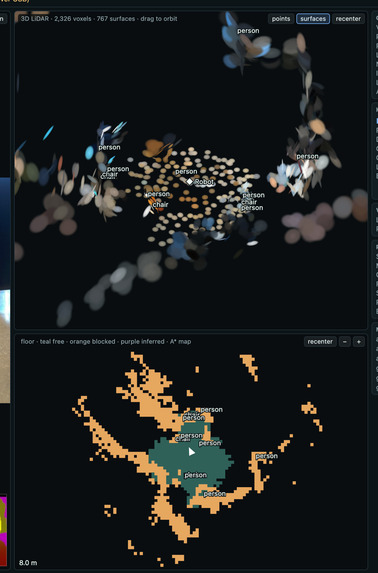
3d grid stored in the bot's memory
-
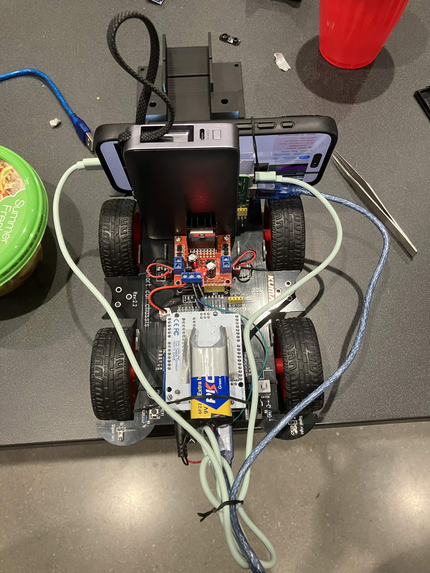
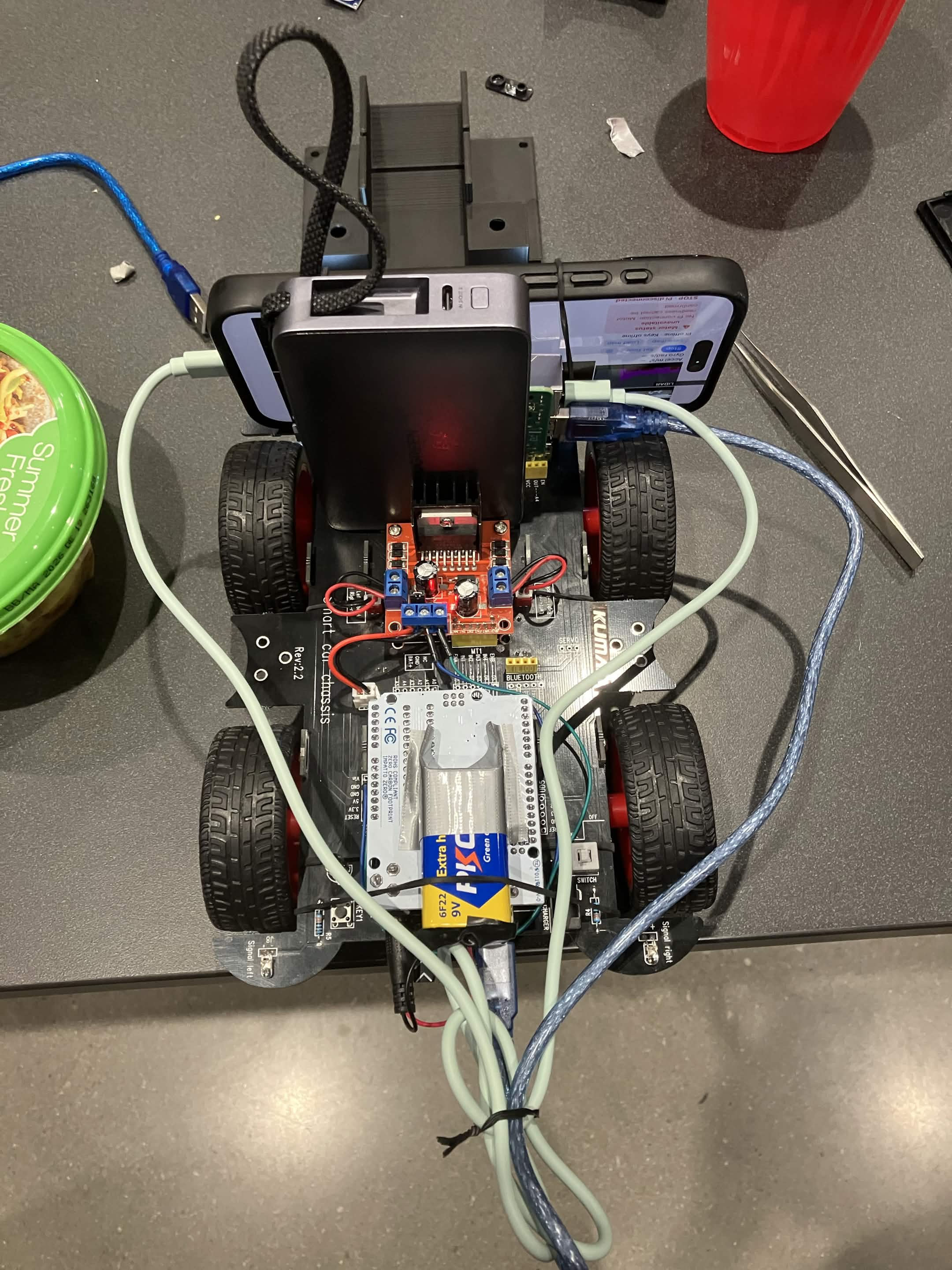
a prototype of the bot
-
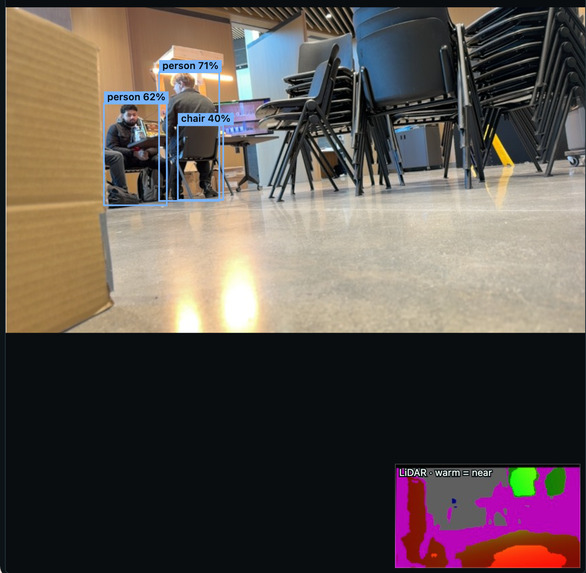
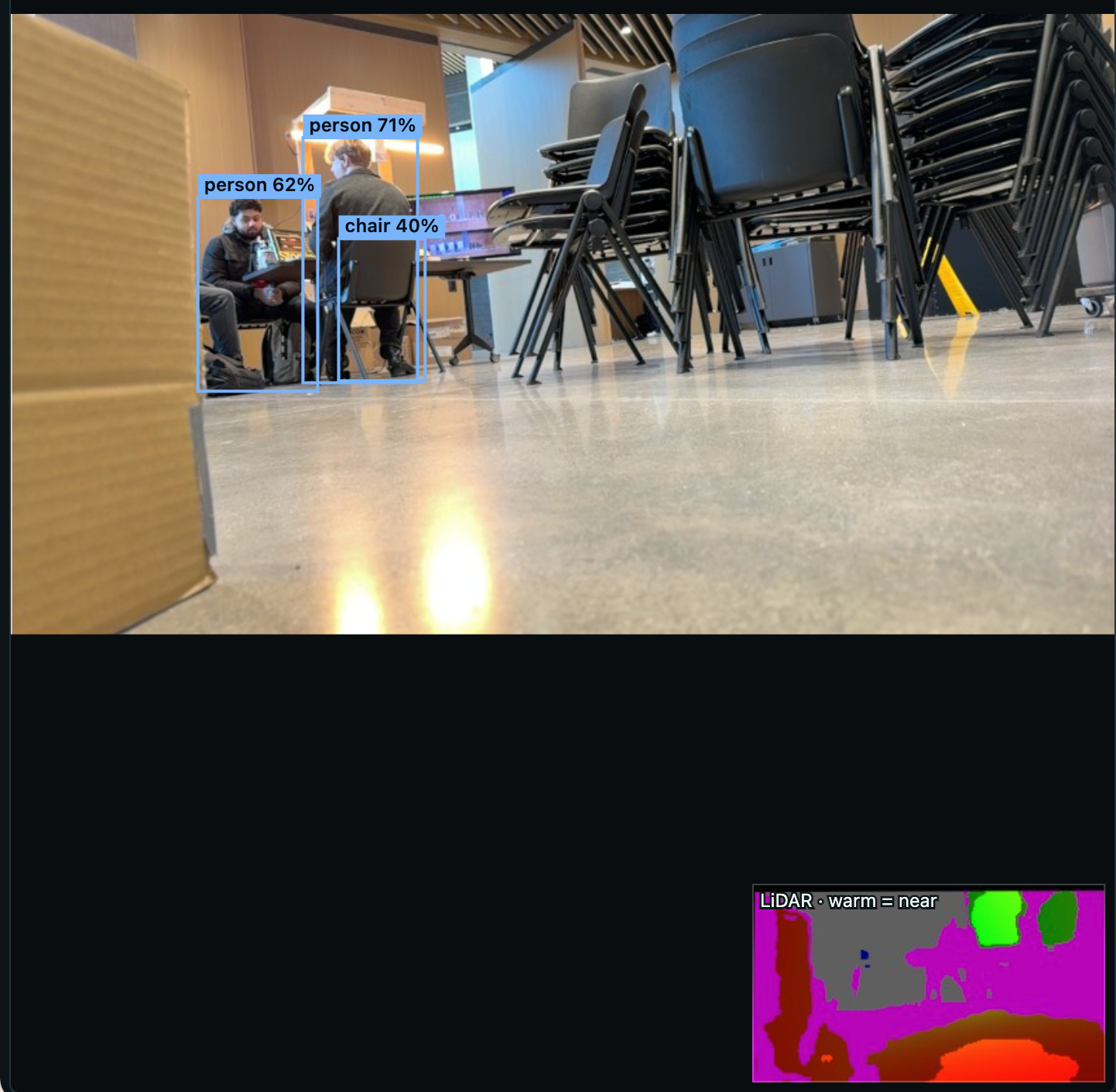
YOLO and LiDAR
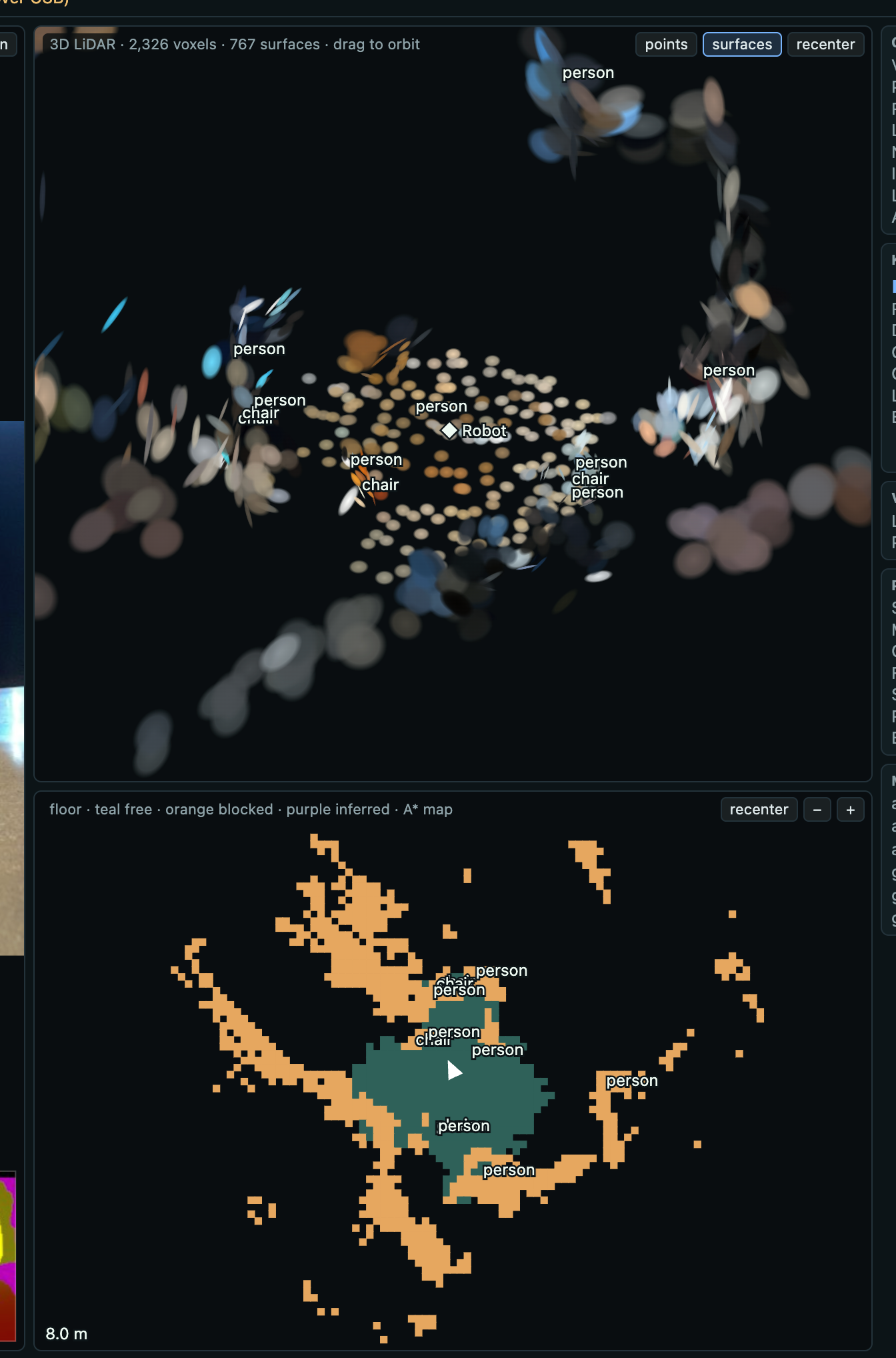
QNXplorer: a self-navigating rover that remembers where things are
Inspiration
Most hackathon "AI robots" are a thin layer over a cloud API, and they stop working when the Wi-Fi drops. We wanted a robot that hears you, sees the room, remembers where things are and drives itself there. Everything runs on the robot itself, with a separate loop for critical systems, on a real-time embedded OS, with no laptop and no internet. And saying "stop" always works.
What it does
Say "QNXplorer, go to the trash can" and QNXplorer:
- Hears you: speech-to-text with whisper.cpp, then a tiny trained intent classifier that copes with noisy transcripts like "for word" or "turn lift".
- Finds it: YOLOX-Nano object detection running on ONNX Runtime for QNX.
- Remembers it: QNXplorer maintains a 3D point cloud of its environment in memory, storing the position of objects detected through YOLO for future reference, even if they're not currently in sight
- Plans a route: An iPhone on the robot streams LiDAR and ARKit pose. QNXplorer builds an occupancy map and plans a route around walls with A*, sized to the car's footprint. When the route is blocked, it backs up and re-plans from where it is.
- Drives there: It checks its heading against ARKit after every turn and stops at the object.
QNXplorer also has WASD teleop, spoken replies through the phone, and a gesture-driven pet mode built on MediaPipe Hands.
Important technical components:
- LiDAR runs in a safe loop separate from YOLO and Whisper inference.
- Classifies different types of targets (stationary, permanent, object).
- FAILSAFE, cannot hit obstacles even if AI fails.
- Object-aware, searches for objects even behind walls.
Stop always wins
Every motion command goes through one native C motor server that runs at real-time priority. A spoken "stop", a ✋, a tip-over, a LiDAR guard or a watchdog timeout halts the wheels at once, and no AI component can override it. If any process crashes or goes quiet, the car stops.
How we built it
- Brain: Raspberry Pi 5 running QNX 8.0. All on-robot code is native C/C++ built with
qcc: the motor server, voice, intent classifier, go-to planner, detectors and LiDAR guard. - Muscles: an Arduino Uno driving DC gearmotors. The Pi decides; the Uno only moves.
- Sensors: an iPhone for camera, LiDAR, IMU and pose.
- AI: ONNX Runtime (YOLOX-Nano, MiDaS), whisper.cpp, MediaPipe, and our own n-gram intent classifier. We trained it in Python and exported it to a C header, so it runs in microseconds.
- Mission control: a browser dashboard and room simulator. You draw walls, place objects and test voice commands against a virtual car that runs our real firmware and C code.
Challenges
- Timed DC motors with no encoders, so we correct turns using ARKit.
- Fitting speech, vision and planning onto 4 cores without starving the real-time loops.
- Routing a car through tight gaps on a coarse map.
- Getting non-LiPo batteries to power strong motors
What's next
Wheel encoders, more object classes, and multi-room memory.
Built With
- arduino
- arkit
- gaussian-splatt
- hardware
- lidar
- qnx
- raspberry-pi
- whisper
- yolo


