Inspiration
Our inspiration came from the idea that the spaces we live and work in have a direct impact on our wellbeing, productivity, and mindset. Feng Shui is an ancient practice that focuses on arranging environments to promote balance and harmony through the flow of energy, or Qi. However, applying Feng Shui principles can be difficult for people who are unfamiliar with the concepts.
We wanted to explore how modern technology—specifically computer vision and AI—could make Feng Shui easier to understand and apply. Our goal was to create a tool that allows users to scan their room and receive simple, actionable recommendations to improve the energy and balance of their space.
What it does
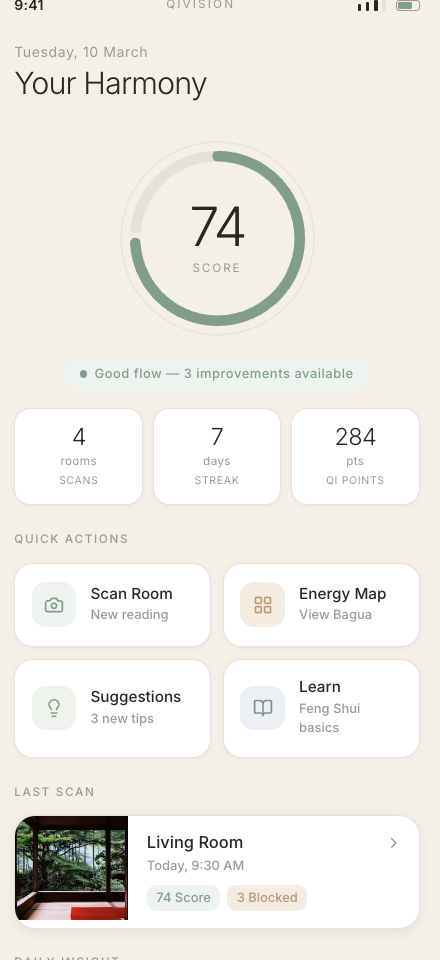
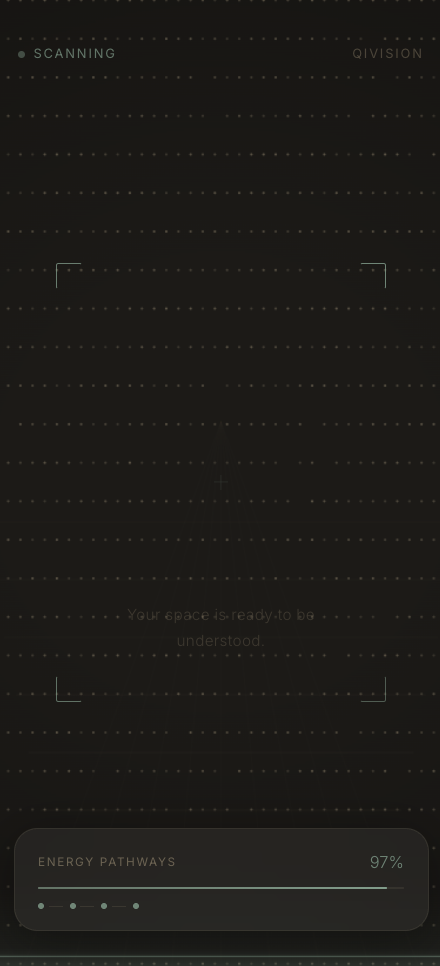
QiVision is an AI-powered mobile application that analyzes the Feng Shui of a room. Users can scan their space using their camera, and the app evaluates the layout, objects, and spatial arrangement within the room.
The app then provides:
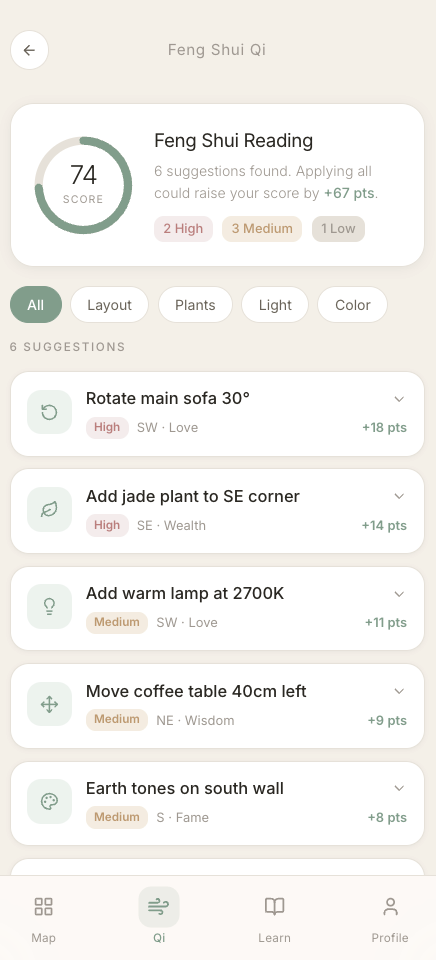
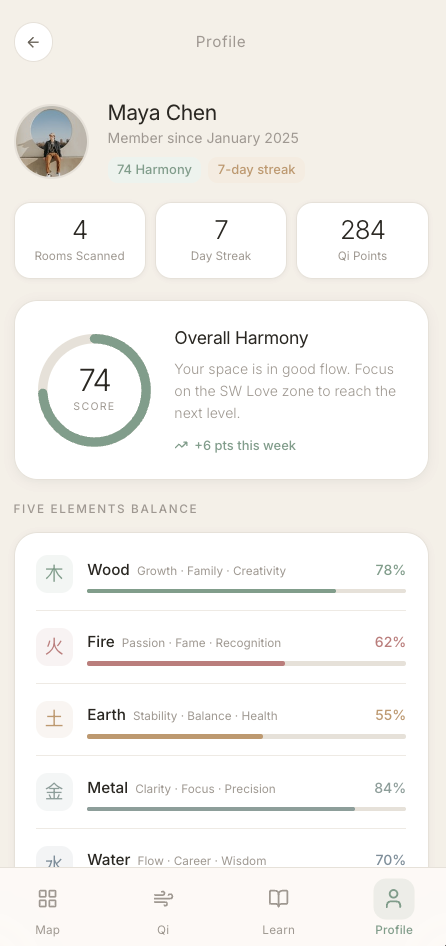
- A Harmony Score representing the balance of the space
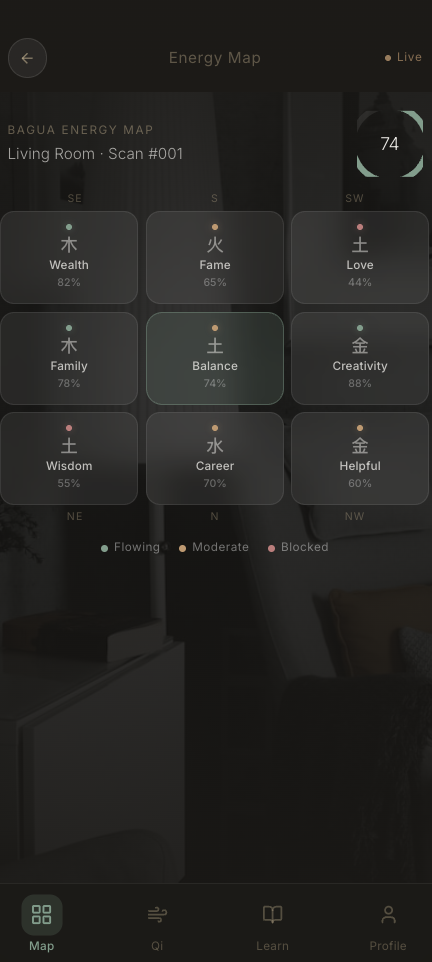
- A visual energy map that highlights areas where energy flow may be blocked
- Personalized recommendations to improve the arrangement of furniture or objects
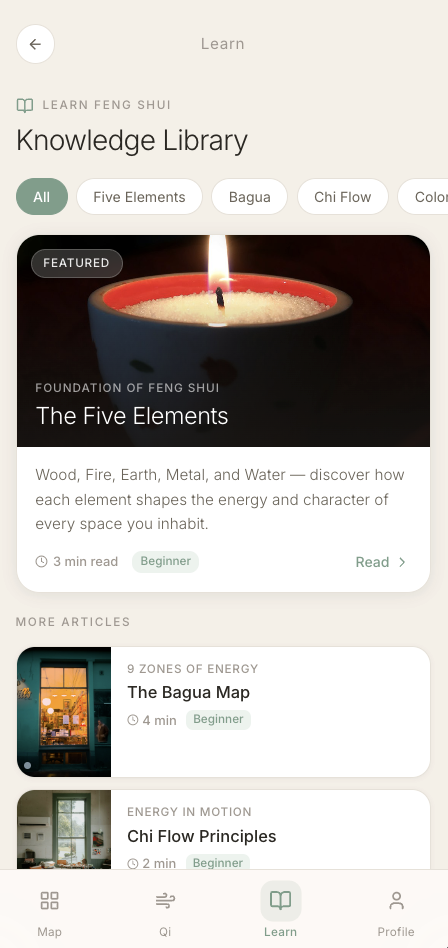
- Educational insights that explain Feng Shui principles and how they affect the environment
The goal is to help users create spaces that promote calm, focus, and positive energy.
How we built it
QiVision combines several components to analyze a room and generate meaningful feedback.
First, we used computer vision to detect objects within a room such as desks, beds, plants, and other furniture. Once these objects are identified, the app analyzes their placement relative to the room layout.
We then implemented a rule-based system inspired by Feng Shui principles. These rules evaluate things like:
- blocked pathways
- furniture placement relative to doors
- clutter in central areas
- the balance of natural elements in the space
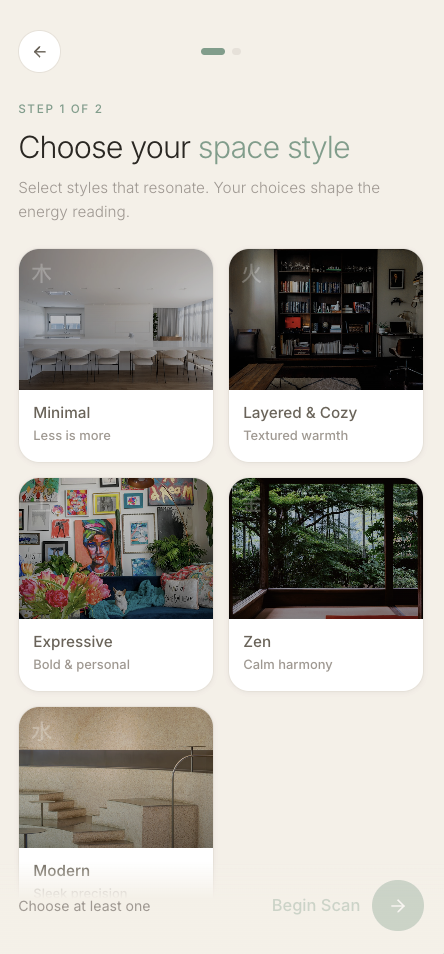
Finally, we designed a minimal and calming user interface inspired by Japandi and Zen aesthetics. The interface prioritizes simplicity and clarity so users can easily understand the analysis and recommendations.
Challenges we ran into
One of the biggest challenges was translating Feng Shui concepts into something that software could evaluate. Feng Shui is traditionally based on philosophy and intuition rather than strict measurements, so we had to simplify these principles into clear rules that an algorithm could interpret.
Another challenge was making the feedback intuitive for users. Simply detecting objects is not enough—users need meaningful suggestions that clearly explain why a certain change would improve the space.
We also faced challenges in designing the interface. Since the app focuses on harmony and balance, the design itself needed to feel calm, minimal, and cohesive rather than overwhelming or cluttered.
Accomplishments that we're proud of
We are proud that we were able to combine an ancient design philosophy with modern technology in a way that feels intuitive and useful.
Our biggest accomplishment was creating a system that can analyze a room and translate spatial information into understandable Feng Shui recommendations. We also built an interface that visually communicates energy flow and makes a complex concept easier to understand.
Another accomplishment was designing an app experience that feels calm and intentional, reflecting the principles of Feng Shui within the interface itself.
What we learned
Through this project we learned how interdisciplinary design and technology can be. Building QiVision required knowledge of computer vision, spatial analysis, user interface design, and human-centered design.
We also learned how important it is to simplify complex ideas when building user-facing tools. Translating Feng Shui philosophy into something users can quickly understand required careful thinking about both design and communication.
Finally, we gained experience in building an application that blends AI, visualization, and user experience into a single product.
What's next for QiVision
In the future, we would like to expand QiVision with more advanced features.
One direction is integrating augmented reality (AR) so users can see real-time suggestions directly within their room, such as recommended placements for plants or furniture.
We also plan to improve the computer vision system to better understand room layouts and detect more objects. This would allow the app to generate more precise Feng Shui recommendations.
Another goal is to allow users to select personal intentions—such as improving focus, creativity, or relaxation—and tailor recommendations based on those goals.
Ultimately, we envision QiVision becoming a tool that helps people create spaces that support wellbeing, productivity, and balance in everyday life.
Built With
- figma

Log in or sign up for Devpost to join the conversation.