Inspiration
Growing up in China, all of us on the team had heard familiar Feng Shui rules..
People would mention things like not placing a mirror facing the bed, or say that the layout of a room could affect a person’s fortune or wellbeing. These ideas were often passed down casually by parents or relatives, almost like cultural wisdom that everyone recognized but few could fully explain.
At first, we didn’t fully engage with these ideas as they often felt abstract. Without a clear explanation, Feng Shui sounded more like superstition: something rooted in tradition but difficult to understand from a modern perspective.
Yet at the same time, we all could relate to certain everyday experiences.
Sometimes a space feels oddly uncomfortable even when it looks perfectly normal.
The furniture is nice, the lighting is fine, but being in the room somehow feels tense or blocked. Meanwhile, we might feel other spaces open and balanced, almost as if the space itself is “flowing.”
We often describe this as the vibe or energy of a place, but it’s surprisingly difficult to explain what actually creates that feeling.
Our perspective began to shift when we started to look into environmental psychology and rethink the problem with a human-centered design mindset. We learned that subtle and often invisible relationships exist between spatial environments and how people feel and interact within them. Factors such as light, spatial openness, circulation paths, and environmental stimuli can shape stress levels, attention, and mood.
This perspective helped us reinterpret Feng Shui. They seemed less like superstition and more like observations about how environments shape human experience.
During FigBuild 2026, we were challenged to think about human senses beyond the traditional five. The prompt led us to an interesting realization: we all seem to have an intuitive sense of space, yet we rarely have tools to understand or articulate it.
This insight led us to combine two perspectives: the spatial intuition of Feng Shui and the scientific insights of environmental psychology. At the same time, we also noticed the limitations of both approaches. Feng Shui can feel rigid and rule-based, while environmental psychology often remains theoretical and difficult to apply in everyday life.
The gap between how people intuitively feel a space and their ability to clearly understand, visualize, and reshape that experience became the starting point for our project.
What it does
QiSense is a speculative XR system that helps people perceive how a space affects their body and mind.
By combining spatial scanning with interoceptive sensing, QiSense interprets both the structure of a space and the user’s physiological response to it.
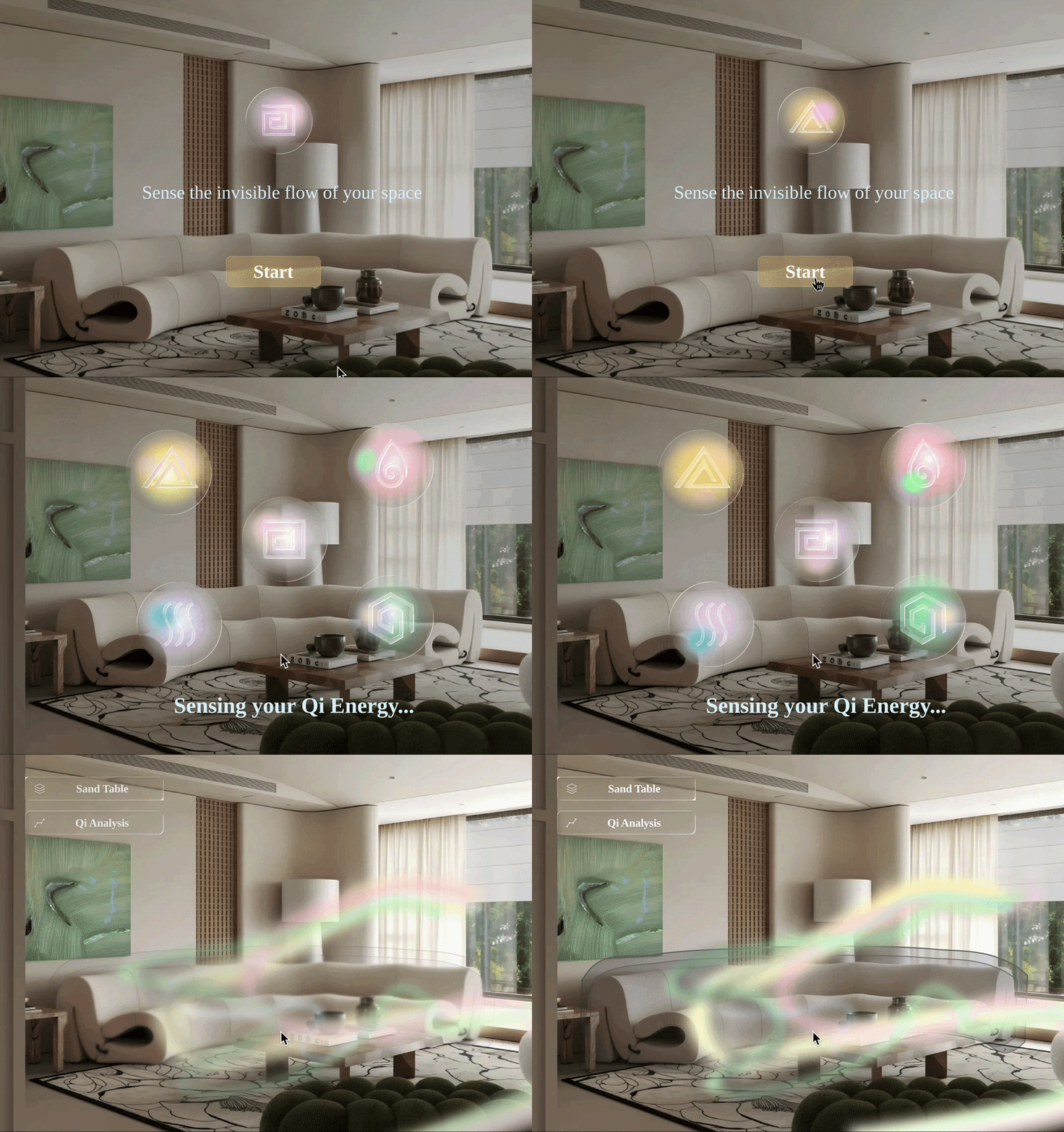
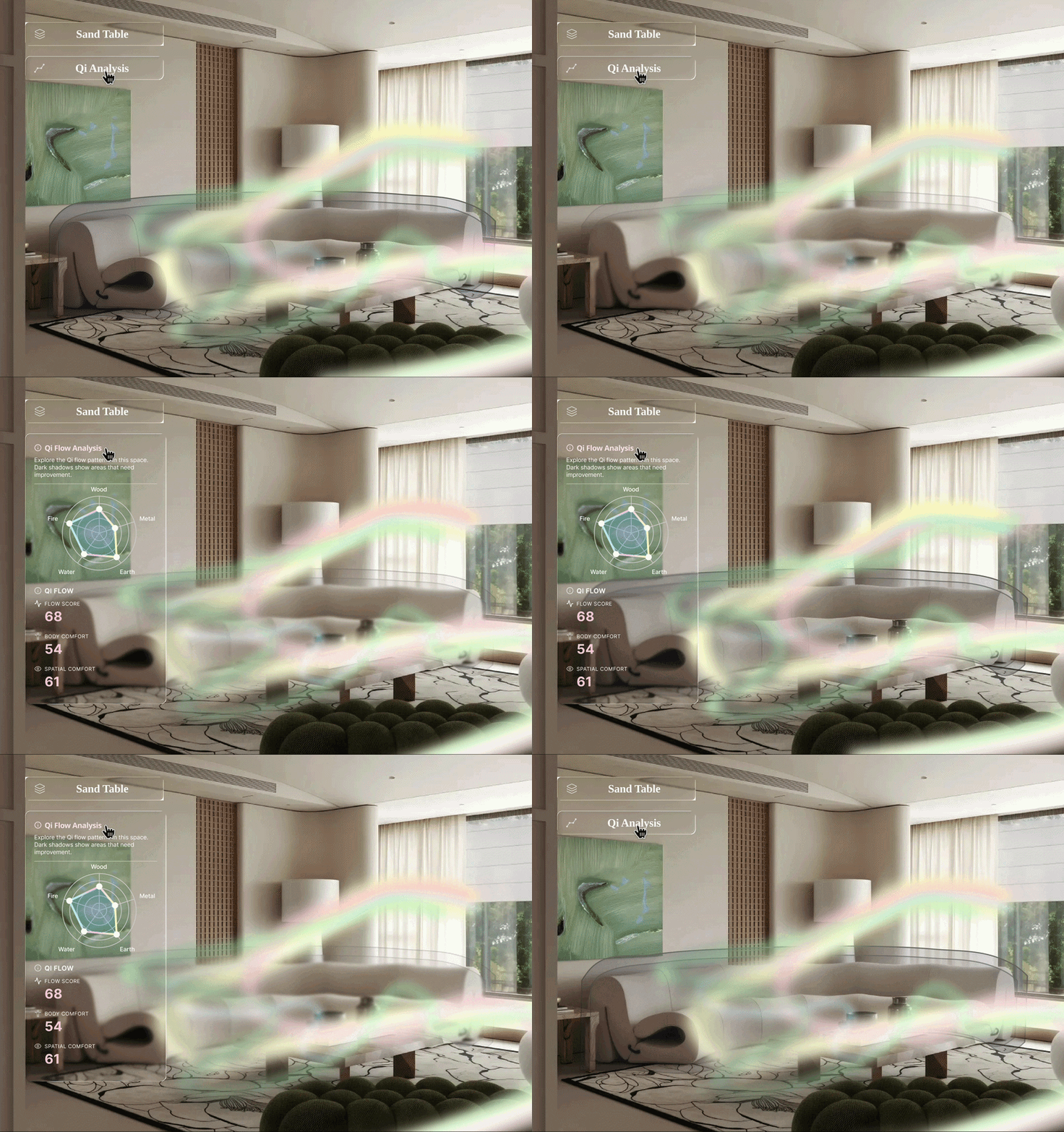
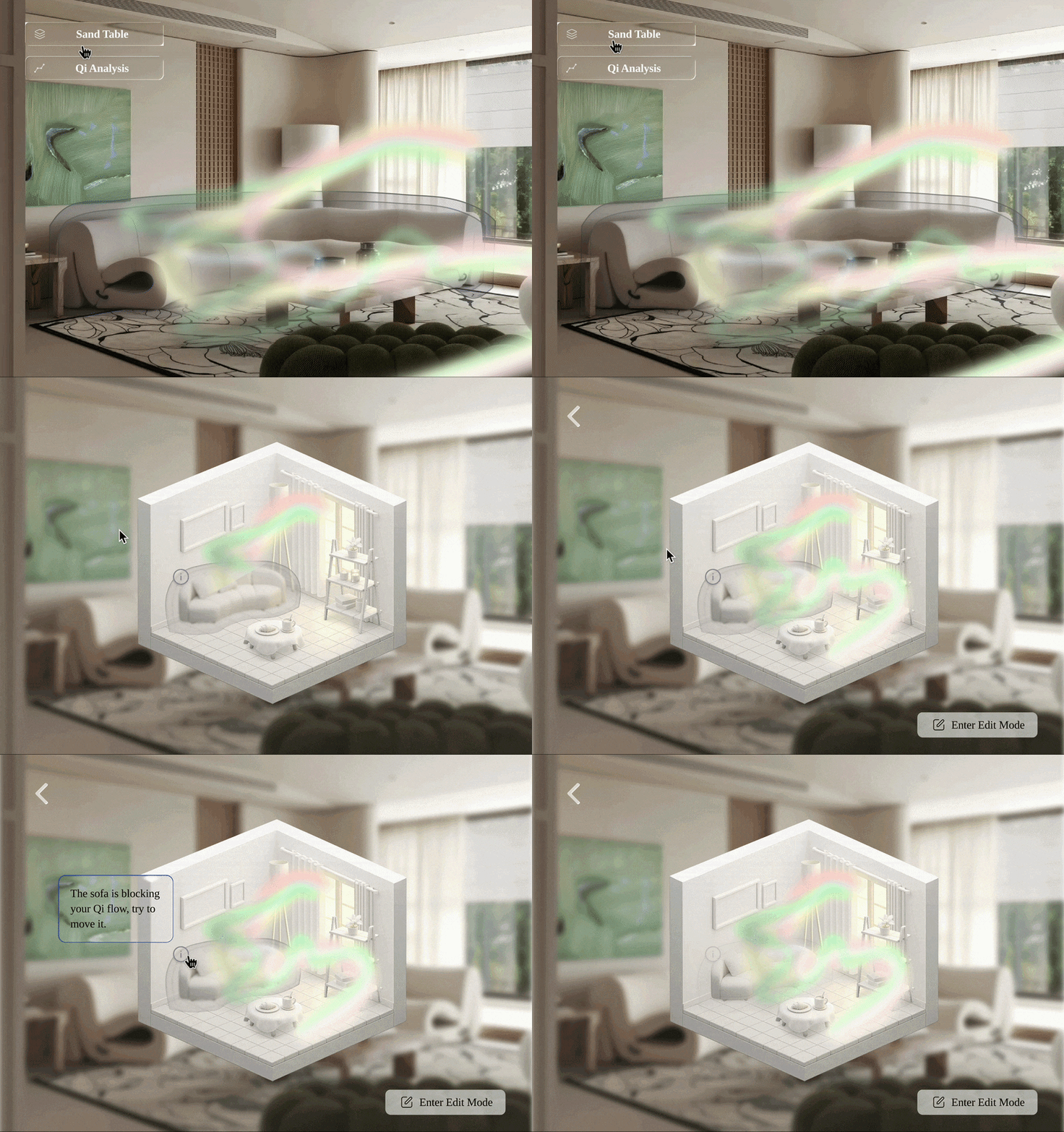
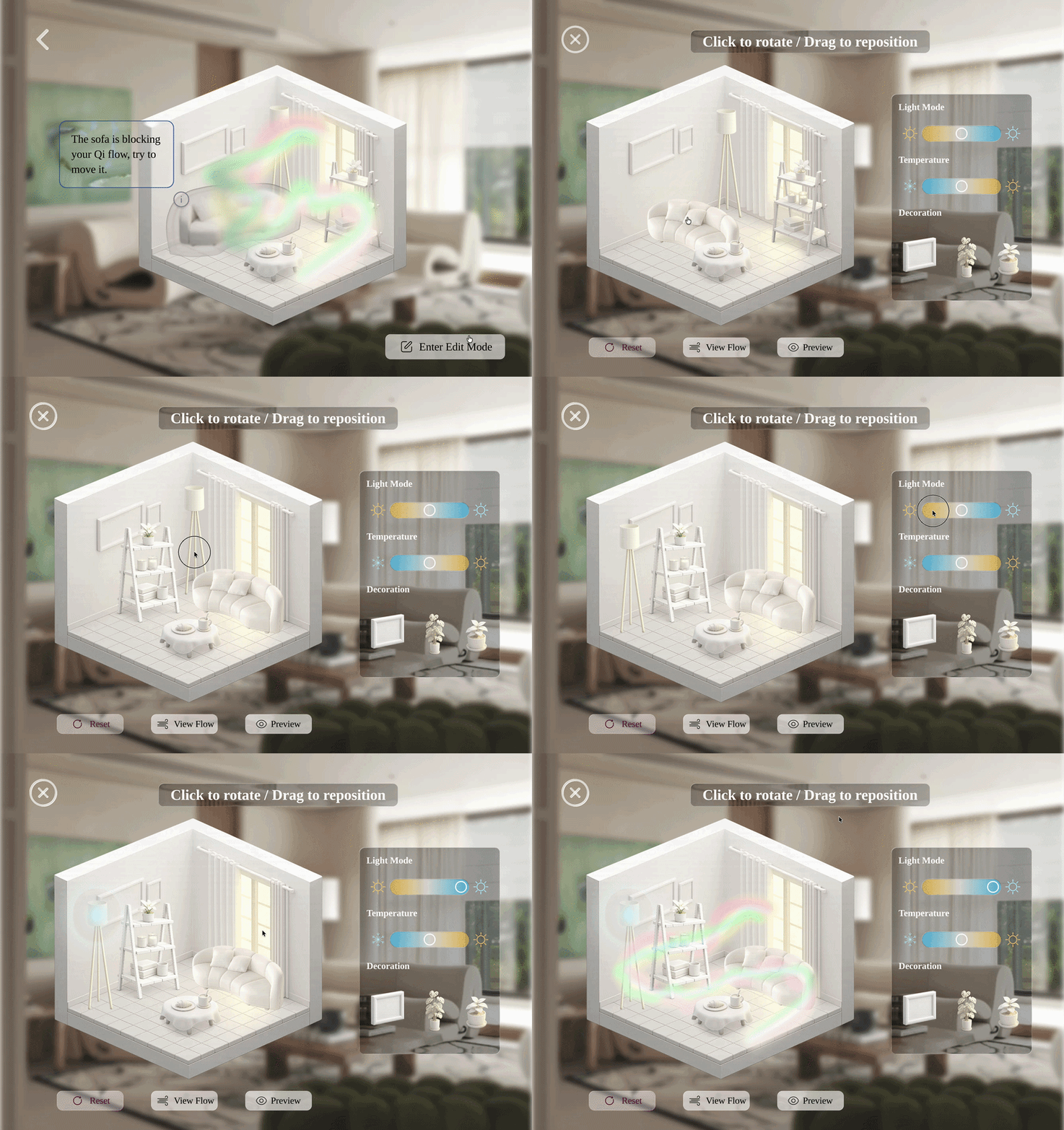
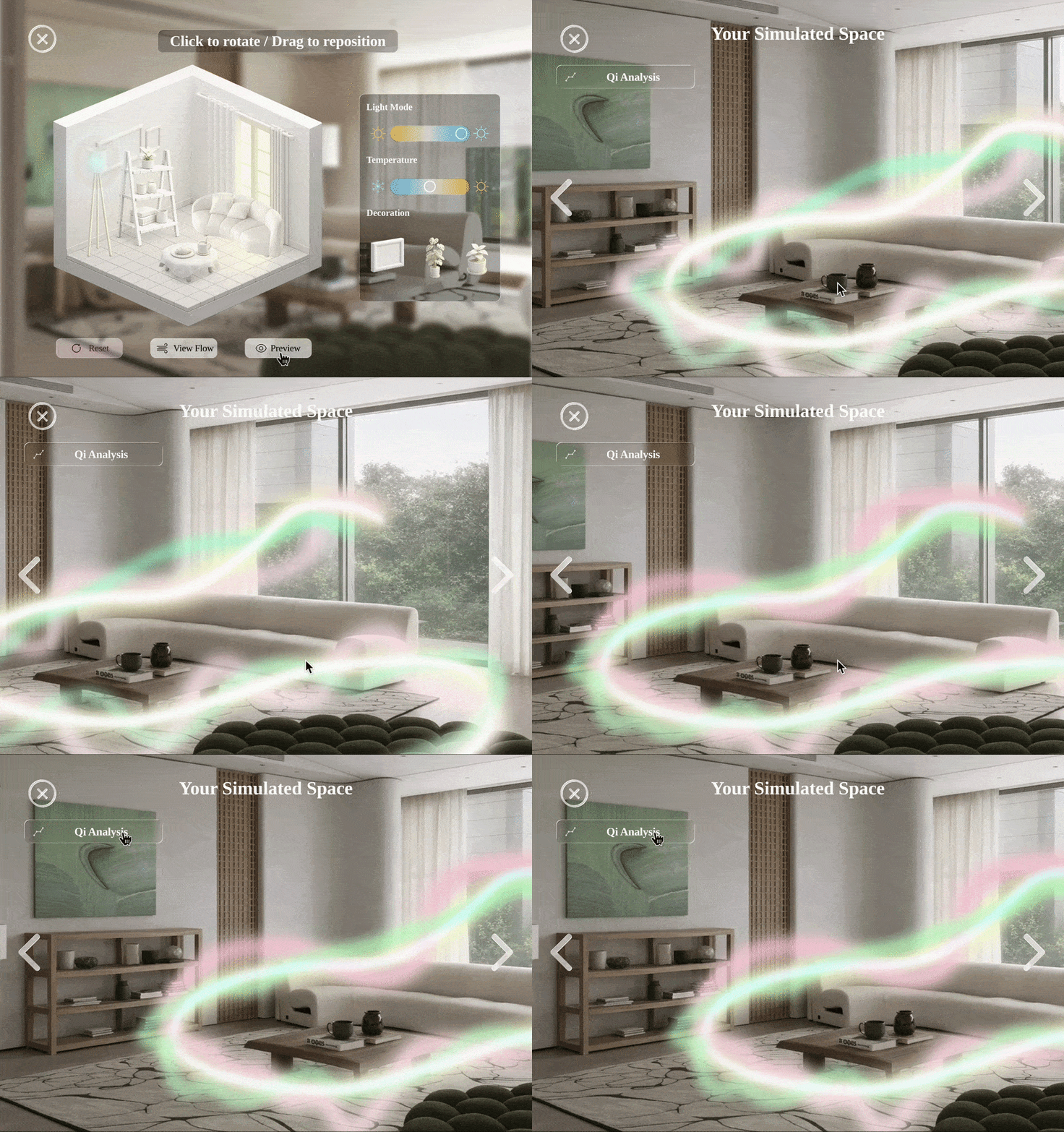
Rather than relying on fixed Feng Shui rules and environmental stimuli analysis, QiSense centers the user’s own embodied experience. It helps people understand how their body responds to a space with visualizations, identifies areas of blockage or imbalance, explore alternative layouts through a virtual sand table, and step into an immersive simulation of the redesigned environment before making changes in real life.
In this way, QiSense turns spatial intuition into something more visible, interactive, and actionable, helping users shape spaces that better support comfort, focus, and ultimately wellbeing.
How we built it
We built QiSense as a high-fidelity interactive prototype using Figma’s design and prototyping capabilities.
Figma allowed us to design the interface, simulate the XR interaction flow, and prototype key parts of the experience, including Qi Flow visualization, Qi Analysis dashboard, spatial sandbox, and immersive room transitions shown in the final demo. It became the main environment for translating our concept into a coherent user journey and visual system.
We also incorporated several AI tools during the process to support exploration and production:
- Sora 2 helped us generate some visual design materials and video elements.
- ElevenLabs helped us generate audio tracks for the demo video.
- ChatGPT helped us iterate on ideas, refine the concept, and generate storyboards.
- Figma Make allowed us to rapidly test out different design ideas.
Throughout the project, we followed an iterative UX workflow centered on ideation, research, iteration, design, and testing. We moved quickly between concept development and interface design, using each round of iteration to clarify the narrative, strengthen the interaction flow, and make the speculative experience more tangible and convincing.
Challenges we ran into
One challenge we encountered was working with emerging AI design tools such as Figma Make.
While these tools were useful for rapid experimentation, they often behaved like a black box. It was difficult to control exactly what the AI generated, which made it harder to achieve the level of precision and consistency we wanted in the interface and interactions.
Another practical limitation was running out of Figma Make credits while exploring multiple design directions. This constrained how far we could push certain ideas through AI-assisted iteration alone.
Because of these limitations, we ultimately shifted back to manual design work to build, refine, and finalize the core interface and interaction details. In the end, AI tools were valuable for exploration, but the final experience still depended heavily on intentional design decisions and hands-on refinement.
Accomplishments that we're proud of
One accomplishment we are especially proud of is how strongly QiSense aligns with the challenge theme. Rather than focusing only on environmental data, QiSense explores a new kind of sensory experience by helping people perceive spatial dynamics that are usually invisible and understand how those dynamics relate to their own bodily and emotional responses.
We are also proud of how smoothly we combined emerging AI tools with our own design judgment throughout the process. AI helped us accelerate exploration and production in some areas, while manual design work allowed us to maintain precision, consistency, and intentionality in the final experience.
Most importantly, the team collaboration worked really well. Each team member brought a different perspective to the project, and the concept evolved quickly through shared discussion, critique, and iteration. That collaborative process helped us turn an initially abstract idea into a coherent and compelling prototype.
What we learned
This project gave us a deeper understanding of speculative and future-oriented design.
One key takeaway is that design can lead technology. Even when a system is not fully feasible today, designing it helps us imagine how future tools might expand human perception and make new forms of experience tangible.
We also gained hands-on experience designing for XR interactions, spatial interfaces, and interactive systems, while learning how to translate abstract concepts into concrete user flows and visual prototypes.
More broadly, the project reinforced the importance of rapid iteration, storytelling, and clear communication. For an idea as conceptual as QiSense, the ability to explain the vision, show how the experience works, and make the concept feel believable was just as important as the interface itself.
What's next for QiSense
If we were to continue developing QiSense, there are several directions we would be excited to explore.
First, we would design a stronger onboarding experience to help users understand the idea of spatial interoception and learn how to interpret the system’s indicators and visualizations. Because the concept is unfamiliar, helping users build trust in the interface would be an important next step.
Second, we would deepen the interactive experience by making the spatial sandbox and immersive simulation more responsive and personalized. This could include richer layout editing, clearer before-and-after comparisons, and more nuanced feedback on how different spatial changes may affect comfort, focus, or social flow.
Third, we would want to explore how QiSense could extend beyond indoor rooms into larger environmental contexts. In the future, the system could help users understand environmental comfort in outdoor settings such as parks, streets, or public spaces, potentially integrating map-based insights and location-aware feedback.
More broadly, we see QiSense as a step toward a future in which technology helps people become more aware of how environments shape their wellbeing. Rather than treating space as something static or purely visual, QiSense points to a future where people can better sense, interpret, and intentionally shape the spaces they live in every day.
Built With
- capcut
- chatgpt
- elevenlabs
- figma
- google-drive
- sora


Log in or sign up for Devpost to join the conversation.