-
-
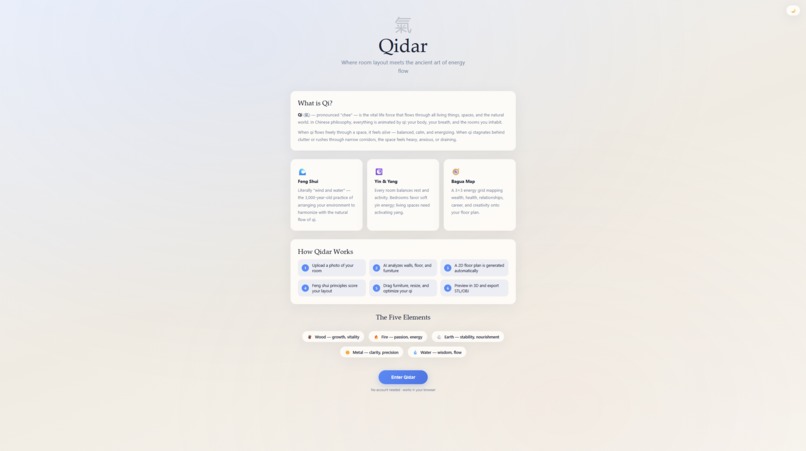
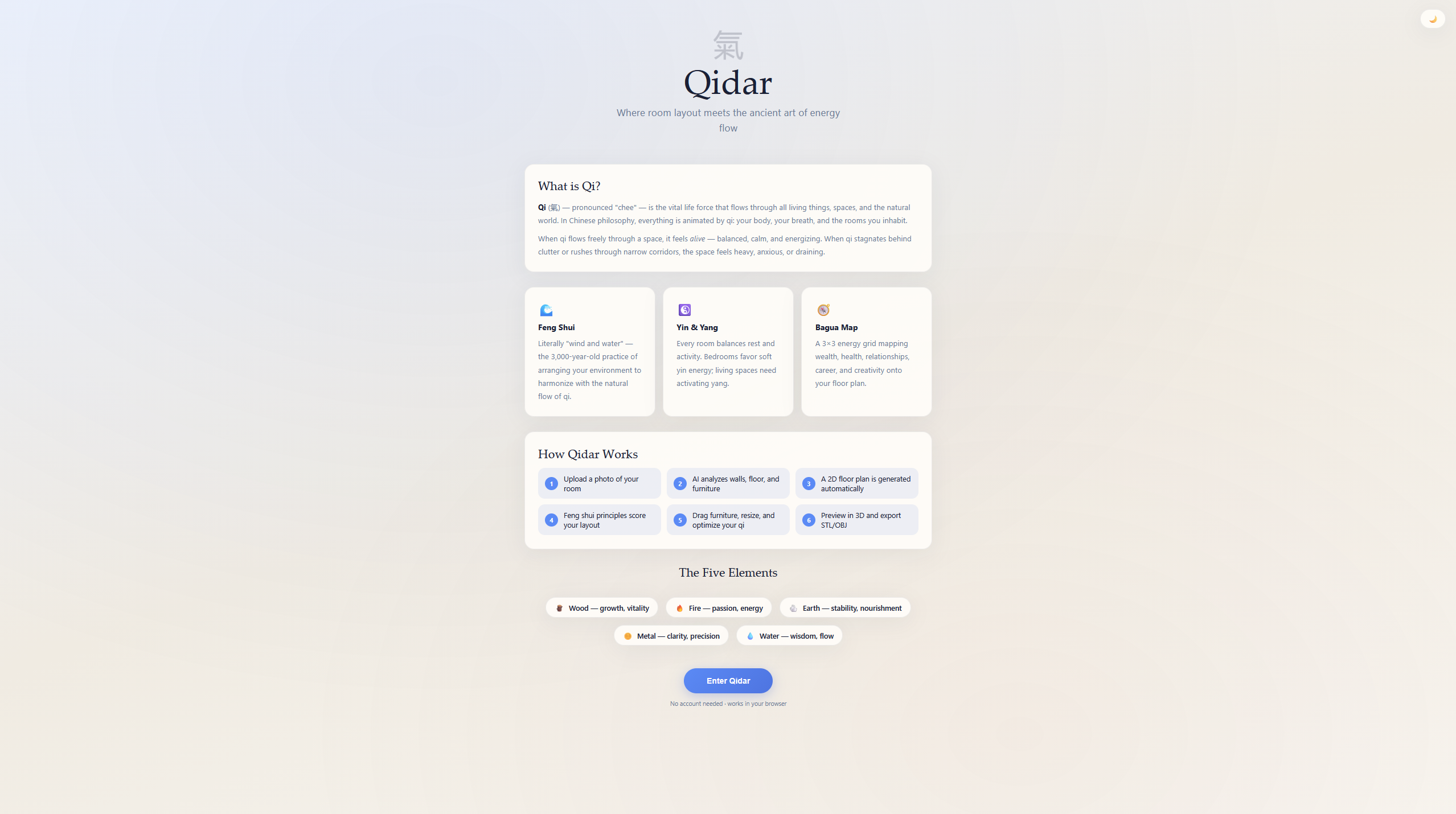
Landing page
-
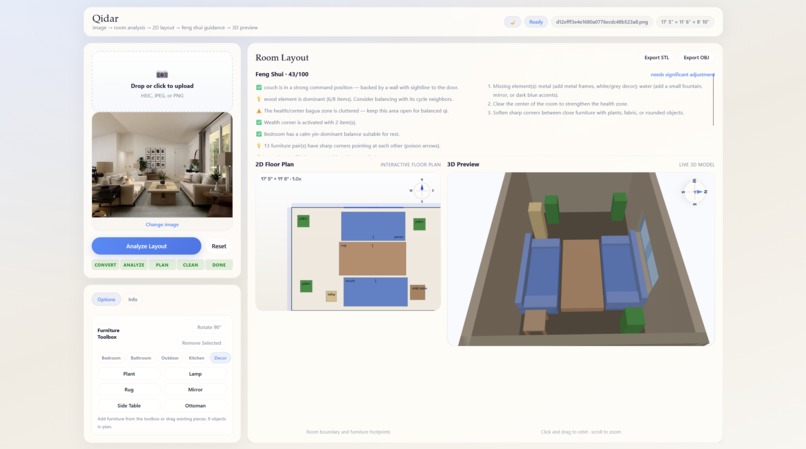
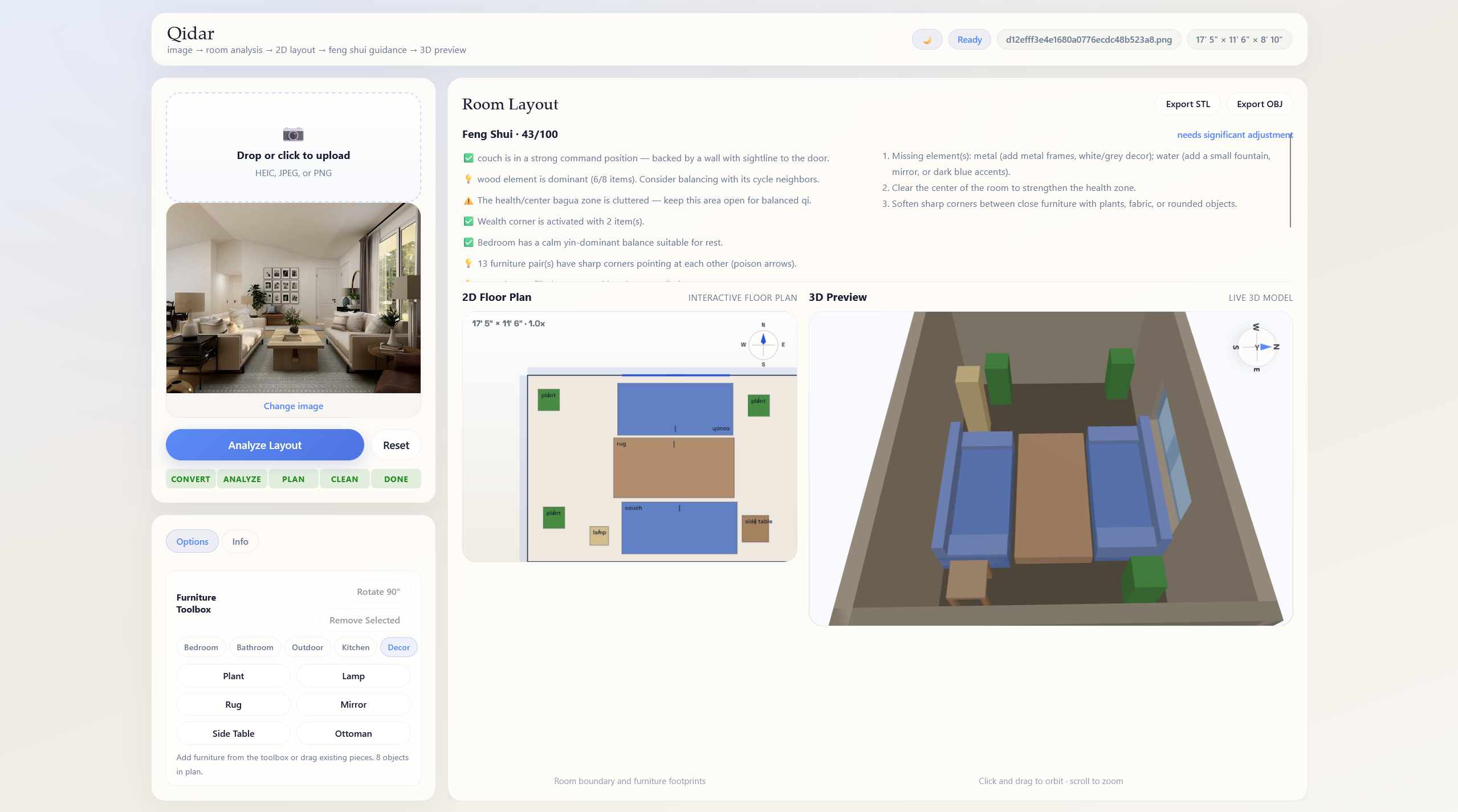
Main page
-

logo

• ## Inspiration
We were inspired by our Chinese roots and by feng shui, the ancient philosophy of shaping spaces so energy, or qi, can move in a balanced and healthy way. We wanted to turn that cultural knowledge into something interactive and practical: a tool that helps people understand not just how a room looks, but how it feels and flows.
What it does
Qidar analyzes a room from a photo, generates a 2D floor plan, builds a 3D room preview, and evaluates the layout through feng shui principles. Users can adjust furniture placement, explore command position and room flow, and get guidance on how to improve harmony, balance, and usability in their space.
How we built it
We built Qidar as a browser-based experience using a custom frontend for image upload, room visualization, and interaction. The app processes room data, converts it into a structured floor plan, renders a 3D preview, and layers feng shui logic on top of the spatial model. We combined layout generation, object handling, and design-focused UI work to make the experience feel both technical and intuitive.
Challenges we ran into
A major challenge was connecting abstract feng shui concepts to concrete spatial logic in a way that felt credible and useful. We also had to manage the complexity of keeping the 2D plan, 3D preview, and room analysis in sync. On top of that, we ran into frontend issues around rendering, browser behavior, and theme consistency.
Accomplishments that we're proud of
We’re proud that Qidar turns a culturally rich, philosophical practice into something interactive and understandable. The combination of room analysis, editable layouts, and feng shui feedback makes the project feel more thoughtful than a standard room-planning tool. We’re also proud of building a product that feels personal, visual, and grounded in our identity.
What we learned
We learned that cultural ideas can translate well into software when they are made tangible through interaction and design. We also learned a lot about spatial modeling, syncing multiple visual representations of the same data, and balancing technical systems with a calm, intentional user experience.
What's next for Qidar
Next, we want to make Qidar more accurate, more personalized, and more intelligent. That includes stronger room detection, better furniture recognition, richer feng shui recommendations, and support for more room types and design styles. We also want to expand the app into a more complete home wellness and spatial-planning assistant.


Log in or sign up for Devpost to join the conversation.