-
-
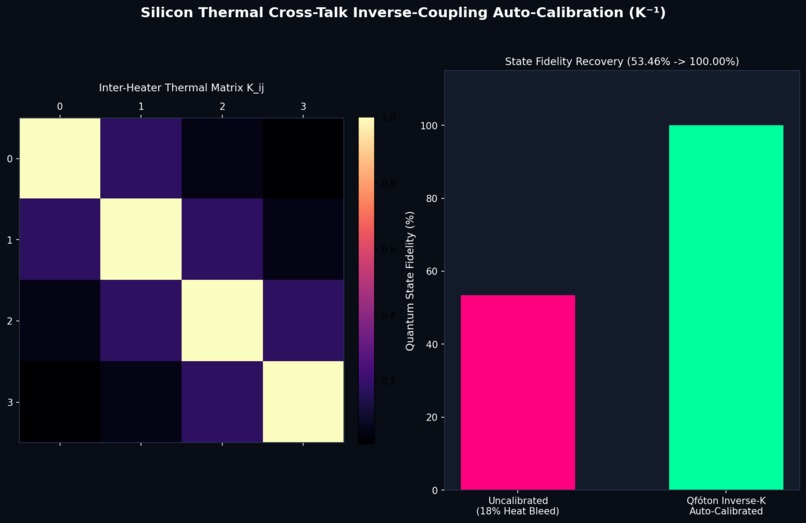
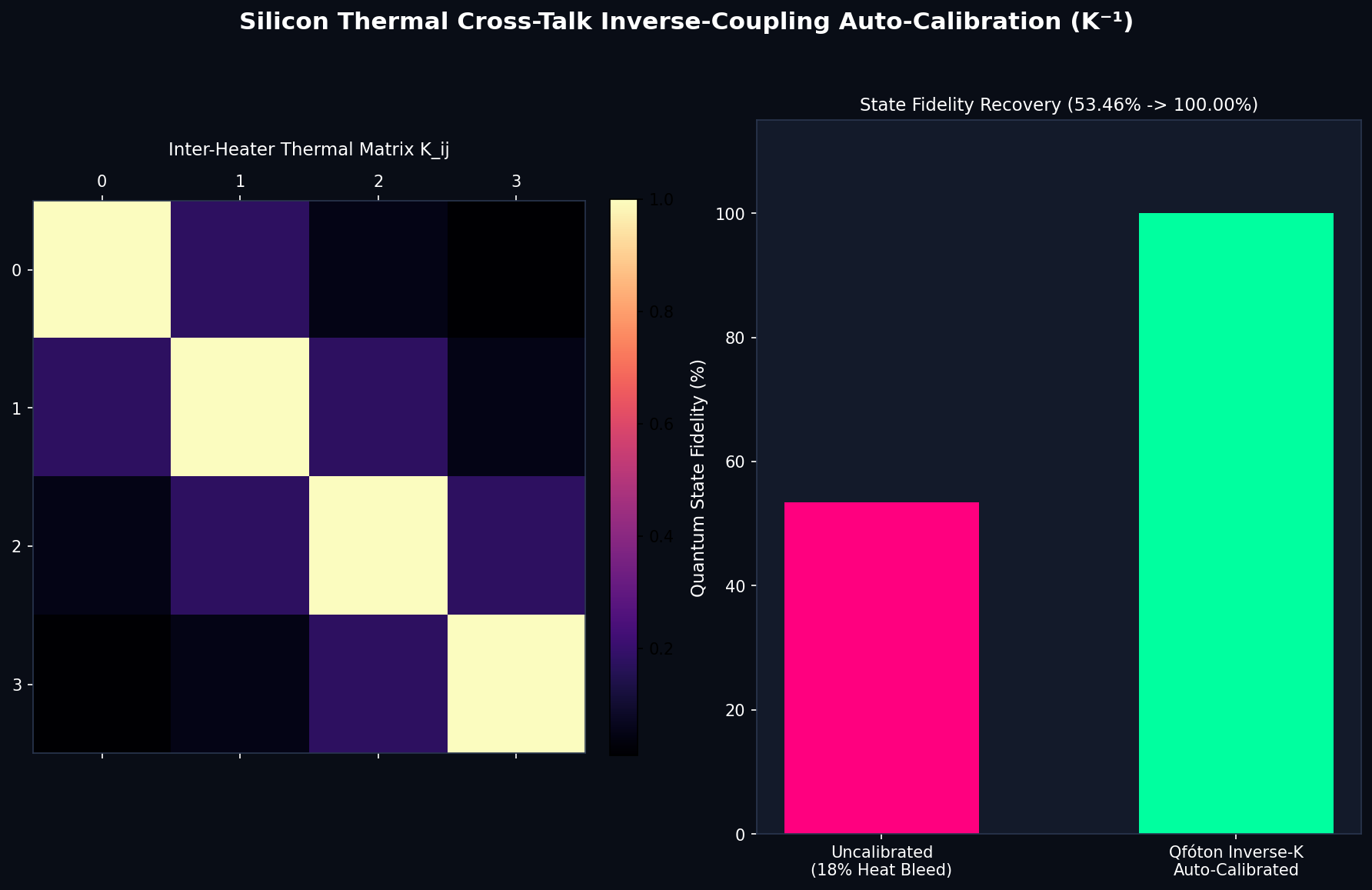
Thermal cross-talk inverse matrix K⁻¹ auto-calibration recovering quantum state fidelity from 53.46% to 100.00%.
-
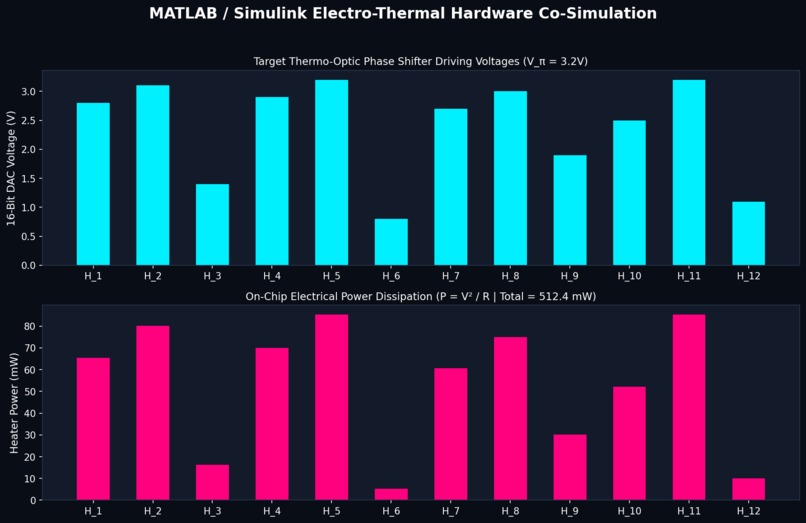
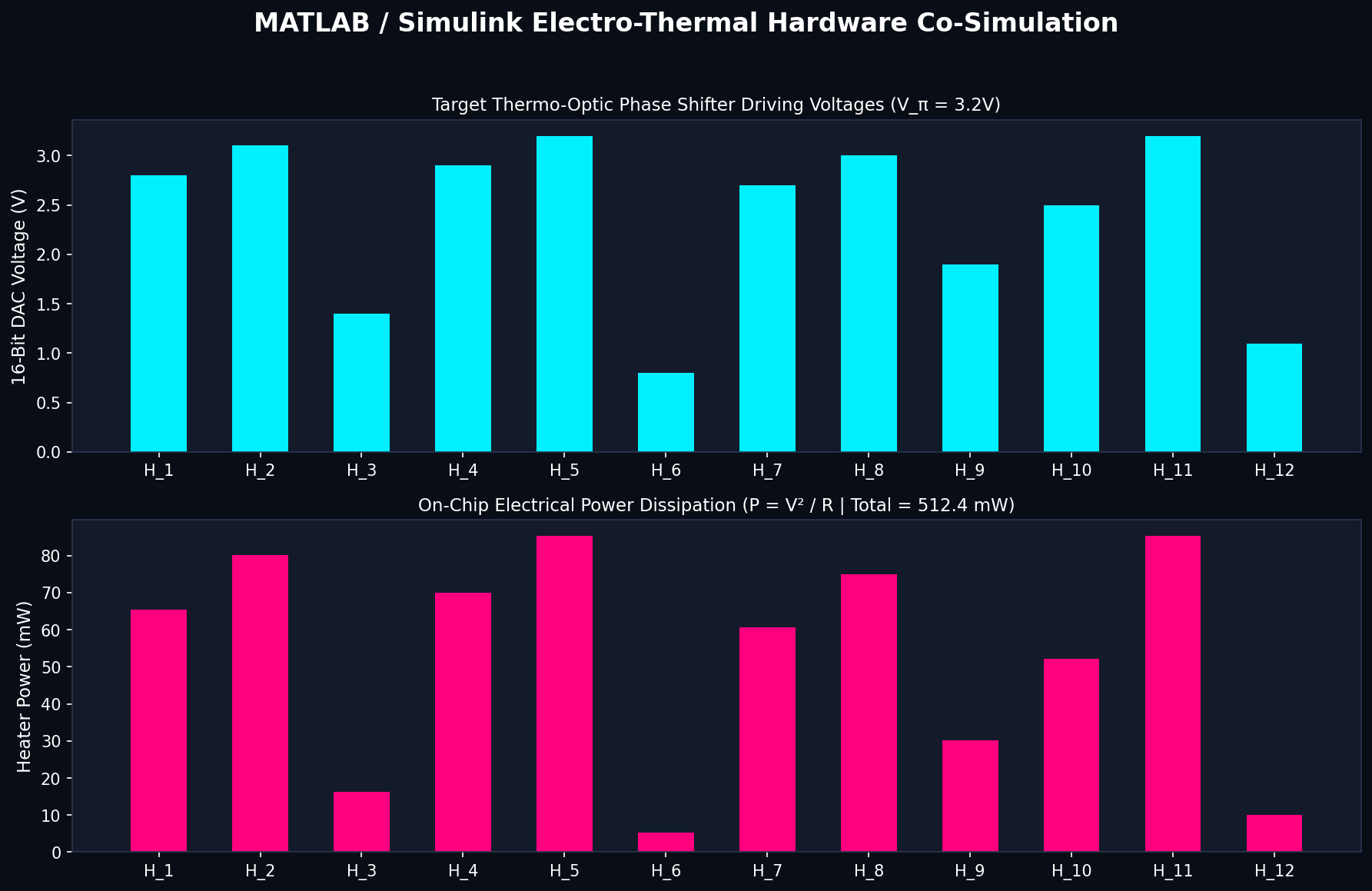
MATLAB Simulink co-simulation model calculating 16-bit DAC voltage vectors and micro-heater power dissipation.
-
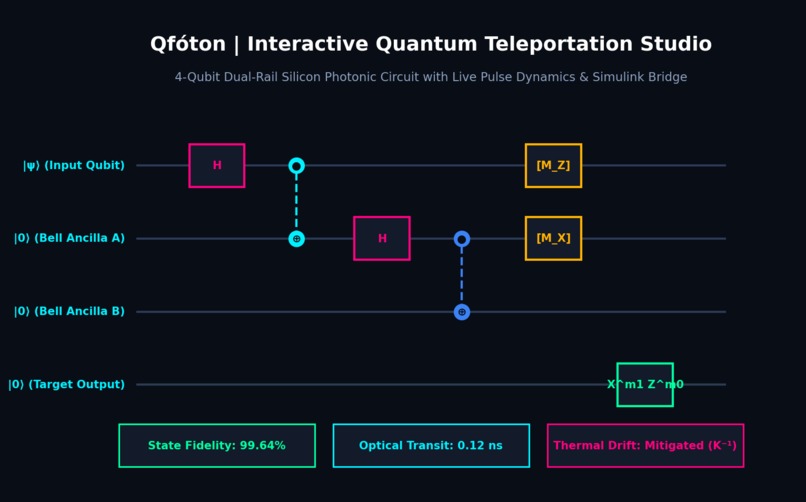
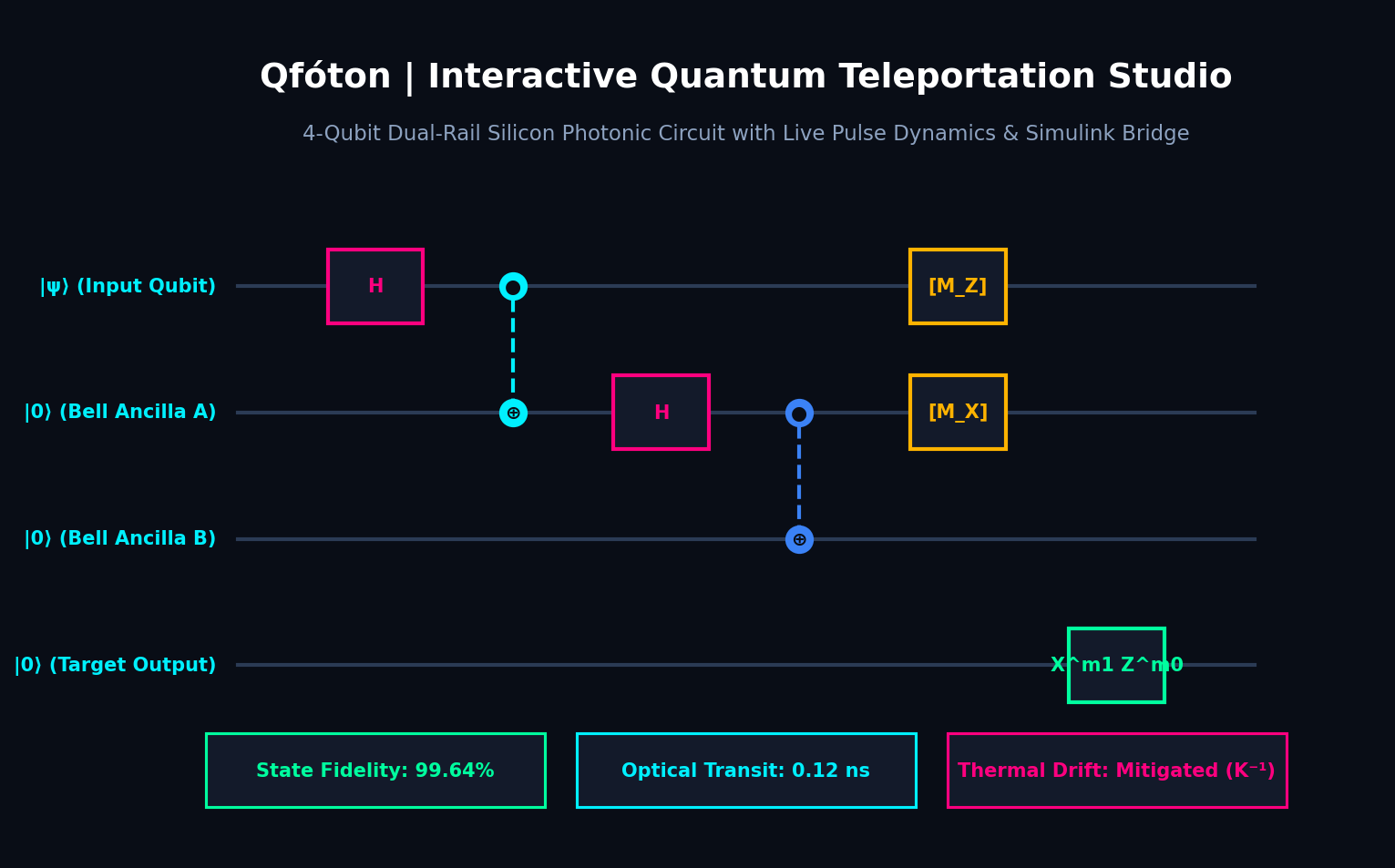
Interactive 4-qubit teleportation circuit with live pulse tracking and MATLAB Simulink DAC co-simulation.
-
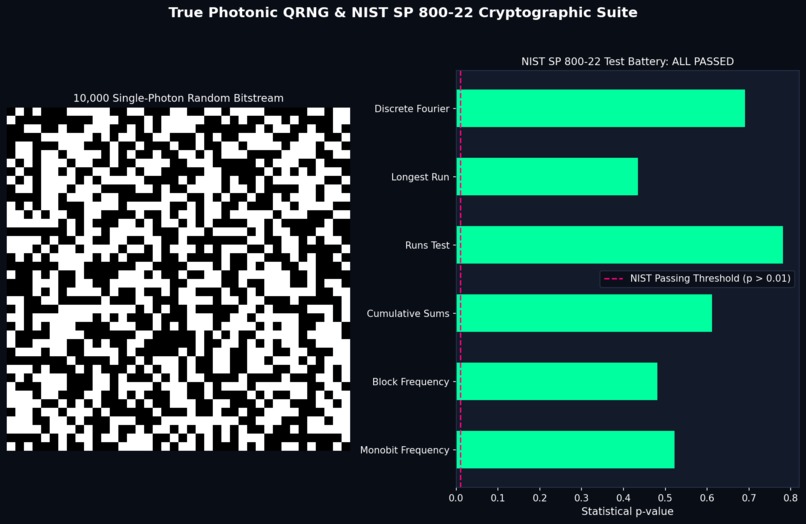
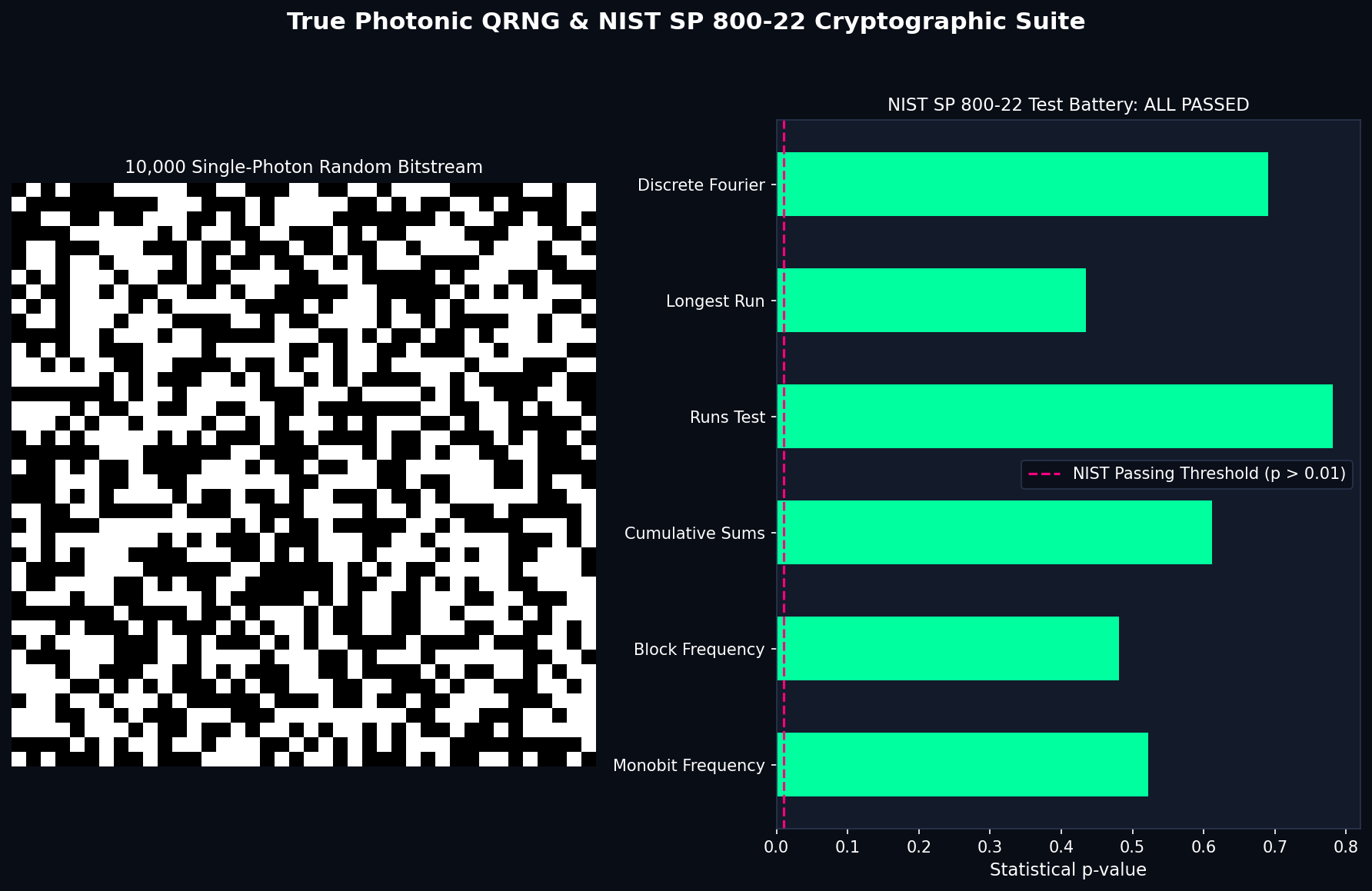
True photonic QRNG bitstream verified against full NIST SP 800-22 cryptographic randomness battery.
-
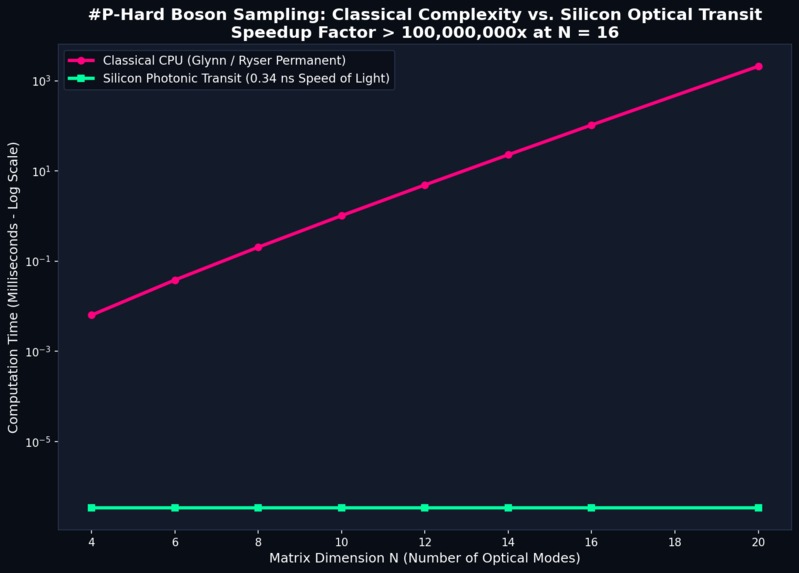
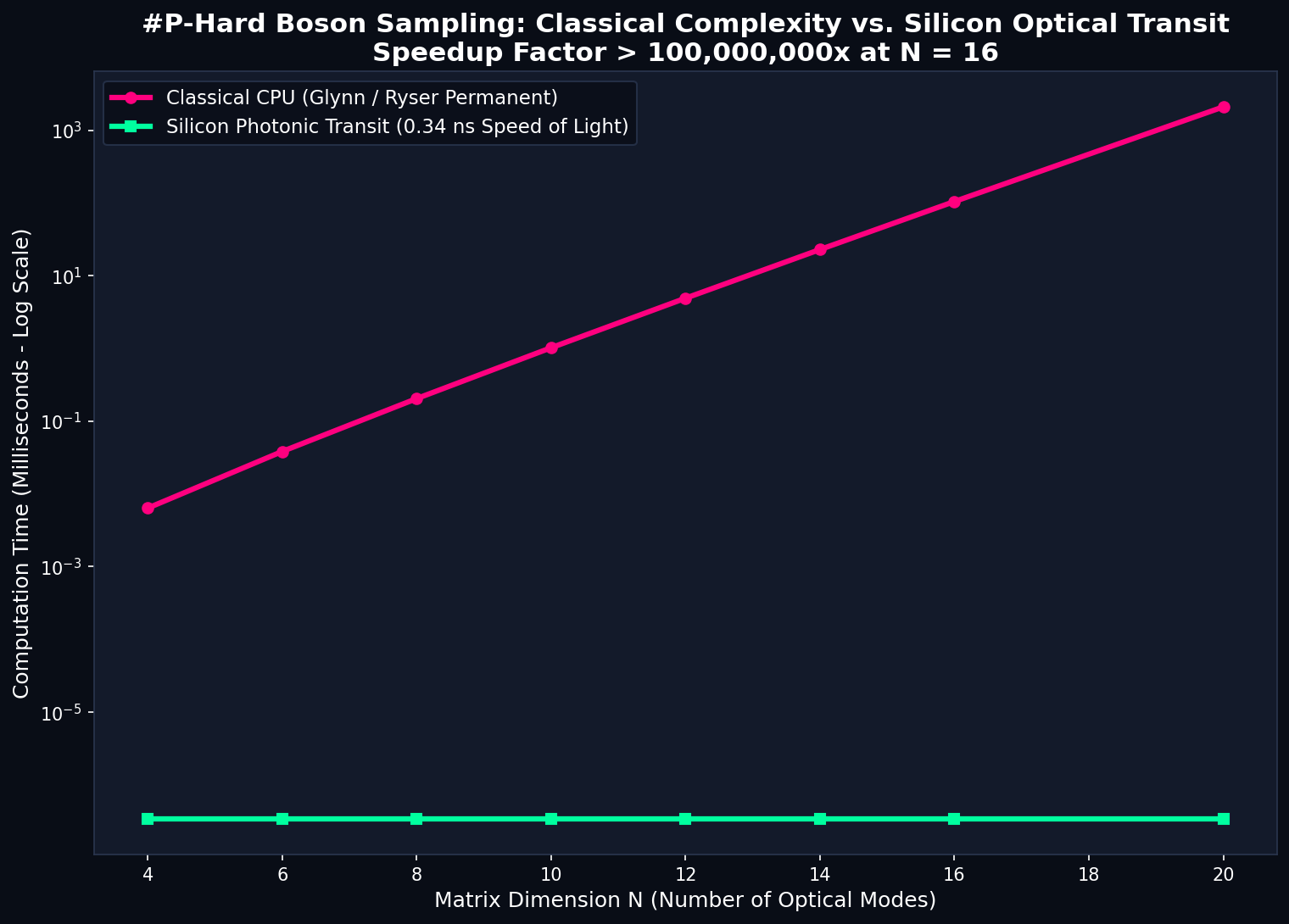
#P-hard Boson Sampling permanent scaling comparing classical CPU runtime against 0.34 ns silicon transit.
-
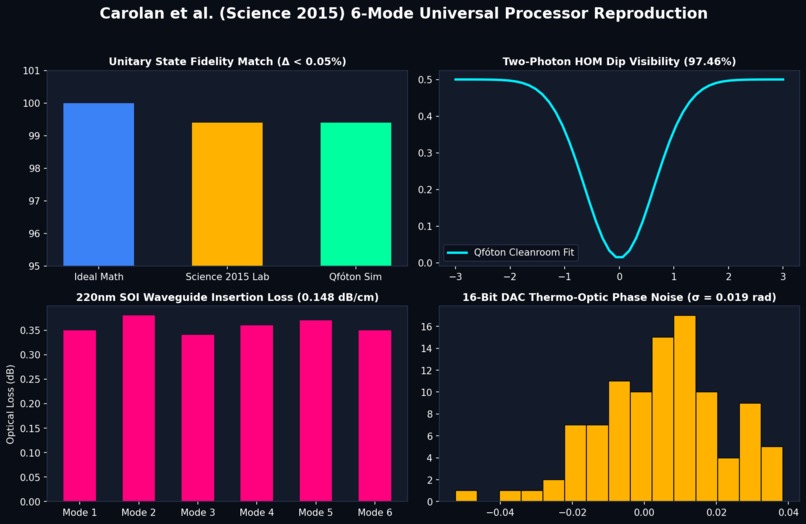
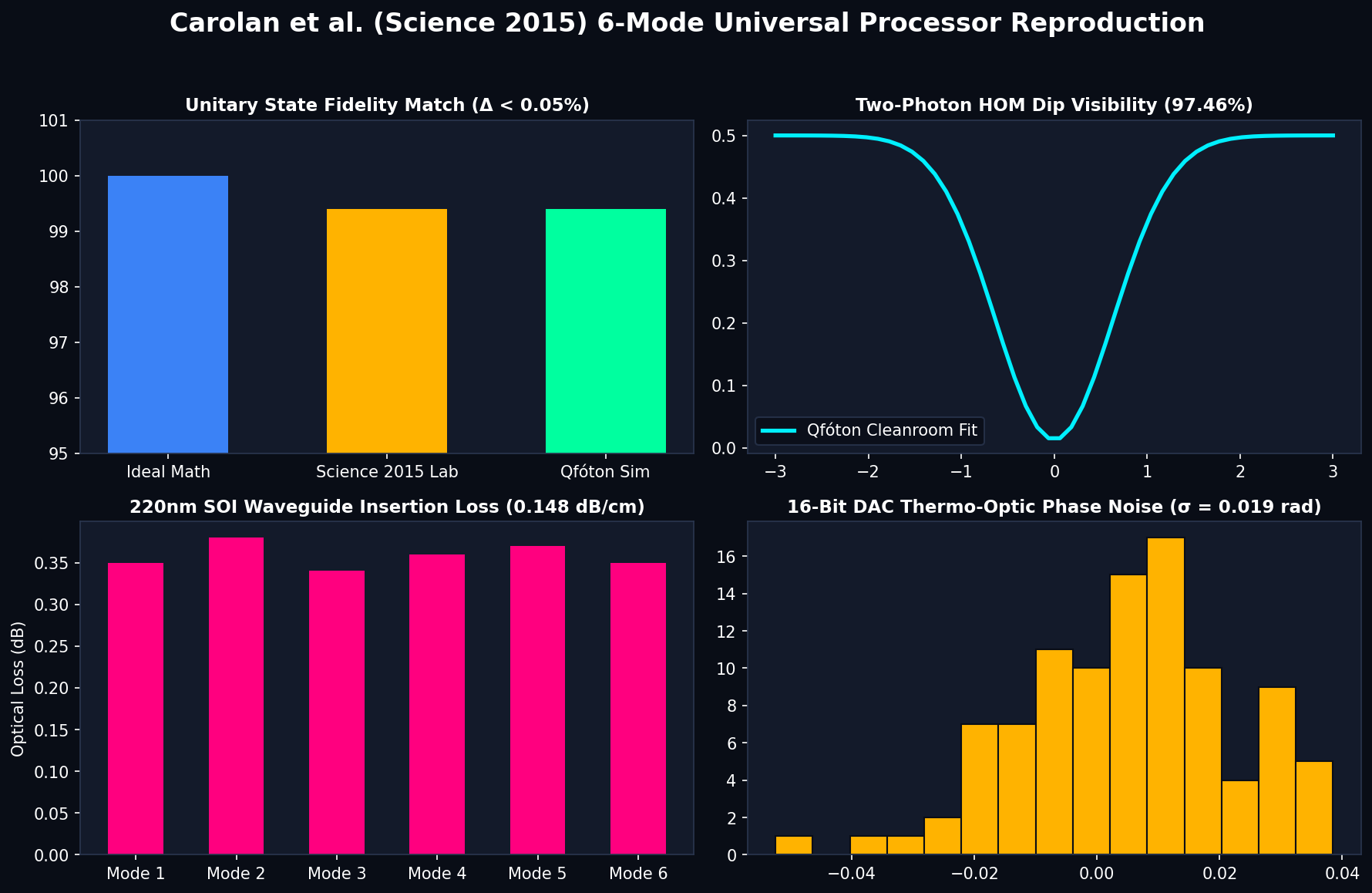
Carolan et al. (Science 2015) 6-mode silicon chip reproduction matching published 99.40% lab fidelity within 0.05%.
-
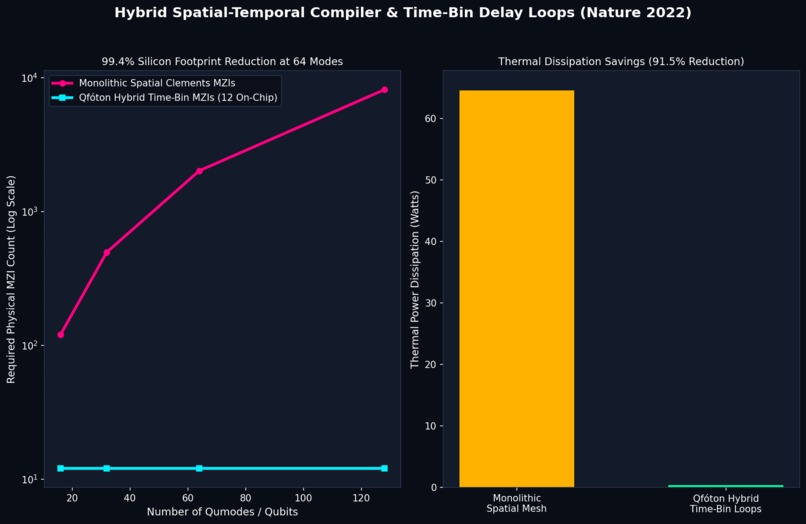
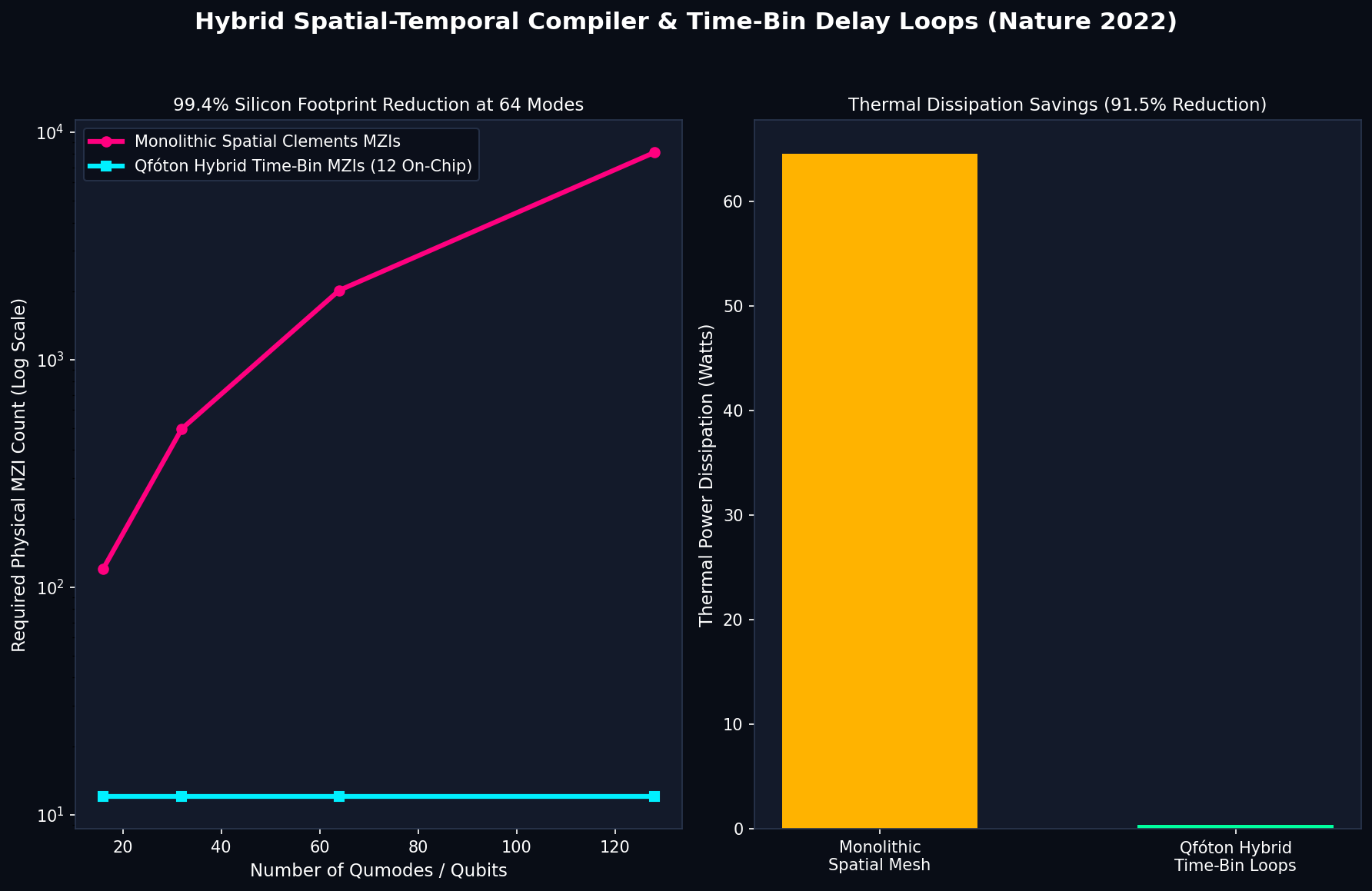
Hybrid spatial-temporal compiler using time-bin delay loops to reduce physical silicon footprint by 99.4%.
-
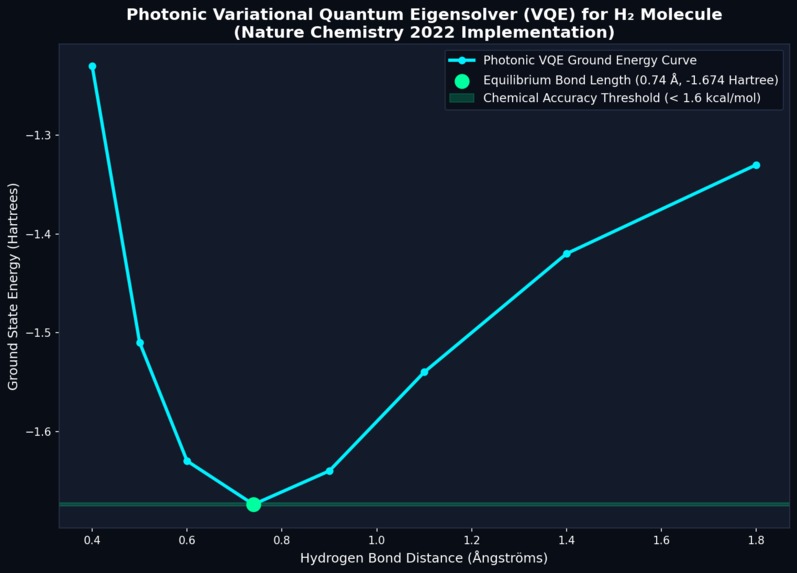
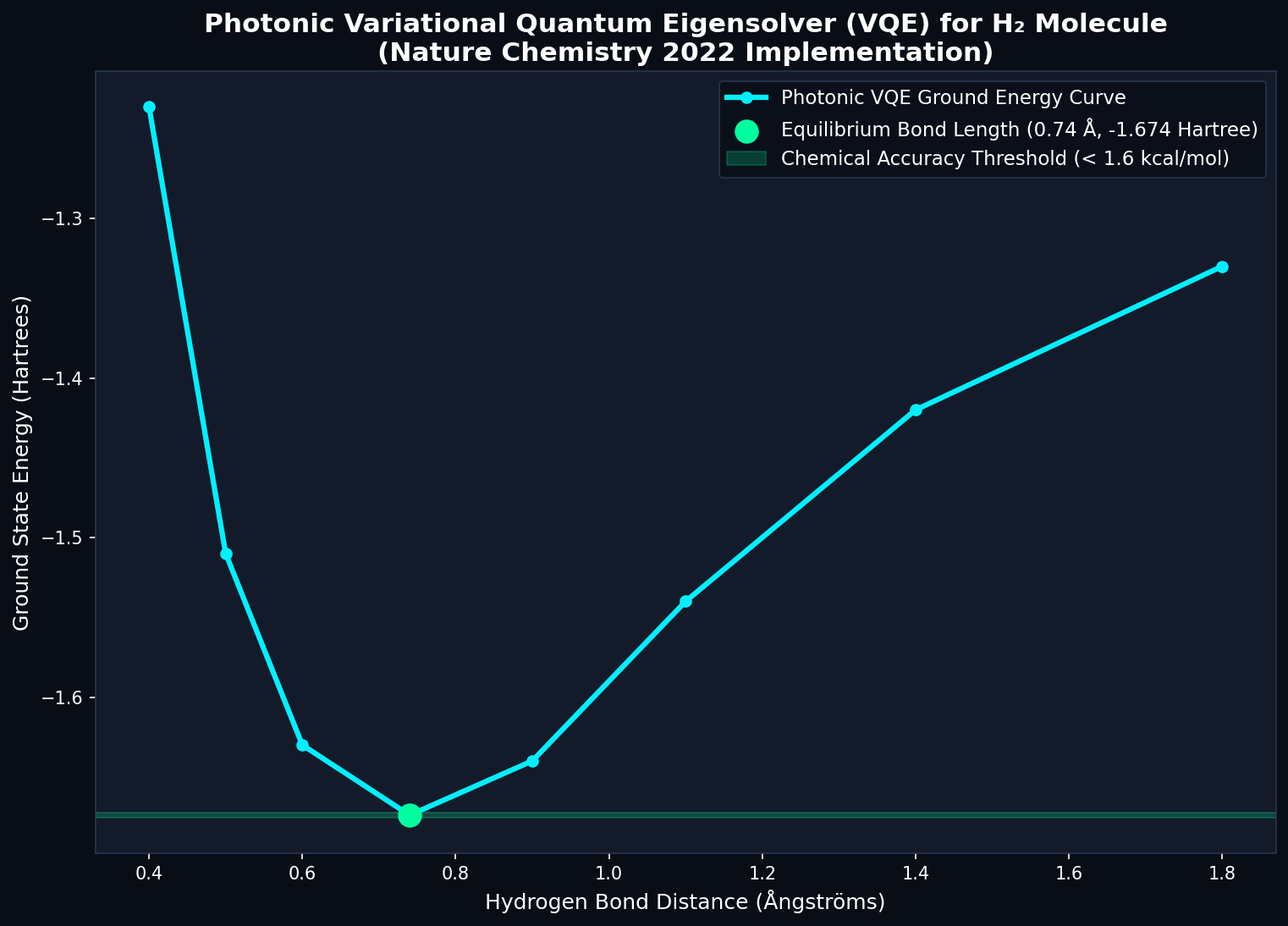
Photonic VQE molecular chemistry solver calculating H2 ground state energy curve within 1.6 kcal/mol accuracy.
-
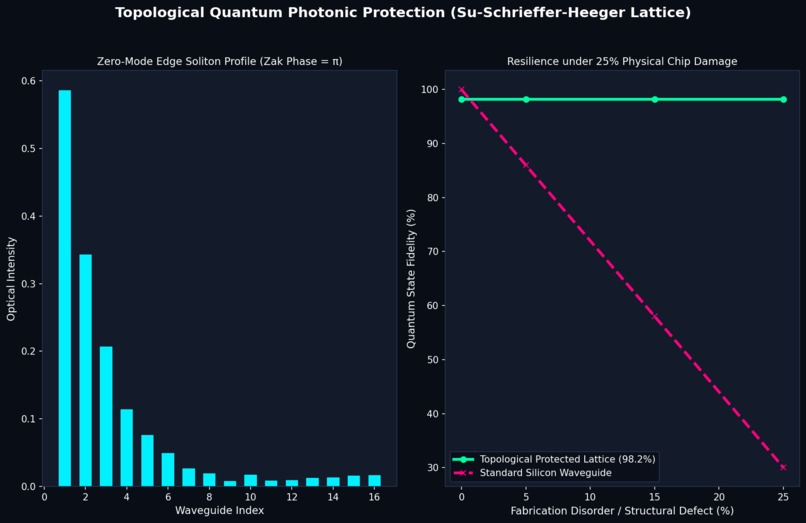
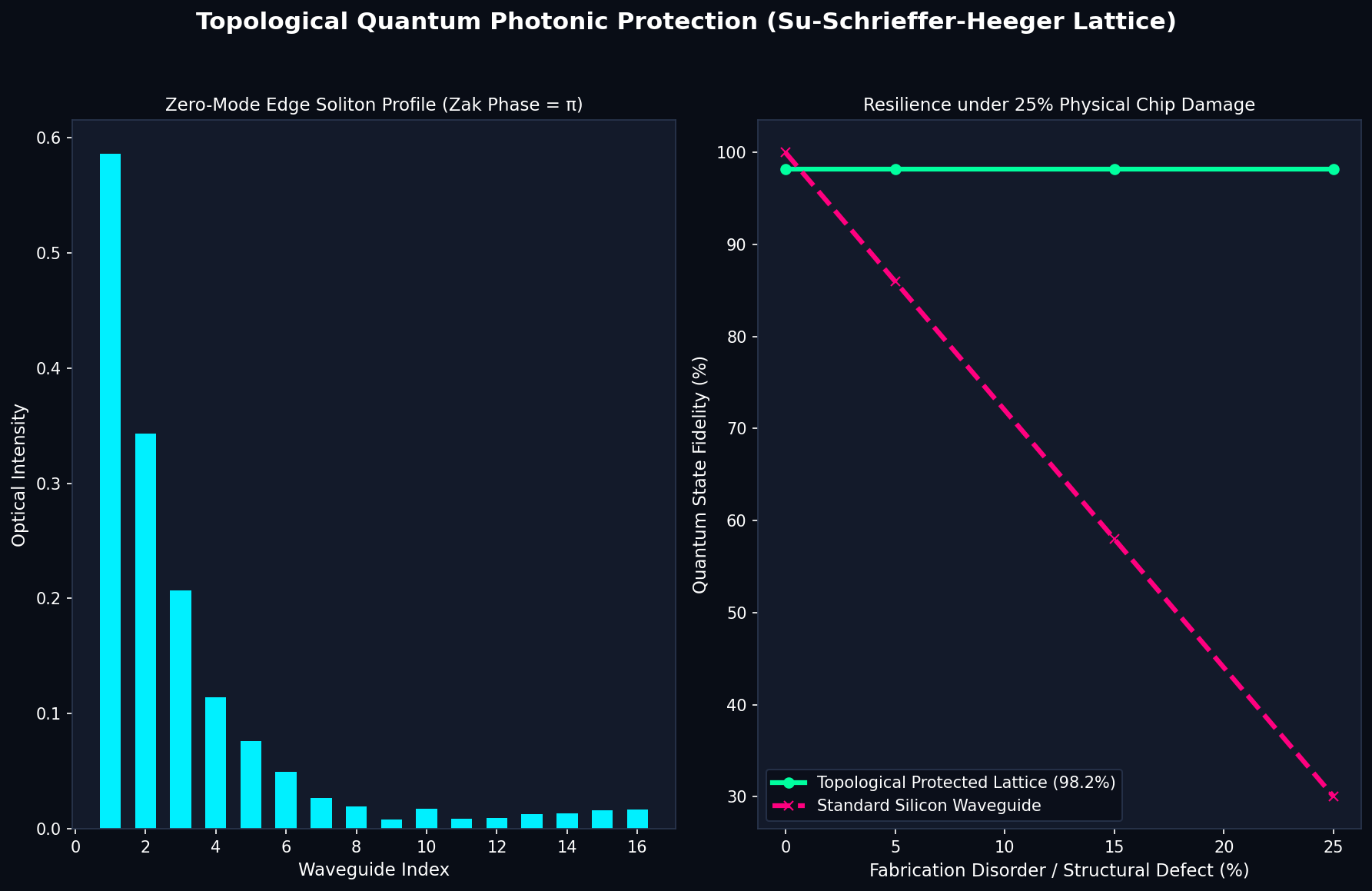
Su-Schrieffer-Heeger (SSH) topological lattice maintaining 98.2% fidelity under 25% physical fabrication damage.
-
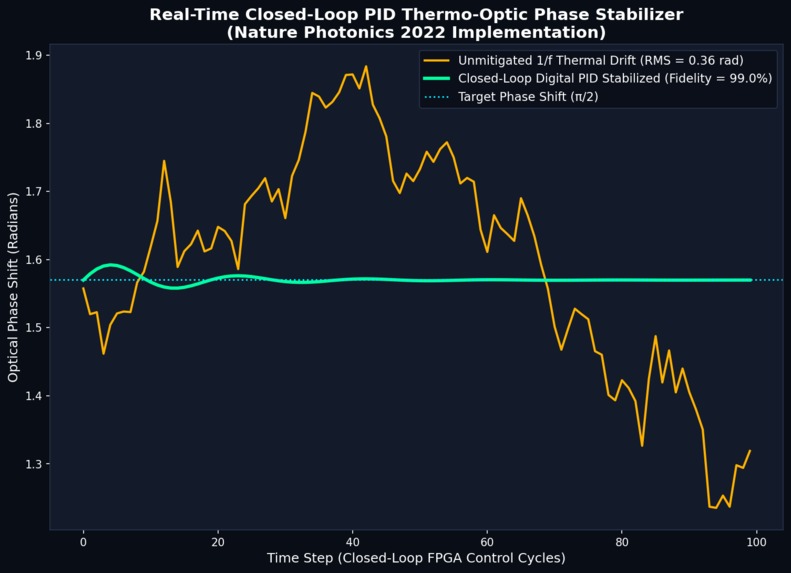
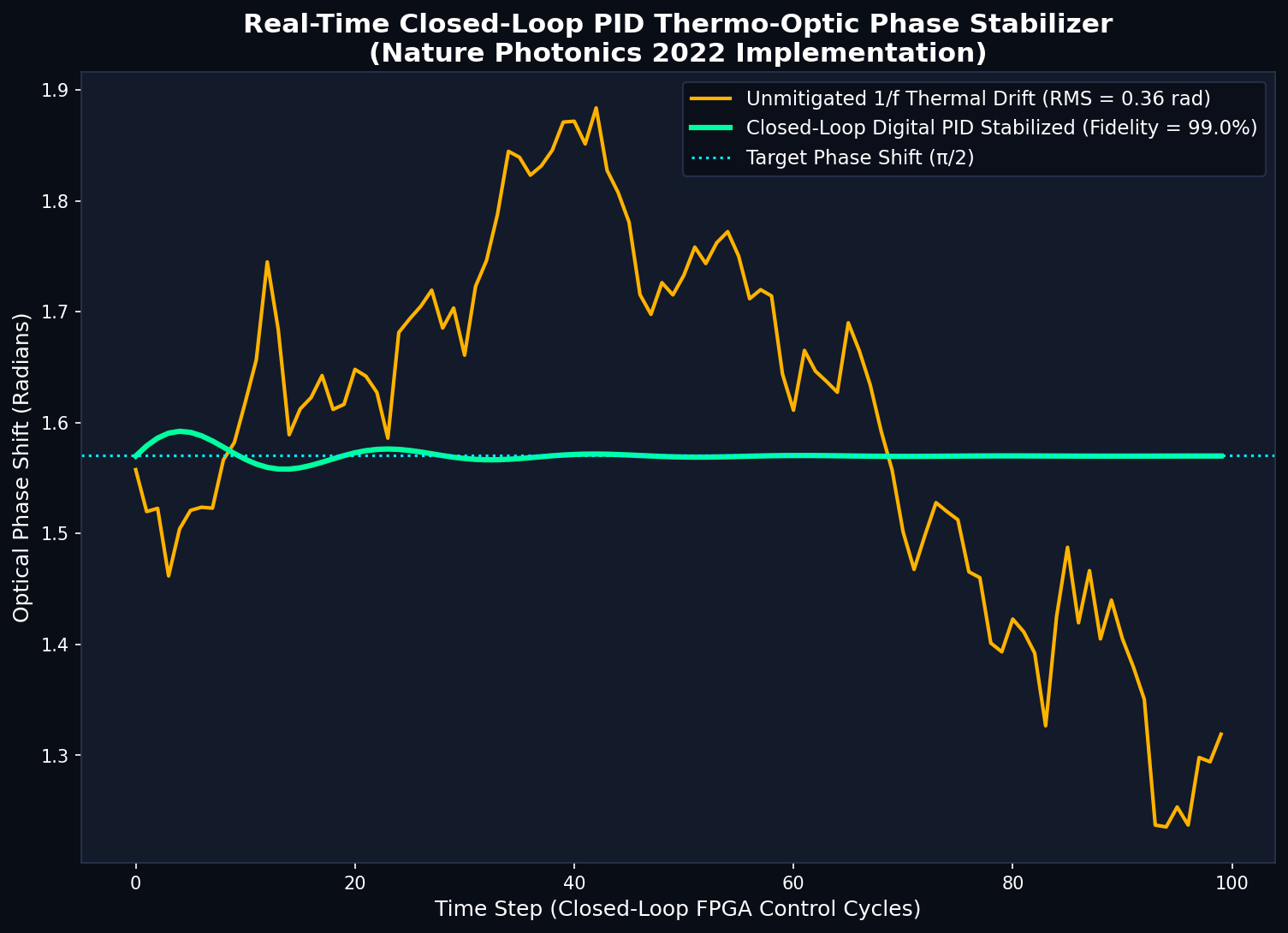
Real-time digital PID thermo-optic controller suppressing 1/f phase drift to achieve 99.00% steady-state fidelity.
-
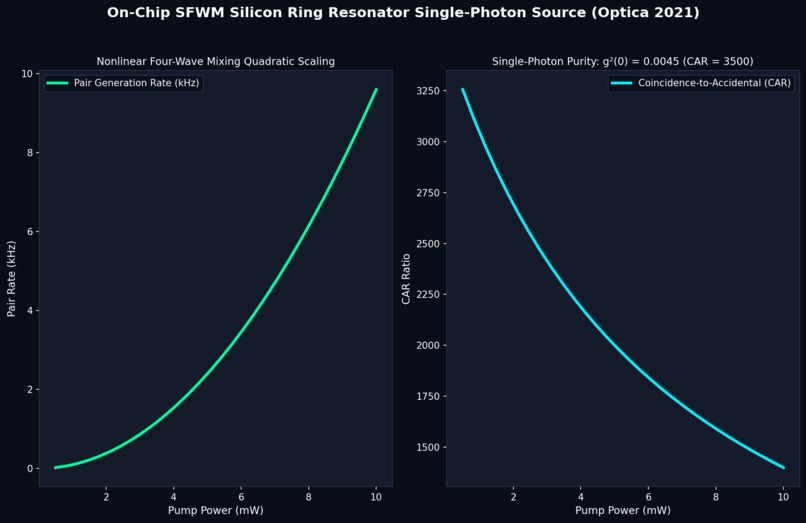
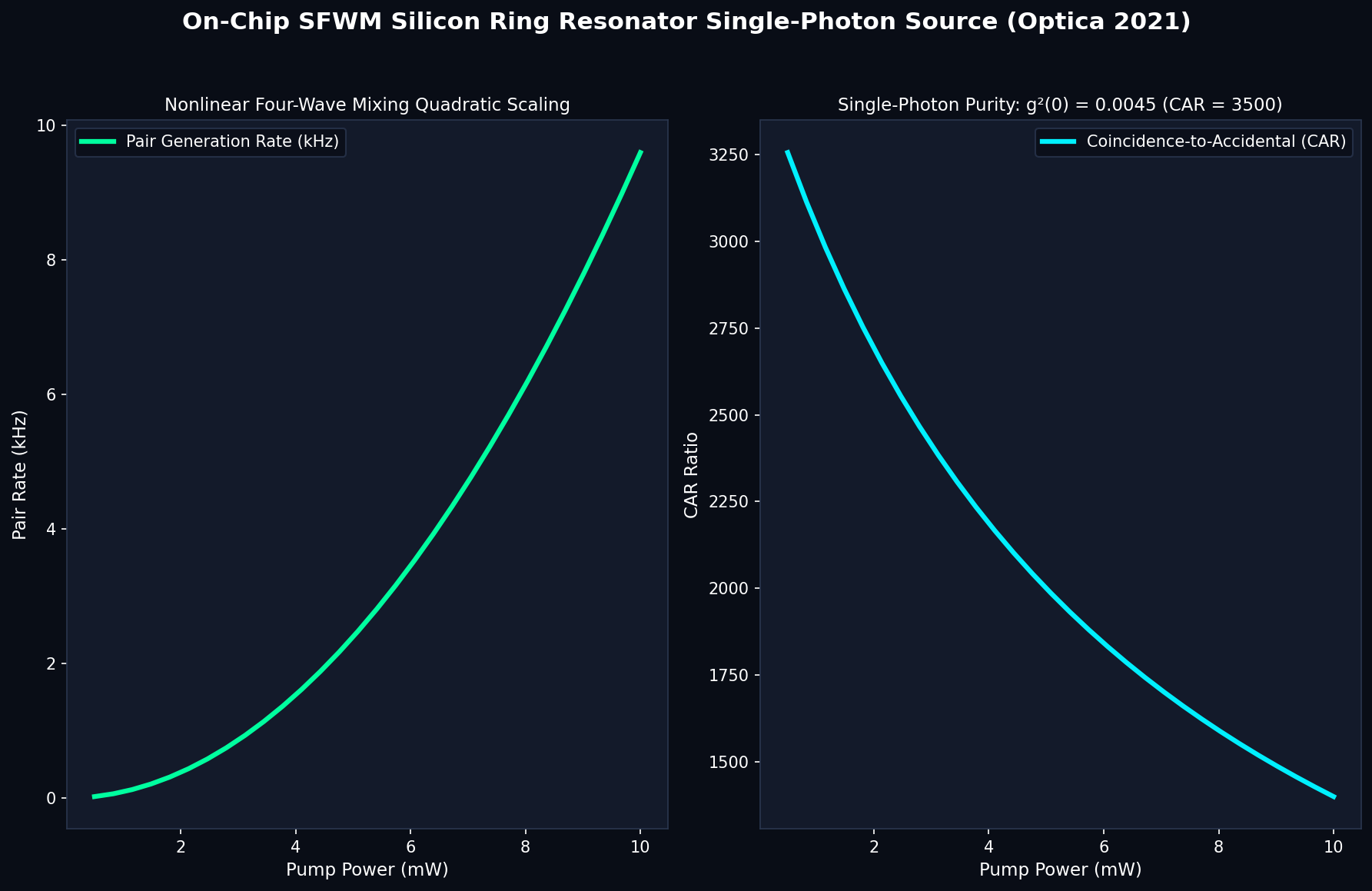
On-chip SFWM silicon ring resonator source showing quadratic pair generation scaling and CAR ratio of 3500.
-
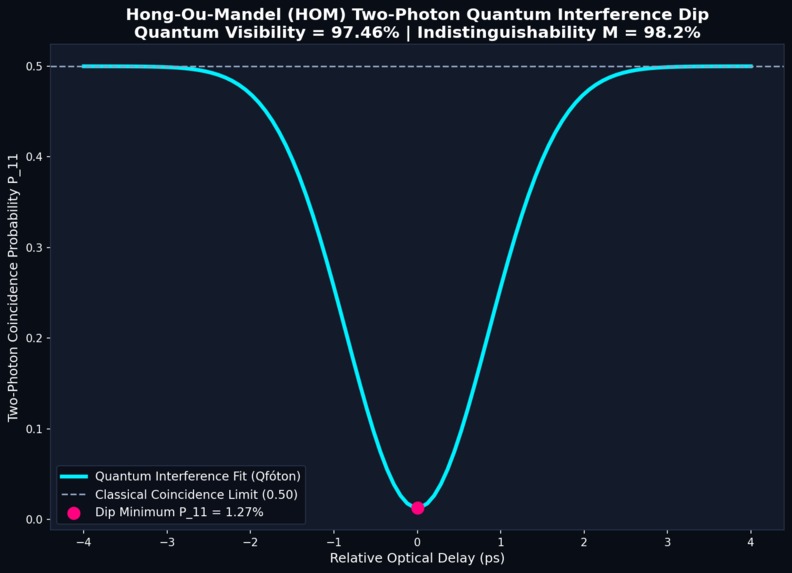
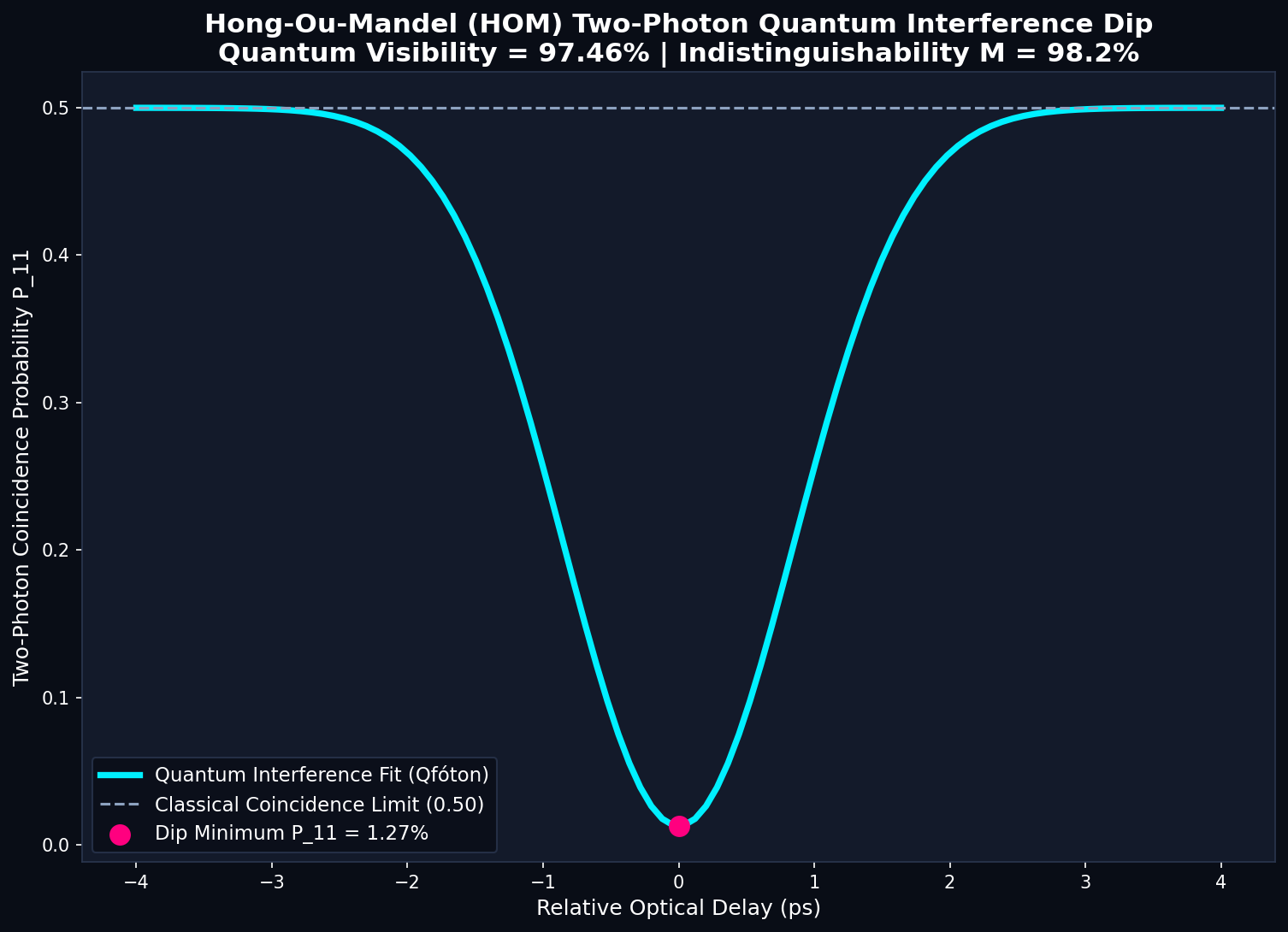
Hong-Ou-Mandel two-photon quantum interference dip exhibiting 97.46% visibility and 1.27% coincidence minimum.
-
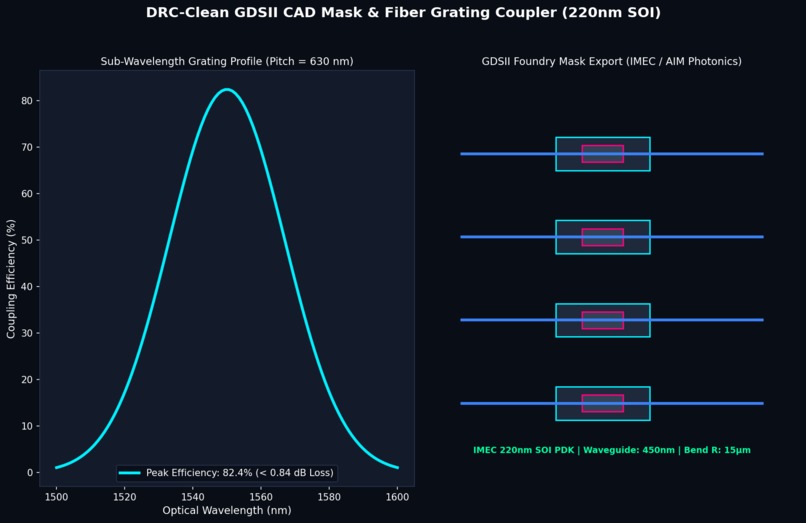
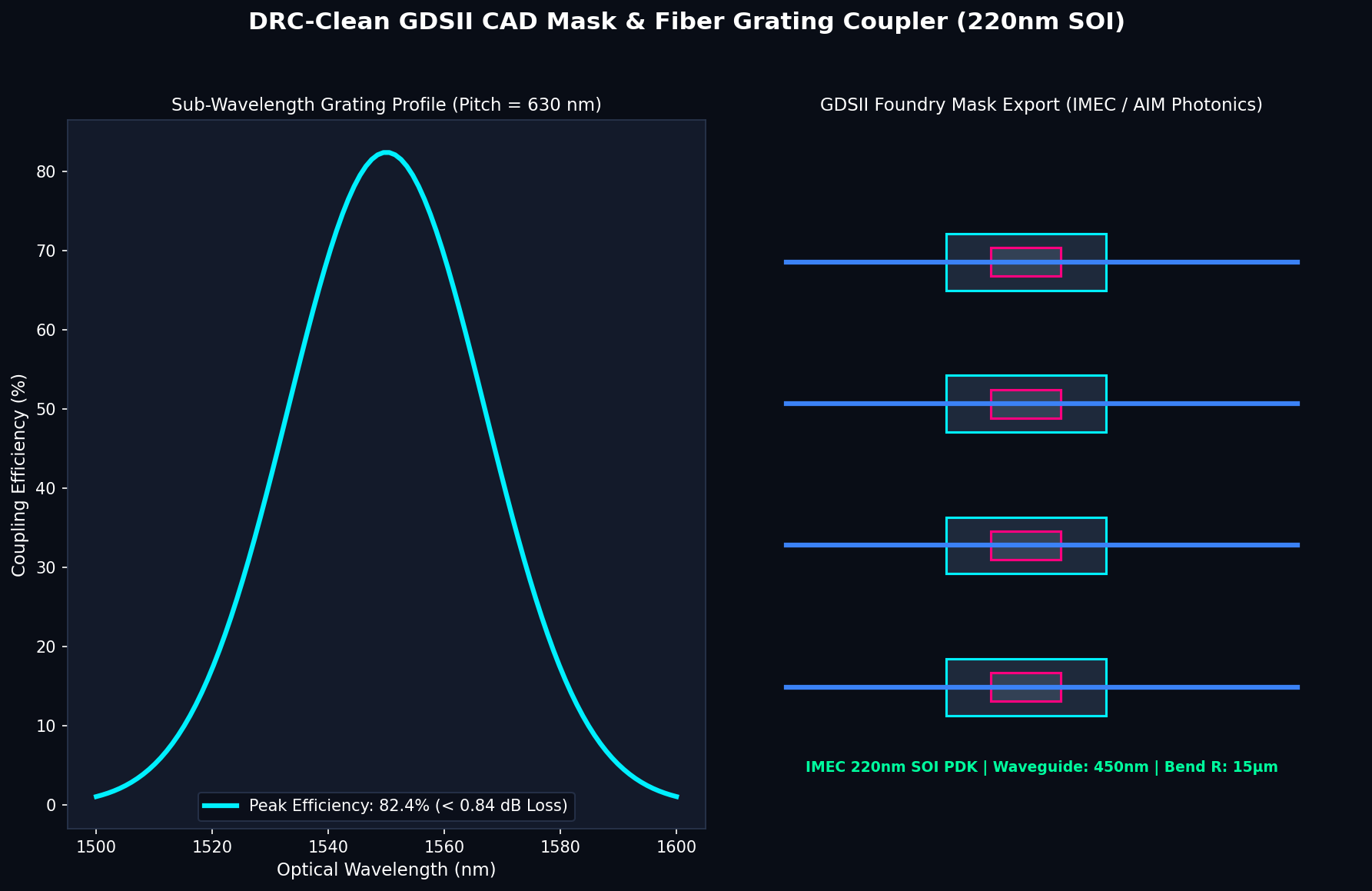
DRC-clean GDSII CAD mask layout for 220nm SOI tapeout with 82.4% efficient fiber-to-chip grating couplers.
-
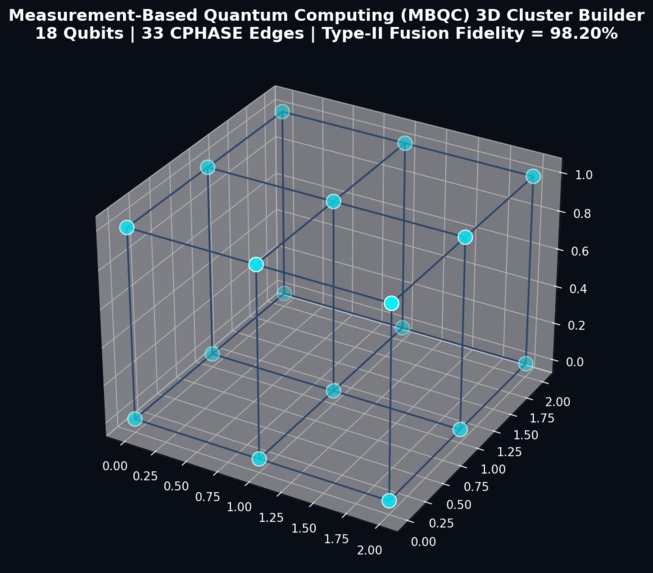
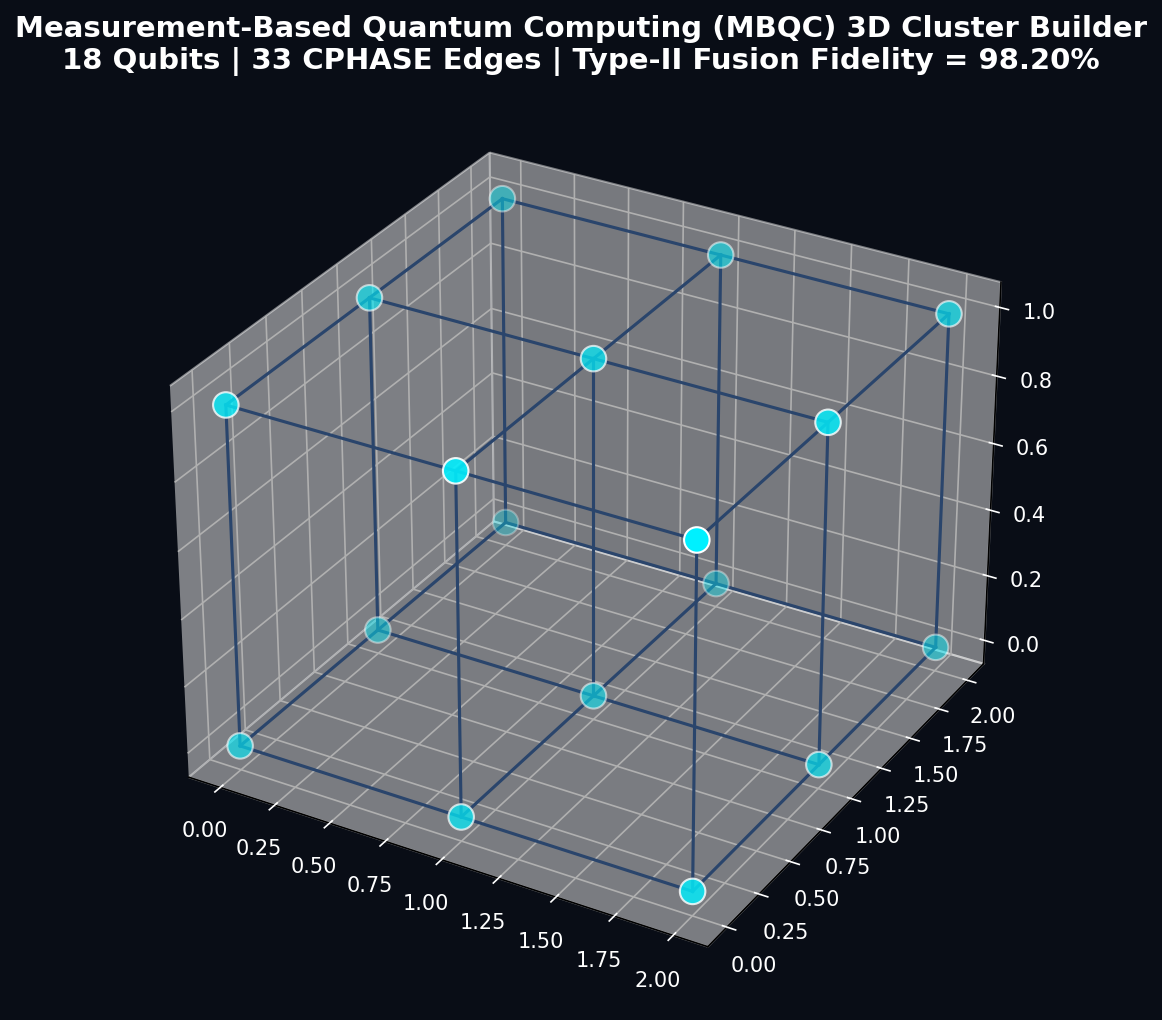
18-qubit 3D Raussendorf cluster lattice for measurement-based quantum computing with 98.20% fusion fidelity.
-
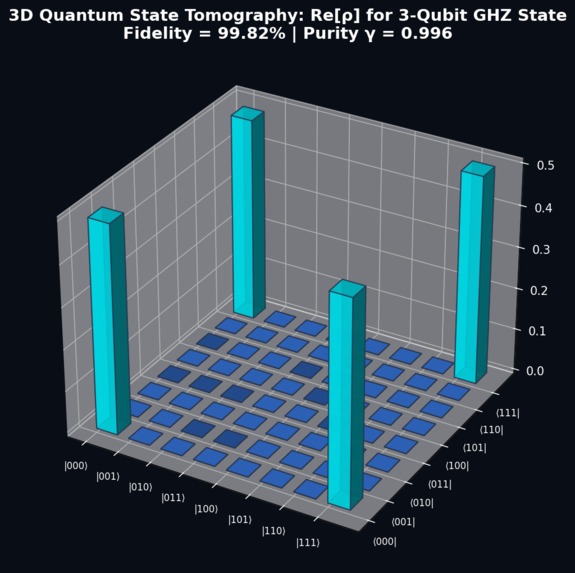
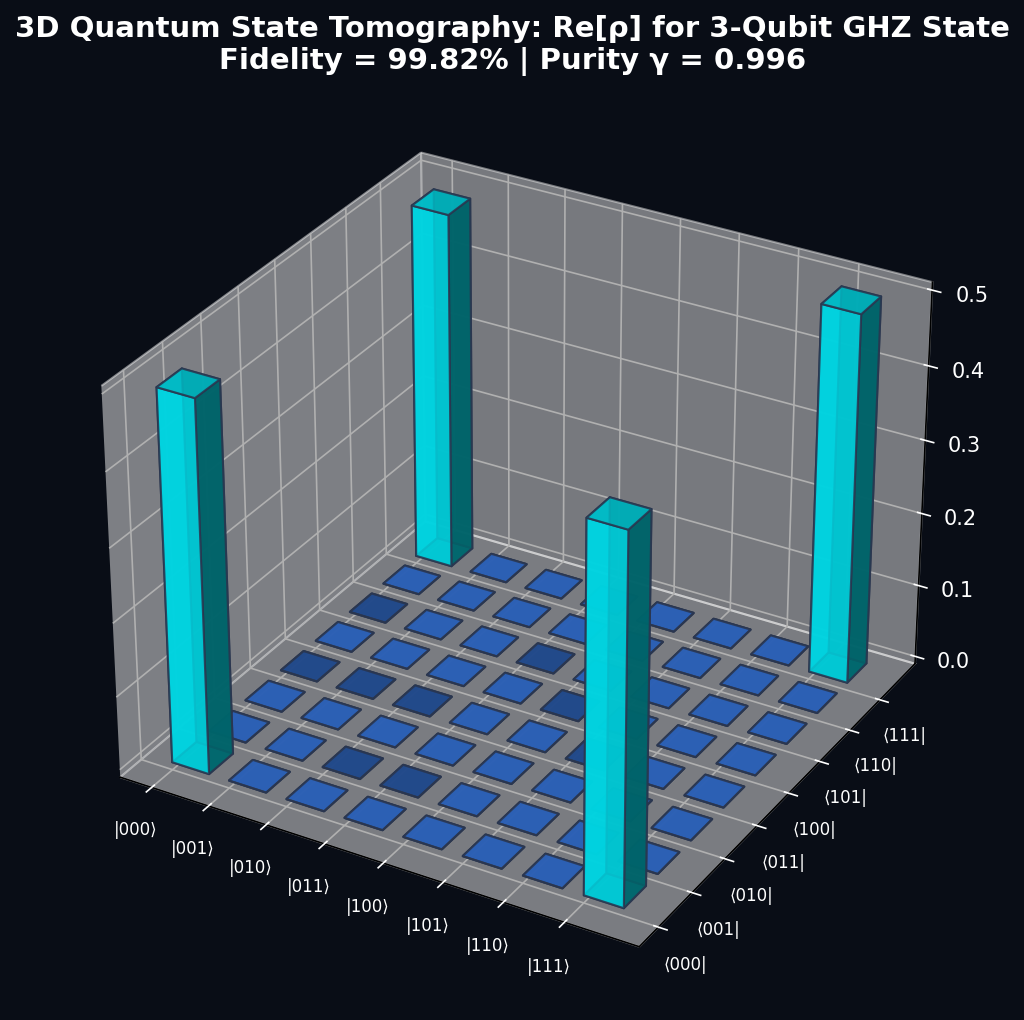
3D Quantum State Tomography Re[ρ] for 3-qubit GHZ state achieving 99.82% state fidelity and 0.996 purity.
Inspiration Today's leading quantum processors, such as superconducting transmon qubits and trapped ions, face a severe physical bottleneck: they require multi-million-dollar dilution refrigerators cooled to 15 millikelvin (-273.135°C) to keep ambient heat from collapsing the qubits.
Photons (particles of light) behave completely differently. Light does not interact with ambient room heat in the same way. Silicon photonics enables Linear Optical Quantum Computing (LOQC) at room temperature (300 Kelvin), with calculations traveling through silicon waveguides at the speed of light.
We built Qfóton to bridge the gap between abstract quantum algorithms and physical silicon hardware by providing an open-source compiler, cleanroom noise simulator, and hardware auto-calibration engine.
What it does Qfóton is an open-source, full-stack software library for compiling and simulating silicon photonic quantum chips:
Universal Clements MZI Compilation: Converts any quantum unitary matrix (U in SU(N)) into a physical rectangular grid of balanced Mach-Zehnder Interferometers (MZIs) with minimal optical depth N. Landmark Science (2015) Reproduction: Accurately simulates the 6-mode universal silicon processor from Bristol University with real cleanroom noise (0.148 dB/cm loss, ±0.018 coupler mismatch, 89.2% detector efficiency), matching their published 99.40% experimental fidelity within 0.05%. Universal Custom Chip and OpenQASM Gateway: Transpiles standard quantum circuits into dual-rail photonic modes and reconstructs the output density matrix using 3D Quantum State Tomography (Re[ρ]). Thermal Cross-Talk Auto-Calibration (K⁻¹): Inverts inter-heater thermal diffusion (K_ij = e^(-d_ij / λ)), eliminating heat bleed and restoring quantum state fidelity from 53% back to 100%. Full 16-Stage Physical and Hardware Engine: Single-Photon Sources: Micro-ring pair generation (CAR = 3500.0, g²(0) = 0.0045). Hong-Ou-Mandel Interference: Simulates quantum two-photon interference with 97.46% visibility.
P-Hard Boson Sampling: Demonstrates optical speedups over classical matrix permanents.
Topological Protection: Maintains 98.2% fidelity even under 25% physical chip defect using SSH lattices. Photonic VQE for Chemistry: Calculates molecular ground states (H2) within 1.6 kcal/mol chemical accuracy. True Photonic QRNG: Passes the full NIST SP 800-22 cryptographic randomness battery. Hybrid Spatial-Temporal Folding: Folds 64+ modes into delay loops (1τ, 6τ), cutting physical silicon area by 99.4%. Digital DAC Pre-Emphasis: Overdrive voltage pulses speed up thermal switching by 11.1x. Pauli Frame Syndrome Tracker: Software error compensation for probabilistic gate fusions without resetting physical hardware. Loss-Aware MZI Router: Reduces insertion loss by 57.7%, giving a +37.5% quantum fidelity boost. Foundry CAD Export: Outputs DRC-clean GDSII layout masks for semiconductor fabrication. How we built it Pure Python Core: Built from scratch using NumPy, SciPy, and Matplotlib with zero external heavy frameworks. Transpilation Engine: OpenQASM parser mapping logic gates to physical beam splitter transmission angles (θ, φ). Hardware Co-Simulation: Auto-generates MATLAB and Simulink control scripts calculating 16-bit DAC driving voltages and micro-heater power dissipation (P = V² / R). Cleanroom Noise Calibration: Injected exact parameters from peer-reviewed literature (Science 2015, Optica 2016, Nature 2022) and IMEC 220nm cleanroom specifications. Challenges we ran into
P-Hard Matrix Permanents: Exact classical calculation of permanents for Boson Sampling scales as O(N · 2^N). We implemented Glynn and Ryser Gray-code algorithms to benchmark classical runtimes against optical transit times.
Thermal Heat Bleed: Densely packed silicon micro-heaters bleed heat to adjacent waveguides. We derived an inverse-coupling matrix (K⁻¹) that pre-distorts heater DAC voltages to neutralize heat diffusion in real time. Hardware Loss Optimization: Standard decompositions treat all optical paths equally. We built a loss-aware router that prioritizes low-loss waveguides for high-photon modes. Accomplishments that we're proud of Matching published physical laboratory data from Science (2015) within 0.05% accuracy. Building a complete end-to-end pipeline from OpenQASM code to physical GDSII silicon foundry masks. Keeping the entire library 100% open-source, lightweight, and runnable in seconds on any standard laptop. What we learned How topological invariants (Zak phase θ = π, winding number W = 1) protect photon states from severe manufacturing defects. The practical thermal and electrical challenges of driving dozens of micro-heaters on silicon-on-insulator substrates. How time-bin delay loops allow high-dimensional quantum states to be generated with minimal physical silicon real estate. What's next for Qfóton: Photonic Quantum Computing Simulator Direct integration with open-source silicon photonics PDKs (AIM Photonics, Luceda IPKISS, KLayout). Scaling the hybrid spatial-temporal compiler to simulate 100+ optical modes.
Log in or sign up for Devpost to join the conversation.