Category:Education
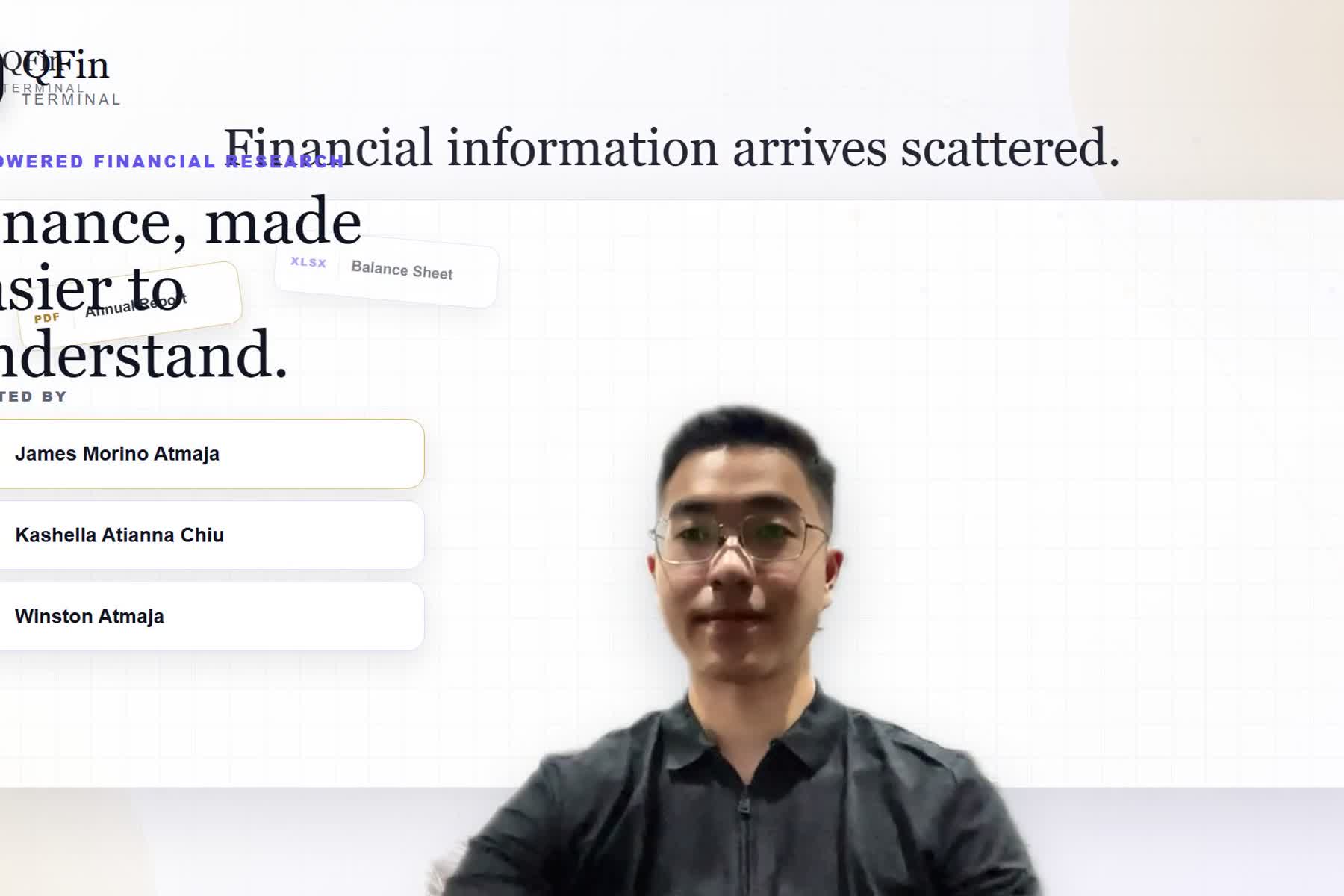
QFin Terminal automates a real financial research workflow: a user can ask a question, upload financial material, receive AI-assisted analysis, compare market data, and publish or discuss ideas with the community.
About The Project
Inspiration
I have always wanted to learn finance from scratch, but most finance platforms on the internet feel too complex for beginners. They often assume users already understand financial statements, valuation, ratios, markets, and investing language.
That inspired me to build QFin Terminal: an AI chatbot made specifically for finance, combined with a community forum where users can ask questions, upload financial documents, share ideas, and learn together.
What it does
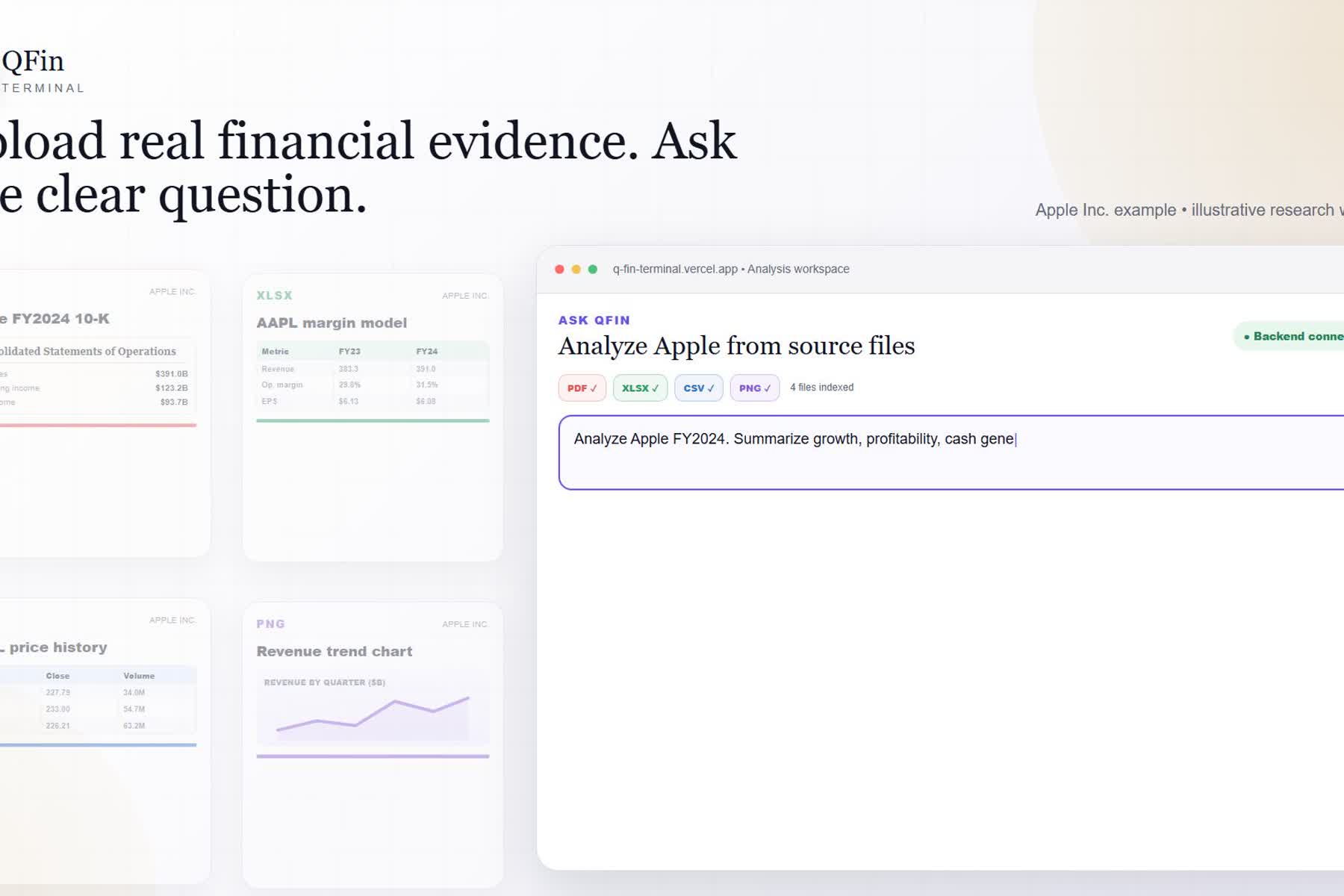
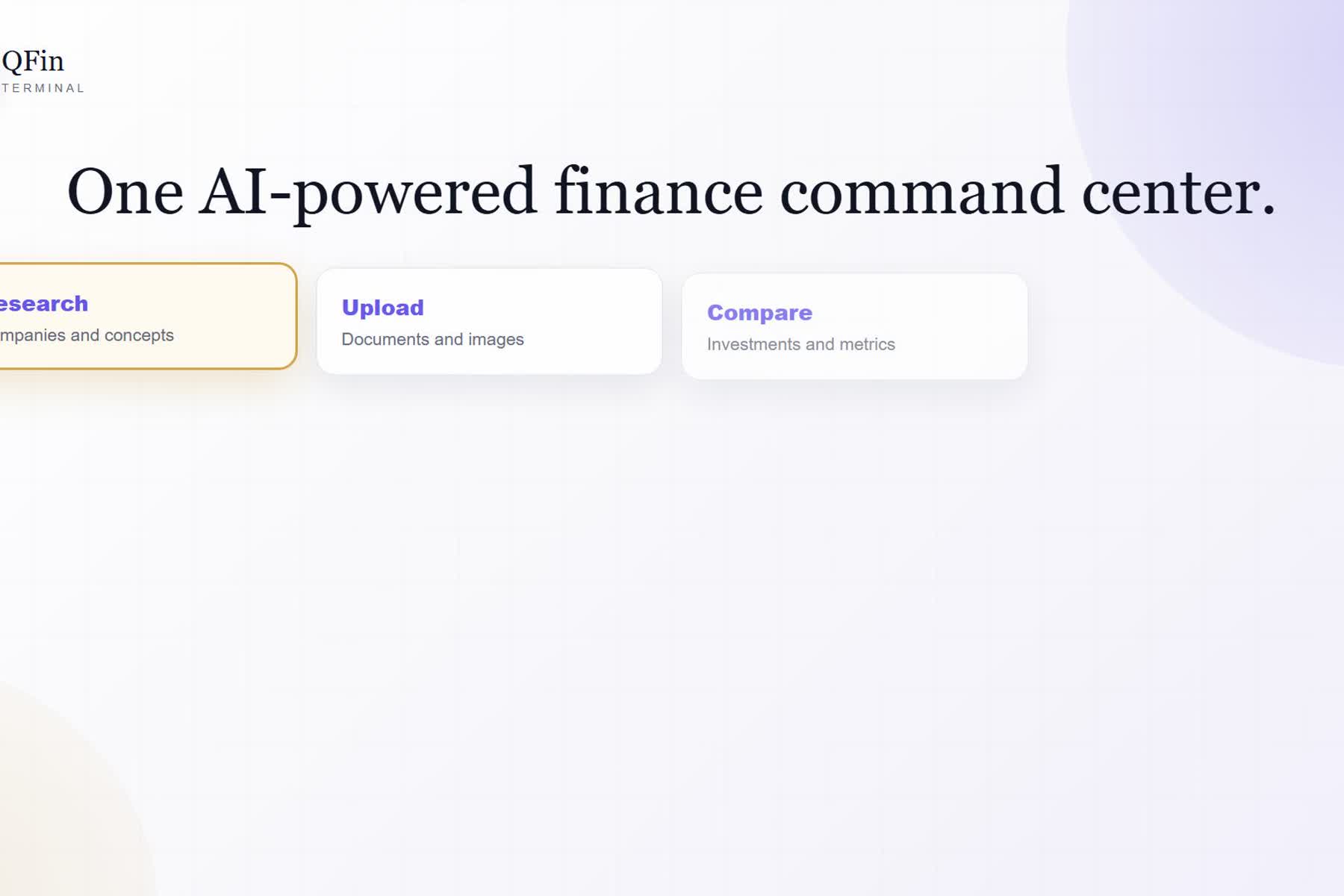
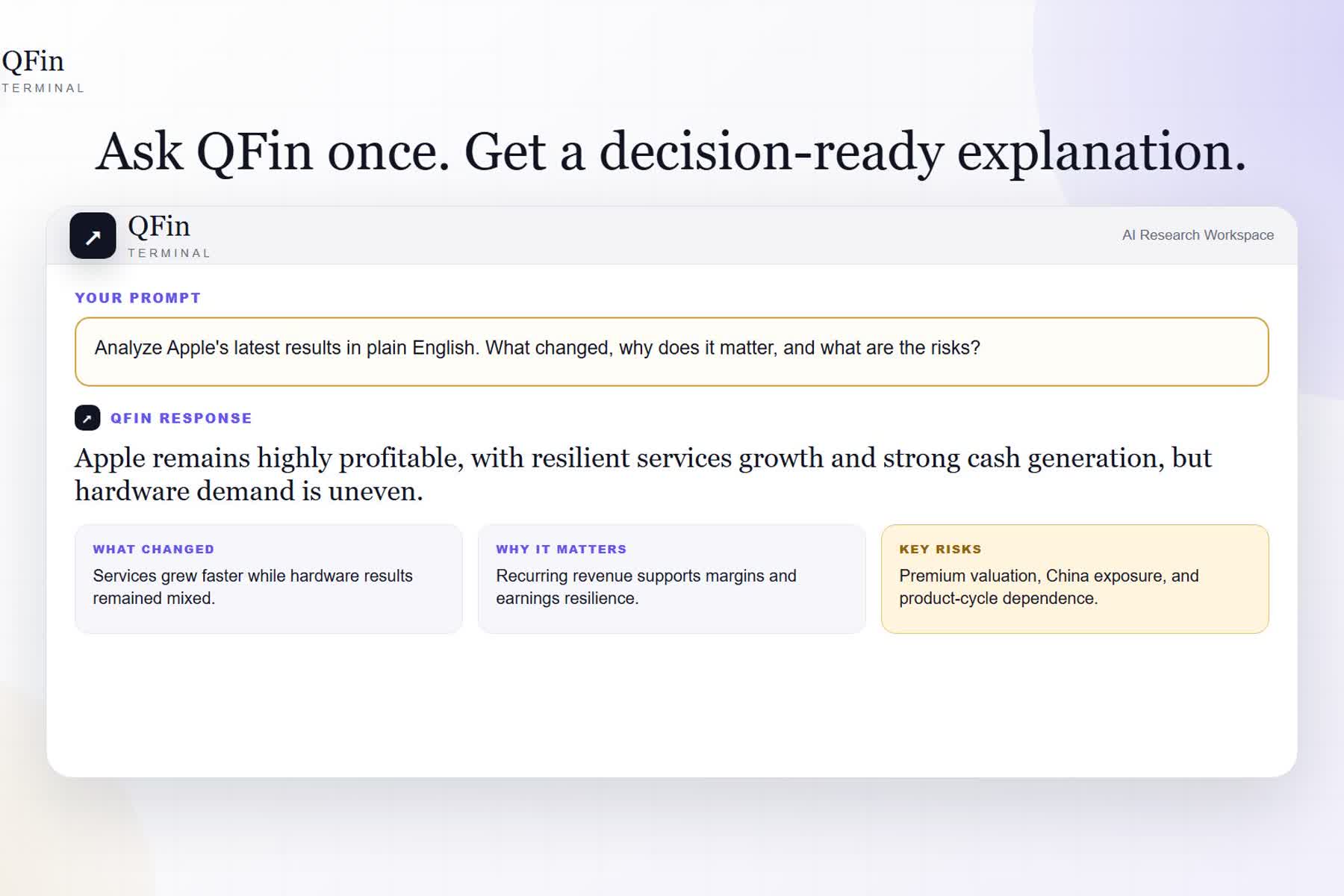
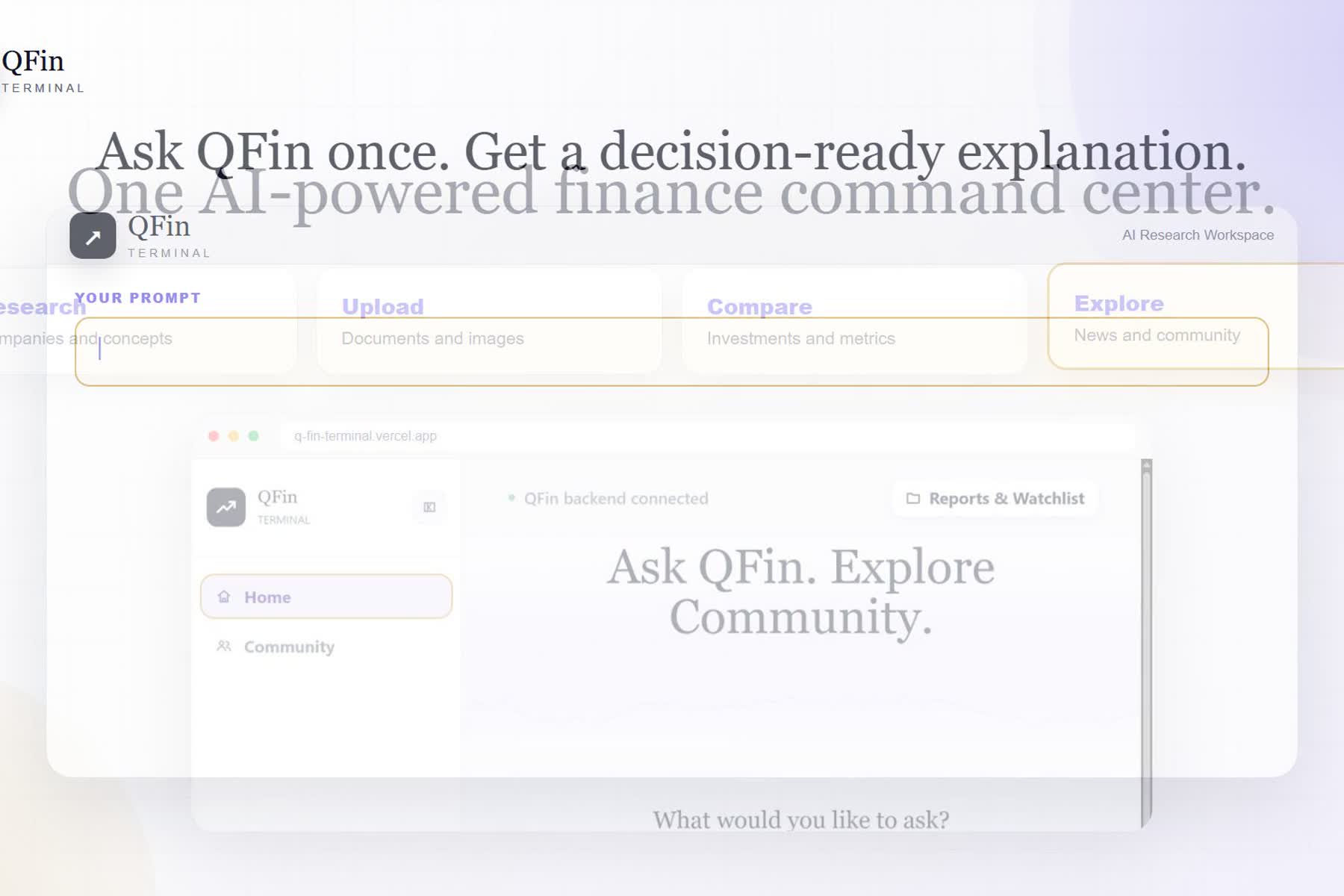
QFin Terminal is an AI-powered finance workspace. Users can chat with a finance-focused assistant, ask questions about companies, compare stocks, and upload files such as PDFs, Excel files, CSV files, documents, and images for analysis.
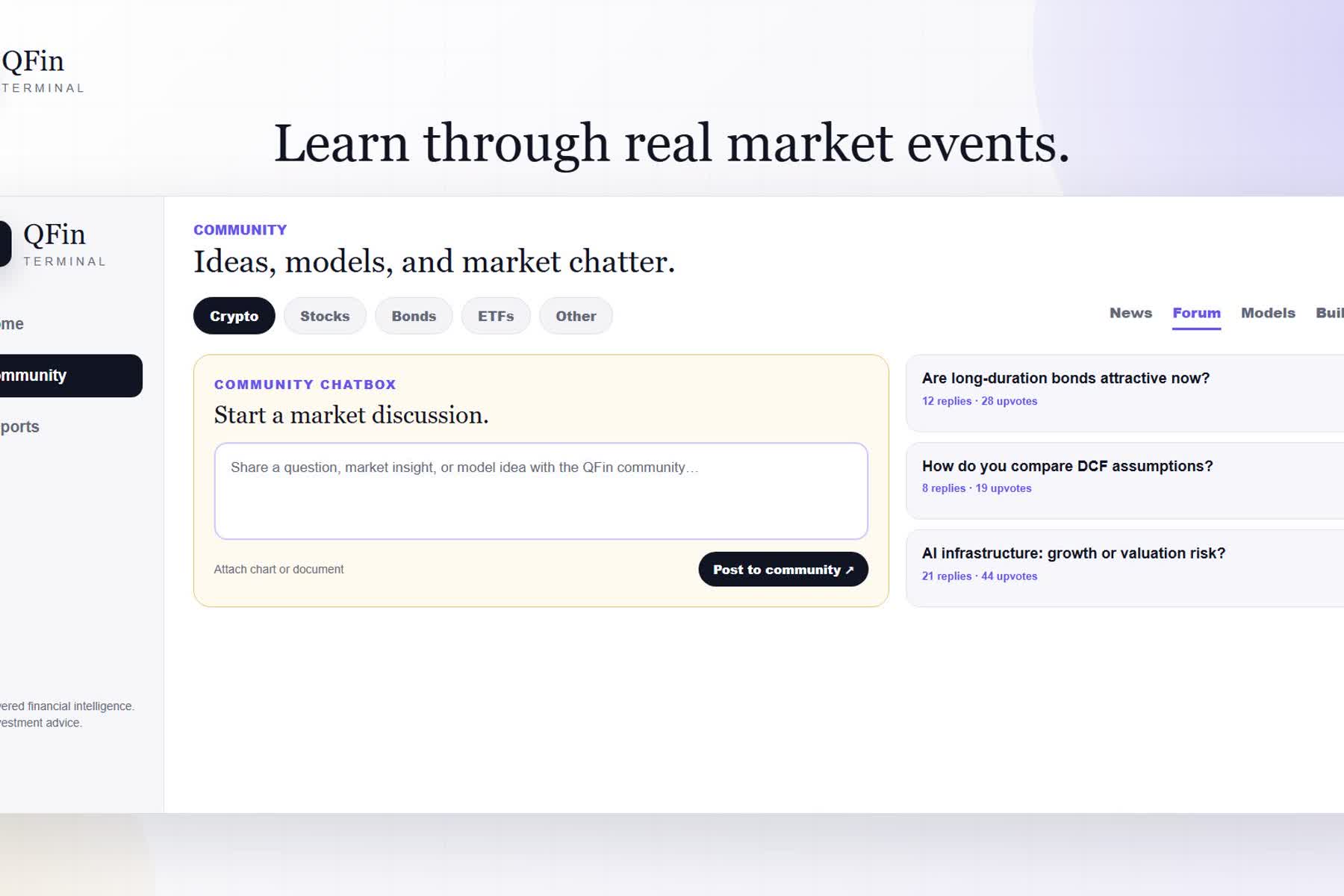
The chatbot can summarize annual reports, explain financial statements, identify risks, compare companies, and turn complicated finance data into beginner-friendly explanations. QFin also includes a community area where users can post finance discussions, comment on threads, share model ideas, and publish builder models into a shared gallery.
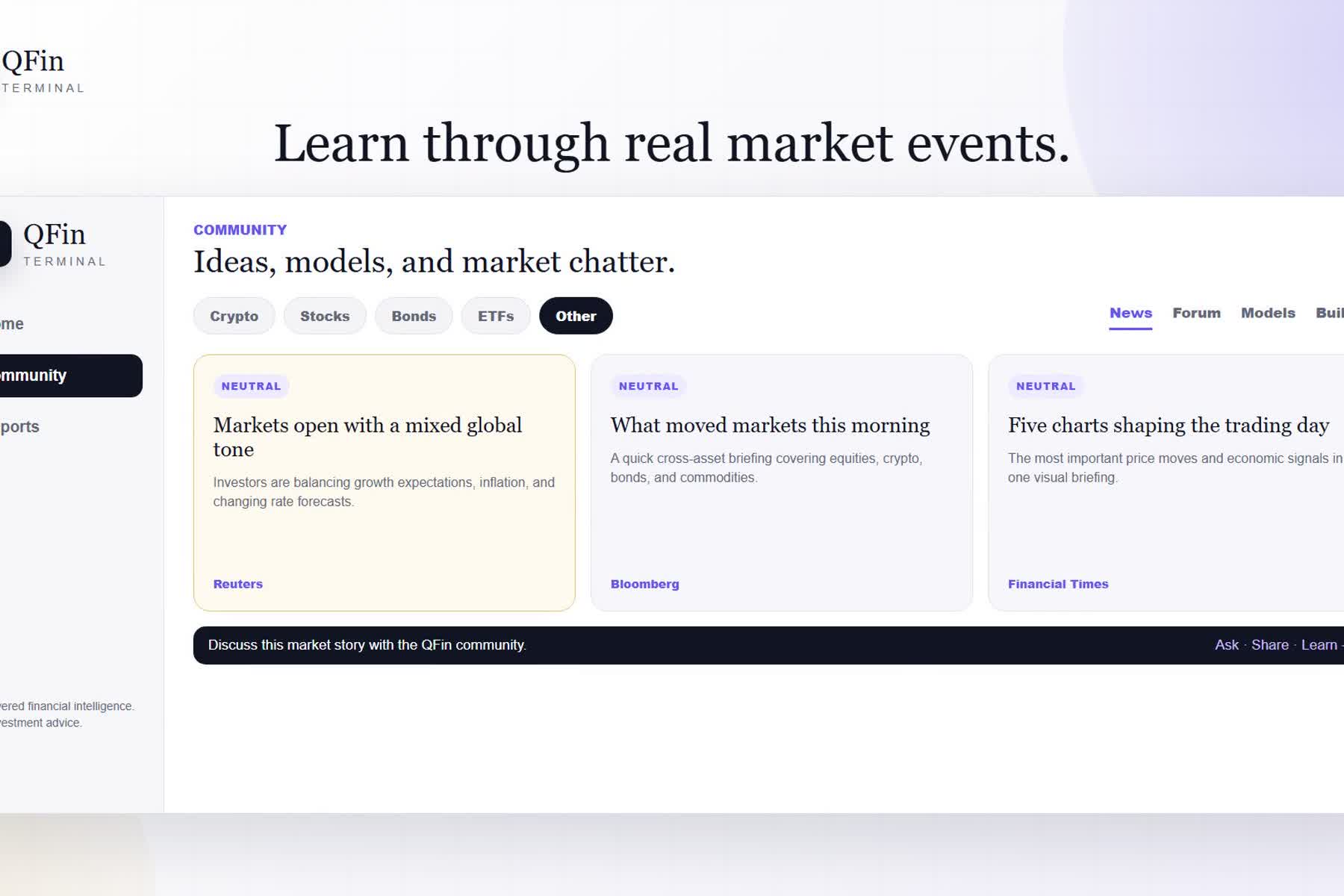
QFin also includes a news section with multiple finance categories, so users can learn through the market topics they already care about, such as crypto, stocks, bonds, ETFs, and other asset classes. Instead of forcing every user through the same finance path, QFin lets each person explore the market from their own interest area.
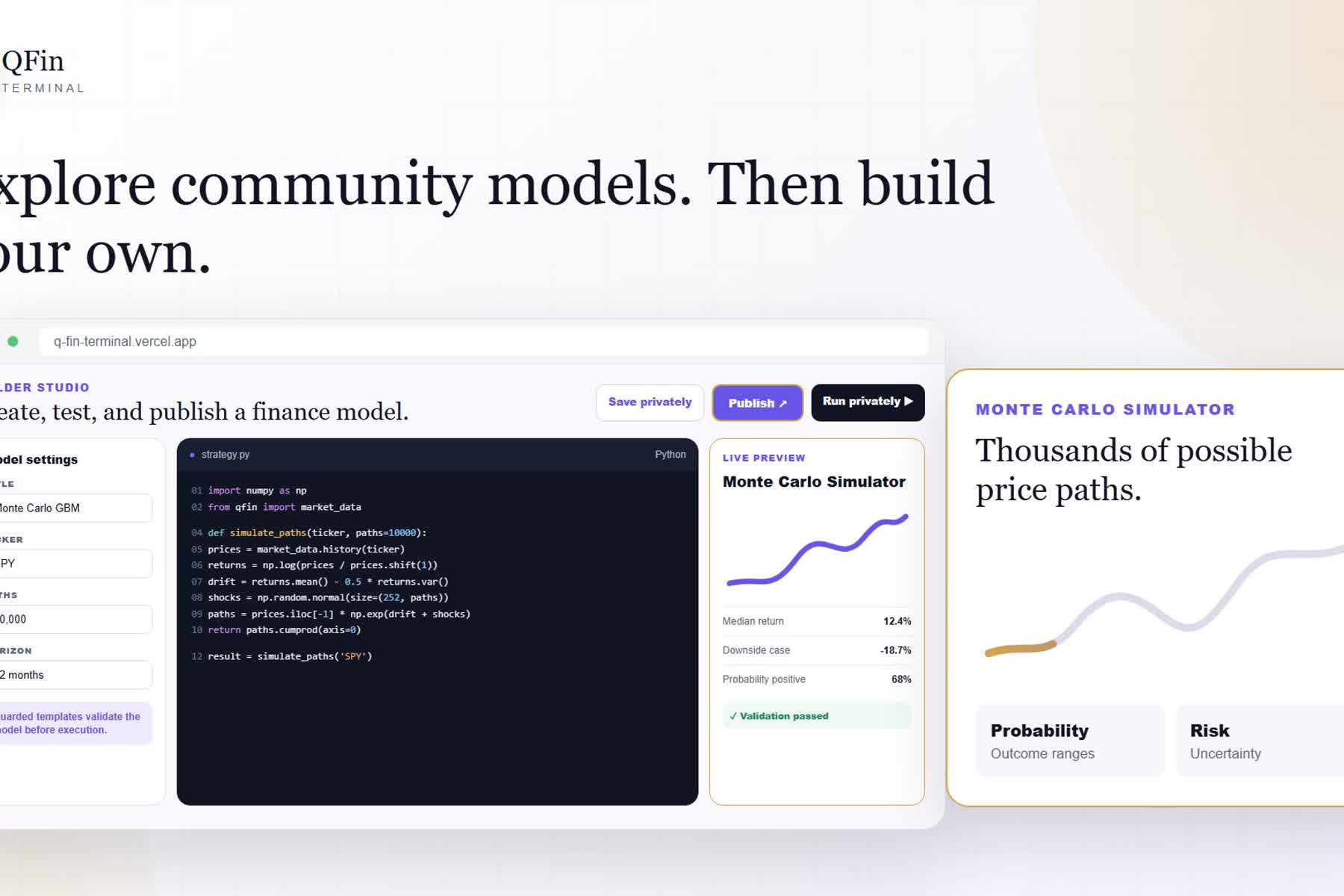
The models section lets users learn from trading and research models shared by other users. A beginner can browse model cards, study how other people think about market strategy, and reuse or adapt those ideas. The builder section then lets users create their own finance model directly inside the website and deploy it immediately into the QFin experience. For example, a user can build a Monte Carlo trading model that simulates many possible price paths, estimates return ranges, and helps explain why risk and probability matter more than one single prediction.
The goal is to make finance learning feel welcoming, more interactive, and more useful for people who are still learning.
How we built it
QFin Terminal is built as a full-stack web application. The frontend is built with React, TypeScript, and Vite. The backend is built with Python and FastAPI. Supabase and PostgreSQL power persistent community features, saved models, reports, and discussion data.
The AI layer connects to Qwen Cloud-compatible APIs through DashScope. The backend routes different tasks to different models: quick questions can use faster text models, deeper finance analysis can use stronger reasoning models, and uploaded screenshots or chart images can use a vision model.
For the Alibaba Cloud version, the FastAPI backend can be deployed to Alibaba Cloud so the project demonstrates Alibaba Cloud infrastructure in addition to Qwen Cloud model usage. The backend keeps all private keys server-side, while the frontend only talks to the public API endpoint.
What we learned
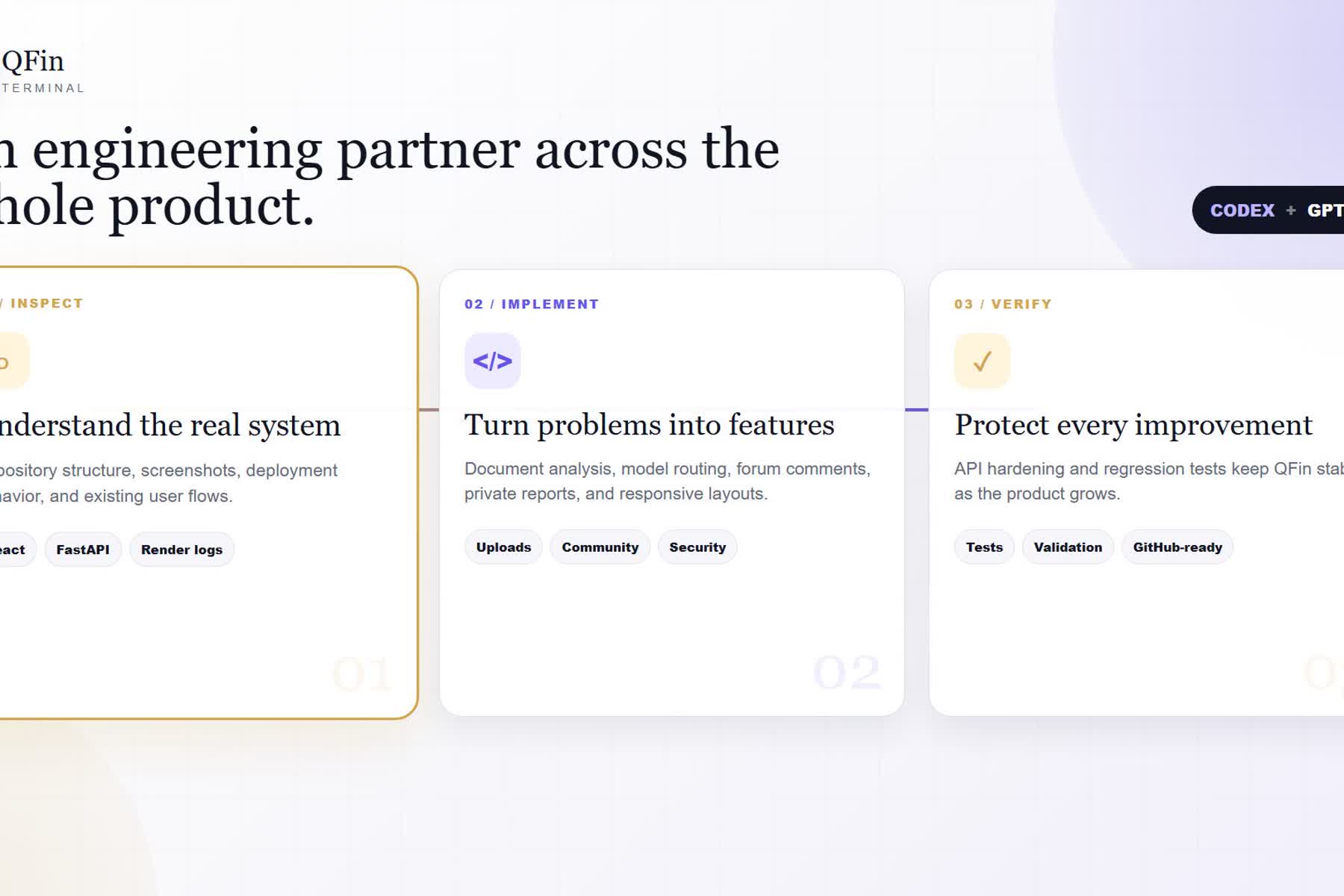
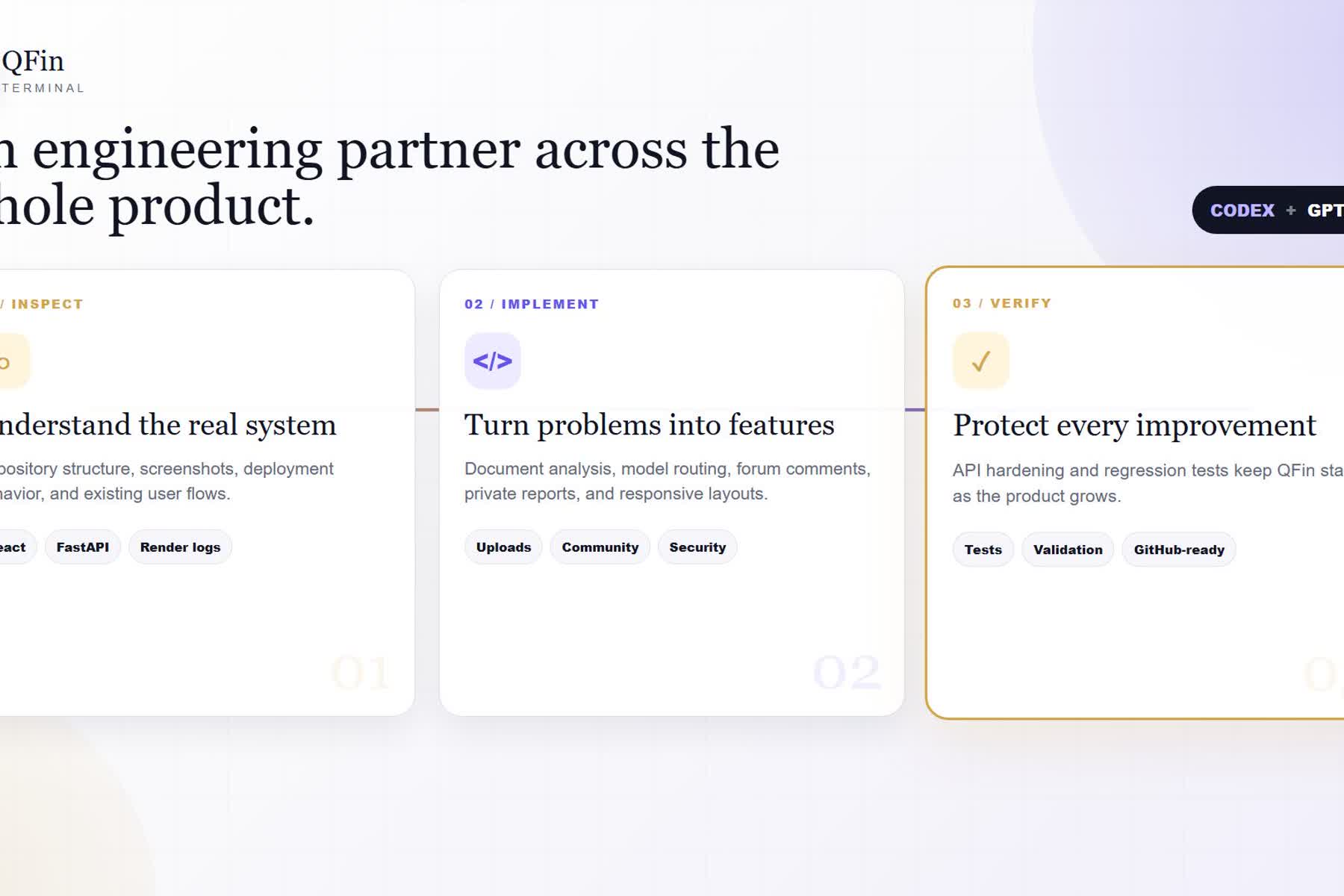
We learned that a useful AI finance product needs more than a chat box. It needs file ingestion, reliable model routing, market data, community persistence, security hardening, and a user experience that makes finance feel approachable.
We also learned how important fallback design is. Model quotas, cloud configuration, and file formats can all fail in different ways, so QFin is designed to route requests, parse files safely, and keep the user focused on the finance question instead of the infrastructure.
What's next for QFin Terminal
Next, we want to add a best-price execution feature that compares available buying and selling prices across connected stock exchanges. When an investor wants to buy a stock, the system would try to find the lowest available selling price. When an investor wants to sell, it would look for the highest available buying price. This could help users receive more competitive execution prices and potentially reduce trading costs.
We also want to add trading signals connected to real-time stock exchange dashboards around the world. Traders could use these signals to learn how markets move, study different strategies, and better understand global financial opportunities.
Long term, QFin Terminal can become a complete AI finance copilot for learning, research, community discussion, portfolio analysis, and market execution
Built With
- ai-chatbot
- cloud
- community-forum
- csv-analysis
- dashscope
- excel-analysis
- fastapi
- finance
- financial-data-apis
- github
- glm
- image-analysis
- pdf-analysis
- postgresql
- python
- qwen-vl
- react
- render
- rest-api
- stock-research
- supabase
- tailwind-css
- typescript
- vite

Log in or sign up for Devpost to join the conversation.