-
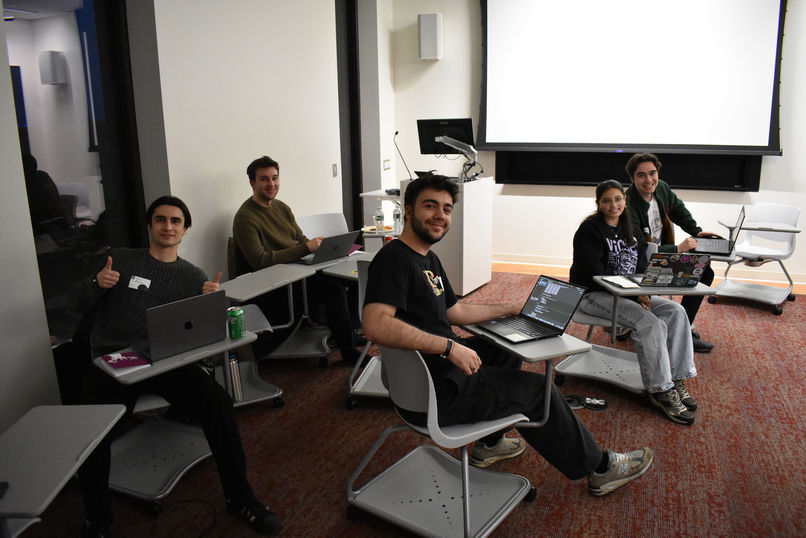
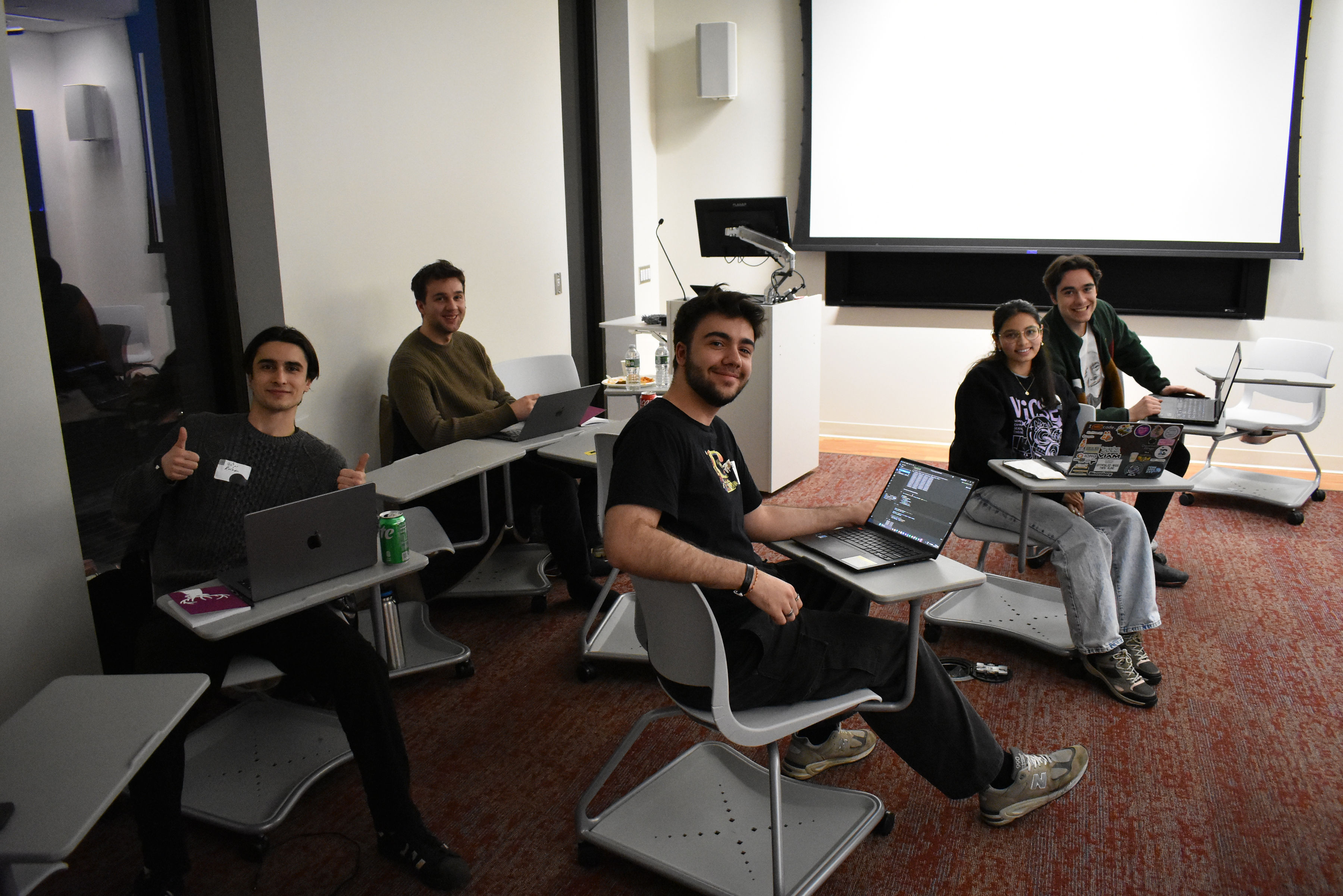
Meet the team!
Inspiration
Insurance companies like The Hartford manage portfolios of insured properties where correlated risks (e.g., from natural disasters) can lead to major losses. We were inspired to explore how quantum computing, particularly Variational Quantum Eigensolver (VQE), can help optimize such portfolios for lower total risk while maintaining high return.
What it does
QEdge Portfolios selects the optimal subset of properties (out of many) by:
- Minimizing total correlation risk (from a correlation matrix)
- Maximizing expected return
- Enforcing a strict budget (select exactly B properties)
The system compares three solutions:
- Random selection
- Classical solver (CVXPY)
- Quantum-enhanced selection using VQE
How we built it
- Formulated the problem as a QUBO (Quadratic Unconstrained Binary Optimization)
- Converted to Ising Hamiltonian for quantum evaluation
- Implemented VQE with PennyLane and a parametrized quantum circuit
- Benchmarked against classical solutions using CVXPY
- Visualized energy convergence, portfolio choices, and comparative performance
Challenges we ran into
- CVXPY solver compatibility required tuning and fallbacks
- Mapping QUBO to Ising with penalties required care to enforce the budget
- Quantum circuit design needed to balance expressive power and convergence stability
- Interpreting quantum measurement results into actionable portfolio decisions
Accomplishments that we're proud of
- Developed a full quantum-classical pipeline to solve a real business problem
- Achieved measurable improvement over both random and classical baselines
- Demonstrated the feasibility of running VQE on practical insurance data
- Created a reusable framework scalable to IBM Q or Braket
What we learned
- VQE is a powerful hybrid method even on today’s NISQ devices
- Penalty methods can enforce hard constraints in quantum optimization
- Classical post-processing is key to interpreting quantum results
- Domain-specific quantum optimization is already valuable
What's next for QEdge Portfolios
- Scale the model to 50+ properties
- Add real-world insurance data from The Hartford
- Introduce ESG and exposure constraints
- Deploy to real quantum backends (IBM Q, Rigetti, Braket)
- Create a front-end interface for actuaries to interact with quantum optimization results
Authors
- Aanya Bhandari
- Roman Tudor
- Felix Caron
- Victor Rochon
- Jacopo Dardini
Built With
- pennylane
- python
- qiskit
- rigetti

Log in or sign up for Devpost to join the conversation.