Inspiration
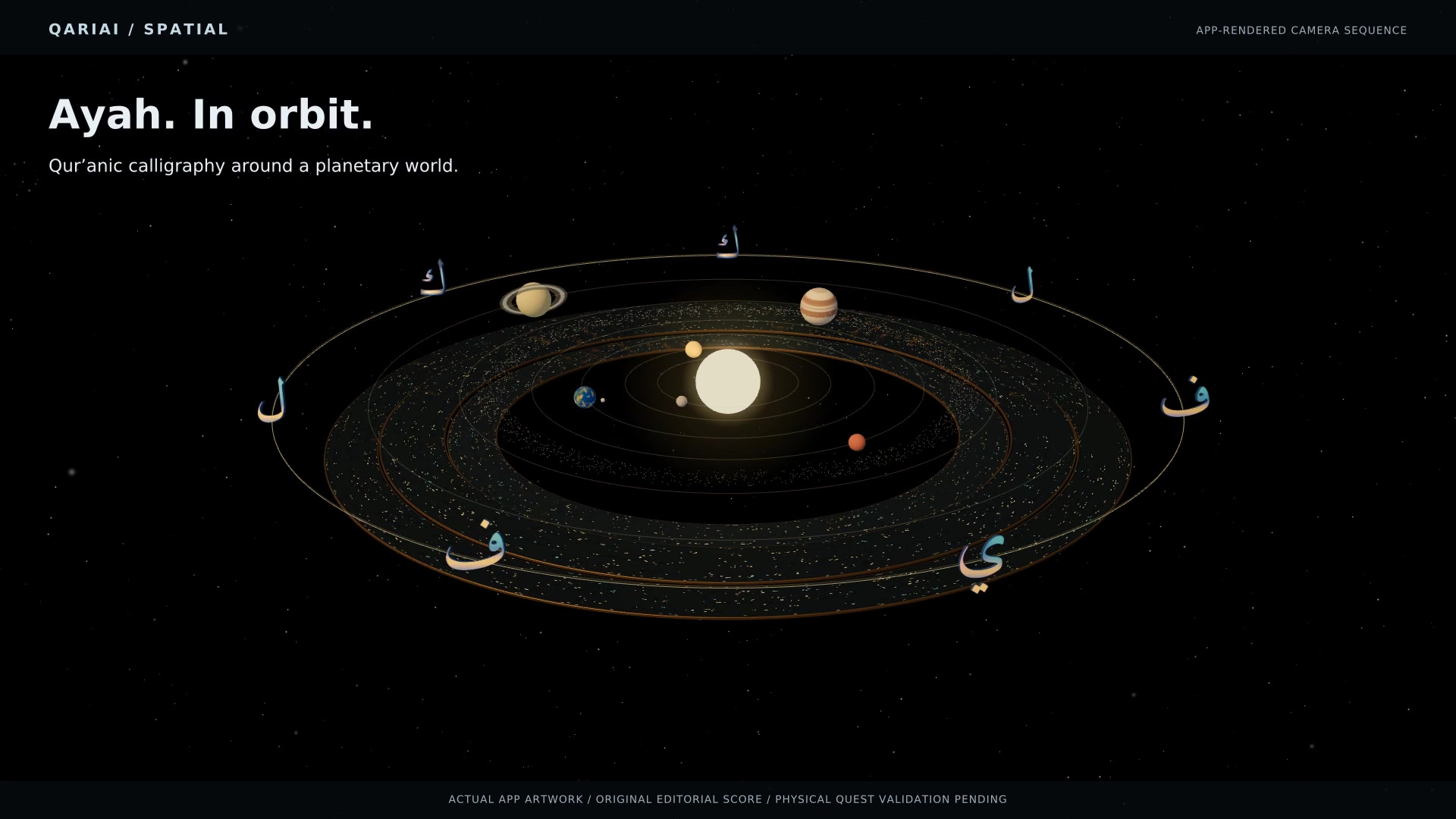
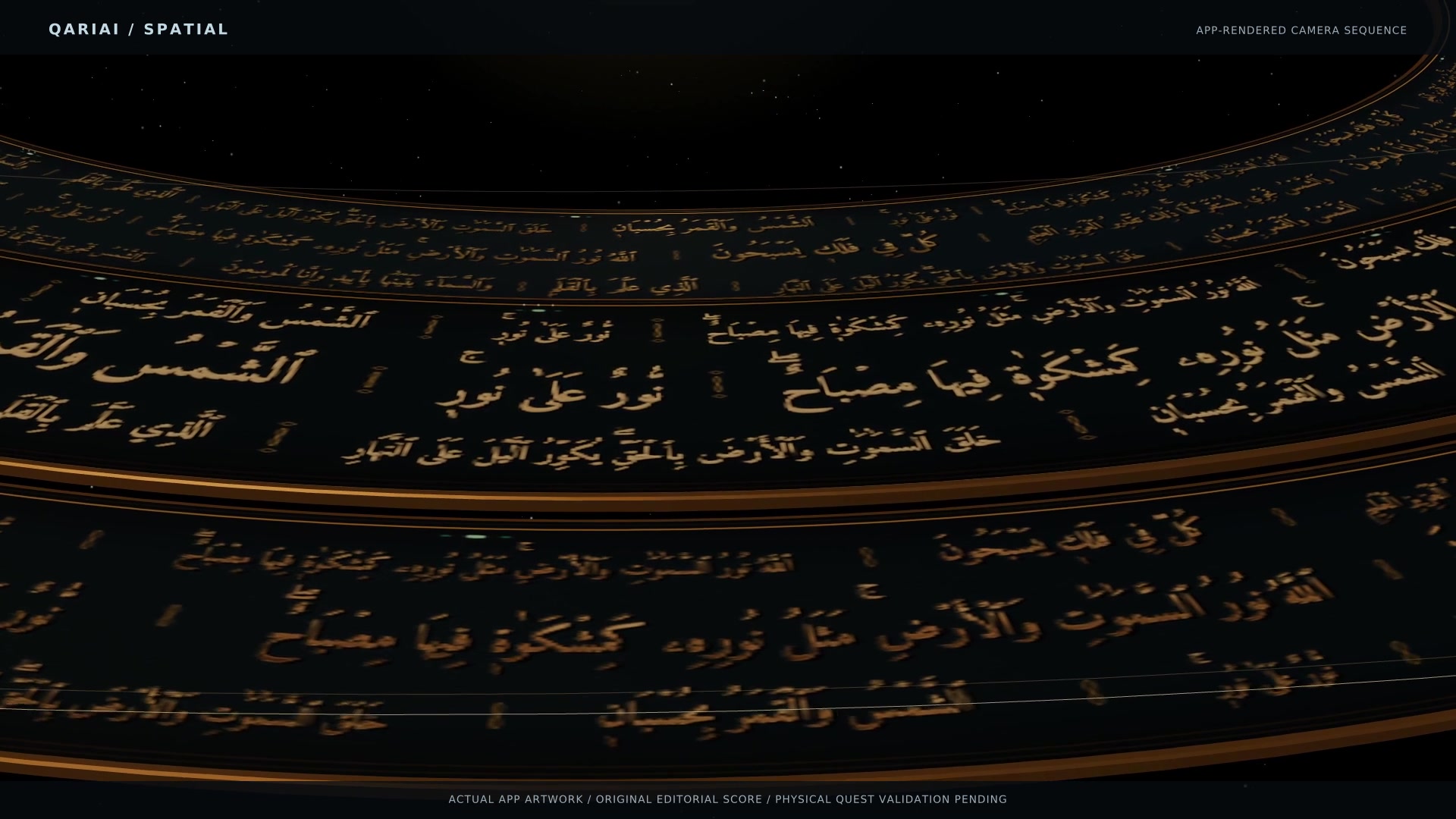
QariAI Spatial centres on Qur’anic ayah calligraphy surrounding a planetary world. The idea is to give calligraphy a spatial presence: something visitors can approach, inspect and explore from different perspectives.
Living Orbit is the central artistic installation. Harf Studio extends the experience into guided practice with individual Arabic letterforms.
What it does
Living Orbit combines calligraphic rings, a stylized solar system and mirrored Arabic letters. Users can explore the scene, select letters, open a spatial menu, pause the orbit and bring the installation closer.
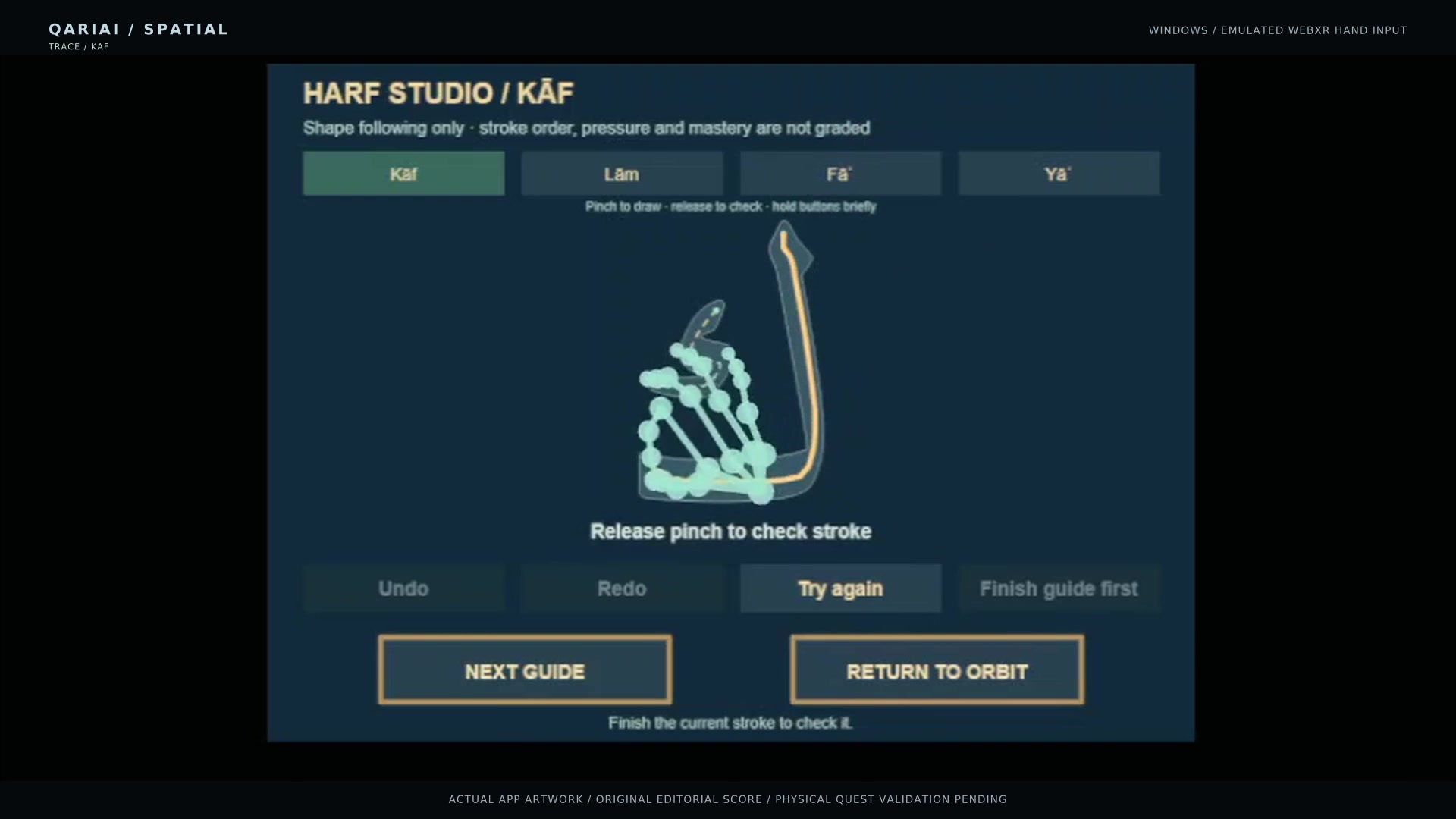
Harf Studio offers four guides: kāf, lām, fāʾ and yāʾ. Users pinch near the writing board to trace a form, release to check a stroke, and place separate components and dots. Undo, Redo, retry and guide-selection controls support experimentation.
Completing a guide unlocks a font-derived 3D letter sculpture within the same immersive session. Users can rotate it, reset the view and return to the guide.
The guides evaluate shape following and required components. They do not assess stroke order, pen pressure or calligraphic mastery.
How I built it
I built the browser experience using TypeScript, React, Three.js, React Three Fiber, Canvas and WebXR.
The calligraphy and letter sculptures use Amiri font assets, with attribution and the SIL Open Font License retained. Hand input uses WebXR joints, with locally rendered joint and bone visuals.
Challenges and what I learned
The main challenges included preserving Arabic contours and detached components, keeping spatial controls deliberate, handling interrupted tracking, and maintaining a clear transition between exploration, practice and inspection.
The work reinforced how much spatial interfaces depend on readable framing, visible input feedback and clear consequences for each action.
Validation and demonstration
Windows testing with IWER Quest 3 hand emulation passed all four guides, 3D inspection and return to Living Orbit.
The demonstration combines staged camera sequences rendered by the actual application with recorded Windows WebXR hand emulation. It includes an original procedural musical score.
Physical Meta Quest comfort, tracking and performance validation remain pending.
What’s next
The next priorities are physical Quest 3/3S validation, accessibility, clearer onboarding and refinements based on user testing.
Target launch: 1 December 2026 as a public beta.
Credits
Created by Nabil Assad.
Amiri font: Amiri Project Authors, SIL Open Font License 1.1.
What it does
How we built it
Challenges we ran into
Accomplishments that we're proud of
What we learned
What's next for QariAI Spatial — Living Orbit & Harf Studio
Built With
- canvas
- fiber
- html5
- react
- three
- three.js
- typescript
- webxr
