-
-
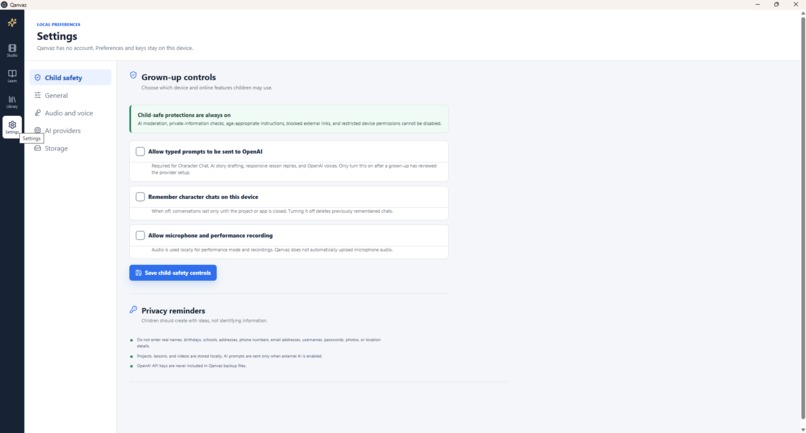
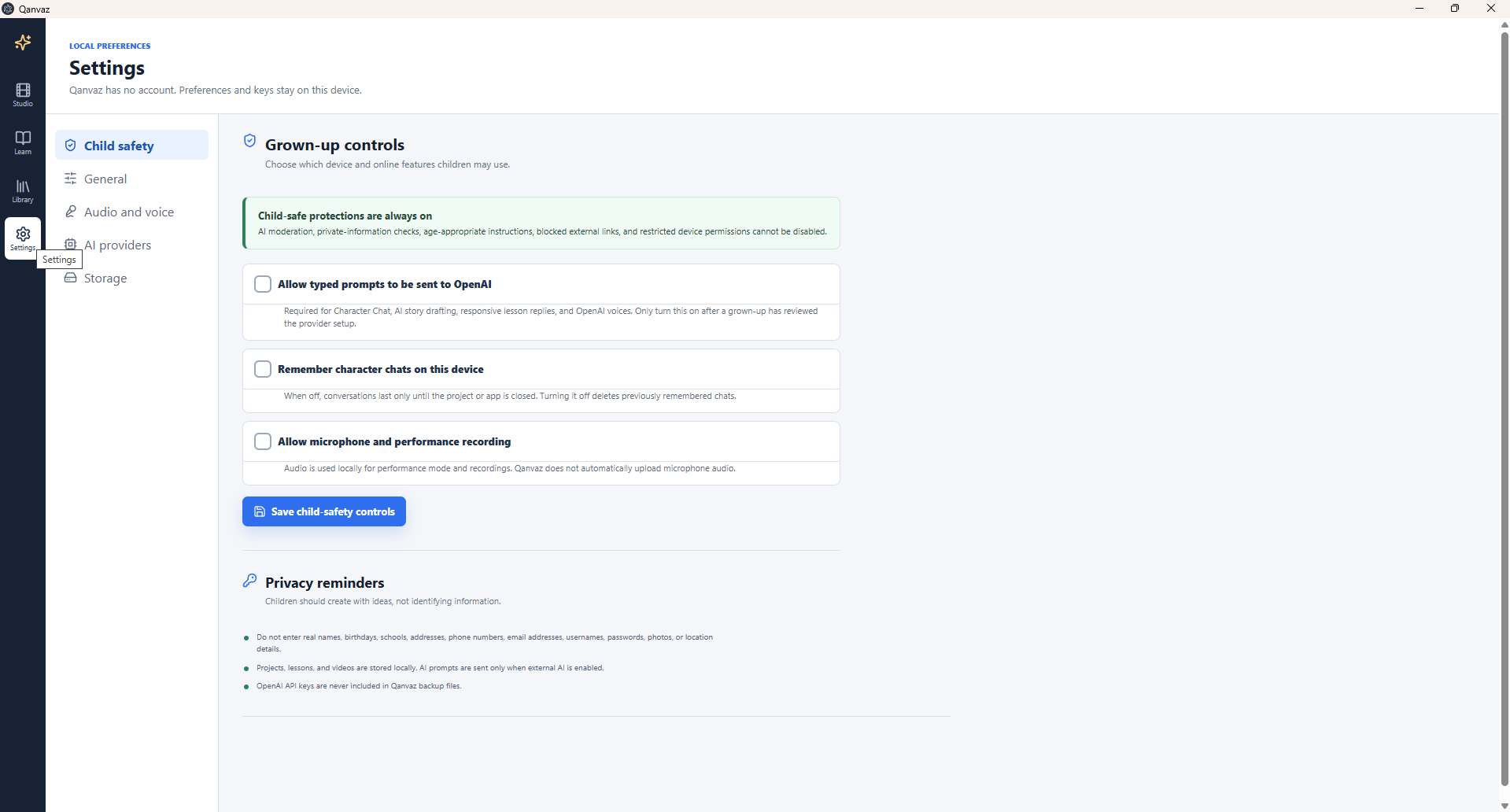
Settings screen
-
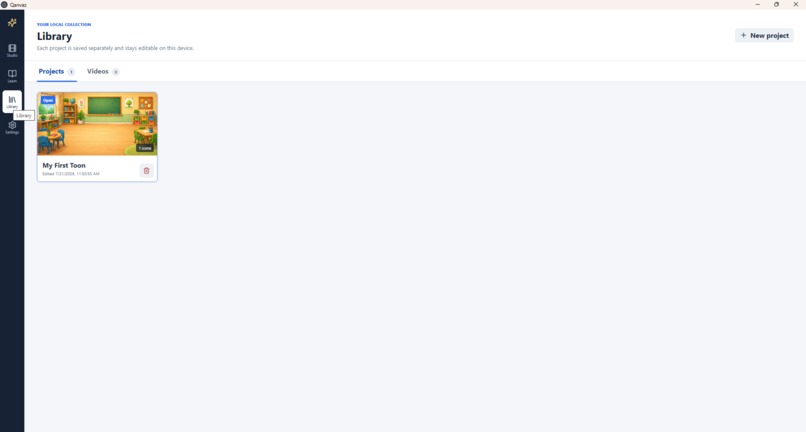
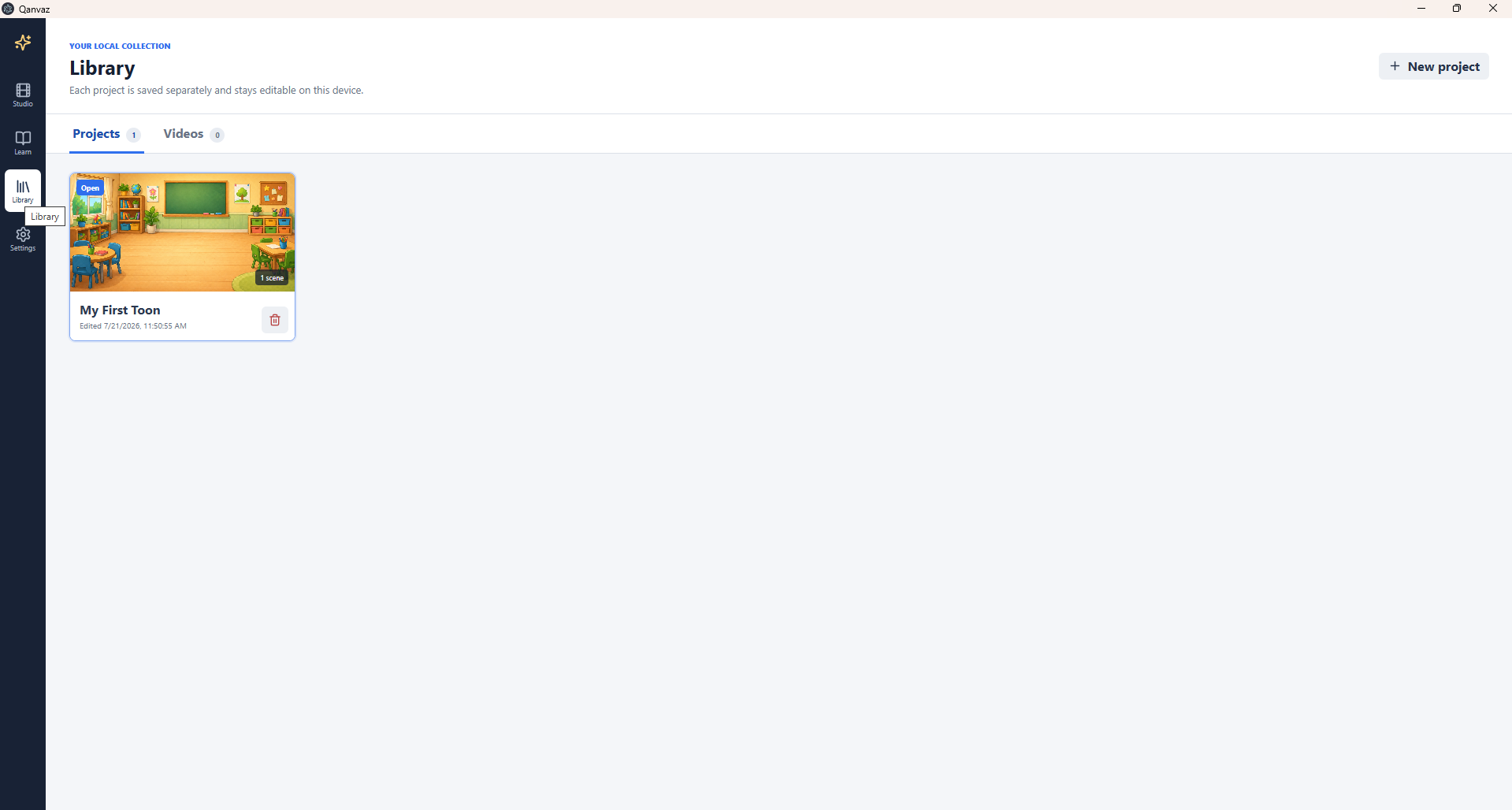
Project screen
-
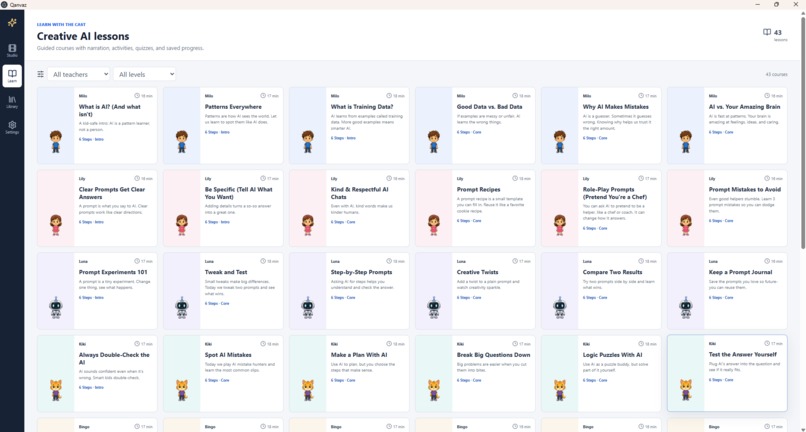
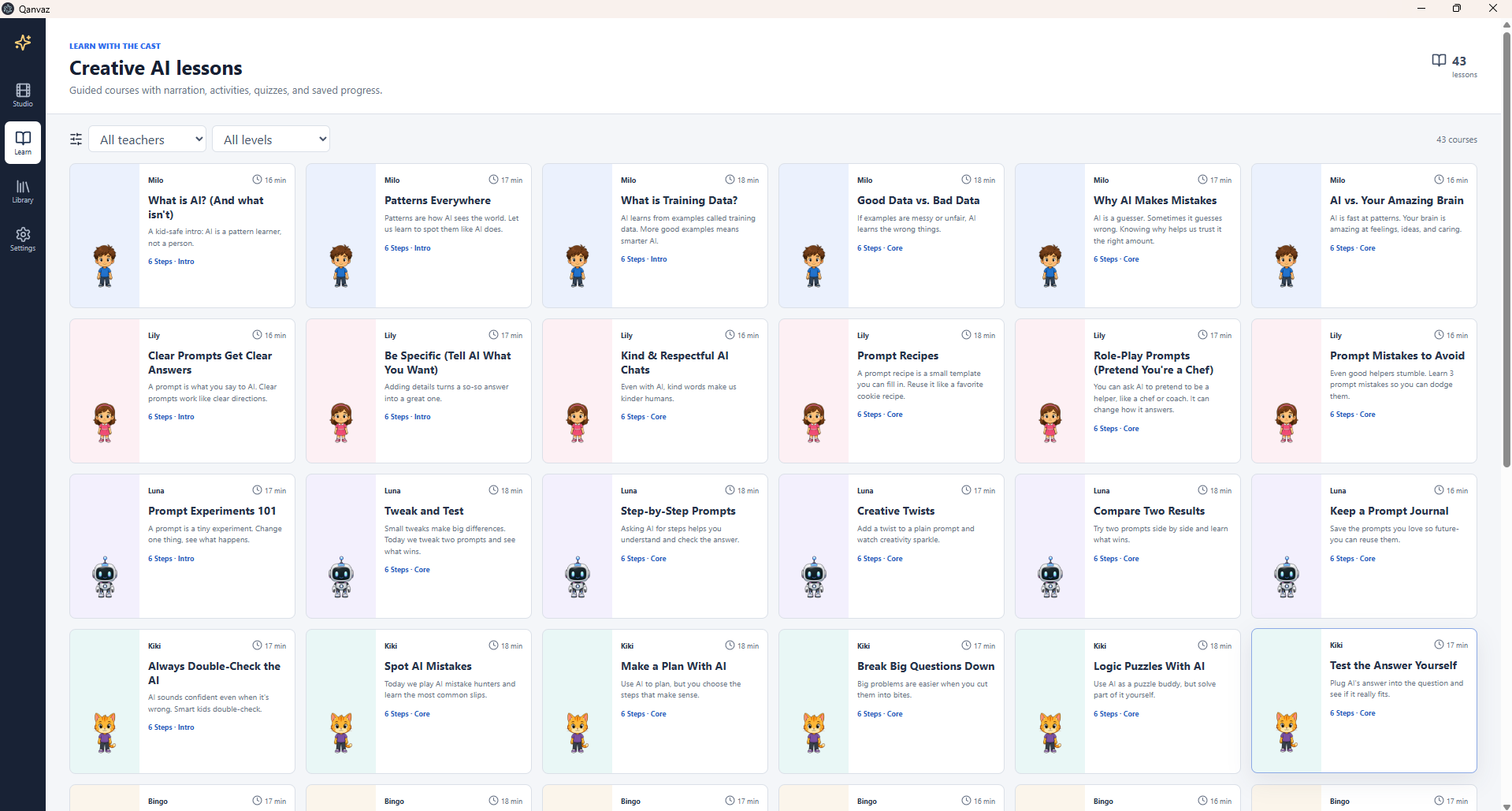
Lessons screen
-
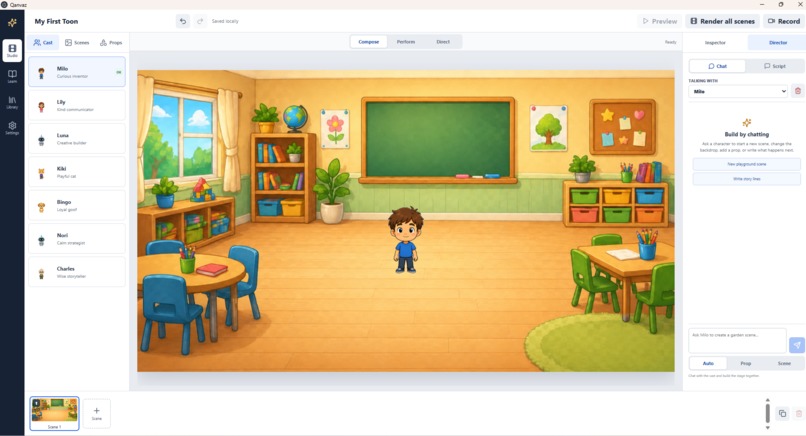
Editor Screen
-
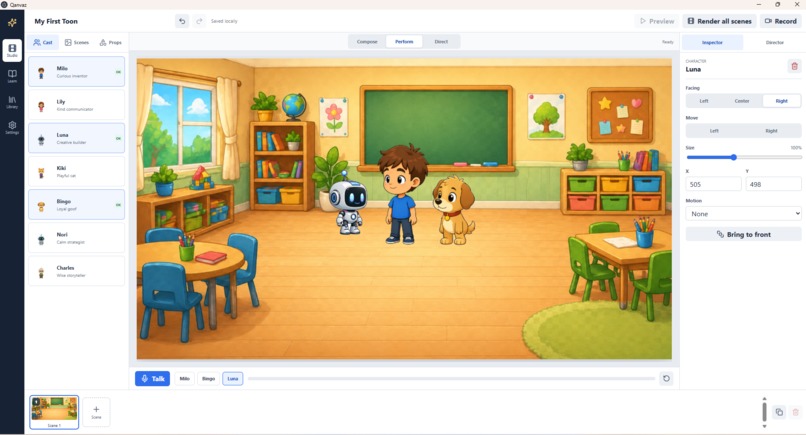
Properties Screen
Inspiration
Qanvaz was inspired by a desire to give my kids a safe, creative, and approachable introduction to artificial intelligence. Instead of teaching AI through technical explanations, I wanted them to experience it through something they already understand and enjoy: characters, stories, imagination, and play.
What it does
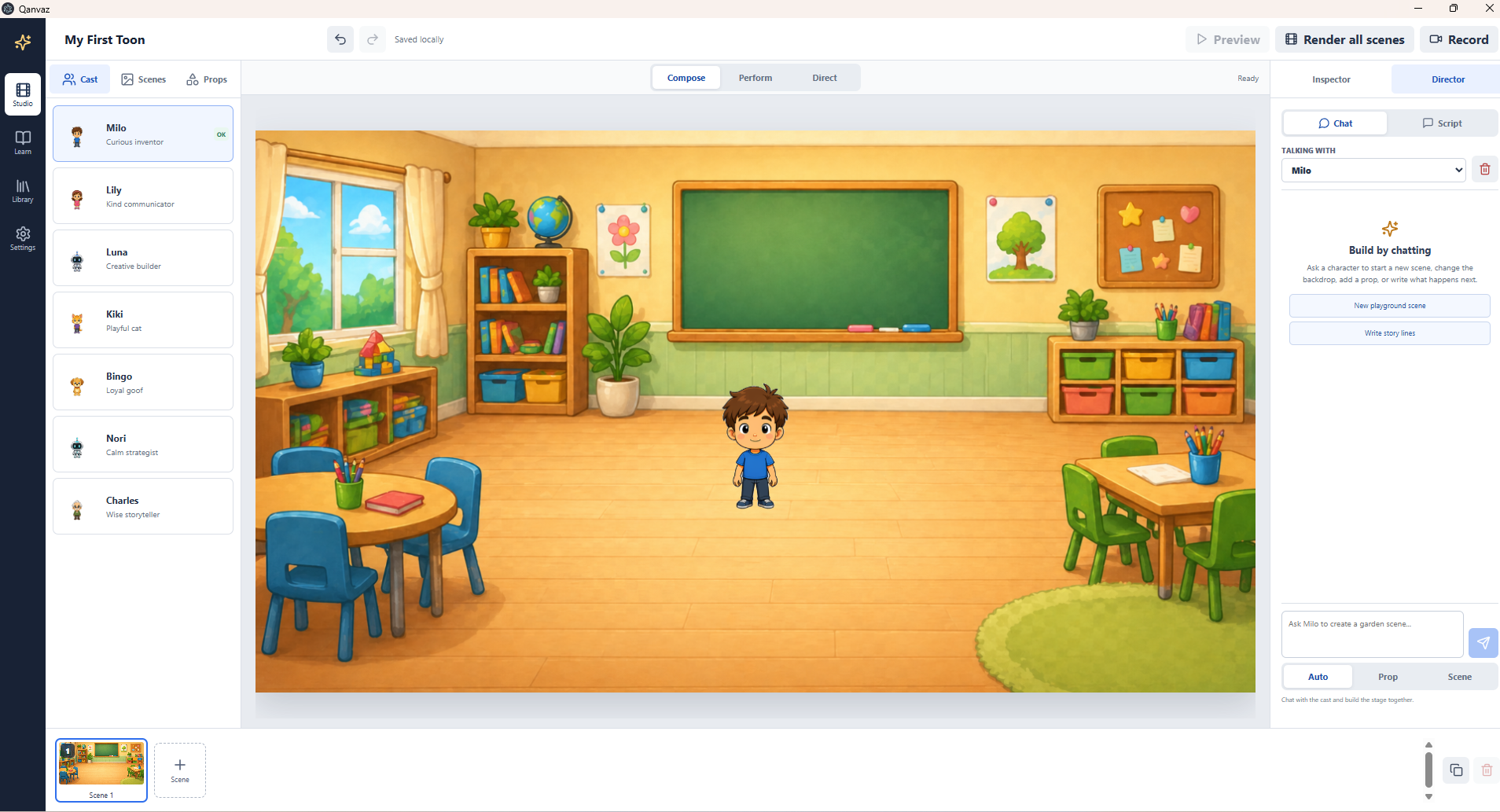
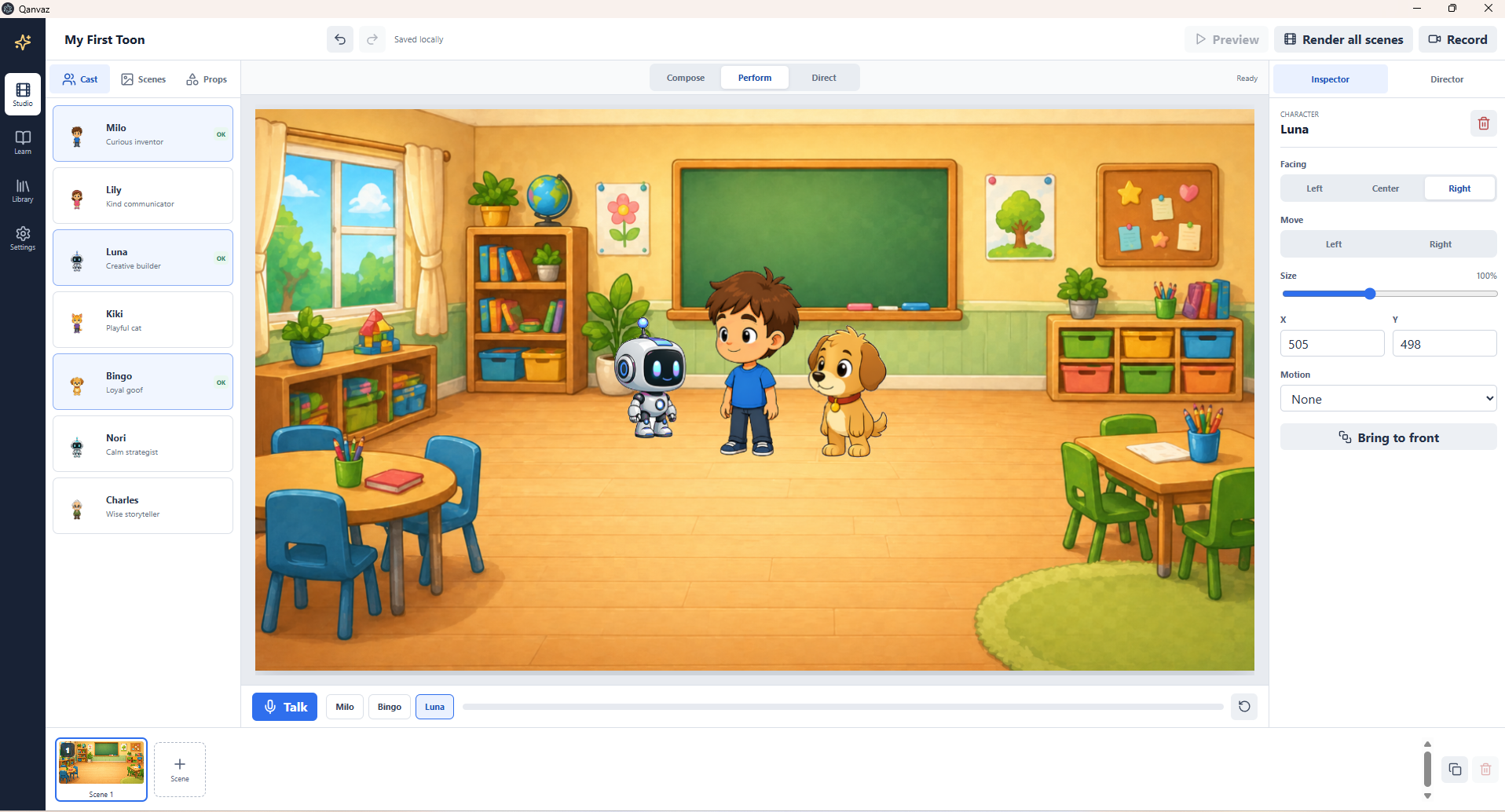
Qanvaz is an AI-powered creative playground for kids. Children can build scenes with animated characters, backgrounds, and props; write dialogue; perform using their voices; explore interactive lessons about AI; and turn complete stories into shareable videos.
The goal is to help kids understand that AI can be a creative tool while encouraging them to think critically, experiment, and remain in control of what they create.
How I built it
Qanvaz was built with Codex as my engineering and creative-development partner. Codex helped me study the original idea, rethink the product experience, implement the new interface, integrate the animation system, troubleshoot technical issues, and package the final desktop application.
This process demonstrated how AI-assisted development can help transform an early idea into a functional product.
Challenges I ran into
One of my biggest challenges was the cost of relying on cloud-based AI services. Generating text and audio through the OpenAI API can become expensive, particularly in an application designed for frequent experimentation and repeated use by children.
I responded by making Qanvaz local-first. Core features such as scene creation, animation, recording, project storage, lessons, and system narration work without a subscription. Cloud AI remains optional for features that benefit from more dynamic responses.
Accomplishments that I'm proud of
I am proud that I took Qanvaz from an idea to a complete, working application. Starting is often the easiest part of a project, but continuing through design changes, technical problems, testing, and packaging requires persistence.
Qanvaz now includes a complete animation studio, reusable projects, interactive AI lessons, character performances, audio controls, local storage, and full-project video rendering.
What I learned
I learned that local AI models still have a long way to go before they can consistently deliver the quality, speed, and accessibility required for a child-friendly creative application on typical consumer hardware.
However, the potential is significant. As local models become smaller, faster, and more capable, applications like Qanvaz could offer richer AI experiences with lower costs, stronger privacy, and less dependence on external services.
What's next for Qanvaz
The next step is to launch Qanvaz, observe how children and families use it, and improve the experience based on real feedback. I plan to expand the creative tools, add more characters and learning experiences, and explore safer and more affordable local AI capabilities.
Beyond Qanvaz, I hope to opensource it and build more products that combine creativity, education, and approachable technology for children and families.
Built With
- codex

Log in or sign up for Devpost to join the conversation.