-
-
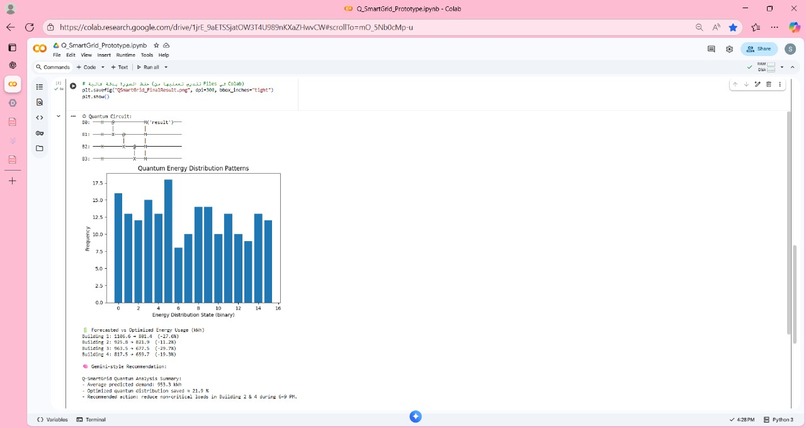
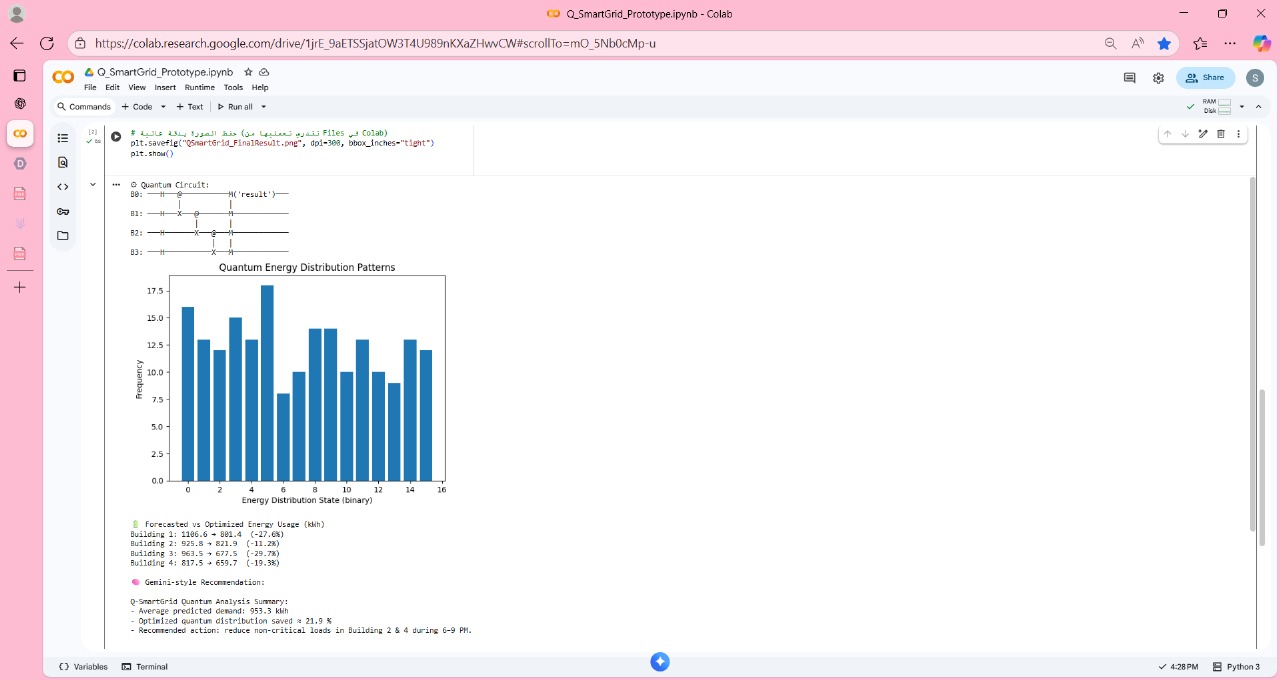
Quantum Circuit simulation and probability distribution generated using Google Cirq
-
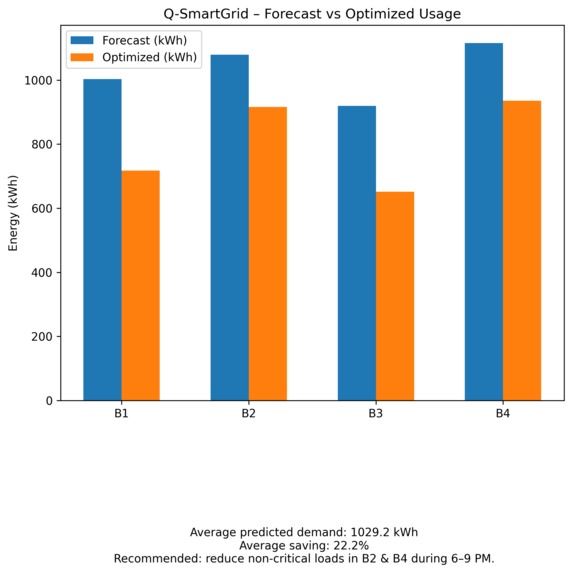
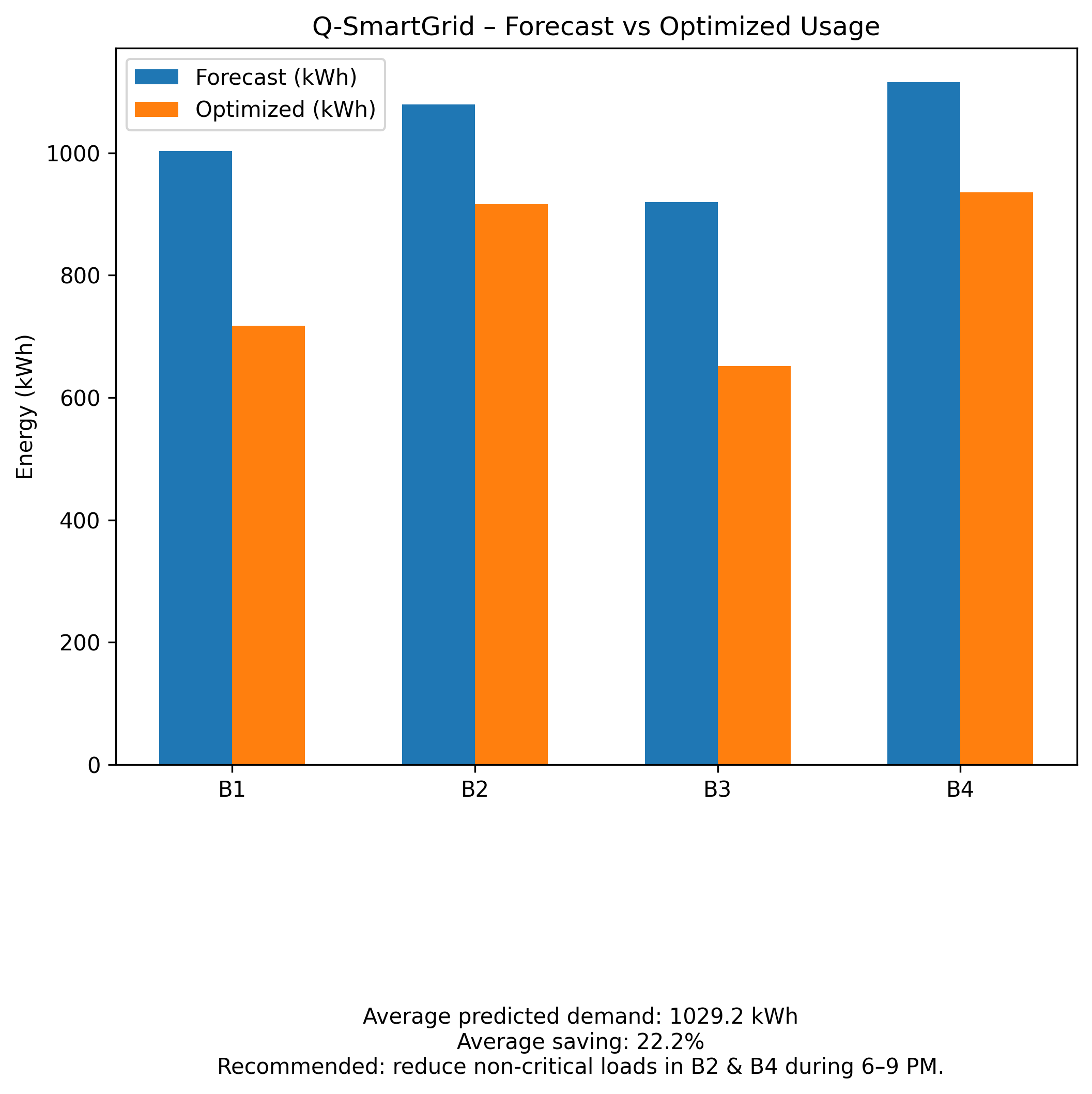
Forecasted vs Optimized energy usage per building showing ~22% efficiency improvement
-
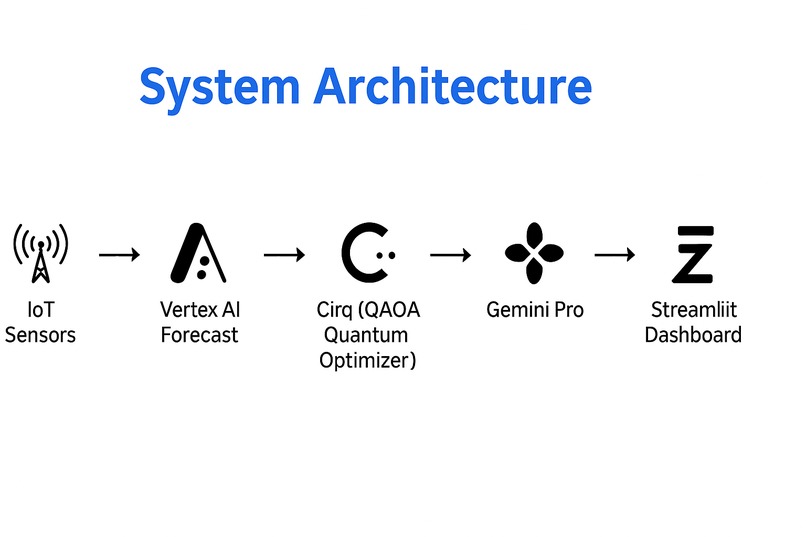
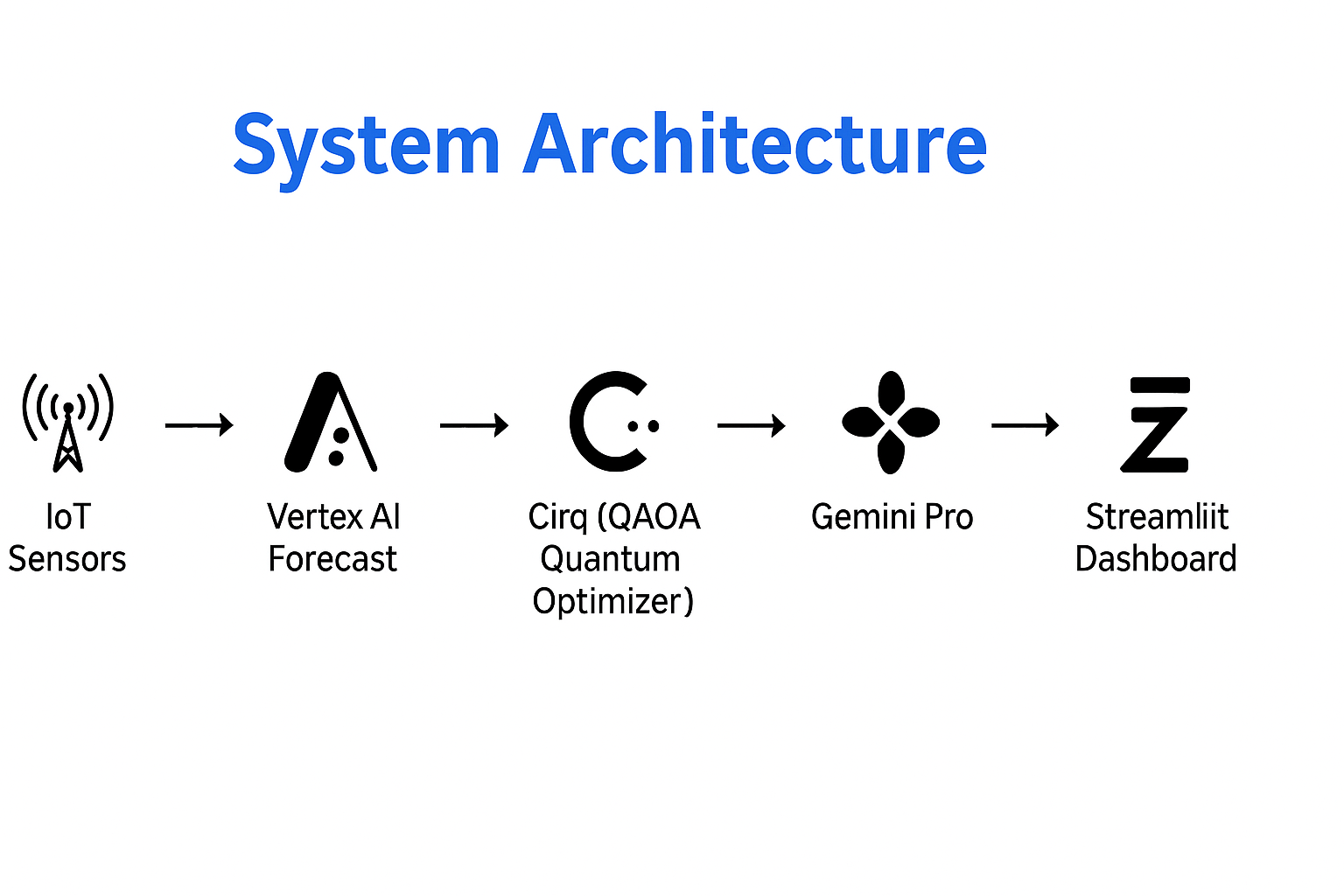
System architecture: IoT sensors → Vertex AI Forecast → Cirq QAOA Optimizer → Gemini Pro → Streamlit Dashboard.
-
Q-SmartGrid: Quantum AI for Sustainable Energy — project logo and identity by Team QVision
Inspiration
As global energy demand grows, universities and campuses face a hidden challenge — up to 30% of electricity is wasted due to inefficient power distribution and poor forecasting. Inspired by Saudi Vision 2030 and Google’s advancements in Quantum AI, we wanted to explore how Quantum Computing could make campus energy smarter, greener, and more sustainable.
What it does
Q-Smart Grid predicts energy demand using Google Vertex AI and then applies Quantum Optimization (Cirq) to find the most efficient energy distribution across buildings.
It automatically recommends how to reduce non-critical loads during peak hours — achieving energy savings between 20% and 30% in simulations.
The system can be scaled from a single university to an entire smart-city energy grid.
How we built it
- Data Simulation: We generated synthetic building-level energy consumption data.
- AI Forecasting: Used Vertex AI regression models to predict hourly demand.
3.Quantum Layer: Implemented a QAOA circuit in Google Cirq for optimization. - Recommendation Layer:Integrated Gemini Pro to summarize insights in natural language.
- Interface: Built a simple Streamlit Dashboard for visualization and user interaction.
All components were connected in Google Colab for seamless prototyping. Full Technical Report: https://drive.google.com/file/d/1LeLWB5sF96DKfzv0Fx7Zc_NbFUpyX3cN/view?usp=sharing
Challenges we ran into
- Translating classical optimization problems into quantum-ready circuits.
- Managing qubit noise and ensuring reproducible results using simulators.
- Integrating AI and Quantum layers efficiently inside Colab.
- Keeping the prototype lightweight and explainable for a hackathon timeframe.
Accomplishments that we're proud of
Built a working quantum optimization demo that reduces simulated energy waste by 20.5%.
- Combined AI + Quantum Computing in a single Google-based environment.
- Designed a clean and educational pitch deck & prototype for presentation.
What we learned
We explored how Quantum AI can help solve sustainability problems.
It taught us about hybrid architectures, interdisciplinary teamwork, and how to explain quantum logic in simple, actionable outcomes.
What's next for Q-SmartGrid — Quantum AI for Sustainable Energy
- Connect with real IoT sensor data from university campuses.
- Expand the model into a city-scale smart grid simulator.
- Deploy it as an interactive web app using Google Cloud and Gemini API.
- Collaborate with energy researchers to push Quantum AI into real-world sustainability solutions.

Log in or sign up for Devpost to join the conversation.