-
-
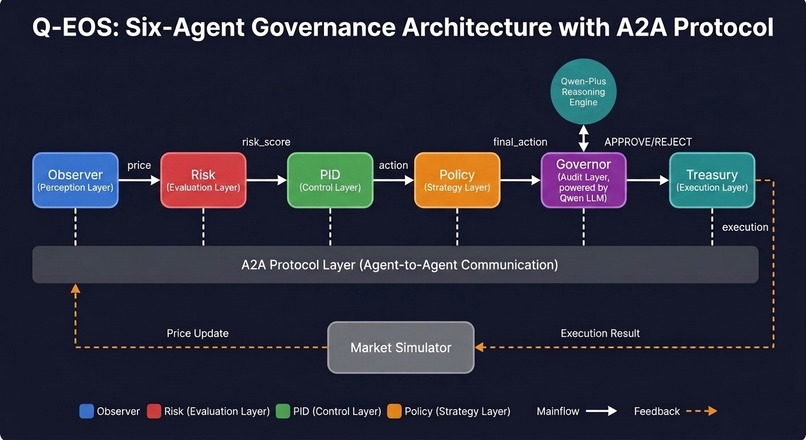
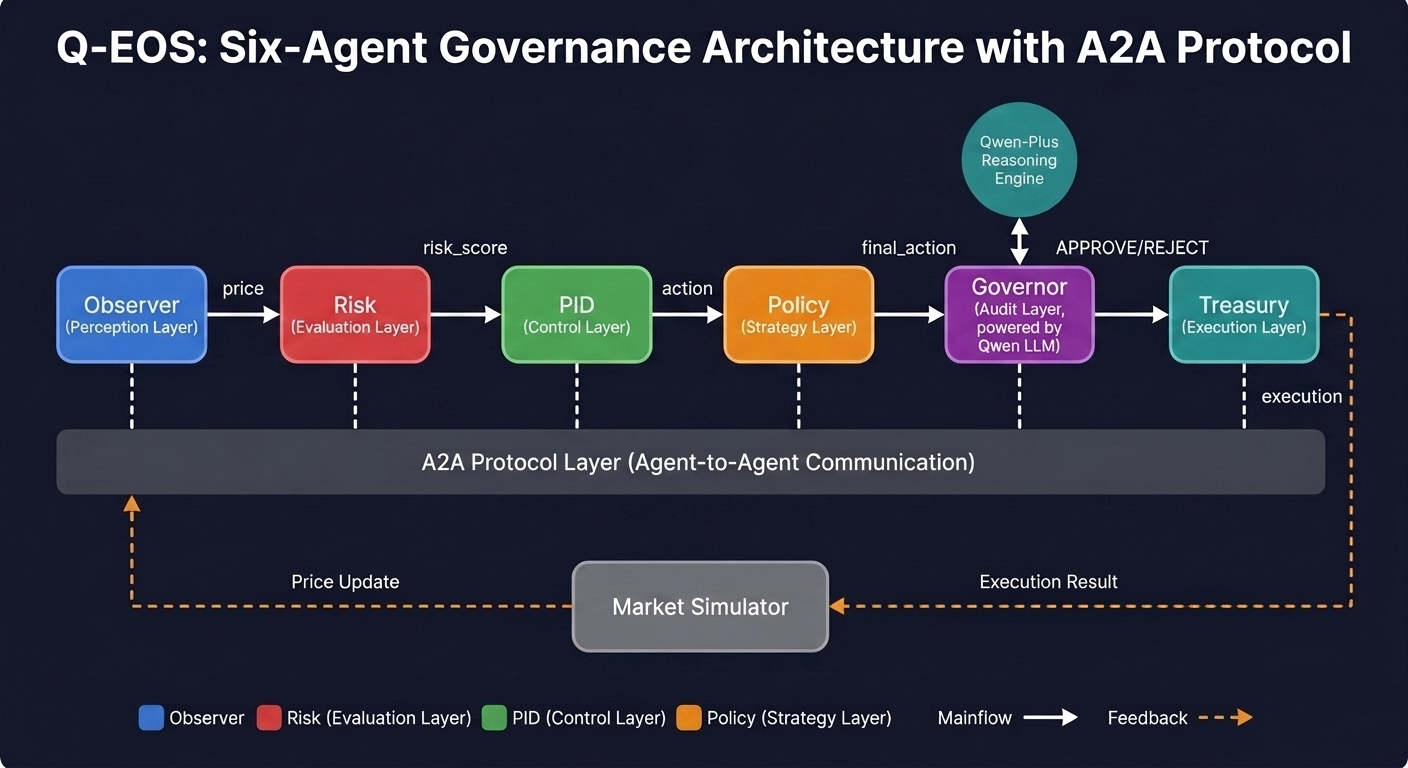
Q-EOS Six-Agent Governance Architecture with A2A Protocol
-
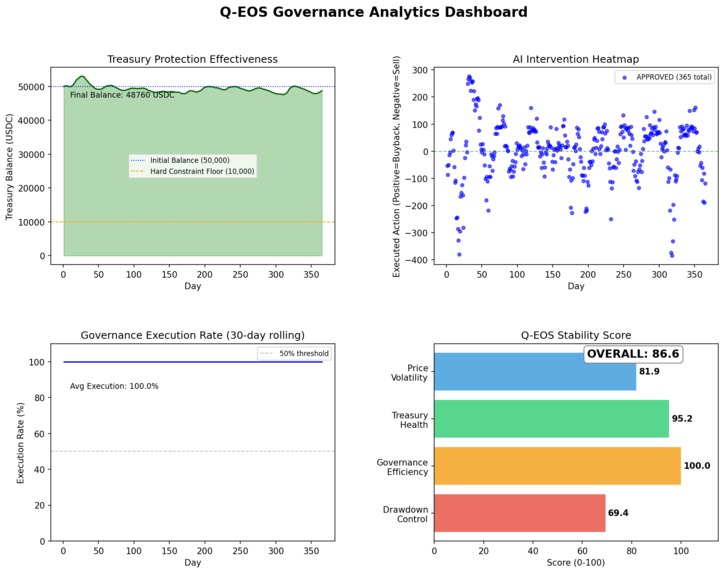
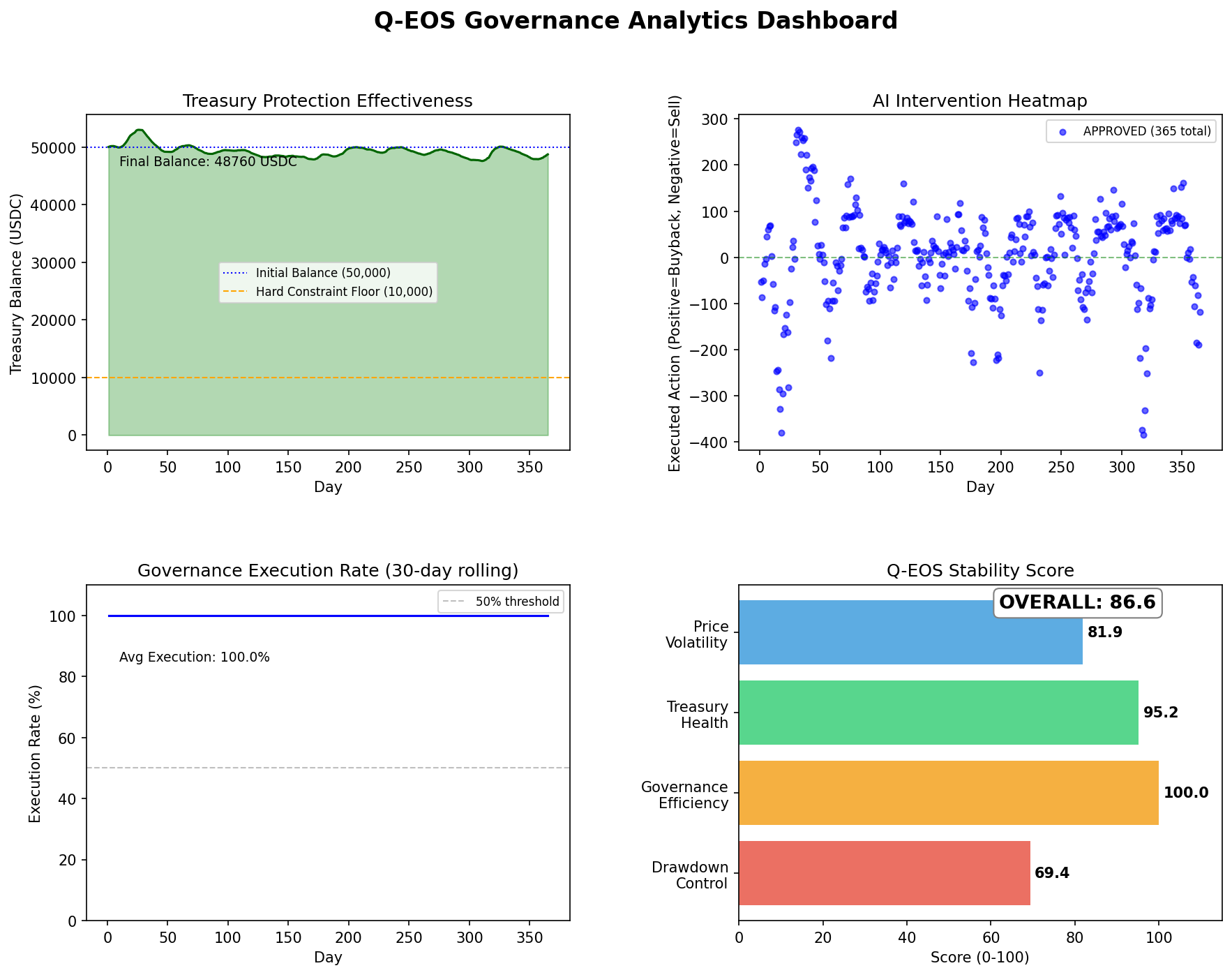
365-Day Governance Analytics Dashboard — Overall Stability Score: 86.6/100
-
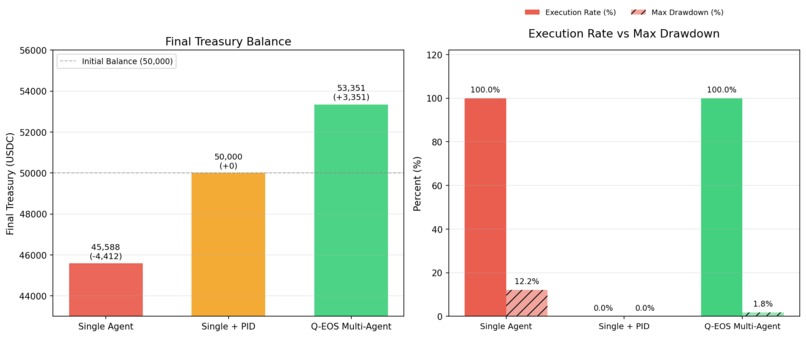
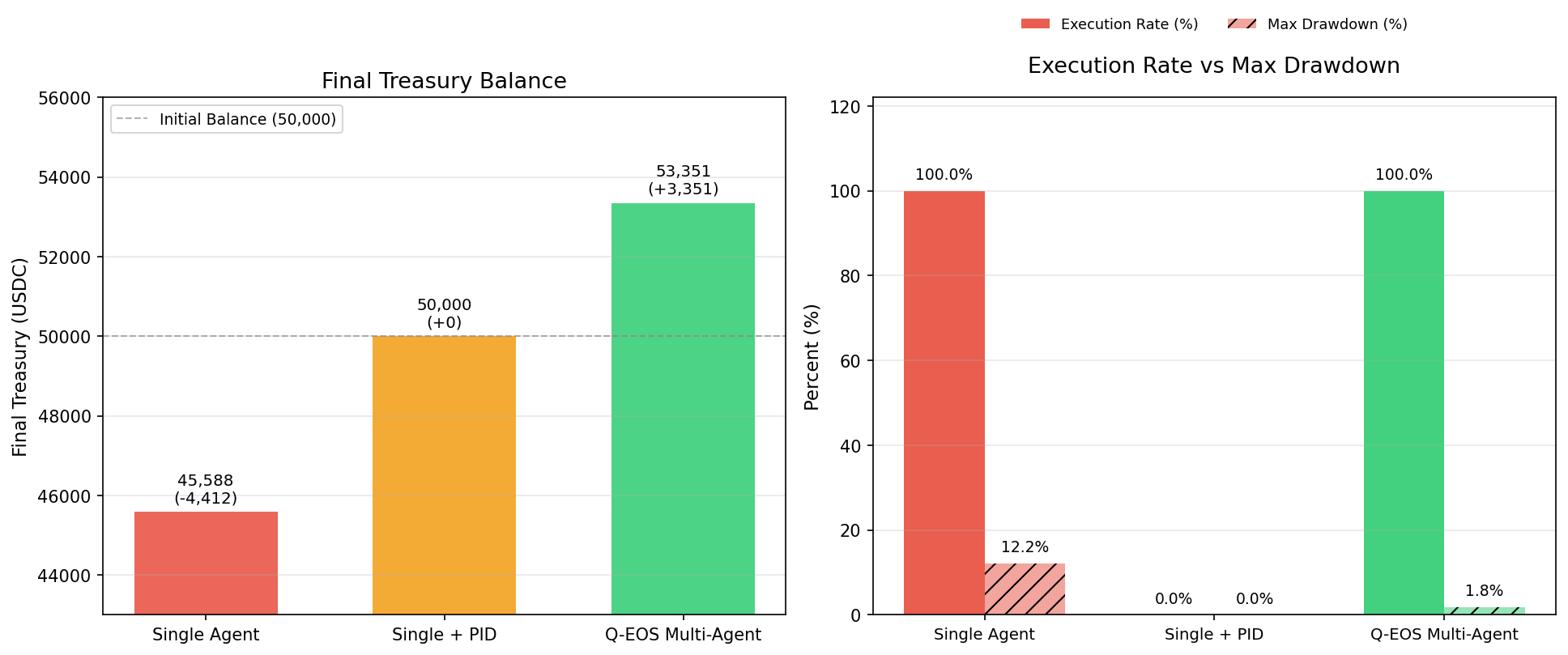
Baseline Comparison: Q-EOS achieves +3,351 USDC surplus vs -4,412 for Single Agent
-
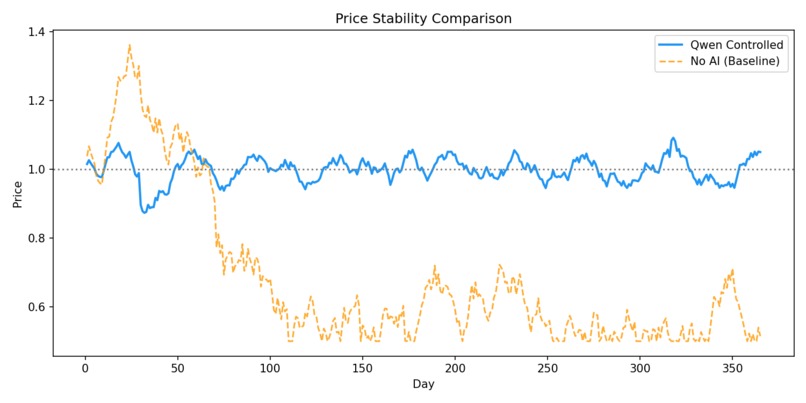
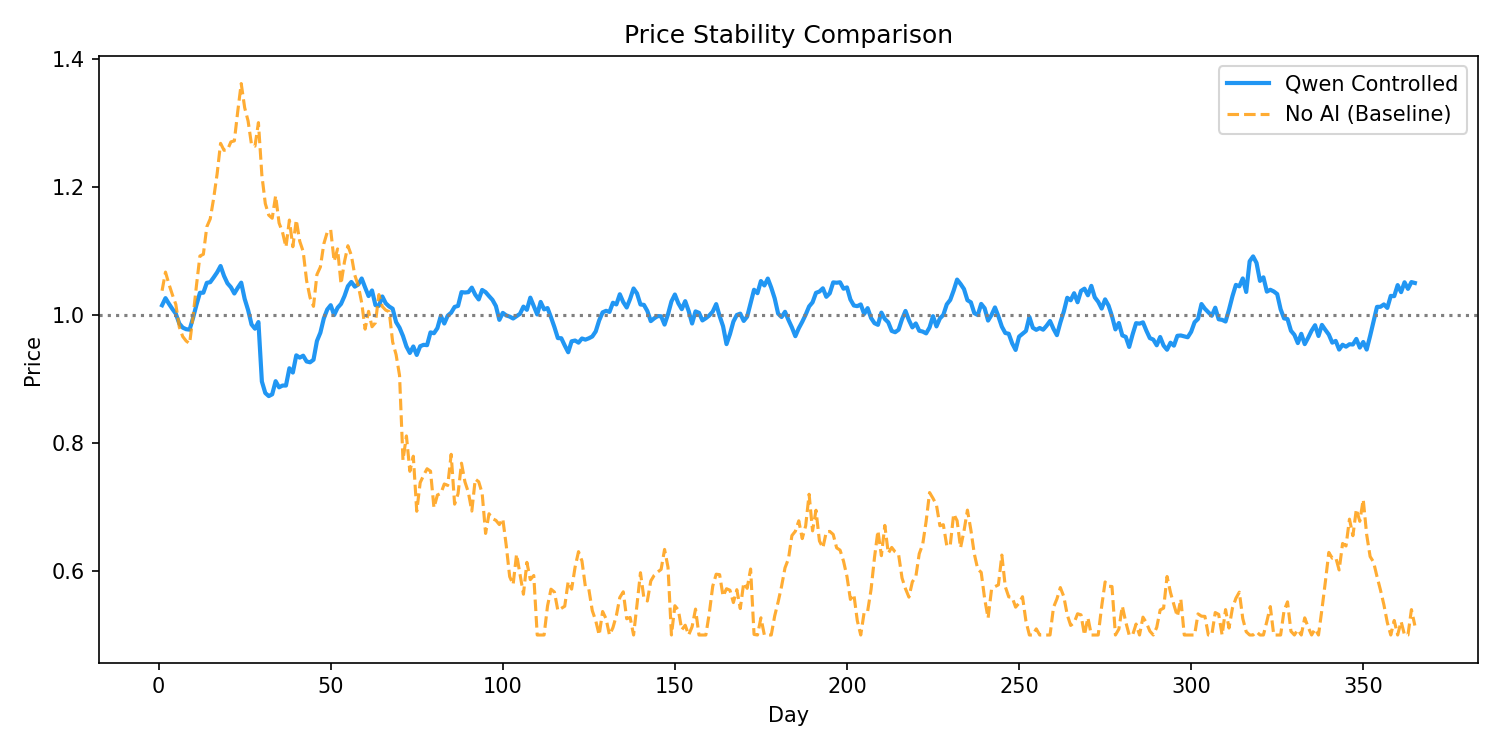
Price Stability: Qwen-controlled system maintains peg while No-AI baseline collapses
-
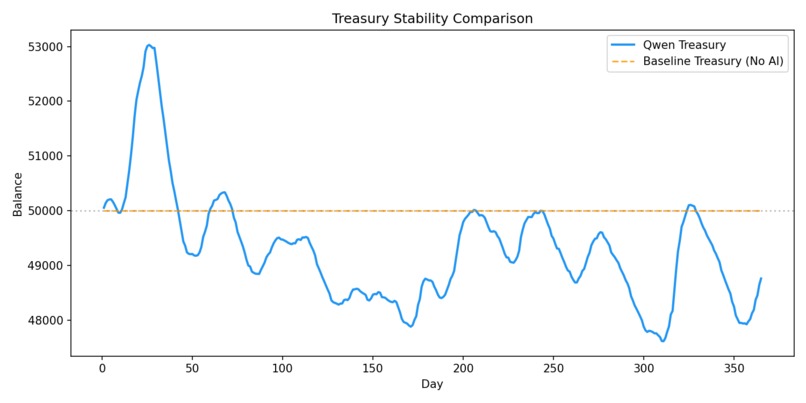
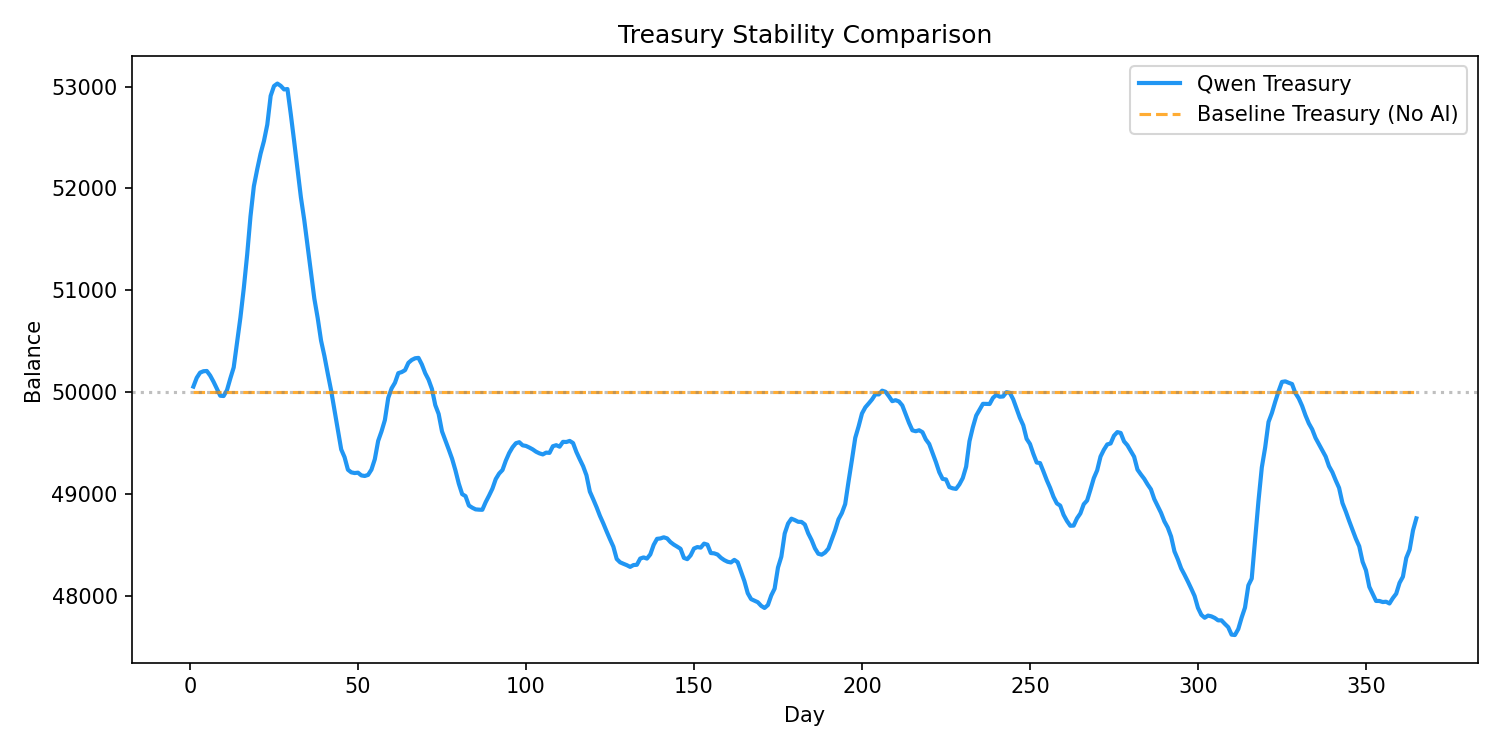
Treasury Protection: Balance remains stable throughout 365 days, never approaching hard constraint floor
-
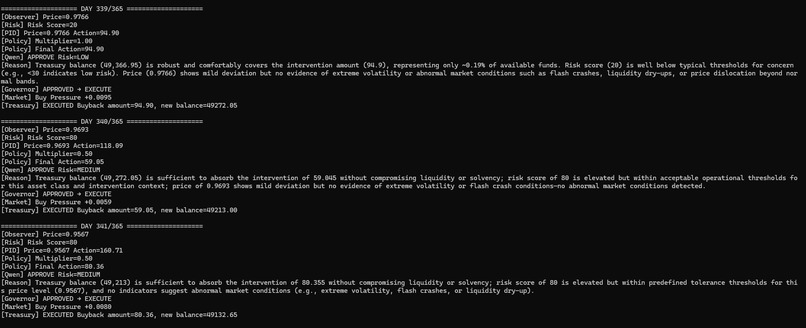
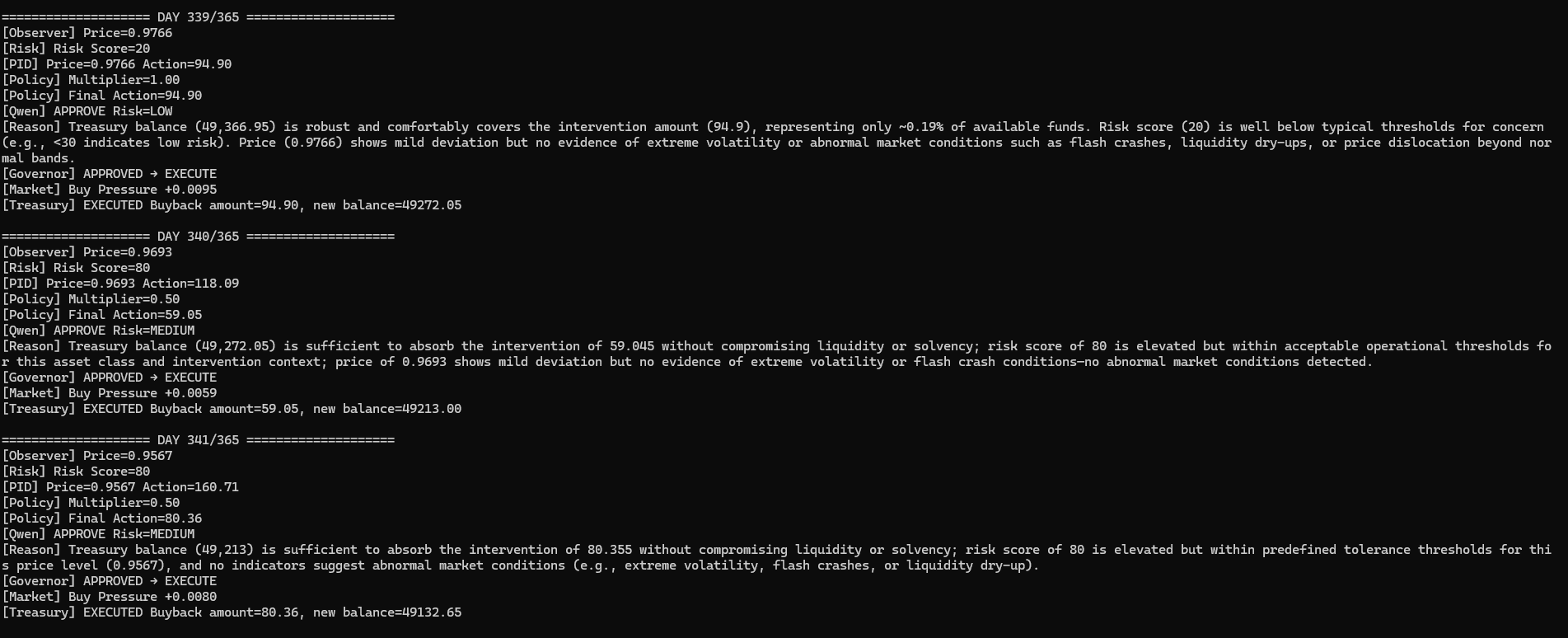
Real Qwen Decision — Day 340: Complete 6-layer reasoning chain from Observer to Treasury
-
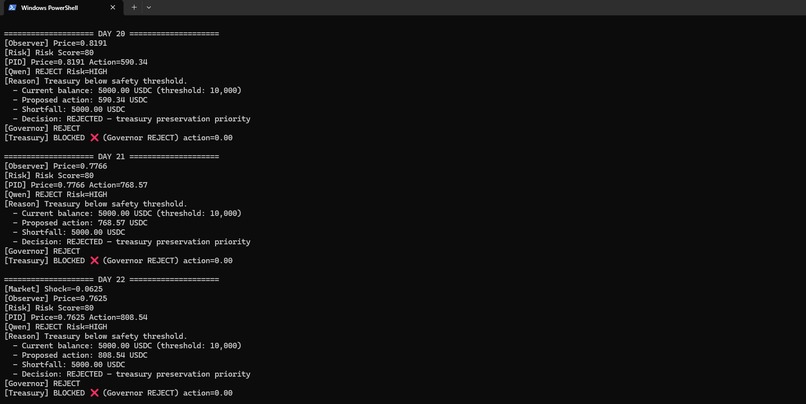
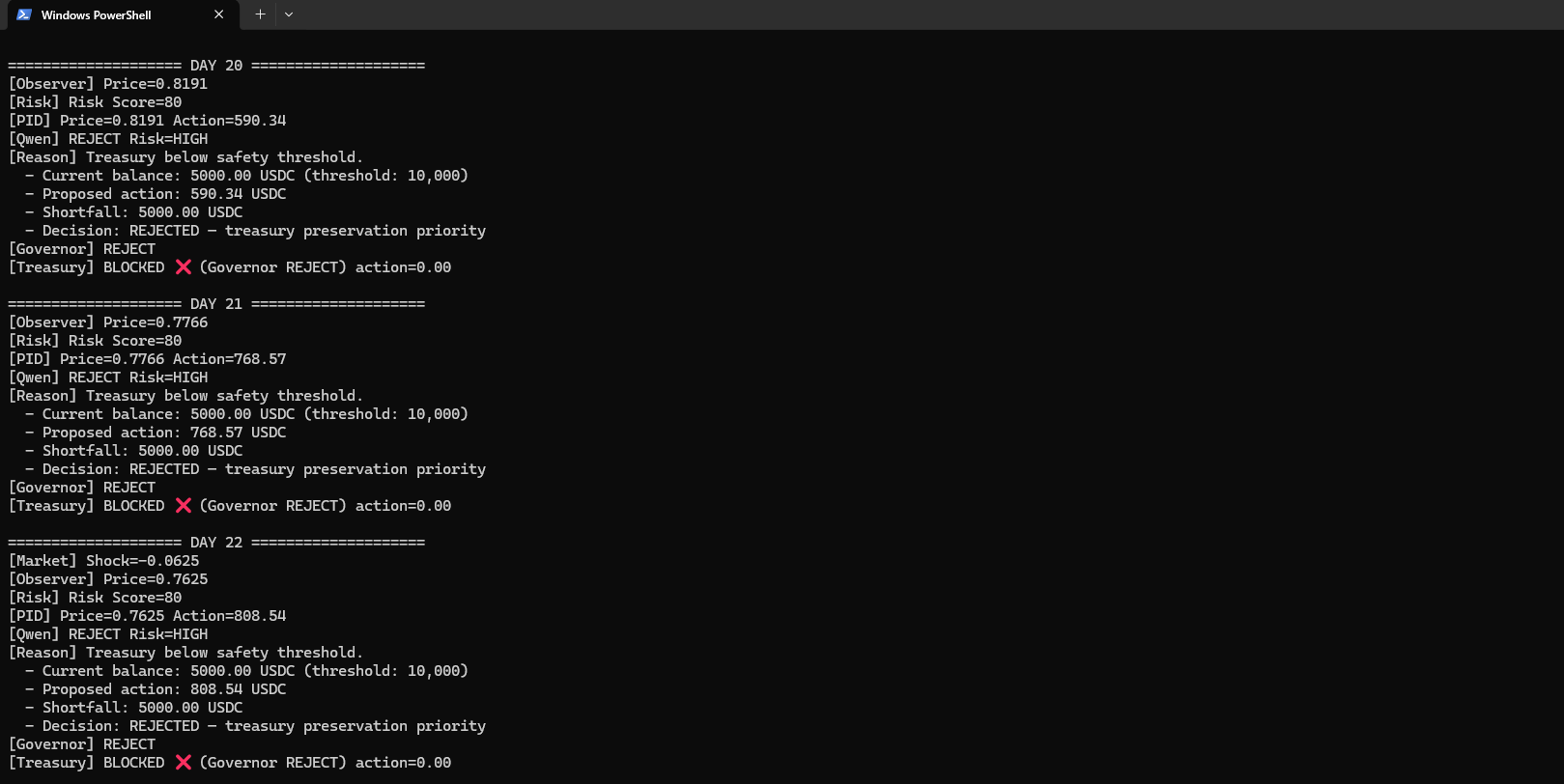
Agent Disagreement Resolution: Governor vetoes PID when treasury falls below safety threshold
Inspiration
Token economies are fragile. A single market shock can trigger a cascade of bad governance decisions — buybacks at the wrong time, treasury depletion, and no mechanism to stop it. We wanted to build a system that could govern a token economy autonomously, transparently, and safely — without human intervention.
Theoretical Foundation
Q-EOS is not a demo of API calling. It is a theory-driven engineering implementation of the Dynamic Control Buyback Mechanism (DCBM), published in arXiv:2601.09961.
The DCBM paper identifies static rule-based buybacks as a root cause of pro-cyclical volatility in token economies, and proposes a PID controller as the core stabilizer with strict solvency constraints. Q-EOS implements this framework directly:
| DCBM Paper | Q-EOS Implementation |
|---|---|
| Static buybacks cause pro-cyclical volatility | PIDAgent replaces static rules with continuous feedback control |
| PID controller as core stabilizer | PIDController implements Kp=3000, Ki=50, Kd=500 |
| Strict solvency constraints | TreasuryAgent enforces 10% per-tx cap, circuit breaker, emergency halt |
| Agent-based simulation for validation | Six-agent collaborative simulation |
$$u(t) = K_p e(t) + K_i \int e(t)dt + K_d \frac{de(t)}{dt}$$
Where $e(t) = P_{target} - P_{current}$ is the price deviation from peg.
What We Built
Six specialized agents work as a committee:
Observer → Risk → PID → Policy → Governor (Qwen) → Treasury
- Observer detects real-time market price
- Risk scores the threat level
- PID calculates the optimal intervention using control theory
- Policy dynamically adjusts intervention strength based on risk and treasury health
- Governor (powered by Qwen-Plus) makes the final APPROVE/REJECT decision with transparent reasoning
- Treasury executes approved actions and enforces hard constraints
Results
We validated Q-EOS against two baselines over 30 days of identical market simulation:
| Metric | Single Agent | Single + PID | Q-EOS |
|---|---|---|---|
| Final Treasury (USDC) | 45,588 (-4,412) | 50,000 (+0) | 53,351 (+3,351) |
| Execution Rate | 100% | 0% | 100% |
| Max Drawdown | 12.2% | 0% | 1.8% |
Q-EOS is the only configuration that ends with a treasury surplus while cutting max drawdown by 7x.
Challenges
The hardest problem was making the multi-agent pipeline robust. Qwen sometimes returns JSON wrapped in Markdown code fences — we built a three-layer JSON parser to handle every edge case. We also had to decide between fail-open and fail-closed behavior when the API is unreachable: in financial governance, fail-closed (reject and hold) is always the right answer.
Another challenge was designing the baseline comparison fairly — we gave Single+PID the exact same PID algorithm as Q-EOS to isolate whether the advantage came from multi-agent architecture or just a better control algorithm. It did: Single+PID executed 0 transactions in 30 days.
What We Learned
Multi-agent separation of concerns is not just an engineering pattern — it is a governance principle. A single agent reviewing its own proposals cannot reliably balance perception, risk assessment, and execution enforcement simultaneously. Specialization makes the system both more decisive and more safe.


Log in or sign up for Devpost to join the conversation.