Origin
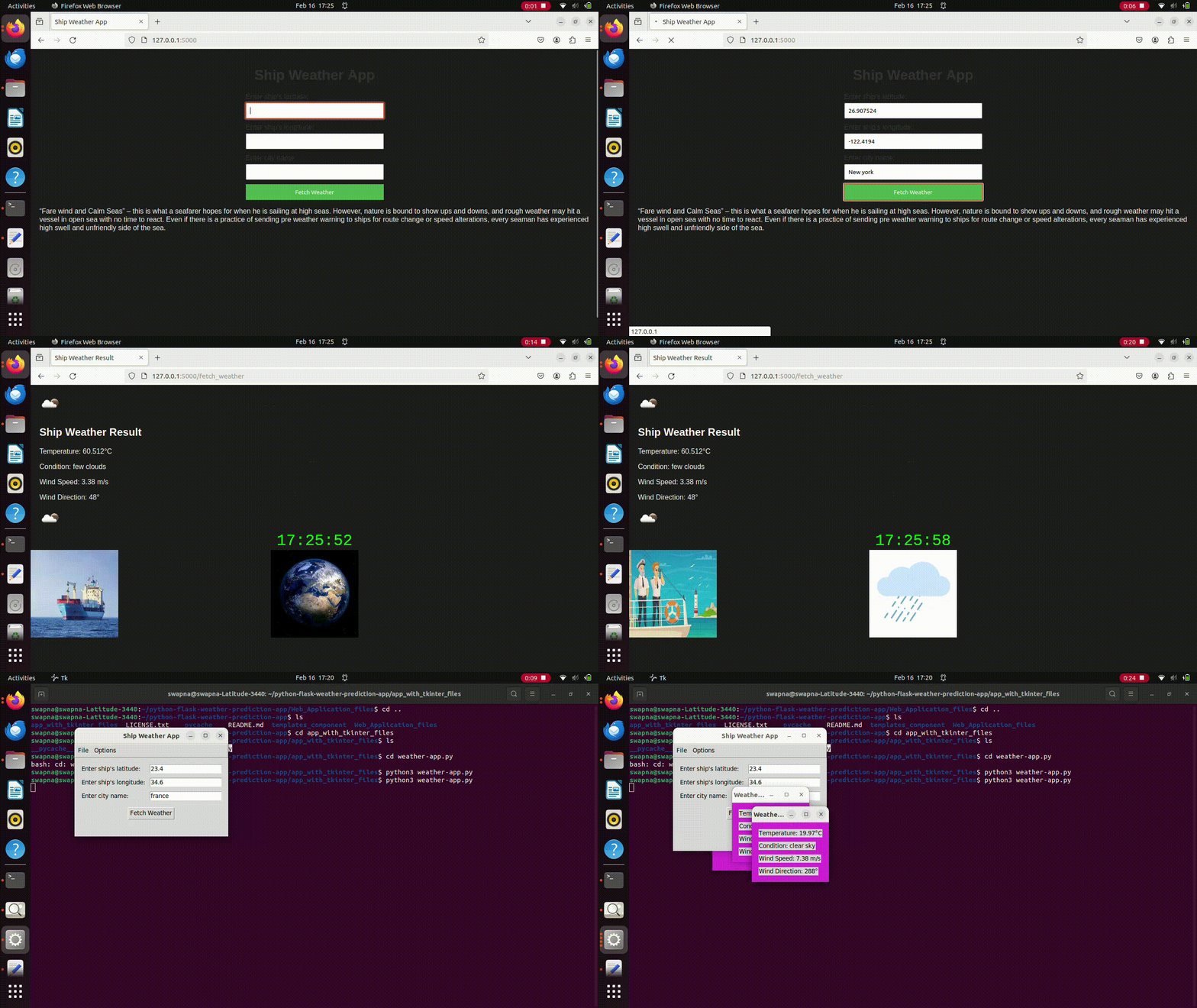
The inspiration behind developing the Python Flask Weather Prediction App stemmed from a desire to create an accessible and efficient weather forecasting tool. Recognizing the need for a straightforward solution, the goal was to seamlessly integrate Python, Flask, and the OpenWeather API.
Functionality The app, powered by the Python Flask framework and the OpenWeather API, delivers real-time and precise weather forecasts. It provides users with a straightforward and intuitive platform to access the latest weather information.
Development Journey The project was approached with a modular mindset. The Python Flask backend served as the project's cornerstone, seamlessly connecting with the OpenWeather API for real-time weather data retrieval. The code base was meticulously organized for maintainability and scalability, and Docker containers were employed to streamline deployment, encapsulating both backend and frontend components.
Overcoming Challenges Throughout development, challenges were encountered in optimizing application performance, particularly when handling real-time data from the OpenWeather API. Debugging, testing, and refining the Dockerized deployment process presented additional hurdles. Overcoming these challenges was pivotal for delivering a reliable and efficient weather prediction solution. Achievements
I take pride in achieving a streamlined and user-centric weather prediction app. The successful integration of Python Flask, the OpenWeather API, and Dockerization showcases my commitment to creating a robust and accessible solution for users.
Lessons Learned The project provided valuable insights into integrating Flask with external APIs, optimizing performance, and Dockerizing web applications. The learning process enriched my skills in modern web development practices and reinforced the importance of user experience in app design.
Utilizing Release Links In addition to the robust features and innovations showcased in the Python Flask Weather Prediction App, GitLab's release functionality is leveraged to provide easy access to the latest version and associated assets.
Permanent Links to Release Assets Recognizing the importance of providing seamless access to app releases, GitLab allows the creation of permanent links to release assets. These links remain constant, ensuring users can effortlessly download specific versions. For detailed information on how to use permanent links to release assets in GitLab, refer to the official documentation: Permanent Links to Release Assets.
Future Developments Looking ahead, the plan is to enhance the app by incorporating additional features such as user customization, extended forecast options, and geographical expansion. Continuous improvement and user feedback will drive the evolution of the Python Flask Weather Prediction App.
JUDGING CRITERIA QUESTIONS AND ANSWERS
Problem Solving
Does it solve a real problem for GitLab users? The project addresses a significant challenge faced by GitLab users in deploying Flask applications efficiently within their CI/CD pipelines. Complexities related to dependency management, testing, and deployment are streamlined, making Flask application deployment straightforward in GitLab workflows.
Problem Articulation
Does the project clearly articulate the problem it aims to address for GitLab users? The project seeks to streamline the deployment process of Flask applications on GitLab, addressing challenges such as managing dependencies, setting up testing environments, and ensuring smooth Dockerized deployment. The comprehensive solution enhances the overall experience for GitLab users, making Flask application deployment efficient.
Innovation The solution introduces several innovative features, including a modular CI/CD pipeline for better organization and reusability, and Dockerized deployment for consistency across different environments, enhancing portability and reproducibility.
Quality The project exhibits excellence in design, user experience, and technical implementation. The modular structure of the CI/CD pipeline enhances readability and maintainability, while the back-end-focused CI/CD configurations are designed for clarity and understanding. Best practices, such as using Docker for containerization, contribute to a robust and standardized deployment process.
Scalability The solution is designed to scale with a growing customer base, increasing project complexity, larger code bases, potential revenue growth through quicker time-to-market, and streamlined operations across different environments.
Market Impact Total Addressable Market (TAM) Capturing the market segment of GitLab users deploying Flask applications presents a substantial opportunity. The solution can significantly impact the efficiency and reliability of CI/CD processes for a broad audience, from small development teams to large enterprises.
Feasibility The solution is practical considering available resources, technology stack adoption, and time efficiency. The modular structure allows for incremental development and testing, contributing to efficient use of time resources. Potential barriers have been addressed, making the solution feasible for implementation.
CI/CD Pipeline Configuration The CI/CD pipeline is structured into stages, emphasizing a modular approach for testing, Dockerizing, deploying, building, uploading, and releasing. A Python 3.9 slim image is utilized for a lightweight environment. Global variables ensure consistency in the Docker environment. The pipeline includes stages like testing, Dockerizing, and deploying, with interruptible jobs for faster feedback. The after_script section ensures a clean environment. The release process involves building, uploading, and creating a release using GitLab's release-cli. The configuration aligns with GitLab CI/CD best practices and supports seamless deployment of Flask applications.


Log in or sign up for Devpost to join the conversation.