-
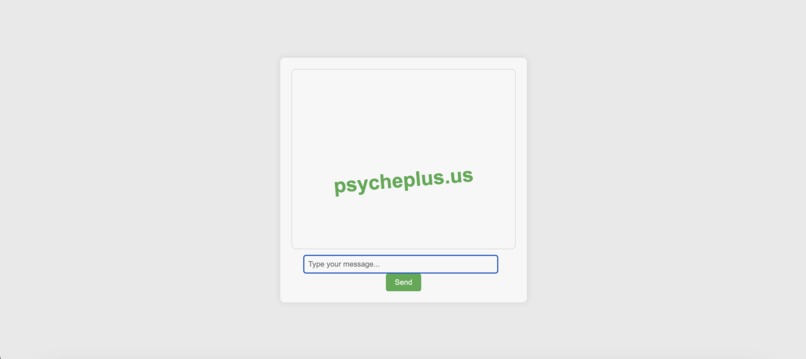
Web interface to interact with the virtual therapist LLM
-
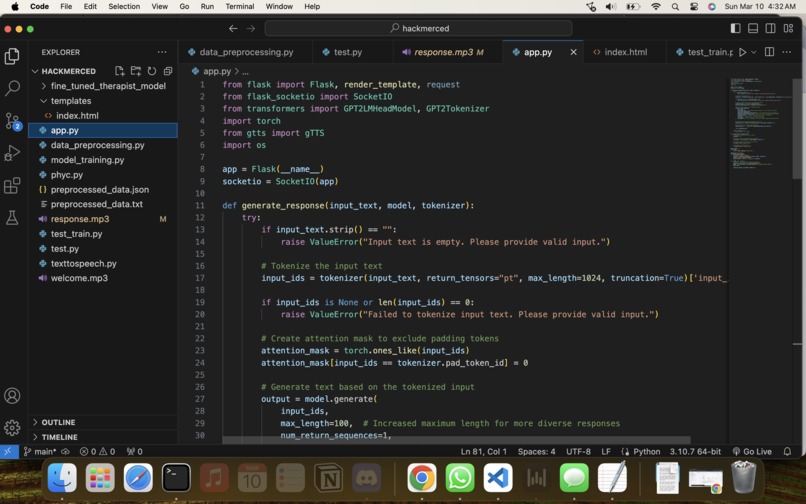
Some of the code for our LLM
Inspiration
Increasing focus on mental health after the COVID-19 pandemic that exacerbated these issues. These issues can be supported by machine learning to be as accessible as possible.
What it does
An online interface where users can interact via speech to text with a virtual therapist trained on generated conversation between a psychiatrist and their patients.
How we built it
A Large Language Model was developed to be trained based generated conversation between a psychiatrist and patient. Using CSS and javascript, a simple web interface allows a user to use speech-to-text to communicate with this virtual therapist. The model responds via speech before the transcription appears on screen.
Challenges we ran into
Finding a suitable dataset to train our LLM was difficult due heavy regulation of health care records. Eventually we came across a generated dataset applicable to our project. Additionally, we had to make various attempts to better train our LLM to make appropriate responses given the sensitive nature of sensitive topics.
Accomplishments that we're proud of
Getting to the point where we could input speech/text and receive a response. Integrating to Large Language Model into a simple web interface.
What we learned
A deeper understanding of how Large Language Models work, their process for interpreting data, and training these models to achieve a desirable result.
What's next for Pysch Plus
Future development would improve the capacity of our LLM to understand speech tone and inflection. Additional work would be done to make conversation more natural, such as asking follow-up questions or having natural pauses. Evolving datasets would be another priority.

Log in or sign up for Devpost to join the conversation.