-
-
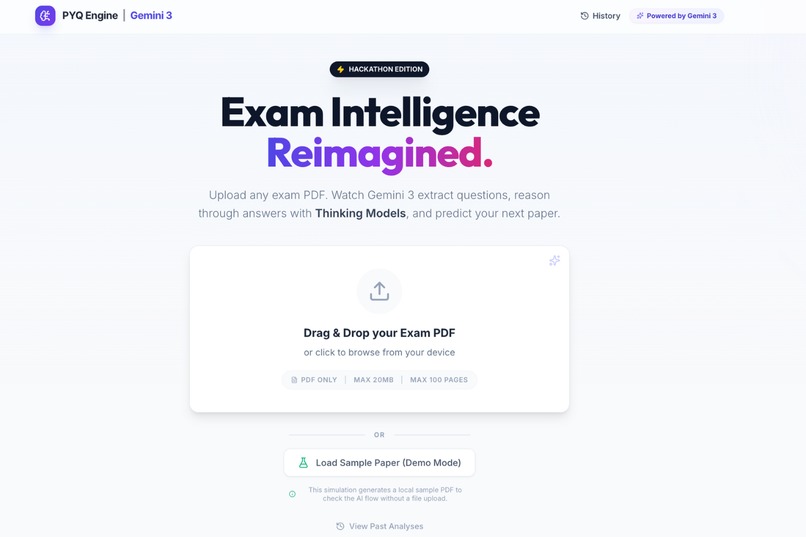
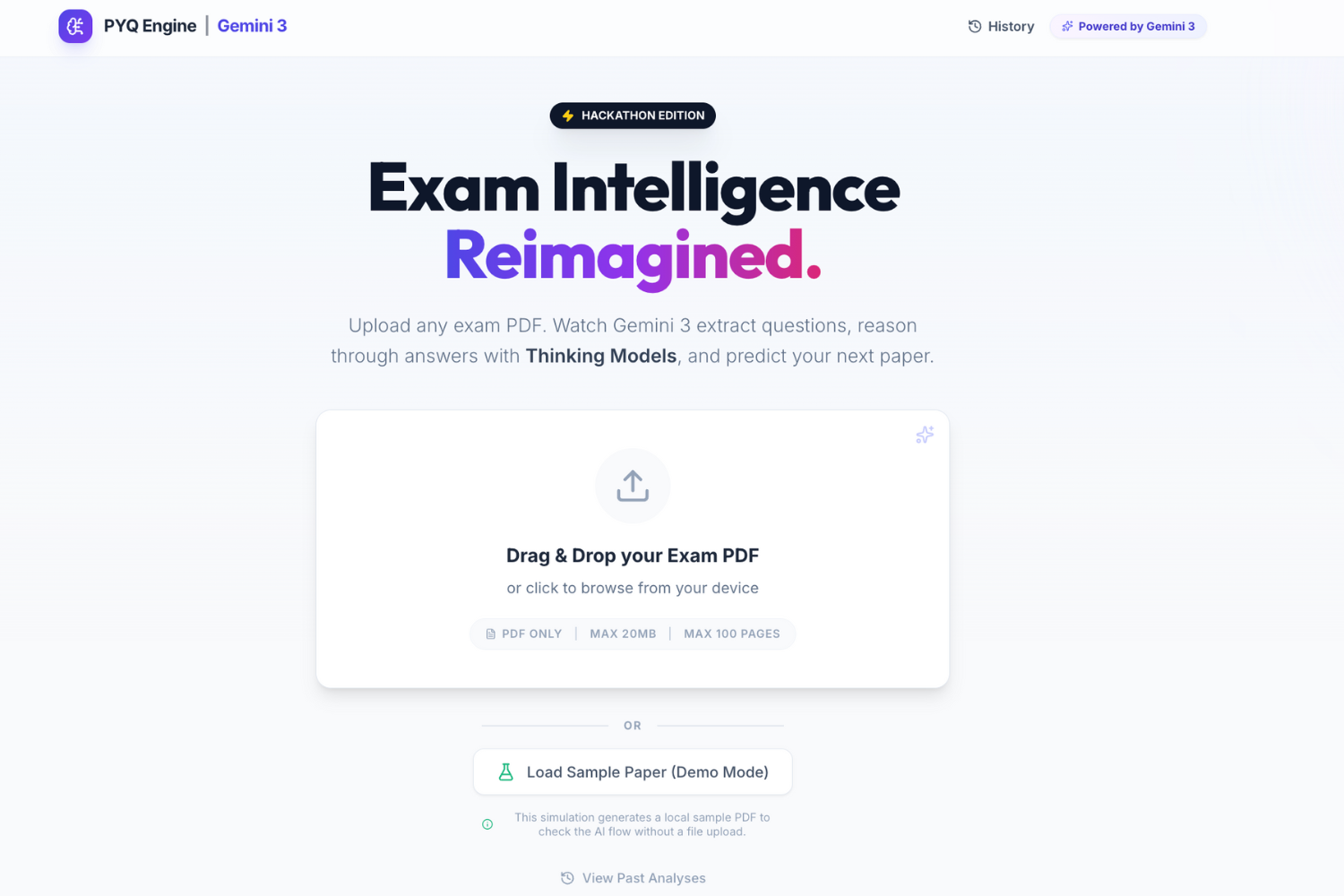
Upload any exam PDF and transform it into structured exam intelligence using Gemini 3.
-
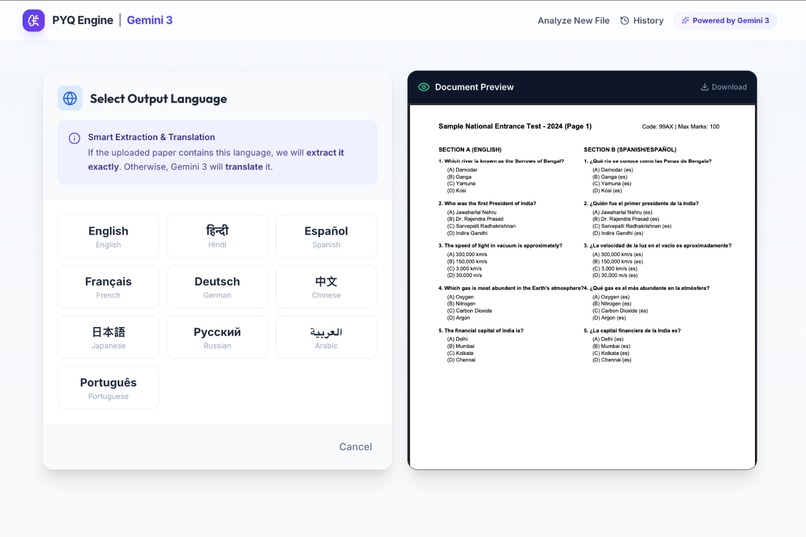
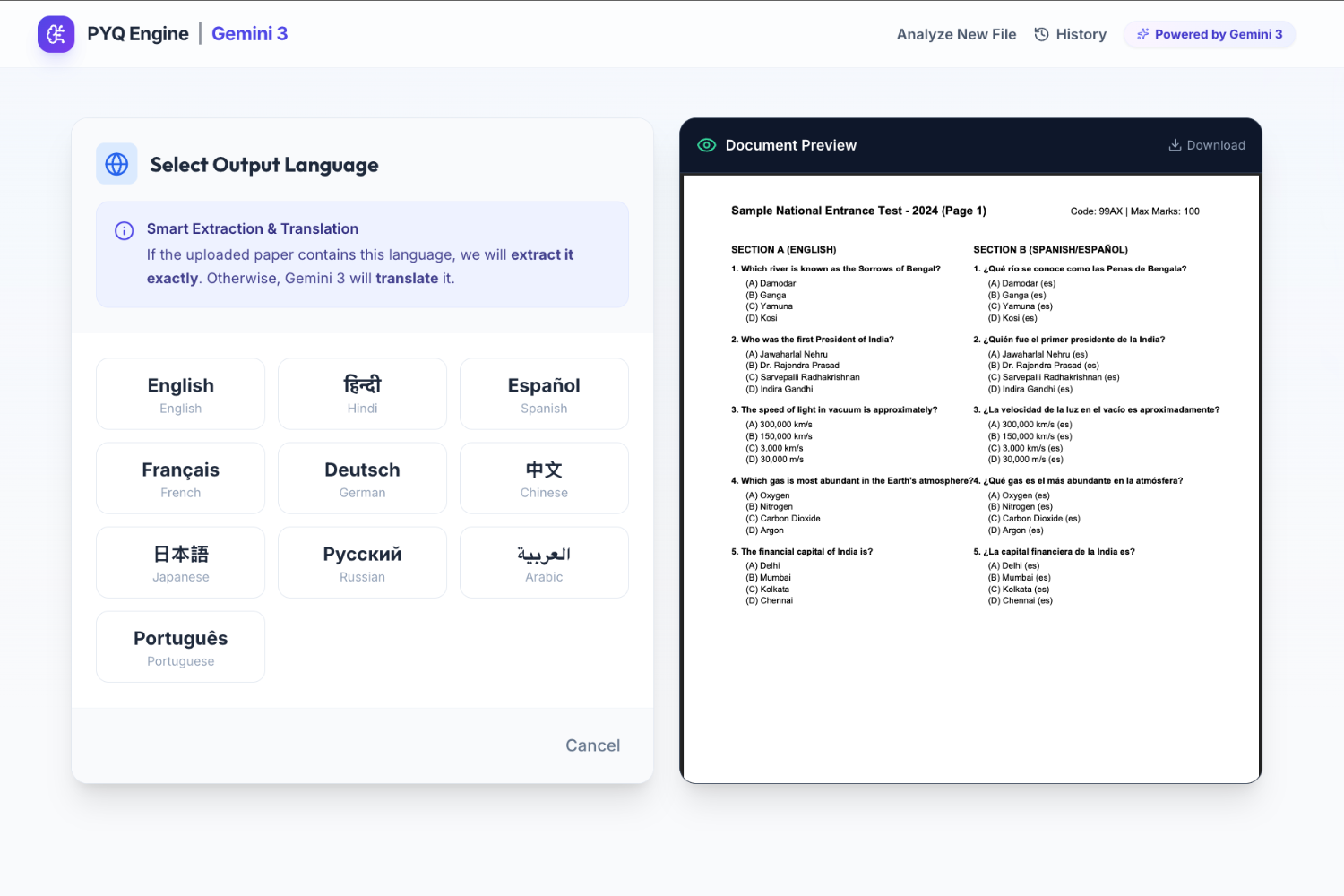
Gemini 3 understands multilingual and scanned exam papers with complex layouts.
-
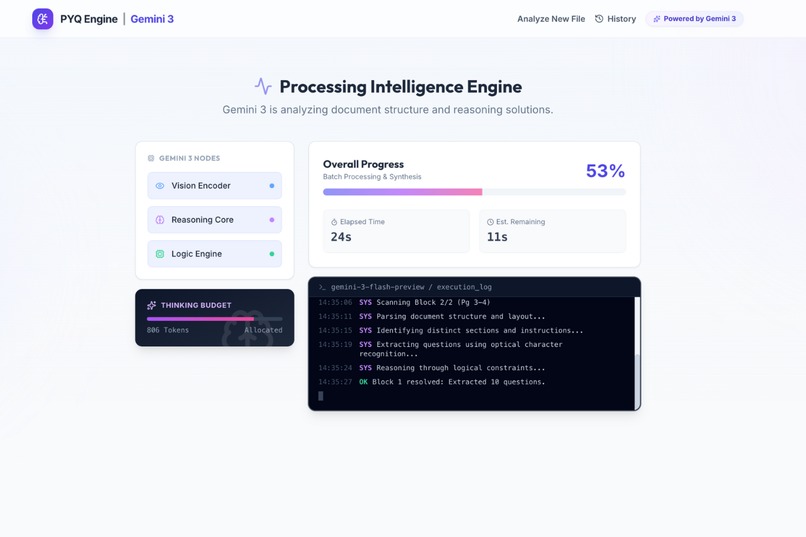
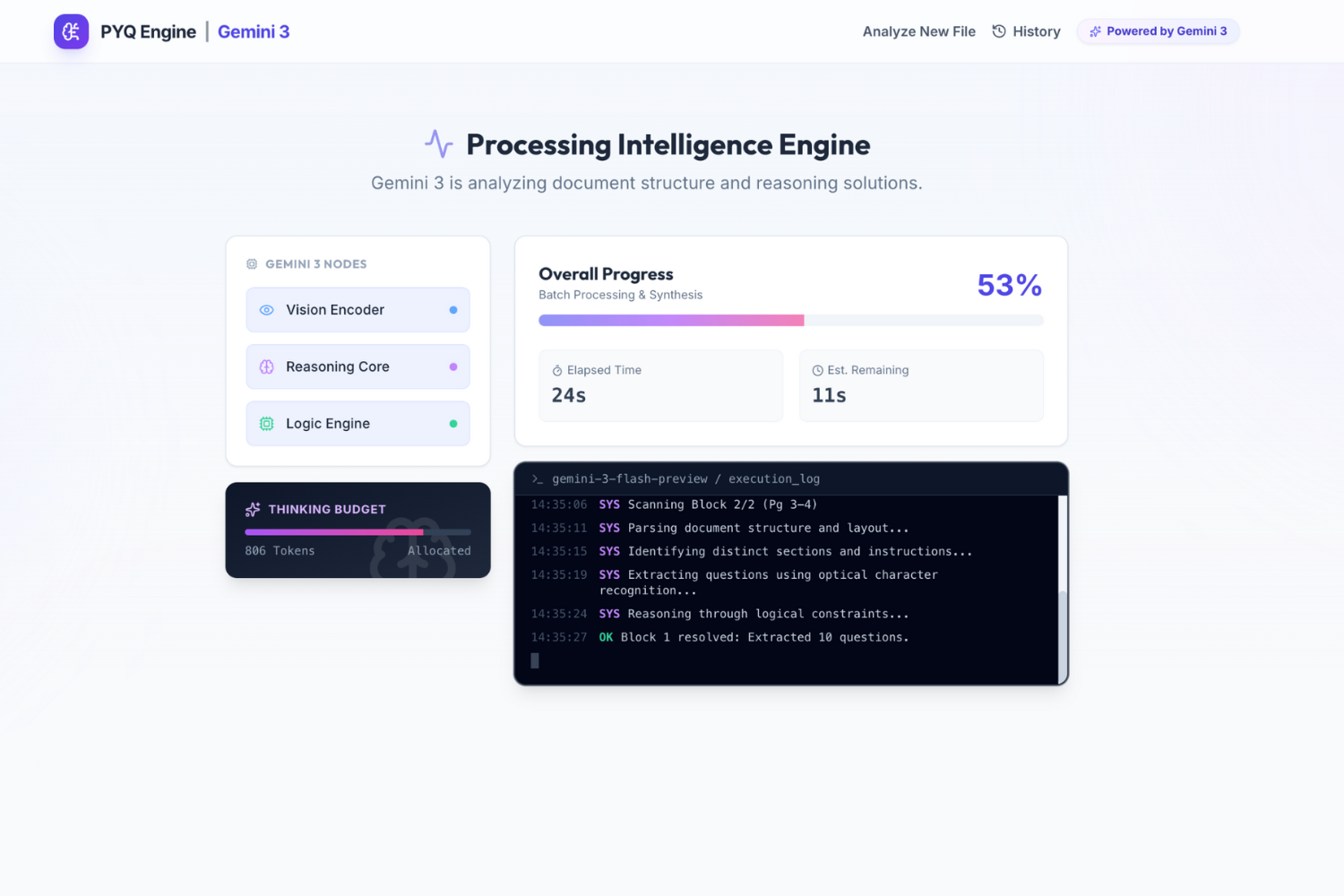
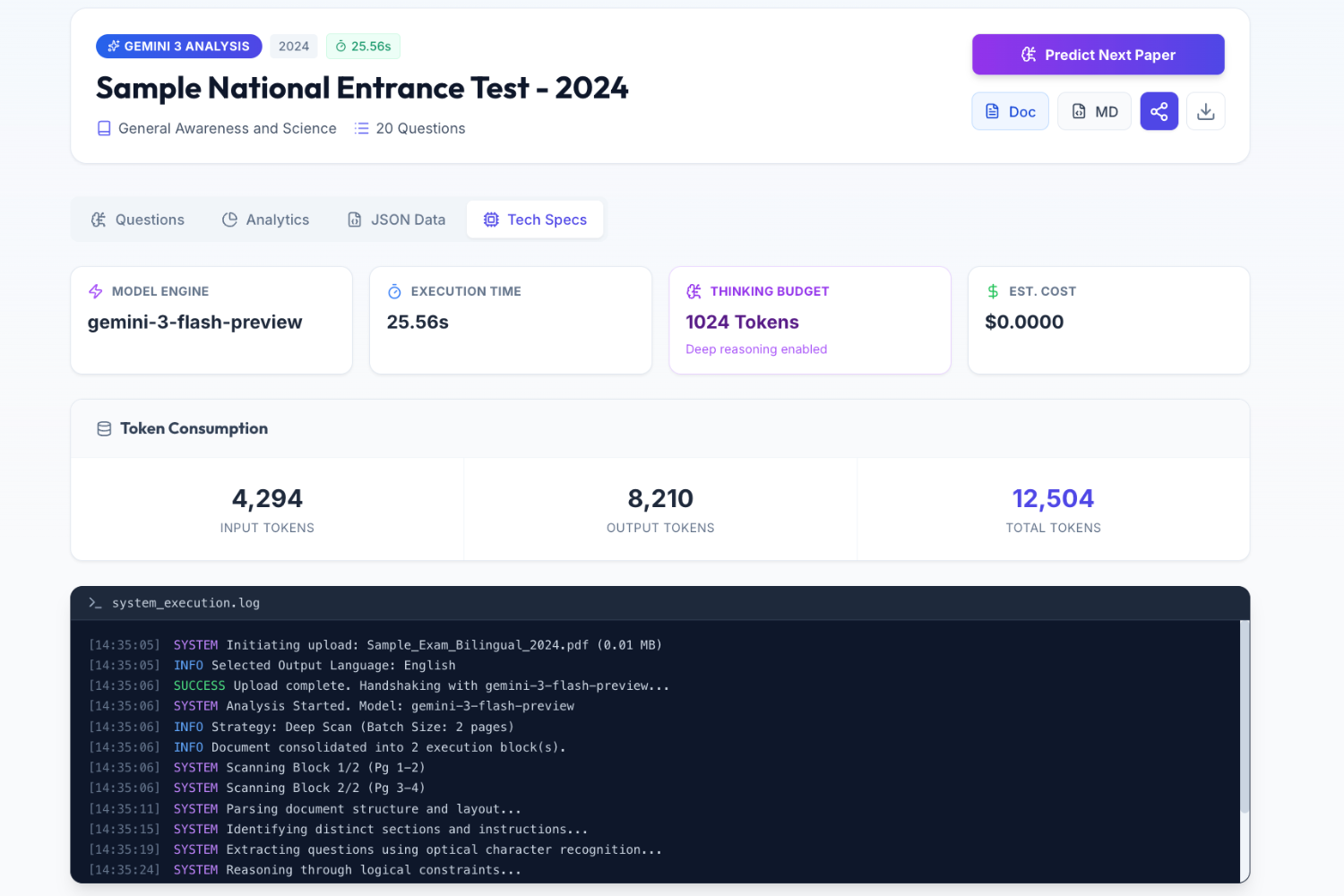
Live Gemini 3 execution showing multimodal vision, reasoning, and logic pipelines.
-
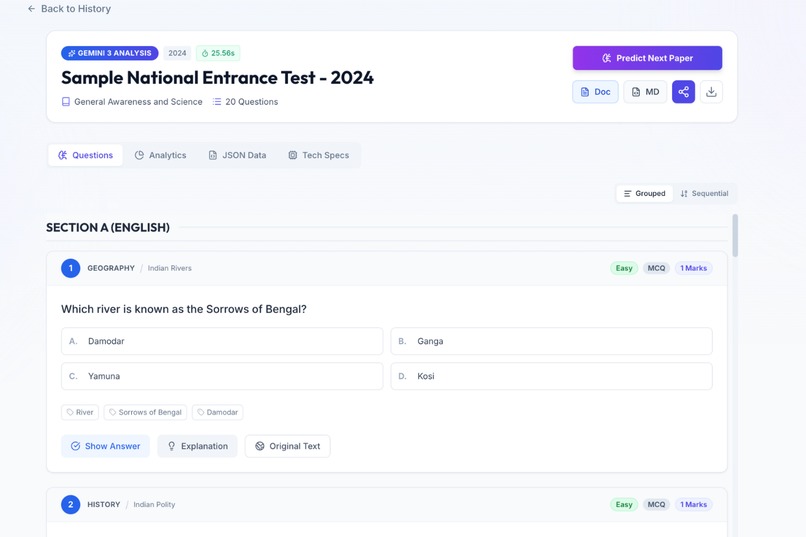
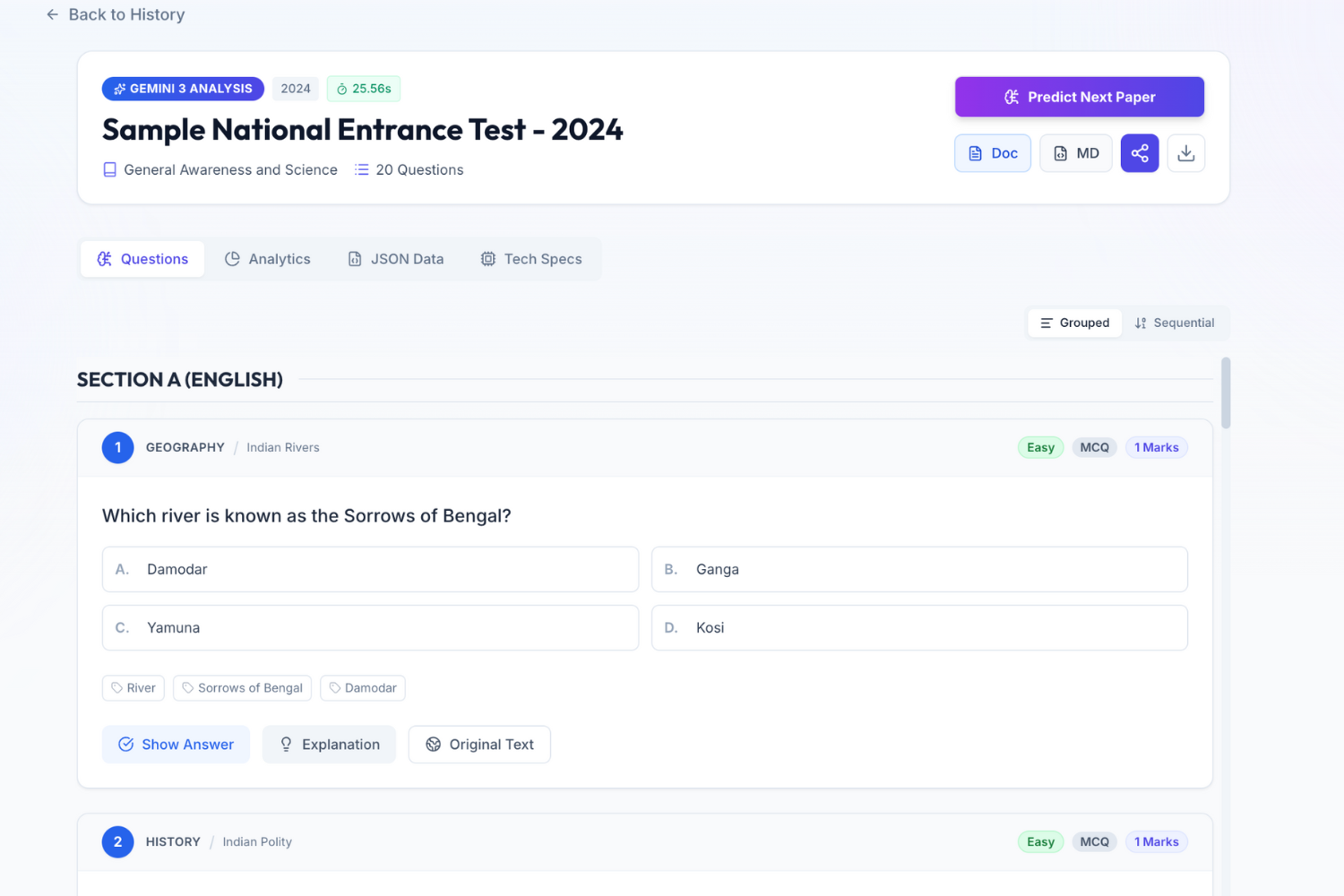
Questions reconstructed with topic classification, difficulty, and answer explanations.
-
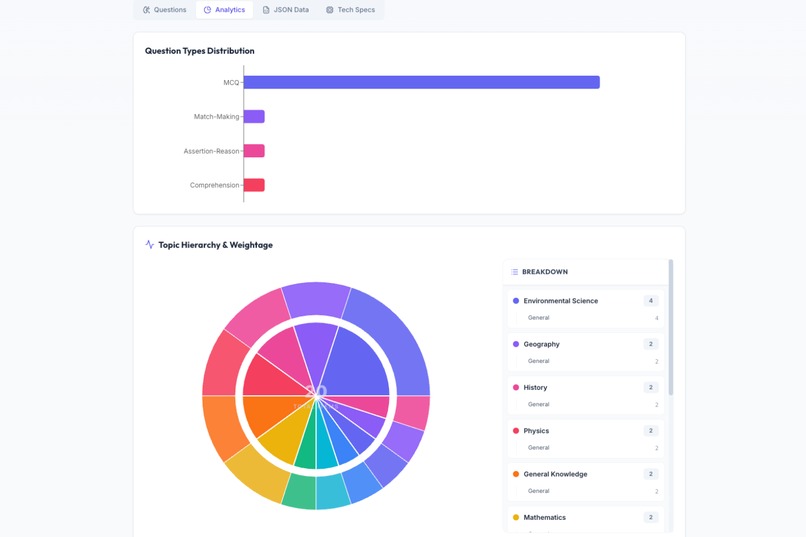
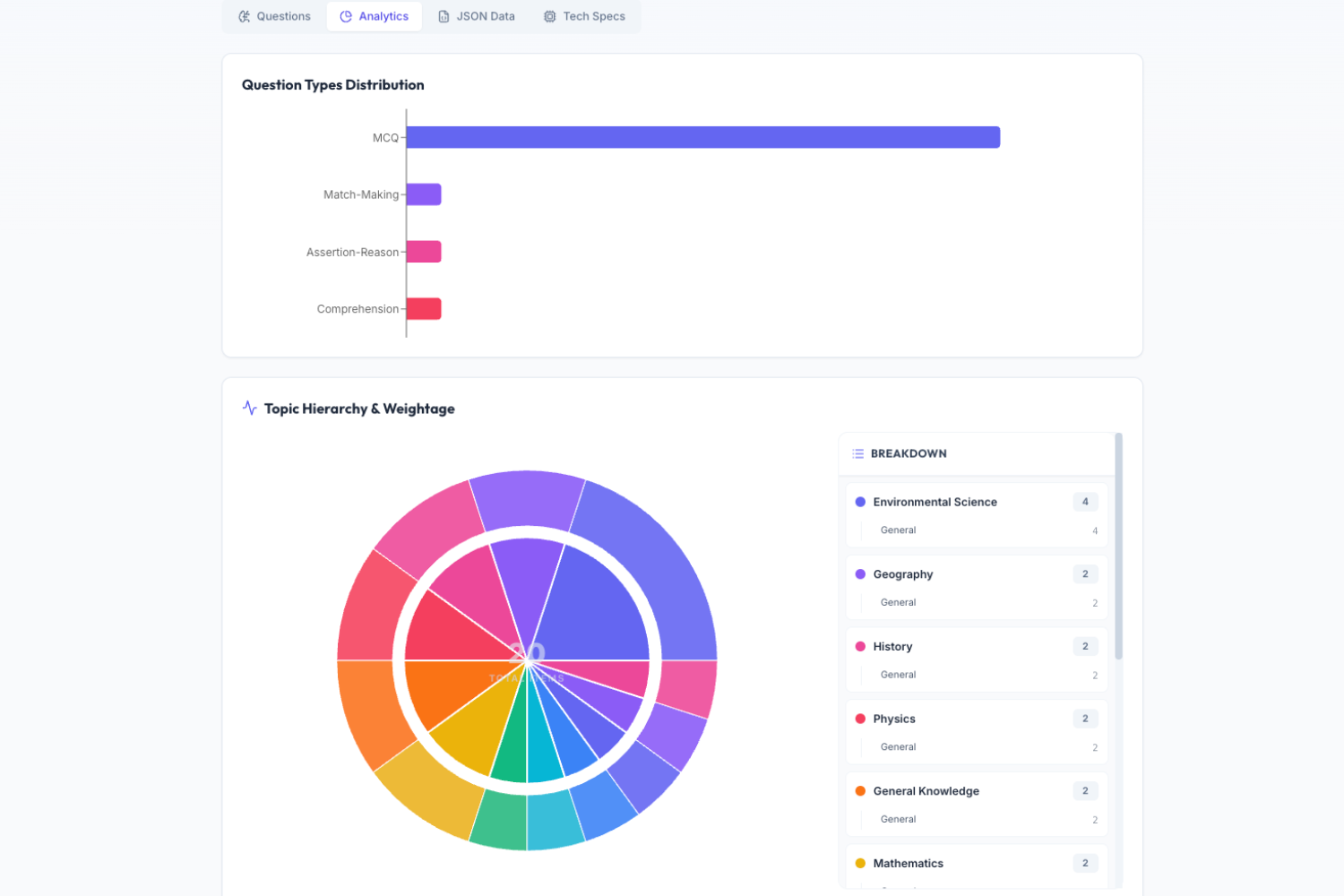
Topic weightage and question pattern analysis inferred using Gemini 3 reasoning.
-
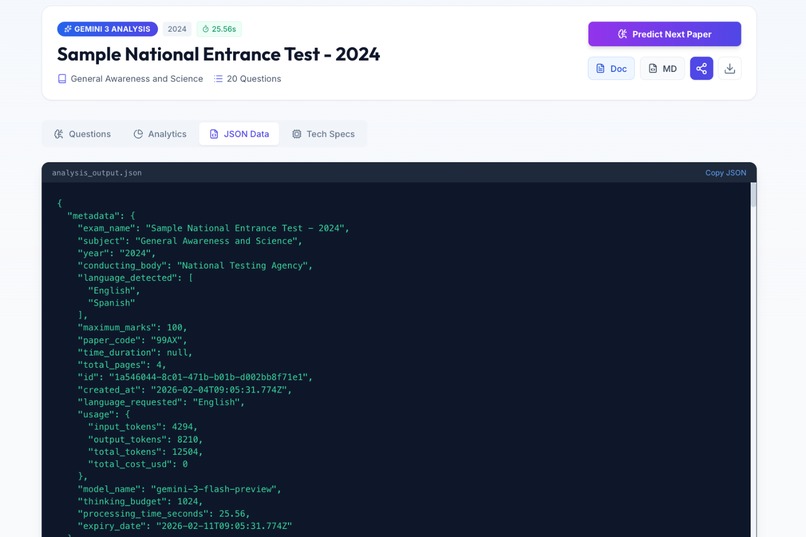
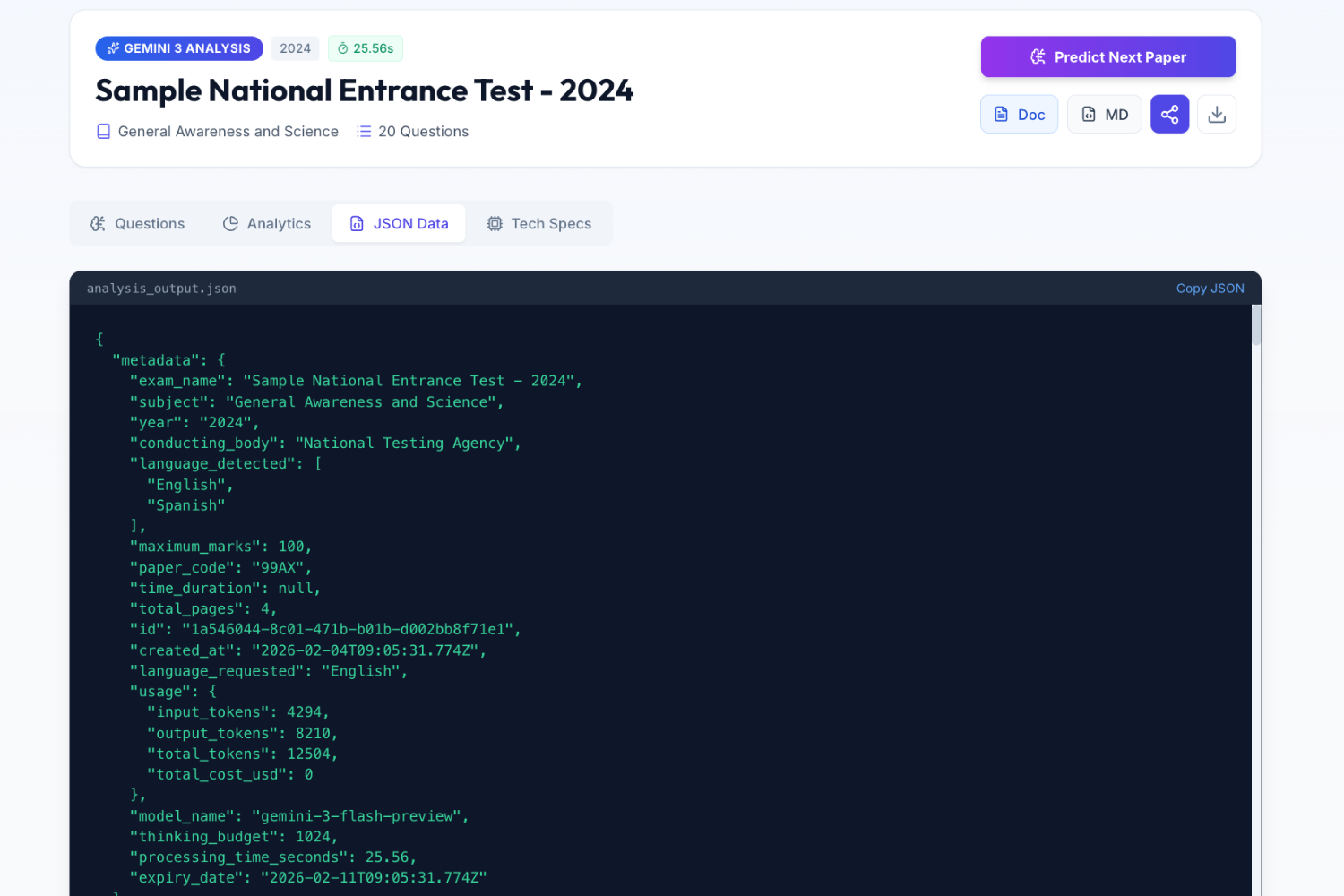
Entire exam converted into structured, machine-readable JSON for reuse and analysis.
-
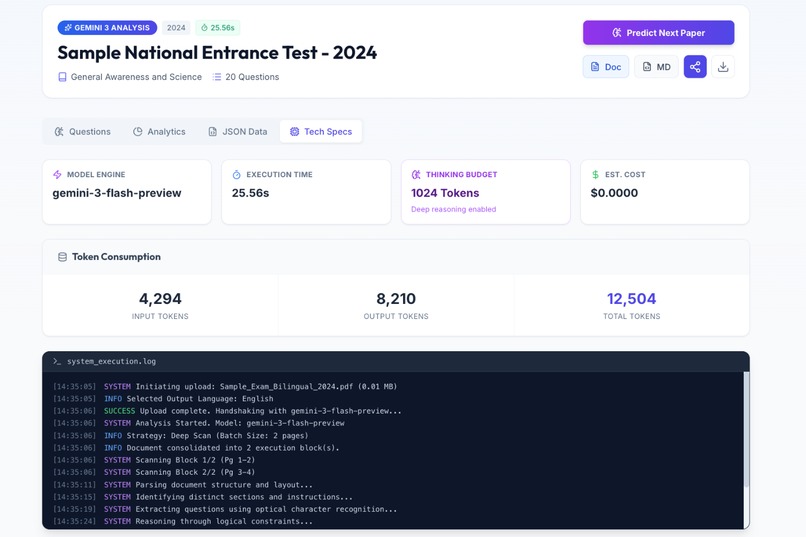
Transparent AI reasoning with execution logs and controlled thinking budget.
-
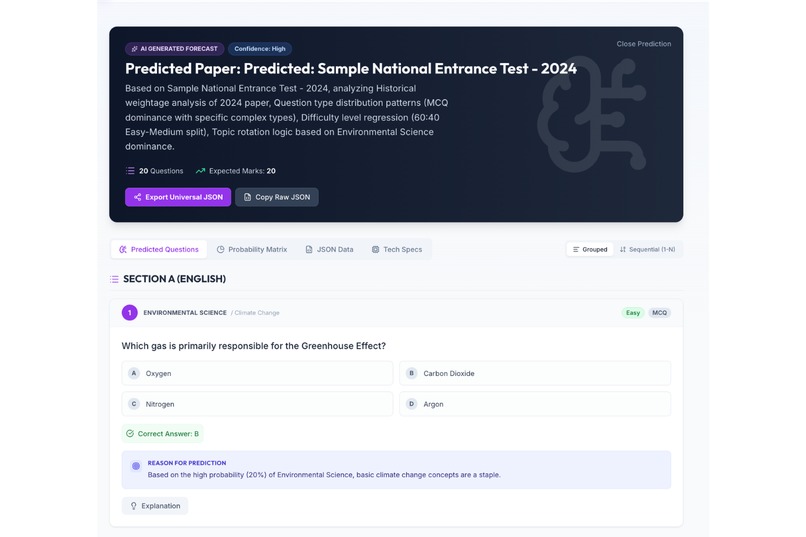
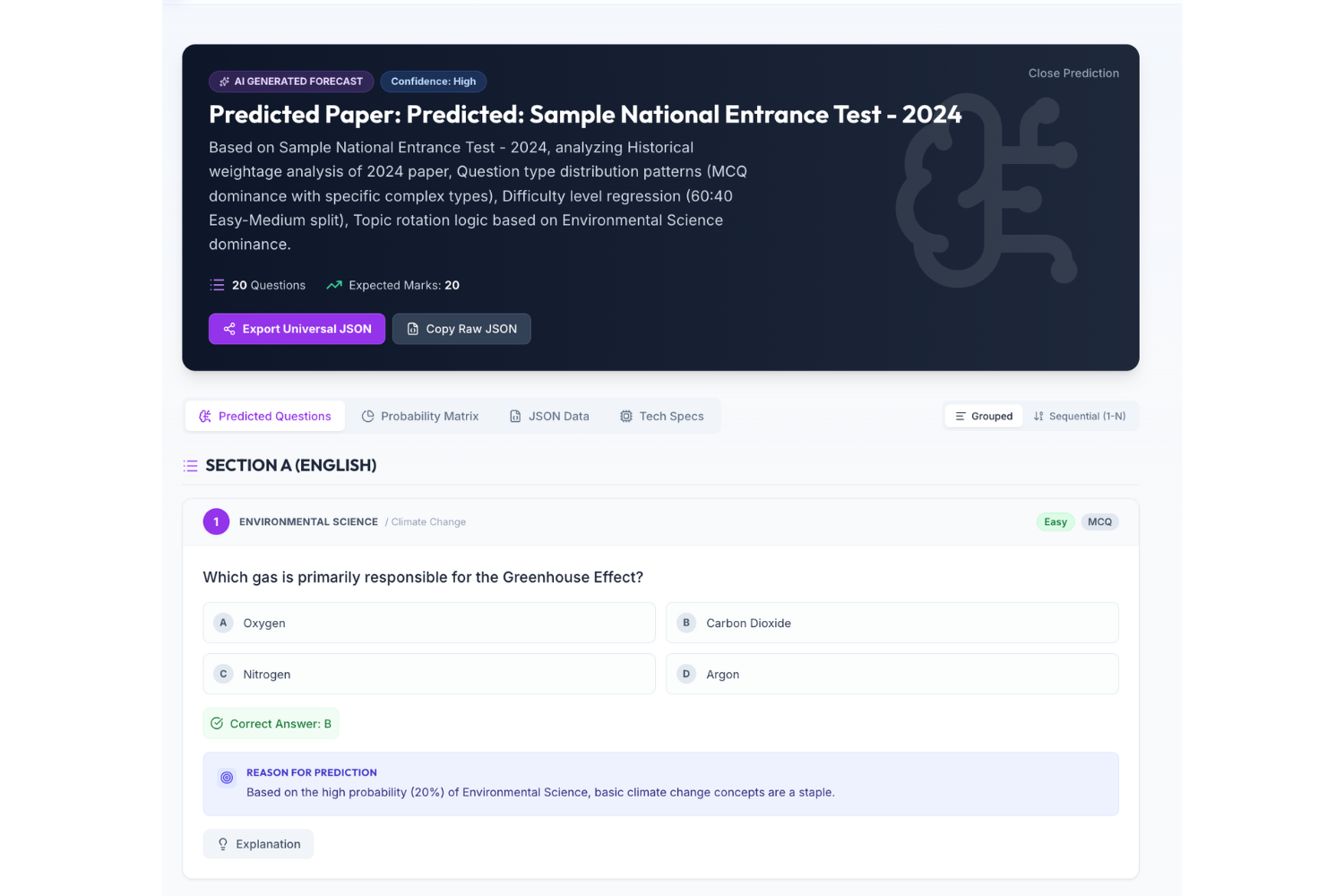
AI-generated predicted exam paper with explainable, probability-based reasoning.
Inspiration
Students preparing for board and competitive exams rely heavily on Previous Year Question (PYQ) papers. However, most PYQs are available only as raw PDFs that lack structure, insights, or guidance on what to focus on next.
Manually analysing question patterns, identifying repeated topics, and inferring future exam trends requires significant time and experience. I wanted to build a system that could understand exam papers the same way a teacher or examiner does — and guide students using data-driven intelligence.
This motivation led to the creation of PYQ Intelligence Engine.
What it does
PYQ Intelligence Engine is an AI-powered exam intelligence system that transforms unstructured PYQ PDFs into structured, actionable insights.
The platform allows users to upload a question paper PDF and:
- Read both text-based and scanned PDFs
- Support multilingual and mixed-language papers (English, Hindi, and more)
- Extract questions section-by-section using reasoning instead of rule-based parsing
- Generate correct answers with clear explanations
- Identify question types, topics, difficulty levels, and marks
- Convert the entire paper into structured JSON data
- Analyse recurring patterns and topic weightage
- Predict future exam papers using probabilistic and explainable AI logic
This enables students to focus on high-probability topics and prepare more efficiently.
How we built it
The project is built as a modern web application using:
- React and TypeScript for the frontend
- Vite for fast development and bundling
- Tailwind CSS for a clean and responsive UI
The intelligence layer is powered entirely by Google Gemini 3 and implemented using Google AI Studio.
Gemini 3’s multimodal reasoning and long-context understanding are used to:
- Interpret full-length PDFs, including scanned pages
- Understand mixed-language and complex exam layouts
- Detect true question boundaries instead of simple OCR text blocks
- Generate consistent, structured JSON outputs
- Produce accurate answers and explanations
- Perform reasoning-based pattern and trend analysis for paper prediction
These capabilities would not be achievable with traditional OCR pipelines or rule-based systems.
Challenges we ran into
Some of the key challenges included:
- Handling long multi-page PDFs without losing context
- Extracting questions accurately from scanned documents
- Correctly identifying sections, internal choices, and marks
- Maintaining strict and consistent structured output
- Preventing hallucination when information was missing
- Balancing prediction confidence with limited input data
These challenges were addressed using prompt engineering, strict output schemas, incremental reasoning, and validation logic.
Accomplishments that we're proud of
- Built a complete end-to-end exam intelligence system
- Successfully processed scanned and multilingual exam papers
- Automatically generated answers and explanations
- Converted raw PDFs into reusable, machine-readable data
- Implemented future paper prediction from a single uploaded PYQ
- Designed a clean and intuitive interface for students
- Integrated Gemini 3 as a reasoning engine, not just a chatbot
What we learned
Through this project, I learned:
- How to build multimodal AI applications
- How to design reliable structured-output prompts
- How to work with long-context document understanding
- How to reduce hallucination in generative AI systems
- How powerful Gemini 3 can be for real-world reasoning tasks
- How to design AI systems for education and social impact
What's next for PYQ Intelligence Engine
Future improvements include:
- Multi-year PYQ aggregation and comparison
- Topic-wise probability scoring for upcoming exams
- Cross-paper and cross-year trend analysis
- Student-personalised prediction models
- Automatic quiz and mock test generation
- Support for additional examination boards and countries
The long-term goal is to build a universal exam intelligence platform that helps students prepare smarter and with confidence.
Built With
- google-ai-studio
- google-gemini-3-api
- react
- tailwind-css
- typescript
- vite

Log in or sign up for Devpost to join the conversation.